
Search
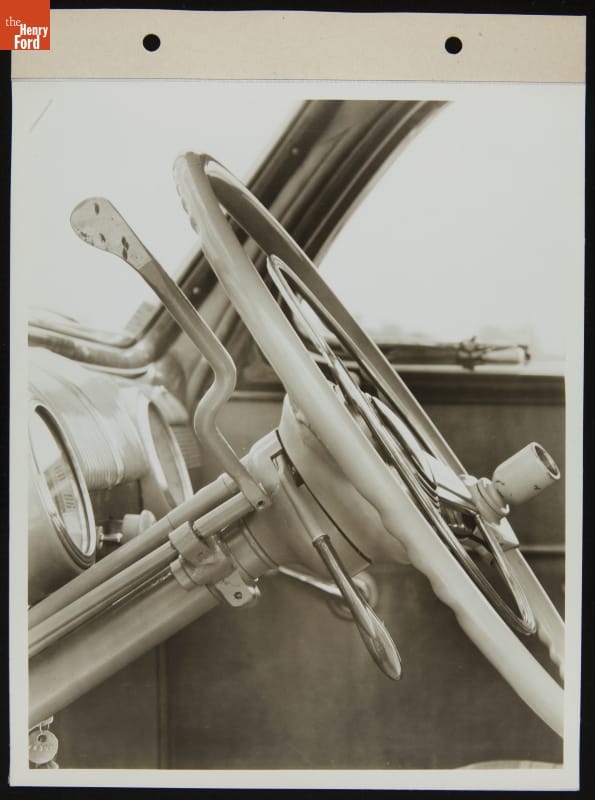
- Steering Wheel Attachments on Mercury Car for Handicapped Drivers, July 1945 - More than 670,000 American soldiers were wounded in World War II. Many of them returned home with lasting injuries. Ford Motor Company's Mercury Division adapted this car with special controls that could be operated by drivers with disabilities.
- July 07, 1945
- Collections - Artifact
Steering Wheel Attachments on Mercury Car for Handicapped Drivers, July 1945
More than 670,000 American soldiers were wounded in World War II. Many of them returned home with lasting injuries. Ford Motor Company's Mercury Division adapted this car with special controls that could be operated by drivers with disabilities.
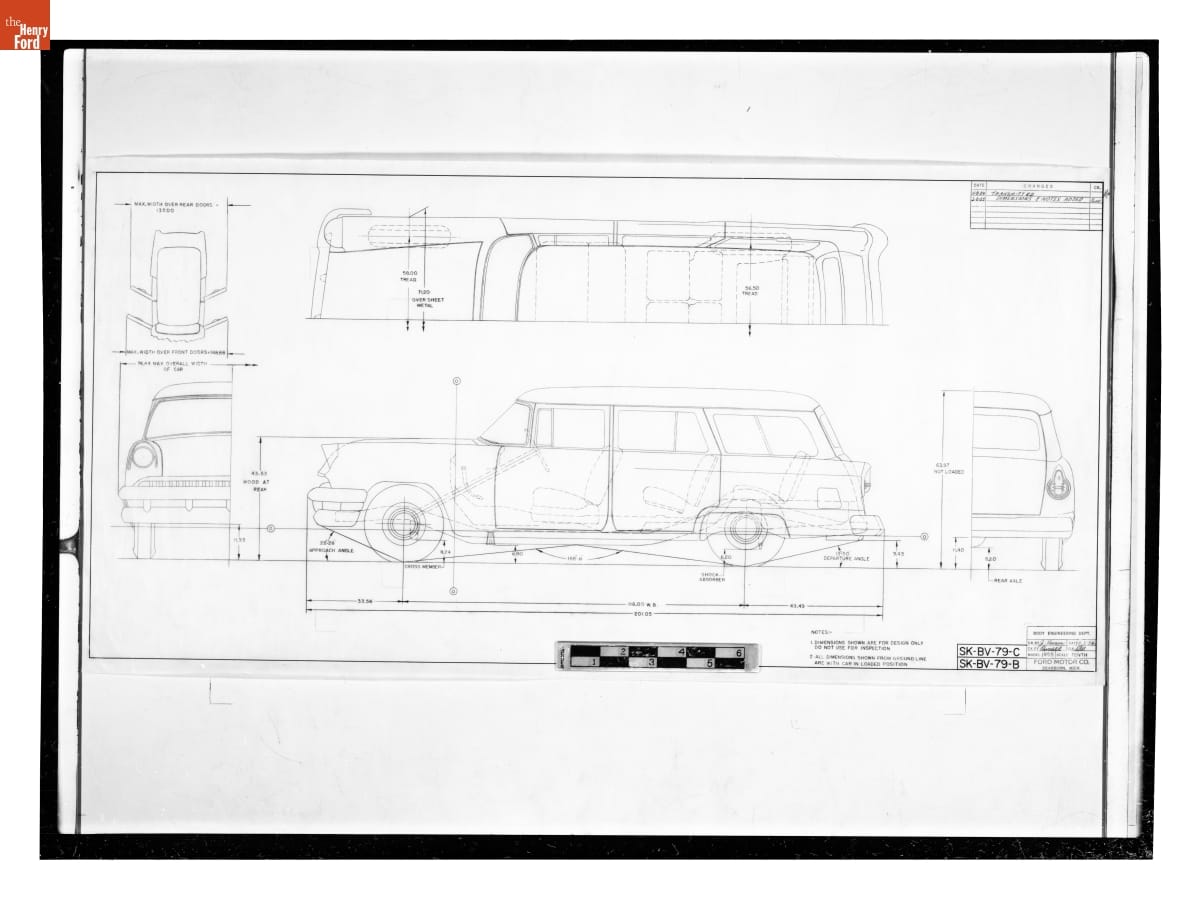
- Drawing, Mercury Monterey/Custom 4-Door Station Wagon, February 8, 1955 - The Ford Motor Company created over a million parts drawings from 1903 to 1957. Many of these drawings specify engineering requirements for the components of Ford-made vehicles--including automobiles, trucks, tractors, military vehicles and Tri-motor airplanes. Others document assembly components, stages of casting and forging, or experimental designs. Beginning in the 1940s, Ford transferred the drawings to microfilm.
- February 08, 1955
- Collections - Artifact
Drawing, Mercury Monterey/Custom 4-Door Station Wagon, February 8, 1955
The Ford Motor Company created over a million parts drawings from 1903 to 1957. Many of these drawings specify engineering requirements for the components of Ford-made vehicles--including automobiles, trucks, tractors, military vehicles and Tri-motor airplanes. Others document assembly components, stages of casting and forging, or experimental designs. Beginning in the 1940s, Ford transferred the drawings to microfilm.
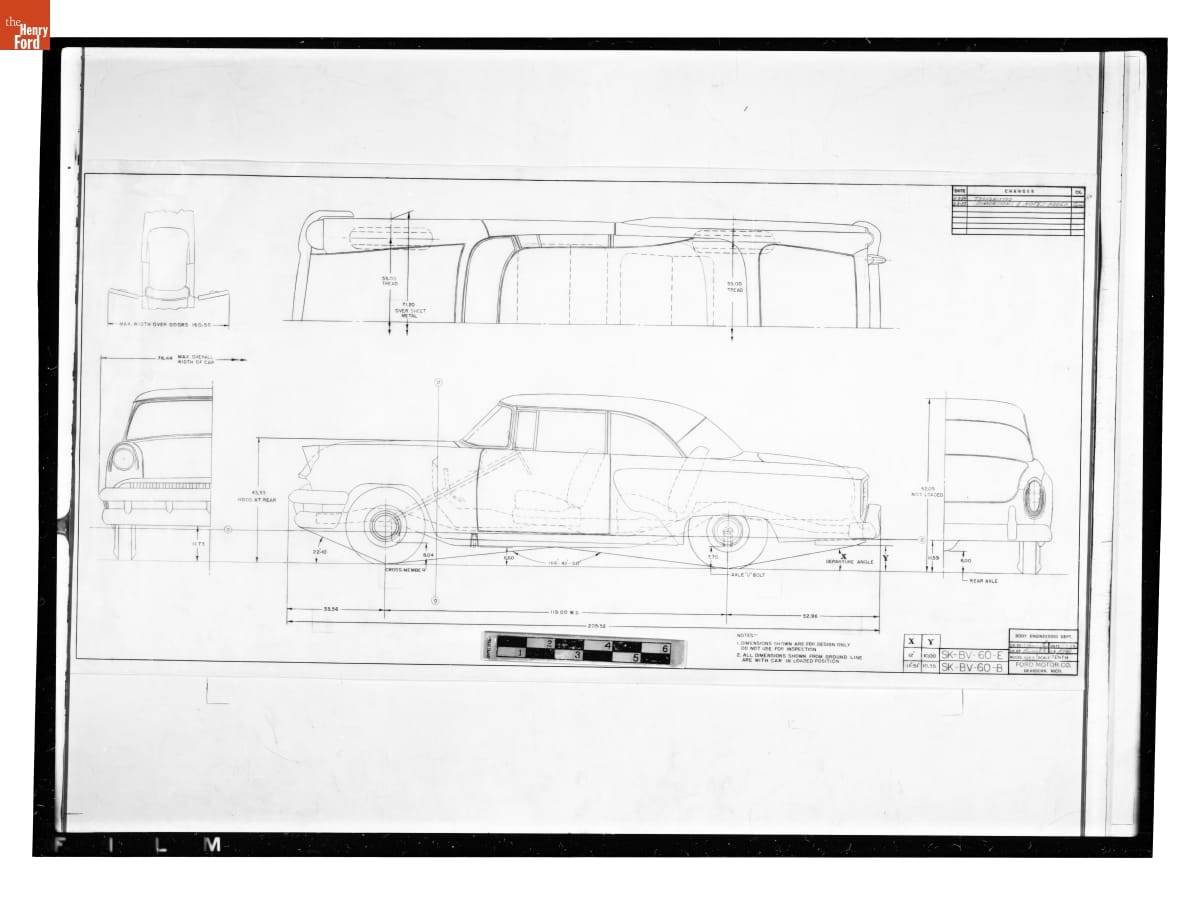
- Drawing, Mercury Monterey Coupe/Custom 2-Door Hardtop, February 8, 1955 - The Ford Motor Company created over a million parts drawings from 1903 to 1957. Many of these drawings specify engineering requirements for the components of Ford-made vehicles--including automobiles, trucks, tractors, military vehicles and Tri-motor airplanes. Others document assembly components, stages of casting and forging, or experimental designs. Beginning in the 1940s, Ford transferred the drawings to microfilm.
- February 08, 1955
- Collections - Artifact
Drawing, Mercury Monterey Coupe/Custom 2-Door Hardtop, February 8, 1955
The Ford Motor Company created over a million parts drawings from 1903 to 1957. Many of these drawings specify engineering requirements for the components of Ford-made vehicles--including automobiles, trucks, tractors, military vehicles and Tri-motor airplanes. Others document assembly components, stages of casting and forging, or experimental designs. Beginning in the 1940s, Ford transferred the drawings to microfilm.
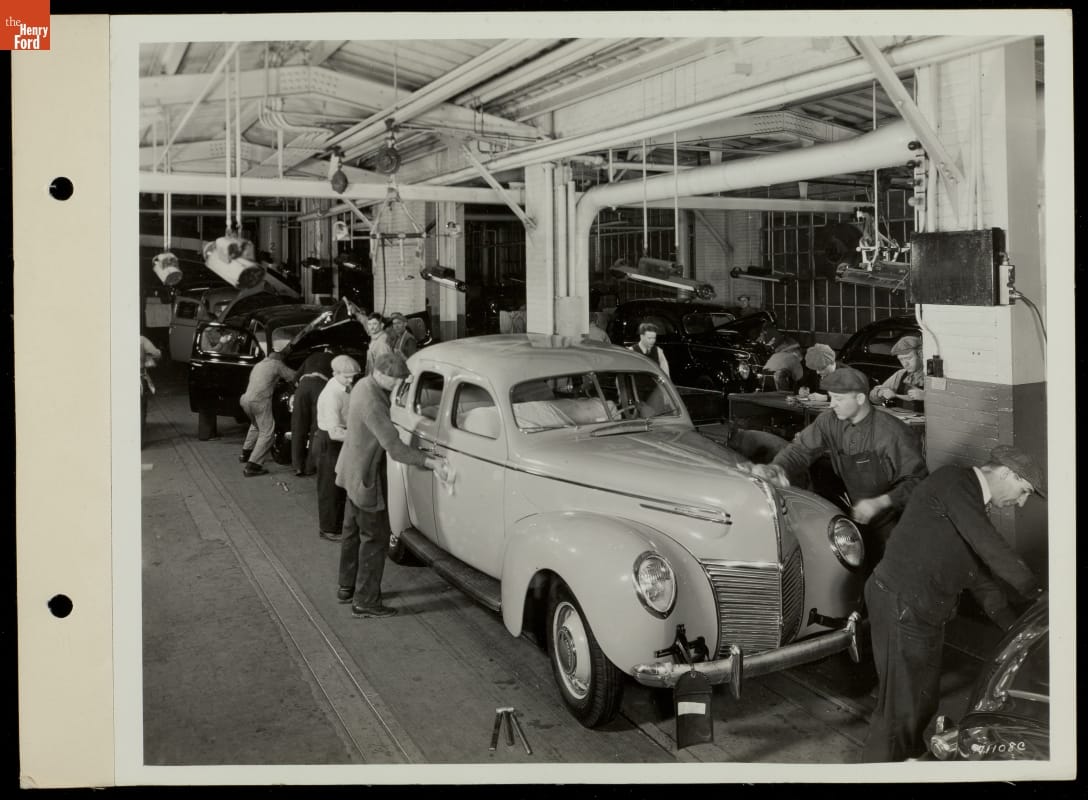
- Mercury Sedan at End of Assembly Line, Ford Motor Company, 1938 - Engineers at Ford's Highland Park plant had fine-tuned the moving assembly line. With this experience in hand, Ford created the "B" Building at its new River Rouge complex with extensive conveyer systems to accommodate the flow of parts and processes for chassis, body, and final assembly. Here, workers prepare a fully assembled Mercury automobile for shipment to a local dealer.
- November 25, 1938
- Collections - Artifact
Mercury Sedan at End of Assembly Line, Ford Motor Company, 1938
Engineers at Ford's Highland Park plant had fine-tuned the moving assembly line. With this experience in hand, Ford created the "B" Building at its new River Rouge complex with extensive conveyer systems to accommodate the flow of parts and processes for chassis, body, and final assembly. Here, workers prepare a fully assembled Mercury automobile for shipment to a local dealer.
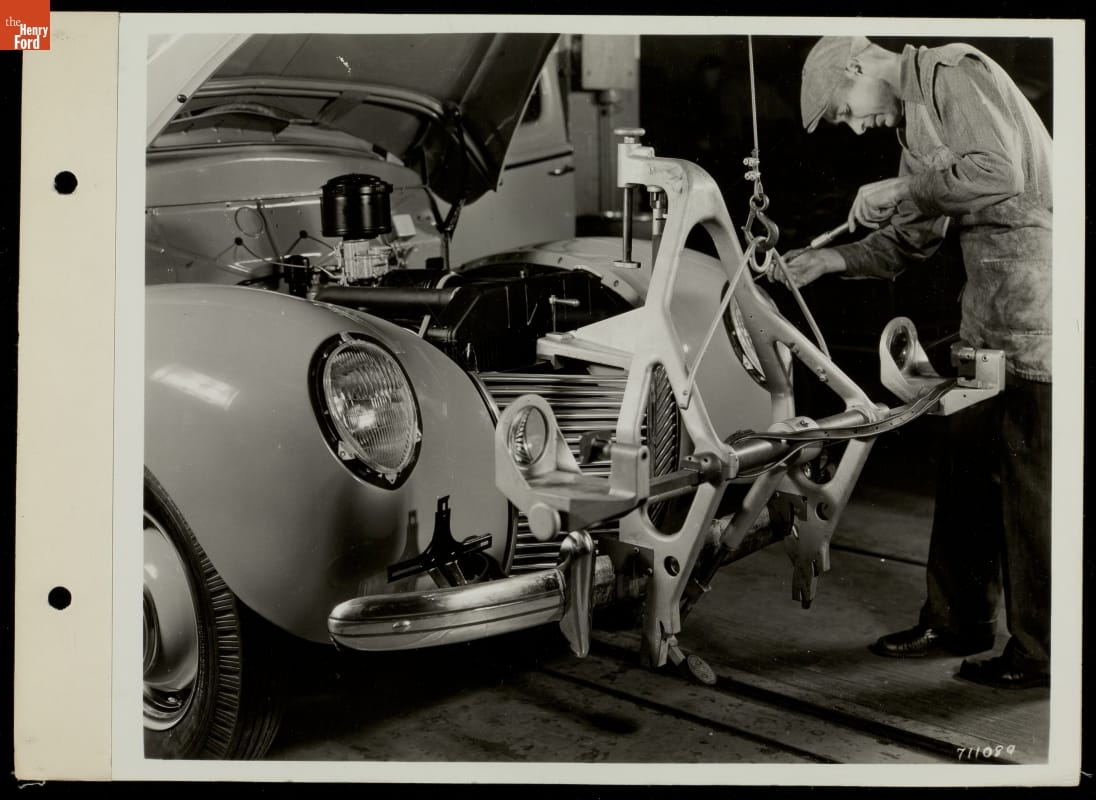
- Headlight Installation on Ford's Mercury Assembly Line, 1938 - Engineers at Ford's Highland Park plant had fine-tuned the moving assembly line. With this experience in hand, Ford created the "B" Building at its new River Rouge complex with extensive conveyer systems to accommodate the flow of parts and assembly processes. Here, during final assembly, a line worker adjusts the newly installed headlight on a 1939 Mercury automobile.
- November 25, 1938
- Collections - Artifact
Headlight Installation on Ford's Mercury Assembly Line, 1938
Engineers at Ford's Highland Park plant had fine-tuned the moving assembly line. With this experience in hand, Ford created the "B" Building at its new River Rouge complex with extensive conveyer systems to accommodate the flow of parts and assembly processes. Here, during final assembly, a line worker adjusts the newly installed headlight on a 1939 Mercury automobile.
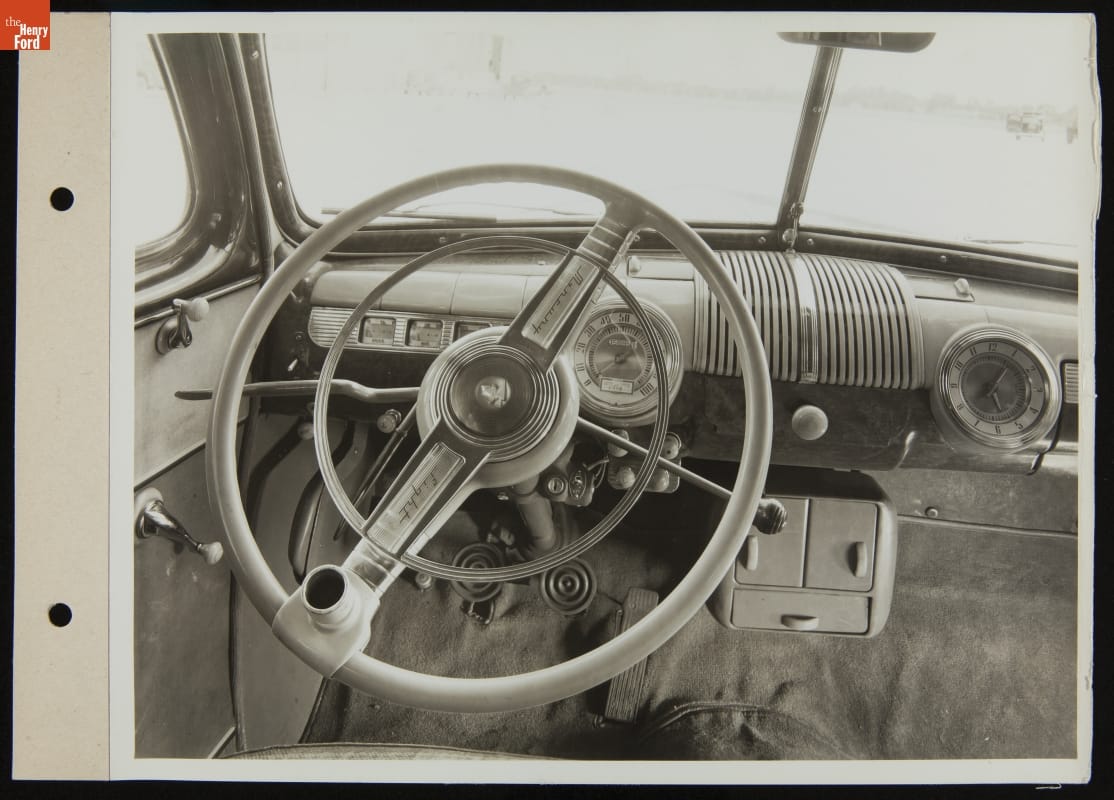
- Steering Wheel Attachments on Mercury Car for Handicapped Drivers, July 1945 - More than 670,000 American soldiers were wounded in World War II. Many of them returned home with lasting injuries. Ford Motor Company's Mercury Division adapted this car with special controls that could be operated by drivers with disabilities.
- July 07, 1945
- Collections - Artifact
Steering Wheel Attachments on Mercury Car for Handicapped Drivers, July 1945
More than 670,000 American soldiers were wounded in World War II. Many of them returned home with lasting injuries. Ford Motor Company's Mercury Division adapted this car with special controls that could be operated by drivers with disabilities.
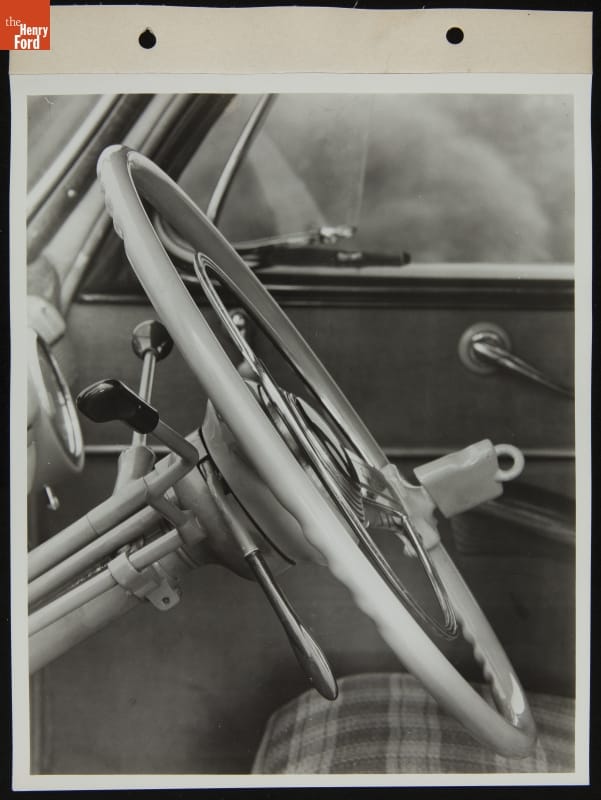
- Steering Wheel Attachments on Mercury Car for Handicapped Drivers, July 1945 - More than 670,000 American soldiers were wounded in World War II. Many of them returned home with lasting injuries. Ford Motor Company's Mercury Division adapted this car with special controls that could be operated by drivers with disabilities.
- August 01, 1945
- Collections - Artifact
Steering Wheel Attachments on Mercury Car for Handicapped Drivers, July 1945
More than 670,000 American soldiers were wounded in World War II. Many of them returned home with lasting injuries. Ford Motor Company's Mercury Division adapted this car with special controls that could be operated by drivers with disabilities.
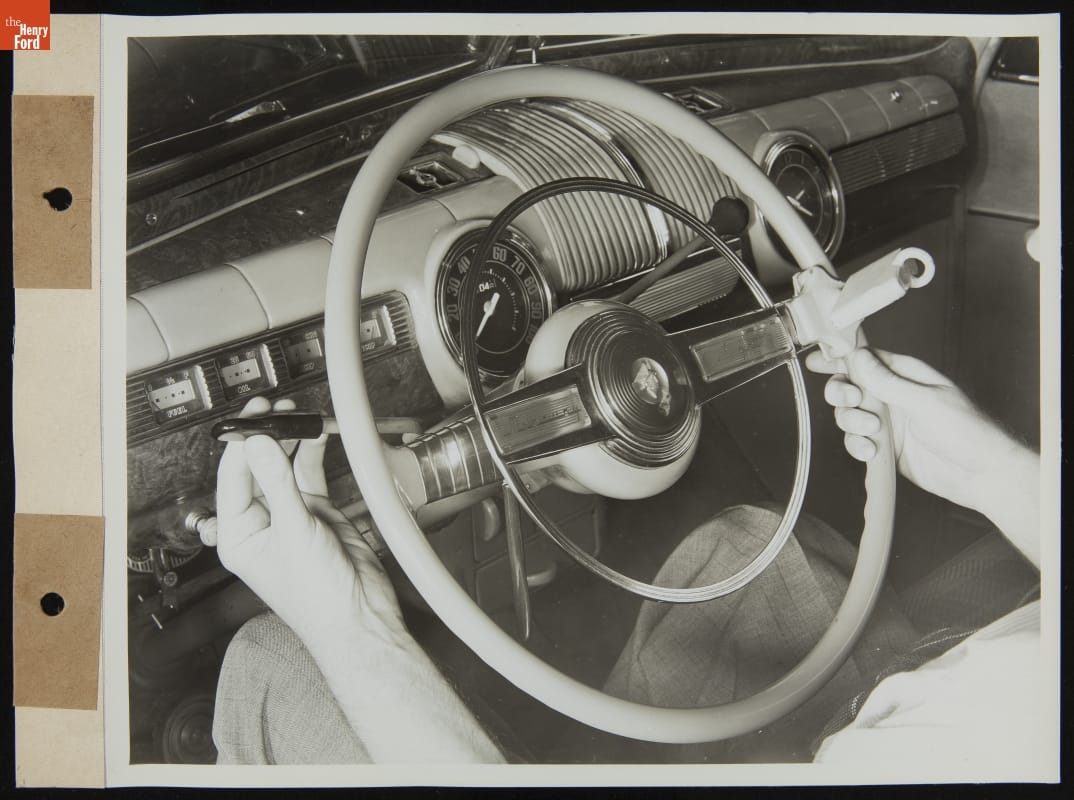
- Driver Demonstrates Steering Wheel Attachments on Mercury Car for Handicapped Drivers, August 1945 - More than 670,000 American soldiers were wounded in World War II. Many of them returned home with lasting injuries. Ford Motor Company's Mercury Division adapted this car with special controls that could be operated by drivers with disabilities.
- August 01, 1945
- Collections - Artifact
Driver Demonstrates Steering Wheel Attachments on Mercury Car for Handicapped Drivers, August 1945
More than 670,000 American soldiers were wounded in World War II. Many of them returned home with lasting injuries. Ford Motor Company's Mercury Division adapted this car with special controls that could be operated by drivers with disabilities.
- Driver Demonstrates Steering Wheel Attachments on Mercury Car for Handicapped Drivers, August 1945 - More than 670,000 American soldiers were wounded in World War II. Many of them returned home with lasting injuries. Ford Motor Company's Mercury Division adapted this car with special controls that could be operated by drivers with disabilities.
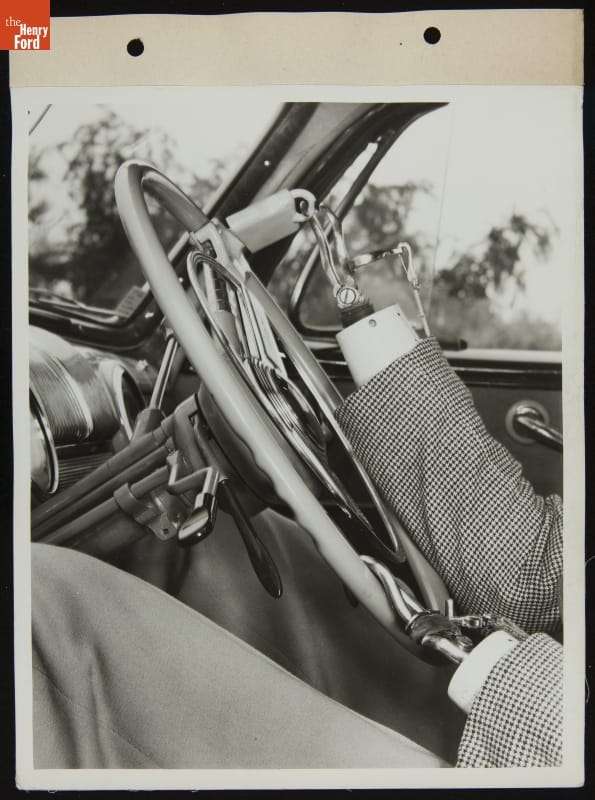
- August 01, 1945
- Collections - Artifact
Driver Demonstrates Steering Wheel Attachments on Mercury Car for Handicapped Drivers, August 1945
More than 670,000 American soldiers were wounded in World War II. Many of them returned home with lasting injuries. Ford Motor Company's Mercury Division adapted this car with special controls that could be operated by drivers with disabilities.
- Driver Demonstrates Steering Wheel Attachments on Mercury Car for Handicapped Drivers, August 1945 - More than 670,000 American soldiers were wounded in World War II. Many of them returned home with lasting injuries. Ford Motor Company's Mercury Division adapted this car with special controls that could be operated by drivers with disabilities.
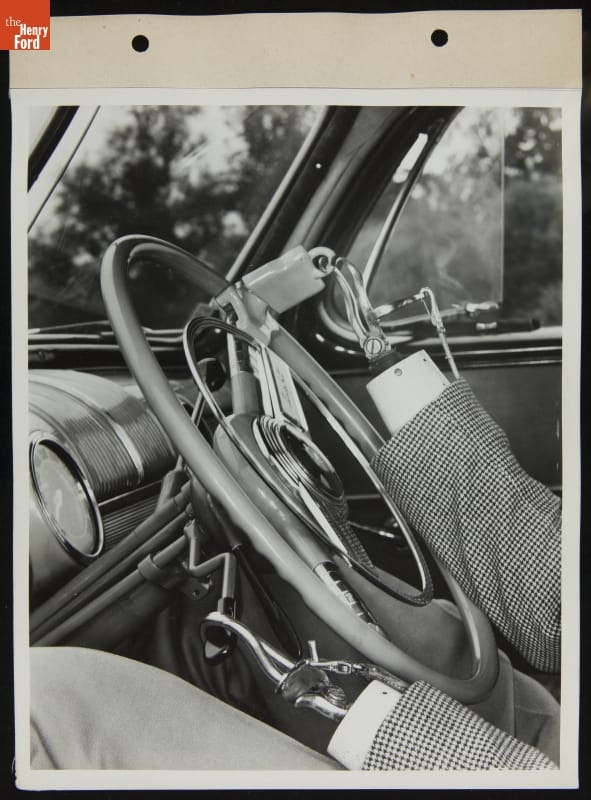
- August 01, 1945
- Collections - Artifact
Driver Demonstrates Steering Wheel Attachments on Mercury Car for Handicapped Drivers, August 1945
More than 670,000 American soldiers were wounded in World War II. Many of them returned home with lasting injuries. Ford Motor Company's Mercury Division adapted this car with special controls that could be operated by drivers with disabilities.