
Search
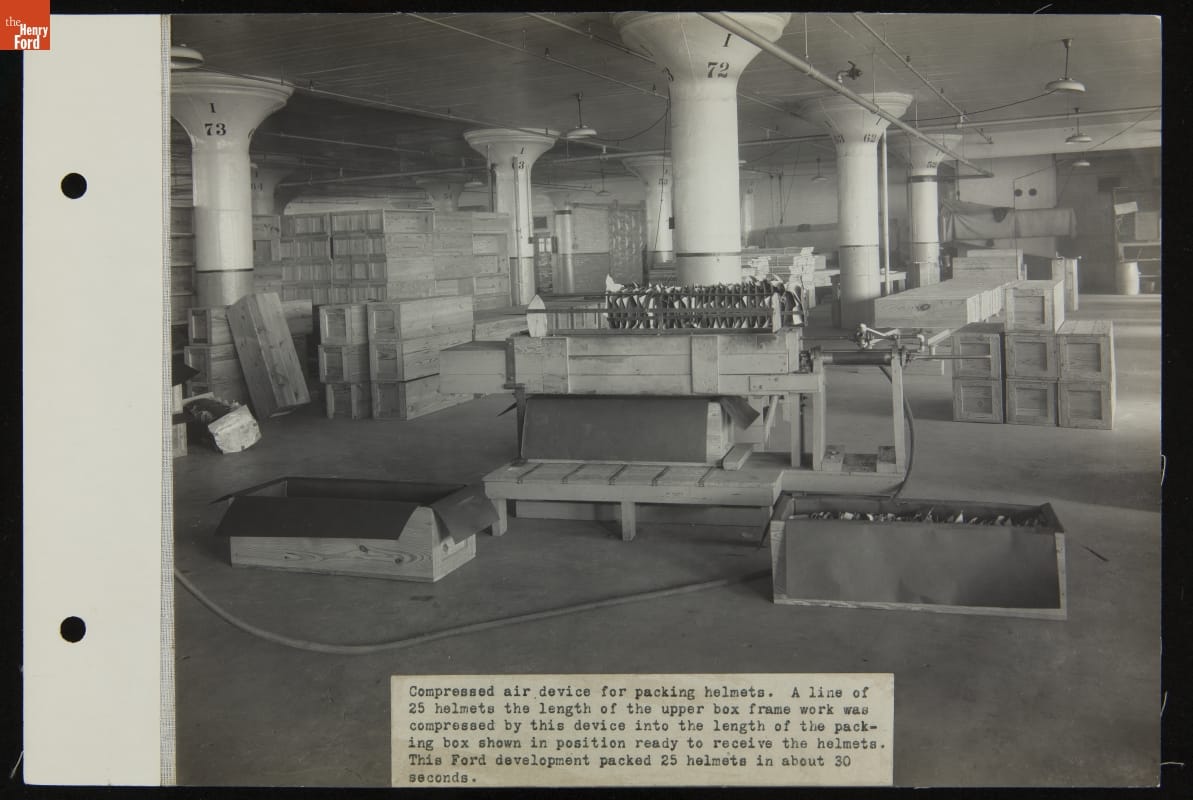
- Compressed Air Device for Packing Helmets during World War I, Ford Motor Company Philadelphia Plant, 1917-1918 - When the United States entered World War I, American automobile companies turned some of their manufacturing capacity to the production of war materiel. Ford Motor Company received a contract to paint, assemble, and crate steel helmets for American soldiers. Altogether, Ford's Philadelphia plant processed more than 2.7 million helmets at a rate as high as 40,000 each day.
- 1917-1918
- Collections - Artifact
Compressed Air Device for Packing Helmets during World War I, Ford Motor Company Philadelphia Plant, 1917-1918
When the United States entered World War I, American automobile companies turned some of their manufacturing capacity to the production of war materiel. Ford Motor Company received a contract to paint, assemble, and crate steel helmets for American soldiers. Altogether, Ford's Philadelphia plant processed more than 2.7 million helmets at a rate as high as 40,000 each day.
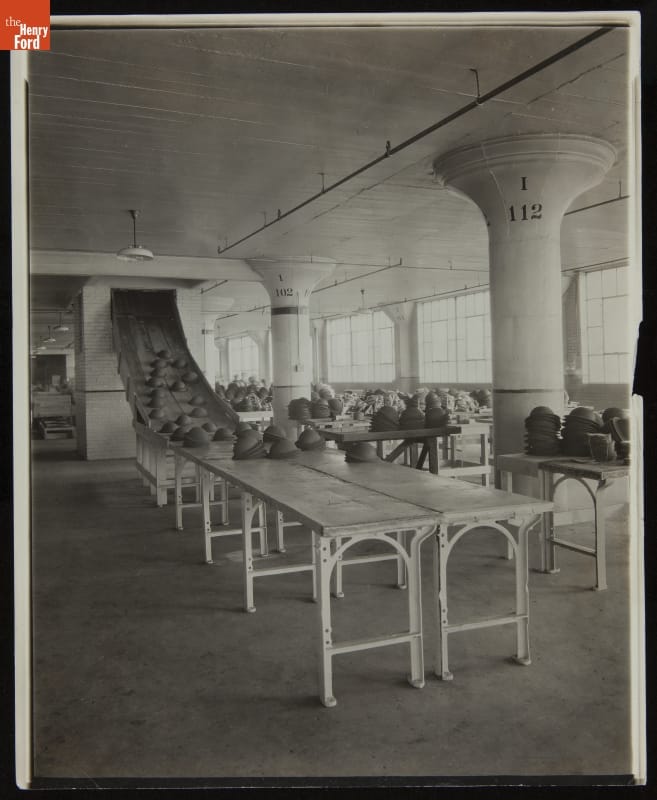
- Army Helmets Transferred from Tenth to Ninth Floor by Chute, Ford Motor Company Philadelphia Plant, 1917-1918 - When the United States entered World War I, American automobile companies turned some of their manufacturing capacity to the production of war materiel. Ford Motor Company received a contract to paint, assemble, and crate steel helmets for American soldiers. Altogether, Ford's Philadelphia plant processed more than 2.7 million helmets at a rate as high as 40,000 each day.
- 1917-1918
- Collections - Artifact
Army Helmets Transferred from Tenth to Ninth Floor by Chute, Ford Motor Company Philadelphia Plant, 1917-1918
When the United States entered World War I, American automobile companies turned some of their manufacturing capacity to the production of war materiel. Ford Motor Company received a contract to paint, assemble, and crate steel helmets for American soldiers. Altogether, Ford's Philadelphia plant processed more than 2.7 million helmets at a rate as high as 40,000 each day.
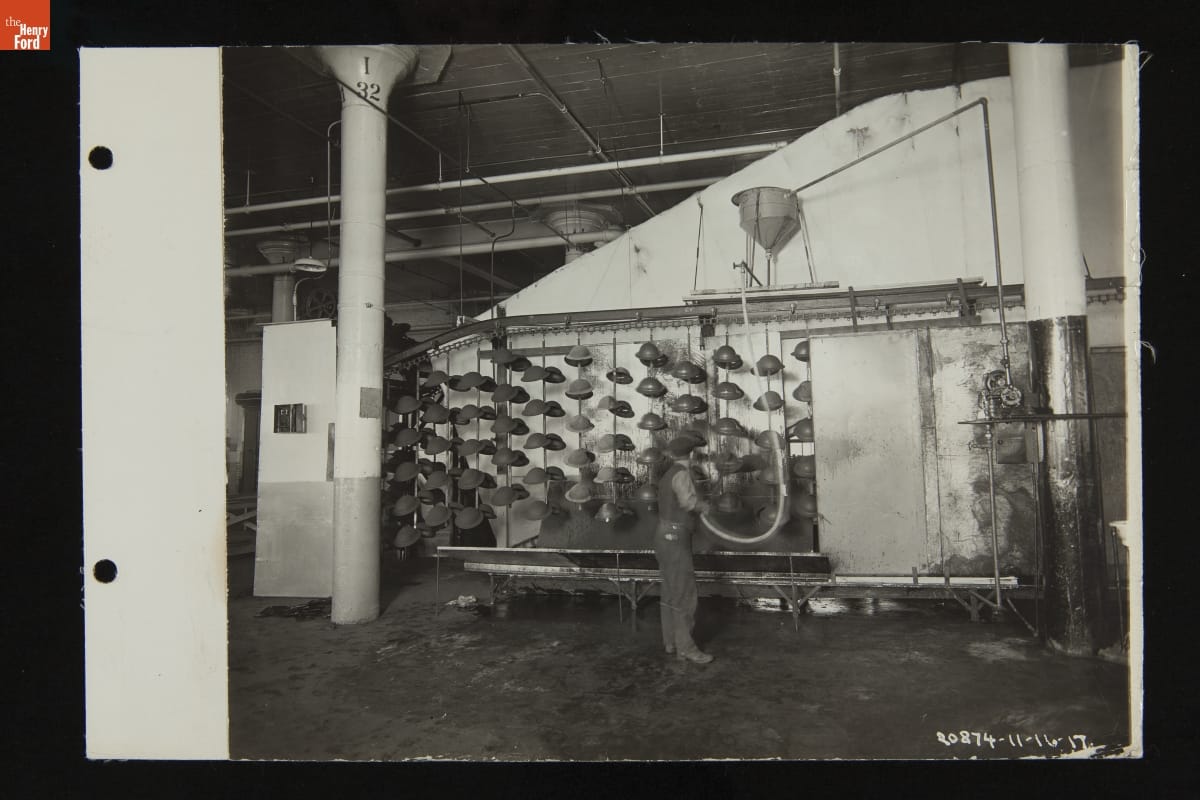
- Man Spray-Painting Army Helmets, Ford Motor Company Philadelphia Plant, November 1917 - When the United States entered World War I, American automobile companies turned some of their manufacturing capacity to the production of war materiel. Ford Motor Company received a contract to paint, assemble, and crate steel helmets for American soldiers. Altogether, Ford's Philadelphia plant processed more than 2.7 million helmets at a rate as high as 40,000 each day.
- November 16, 1917
- Collections - Artifact
Man Spray-Painting Army Helmets, Ford Motor Company Philadelphia Plant, November 1917
When the United States entered World War I, American automobile companies turned some of their manufacturing capacity to the production of war materiel. Ford Motor Company received a contract to paint, assemble, and crate steel helmets for American soldiers. Altogether, Ford's Philadelphia plant processed more than 2.7 million helmets at a rate as high as 40,000 each day.
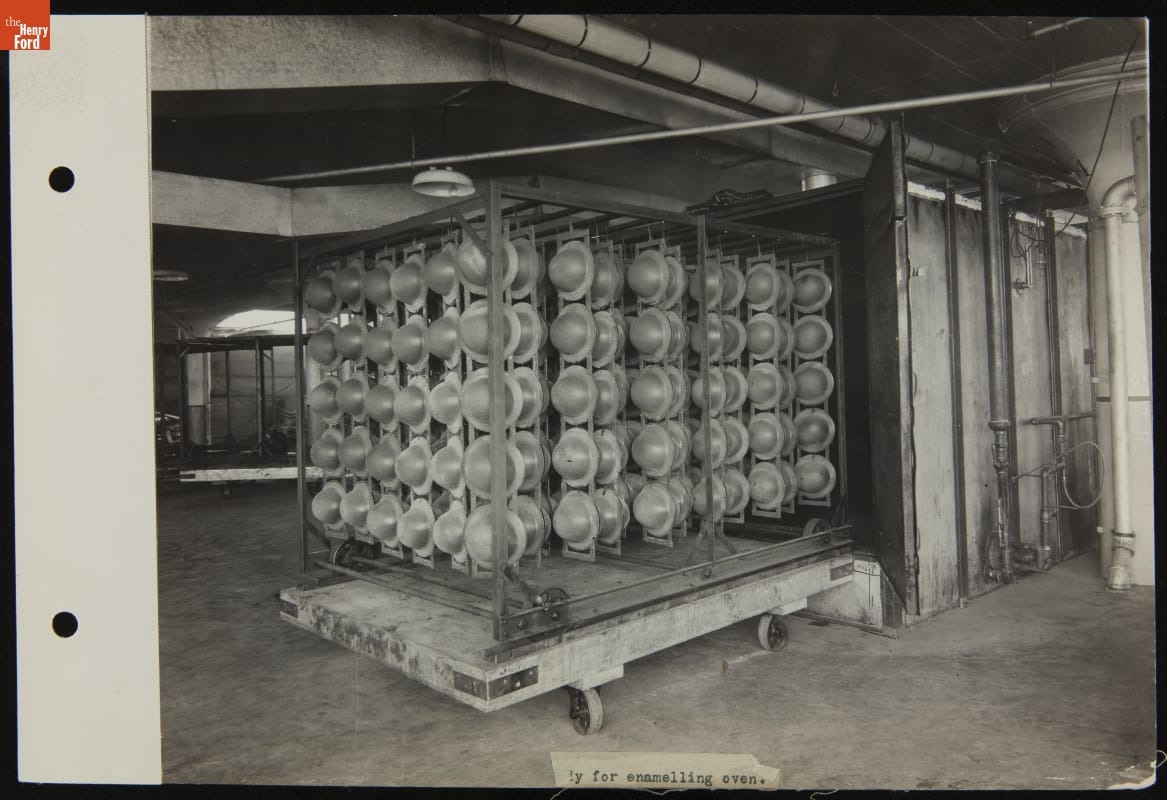
- Army Helmets Ready for Enamelling Oven, Ford Motor Company Philadelphia Plant, 1917-1918 - When the United States entered World War I, American automobile companies turned some of their manufacturing capacity to the production of war materiel. Ford Motor Company received a contract to paint, assemble, and crate steel helmets for American soldiers. Altogether, Ford's Philadelphia plant processed more than 2.7 million helmets at a rate as high as 40,000 each day.
- circa 1918
- Collections - Artifact
Army Helmets Ready for Enamelling Oven, Ford Motor Company Philadelphia Plant, 1917-1918
When the United States entered World War I, American automobile companies turned some of their manufacturing capacity to the production of war materiel. Ford Motor Company received a contract to paint, assemble, and crate steel helmets for American soldiers. Altogether, Ford's Philadelphia plant processed more than 2.7 million helmets at a rate as high as 40,000 each day.
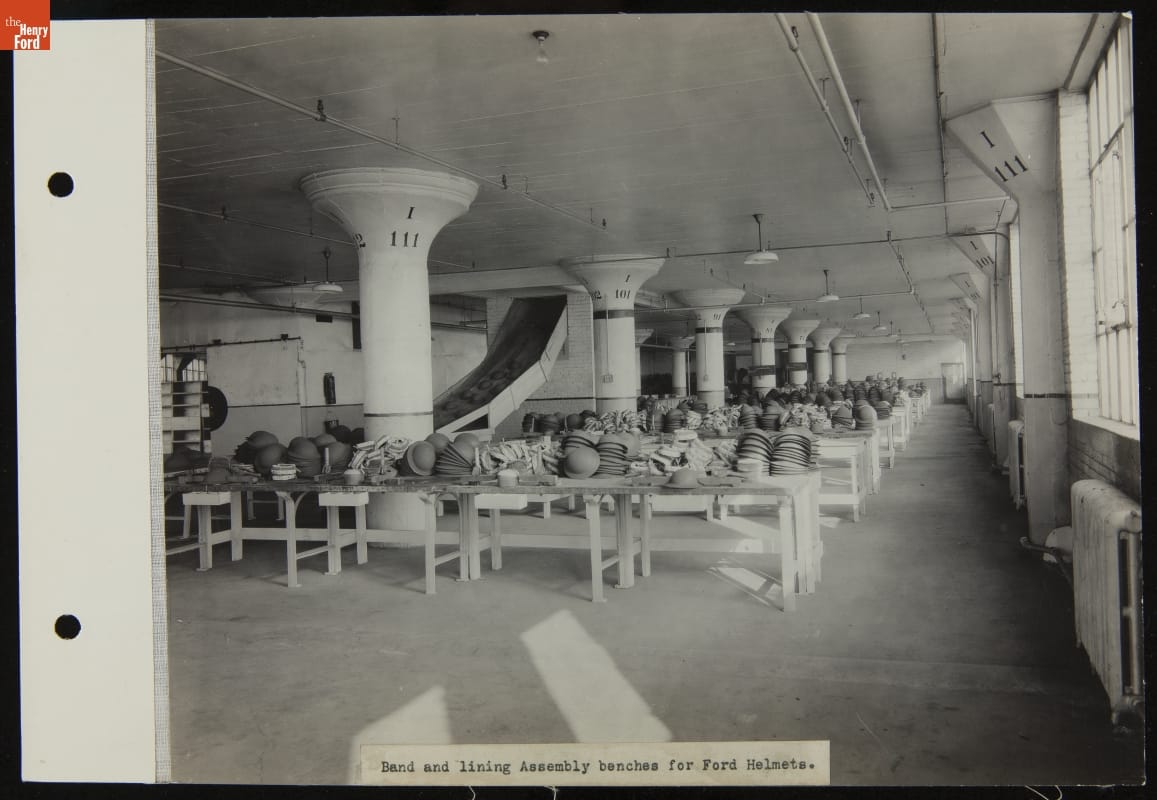
- Band and Lining Assembly Benches for Army Helmets, Ford Motor Company Philadelphia Plant, 1917-1918 - When the United States entered World War I, American automobile companies turned some of their manufacturing capacity to the production of war materiel. Ford Motor Company received a contract to paint, assemble, and crate steel helmets for American soldiers. Altogether, Ford's Philadelphia plant processed more than 2.7 million helmets at a rate as high as 40,000 each day.
- circa 1918
- Collections - Artifact
Band and Lining Assembly Benches for Army Helmets, Ford Motor Company Philadelphia Plant, 1917-1918
When the United States entered World War I, American automobile companies turned some of their manufacturing capacity to the production of war materiel. Ford Motor Company received a contract to paint, assemble, and crate steel helmets for American soldiers. Altogether, Ford's Philadelphia plant processed more than 2.7 million helmets at a rate as high as 40,000 each day.
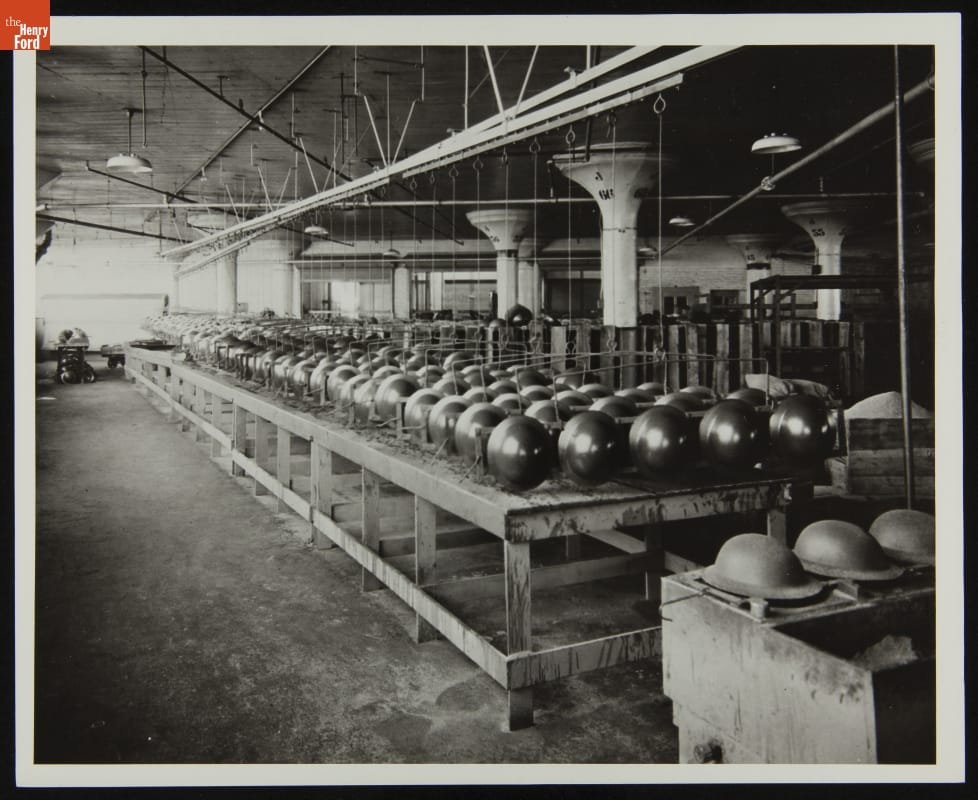
- Drying Helmets after Painting, Ford Motor Company Philadelphia Plant, 1917-1918 - When the United States entered World War I, American automobile companies turned some of their manufacturing capacity to the production of war materiel. Ford Motor Company received a contract to paint, assemble, and crate steel helmets for American soldiers. Altogether, Ford's Philadelphia plant processed more than 2.7 million helmets at a rate as high as 40,000 each day.
- circa 1918
- Collections - Artifact
Drying Helmets after Painting, Ford Motor Company Philadelphia Plant, 1917-1918
When the United States entered World War I, American automobile companies turned some of their manufacturing capacity to the production of war materiel. Ford Motor Company received a contract to paint, assemble, and crate steel helmets for American soldiers. Altogether, Ford's Philadelphia plant processed more than 2.7 million helmets at a rate as high as 40,000 each day.
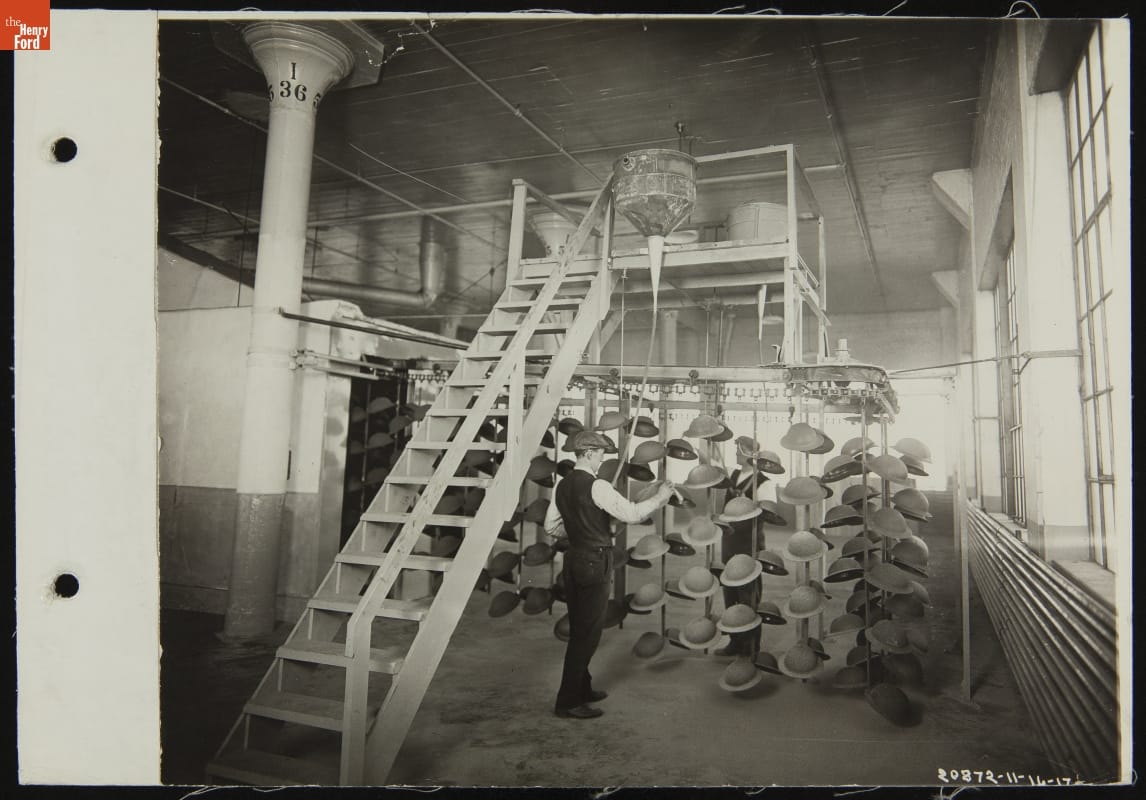
- Man Spray Painting Army Helmets, Ford Motor Company Philadelphia Plant, November 1917 - When the United States entered World War I, American automobile companies turned some of their manufacturing capacity to the production of war materiel. Ford Motor Company received a contract to paint, assemble, and crate steel helmets for American soldiers. Altogether, Ford's Philadelphia plant processed more than 2.7 million helmets at a rate as high as 40,000 each day.
- November 16, 1917
- Collections - Artifact
Man Spray Painting Army Helmets, Ford Motor Company Philadelphia Plant, November 1917
When the United States entered World War I, American automobile companies turned some of their manufacturing capacity to the production of war materiel. Ford Motor Company received a contract to paint, assemble, and crate steel helmets for American soldiers. Altogether, Ford's Philadelphia plant processed more than 2.7 million helmets at a rate as high as 40,000 each day.
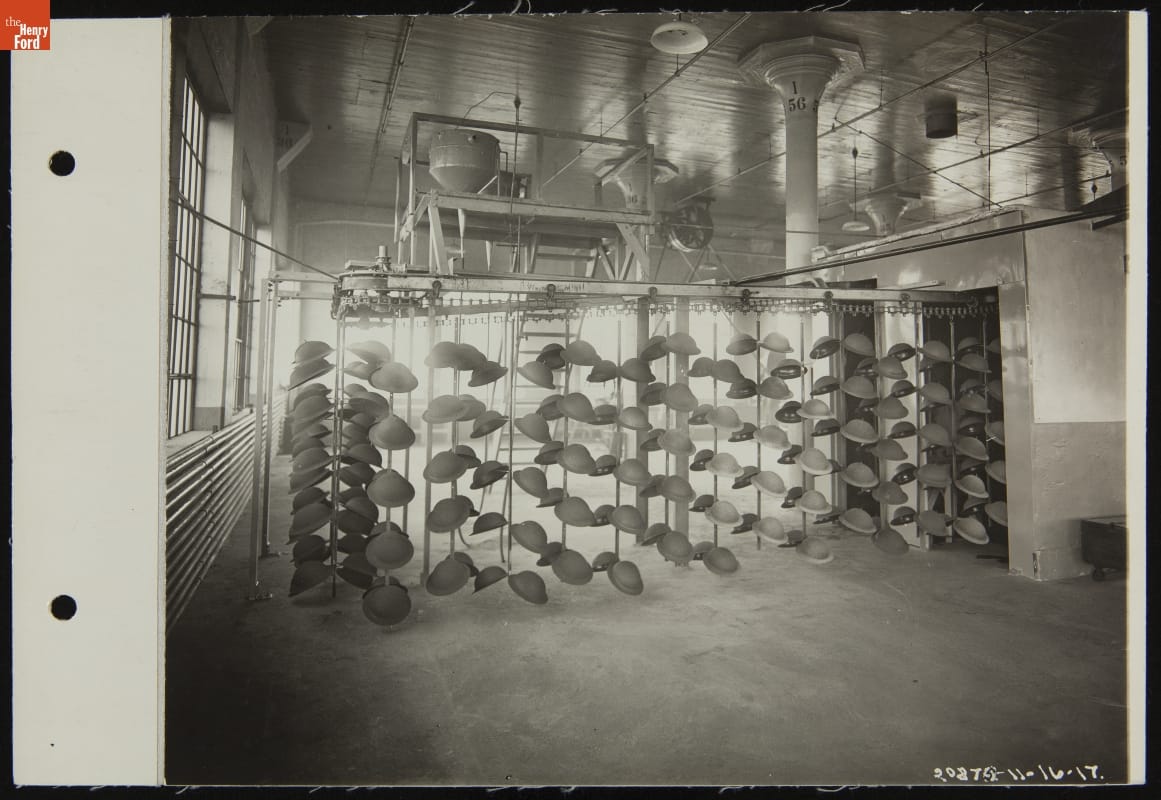
- Army Helmets on Painting Rack, Ford Motor Company Philadelphia Assembly Plant, November 1917 - When the United States entered World War I, American automobile companies turned some of their manufacturing capacity to the production of war materiel. Ford Motor Company received a contract to paint, assemble, and crate steel helmets for American soldiers. Altogether, Ford's Philadelphia plant processed more than 2.7 million helmets at a rate as high as 40,000 each day.
- November 16, 1917
- Collections - Artifact
Army Helmets on Painting Rack, Ford Motor Company Philadelphia Assembly Plant, November 1917
When the United States entered World War I, American automobile companies turned some of their manufacturing capacity to the production of war materiel. Ford Motor Company received a contract to paint, assemble, and crate steel helmets for American soldiers. Altogether, Ford's Philadelphia plant processed more than 2.7 million helmets at a rate as high as 40,000 each day.
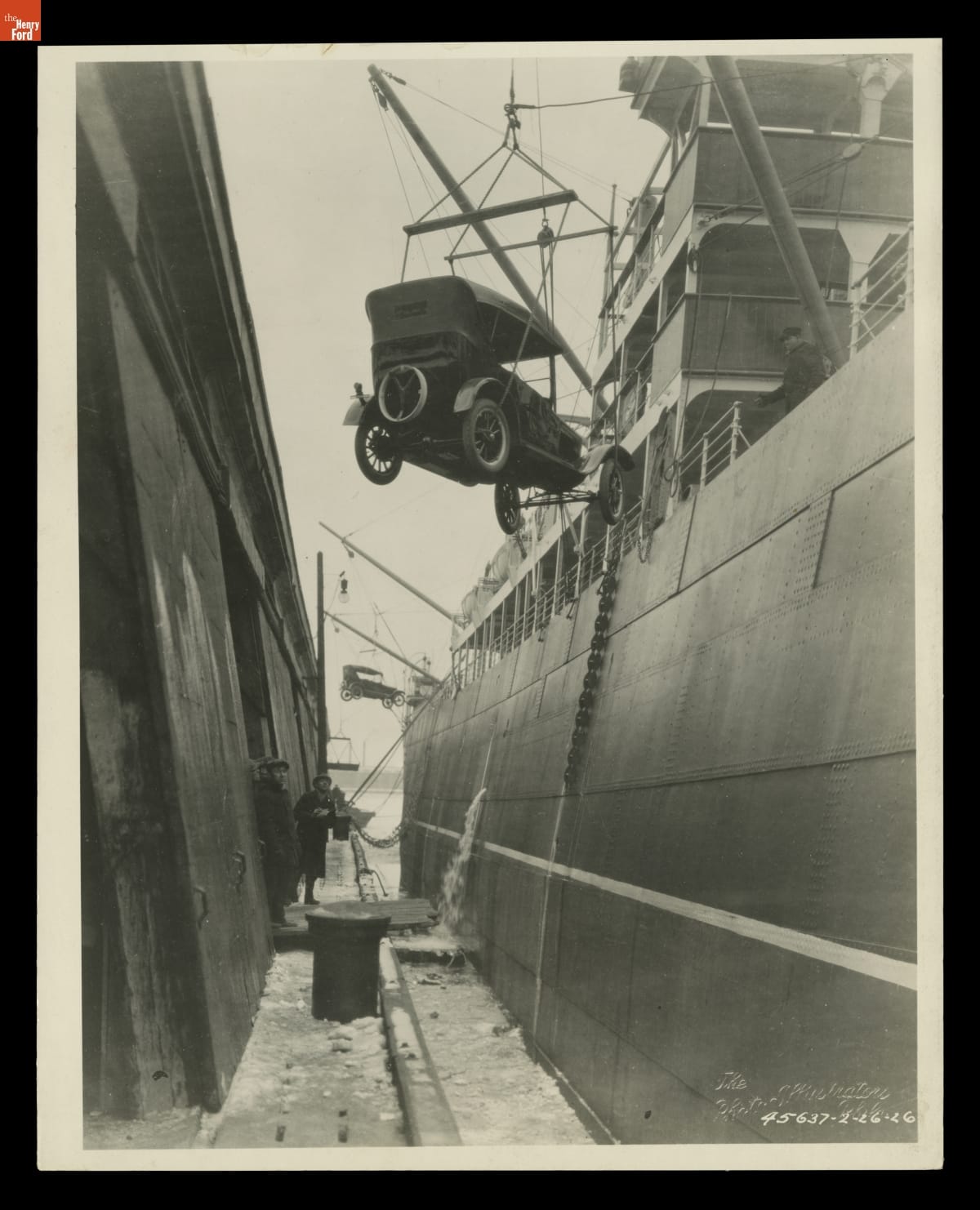
- Loading Ford Model Ts onto a Ship, February 1926 - Ford Motor Company sent its Model T cars to destinations around the world. When moved by railroad, cars were partially disassembled to save space in boxcars. When going overseas, cars could either be partially disassembled and crated, or loaded into a ship's hold fully assembled. Gas, oil and water were usually drained from each vehicle to reduce weight.
- February 26, 1926
- Collections - Artifact
Loading Ford Model Ts onto a Ship, February 1926
Ford Motor Company sent its Model T cars to destinations around the world. When moved by railroad, cars were partially disassembled to save space in boxcars. When going overseas, cars could either be partially disassembled and crated, or loaded into a ship's hold fully assembled. Gas, oil and water were usually drained from each vehicle to reduce weight.
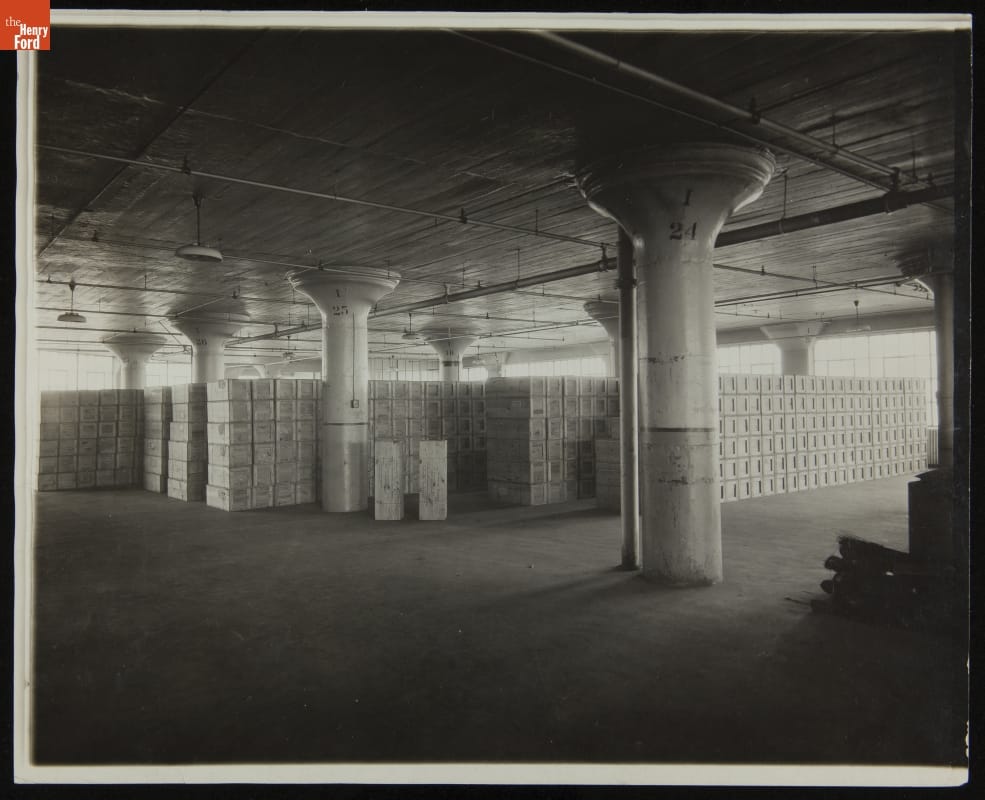
- Forty Thousand Army Helmets Boxed and Ready for Shipment, Ford Philadelphia Assembly Plant, 1917 - When the United States entered World War I, American automobile companies turned some of their manufacturing capacity to the production of war materiel. Ford Motor Company received a contract to paint, assemble, and crate steel helmets for American soldiers. Altogether, Ford's Philadelphia plant processed more than 2.7 million helmets at a rate as high as 40,000 each day.
- 1917-1918
- Collections - Artifact
Forty Thousand Army Helmets Boxed and Ready for Shipment, Ford Philadelphia Assembly Plant, 1917
When the United States entered World War I, American automobile companies turned some of their manufacturing capacity to the production of war materiel. Ford Motor Company received a contract to paint, assemble, and crate steel helmets for American soldiers. Altogether, Ford's Philadelphia plant processed more than 2.7 million helmets at a rate as high as 40,000 each day.