
Search
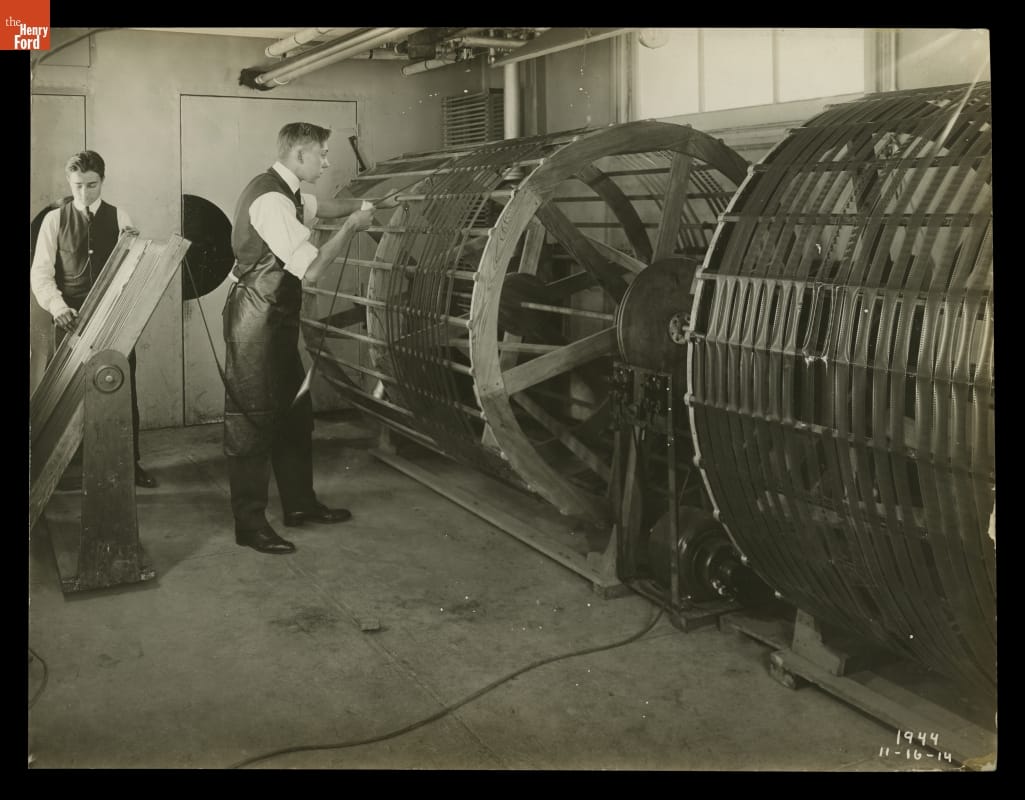
- Motion Picture Drying Room at the Highland Park Plant, 1914 - Ford Motor Company established its motion picture department in 1914. Employees produced informational newsreels, educational features, and promotional films about Ford vehicles and manufacturing facilities. Between 1914 and 1920, Ford films were shown to five million people in more than 4,000 theaters. Ford ended film production as a cost-saving measure during the Great Depression of the 1930s.
- November 16, 1914
- Collections - Artifact
Motion Picture Drying Room at the Highland Park Plant, 1914
Ford Motor Company established its motion picture department in 1914. Employees produced informational newsreels, educational features, and promotional films about Ford vehicles and manufacturing facilities. Between 1914 and 1920, Ford films were shown to five million people in more than 4,000 theaters. Ford ended film production as a cost-saving measure during the Great Depression of the 1930s.
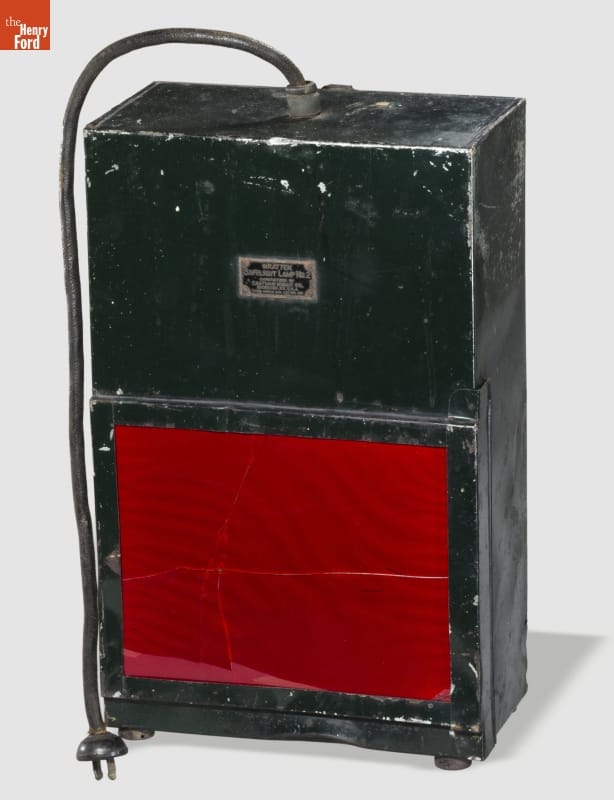
- Wratten Safelight Lamp No. 2, Used by George Ebling, Ford Motor Company Photographer, 1915-1925 -
- 1915-1925
- Collections - Artifact
Wratten Safelight Lamp No. 2, Used by George Ebling, Ford Motor Company Photographer, 1915-1925
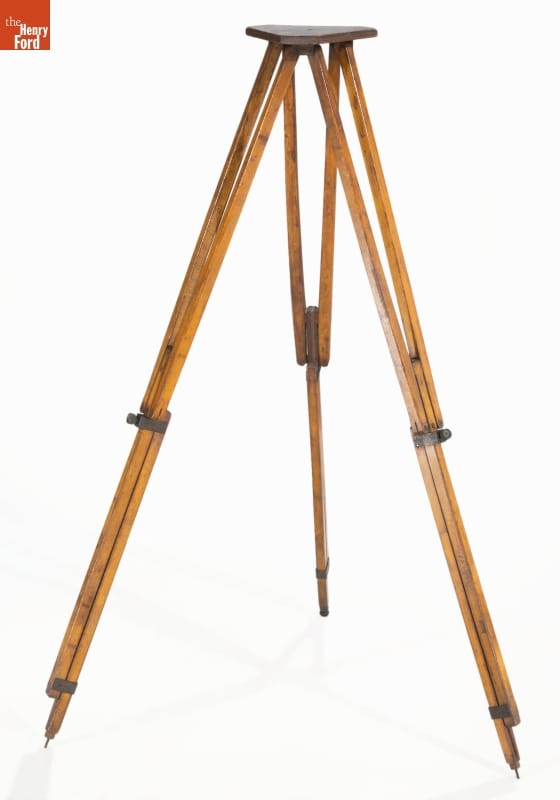
- Tripod, Used by George Ebling, Ford Motor Company Photographer, 1920-1940 -
- 1920-1940
- Collections - Artifact
Tripod, Used by George Ebling, Ford Motor Company Photographer, 1920-1940
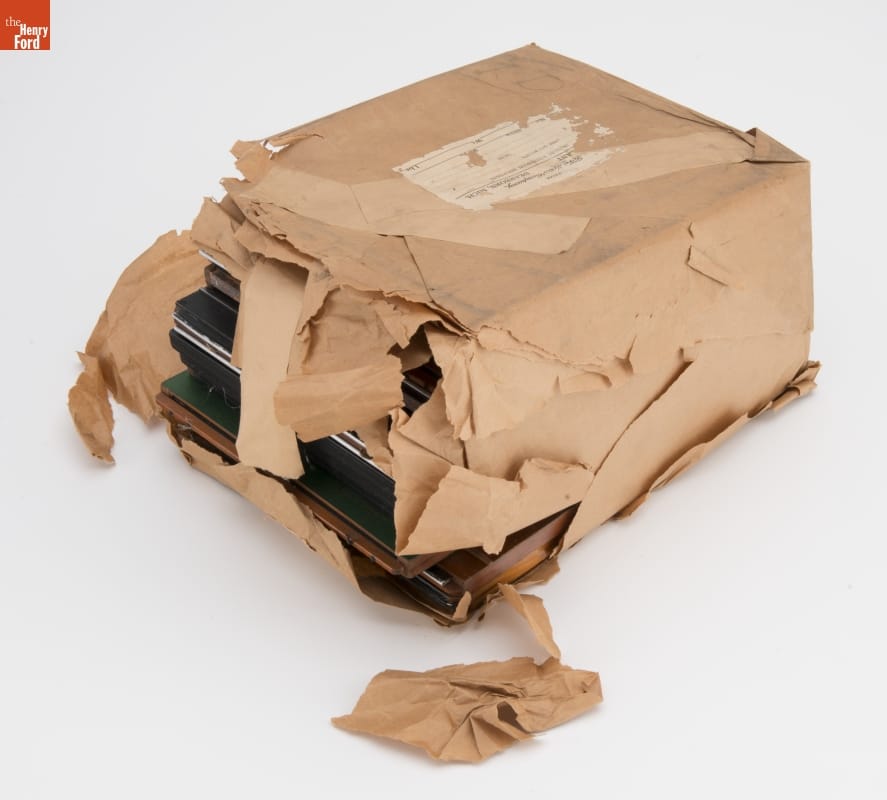
- Bundle of Sheet Film Holders, Addressed to George Ebling of Ford Motor Company, 1920-1940 - In 1913, Kodak introduced their pioneering Eastman Portrait Film for the professional photographer as an alternative to glass plate photography. Individual sheets of flexible cellulose nitrate were housed in light-safe film holders. Large format film produced by Kodak and others held copious amounts of information, perfect for crisp, faithful reproductions. A less flammable "safety" sheet film was introduced in 1925.
- 1920-1940
- Collections - Artifact
Bundle of Sheet Film Holders, Addressed to George Ebling of Ford Motor Company, 1920-1940
In 1913, Kodak introduced their pioneering Eastman Portrait Film for the professional photographer as an alternative to glass plate photography. Individual sheets of flexible cellulose nitrate were housed in light-safe film holders. Large format film produced by Kodak and others held copious amounts of information, perfect for crisp, faithful reproductions. A less flammable "safety" sheet film was introduced in 1925.
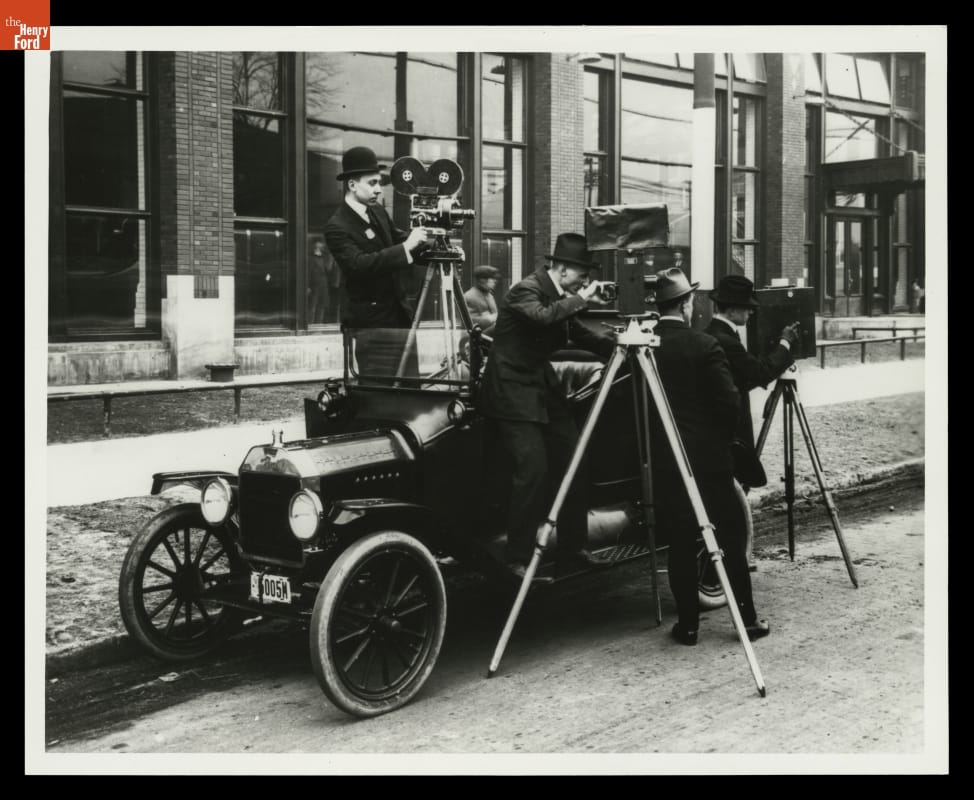
- Ford Motor Company Photographers with Ford Model T Touring Car outside the Highland Park Plant - Henry Ford was especially interested in documenting his company's activities as an example for others to follow. In the 1920s, the Ford Motor Company's Photographic Department was the world's largest still and motion picture production unit. Company photographers documented various activities from the shop floor to the community. These efforts demonstrated the power of photography in education, documentation, and propaganda.
- March 20, 1916
- Collections - Artifact
Ford Motor Company Photographers with Ford Model T Touring Car outside the Highland Park Plant
Henry Ford was especially interested in documenting his company's activities as an example for others to follow. In the 1920s, the Ford Motor Company's Photographic Department was the world's largest still and motion picture production unit. Company photographers documented various activities from the shop floor to the community. These efforts demonstrated the power of photography in education, documentation, and propaganda.
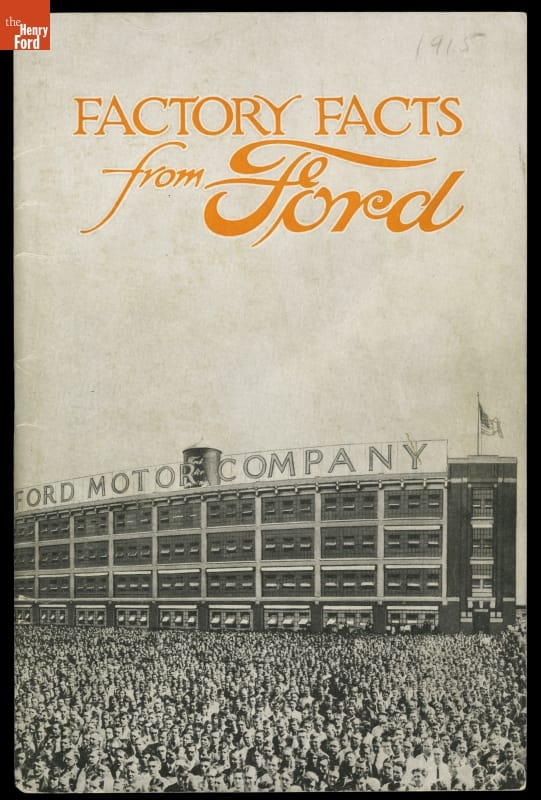
- "Factory Facts from Ford," 1915 - This pamphlet covers topics about Ford Motor Company and highlights the Ford Sociological Department. The department was created to ensure that employees, many of whom were non-English-speaking immigrants, did not squander their $5 per day wages. Investigators monitored the personal and work lives of employees. In addition, the department provided hygiene instruction, financial and legal advice, and an English-language school.
- 1915
- Collections - Artifact
"Factory Facts from Ford," 1915
This pamphlet covers topics about Ford Motor Company and highlights the Ford Sociological Department. The department was created to ensure that employees, many of whom were non-English-speaking immigrants, did not squander their $5 per day wages. Investigators monitored the personal and work lives of employees. In addition, the department provided hygiene instruction, financial and legal advice, and an English-language school.
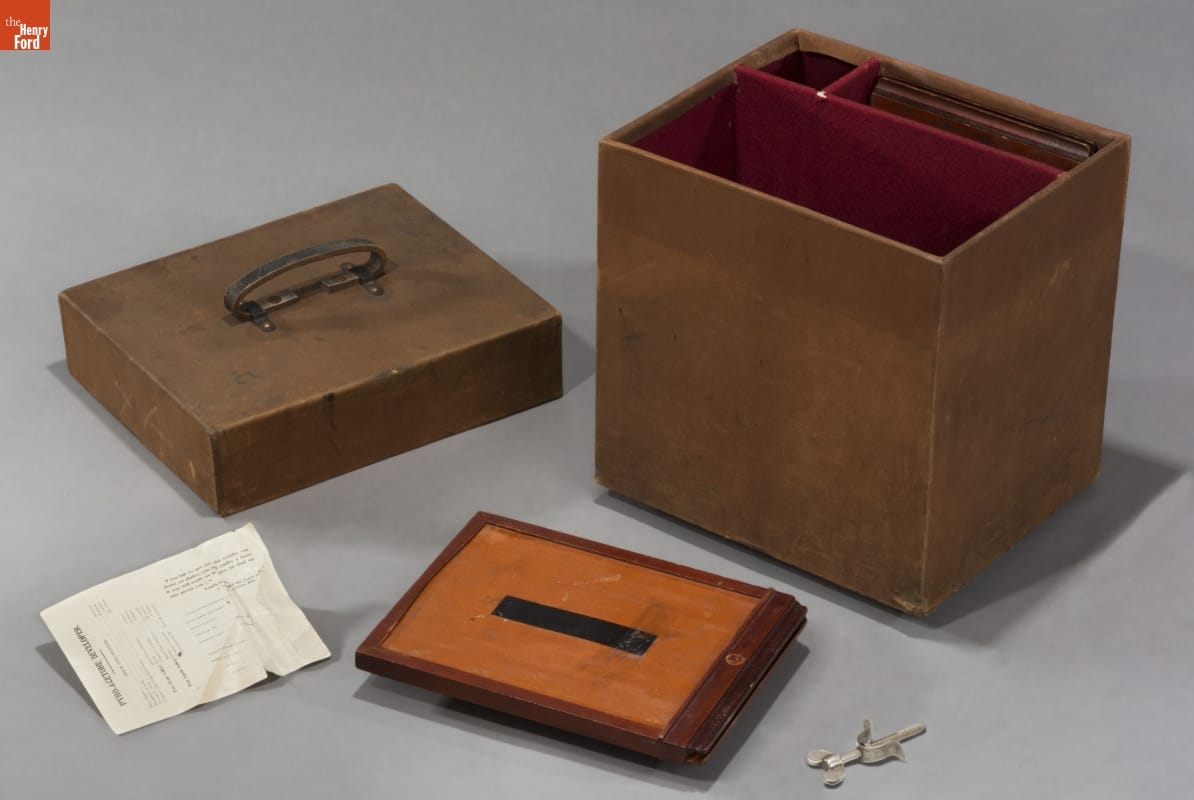
- Camera Case, Used by George Ebling, 1920-1940 -
- 1920-1940
- Collections - Artifact
Camera Case, Used by George Ebling, 1920-1940
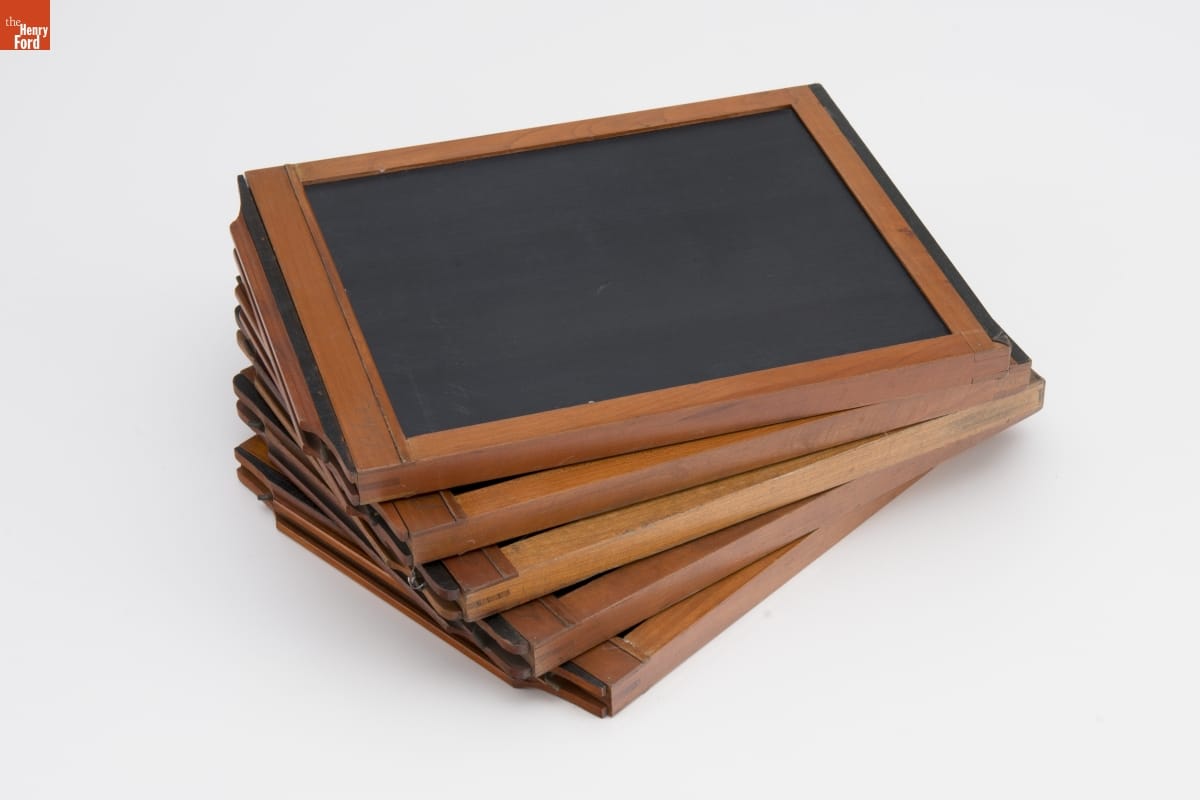
- Bundle of Photographic Plate Holders, Addressed to George Ebling of Ford Motor Company, 1920-1940 - Dry plate photography was a primary photographic method until the invention of roll-film in the 1880s. Glass plates coated with light-sensitive gelatin were placed into holders, and exposed in a camera. George Eastman automated this process with his plate-coating machine and factory in 1879. Exacting and demanding, plate-based photography was the opposite of being a mobile or spontaneous process.
- 1920-1940
- Collections - Artifact
Bundle of Photographic Plate Holders, Addressed to George Ebling of Ford Motor Company, 1920-1940
Dry plate photography was a primary photographic method until the invention of roll-film in the 1880s. Glass plates coated with light-sensitive gelatin were placed into holders, and exposed in a camera. George Eastman automated this process with his plate-coating machine and factory in 1879. Exacting and demanding, plate-based photography was the opposite of being a mobile or spontaneous process.
- Henry Ford II, Benson Ford, and William Clay Ford with Photographers in Ford Engineering Laboratory Styling Studio, June 1950 -
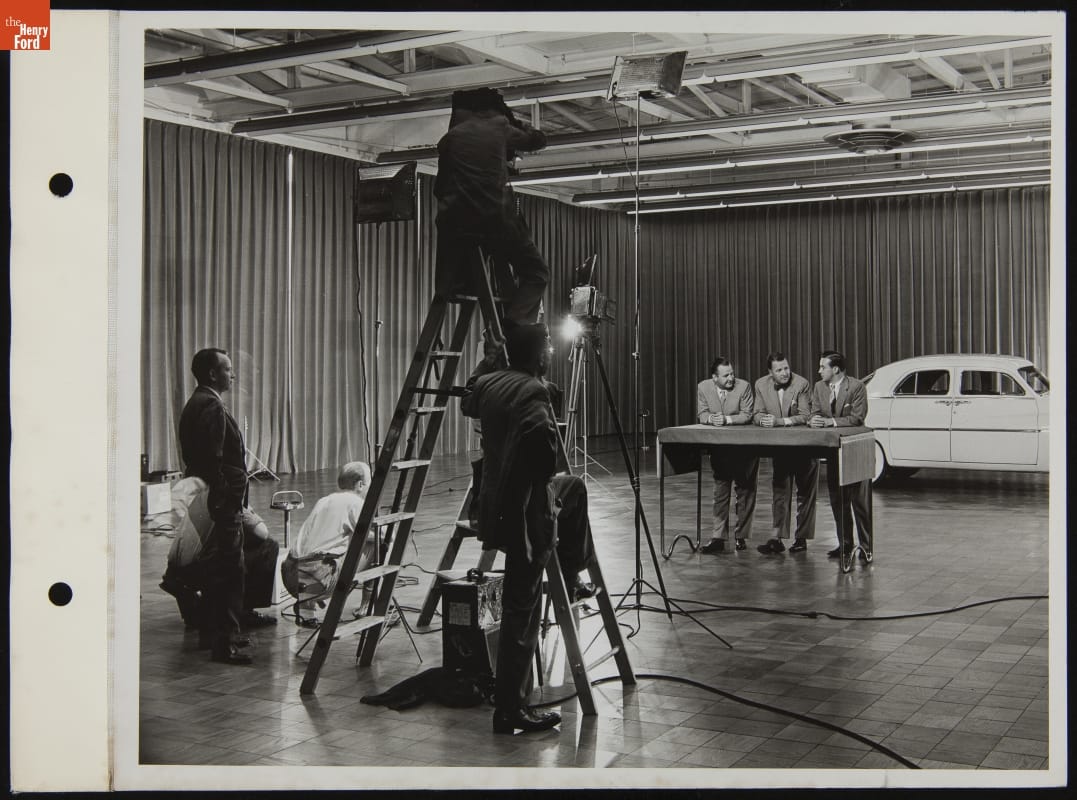
- June 23, 1950
- Collections - Artifact
Henry Ford II, Benson Ford, and William Clay Ford with Photographers in Ford Engineering Laboratory Styling Studio, June 1950
- Workers at Cutting Tables and Copy Camera, Ford Photographic Department, Highland Park Plant, 1914 -
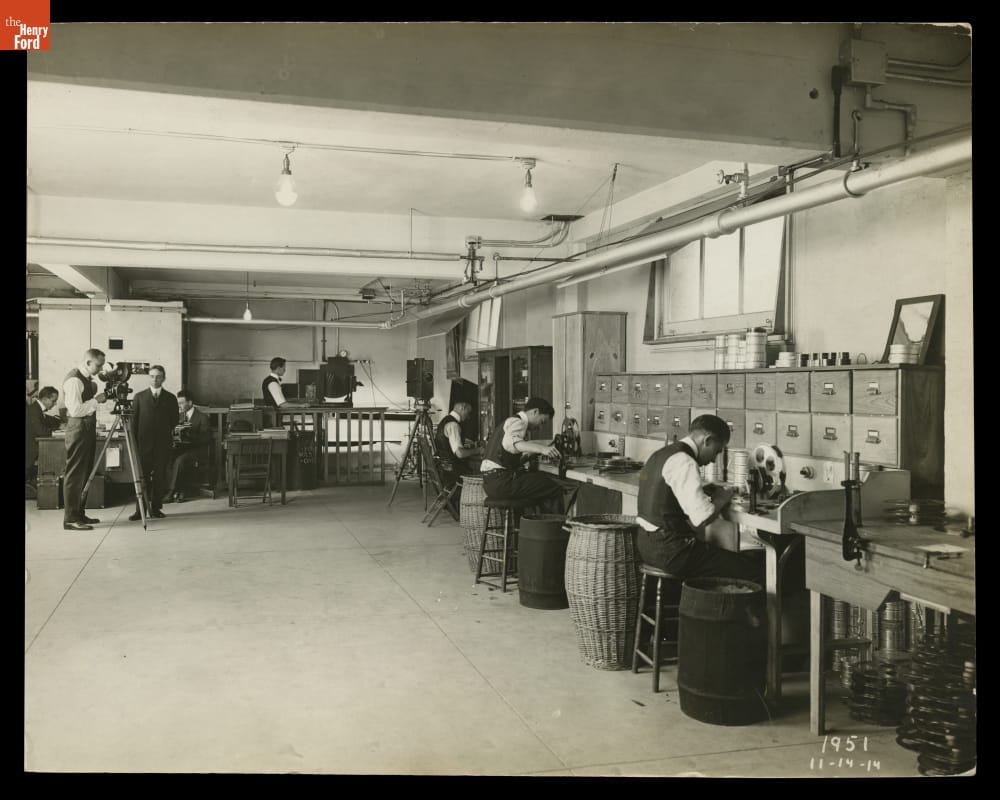
- November 14, 1914
- Collections - Artifact
Workers at Cutting Tables and Copy Camera, Ford Photographic Department, Highland Park Plant, 1914