
Search
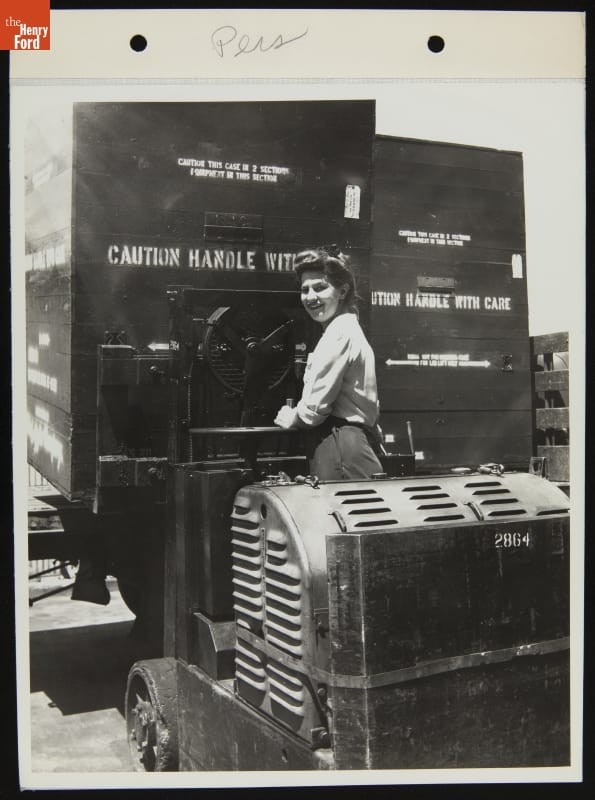
- Ruth Tap, First Woman to Operate Hilton Truck, Ford Rouge Plant Aircraft Engine Building, July 1943 -
- July 19, 1943
- Collections - Artifact
Ruth Tap, First Woman to Operate Hilton Truck, Ford Rouge Plant Aircraft Engine Building, July 1943
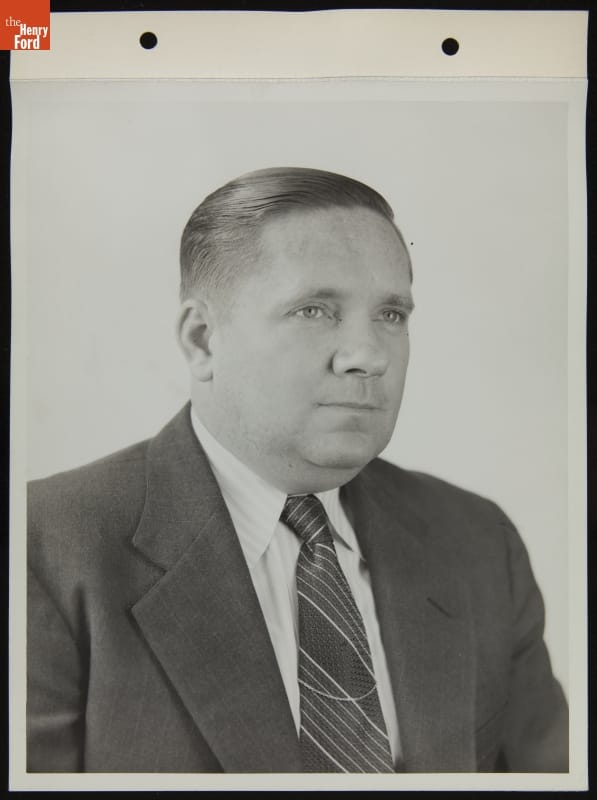
- Ford Employee and Detroit Northern Basketball Coach Eddie Powers, August 1944 - Edward "Eddie" Powers (1896-1971) served as both a high school basketball coach and a basketball referee, including officiating basketball for the 1936 summer Olympics. He also spent time working security for Ford Motor Company. Ford regularly featured workers, such as Powers, and touted their activities and interests in the factory and company newsletters.
- August 03, 1944
- Collections - Artifact
Ford Employee and Detroit Northern Basketball Coach Eddie Powers, August 1944
Edward "Eddie" Powers (1896-1971) served as both a high school basketball coach and a basketball referee, including officiating basketball for the 1936 summer Olympics. He also spent time working security for Ford Motor Company. Ford regularly featured workers, such as Powers, and touted their activities and interests in the factory and company newsletters.
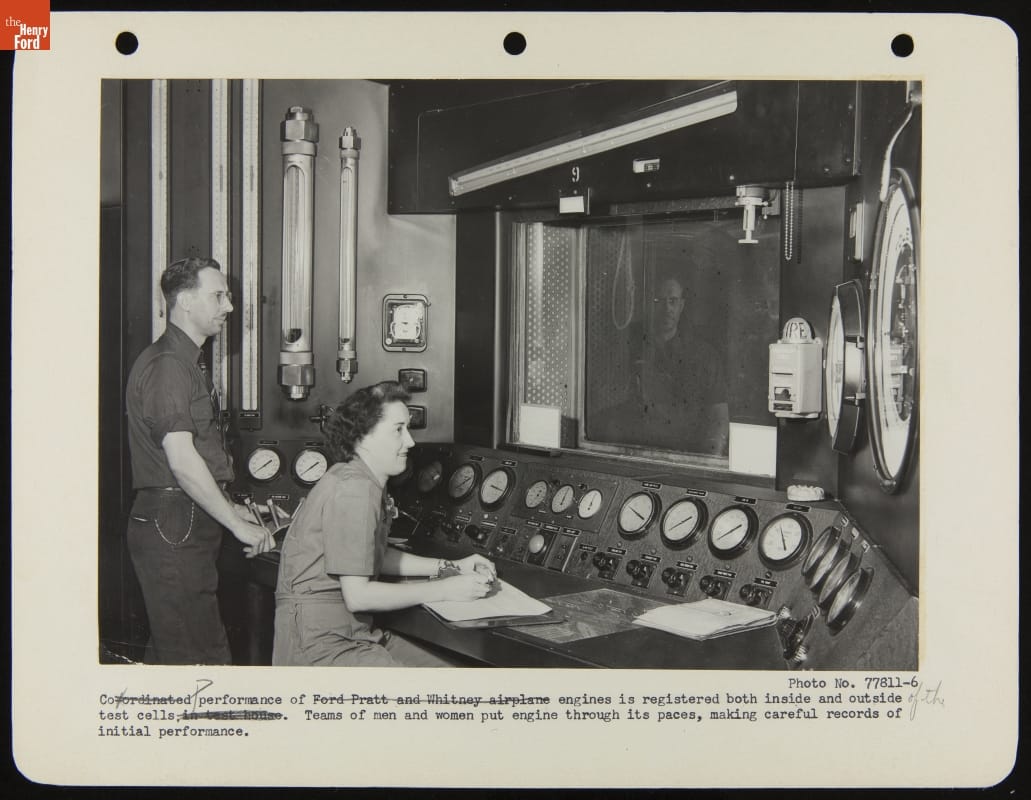
- Teams of Mechanics Testing New Pratt and Whitney Engines, Ford Rouge Plant Aircraft Engine Building, April 1943 - During World War II, women joined the workforce in record numbers to take on essential jobs traditionally held by men who had entered the armed forces. At Ford Motor Company, this included work on Pratt & Whitney R-2800 aircraft engines built in a special facility at the Rouge. Women were involved throughout the process, from initial assembly to final testing.
- April 29, 1943
- Collections - Artifact
Teams of Mechanics Testing New Pratt and Whitney Engines, Ford Rouge Plant Aircraft Engine Building, April 1943
During World War II, women joined the workforce in record numbers to take on essential jobs traditionally held by men who had entered the armed forces. At Ford Motor Company, this included work on Pratt & Whitney R-2800 aircraft engines built in a special facility at the Rouge. Women were involved throughout the process, from initial assembly to final testing.
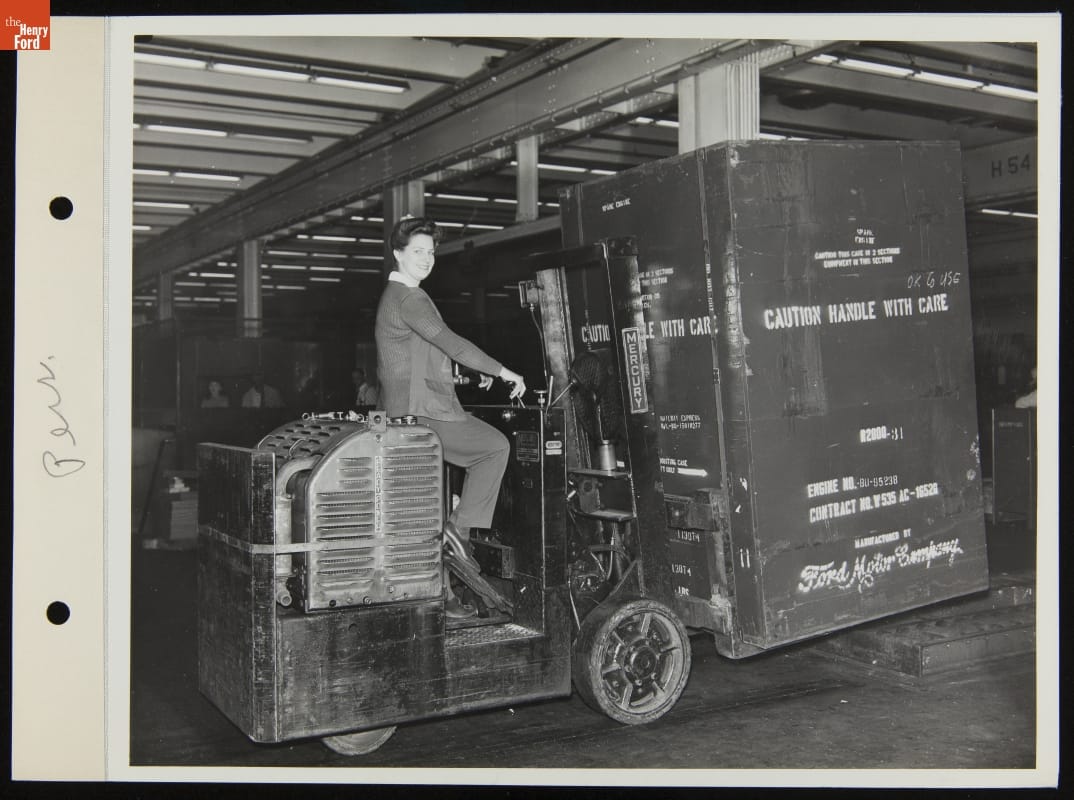
- Ruth Tap, First Woman to Operate Hilton Truck, Ford Rouge Plant Aircraft Engine Building, July 1943 -
- July 19, 1943
- Collections - Artifact
Ruth Tap, First Woman to Operate Hilton Truck, Ford Rouge Plant Aircraft Engine Building, July 1943
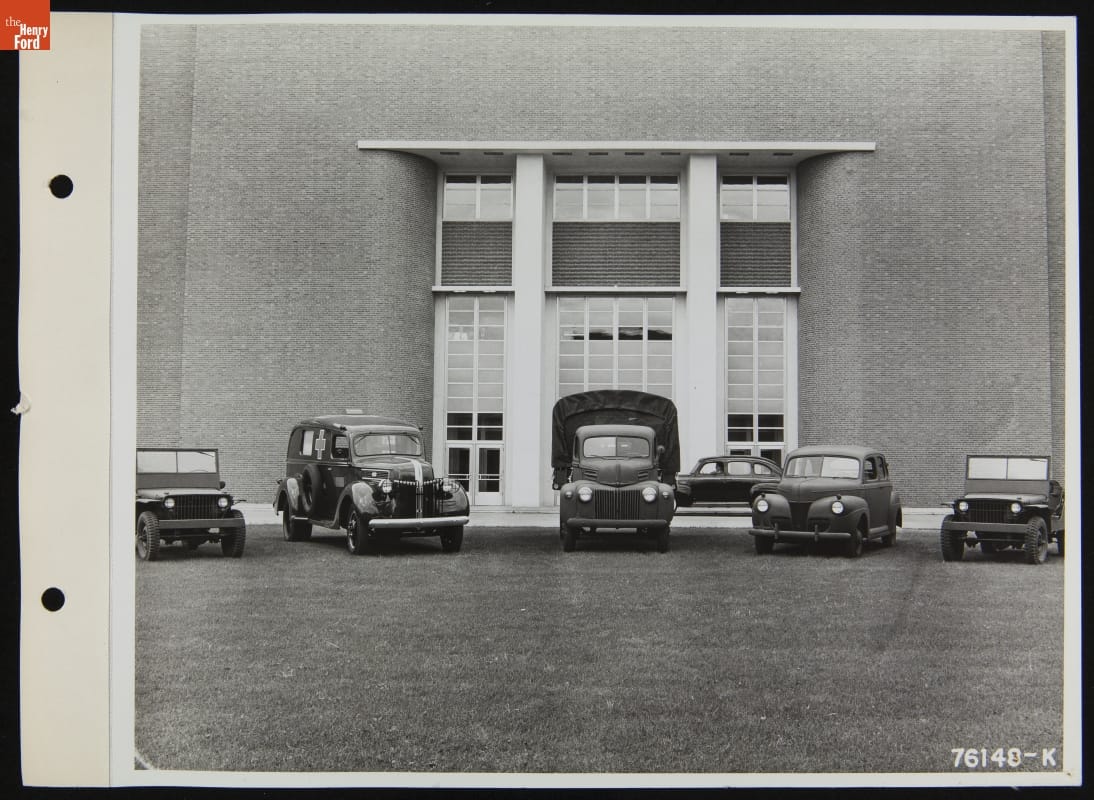
- Ford Ambulance, GPWs and Other Vehicles Parked near the Rouge Plant Aircraft Engine Building, September 26, 1941 - Ford Motor Company did not produce civilian vehicles from 1942 to 1945, instead turning its resources to the production of military vehicles and other war materiel. Jeeps, ambulances, trucks, and automobiles were all built for Allied forces -- along with bomber airplanes, gliders, tanks, and other items. The automotive industry provided one fifth of American manufacturing output during World War II.
- September 26, 1941
- Collections - Artifact
Ford Ambulance, GPWs and Other Vehicles Parked near the Rouge Plant Aircraft Engine Building, September 26, 1941
Ford Motor Company did not produce civilian vehicles from 1942 to 1945, instead turning its resources to the production of military vehicles and other war materiel. Jeeps, ambulances, trucks, and automobiles were all built for Allied forces -- along with bomber airplanes, gliders, tanks, and other items. The automotive industry provided one fifth of American manufacturing output during World War II.
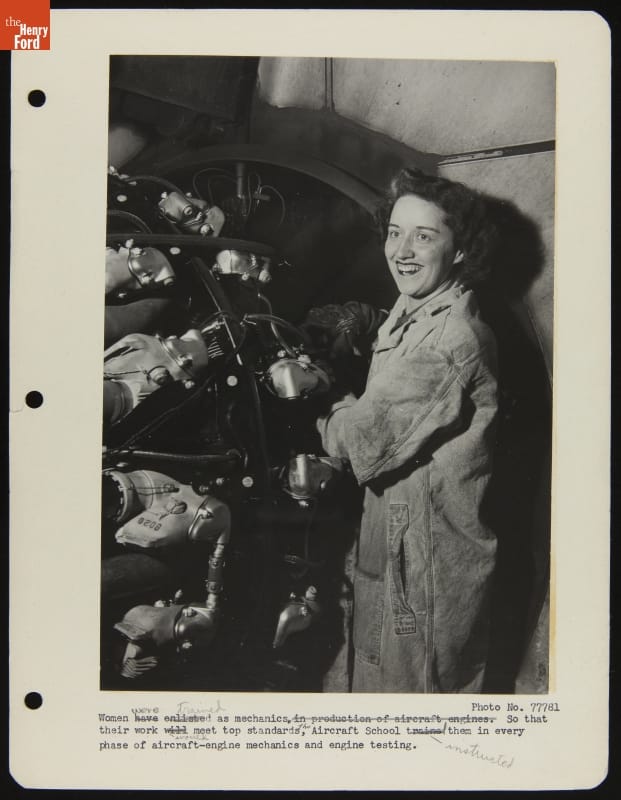
- Woman Mechanic Testing New Pratt & Whitney Aircraft Engines, Ford Rouge Plant Aircraft Engine Building, April 1943 - During World War II, women joined the workforce in record numbers to take on essential jobs traditionally held by men who had entered the armed forces. At Ford Motor Company, this included work on Pratt & Whitney R-2800 aircraft engines built in a special facility at the Rouge. Women were involved throughout the process, from initial assembly to final testing.
- April 26, 1943
- Collections - Artifact
Woman Mechanic Testing New Pratt & Whitney Aircraft Engines, Ford Rouge Plant Aircraft Engine Building, April 1943
During World War II, women joined the workforce in record numbers to take on essential jobs traditionally held by men who had entered the armed forces. At Ford Motor Company, this included work on Pratt & Whitney R-2800 aircraft engines built in a special facility at the Rouge. Women were involved throughout the process, from initial assembly to final testing.
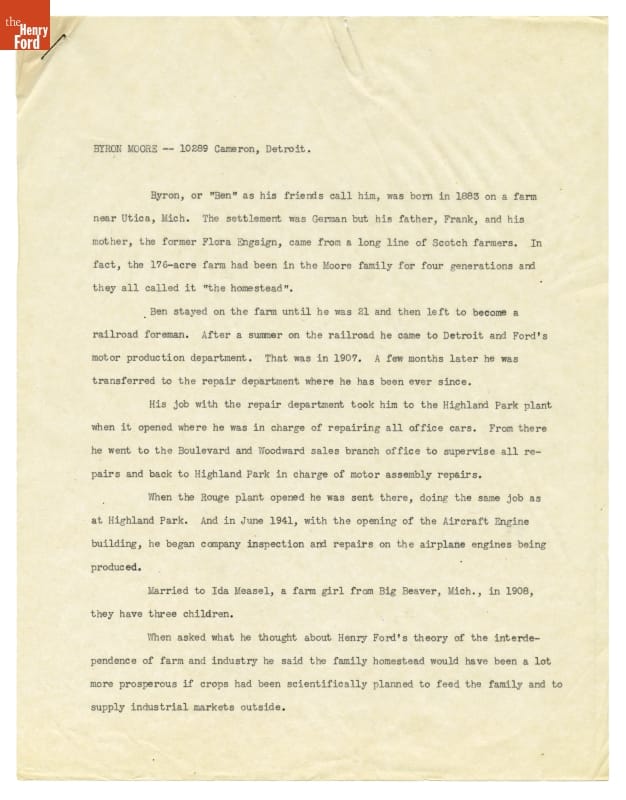
- Short Biography of Ford Motor Company Employee Byron Moore, circa 1943 - Byron Moore grew up on a farm in rural Utica, Michigan, and came to work for Ford Motor Company. This biography describes his positions at the Piquette Plant, the Grand Boulevard and Woodward sales branch office, the Highland Park Plant, and the Rouge Plant. Moore also remarks on Henry Ford's theories about agriculture and advancements in safety on the farm.
- 1883-1943
- Collections - Artifact
Short Biography of Ford Motor Company Employee Byron Moore, circa 1943
Byron Moore grew up on a farm in rural Utica, Michigan, and came to work for Ford Motor Company. This biography describes his positions at the Piquette Plant, the Grand Boulevard and Woodward sales branch office, the Highland Park Plant, and the Rouge Plant. Moore also remarks on Henry Ford's theories about agriculture and advancements in safety on the farm.
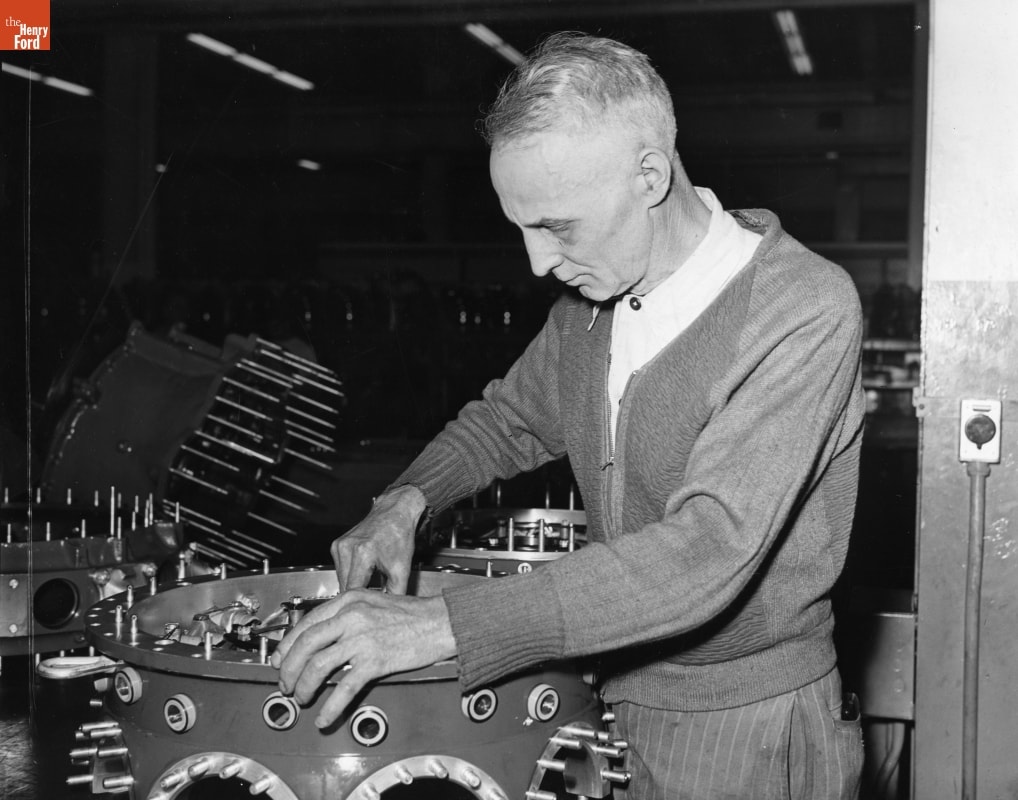
- Byron Moore, Head of Ford Rouge Plant Aircraft Engine Inspection and Repair, 1943 - Mr. Byron (Ben) Moore is pictured at work in the Aircraft Building at the Ford Rouge Plant during World War II. Before war production started, Moore oversaw motor assembly repairs at the Highland Park Plant and the Rouge. Like many during the early 20th-century's urbanization, Moore grew up on a rural farm but moved to work in Detroit's industries.
- June 30, 1943
- Collections - Artifact
Byron Moore, Head of Ford Rouge Plant Aircraft Engine Inspection and Repair, 1943
Mr. Byron (Ben) Moore is pictured at work in the Aircraft Building at the Ford Rouge Plant during World War II. Before war production started, Moore oversaw motor assembly repairs at the Highland Park Plant and the Rouge. Like many during the early 20th-century's urbanization, Moore grew up on a rural farm but moved to work in Detroit's industries.
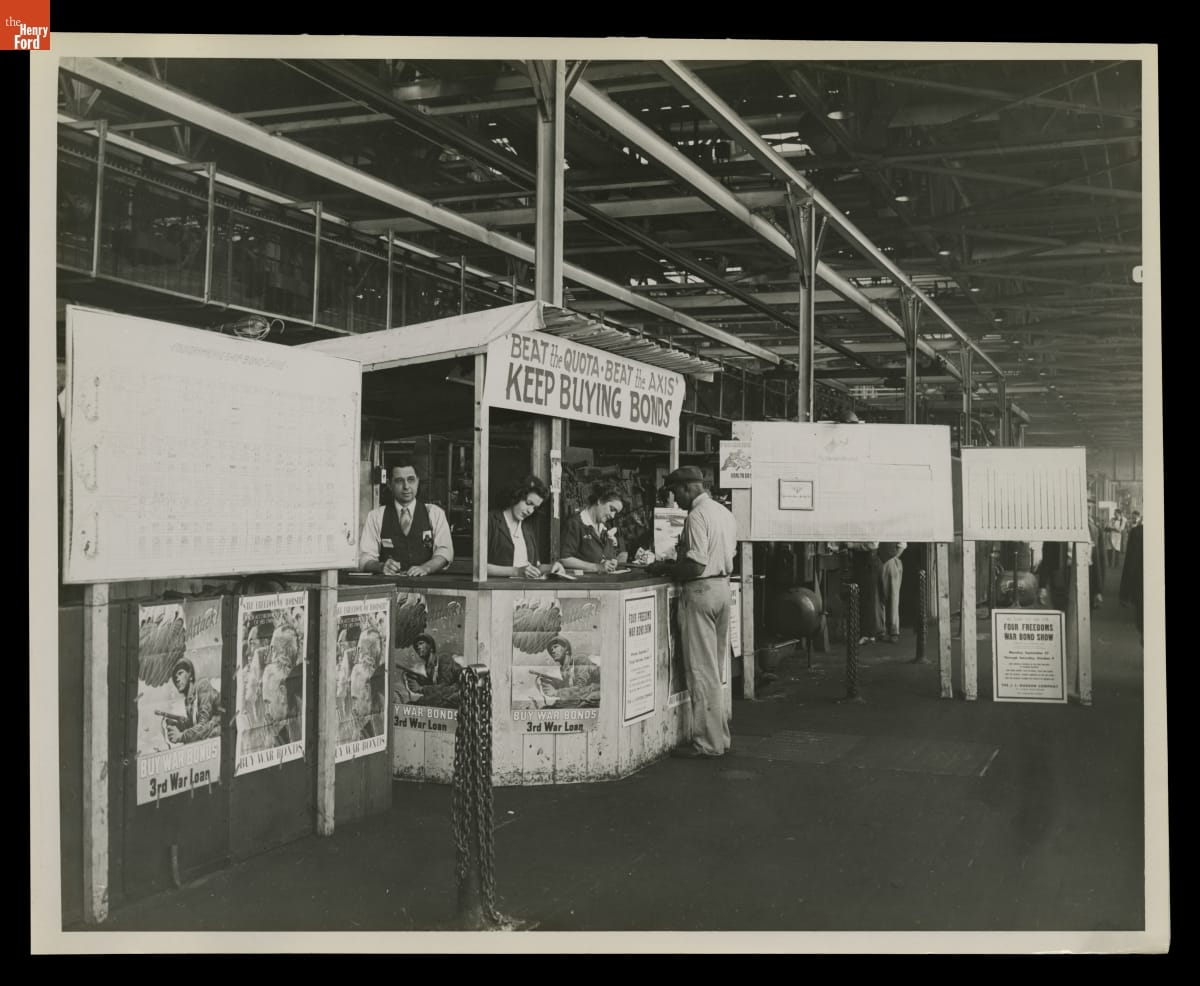
- War Bond Drive in Ford Motor Company Rouge Plant Aircraft Building, October 1943 - Ford Motor Company and its employees contributed to Allied efforts in World War II in numerous ways. The company built trucks, tanks, aircraft engines, gliders, and B-24 bomber airplanes. Ford workers purchased war bonds with their earnings, either independently or through a payroll deduction program.
- October 04, 1943
- Collections - Artifact
War Bond Drive in Ford Motor Company Rouge Plant Aircraft Building, October 1943
Ford Motor Company and its employees contributed to Allied efforts in World War II in numerous ways. The company built trucks, tanks, aircraft engines, gliders, and B-24 bomber airplanes. Ford workers purchased war bonds with their earnings, either independently or through a payroll deduction program.
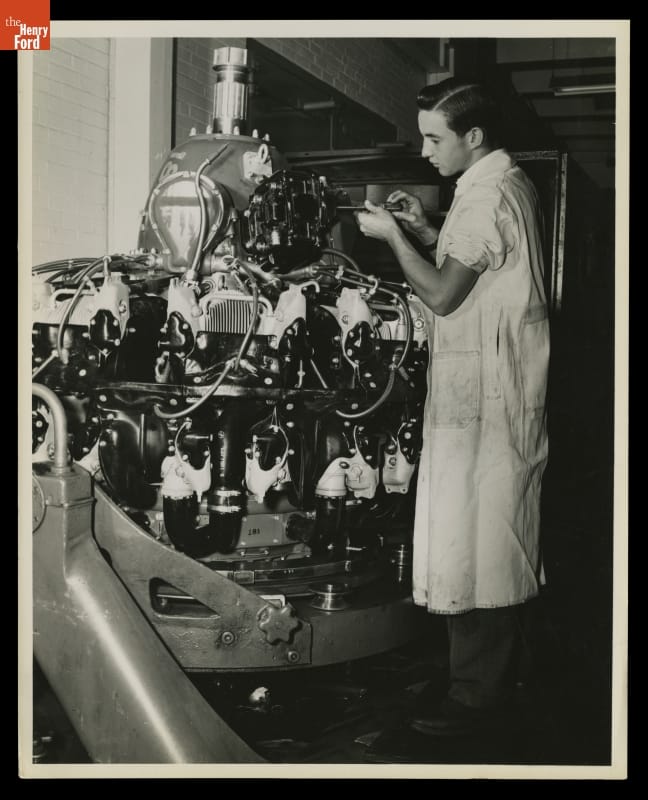
- William Clay Ford at Work on Pratt & Whitney Aircraft Engines, Ford Rouge Plant, September 1943 - Although Ford Motor Company wartime production of B-24 Bombers at its Willow Run Plant is better known, the company also produced Pratt & Whitney aircraft engines at its Rouge Plant facility during World War II. William Clay Ford (1925-2014), Henry Ford's grandson and Edsel and Eleanor Clay Ford's youngest child, is shown here working on one of these engines.
- September 13, 1943
- Collections - Artifact
William Clay Ford at Work on Pratt & Whitney Aircraft Engines, Ford Rouge Plant, September 1943
Although Ford Motor Company wartime production of B-24 Bombers at its Willow Run Plant is better known, the company also produced Pratt & Whitney aircraft engines at its Rouge Plant facility during World War II. William Clay Ford (1925-2014), Henry Ford's grandson and Edsel and Eleanor Clay Ford's youngest child, is shown here working on one of these engines.