
Search
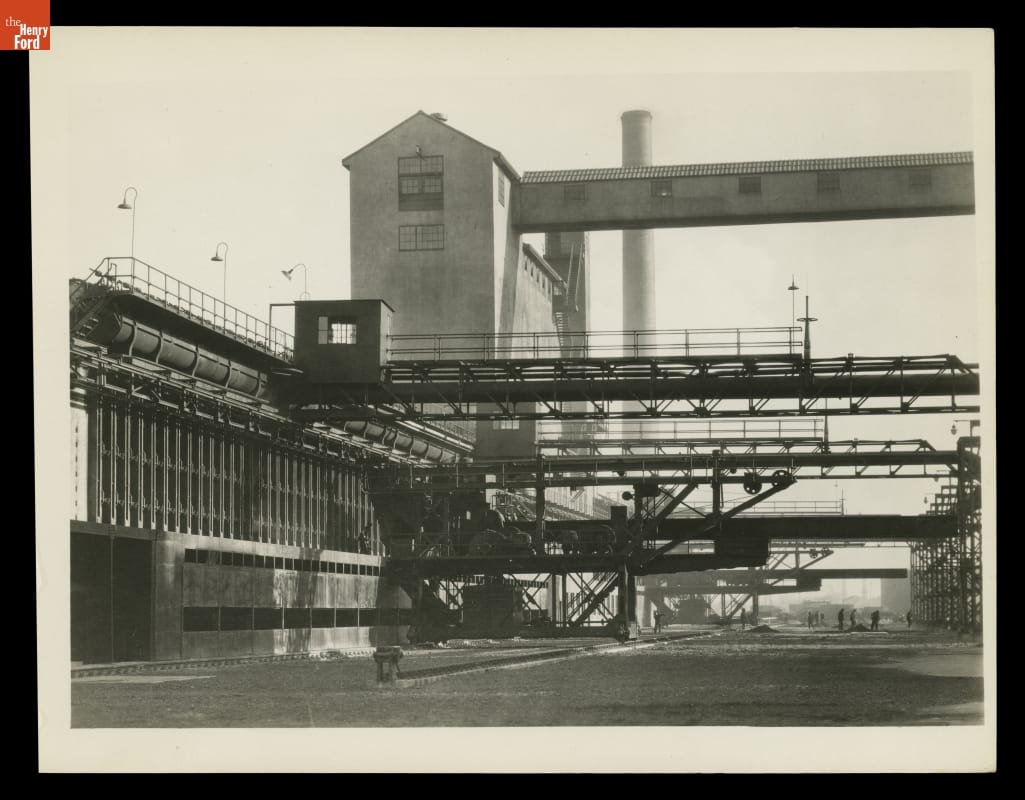
- Ford Motor Company Rouge Plant Coke Ovens, 1927 - Coke ovens at Ford Motor Company's Rouge plant converted coal into high-carbon coke, used in the factory's blast furnaces to produce iron. In 1921, the Rouge's ovens could produce up to 3,600 tons of coke daily. New, more efficient coke ovens opened in 1937. The coking process also produced gas used to heat some of the factory's other furnaces.
- 1927
- Collections - Artifact
Ford Motor Company Rouge Plant Coke Ovens, 1927
Coke ovens at Ford Motor Company's Rouge plant converted coal into high-carbon coke, used in the factory's blast furnaces to produce iron. In 1921, the Rouge's ovens could produce up to 3,600 tons of coke daily. New, more efficient coke ovens opened in 1937. The coking process also produced gas used to heat some of the factory's other furnaces.
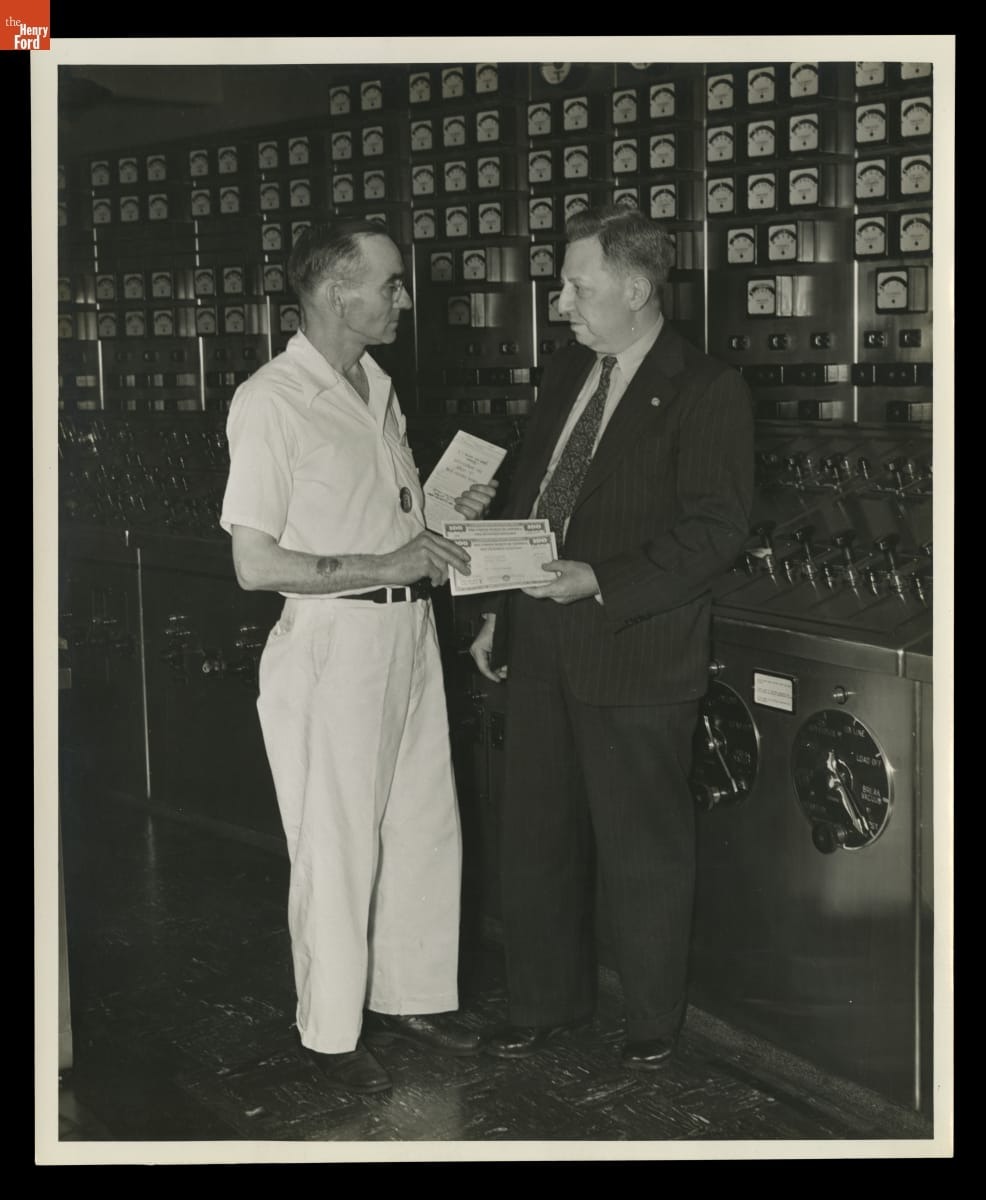
- War Bond Drive at Ford Motor Company Rouge Plant Powerhouse #1, June 1945 - Ford Motor Company and its employees contributed to Allied efforts in World War II in numerous ways. The company built trucks, tanks, aircraft engines, gliders, and B-24 bomber airplanes. Ford workers purchased war bonds with their earnings, either independently or through a payroll deduction program.
- June 18, 1945
- Collections - Artifact
War Bond Drive at Ford Motor Company Rouge Plant Powerhouse #1, June 1945
Ford Motor Company and its employees contributed to Allied efforts in World War II in numerous ways. The company built trucks, tanks, aircraft engines, gliders, and B-24 bomber airplanes. Ford workers purchased war bonds with their earnings, either independently or through a payroll deduction program.
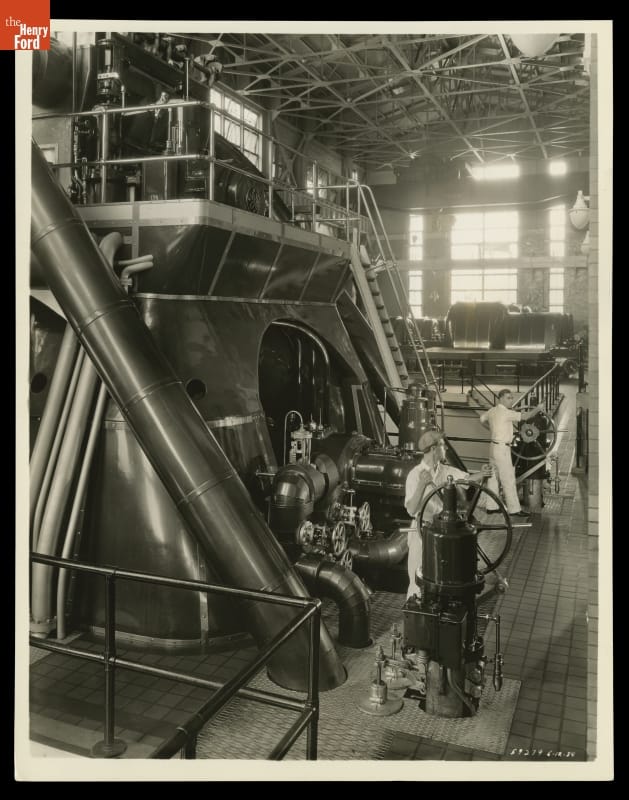
- Operating a 100,000 Kilowatt Turbo-Generator at the Ford Rouge Plant Main Powerhouse, June 1934 - The powerhouse at Ford Motor Company's Rouge factory was readily identified by its eight tall smokestacks. Steam turbines, fueled by pulverized coal, generated electricity for the massive Rouge complex -- and for Ford's Highland Park and Flat Rock plants, and for Lincoln's Detroit plant. The Rouge sometimes generated surplus power that could be sold to Detroit Edison Company.
- June 12, 1934
- Collections - Artifact
Operating a 100,000 Kilowatt Turbo-Generator at the Ford Rouge Plant Main Powerhouse, June 1934
The powerhouse at Ford Motor Company's Rouge factory was readily identified by its eight tall smokestacks. Steam turbines, fueled by pulverized coal, generated electricity for the massive Rouge complex -- and for Ford's Highland Park and Flat Rock plants, and for Lincoln's Detroit plant. The Rouge sometimes generated surplus power that could be sold to Detroit Edison Company.
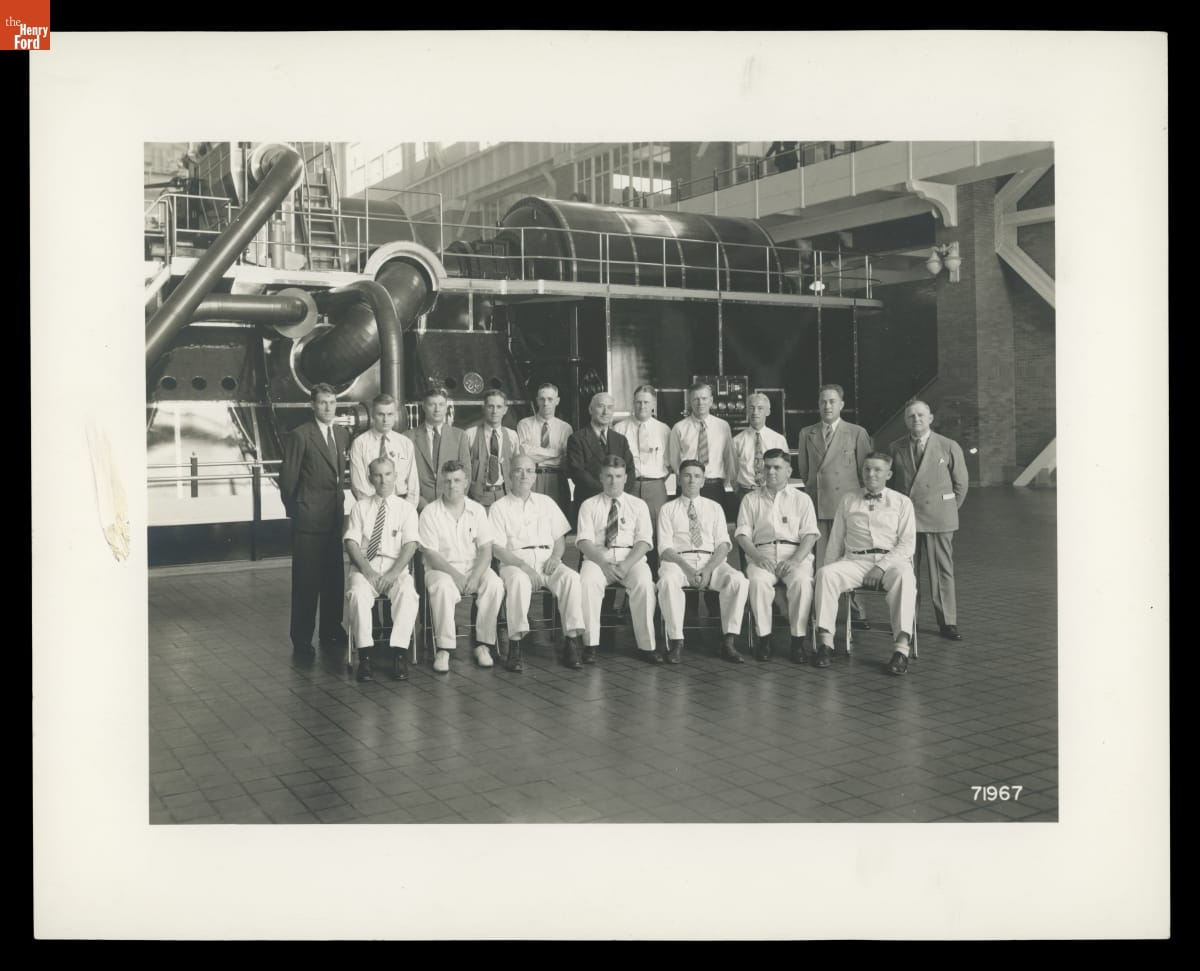
- Employees in the Powerhouse at the Ford Motor Company Rouge Plant, June 1939 - The powerhouse at Ford Motor Company's Rouge factory was readily identified by its eight tall smokestacks. Steam turbines, fueled by pulverized coal, generated electricity for the massive Rouge complex -- and for Ford's Highland Park and Flat Rock plants, and for Lincoln's Detroit plant. The Rouge sometimes generated surplus power that could be sold to Detroit Edison Company.
- June 20, 1939
- Collections - Artifact
Employees in the Powerhouse at the Ford Motor Company Rouge Plant, June 1939
The powerhouse at Ford Motor Company's Rouge factory was readily identified by its eight tall smokestacks. Steam turbines, fueled by pulverized coal, generated electricity for the massive Rouge complex -- and for Ford's Highland Park and Flat Rock plants, and for Lincoln's Detroit plant. The Rouge sometimes generated surplus power that could be sold to Detroit Edison Company.
- Rouge Plant Powerhouse Smokestacks, March 1944 - The powerhouse at Ford Motor Company's Rouge factory was readily identified by its eight tall smokestacks. Steam turbines, fueled by pulverized coal, generated electricity for the massive Rouge complex -- and for Ford's Highland Park and Flat Rock plants, and for Lincoln's Detroit plant. The Rouge sometimes generated surplus power that could be sold to Detroit Edison Company.
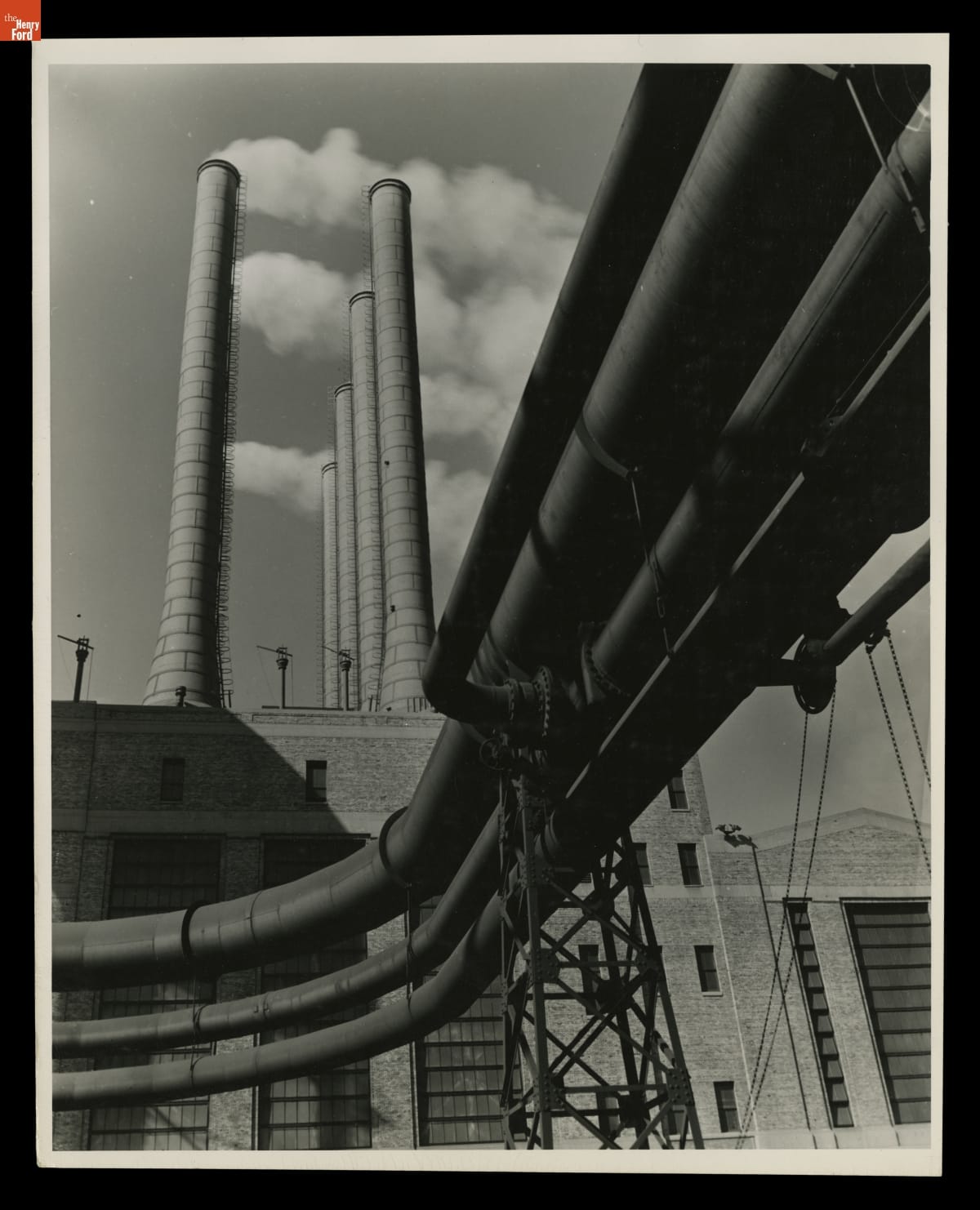
- March 01, 1944
- Collections - Artifact
Rouge Plant Powerhouse Smokestacks, March 1944
The powerhouse at Ford Motor Company's Rouge factory was readily identified by its eight tall smokestacks. Steam turbines, fueled by pulverized coal, generated electricity for the massive Rouge complex -- and for Ford's Highland Park and Flat Rock plants, and for Lincoln's Detroit plant. The Rouge sometimes generated surplus power that could be sold to Detroit Edison Company.
- Interior of Powerhouse at Ford Motor Company Rouge Plant, October 1940 - The powerhouse at Ford Motor Company's Rouge factory was readily identified by its eight tall smokestacks. Steam turbines, fueled by pulverized coal, generated electricity for the massive Rouge complex -- and for Ford's Highland Park and Flat Rock plants, and for Lincoln's Detroit plant. The Rouge sometimes generated surplus power that could be sold to Detroit Edison Company.
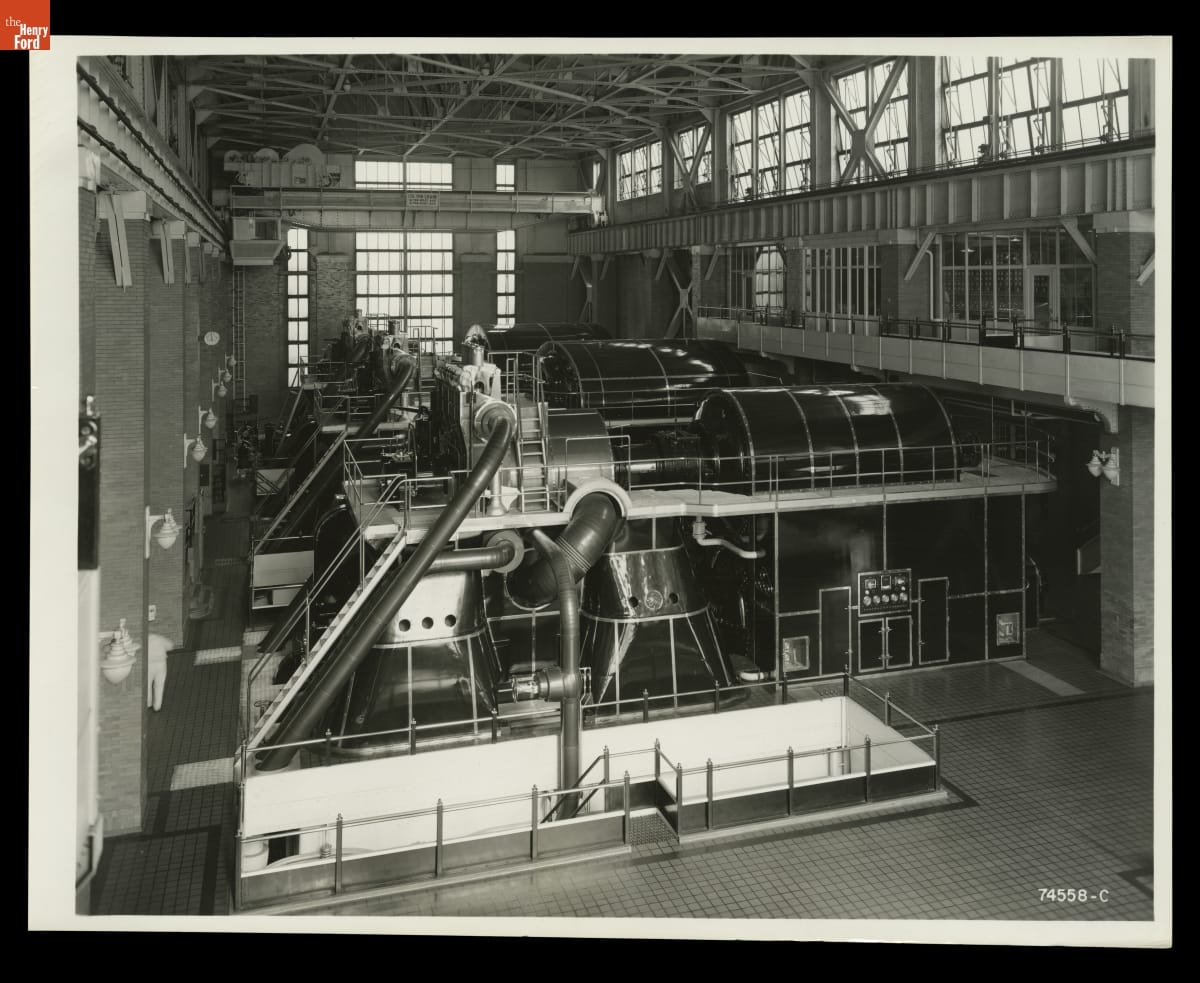
- October 25, 1940
- Collections - Artifact
Interior of Powerhouse at Ford Motor Company Rouge Plant, October 1940
The powerhouse at Ford Motor Company's Rouge factory was readily identified by its eight tall smokestacks. Steam turbines, fueled by pulverized coal, generated electricity for the massive Rouge complex -- and for Ford's Highland Park and Flat Rock plants, and for Lincoln's Detroit plant. The Rouge sometimes generated surplus power that could be sold to Detroit Edison Company.
- Interior of Powerhouse at Ford Motor Company Rouge Plant, October 1940 - The powerhouse at Ford Motor Company's Rouge factory was readily identified by its eight tall smokestacks. Steam turbines, fueled by pulverized coal, generated electricity for the massive Rouge complex -- and for Ford's Highland Park and Flat Rock plants, and for Lincoln's Detroit plant. The Rouge sometimes generated surplus power that could be sold to Detroit Edison Company.
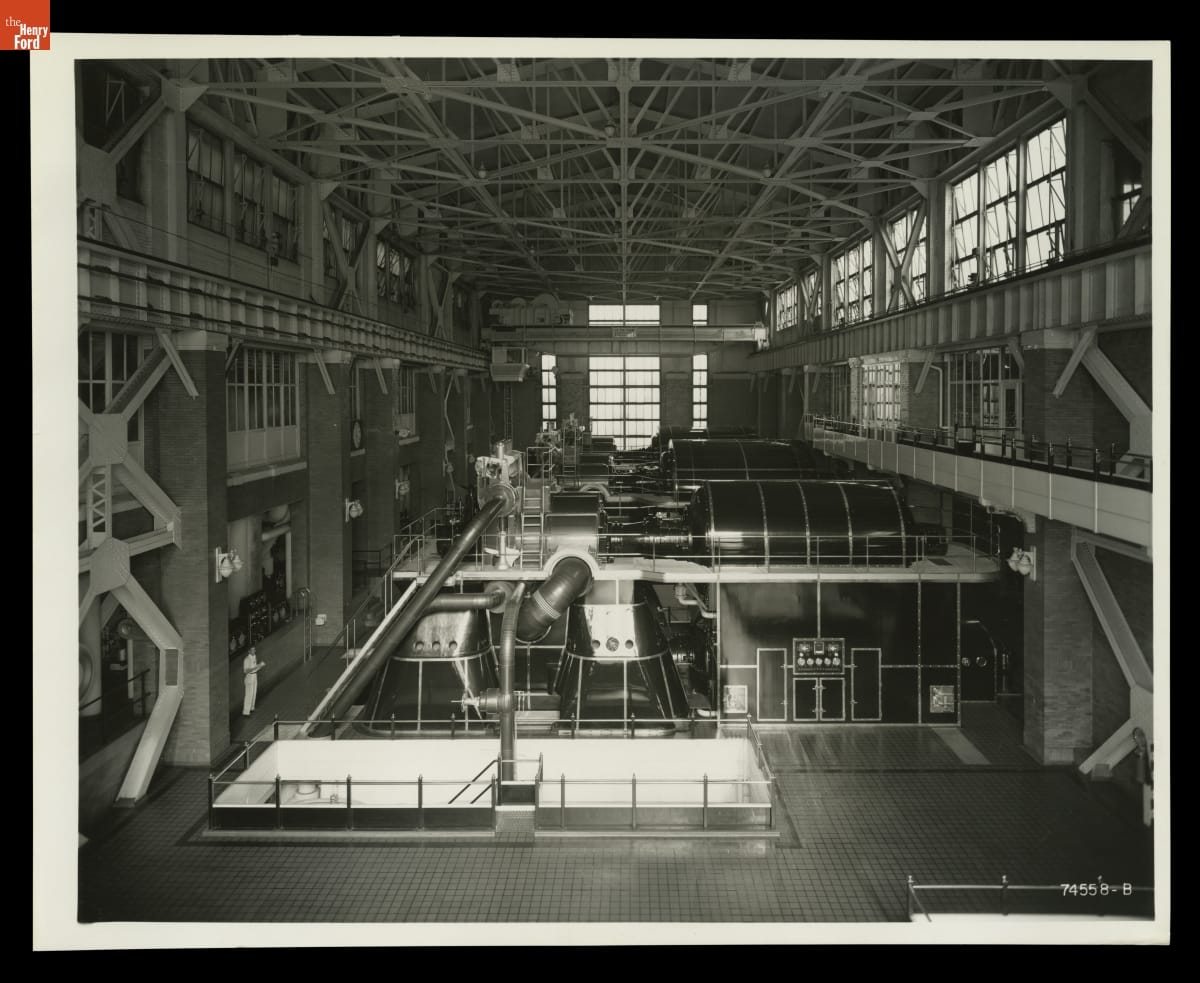
- October 25, 1940
- Collections - Artifact
Interior of Powerhouse at Ford Motor Company Rouge Plant, October 1940
The powerhouse at Ford Motor Company's Rouge factory was readily identified by its eight tall smokestacks. Steam turbines, fueled by pulverized coal, generated electricity for the massive Rouge complex -- and for Ford's Highland Park and Flat Rock plants, and for Lincoln's Detroit plant. The Rouge sometimes generated surplus power that could be sold to Detroit Edison Company.