
Search
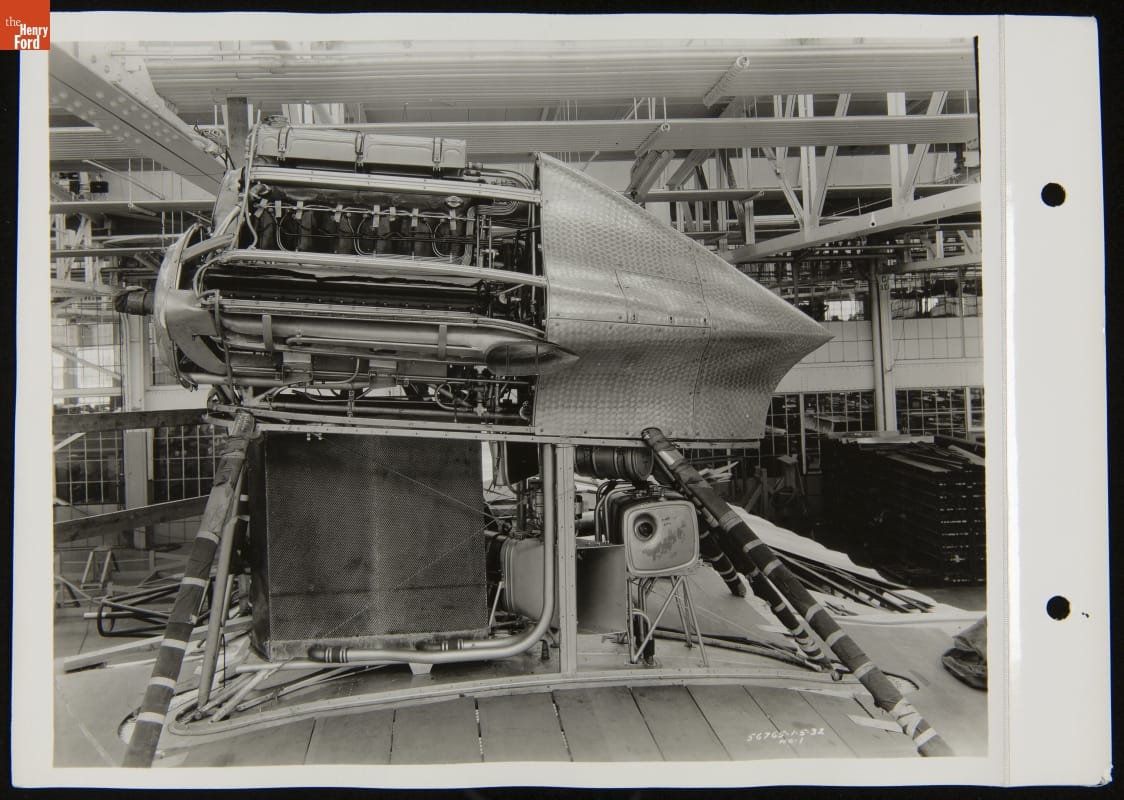
- Construction of Ford Tri-Motor 14-AT Showing Center Hispano Suiza Engine, January 1932 - Ford Motor Company's Tri-Motor, built from 1926-1933, flew in many early American airline fleets. The all-metal airplane was rugged, dependable, and equally adaptable to passenger and freight service. Tri-Motors were built with some of the same mass production techniques used in Ford's automobile plants. This version, the 14-AT, featured three Hispano-Suiza Engines. This photograph reveals the interior of the central engine.
- January 05, 1932
- Collections - Artifact
Construction of Ford Tri-Motor 14-AT Showing Center Hispano Suiza Engine, January 1932
Ford Motor Company's Tri-Motor, built from 1926-1933, flew in many early American airline fleets. The all-metal airplane was rugged, dependable, and equally adaptable to passenger and freight service. Tri-Motors were built with some of the same mass production techniques used in Ford's automobile plants. This version, the 14-AT, featured three Hispano-Suiza Engines. This photograph reveals the interior of the central engine.
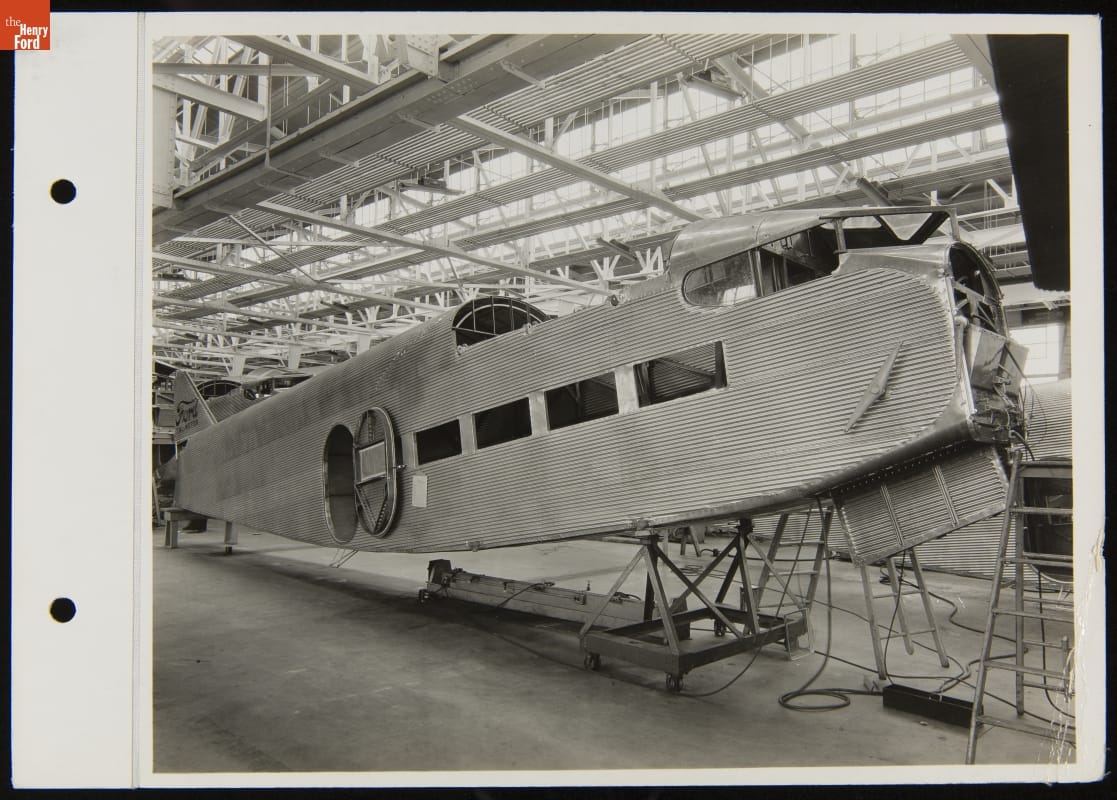
- Ford Tri-Motor Airplane Fuselage Being Constructed at the Stout Factory, Dearborn, Michigan, April 1929 - Ford Motor Company's Tri-Motor, built from 1926-1933, flew in many early American airline fleets. The all-metal airplane was rugged, dependable, and equally adaptable to passenger and freight service. Tri-Motors were built with some of the same mass production techniques used in Ford's automobile plants. The fuselage, or the main body of the airplane, is constructed in this photograph.
- April 30, 1929
- Collections - Artifact
Ford Tri-Motor Airplane Fuselage Being Constructed at the Stout Factory, Dearborn, Michigan, April 1929
Ford Motor Company's Tri-Motor, built from 1926-1933, flew in many early American airline fleets. The all-metal airplane was rugged, dependable, and equally adaptable to passenger and freight service. Tri-Motors were built with some of the same mass production techniques used in Ford's automobile plants. The fuselage, or the main body of the airplane, is constructed in this photograph.
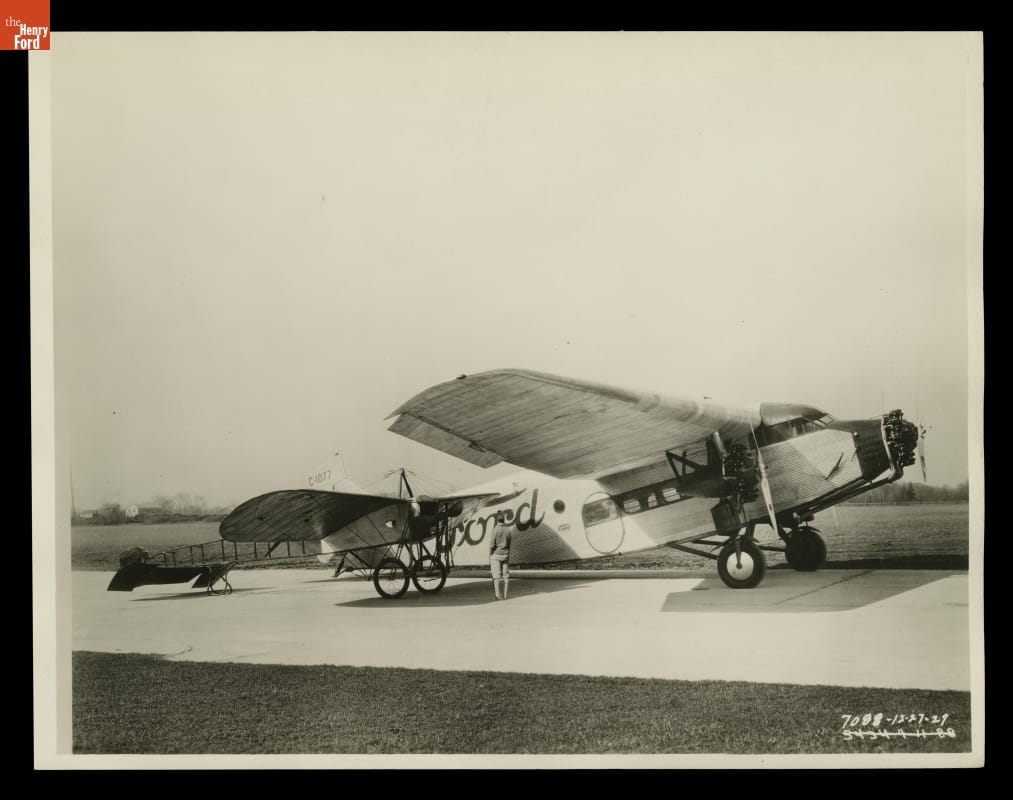
- Ford Trimotor 4-AT-10 and Bleriot Airplane at Ford Airport, Dearborn, Michigan, April 1928 - Two generations of aircraft contrasted at Ford Airport. The smaller Bleriot XI was of the type flown by French pilot Louis Bleriot across the English Channel in 1909. Its wood frame and fabric-covered surfaces were light but fragile. The larger Ford Trimotor was of a design built from 1926 to 1933. Its metal construction and three motors suggested strength and safety.
- April 11, 1928
- Collections - Artifact
Ford Trimotor 4-AT-10 and Bleriot Airplane at Ford Airport, Dearborn, Michigan, April 1928
Two generations of aircraft contrasted at Ford Airport. The smaller Bleriot XI was of the type flown by French pilot Louis Bleriot across the English Channel in 1909. Its wood frame and fabric-covered surfaces were light but fragile. The larger Ford Trimotor was of a design built from 1926 to 1933. Its metal construction and three motors suggested strength and safety.
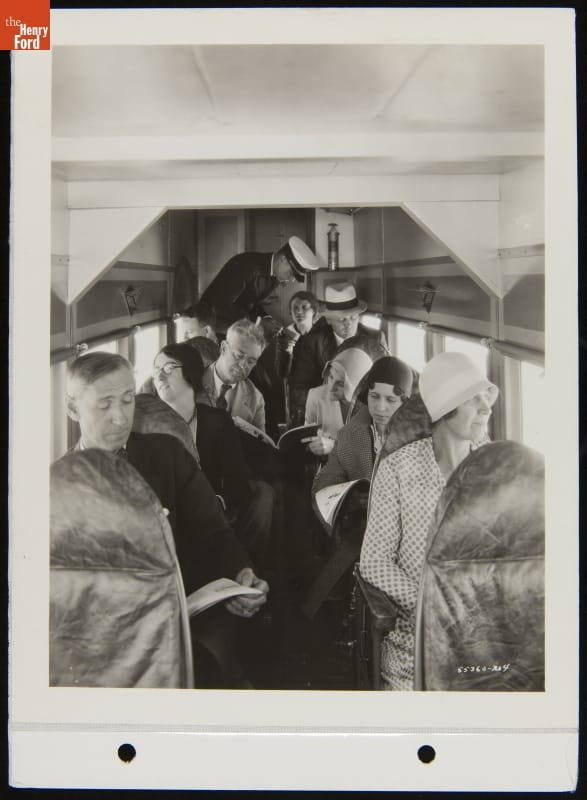
- Ford Tri-Motor Airplane, Interior Cabin Showing Steward Serving Passengers, September 1929 - Passenger air travel was a completely new -- and perhaps fearsome -- concept for most Americans in the 1920s. National advertisements for the Ford Tri-Motor promoted "roomy and comfortable" wicker passenger chairs -- one of the many advertised amenities used to convince a skeptical public of the appeal of flying in a Ford plane. Later models of the Ford Tri-Motor featured almuminum seats covered with leather.
- September 01, 1930
- Collections - Artifact
Ford Tri-Motor Airplane, Interior Cabin Showing Steward Serving Passengers, September 1929
Passenger air travel was a completely new -- and perhaps fearsome -- concept for most Americans in the 1920s. National advertisements for the Ford Tri-Motor promoted "roomy and comfortable" wicker passenger chairs -- one of the many advertised amenities used to convince a skeptical public of the appeal of flying in a Ford plane. Later models of the Ford Tri-Motor featured almuminum seats covered with leather.
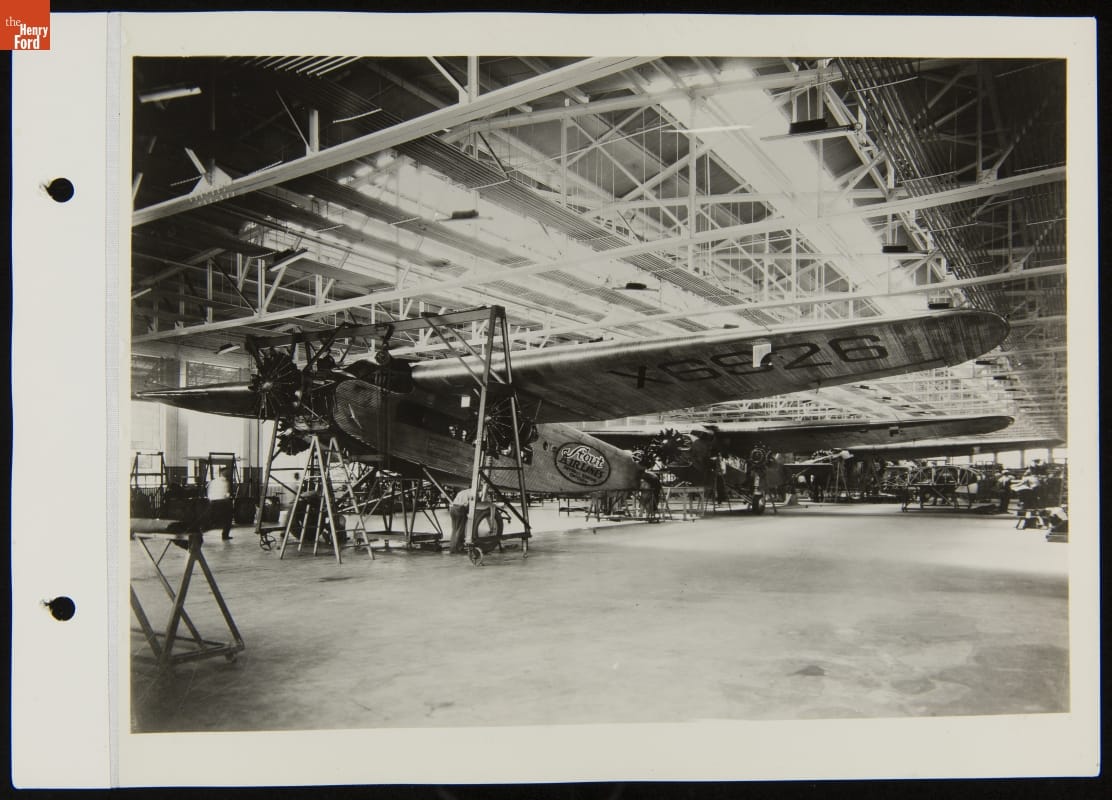
- Ford Tri-Motor Airplane Being Constructed at the Stout Factory, Dearborn, Michigan, February 1929 - Ford Motor Company's Tri-Motor, built from 1926-1933, flew in many early American airline fleets. The all-metal airplane was rugged, dependable, and equally adaptable to passenger and freight service. Tri-Motors were built with some of the same mass production techniques used in Ford's automobile plants. In this photo, the propellers are being connected to the fuselage or the main body of the airplane.
- February 19, 1929
- Collections - Artifact
Ford Tri-Motor Airplane Being Constructed at the Stout Factory, Dearborn, Michigan, February 1929
Ford Motor Company's Tri-Motor, built from 1926-1933, flew in many early American airline fleets. The all-metal airplane was rugged, dependable, and equally adaptable to passenger and freight service. Tri-Motors were built with some of the same mass production techniques used in Ford's automobile plants. In this photo, the propellers are being connected to the fuselage or the main body of the airplane.
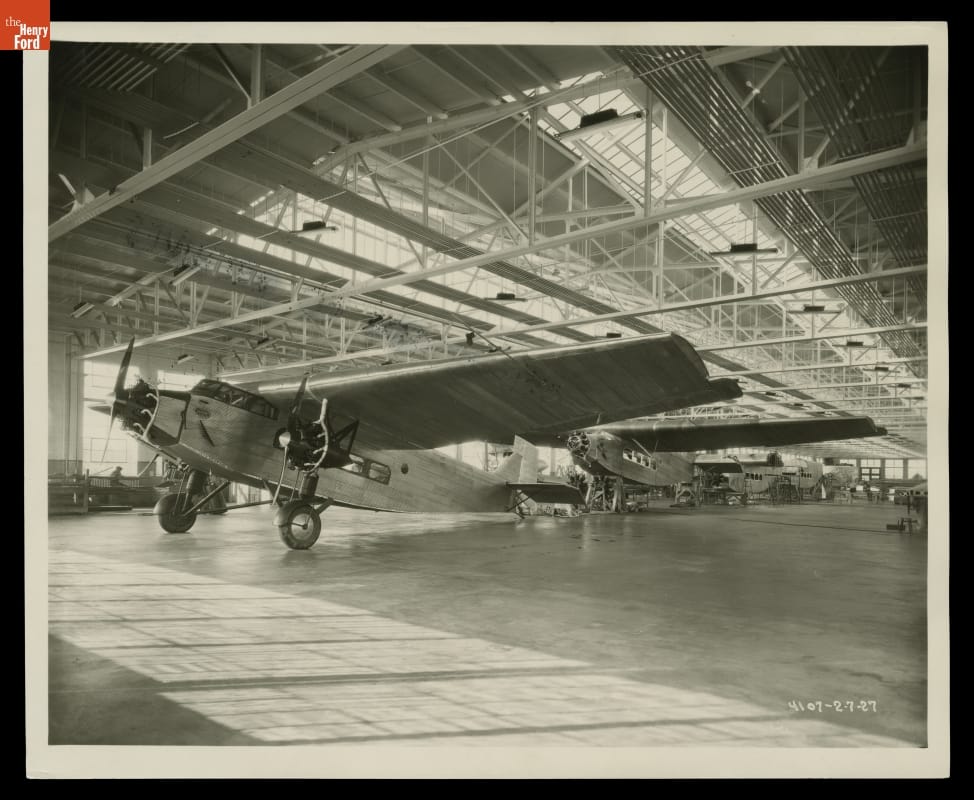
- Ford Tri-Motor Airplane Assembly Line, Dearborn, Michigan, 1927 - Henry Ford attempted to apply automobile assembly line techniques to the manufacture of airplanes, and to build them in large numbers. Monthly production peaked at 25 planes in June 1929. The Great Depression forced Ford to re-focus on his core auto business, and the company's commercial aircraft production ended in May 1933.
- February 07, 1927
- Collections - Artifact
Ford Tri-Motor Airplane Assembly Line, Dearborn, Michigan, 1927
Henry Ford attempted to apply automobile assembly line techniques to the manufacture of airplanes, and to build them in large numbers. Monthly production peaked at 25 planes in June 1929. The Great Depression forced Ford to re-focus on his core auto business, and the company's commercial aircraft production ended in May 1933.
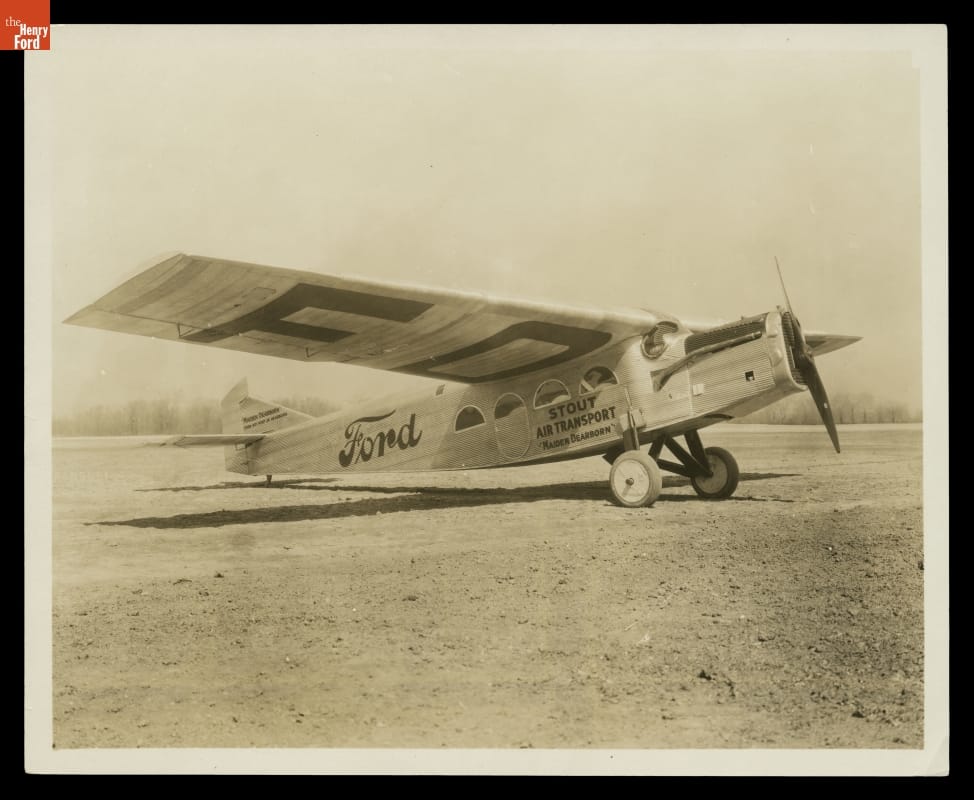
- Stout Air Transport 2AT-2 Airplane, "Maiden Dearborn" at Ford Airport, 1925 - The Stout 2AT airplane, designed by William B. Stout, first flew in February 1924. It had a cruising speed of 100 miles per hour, a range of 500 miles, and a capacity of six passengers or 1,500 pounds of freight. The plane in this photo was the first built at Stout's factory in Dearborn -- which explains its pun name, <EM>Maiden Dearborn</EM>.
- April 06, 1925
- Collections - Artifact
Stout Air Transport 2AT-2 Airplane, "Maiden Dearborn" at Ford Airport, 1925
The Stout 2AT airplane, designed by William B. Stout, first flew in February 1924. It had a cruising speed of 100 miles per hour, a range of 500 miles, and a capacity of six passengers or 1,500 pounds of freight. The plane in this photo was the first built at Stout's factory in Dearborn -- which explains its pun name, Maiden Dearborn.
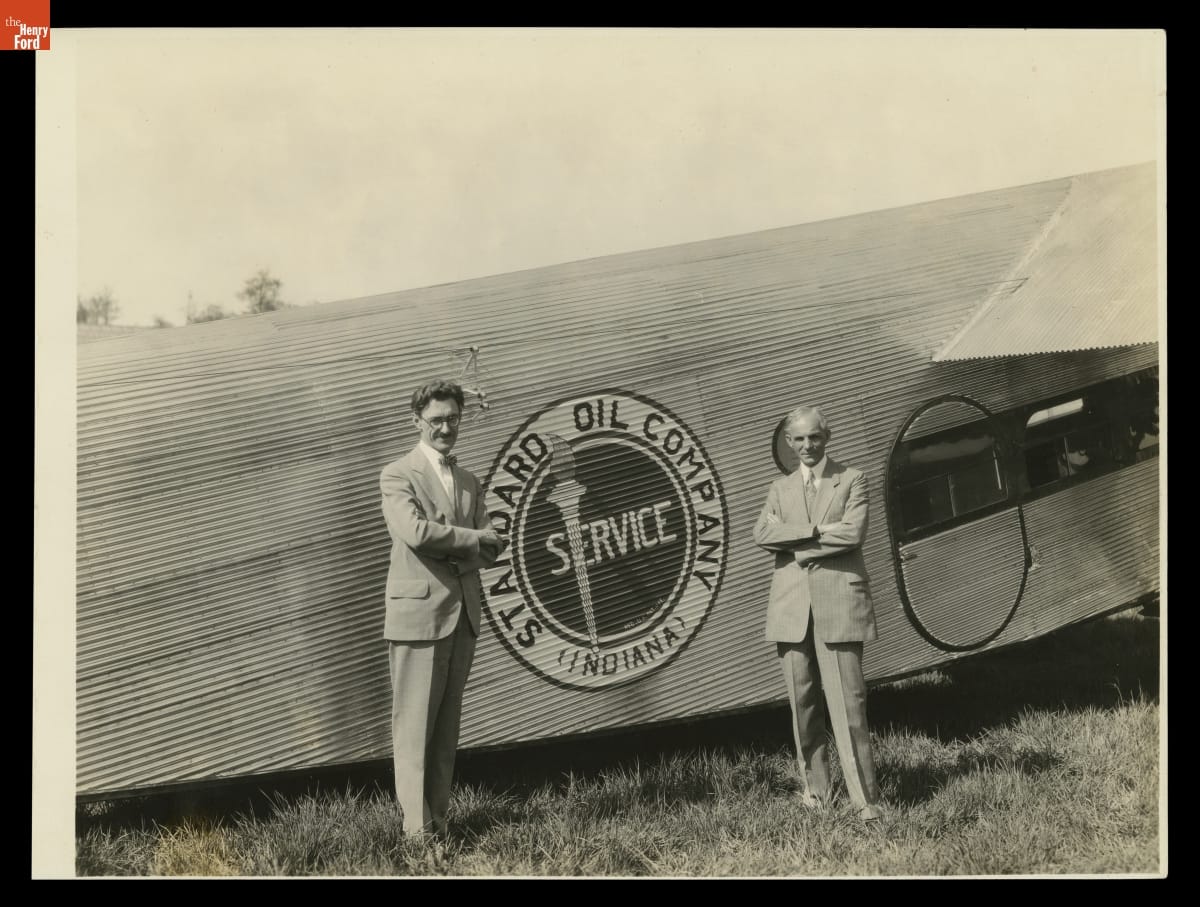
- William B. Stout and Henry Ford with a Ford Tri-Motor Airplane, circa 1927 - William B. Stout and Henry Ford pose beside a Ford Tri-Motor in this circa 1927 photo. Ford purchased the Stout Metal Aircraft Company in 1925, and Stout's tri-motor 3-AT airplane influenced the design of the successful Ford Tri-Motor aircraft produced from 1926 to 1933.
- circa 1927
- Collections - Artifact
William B. Stout and Henry Ford with a Ford Tri-Motor Airplane, circa 1927
William B. Stout and Henry Ford pose beside a Ford Tri-Motor in this circa 1927 photo. Ford purchased the Stout Metal Aircraft Company in 1925, and Stout's tri-motor 3-AT airplane influenced the design of the successful Ford Tri-Motor aircraft produced from 1926 to 1933.
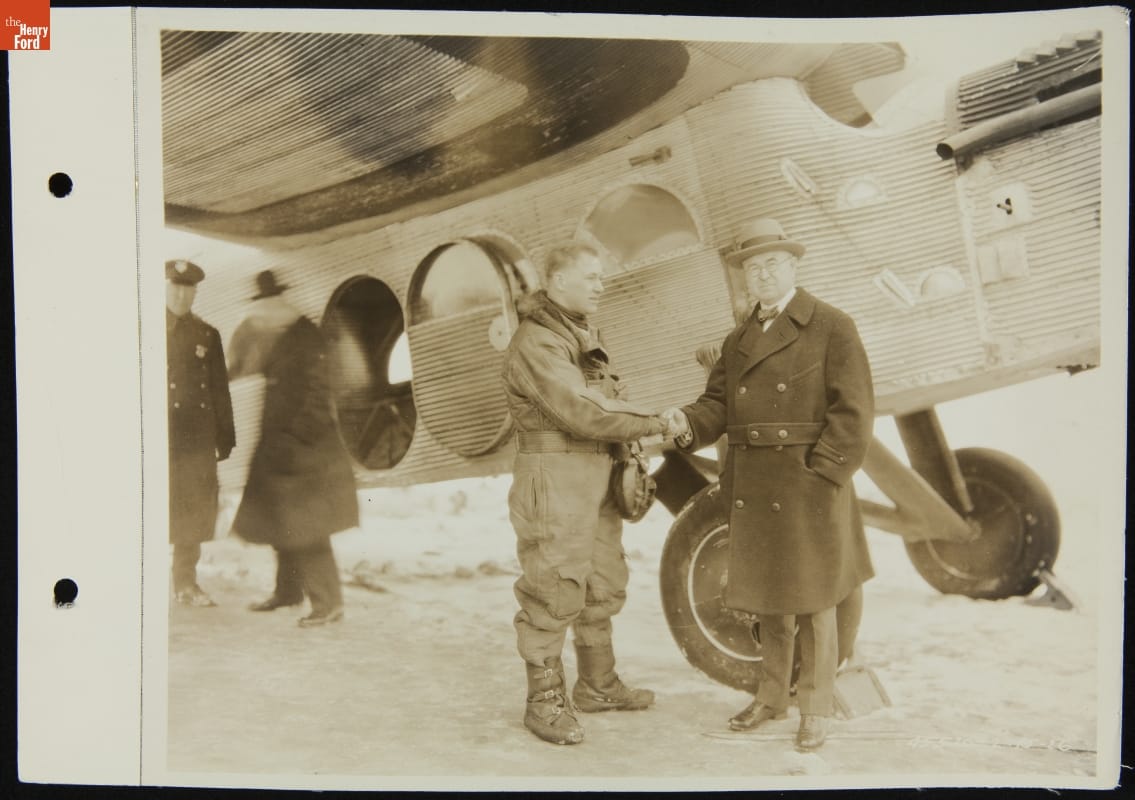
- Greeting Pilot Lawrence Fritz after the First Contract Air Mail Flight (CAM-6), Detroit to Cleveland, February 15, 1926 - After operating air mail flights itself for eight years, the U.S. Post Office Department contracted with commercial air carriers in 1926. The first two contract routes, connecting Detroit with Cleveland and Chicago, were awarded to Ford Air Transport, Ford Motor Company's airline subsidiary. Ford planes carried more than 32,000 pounds of mail before the contract ended in July 1928.
- February 15, 1926
- Collections - Artifact
Greeting Pilot Lawrence Fritz after the First Contract Air Mail Flight (CAM-6), Detroit to Cleveland, February 15, 1926
After operating air mail flights itself for eight years, the U.S. Post Office Department contracted with commercial air carriers in 1926. The first two contract routes, connecting Detroit with Cleveland and Chicago, were awarded to Ford Air Transport, Ford Motor Company's airline subsidiary. Ford planes carried more than 32,000 pounds of mail before the contract ended in July 1928.
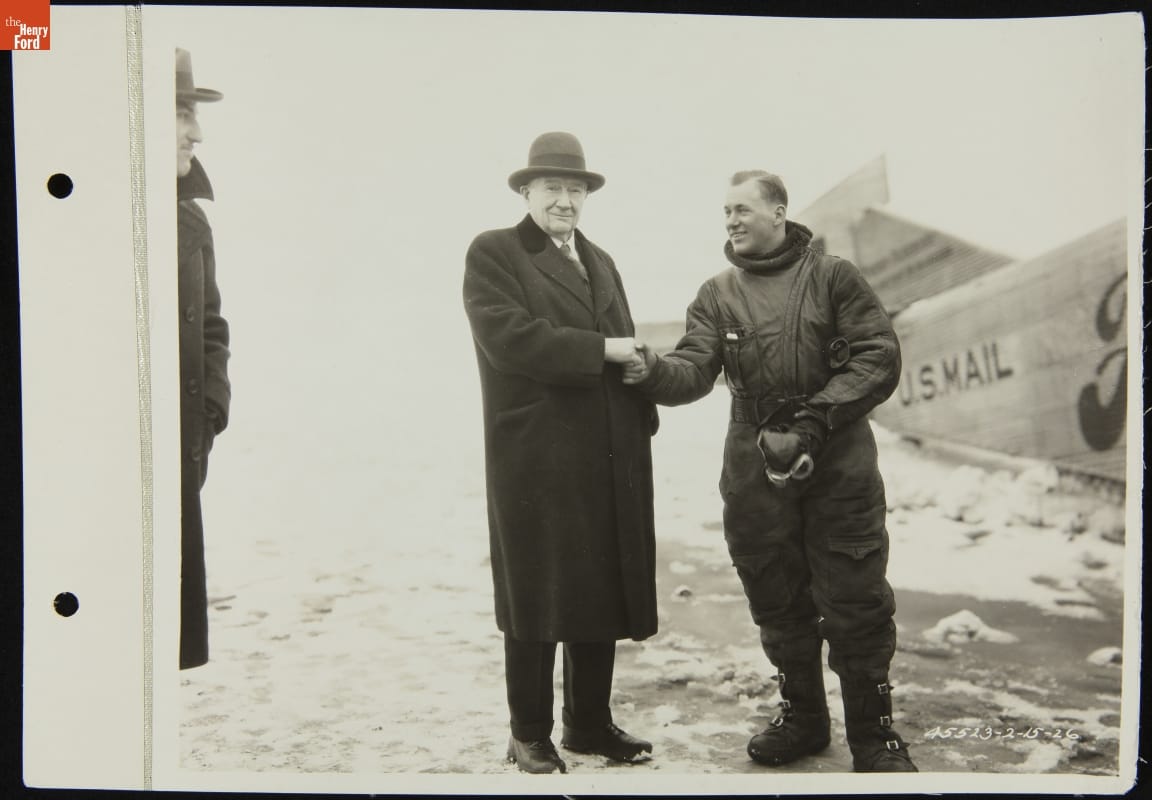
- Greeting Pilot Lawrence Fritz after the First Contract Air Mail Flight (CAM-6), Detroit to Cleveland, February 15, 1926 - After operating air mail flights itself for eight years, the U.S. Post Office Department contracted with commercial air carriers in 1926. The first two contract routes, connecting Detroit with Cleveland and Chicago, were awarded to Ford Air Transport, Ford Motor Company's airline subsidiary. Ford planes carried more than 32,000 pounds of mail before the contract ended in July 1928.
- February 15, 1926
- Collections - Artifact
Greeting Pilot Lawrence Fritz after the First Contract Air Mail Flight (CAM-6), Detroit to Cleveland, February 15, 1926
After operating air mail flights itself for eight years, the U.S. Post Office Department contracted with commercial air carriers in 1926. The first two contract routes, connecting Detroit with Cleveland and Chicago, were awarded to Ford Air Transport, Ford Motor Company's airline subsidiary. Ford planes carried more than 32,000 pounds of mail before the contract ended in July 1928.