
Search
- Soloist Rose Bampton Performing on the "Ford Sunday Evening Hour" Program, December 16, 1945 -
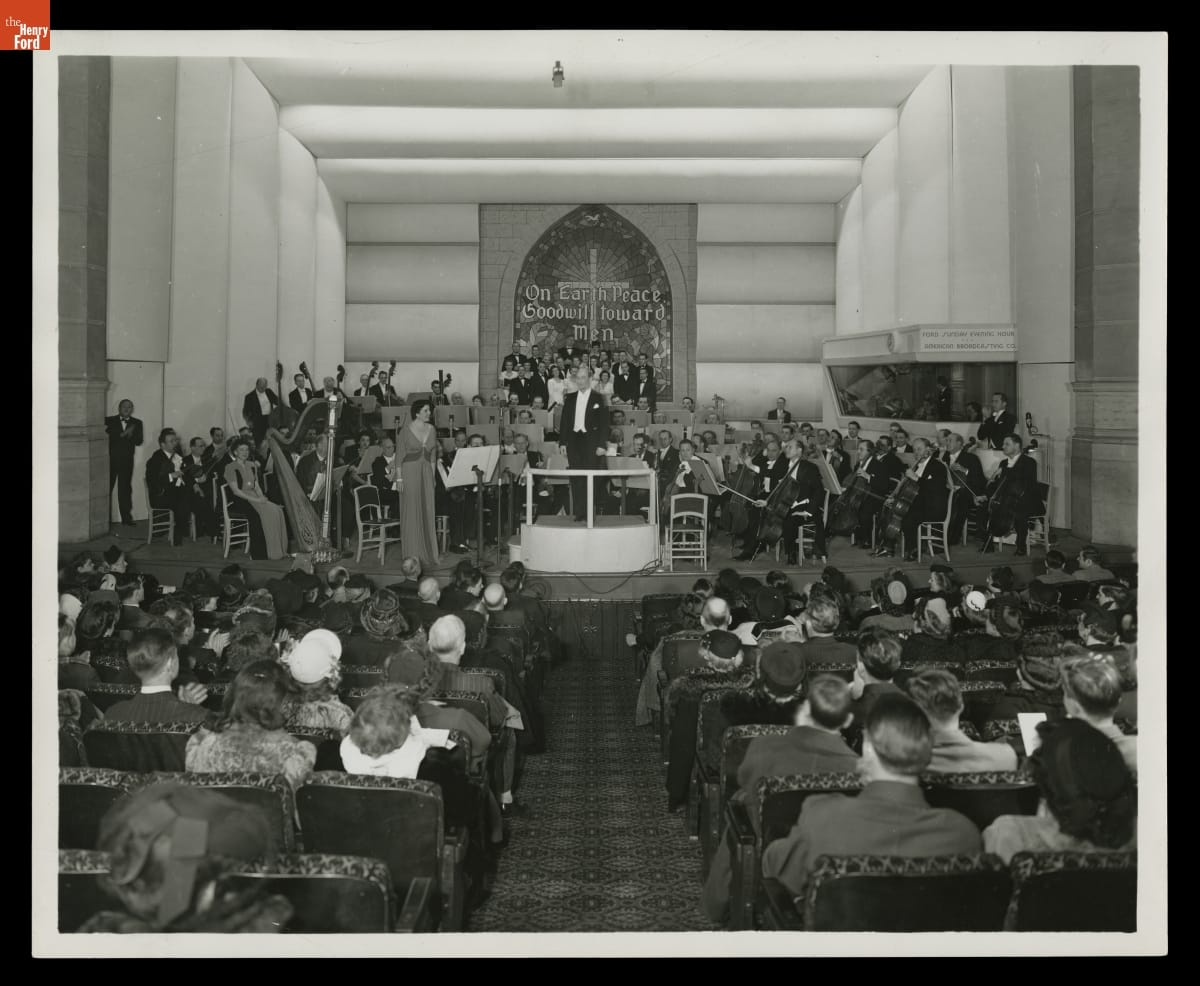
- December 16, 1945
- Collections - Artifact
Soloist Rose Bampton Performing on the "Ford Sunday Evening Hour" Program, December 16, 1945
- Program for the First "Ford Sunday Evening Hour" Radio Broadcast, October 7, 1934 -
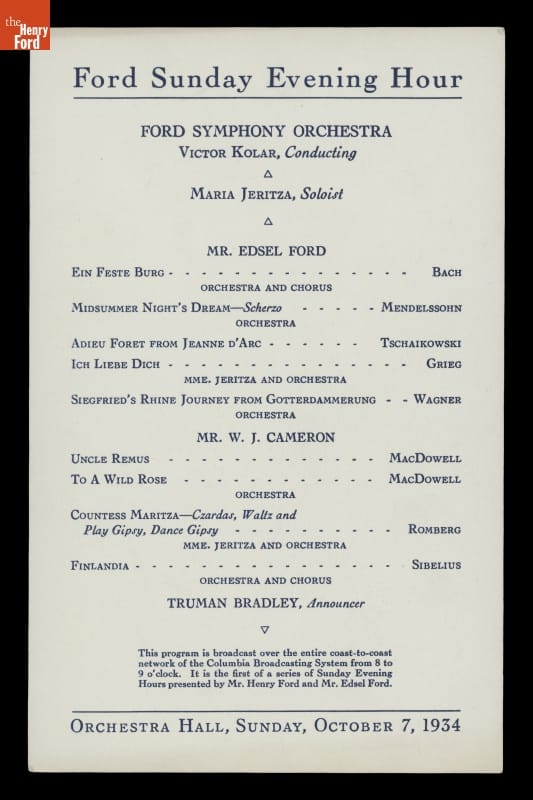
- October 07, 1934
- Collections - Artifact
Program for the First "Ford Sunday Evening Hour" Radio Broadcast, October 7, 1934
- List of Ford Symphony Orchestra Members for the Ford Sunday Evening Hour Radio Broadcast, 1941-1942 - Launched in 1934, the <em>Ford Sunday Evening Hour</em> radio program featured classical music, guest soloists and conductors, and a weekly talk during intermission. The show was performed live and broadcast over the CBS radio network. Seventy-five members of the Detroit Symphony Orchestra -- under the name Ford Symphony Orchestra -- played musical pieces. This list contains names of musicians for the 1941-42 season.
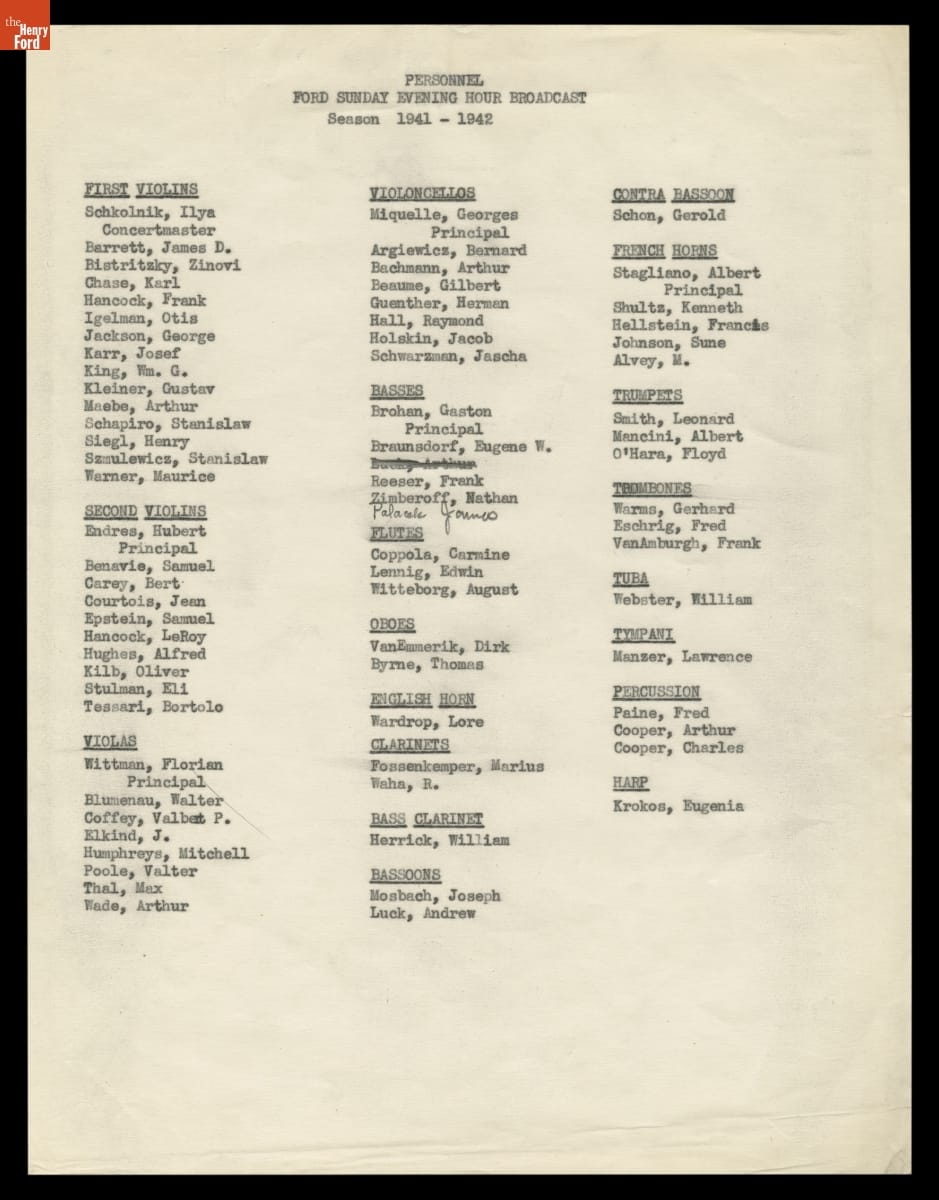
- 1941-1942
- Collections - Artifact
List of Ford Symphony Orchestra Members for the Ford Sunday Evening Hour Radio Broadcast, 1941-1942
Launched in 1934, the Ford Sunday Evening Hour radio program featured classical music, guest soloists and conductors, and a weekly talk during intermission. The show was performed live and broadcast over the CBS radio network. Seventy-five members of the Detroit Symphony Orchestra -- under the name Ford Symphony Orchestra -- played musical pieces. This list contains names of musicians for the 1941-42 season.
- Talks Given on The Ford Sunday Evening Hour, September 1940-May 1941 - Launched in 1934, the <em>Ford Sunday Evening Hour</em> radio program featured classical music, guest soloists and conductors, and a weekly talk during intermission. Henry Ford asked his friend and advisor William J. Cameron to write and deliver these messages. Cameron, who composed the anti-Semitic articles for <em>The Dearborn Independent</em>, now peddled softer populist views--avoiding extremes and any direct attacks on politicians, ethnic groups, or Wall Street financiers.
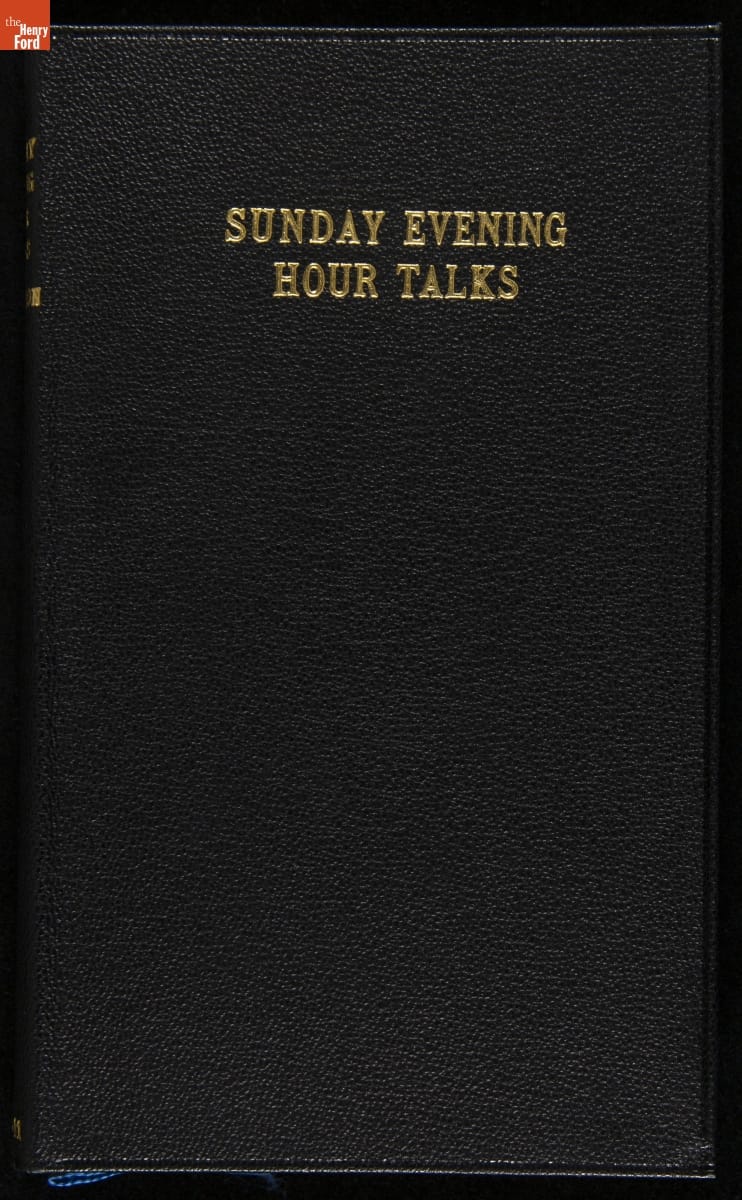
- June 01, 1941
- Collections - Artifact
Talks Given on The Ford Sunday Evening Hour, September 1940-May 1941
Launched in 1934, the Ford Sunday Evening Hour radio program featured classical music, guest soloists and conductors, and a weekly talk during intermission. Henry Ford asked his friend and advisor William J. Cameron to write and deliver these messages. Cameron, who composed the anti-Semitic articles for The Dearborn Independent, now peddled softer populist views--avoiding extremes and any direct attacks on politicians, ethnic groups, or Wall Street financiers.
- Talks Given on The Ford Sunday Evening Hour, September 1941-March 1942 - Launched in 1934, the <em>Ford Sunday Evening Hour</em> radio program featured classical music, guest soloists and conductors, and a weekly talk during intermission. Henry Ford asked his friend and advisor William J. Cameron to write and deliver these messages. Cameron, who composed the anti-Semitic articles for <em>The Dearborn Independent</em>, now peddled softer populist views--avoiding extremes and any direct attacks on politicians, ethnic groups, or Wall Street financiers.
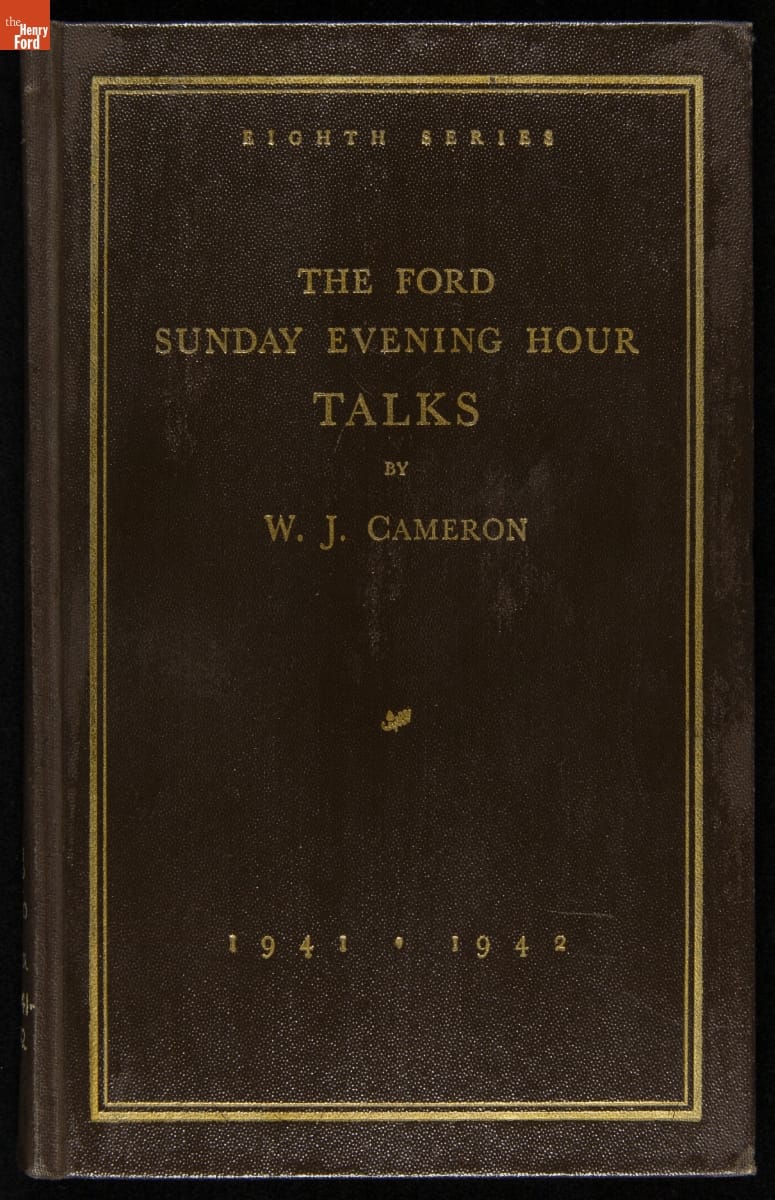
- April 01, 1942
- Collections - Artifact
Talks Given on The Ford Sunday Evening Hour, September 1941-March 1942
Launched in 1934, the Ford Sunday Evening Hour radio program featured classical music, guest soloists and conductors, and a weekly talk during intermission. Henry Ford asked his friend and advisor William J. Cameron to write and deliver these messages. Cameron, who composed the anti-Semitic articles for The Dearborn Independent, now peddled softer populist views--avoiding extremes and any direct attacks on politicians, ethnic groups, or Wall Street financiers.
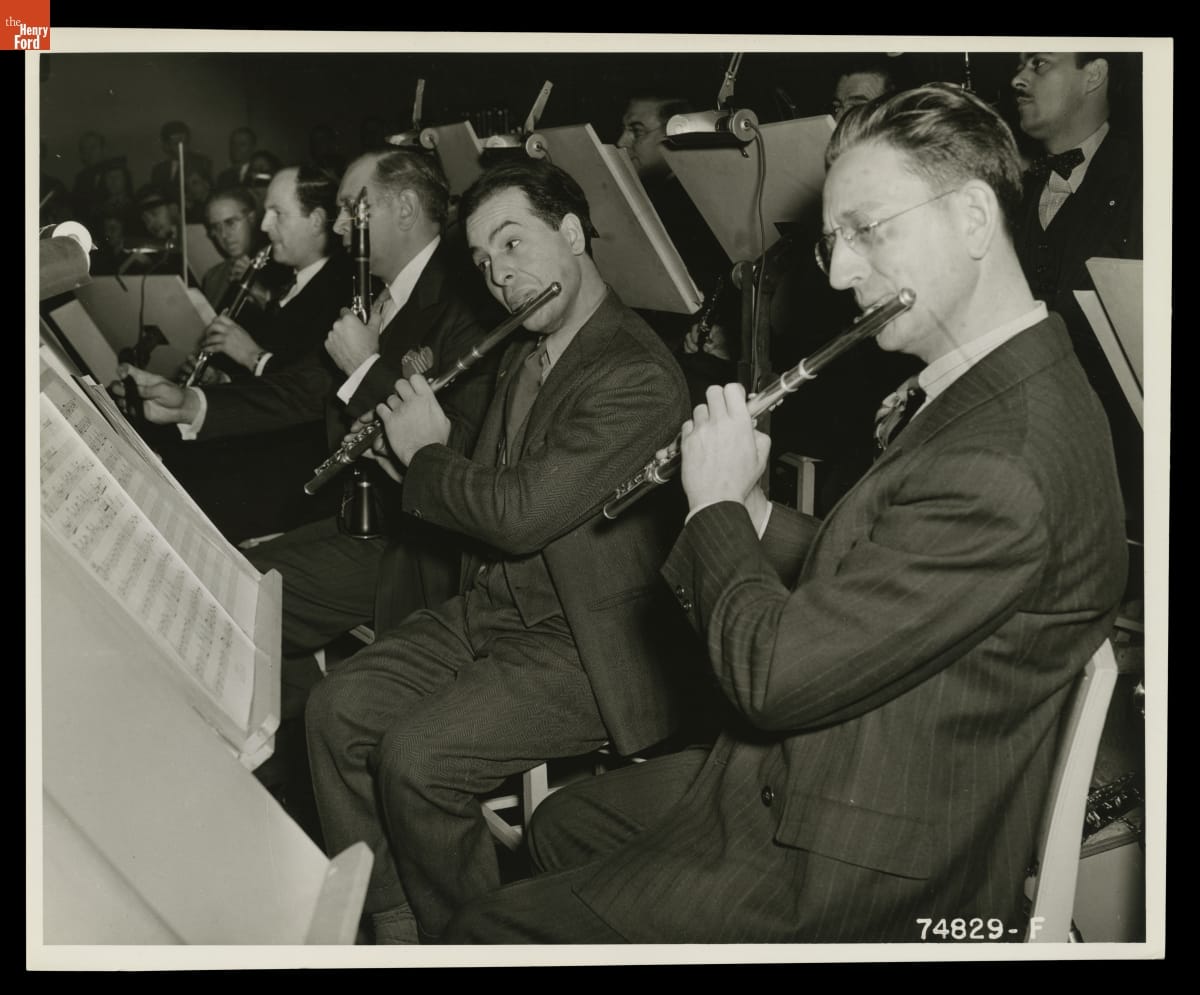
- Ford Sunday Evening Hour Orchestra Flute Section Rehearsal, January 11, 1941 - Launched in 1934, the Ford Sunday Evening Hour radio program featured classical music, guest soloists and conductors, and a weekly talk during intermission. CBS broadcasted the show live over its radio network. Members of the Detroit Symphony Orchestra -- under the name Ford Symphony Orchestra -- played musical pieces. Flutist Carmine Coppola (center), father of Francis Ford Coppola, played with the orchestra in 1941.
- January 11, 1941
- Collections - Artifact
Ford Sunday Evening Hour Orchestra Flute Section Rehearsal, January 11, 1941
Launched in 1934, the Ford Sunday Evening Hour radio program featured classical music, guest soloists and conductors, and a weekly talk during intermission. CBS broadcasted the show live over its radio network. Members of the Detroit Symphony Orchestra -- under the name Ford Symphony Orchestra -- played musical pieces. Flutist Carmine Coppola (center), father of Francis Ford Coppola, played with the orchestra in 1941.
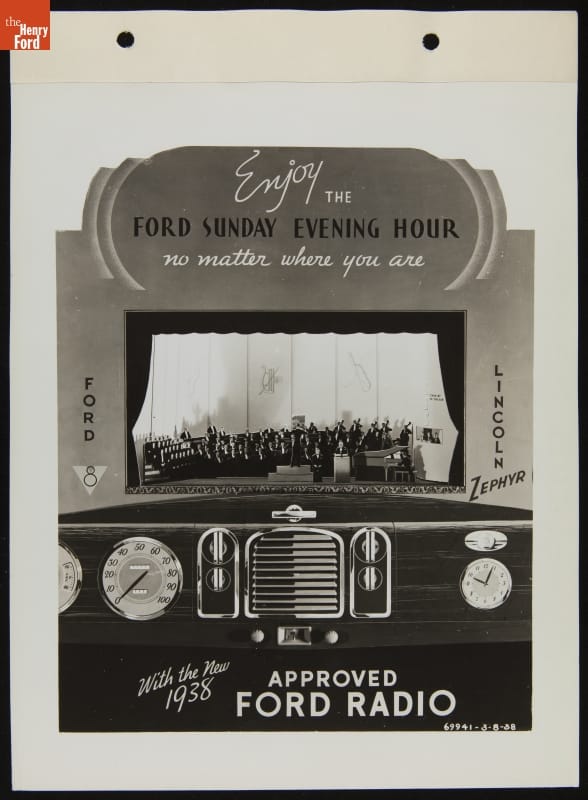
- Ford Dealers' Counter Display for Ford Car Radios, March 1938 - Ford Motor Company offered a variety of accessories for its cars, trucks and engines in the 1930s. Cleaners and polishes enhanced a vehicle's appearance. Lubricants and repair kits improved engine performance and economy. Convenience accessories like luggage carriers, clocks and radios added comfort and convenience while traveling.
- March 08, 1938
- Collections - Artifact
Ford Dealers' Counter Display for Ford Car Radios, March 1938
Ford Motor Company offered a variety of accessories for its cars, trucks and engines in the 1930s. Cleaners and polishes enhanced a vehicle's appearance. Lubricants and repair kits improved engine performance and economy. Convenience accessories like luggage carriers, clocks and radios added comfort and convenience while traveling.
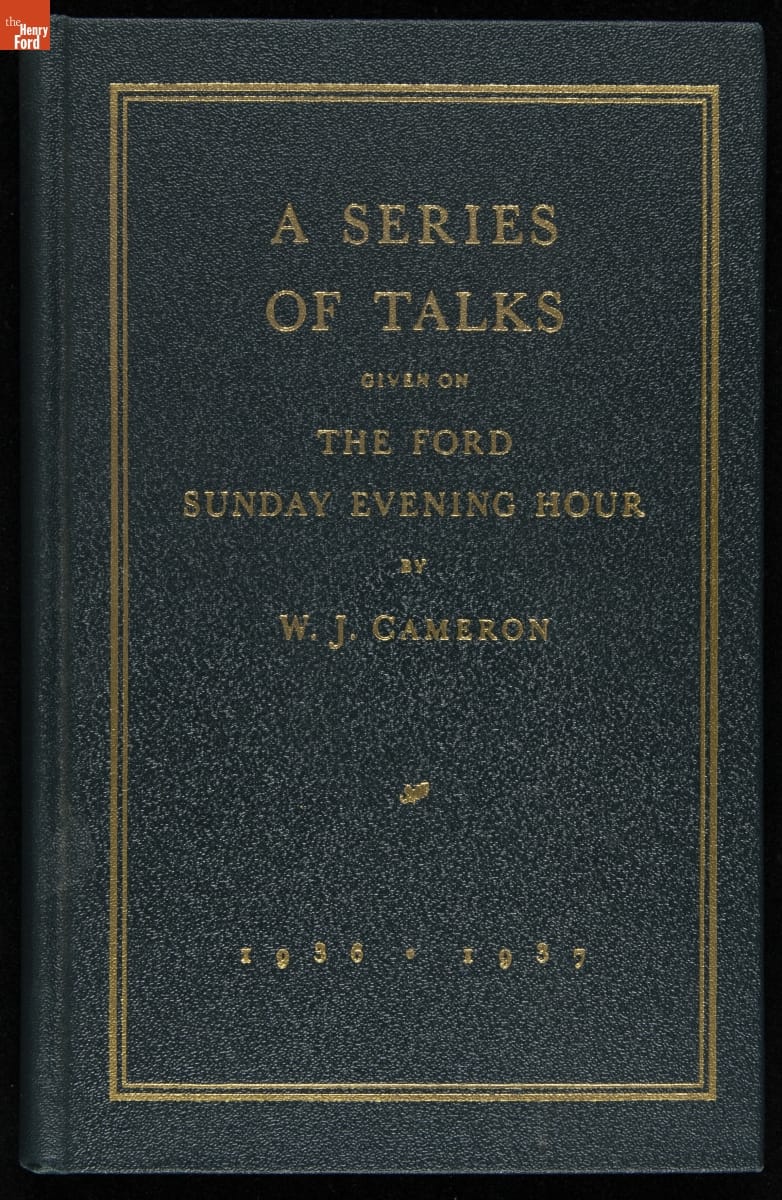
- Talks Given on The Ford Sunday Evening Hour, September 1936-June 1937 - Launched in 1934, the <em>Ford Sunday Evening Hour</em> radio program featured classical music, guest soloists and conductors, and a weekly talk during intermission. Henry Ford asked his friend and advisor William J. Cameron to write and deliver these messages. Cameron, who composed the anti-Semitic articles for <em>The Dearborn Independent</em>, now peddled softer populist views--avoiding extremes and any direct attacks on politicians, ethnic groups, or Wall Street financiers.
- July 01, 1937
- Collections - Artifact
Talks Given on The Ford Sunday Evening Hour, September 1936-June 1937
Launched in 1934, the Ford Sunday Evening Hour radio program featured classical music, guest soloists and conductors, and a weekly talk during intermission. Henry Ford asked his friend and advisor William J. Cameron to write and deliver these messages. Cameron, who composed the anti-Semitic articles for The Dearborn Independent, now peddled softer populist views--avoiding extremes and any direct attacks on politicians, ethnic groups, or Wall Street financiers.
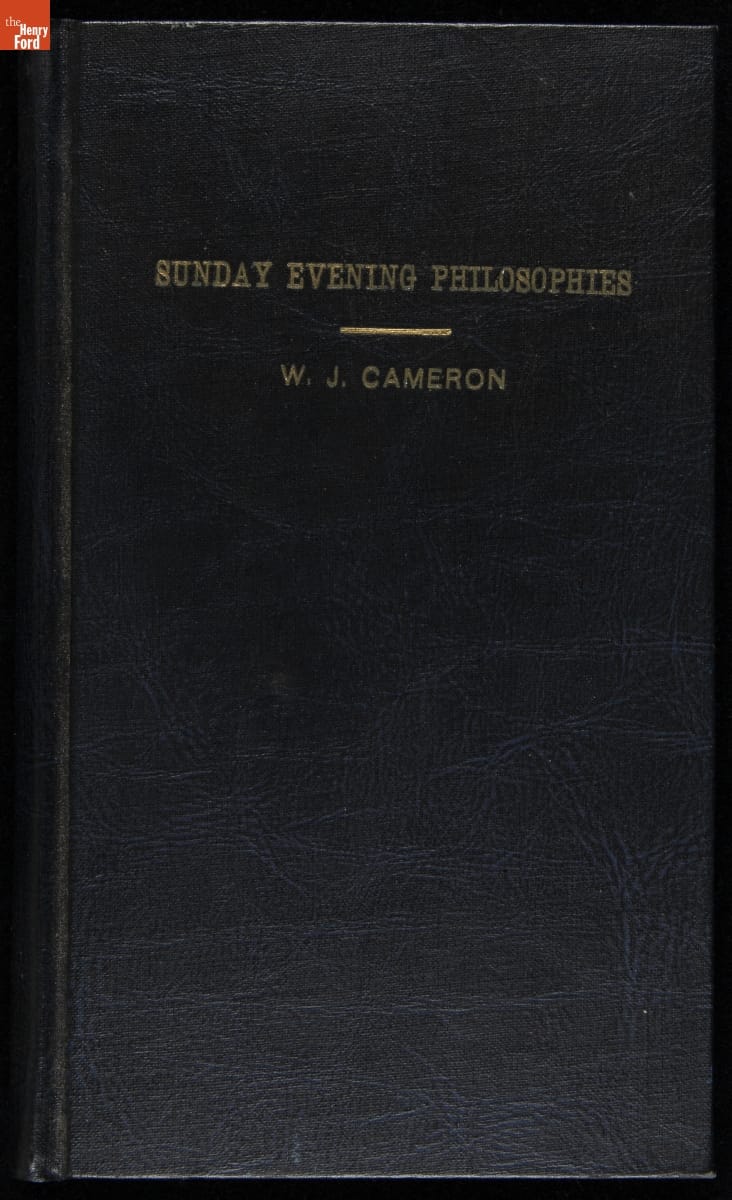
- Talks Given on The Ford Sunday Evening Hour, September 1937-June 1938 - Launched in 1934, the <em>Ford Sunday Evening Hour</em> radio program featured classical music, guest soloists and conductors, and a weekly talk during intermission. Henry Ford asked his friend and advisor William J. Cameron to write and deliver these messages. Cameron, who composed the anti-Semitic articles for <em>The Dearborn Independent</em>, now peddled softer populist views--avoiding extremes and any direct attacks on politicians, ethnic groups, or Wall Street financiers.
- July 01, 1938
- Collections - Artifact
Talks Given on The Ford Sunday Evening Hour, September 1937-June 1938
Launched in 1934, the Ford Sunday Evening Hour radio program featured classical music, guest soloists and conductors, and a weekly talk during intermission. Henry Ford asked his friend and advisor William J. Cameron to write and deliver these messages. Cameron, who composed the anti-Semitic articles for The Dearborn Independent, now peddled softer populist views--avoiding extremes and any direct attacks on politicians, ethnic groups, or Wall Street financiers.
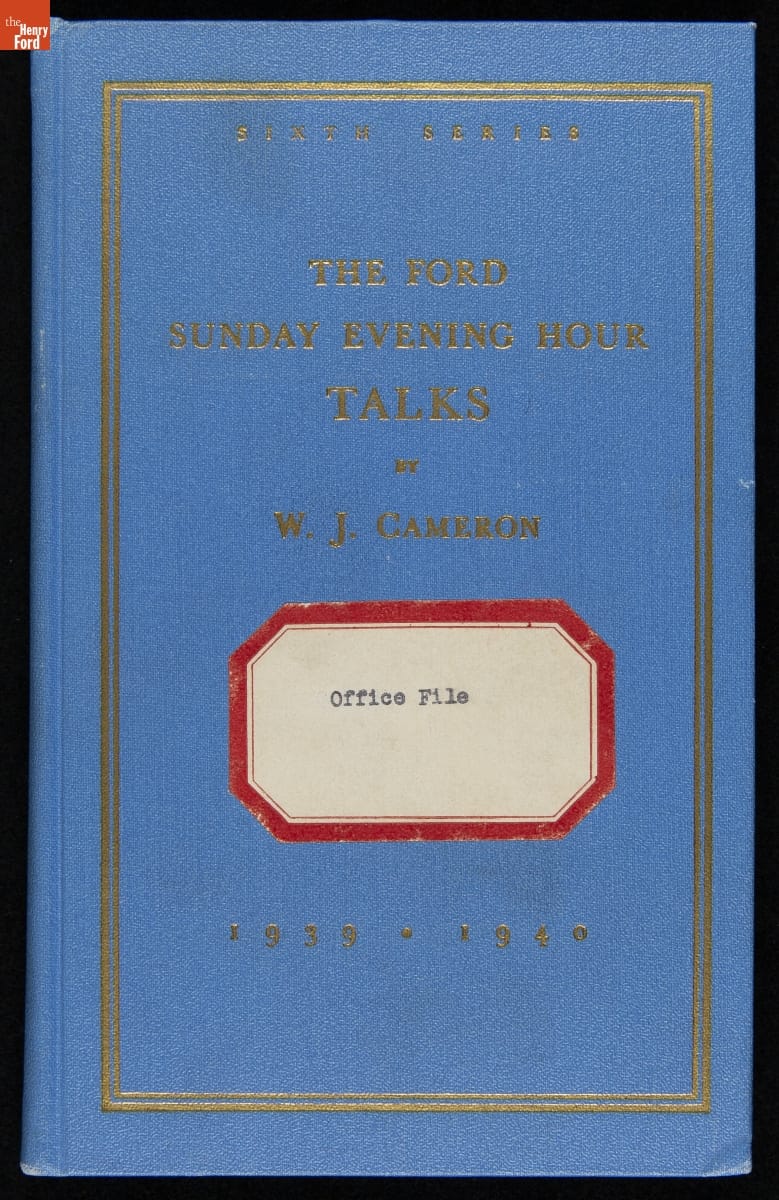
- Talks Given on The Ford Sunday Evening Hour, September 1939-May 1940 - Launched in 1934, the <em>Ford Sunday Evening Hour</em> radio program featured classical music, guest soloists and conductors, and a weekly talk during intermission. Henry Ford asked his friend and advisor William J. Cameron to write and deliver these messages. Cameron, who composed the anti-Semitic articles for <em>The Dearborn Independent</em>, now peddled softer populist views--avoiding extremes and any direct attacks on politicians, ethnic groups, or Wall Street financiers.
- June 01, 1940
- Collections - Artifact
Talks Given on The Ford Sunday Evening Hour, September 1939-May 1940
Launched in 1934, the Ford Sunday Evening Hour radio program featured classical music, guest soloists and conductors, and a weekly talk during intermission. Henry Ford asked his friend and advisor William J. Cameron to write and deliver these messages. Cameron, who composed the anti-Semitic articles for The Dearborn Independent, now peddled softer populist views--avoiding extremes and any direct attacks on politicians, ethnic groups, or Wall Street financiers.