
Search
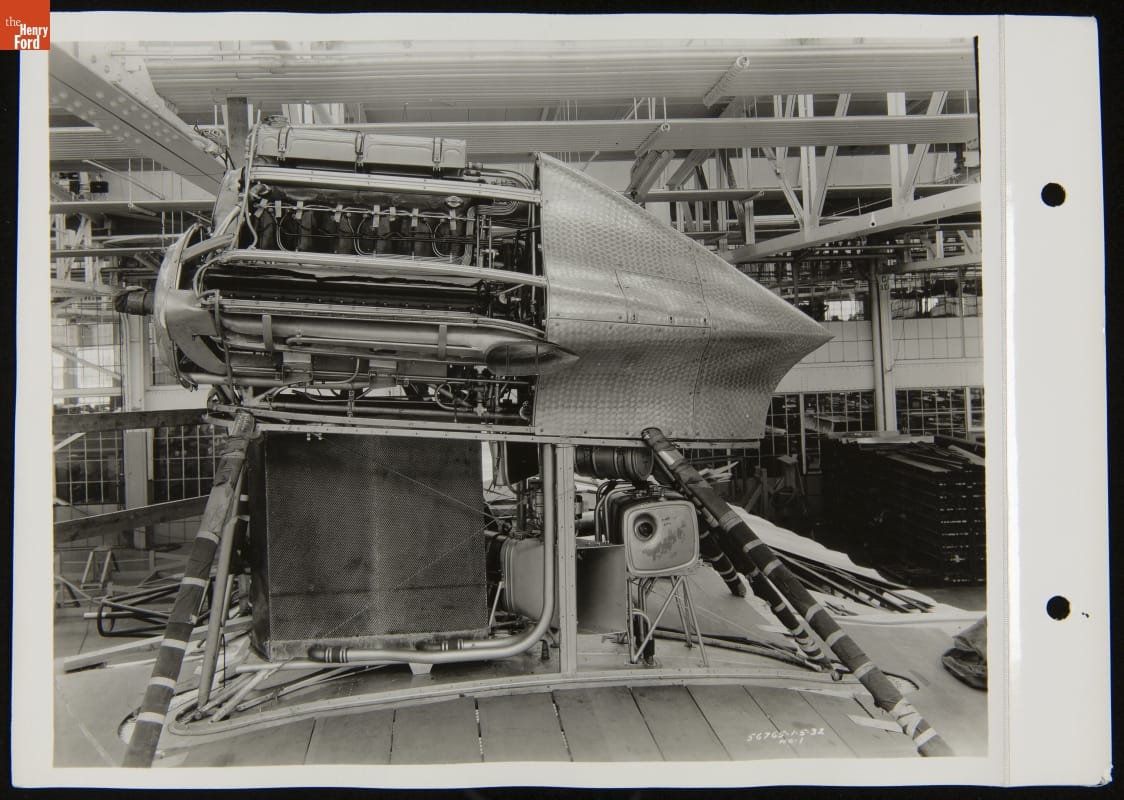
- Construction of Ford Tri-Motor 14-AT Showing Center Hispano Suiza Engine, January 1932 - Ford Motor Company's Tri-Motor, built from 1926-1933, flew in many early American airline fleets. The all-metal airplane was rugged, dependable, and equally adaptable to passenger and freight service. Tri-Motors were built with some of the same mass production techniques used in Ford's automobile plants. This version, the 14-AT, featured three Hispano-Suiza Engines. This photograph reveals the interior of the central engine.
- January 05, 1932
- Collections - Artifact
Construction of Ford Tri-Motor 14-AT Showing Center Hispano Suiza Engine, January 1932
Ford Motor Company's Tri-Motor, built from 1926-1933, flew in many early American airline fleets. The all-metal airplane was rugged, dependable, and equally adaptable to passenger and freight service. Tri-Motors were built with some of the same mass production techniques used in Ford's automobile plants. This version, the 14-AT, featured three Hispano-Suiza Engines. This photograph reveals the interior of the central engine.
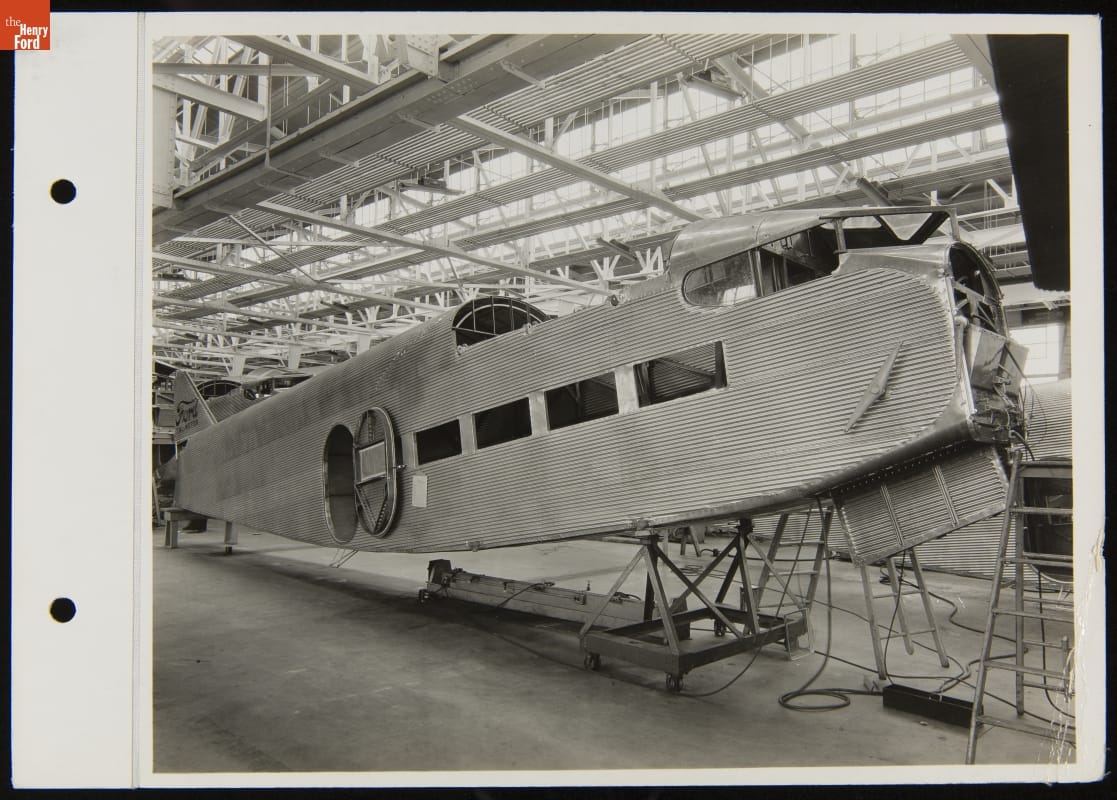
- Ford Tri-Motor Airplane Fuselage Being Constructed at the Stout Factory, Dearborn, Michigan, April 1929 - Ford Motor Company's Tri-Motor, built from 1926-1933, flew in many early American airline fleets. The all-metal airplane was rugged, dependable, and equally adaptable to passenger and freight service. Tri-Motors were built with some of the same mass production techniques used in Ford's automobile plants. The fuselage, or the main body of the airplane, is constructed in this photograph.
- April 30, 1929
- Collections - Artifact
Ford Tri-Motor Airplane Fuselage Being Constructed at the Stout Factory, Dearborn, Michigan, April 1929
Ford Motor Company's Tri-Motor, built from 1926-1933, flew in many early American airline fleets. The all-metal airplane was rugged, dependable, and equally adaptable to passenger and freight service. Tri-Motors were built with some of the same mass production techniques used in Ford's automobile plants. The fuselage, or the main body of the airplane, is constructed in this photograph.
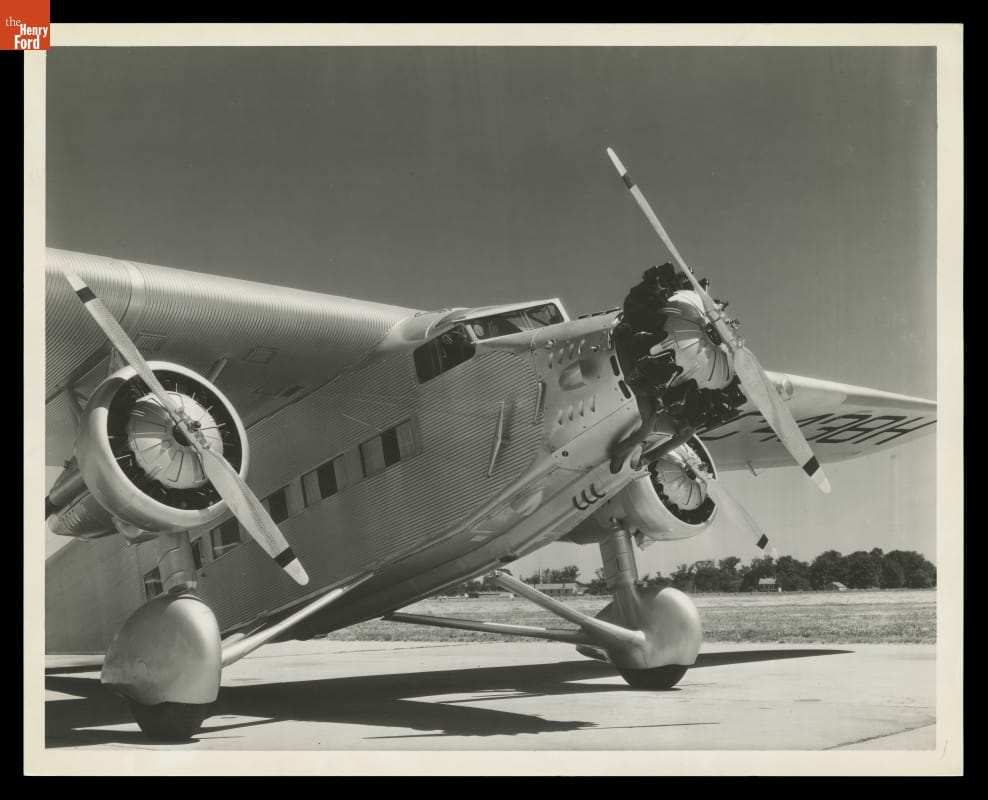
- Ford Tri-Motor 5-AT-112 Airplane at Ford Airport, 1932 - In 1928, the Stout Metal Airplane Company, a division of Ford Motor Company, introduced a new airliner. The 5-AT was faster and more powerful than its popular predecessor, the 4-AT. It had a longer wingspan and higher passenger capacity, and became the most successful all-metal, multi-engine passenger plane in the country. Virtually all existing airlines flew Ford 5-ATs.
- June 24, 1932
- Collections - Artifact
Ford Tri-Motor 5-AT-112 Airplane at Ford Airport, 1932
In 1928, the Stout Metal Airplane Company, a division of Ford Motor Company, introduced a new airliner. The 5-AT was faster and more powerful than its popular predecessor, the 4-AT. It had a longer wingspan and higher passenger capacity, and became the most successful all-metal, multi-engine passenger plane in the country. Virtually all existing airlines flew Ford 5-ATs.
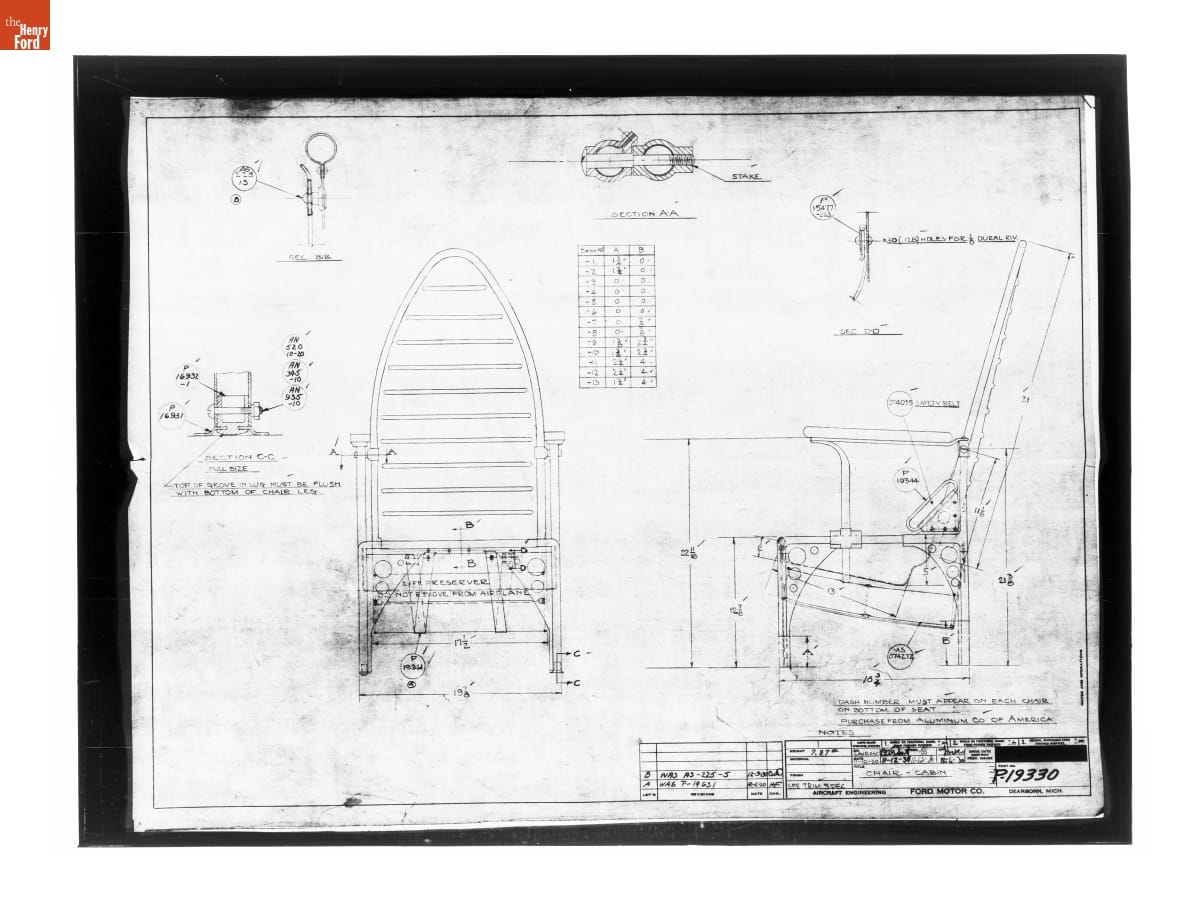
- Drawing, "Chair - Cabin," Ford Tri-Motor (5-AT), December 9, 1930 - The Ford Motor Company created over a million parts drawings from 1903 to 1957. Many of these drawings specify engineering requirements for the components of Ford-made vehicles--including automobiles, trucks, tractors, military vehicles and Tri-motor airplanes. Others document assembly components, stages of casting and forging, or experimental designs. Beginning in the 1940s, Ford transferred the drawings to microfilm.
- December 09, 1930
- Collections - Artifact
Drawing, "Chair - Cabin," Ford Tri-Motor (5-AT), December 9, 1930
The Ford Motor Company created over a million parts drawings from 1903 to 1957. Many of these drawings specify engineering requirements for the components of Ford-made vehicles--including automobiles, trucks, tractors, military vehicles and Tri-motor airplanes. Others document assembly components, stages of casting and forging, or experimental designs. Beginning in the 1940s, Ford transferred the drawings to microfilm.
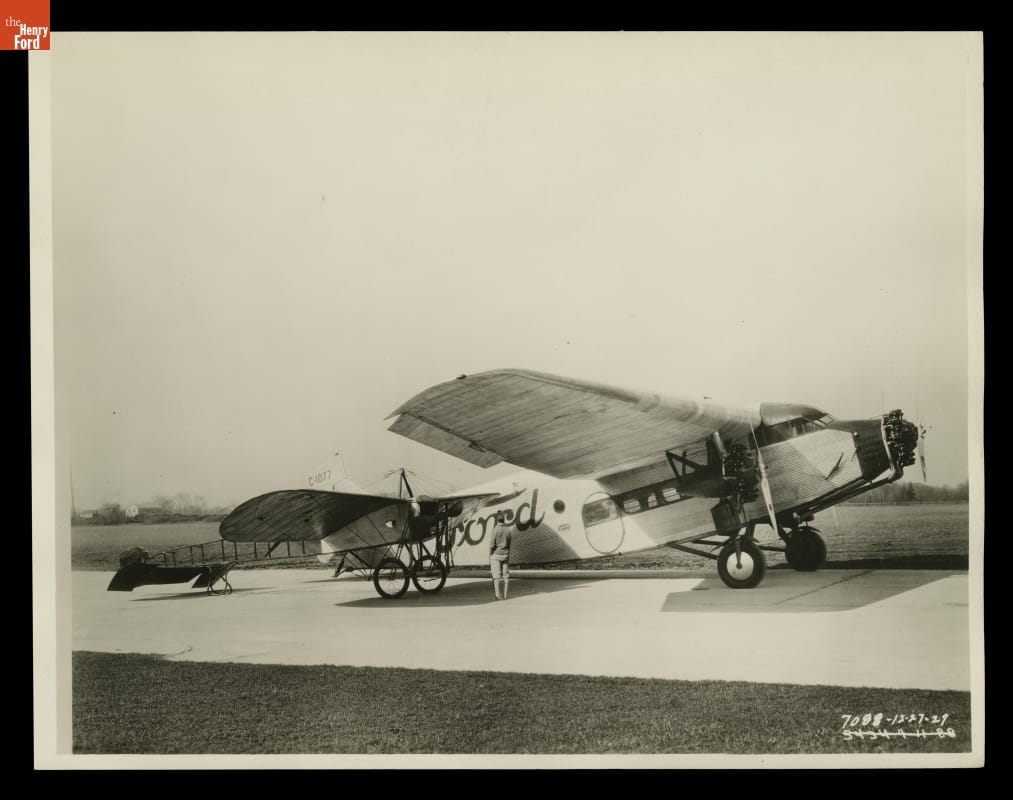
- Ford Trimotor 4-AT-10 and Bleriot Airplane at Ford Airport, Dearborn, Michigan, April 1928 - Two generations of aircraft contrasted at Ford Airport. The smaller Bleriot XI was of the type flown by French pilot Louis Bleriot across the English Channel in 1909. Its wood frame and fabric-covered surfaces were light but fragile. The larger Ford Trimotor was of a design built from 1926 to 1933. Its metal construction and three motors suggested strength and safety.
- April 11, 1928
- Collections - Artifact
Ford Trimotor 4-AT-10 and Bleriot Airplane at Ford Airport, Dearborn, Michigan, April 1928
Two generations of aircraft contrasted at Ford Airport. The smaller Bleriot XI was of the type flown by French pilot Louis Bleriot across the English Channel in 1909. Its wood frame and fabric-covered surfaces were light but fragile. The larger Ford Trimotor was of a design built from 1926 to 1933. Its metal construction and three motors suggested strength and safety.
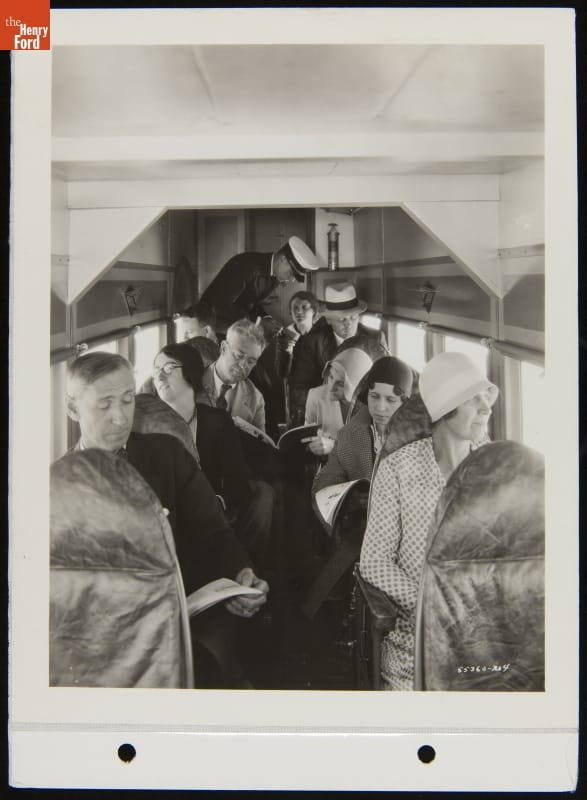
- Ford Tri-Motor Airplane, Interior Cabin Showing Steward Serving Passengers, September 1929 - Passenger air travel was a completely new -- and perhaps fearsome -- concept for most Americans in the 1920s. National advertisements for the Ford Tri-Motor promoted "roomy and comfortable" wicker passenger chairs -- one of the many advertised amenities used to convince a skeptical public of the appeal of flying in a Ford plane. Later models of the Ford Tri-Motor featured almuminum seats covered with leather.
- September 01, 1930
- Collections - Artifact
Ford Tri-Motor Airplane, Interior Cabin Showing Steward Serving Passengers, September 1929
Passenger air travel was a completely new -- and perhaps fearsome -- concept for most Americans in the 1920s. National advertisements for the Ford Tri-Motor promoted "roomy and comfortable" wicker passenger chairs -- one of the many advertised amenities used to convince a skeptical public of the appeal of flying in a Ford plane. Later models of the Ford Tri-Motor featured almuminum seats covered with leather.
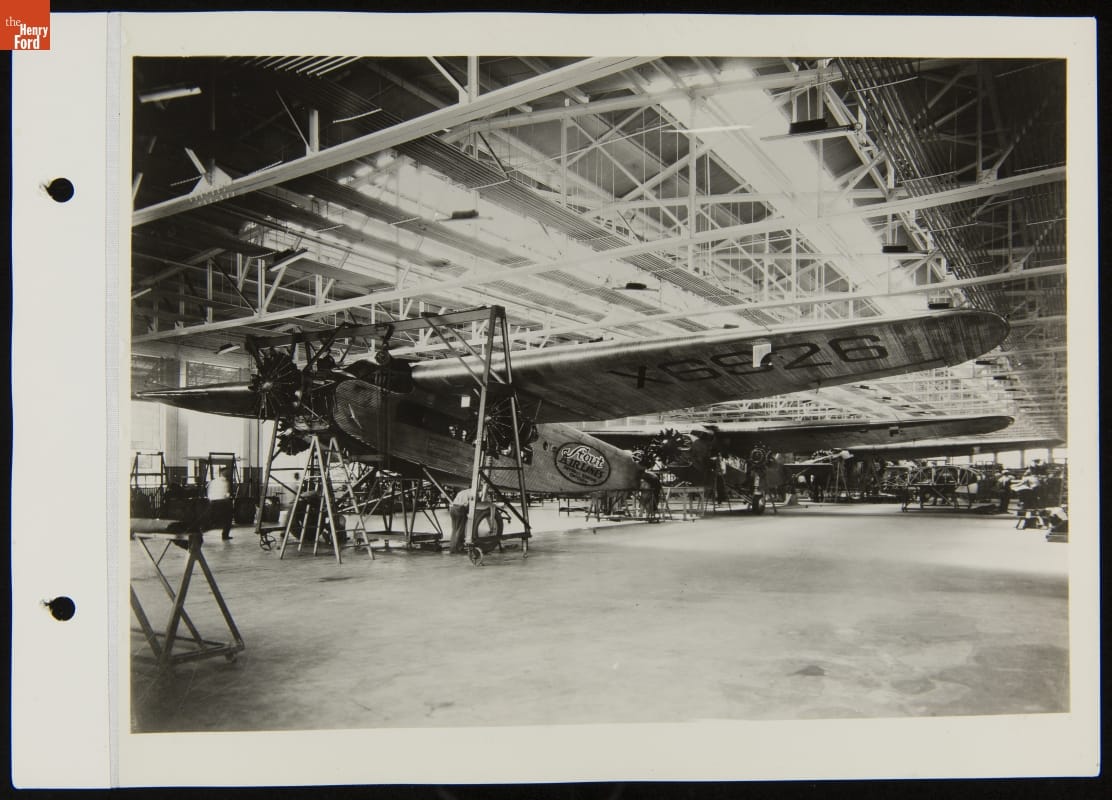
- Ford Tri-Motor Airplane Being Constructed at the Stout Factory, Dearborn, Michigan, February 1929 - Ford Motor Company's Tri-Motor, built from 1926-1933, flew in many early American airline fleets. The all-metal airplane was rugged, dependable, and equally adaptable to passenger and freight service. Tri-Motors were built with some of the same mass production techniques used in Ford's automobile plants. In this photo, the propellers are being connected to the fuselage or the main body of the airplane.
- February 19, 1929
- Collections - Artifact
Ford Tri-Motor Airplane Being Constructed at the Stout Factory, Dearborn, Michigan, February 1929
Ford Motor Company's Tri-Motor, built from 1926-1933, flew in many early American airline fleets. The all-metal airplane was rugged, dependable, and equally adaptable to passenger and freight service. Tri-Motors were built with some of the same mass production techniques used in Ford's automobile plants. In this photo, the propellers are being connected to the fuselage or the main body of the airplane.
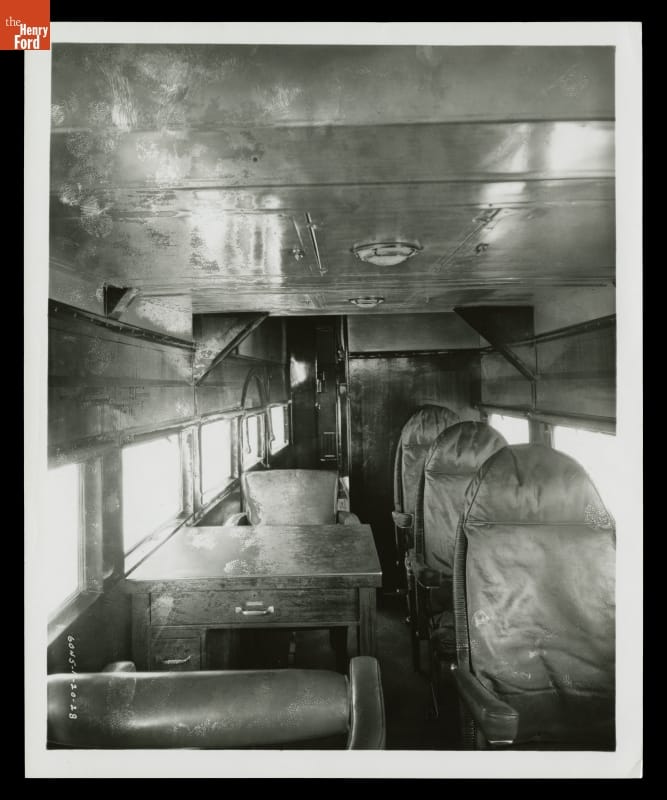
- Interior of Ford Tri-Motor Airplane with Charles Lindbergh's Desk, 1928 - Charles Lindbergh's desk is seen mounted in the passenger cabin of a Ford Tri-Motor airplane. The celebrated aviator consulted for the airline Transcontinental Air Transport in 1928, and he recommended that the company purchase Ford Tri-Motors for its fleet.
- November 20, 1928
- Collections - Artifact
Interior of Ford Tri-Motor Airplane with Charles Lindbergh's Desk, 1928
Charles Lindbergh's desk is seen mounted in the passenger cabin of a Ford Tri-Motor airplane. The celebrated aviator consulted for the airline Transcontinental Air Transport in 1928, and he recommended that the company purchase Ford Tri-Motors for its fleet.
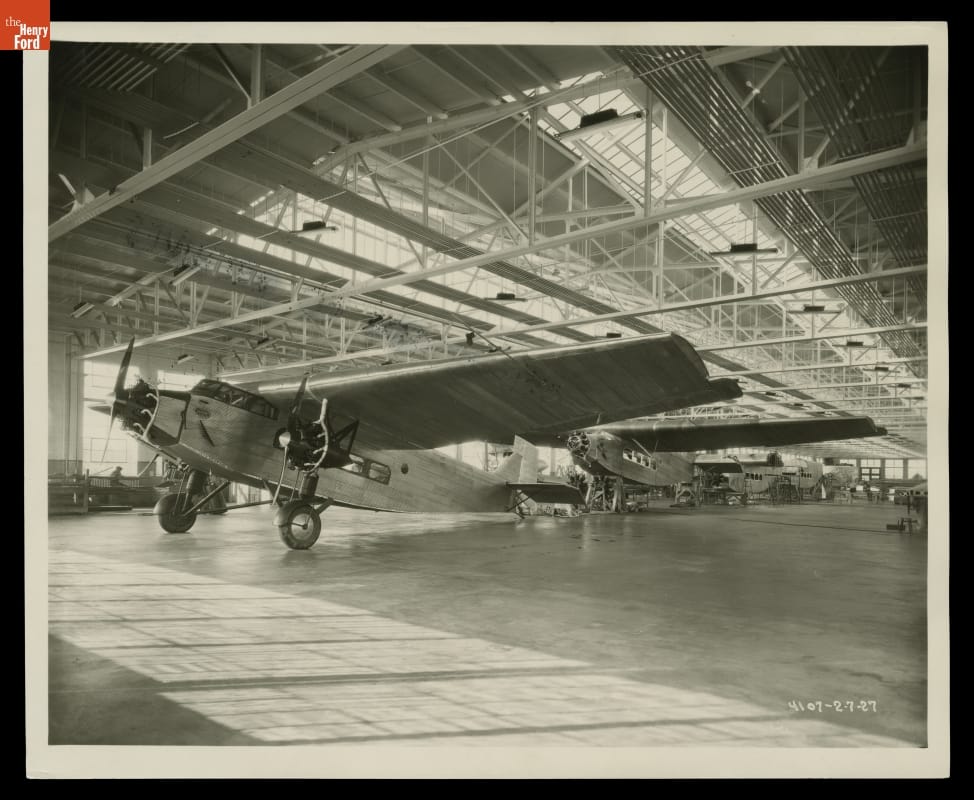
- Ford Tri-Motor Airplane Assembly Line, Dearborn, Michigan, 1927 - Henry Ford attempted to apply automobile assembly line techniques to the manufacture of airplanes, and to build them in large numbers. Monthly production peaked at 25 planes in June 1929. The Great Depression forced Ford to re-focus on his core auto business, and the company's commercial aircraft production ended in May 1933.
- February 07, 1927
- Collections - Artifact
Ford Tri-Motor Airplane Assembly Line, Dearborn, Michigan, 1927
Henry Ford attempted to apply automobile assembly line techniques to the manufacture of airplanes, and to build them in large numbers. Monthly production peaked at 25 planes in June 1929. The Great Depression forced Ford to re-focus on his core auto business, and the company's commercial aircraft production ended in May 1933.
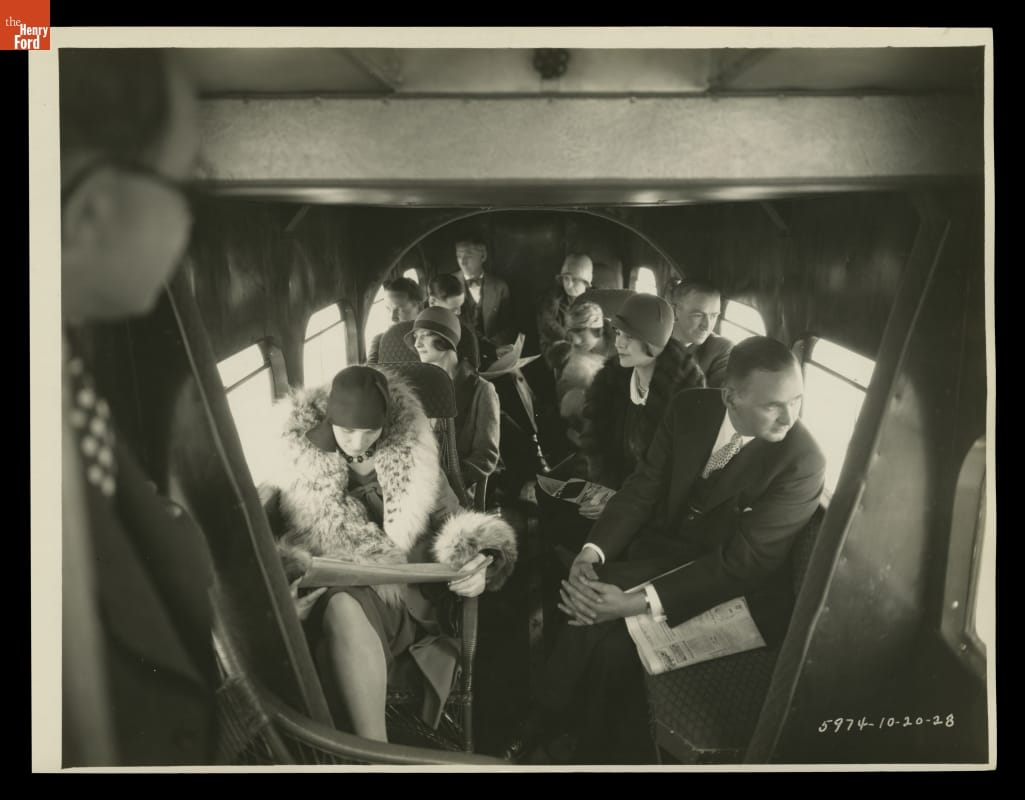
- Passengers Seated Inside a Ford Tri-Motor Airplane, October 1928 - Americans initially wondered if air travel was safe. Fatal crashes by barnstorming pilots were well publicized, and wood and cloth airplanes did not inspire confidence. But when Henry Ford began making planes, the industrialist's solid reputation eased people's fears. Ford's all-metal Tri-Motors were rugged, dependable and safe. By the late 1920s these planes were the backbone of the budding airline industry.
- October 20, 1928
- Collections - Artifact
Passengers Seated Inside a Ford Tri-Motor Airplane, October 1928
Americans initially wondered if air travel was safe. Fatal crashes by barnstorming pilots were well publicized, and wood and cloth airplanes did not inspire confidence. But when Henry Ford began making planes, the industrialist's solid reputation eased people's fears. Ford's all-metal Tri-Motors were rugged, dependable and safe. By the late 1920s these planes were the backbone of the budding airline industry.