
Search
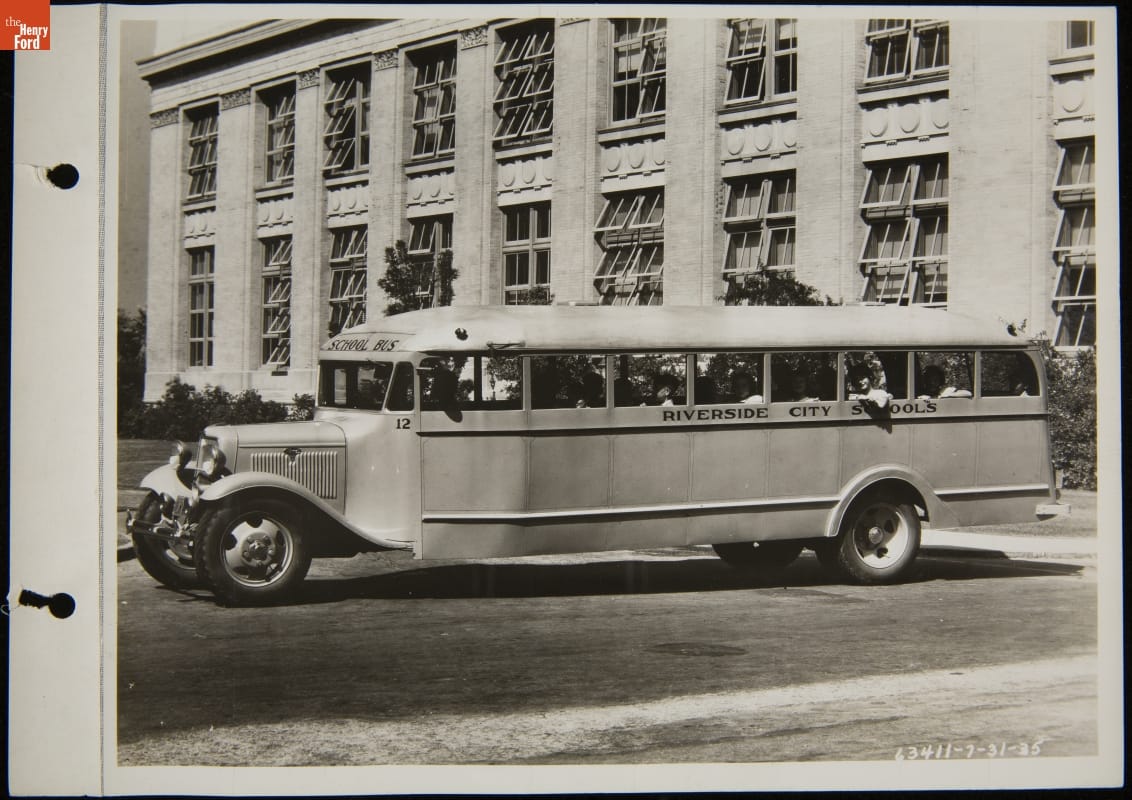
- Ford V-8 School Bus Used by Riverside City Schools, July 1935 - Ford initially offered its V-8 engine, introduced in 1932, only in its cars. But customer demand encouraged the company to make the low-priced V-8 available in its trucks and buses too. For 1935, Ford offered the V-8 in a standard 157-inch wheelbase bus chassis. Some body manufacturers lengthened Ford's standard chassis to accommodate larger bus bodies.
- July 31, 1935
- Collections - Artifact
Ford V-8 School Bus Used by Riverside City Schools, July 1935
Ford initially offered its V-8 engine, introduced in 1932, only in its cars. But customer demand encouraged the company to make the low-priced V-8 available in its trucks and buses too. For 1935, Ford offered the V-8 in a standard 157-inch wheelbase bus chassis. Some body manufacturers lengthened Ford's standard chassis to accommodate larger bus bodies.
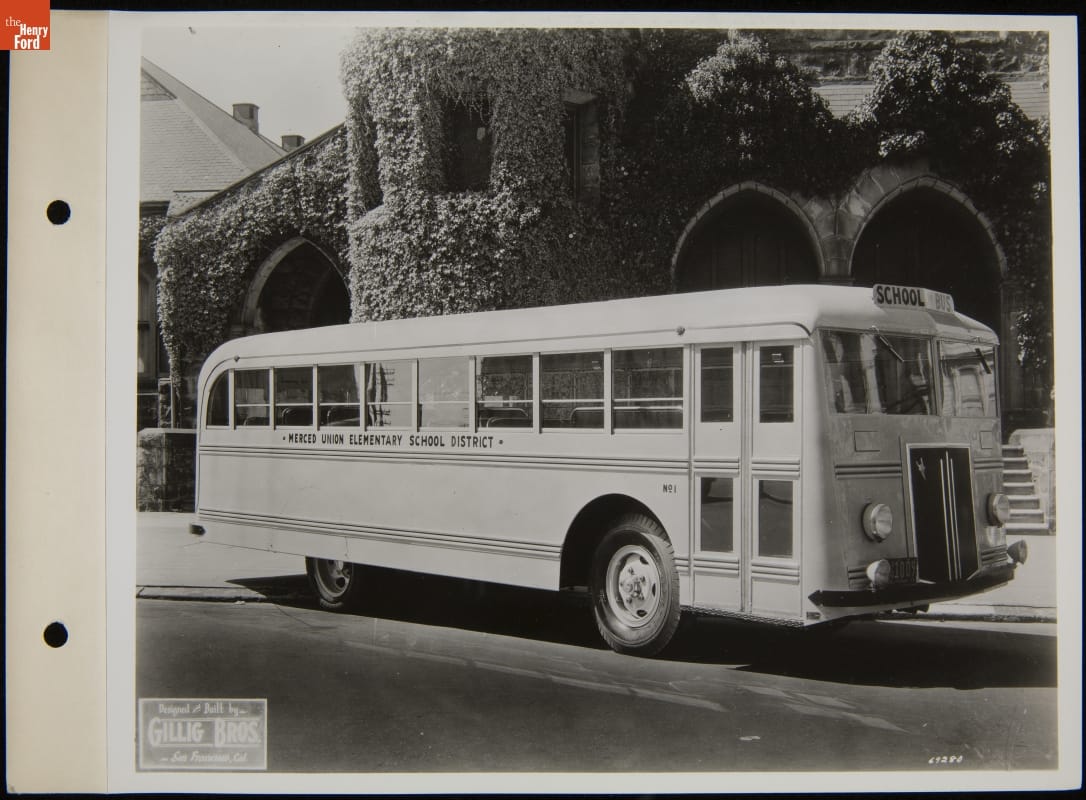
- Ford V-8 School Bus Used by Merced Union Elementary School District No. 1, November 1937 - In November 1936, Ford Motor Company introduced a "forward control" chassis for transit and school buses. The layout placed the engine underneath the driver's area rather than out front. The resulting flat-nosed design made it easier for the driver to see passengers or students crossing in front of the bus while loading or unloading.
- November 05, 1937
- Collections - Artifact
Ford V-8 School Bus Used by Merced Union Elementary School District No. 1, November 1937
In November 1936, Ford Motor Company introduced a "forward control" chassis for transit and school buses. The layout placed the engine underneath the driver's area rather than out front. The resulting flat-nosed design made it easier for the driver to see passengers or students crossing in front of the bus while loading or unloading.
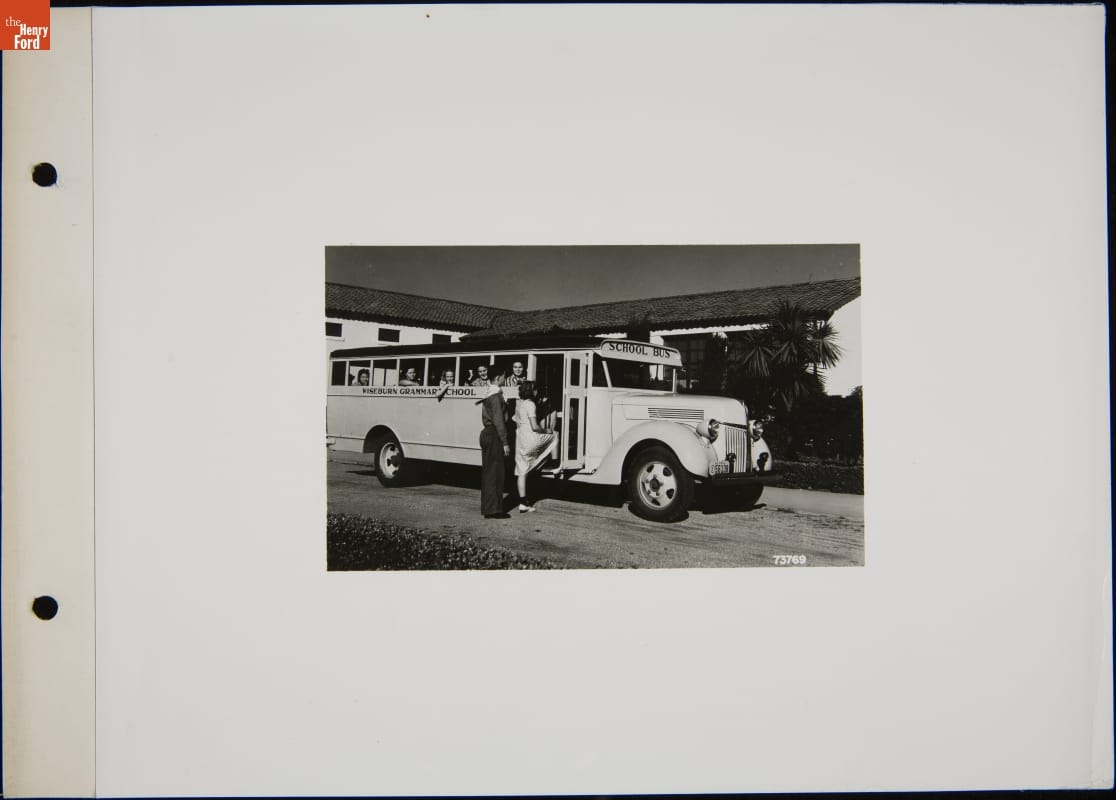
- Ford V-8 School Bus Used by Wiseburn Grammar School, El Segundo, California, May 1940 - Ford Motor Company updated the suspensions on its truck and bus chassis for 1940, replacing component designs in use since 1932. Ford also introduced its first rear-engine transit bus chassis in the 1940 model year. The school bus in this photo features the conventional front-engine layout.
- May 21, 1940
- Collections - Artifact
Ford V-8 School Bus Used by Wiseburn Grammar School, El Segundo, California, May 1940
Ford Motor Company updated the suspensions on its truck and bus chassis for 1940, replacing component designs in use since 1932. Ford also introduced its first rear-engine transit bus chassis in the 1940 model year. The school bus in this photo features the conventional front-engine layout.
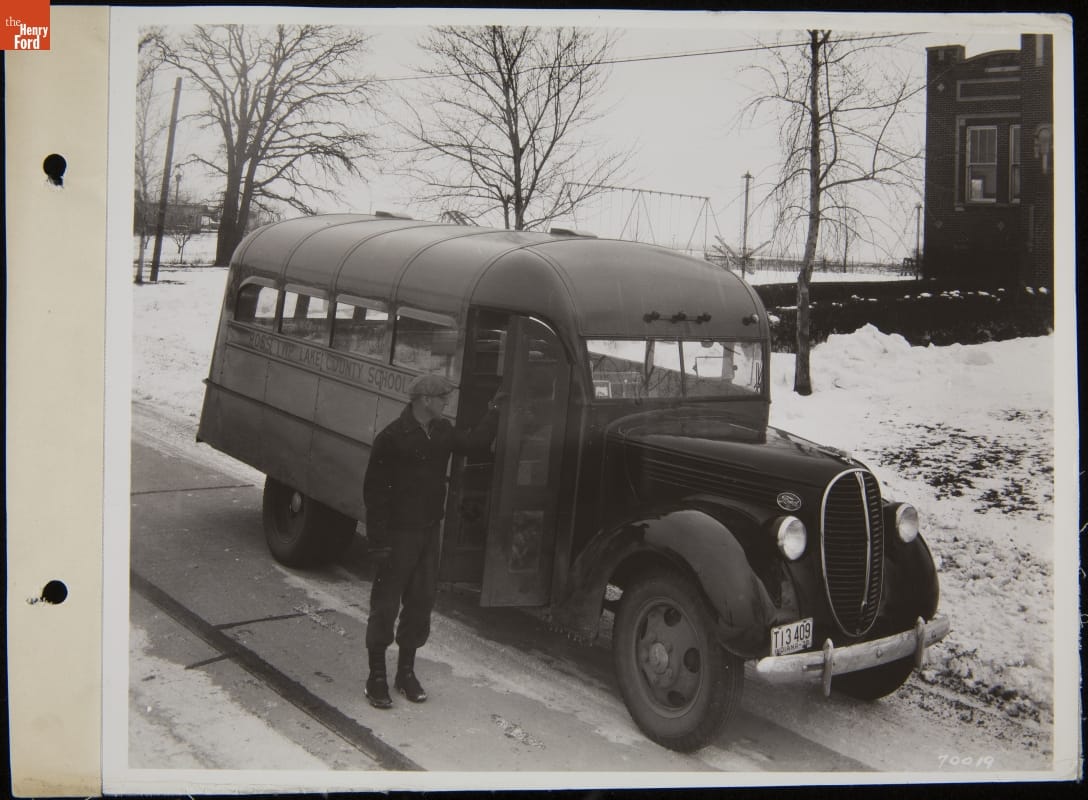
- Ford V-8 School Bus Used by Ross Township Lake County (Indiana) School, March 1938 - Ford Motor Company introduced new front ends, cabs, and bodies on its trucks and buses for 1938. It was the most significant update to these product lines since 1932. Ford's oval-grilled front ends featured the industry's first front-opening conventional truck hoods. The new look provided some style even to ordinary school buses.
- March 30, 1938
- Collections - Artifact
Ford V-8 School Bus Used by Ross Township Lake County (Indiana) School, March 1938
Ford Motor Company introduced new front ends, cabs, and bodies on its trucks and buses for 1938. It was the most significant update to these product lines since 1932. Ford's oval-grilled front ends featured the industry's first front-opening conventional truck hoods. The new look provided some style even to ordinary school buses.
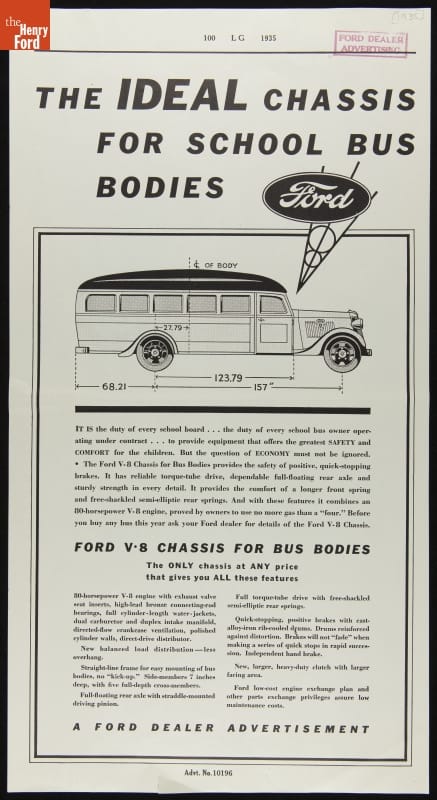
- The Ideal Chassis for School bus Bodies, 1935 - Ford initially offered its V-8 engine, introduced in 1932, only in its cars. But customer demand encouraged the company to make the low-priced V-8 available in its trucks and buses too. For 1935, Ford offered the V-8 in a standard 157-inch wheelbase bus chassis. Some body manufacturers lengthened Ford's standard chassis to accommodate larger bus bodies.
- 1935
- Collections - Artifact
The Ideal Chassis for School bus Bodies, 1935
Ford initially offered its V-8 engine, introduced in 1932, only in its cars. But customer demand encouraged the company to make the low-priced V-8 available in its trucks and buses too. For 1935, Ford offered the V-8 in a standard 157-inch wheelbase bus chassis. Some body manufacturers lengthened Ford's standard chassis to accommodate larger bus bodies.
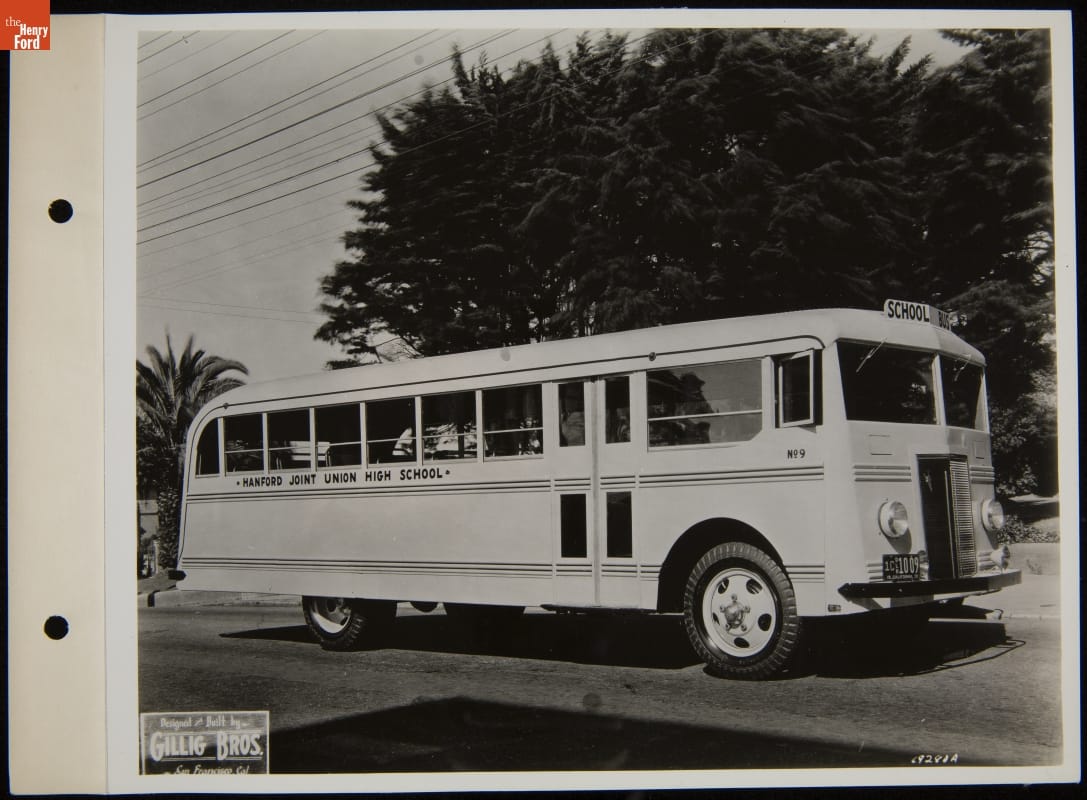
- Ford V-8 School Bus Used by Hanford Joint Union High School, November 1937 - In November 1936, Ford Motor Company introduced a "forward control" chassis for transit and school buses. The layout placed the engine underneath the driver's area rather than out front. The resulting flat-nosed design made it easier for the driver to see passengers or students crossing in front of the bus while loading or unloading.
- November 05, 1937
- Collections - Artifact
Ford V-8 School Bus Used by Hanford Joint Union High School, November 1937
In November 1936, Ford Motor Company introduced a "forward control" chassis for transit and school buses. The layout placed the engine underneath the driver's area rather than out front. The resulting flat-nosed design made it easier for the driver to see passengers or students crossing in front of the bus while loading or unloading.
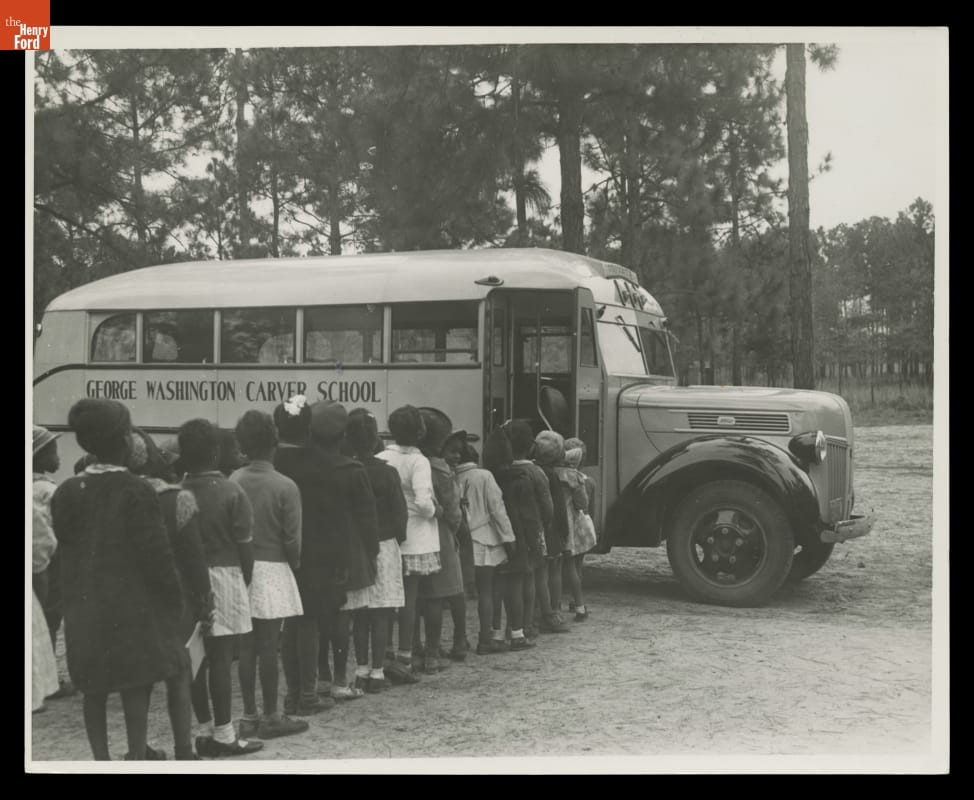
- Children Boarding the School Bus at George Washington Carver School, Richmond Hill, Georgia, circa 1940 - Henry Ford purchased vast amounts of land around Bryan County, Georgia, beginning in the 1920s. After acquiring the property, Ford became interested in the economic and civic improvement of the area. He built schools, churches and community centers. In 1939, Ford founded the George Washington Carver School. This image shows children boarding a bus which took them to and from school.
- circa 1940
- Collections - Artifact
Children Boarding the School Bus at George Washington Carver School, Richmond Hill, Georgia, circa 1940
Henry Ford purchased vast amounts of land around Bryan County, Georgia, beginning in the 1920s. After acquiring the property, Ford became interested in the economic and civic improvement of the area. He built schools, churches and community centers. In 1939, Ford founded the George Washington Carver School. This image shows children boarding a bus which took them to and from school.