
Search
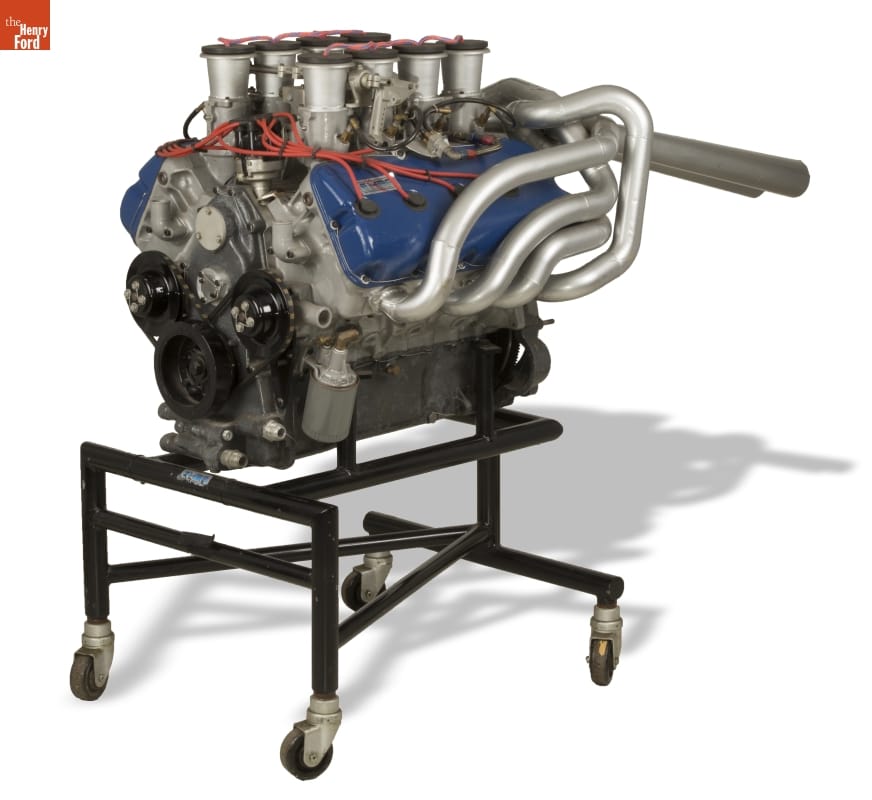
- Ford "Calliope" V-8 Automobile Engine, 1968 - Ford engineers developed the aluminum-block 427-cubic-inch "calliope" engine for the 1968 Le Mans 24-hour race. Three valves per cylinder were connected to pushrods driven by twin camshafts in the block. The distinctive fuel injector stacks above each cylinder, resembling whistles on a musical calliope, gave the engine its nickname. Rules changes at Le Mans prevented the engine from ever racing.
- 1968
- Collections - Artifact
Ford "Calliope" V-8 Automobile Engine, 1968
Ford engineers developed the aluminum-block 427-cubic-inch "calliope" engine for the 1968 Le Mans 24-hour race. Three valves per cylinder were connected to pushrods driven by twin camshafts in the block. The distinctive fuel injector stacks above each cylinder, resembling whistles on a musical calliope, gave the engine its nickname. Rules changes at Le Mans prevented the engine from ever racing.
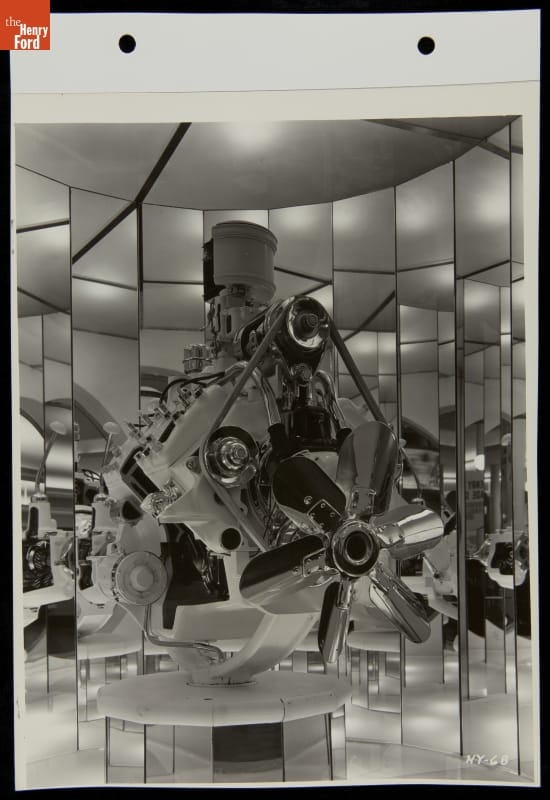
- "Ford V-8 Engine Shows its Inner Workings," Ford Exposition, New York World's Fair, 1939 - Henry Ford viewed national expositions as business opportunities <EM>and</EM> platforms for public education. During the 1939-40 New York World's Fair, Ford Motor Company spent more than $5 million to build and maintain an elaborate exposition space. Informative displays and manufacturing demonstrations inside Ford's massive fair building offered visitors an in-depth, entertaining, and educational look at industrial processes.
- May 03, 1939
- Collections - Artifact
"Ford V-8 Engine Shows its Inner Workings," Ford Exposition, New York World's Fair, 1939
Henry Ford viewed national expositions as business opportunities and platforms for public education. During the 1939-40 New York World's Fair, Ford Motor Company spent more than $5 million to build and maintain an elaborate exposition space. Informative displays and manufacturing demonstrations inside Ford's massive fair building offered visitors an in-depth, entertaining, and educational look at industrial processes.
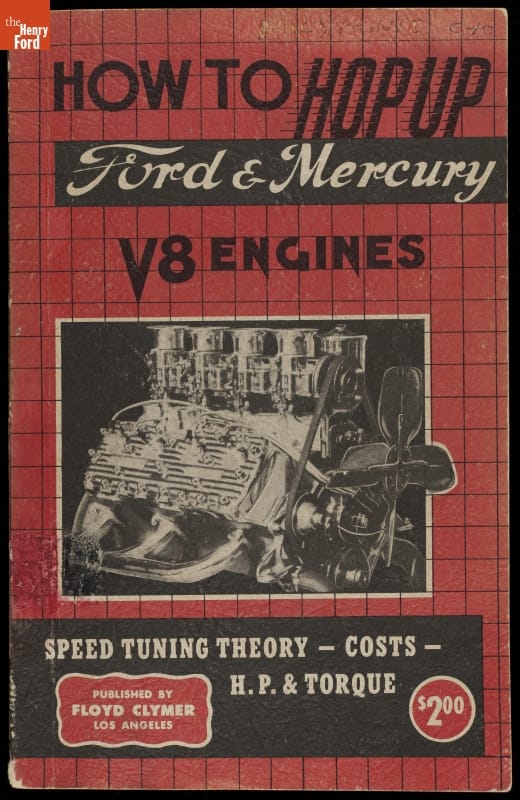
- "How to Hop Up Ford & Mercury V-8 Engines," 1951 - How do you go fast if you can't purchase a powerful engine? The size and weight of a stock V-8 engine built by Ford and Mercury offered racers an affordable option. And rodders could eke out more horsepower by relying on this book.
- 1951
- Collections - Artifact
"How to Hop Up Ford & Mercury V-8 Engines," 1951
How do you go fast if you can't purchase a powerful engine? The size and weight of a stock V-8 engine built by Ford and Mercury offered racers an affordable option. And rodders could eke out more horsepower by relying on this book.
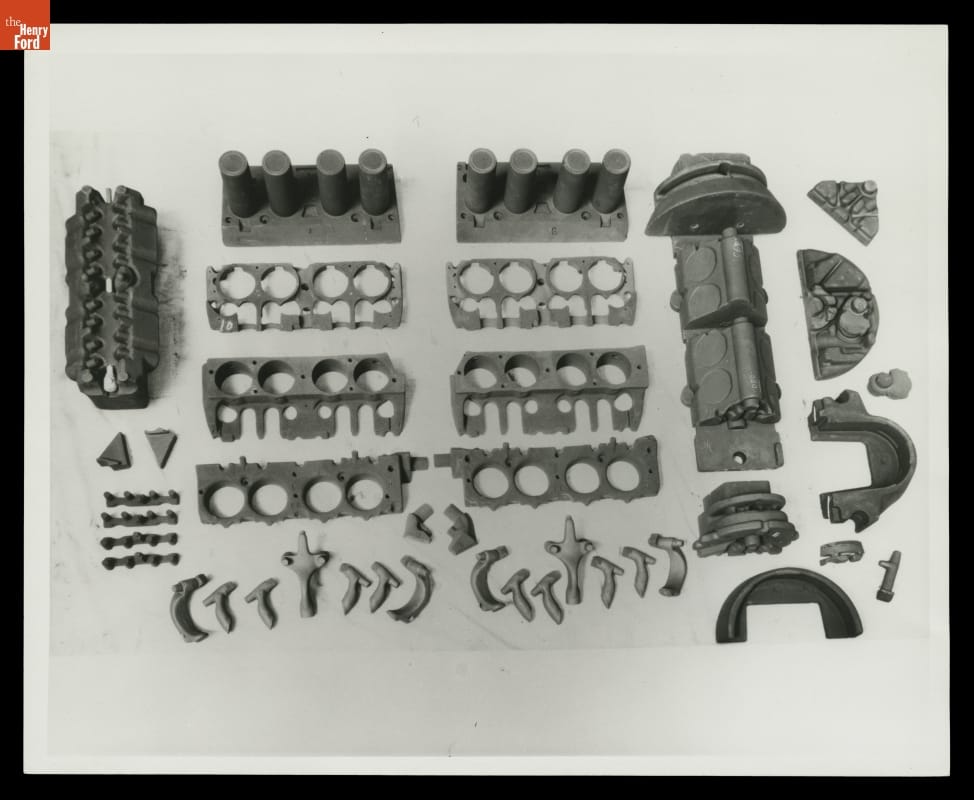
- Photographic Print, View of Ford V-8 Engine Parts, September 9, 1932 - These molded sand shapes -- called cores -- were essential to casting the cylinder blocks for Ford V-8 engines. Automobile engines are mostly hollow inside. The cores were necessary to create voids in the final casting for the crank, pistons, valve gear, cooling water, and lubricating oil.
- September 09, 1932
- Collections - Artifact
Photographic Print, View of Ford V-8 Engine Parts, September 9, 1932
These molded sand shapes -- called cores -- were essential to casting the cylinder blocks for Ford V-8 engines. Automobile engines are mostly hollow inside. The cores were necessary to create voids in the final casting for the crank, pistons, valve gear, cooling water, and lubricating oil.
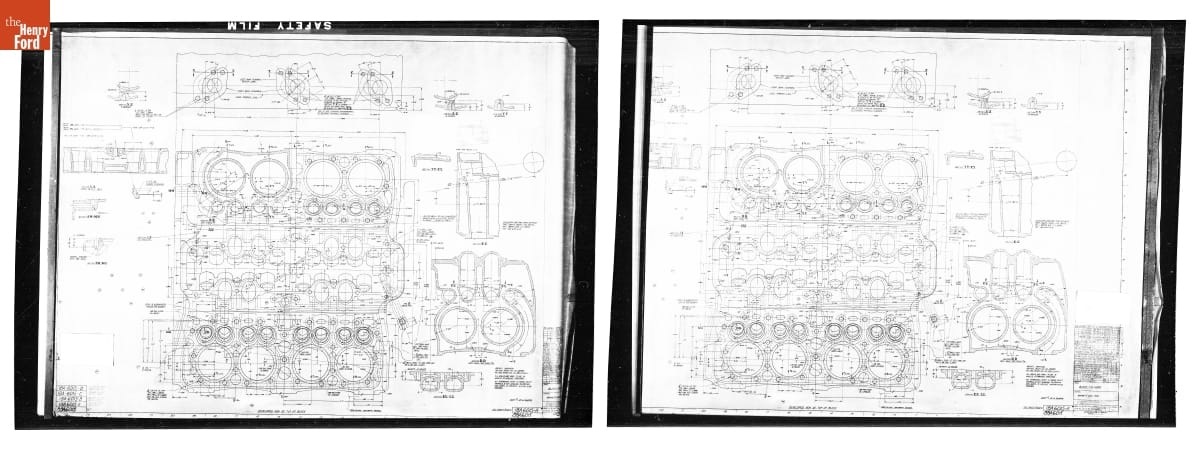
- Drawing, "Block - Cylinder, Sheet #1," Ford Flathead V-8 Engine, May 16, 1952 - Ford Motor Company brought eight-cylinder power to the masses when it introduced its flathead V-8 engine in 1932. The crankcase and cylinder banks were cast as a single unit, reducing manufacturing cost and sale price on the finished car. Ford's enduring engine remained in production, with modifications, until 1953. This drawing was made near the end of its run.
- May 16, 1952
- Collections - Artifact
Drawing, "Block - Cylinder, Sheet #1," Ford Flathead V-8 Engine, May 16, 1952
Ford Motor Company brought eight-cylinder power to the masses when it introduced its flathead V-8 engine in 1932. The crankcase and cylinder banks were cast as a single unit, reducing manufacturing cost and sale price on the finished car. Ford's enduring engine remained in production, with modifications, until 1953. This drawing was made near the end of its run.
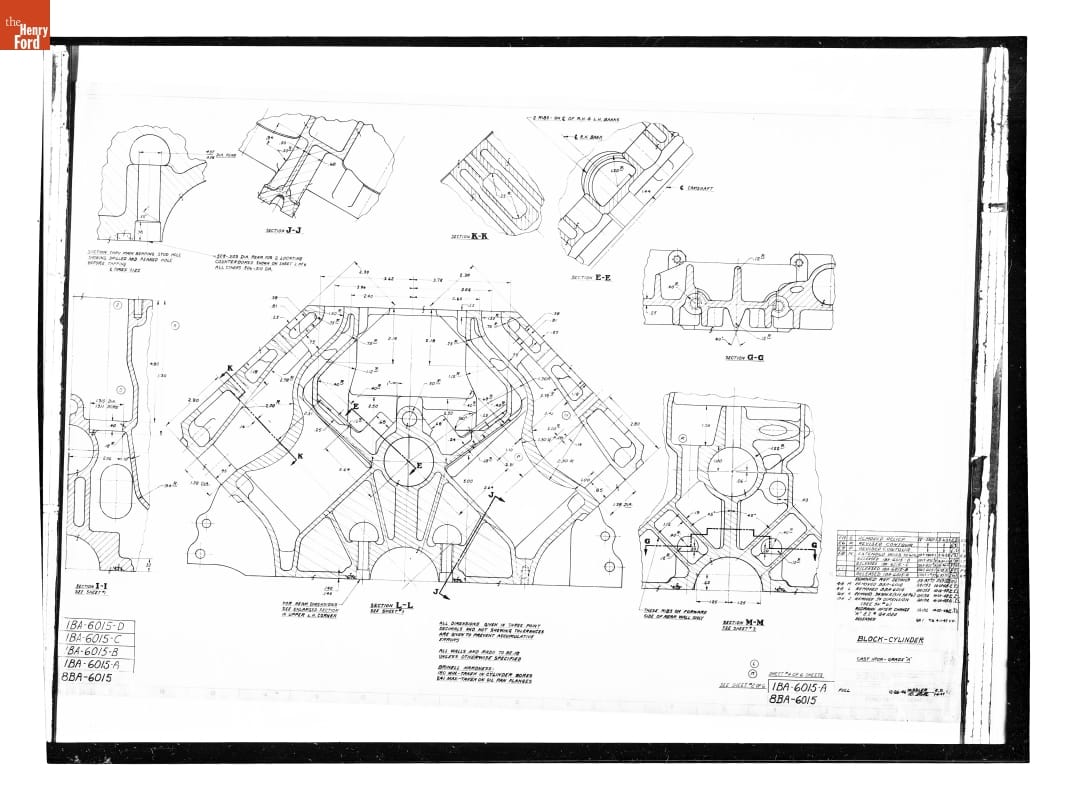
- Drawing, "Block - Cylinder, Sheet #4," Ford Flathead V-8 Engine, February 4, 1953 - Ford Motor Company brought eight-cylinder power to the masses when it introduced its flathead V-8 engine in 1932. The crankcase and cylinder banks were cast as a single unit, reducing manufacturing cost and sale price on the finished car. Ford's enduring engine remained in production, with modifications, until 1953. This drawing was made near the end of its run.
- February 04, 1953
- Collections - Artifact
Drawing, "Block - Cylinder, Sheet #4," Ford Flathead V-8 Engine, February 4, 1953
Ford Motor Company brought eight-cylinder power to the masses when it introduced its flathead V-8 engine in 1932. The crankcase and cylinder banks were cast as a single unit, reducing manufacturing cost and sale price on the finished car. Ford's enduring engine remained in production, with modifications, until 1953. This drawing was made near the end of its run.
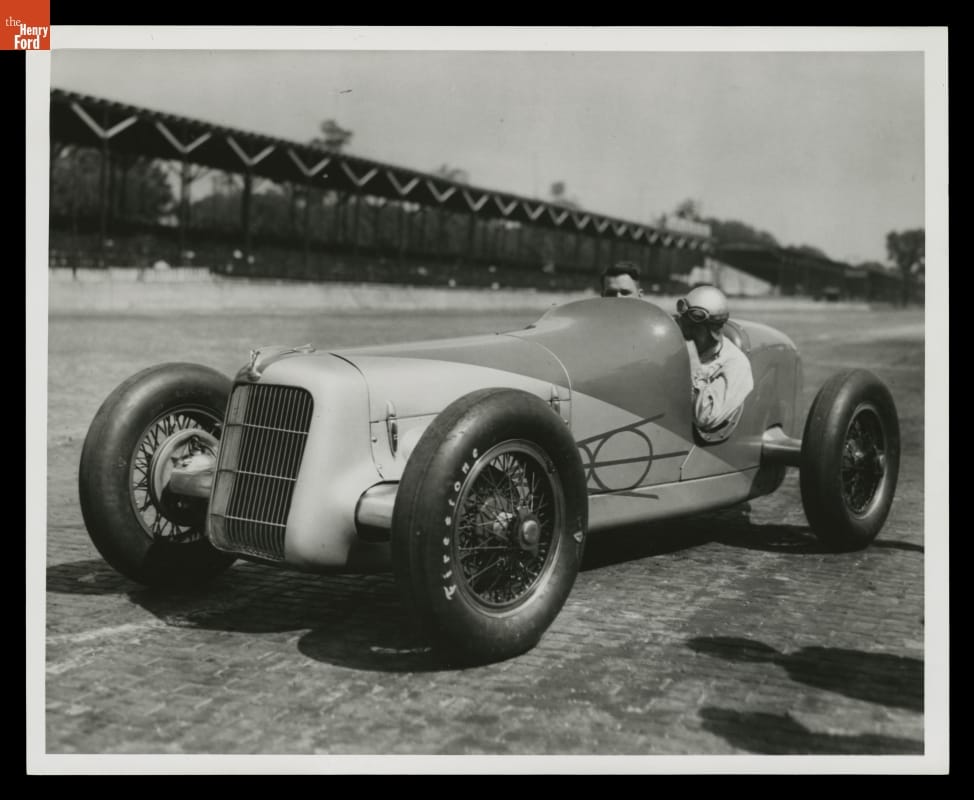
- Ford-Miller Special Race Car at the 1935 Indianapolis 500 Race - Race car builder Harry Miller and entrepreneur Preston Tucker convinced Ford Motor Company to sponsor ten Miller-designed cars at the 1935 Indianapolis 500. The front-wheel-drive racers used Ford V-8 engines under their streamlined bodies. Unfortunately, Miller did not have enough time to thoroughly test the cars and mechanical problems prevented all of them from finishing the race.
- May 30, 1935
- Collections - Artifact
Ford-Miller Special Race Car at the 1935 Indianapolis 500 Race
Race car builder Harry Miller and entrepreneur Preston Tucker convinced Ford Motor Company to sponsor ten Miller-designed cars at the 1935 Indianapolis 500. The front-wheel-drive racers used Ford V-8 engines under their streamlined bodies. Unfortunately, Miller did not have enough time to thoroughly test the cars and mechanical problems prevented all of them from finishing the race.
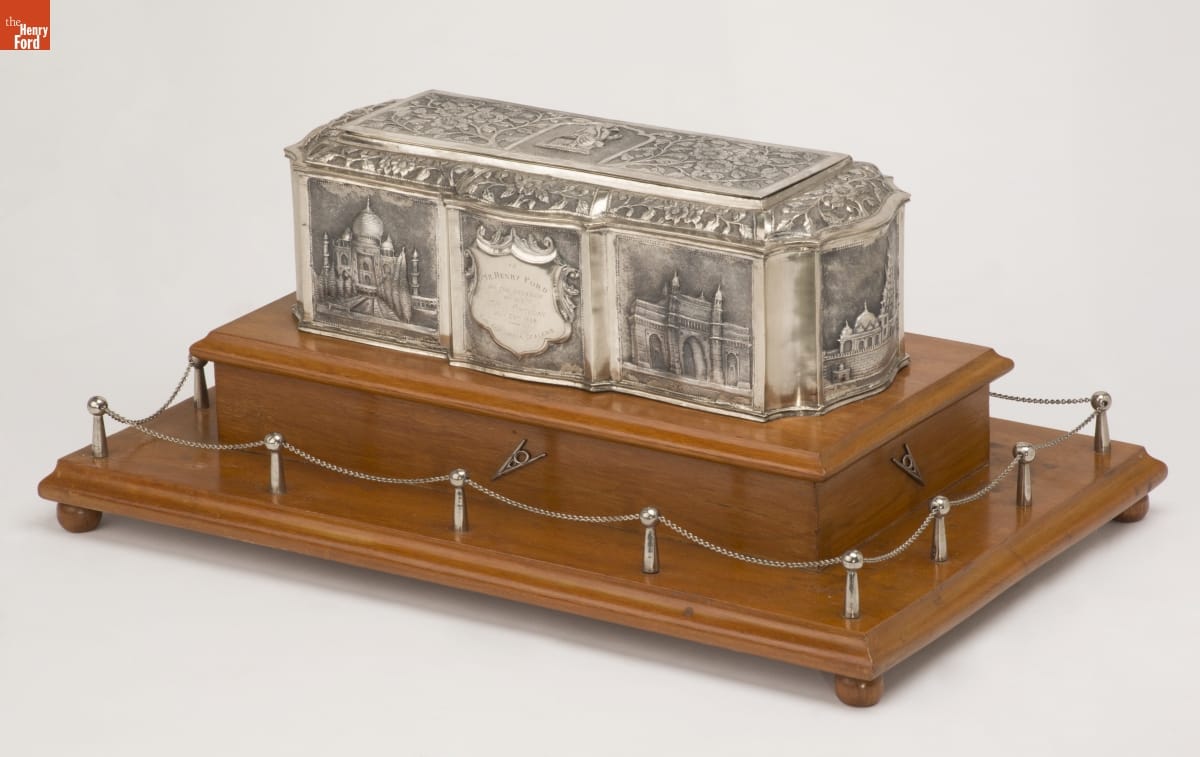
- Presentation Box with Scroll Given to Henry Ford by FordIndia Auto Dealers, July 30, 1938 - Henry Ford's corporate family was generous when it came to acknowledging their leader's enterprising and innovative strides forward. Within this elaborately rendered silver casket is a scroll signed by representatives of Fordindia marking the occasion of Henry Ford's 75th birthday. The inscription reveals the esteem and high regard which was felt by Ford employees towards their employer.
- 1938
- Collections - Artifact
Presentation Box with Scroll Given to Henry Ford by FordIndia Auto Dealers, July 30, 1938
Henry Ford's corporate family was generous when it came to acknowledging their leader's enterprising and innovative strides forward. Within this elaborately rendered silver casket is a scroll signed by representatives of Fordindia marking the occasion of Henry Ford's 75th birthday. The inscription reveals the esteem and high regard which was felt by Ford employees towards their employer.
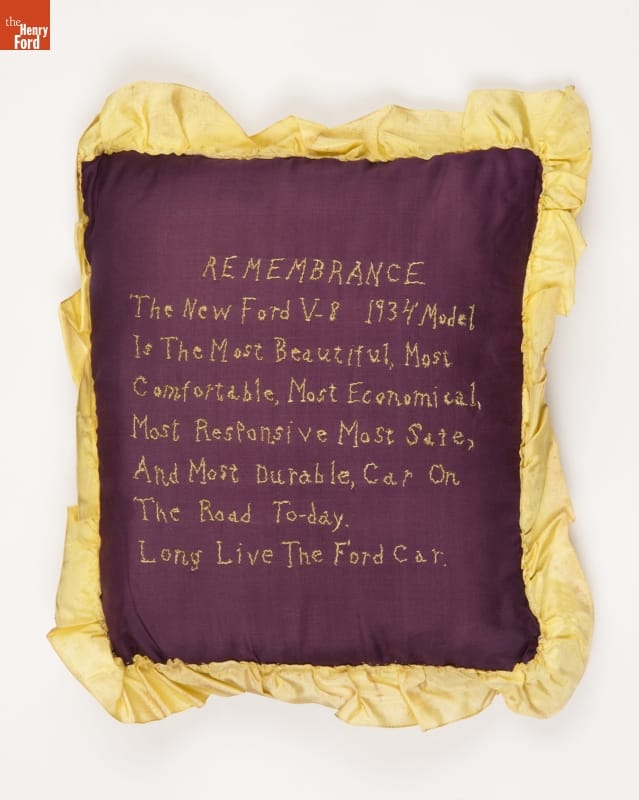
- Embroidered Pillow, Gift to Henry Ford, 1934 - For many women in the early 20th century, Henry Ford's affordable automobile represented freedom and financial security, especially if they were fortunate to be part of the Ford Motor Company family. Their expressions of thanks were often homemade, proud examples of their needle working skills. The embroidered motto reveals the donor's affection for Ford products.
- 1934
- Collections - Artifact
Embroidered Pillow, Gift to Henry Ford, 1934
For many women in the early 20th century, Henry Ford's affordable automobile represented freedom and financial security, especially if they were fortunate to be part of the Ford Motor Company family. Their expressions of thanks were often homemade, proud examples of their needle working skills. The embroidered motto reveals the donor's affection for Ford products.
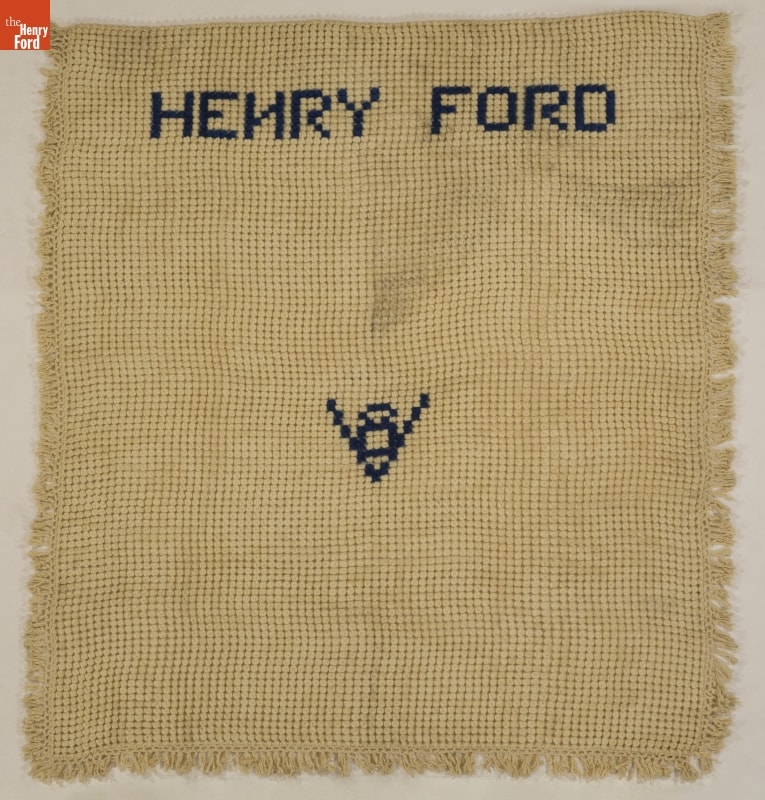
- Bedcover with V-8 Symbol, Gift to Henry Ford, 1930-1940 - For many women in the early 20th century, Henry Ford's affordable automobile represented freedom and financial security, especially if they were fortunate to be part of the Ford Motor Company family. Their expressions of thanks were often homemade, proud examples of their needle working skills. The embroidered motifs often represented Ford products.
- 1930-1940
- Collections - Artifact
Bedcover with V-8 Symbol, Gift to Henry Ford, 1930-1940
For many women in the early 20th century, Henry Ford's affordable automobile represented freedom and financial security, especially if they were fortunate to be part of the Ford Motor Company family. Their expressions of thanks were often homemade, proud examples of their needle working skills. The embroidered motifs often represented Ford products.