
Search
- Construction at Ford Motor Company Hydroelectric Station, Saline, Michigan, December 1935 - In the early 1920s, Henry Ford began locating small hydroelectrically powered plants in rural southeast Michigan. These "Village Industries" employed local people who could maintain farms while working at the factory. One plant, constructed in Saline in the mid-1930s, operated until 1947. During World War II, workers here processed soybean oil for paints and plastics and machined parts for Pratt & Whitney engines.
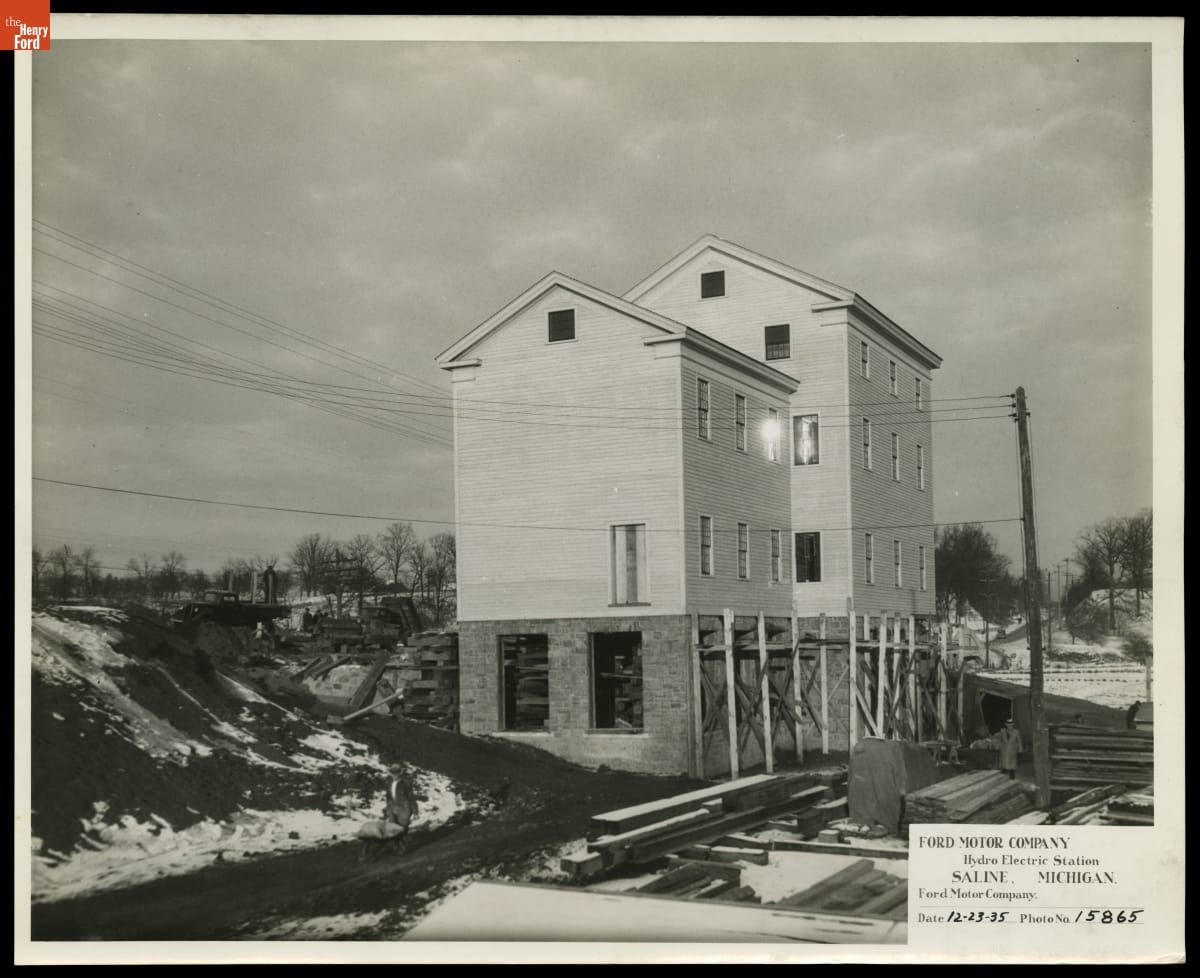
- December 23, 1935
- Collections - Artifact
Construction at Ford Motor Company Hydroelectric Station, Saline, Michigan, December 1935
In the early 1920s, Henry Ford began locating small hydroelectrically powered plants in rural southeast Michigan. These "Village Industries" employed local people who could maintain farms while working at the factory. One plant, constructed in Saline in the mid-1930s, operated until 1947. During World War II, workers here processed soybean oil for paints and plastics and machined parts for Pratt & Whitney engines.
- Construction at Ford Motor Company Hydroelectric Station, Saline, Michigan, August 1935 - In the early 1920s, Henry Ford began locating small hydroelectrically powered plants in rural southeast Michigan. These "Village Industries" employed local people who could maintain farms while working at the factory. One plant, constructed in Saline in the mid-1930s, operated until 1947. During World War II, workers here processed soybean oil for paints and plastics and machined parts for Pratt & Whitney engines.
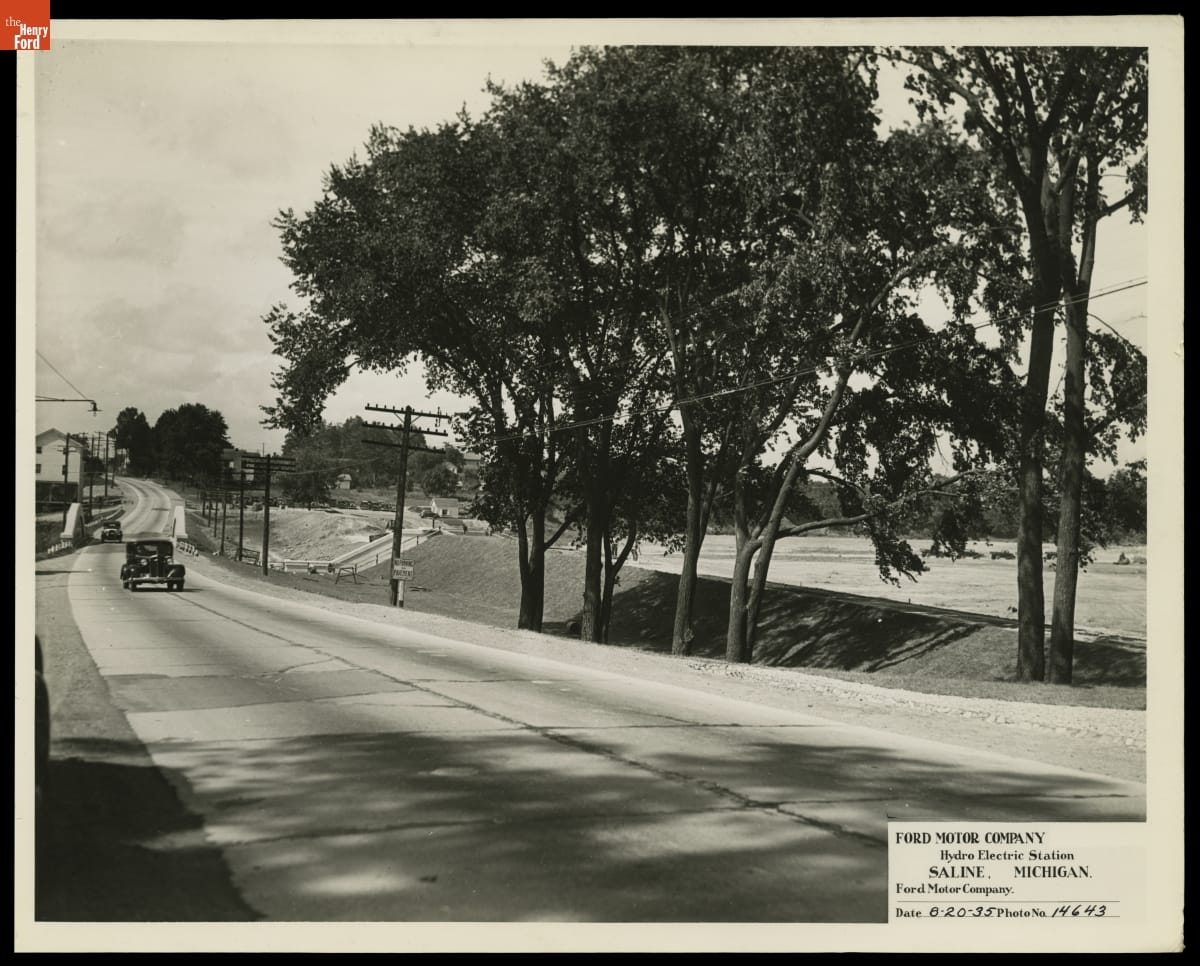
- August 20, 1935
- Collections - Artifact
Construction at Ford Motor Company Hydroelectric Station, Saline, Michigan, August 1935
In the early 1920s, Henry Ford began locating small hydroelectrically powered plants in rural southeast Michigan. These "Village Industries" employed local people who could maintain farms while working at the factory. One plant, constructed in Saline in the mid-1930s, operated until 1947. During World War II, workers here processed soybean oil for paints and plastics and machined parts for Pratt & Whitney engines.
- Construction at Ford Motor Company Hydroelectric Station, Saline, Michigan, August 1936 - In the early 1920s, Henry Ford began locating small hydroelectrically powered plants in rural southeast Michigan. These "Village Industries" employed local people who could maintain farms while working at the factory. One plant, constructed in Saline in the mid-1930s, operated until 1947. During World War II, workers here processed soybean oil for paints and plastics and machined parts for Pratt & Whitney engines.
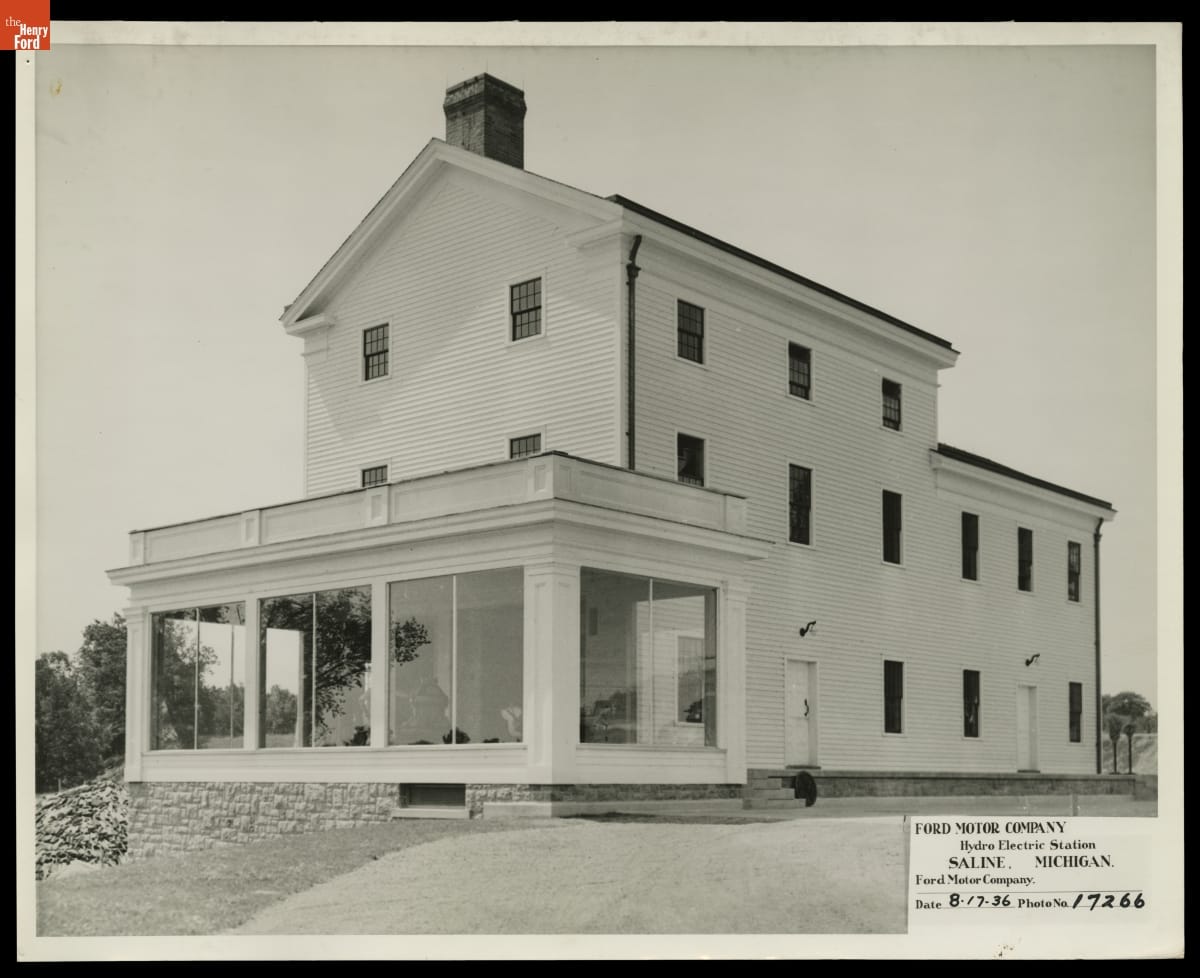
- August 17, 1936
- Collections - Artifact
Construction at Ford Motor Company Hydroelectric Station, Saline, Michigan, August 1936
In the early 1920s, Henry Ford began locating small hydroelectrically powered plants in rural southeast Michigan. These "Village Industries" employed local people who could maintain farms while working at the factory. One plant, constructed in Saline in the mid-1930s, operated until 1947. During World War II, workers here processed soybean oil for paints and plastics and machined parts for Pratt & Whitney engines.
- Making Soybean Paint for Automobiles, Ford Village Industry Plant, Saline, Michigan, November 18, 1941 - In the early 1920s, Henry Ford began locating small hydroelectrically powered plants in rural southeast Michigan. These "Village Industries" employed local people who could maintain farms while working at the factory. The plant in Saline operated from 1938 until 1947. During World War II, workers here processed soybean oil for paints and plastics, and they machined parts for Pratt & Whitney engines.
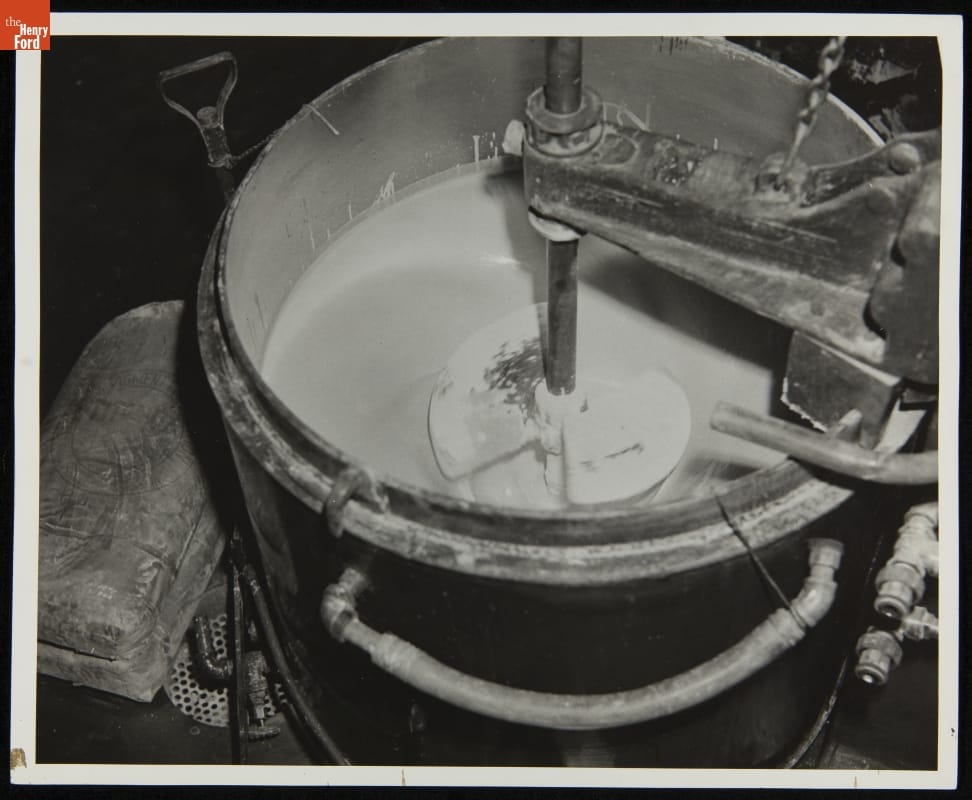
- November 18, 1941
- Collections - Artifact
Making Soybean Paint for Automobiles, Ford Village Industry Plant, Saline, Michigan, November 18, 1941
In the early 1920s, Henry Ford began locating small hydroelectrically powered plants in rural southeast Michigan. These "Village Industries" employed local people who could maintain farms while working at the factory. The plant in Saline operated from 1938 until 1947. During World War II, workers here processed soybean oil for paints and plastics, and they machined parts for Pratt & Whitney engines.
- Children Swimming at Ford Village Industries Hydroelectric Plant, Saline, Michigan, July 1935 - In the early 1920s, Henry Ford began locating small hydroelectrically powered plants in rural southeast Michigan. These "Village Industries" employed local people who could maintain farms while working at the factory. The plant in Saline operated from 1938 until 1947. During World War II, workers here processed soybean oil for paints and plastics, and they machined parts for Pratt & Whitney engines.
- July 22, 1935
- Collections - Artifact
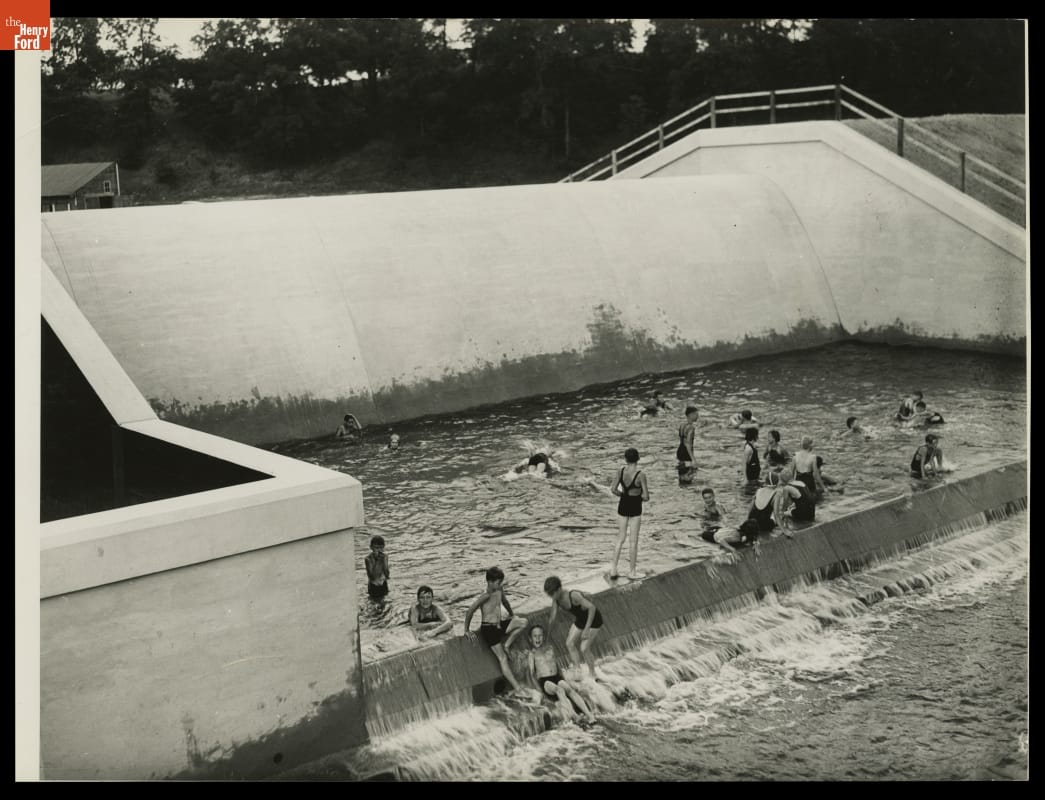
Children Swimming at Ford Village Industries Hydroelectric Plant, Saline, Michigan, July 1935
In the early 1920s, Henry Ford began locating small hydroelectrically powered plants in rural southeast Michigan. These "Village Industries" employed local people who could maintain farms while working at the factory. The plant in Saline operated from 1938 until 1947. During World War II, workers here processed soybean oil for paints and plastics, and they machined parts for Pratt & Whitney engines.
- Construction at Ford Motor Company Hydroelectric Station, Saline, Michigan, December 1935 - In the early 1920s, Henry Ford began locating small hydroelectrically powered plants in rural southeast Michigan. These "Village Industries" employed local people who could maintain farms while working at the factory. One plant, constructed in Saline in the mid-1930s, operated until 1947. During World War II, workers here processed soybean oil for paints and plastics and machined parts for Pratt & Whitney engines.
- December 09, 1935
- Collections - Artifact
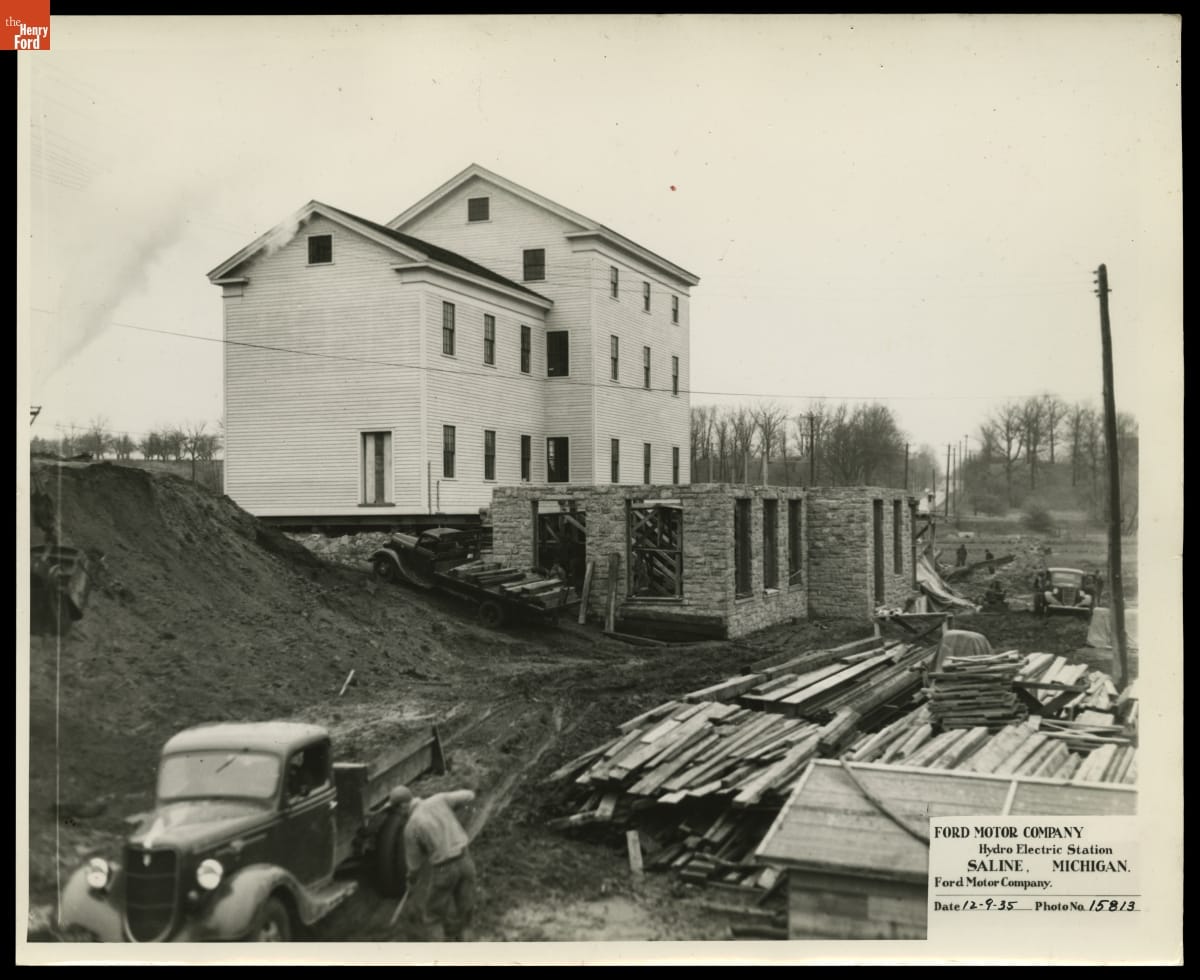
Construction at Ford Motor Company Hydroelectric Station, Saline, Michigan, December 1935
In the early 1920s, Henry Ford began locating small hydroelectrically powered plants in rural southeast Michigan. These "Village Industries" employed local people who could maintain farms while working at the factory. One plant, constructed in Saline in the mid-1930s, operated until 1947. During World War II, workers here processed soybean oil for paints and plastics and machined parts for Pratt & Whitney engines.
- Making Soybean Paint for Automobiles, Ford Village Industry Plant, Saline, Michigan, November 1941 - In the early 1920s, Henry Ford began locating small hydroelectrically powered plants in rural southeast Michigan. These "Village Industries" employed local people who could maintain farms while working at the factory. The plant in Saline operated from 1938 until 1947. During World War II, workers here processed soybean oil for paints and plastics, and they machined parts for Pratt & Whitney engines.
- November 18, 1941
- Collections - Artifact
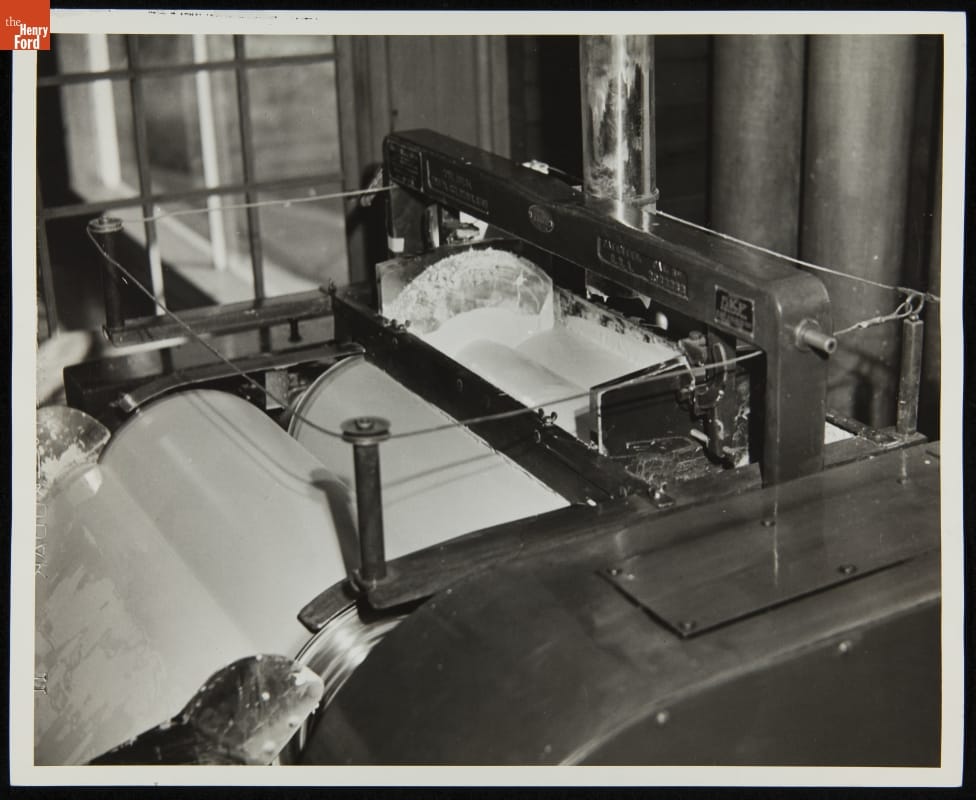
Making Soybean Paint for Automobiles, Ford Village Industry Plant, Saline, Michigan, November 1941
In the early 1920s, Henry Ford began locating small hydroelectrically powered plants in rural southeast Michigan. These "Village Industries" employed local people who could maintain farms while working at the factory. The plant in Saline operated from 1938 until 1947. During World War II, workers here processed soybean oil for paints and plastics, and they machined parts for Pratt & Whitney engines.
- Making Soybean Paint for Automobiles, Ford Village Industry Plant, Saline, Michigan, November 1941 - In the early 1920s, Henry Ford began locating small hydroelectrically powered plants in rural southeast Michigan. These "Village Industries" employed local people who could maintain farms while working at the factory. The plant in Saline operated from 1938 until 1947. During World War II, workers here processed soybean oil for paints and plastics, and they machined parts for Pratt & Whitney engines.
- November 18, 1941
- Collections - Artifact
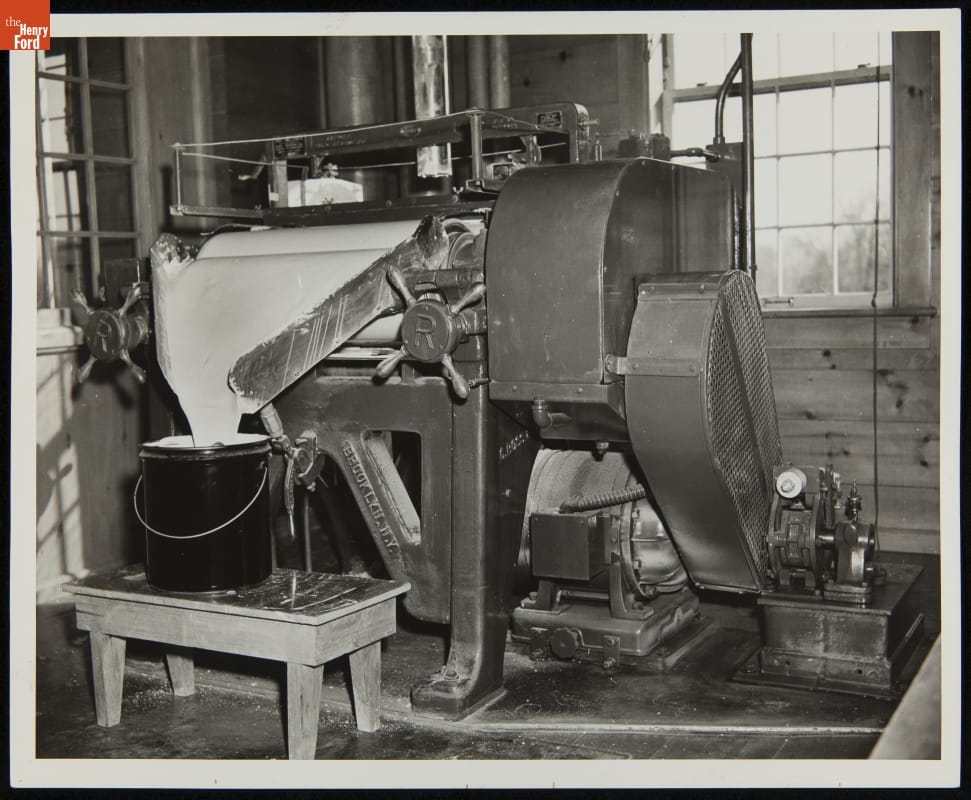
Making Soybean Paint for Automobiles, Ford Village Industry Plant, Saline, Michigan, November 1941
In the early 1920s, Henry Ford began locating small hydroelectrically powered plants in rural southeast Michigan. These "Village Industries" employed local people who could maintain farms while working at the factory. The plant in Saline operated from 1938 until 1947. During World War II, workers here processed soybean oil for paints and plastics, and they machined parts for Pratt & Whitney engines.
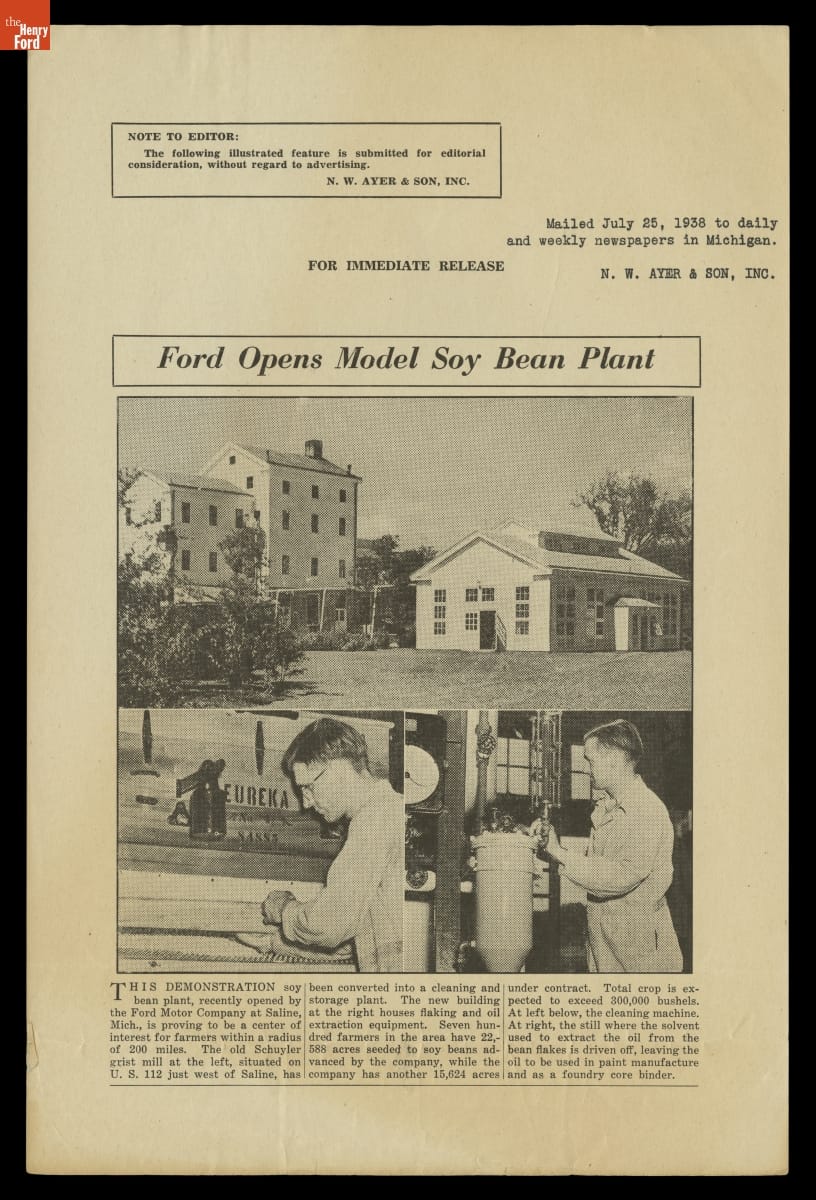
- Ford Opens Model Soy Bean Plant, July 1938 - In the early 1920s, Henry Ford began locating small hydroelectrically powered plants in rural southeast Michigan. These "Village Industries" employed local people who could maintain farms while working at the factory. The plant in Saline operated from 1938 until 1947. During World War II, workers here processed soybean oil for paints and plastics, and they machined parts for Pratt & Whitney engines.
- July 25, 1938
- Collections - Artifact
Ford Opens Model Soy Bean Plant, July 1938
In the early 1920s, Henry Ford began locating small hydroelectrically powered plants in rural southeast Michigan. These "Village Industries" employed local people who could maintain farms while working at the factory. The plant in Saline operated from 1938 until 1947. During World War II, workers here processed soybean oil for paints and plastics, and they machined parts for Pratt & Whitney engines.
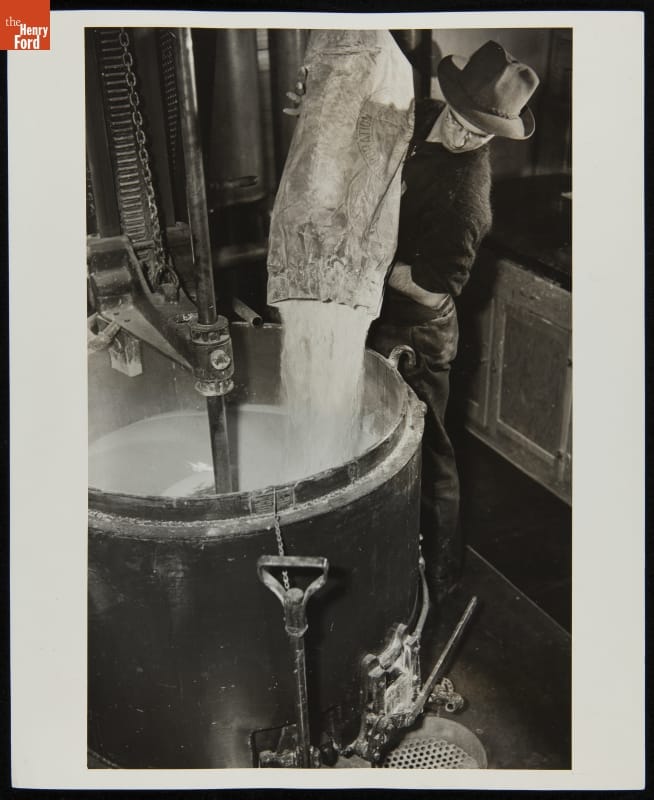
- Making Soybean Paint for Automobiles, Ford Village Industry Plant, Saline, Michigan, November 1941 - In the early 1920s, Henry Ford began locating small hydroelectrically powered plants in rural southeast Michigan. These "Village Industries" employed local people who could maintain farms while working at the factory. The plant in Saline operated from 1938 until 1947. During World War II, workers here processed soybean oil for paints and plastics, and they machined parts for Pratt & Whitney engines.
- November 18, 1941
- Collections - Artifact
Making Soybean Paint for Automobiles, Ford Village Industry Plant, Saline, Michigan, November 1941
In the early 1920s, Henry Ford began locating small hydroelectrically powered plants in rural southeast Michigan. These "Village Industries" employed local people who could maintain farms while working at the factory. The plant in Saline operated from 1938 until 1947. During World War II, workers here processed soybean oil for paints and plastics, and they machined parts for Pratt & Whitney engines.