
Search
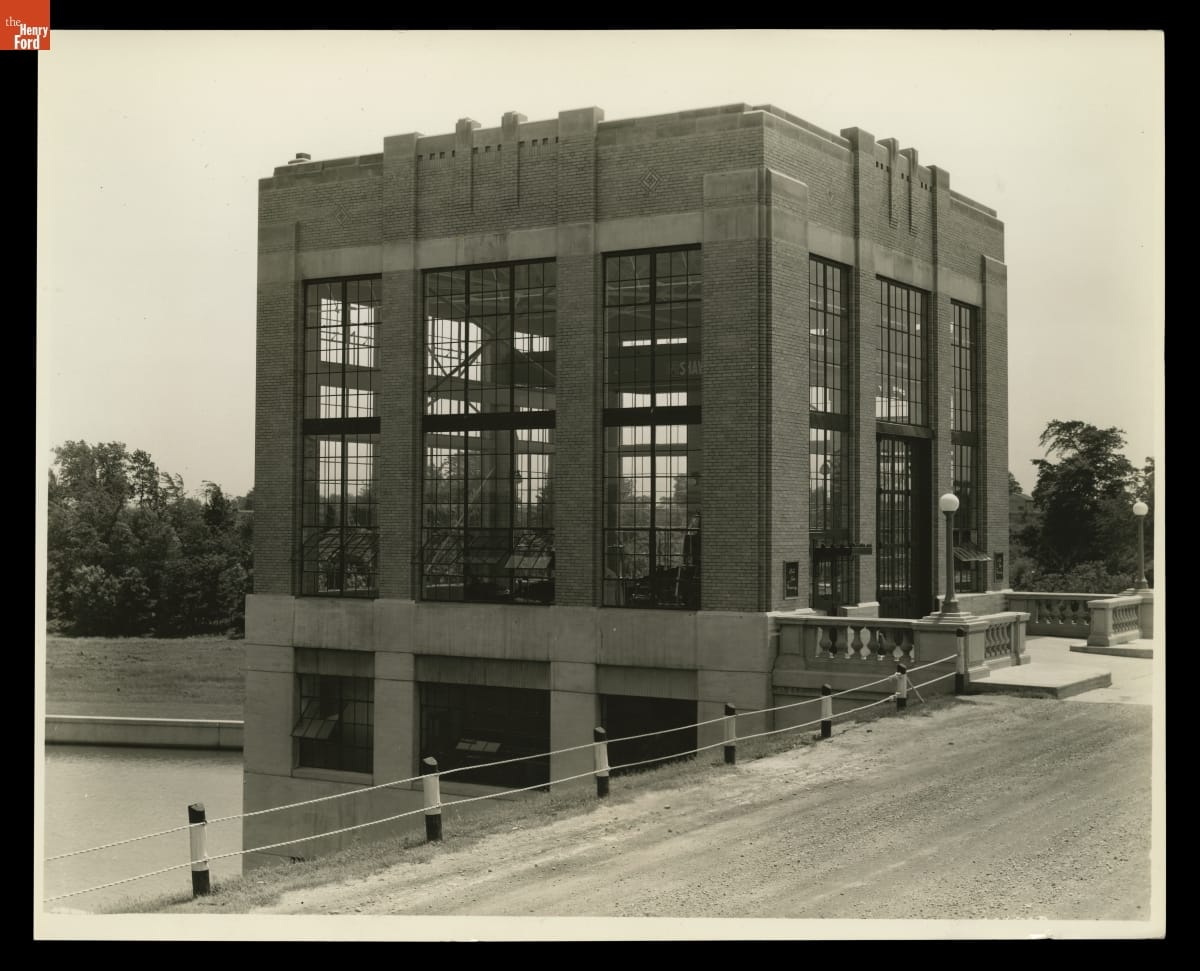
- Ford Lake Dam and Powerhouse, Rawsonville, Michigan, June 1936 - Henry Ford built a dam on the Huron River at Rawsonville, Michigan, in 1931-1932. The dam and resulting Ford Lake reservoir were part of a hydroelectric plant that supplied power to a nearby Ford Motor Company plant. The dam and reservoir were given to the nearby city of Ypsilanti in 1969. Today Ford Lake is popular for boating and fishing.
- June 03, 1936
- Collections - Artifact
Ford Lake Dam and Powerhouse, Rawsonville, Michigan, June 1936
Henry Ford built a dam on the Huron River at Rawsonville, Michigan, in 1931-1932. The dam and resulting Ford Lake reservoir were part of a hydroelectric plant that supplied power to a nearby Ford Motor Company plant. The dam and reservoir were given to the nearby city of Ypsilanti in 1969. Today Ford Lake is popular for boating and fishing.
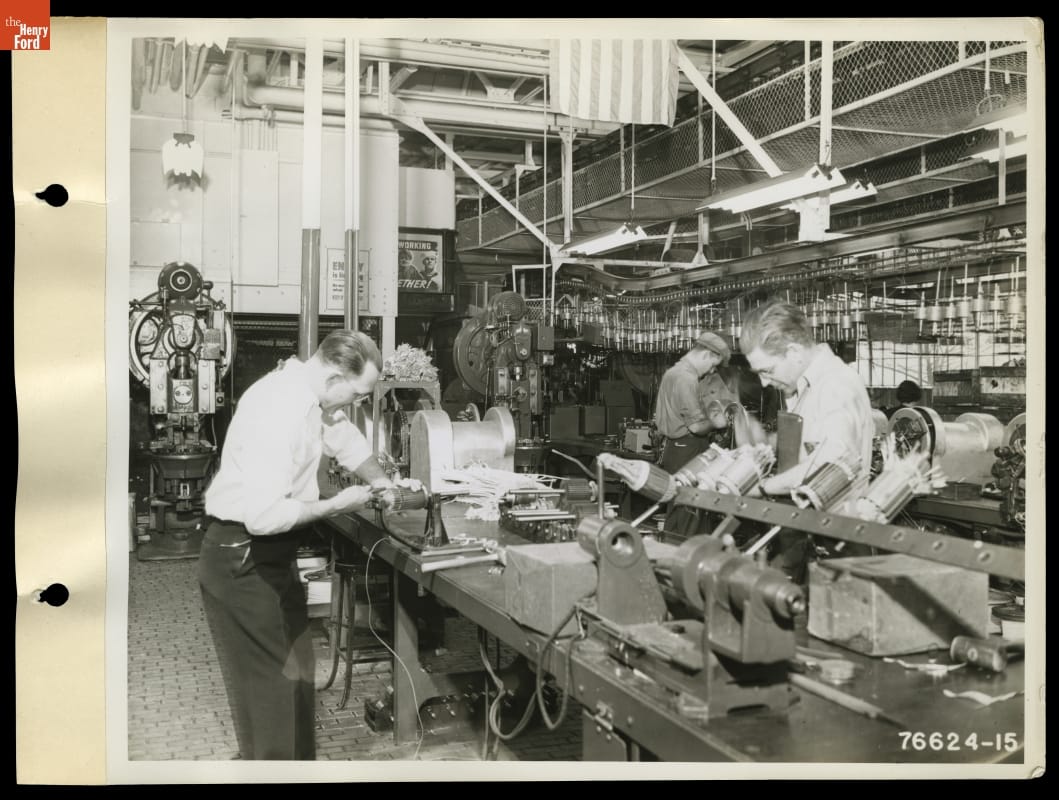
- Ford Ypsilanti Village Industry Plant Before Changeover to Defense Work, March 1942 - In the early 1920s, Henry Ford began locating small hydroelectrically powered plants in rural southeast Michigan. These "Village Industries" employed local people who could maintain farms while working at the factory. The plant at Ypsilanti operated from 1932 to 1947 and produced automobile starters and generators. As many as 1,500 people worked there, making it the largest of these small factories.
- March 16, 1942
- Collections - Artifact
Ford Ypsilanti Village Industry Plant Before Changeover to Defense Work, March 1942
In the early 1920s, Henry Ford began locating small hydroelectrically powered plants in rural southeast Michigan. These "Village Industries" employed local people who could maintain farms while working at the factory. The plant at Ypsilanti operated from 1932 to 1947 and produced automobile starters and generators. As many as 1,500 people worked there, making it the largest of these small factories.
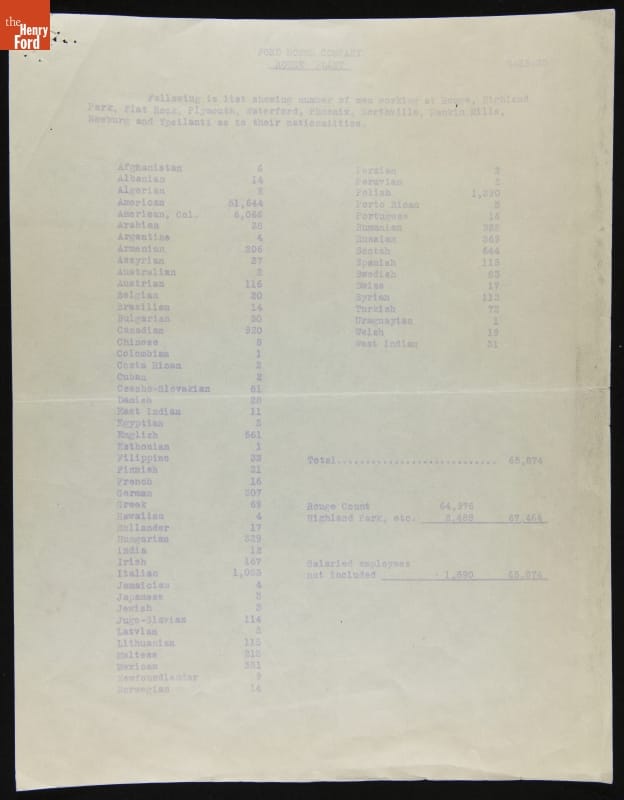
- Number of Men Working in Ford Motor Company Plants Listed by Nationalities, August 1935 - Employees of Ford Motor Company made up a diverse workforce drawn from around the world. This list, compiled in August 1935, shows more than 60 nations and territories represented by 66,000 hourly workers at various Ford plants in southeast Michigan.
- August 28, 1935
- Collections - Artifact
Number of Men Working in Ford Motor Company Plants Listed by Nationalities, August 1935
Employees of Ford Motor Company made up a diverse workforce drawn from around the world. This list, compiled in August 1935, shows more than 60 nations and territories represented by 66,000 hourly workers at various Ford plants in southeast Michigan.
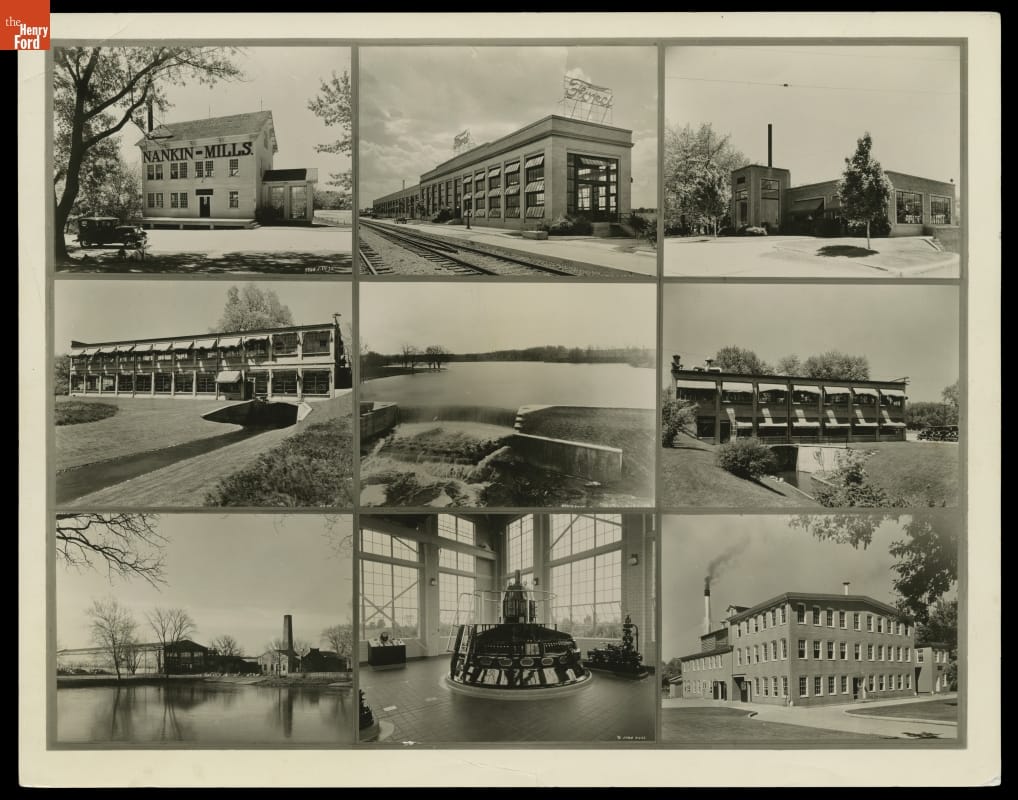
- Ford Village Industry Plants, Southeast Michigan, 1934 - In the 1920s and '30s, Henry Ford set up small-scale factories throughout southeast Michigan. These "Village Industries" employed local residents -- ideally farmers who could maintain their farms when not working at the factory -- and supplied Ford with tools and vehicle parts. This composite image shows several of those plants.
- 1934
- Collections - Artifact
Ford Village Industry Plants, Southeast Michigan, 1934
In the 1920s and '30s, Henry Ford set up small-scale factories throughout southeast Michigan. These "Village Industries" employed local residents -- ideally farmers who could maintain their farms when not working at the factory -- and supplied Ford with tools and vehicle parts. This composite image shows several of those plants.
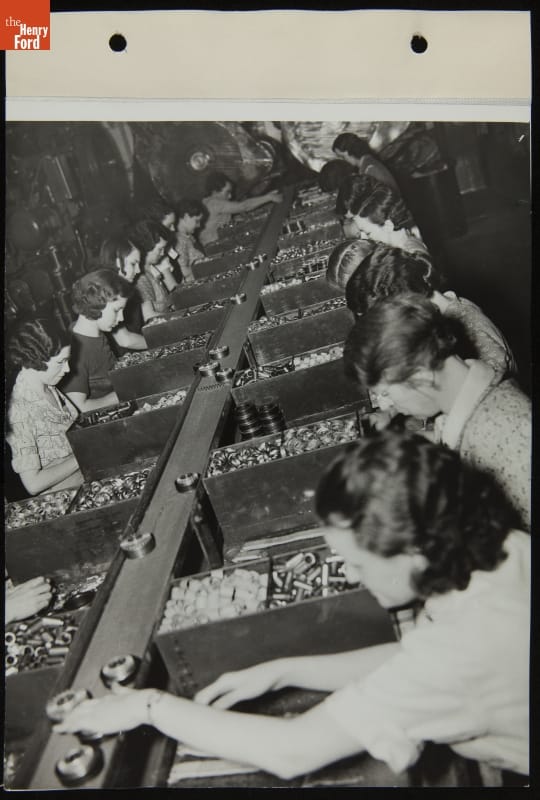
- Women Working at the Ford Ypsilanti Village Industry Plant, March 1937 - In the early 1920s, Henry Ford began locating small hydroelectrically powered plants in rural southeast Michigan. These "Village Industries" employed local people who could maintain farms while working at the factory. The plant at Ypsilanti operated from 1932 to 1947 and produced automobile starters and generators. As many as 1,500 people worked there, making it the largest of these small factories.
- March 15, 1937
- Collections - Artifact
Women Working at the Ford Ypsilanti Village Industry Plant, March 1937
In the early 1920s, Henry Ford began locating small hydroelectrically powered plants in rural southeast Michigan. These "Village Industries" employed local people who could maintain farms while working at the factory. The plant at Ypsilanti operated from 1932 to 1947 and produced automobile starters and generators. As many as 1,500 people worked there, making it the largest of these small factories.
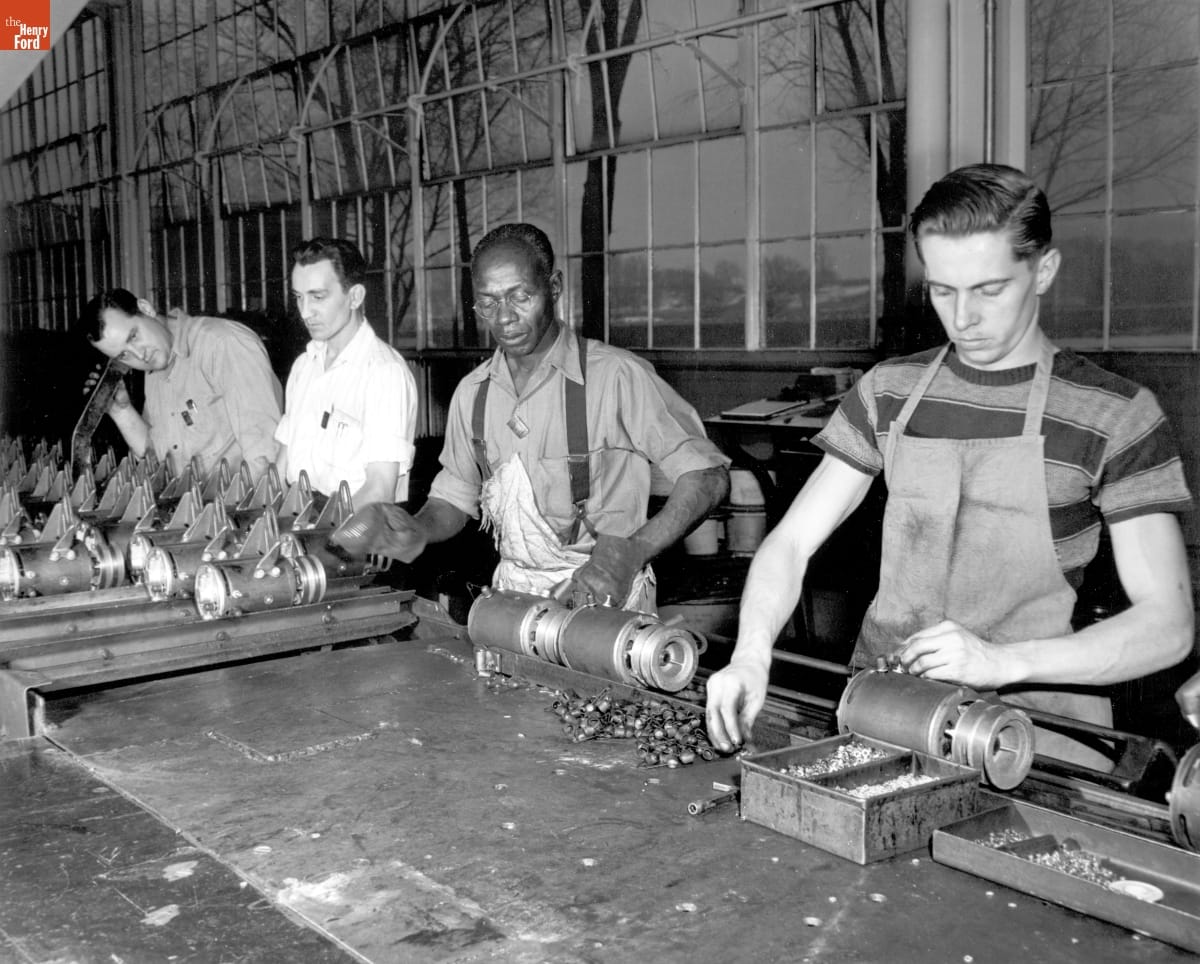
- Workers at the Ford Motor Company Plant in Ypsilanti, Michigan, March 13, 1947 - In the early 1920s, Henry Ford began locating small hydroelectrically powered plants in rural southeast Michigan. These "Village Industries" employed local people who could maintain farms while working at the factory. The plant at Ypsilanti operated from 1932 to 1947 and produced automobile starters and generators. As many as 1,500 people worked there, making it the largest of these small factories.
- March 13, 1947
- Collections - Artifact
Workers at the Ford Motor Company Plant in Ypsilanti, Michigan, March 13, 1947
In the early 1920s, Henry Ford began locating small hydroelectrically powered plants in rural southeast Michigan. These "Village Industries" employed local people who could maintain farms while working at the factory. The plant at Ypsilanti operated from 1932 to 1947 and produced automobile starters and generators. As many as 1,500 people worked there, making it the largest of these small factories.