
Search
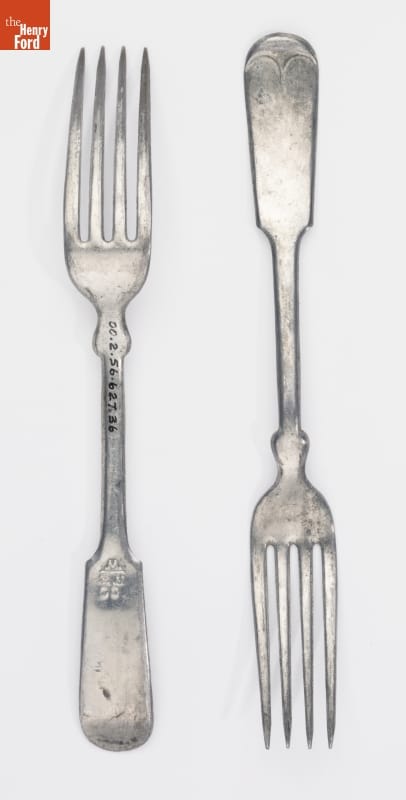
- Fork Used on Henry Ford's "Vagabonds" Camping Trips, 1920-1930 - Henry Ford, Thomas Edison, Harvey Firestone and naturalist John Burroughs embarked on a series of camping trips between 1916 and 1924. These self-proclaimed Vagabonds loved to explore nature and the pre-industrial landscape, but they also camped in style. This group of well-to-do adventurers brought along service staff and all needed amenities, including a set of utilitarian flatware.
- 1920-1930
- Collections - Artifact
Fork Used on Henry Ford's "Vagabonds" Camping Trips, 1920-1930
Henry Ford, Thomas Edison, Harvey Firestone and naturalist John Burroughs embarked on a series of camping trips between 1916 and 1924. These self-proclaimed Vagabonds loved to explore nature and the pre-industrial landscape, but they also camped in style. This group of well-to-do adventurers brought along service staff and all needed amenities, including a set of utilitarian flatware.
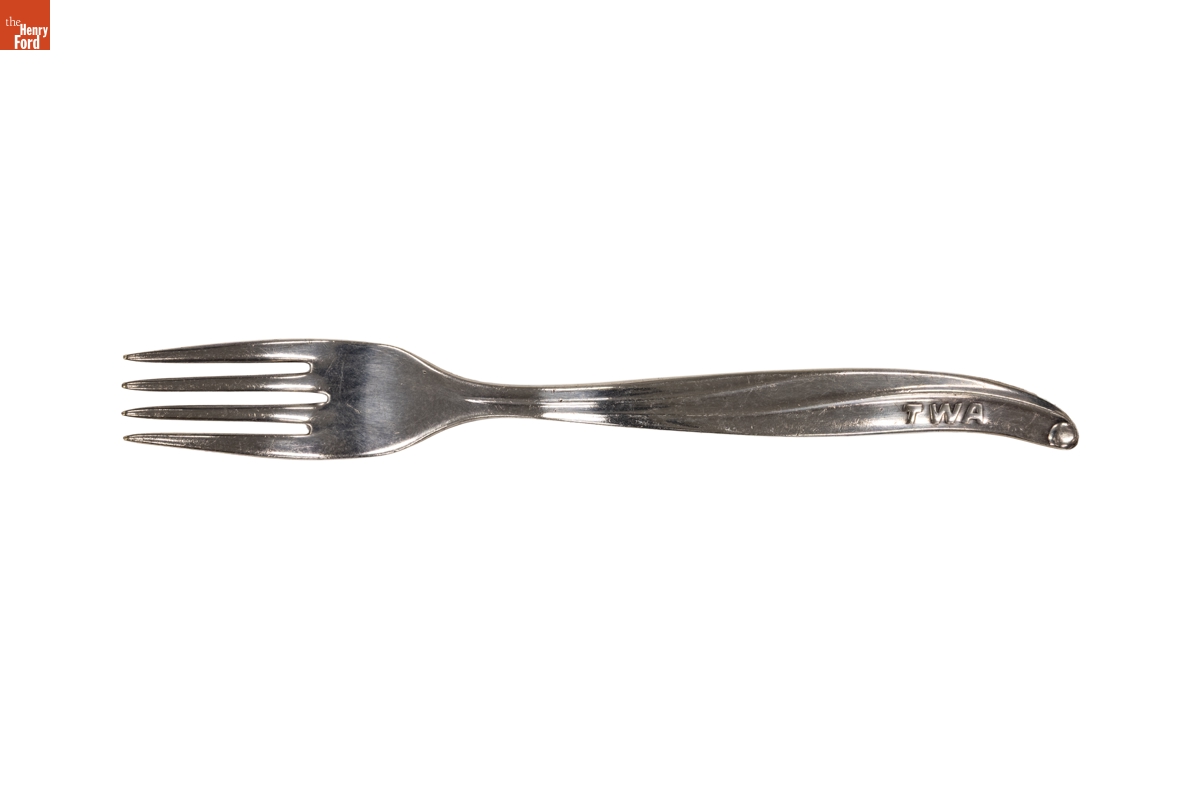
- TWA Royal Ambassador Salad Fork, 1962-1975 - Diane Beers joined TWA as a flight attendant in 1965 but left to marry Richard Hill a year later -- a time when many airlines employed only single women in that job. Beers Hill continued her interest in the aviation industry. Her memorabilia collection included knives, forks and spoons used in airline food service or branded with carrier logos.
- 1962-1975
- Collections - Artifact
TWA Royal Ambassador Salad Fork, 1962-1975
Diane Beers joined TWA as a flight attendant in 1965 but left to marry Richard Hill a year later -- a time when many airlines employed only single women in that job. Beers Hill continued her interest in the aviation industry. Her memorabilia collection included knives, forks and spoons used in airline food service or branded with carrier logos.
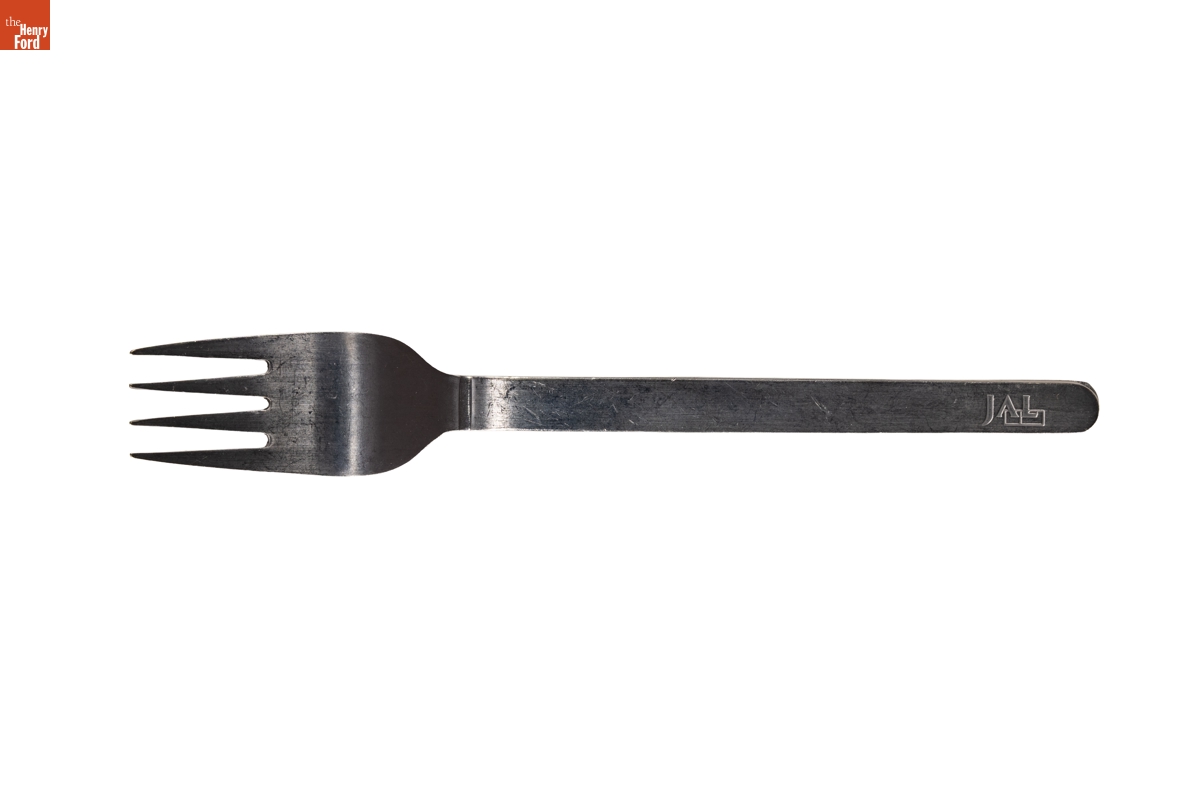
- Japan Air Lines Table Fork, 1989-2002 - Diane Beers joined TWA as a flight attendant in 1965 but left to marry Richard Hill a year later -- a time when many airlines employed only single women in that job. Beers Hill continued her interest in the aviation industry. Her memorabilia collection included knives, forks and spoons used in airline food service or branded with carrier logos.
- 1989-2002
- Collections - Artifact
Japan Air Lines Table Fork, 1989-2002
Diane Beers joined TWA as a flight attendant in 1965 but left to marry Richard Hill a year later -- a time when many airlines employed only single women in that job. Beers Hill continued her interest in the aviation industry. Her memorabilia collection included knives, forks and spoons used in airline food service or branded with carrier logos.
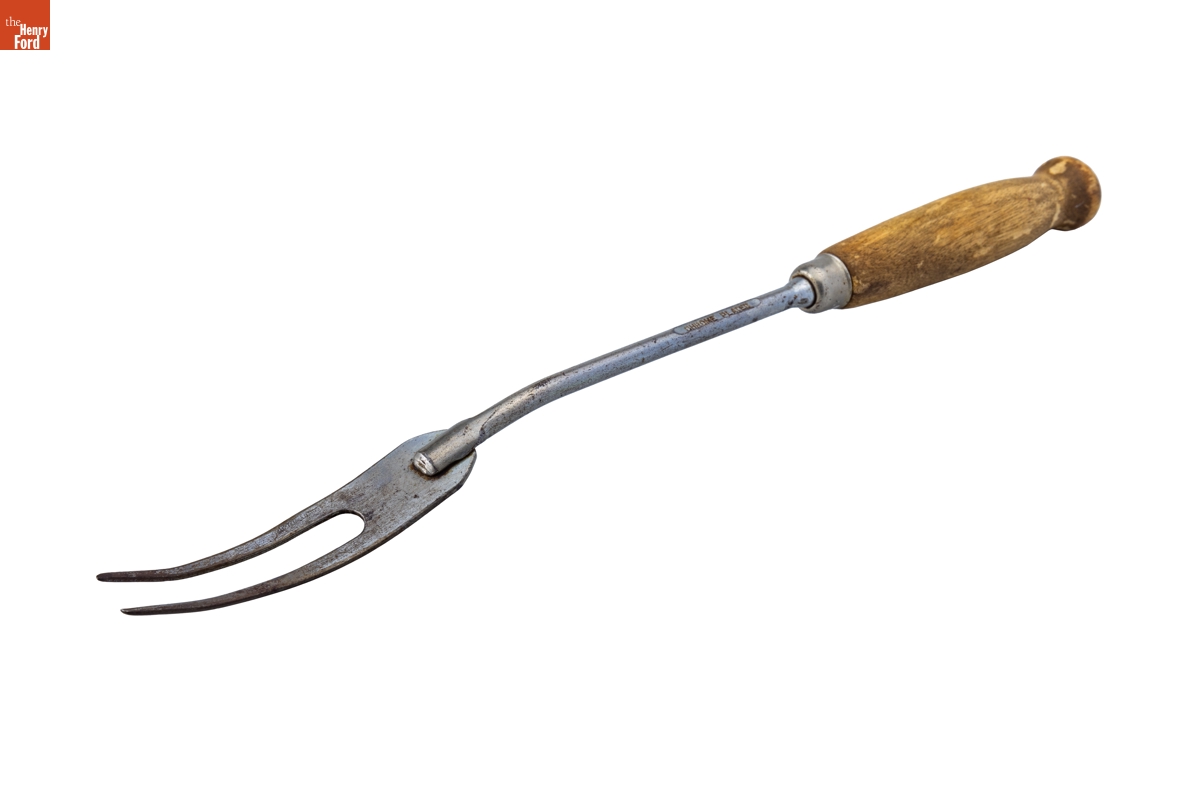
- Carving Fork Used by the Jackson Family, Selma, Alabama - In 2023, The Henry Ford acquired the Selma, Alabama, home of Dr. Sullivan and Richie Jean Sherrod Jackson, where Dr. Martin Luther King and Civil Rights leaders planned the 1965 Selma-to-Montgomery Voting Rights marches. The Jackson Home opened in Greenfield Village in 2026. The home and its contents not only document the voting rights struggle but also shed light on 20th-century Black American middle-class life.
- Collections - Artifact
Carving Fork Used by the Jackson Family, Selma, Alabama
In 2023, The Henry Ford acquired the Selma, Alabama, home of Dr. Sullivan and Richie Jean Sherrod Jackson, where Dr. Martin Luther King and Civil Rights leaders planned the 1965 Selma-to-Montgomery Voting Rights marches. The Jackson Home opened in Greenfield Village in 2026. The home and its contents not only document the voting rights struggle but also shed light on 20th-century Black American middle-class life.
- Oneida "Twin Star" Dessert Fork, 1959-1965 - Oneida Limited retailed stainless flatware in the "Twin Star" pattern through a coupon program beginning in the late 1950s. Customers could clip coupons from General Mills products to purchase the flatware or use a "speed plan" and pay cash to get more pieces at one time. "Twin Star," made from 1959 to 1972, was one of the most popular mid-twentieth-century flatware patterns.

- 1959-1965
- Collections - Artifact
Oneida "Twin Star" Dessert Fork, 1959-1965
Oneida Limited retailed stainless flatware in the "Twin Star" pattern through a coupon program beginning in the late 1950s. Customers could clip coupons from General Mills products to purchase the flatware or use a "speed plan" and pay cash to get more pieces at one time. "Twin Star," made from 1959 to 1972, was one of the most popular mid-twentieth-century flatware patterns.
- Oneida "Twin Star" Serving Fork, 1959-1965 - Oneida Limited retailed stainless flatware in the "Twin Star" pattern through a coupon program beginning in the late 1950s. Customers could clip coupons from General Mills products to purchase the flatware or use a "speed plan" and pay cash to get more pieces at one time. "Twin Star," made from 1959 to 1972, was one of the most popular mid-twentieth-century flatware patterns.

- 1959-1965
- Collections - Artifact
Oneida "Twin Star" Serving Fork, 1959-1965
Oneida Limited retailed stainless flatware in the "Twin Star" pattern through a coupon program beginning in the late 1950s. Customers could clip coupons from General Mills products to purchase the flatware or use a "speed plan" and pay cash to get more pieces at one time. "Twin Star," made from 1959 to 1972, was one of the most popular mid-twentieth-century flatware patterns.