
Search
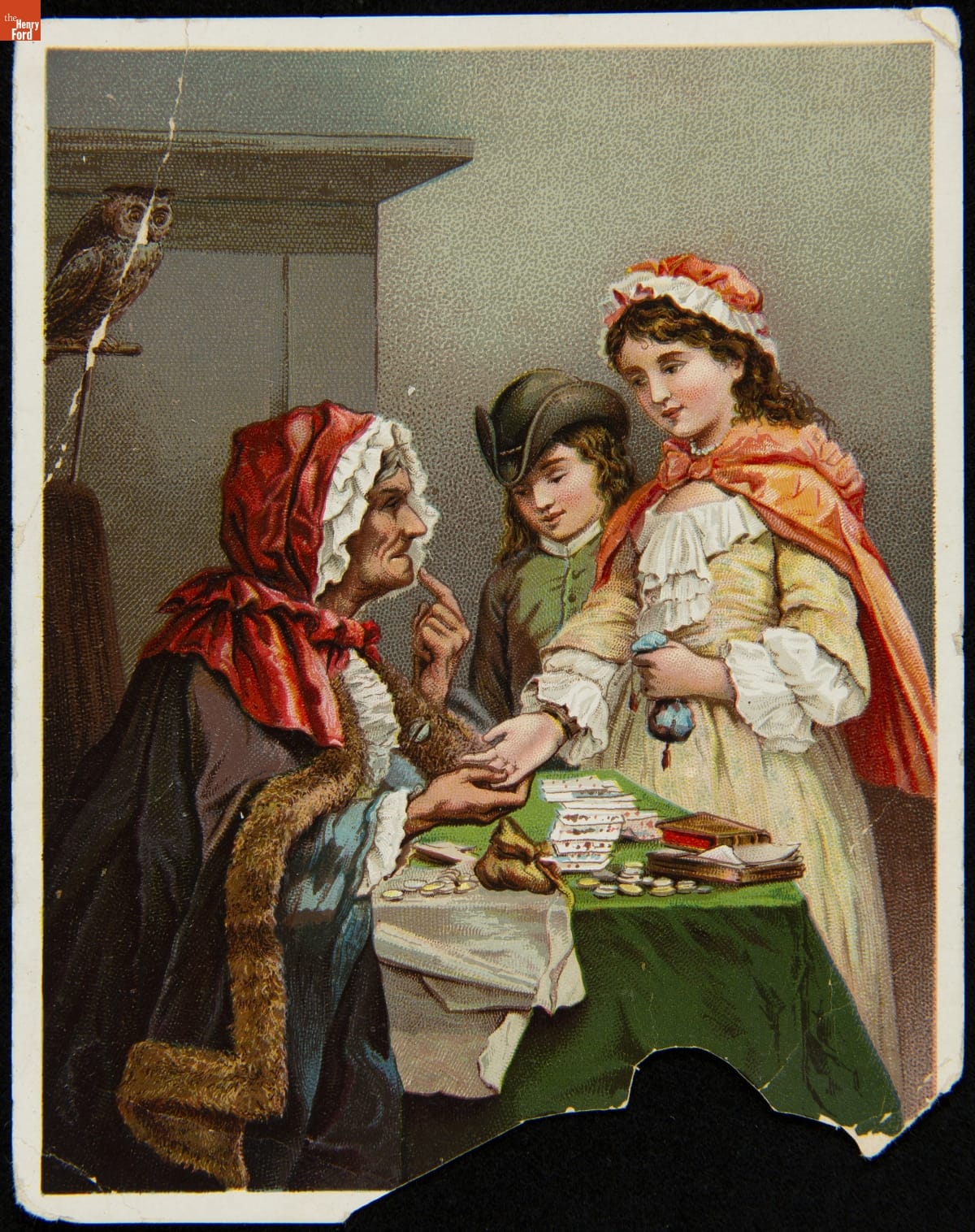
- Trade Card for Dr. Jayne's Patent Medicines, "The Gipsy Fortune-Teller," 1880-1900 - Late-nineteenth-century manufacturers used trade cards to promote and sell products. These colorful advertisements also reflected the prejudices of the time, depicting the discriminatory biases that many white Americans -- the consumers of these cards -- held. Many middle-class Americans perceived Romani people as lazy, deceitful, and prone to steal, connecting one way the Romani made money (through the art of fortunetelling) to those stereotypes.
- 1880-1900
- Collections - Artifact
Trade Card for Dr. Jayne's Patent Medicines, "The Gipsy Fortune-Teller," 1880-1900
Late-nineteenth-century manufacturers used trade cards to promote and sell products. These colorful advertisements also reflected the prejudices of the time, depicting the discriminatory biases that many white Americans -- the consumers of these cards -- held. Many middle-class Americans perceived Romani people as lazy, deceitful, and prone to steal, connecting one way the Romani made money (through the art of fortunetelling) to those stereotypes.
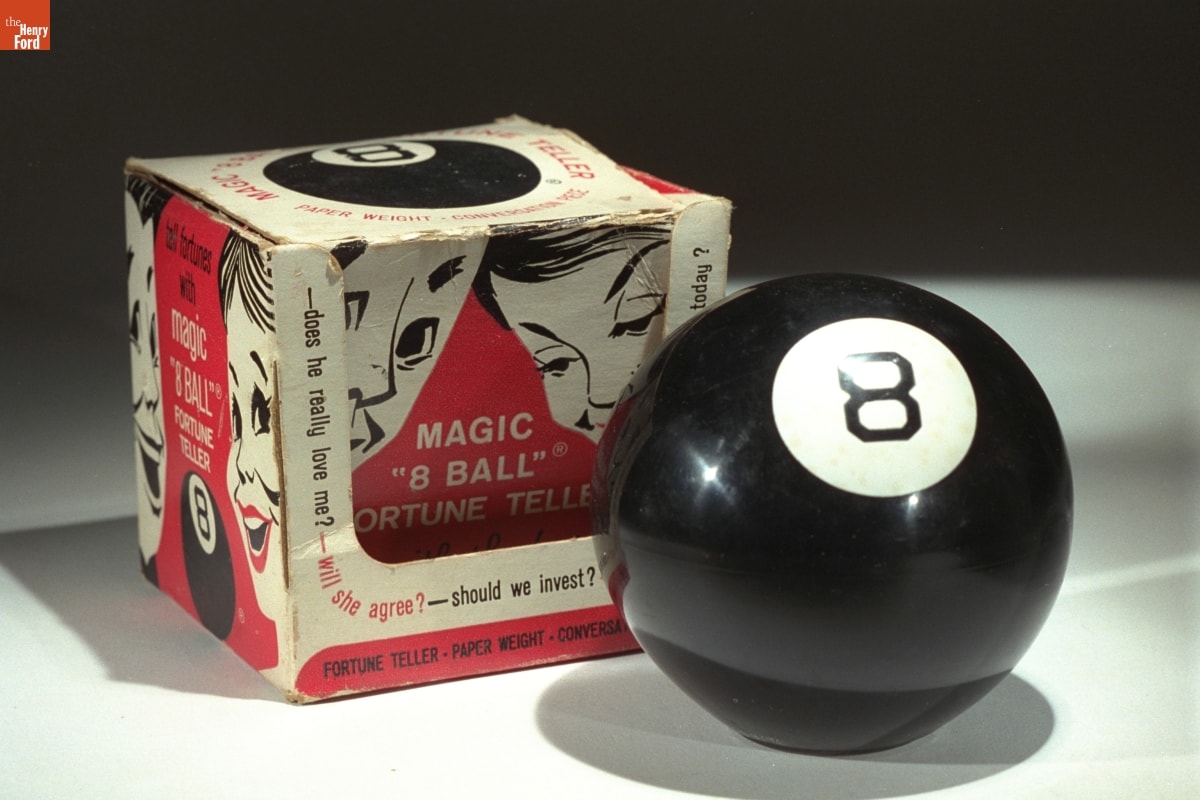
- Magic "8 Ball" Fortune Teller, 1965-1975 -
- 1965-1975
- Collections - Artifact
Magic "8 Ball" Fortune Teller, 1965-1975
- Trade Card for Dr. Jayne's Patent Medicines, "The Gipsy Fortune-Teller," 1880-1900 - Late-nineteenth-century manufacturers used trade cards to promote and sell products. These colorful advertisements also reflected the prejudices of the time, depicting the discriminatory biases that many white Americans -- the consumers of these cards -- held. Many middle-class Americans perceived Romani people as lazy, deceitful, and prone to steal, connecting one way the Romani made money (through the art of fortunetelling) to those stereotypes.
- 1880-1900
- Collections - Artifact
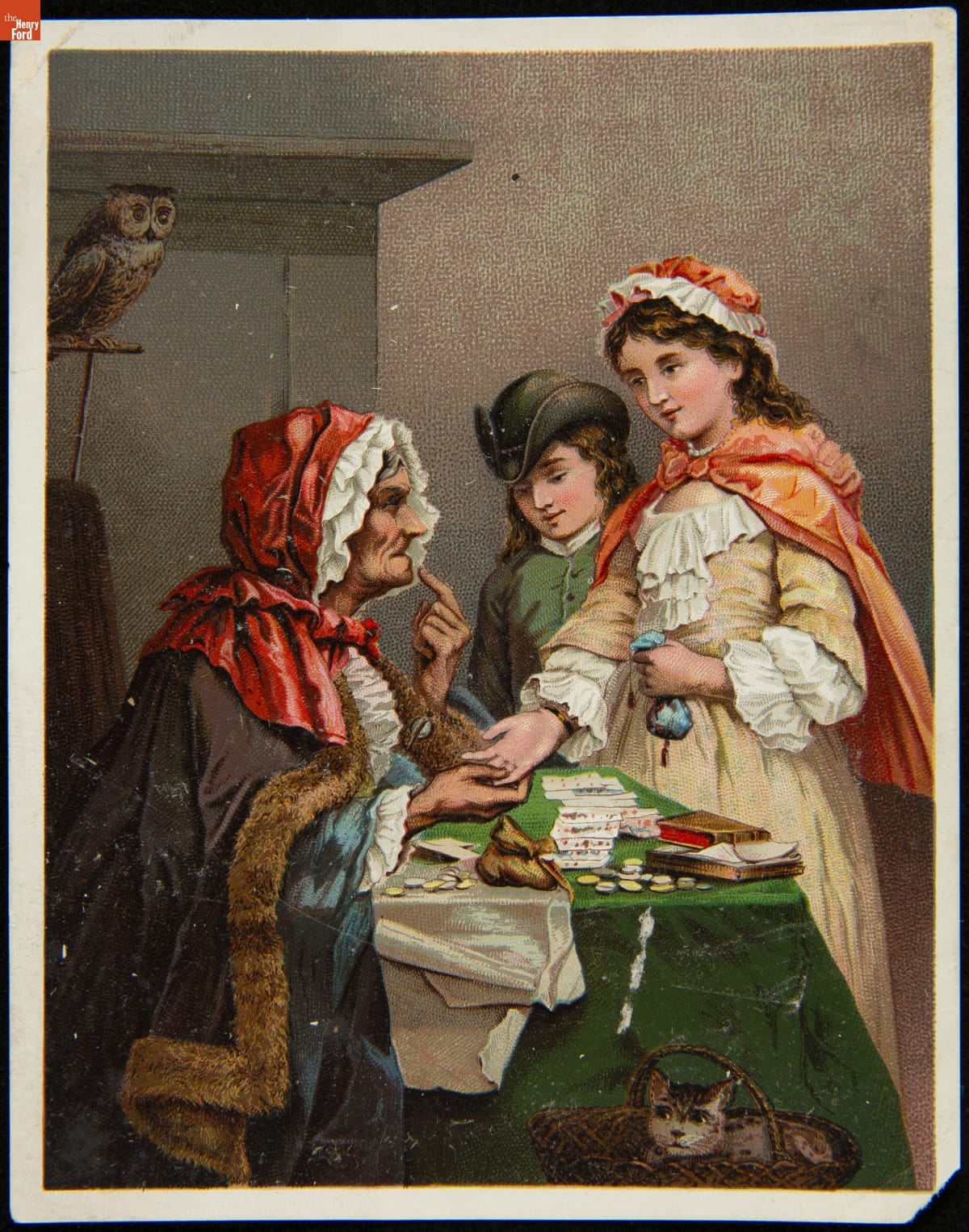
Trade Card for Dr. Jayne's Patent Medicines, "The Gipsy Fortune-Teller," 1880-1900
Late-nineteenth-century manufacturers used trade cards to promote and sell products. These colorful advertisements also reflected the prejudices of the time, depicting the discriminatory biases that many white Americans -- the consumers of these cards -- held. Many middle-class Americans perceived Romani people as lazy, deceitful, and prone to steal, connecting one way the Romani made money (through the art of fortunetelling) to those stereotypes.