
Search
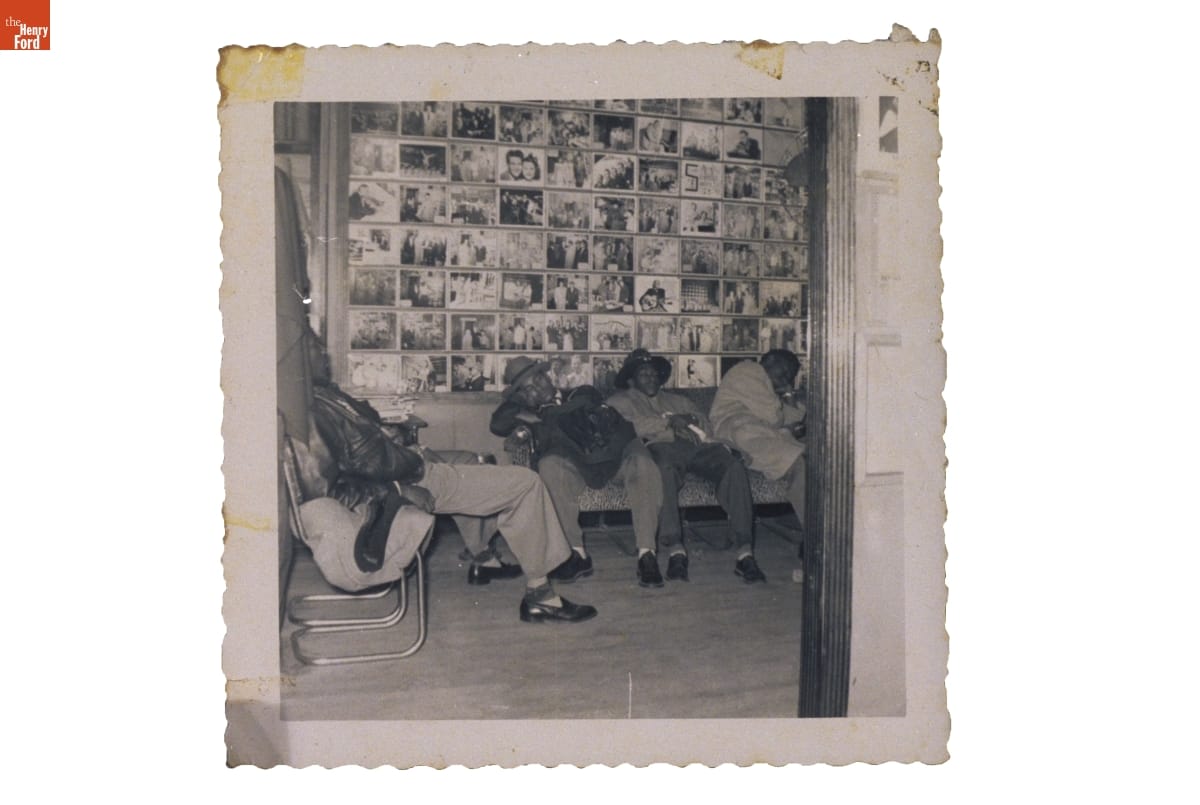
- The Orioles Music Group inside Fox Brothers Clothier, Chicago, Illinois, 1942 - Fox Brothers Clothier in Chicago outfitted many Black American entertainers. Shop owner Harold Fox (1910-1996) had previously worked as an itinerant musician. He used his connections to attract a high-profile clientele, which included artists such as Cab Calloway, Louis Armstrong, and Bill "Bojangles" Robison. This photograph shows The Orioles, a pioneering Rhythm and Blues vocal group, at his shop.
- 1942
- Collections - Artifact
The Orioles Music Group inside Fox Brothers Clothier, Chicago, Illinois, 1942
Fox Brothers Clothier in Chicago outfitted many Black American entertainers. Shop owner Harold Fox (1910-1996) had previously worked as an itinerant musician. He used his connections to attract a high-profile clientele, which included artists such as Cab Calloway, Louis Armstrong, and Bill "Bojangles" Robison. This photograph shows The Orioles, a pioneering Rhythm and Blues vocal group, at his shop.
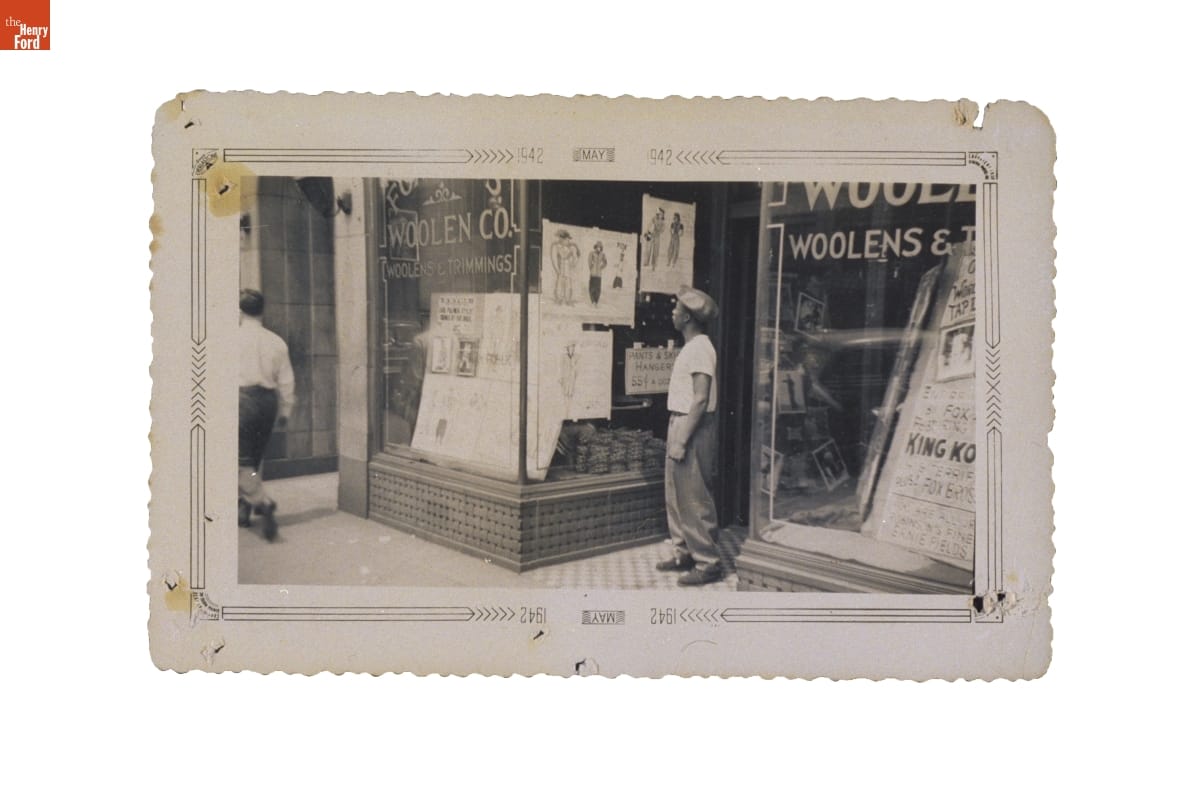
- A Man Looking at the Display Window at Fox Brothers Clothier, Chicago, Illinois, May 1942 - Harold Fox (1910-1996) claimed to be the originator of the zoot suit, which he sold at his family's Chicago-based shop, Fox Brothers Clothier. Originating in the 1920s, the style was known for oversized silhouettes. In the early 1940s, zoot suits were especially popular with Black and Mexican Americans; however, they became controversial for excessive fabric use during wartime rationing.
- May 01, 1942
- Collections - Artifact
A Man Looking at the Display Window at Fox Brothers Clothier, Chicago, Illinois, May 1942
Harold Fox (1910-1996) claimed to be the originator of the zoot suit, which he sold at his family's Chicago-based shop, Fox Brothers Clothier. Originating in the 1920s, the style was known for oversized silhouettes. In the early 1940s, zoot suits were especially popular with Black and Mexican Americans; however, they became controversial for excessive fabric use during wartime rationing.
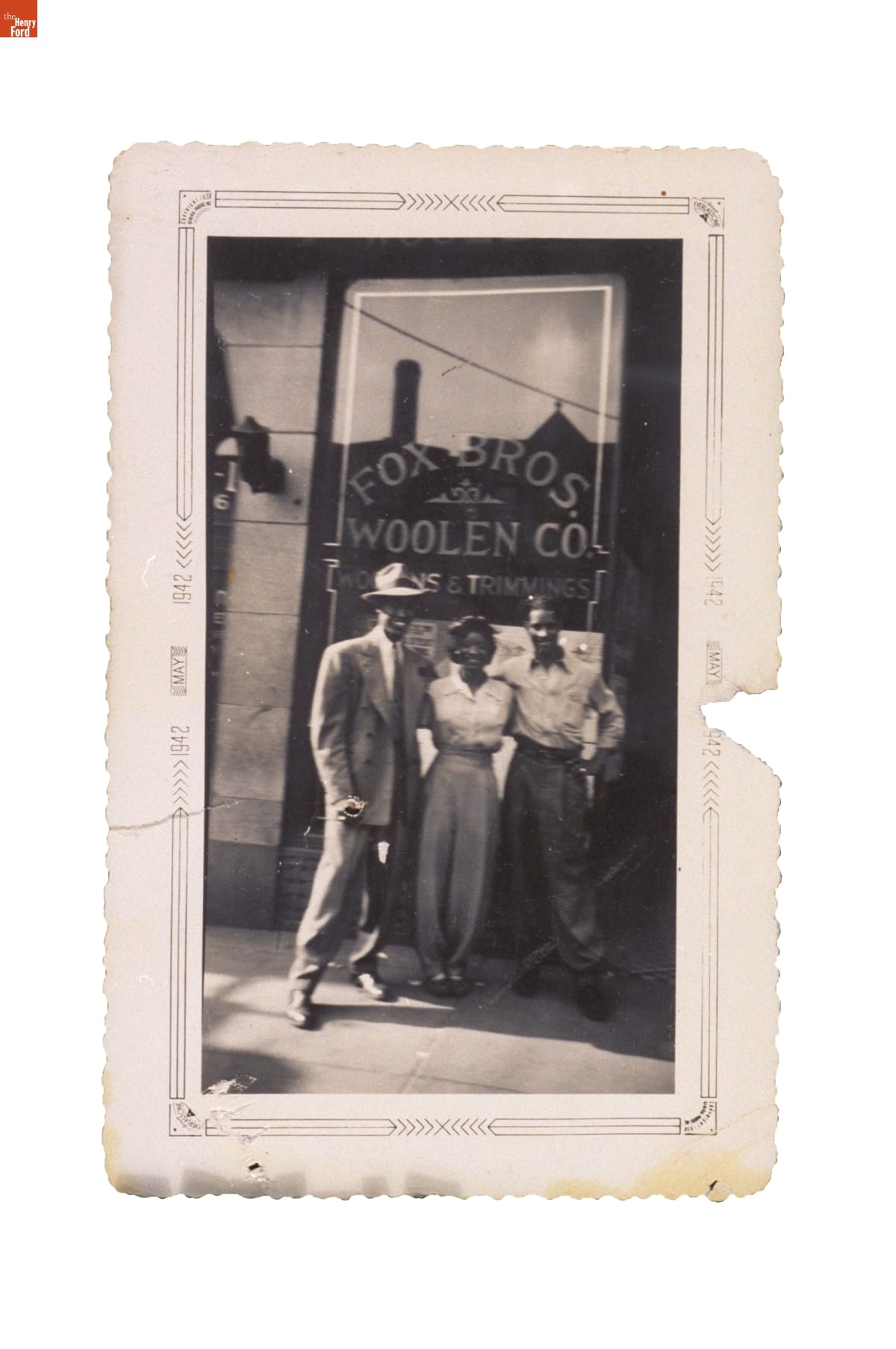
- Man in a Zoot Suit, with a Woman and Another Man outside Fox Brothers Clothier, Chicago, Illinois, May 1942 - Harold Fox (1910-1996) claimed to be the originator of the zoot suit, which he sold at his family's Chicago-based shop, Fox Brothers Clothier. Originating in the 1920s, the style was known for oversized silhouettes. In the early 1940s, zoot suits were especially popular with Black and Mexican Americans; however, they became controversial for excessive fabric use during wartime rationing.
- May 01, 1942
- Collections - Artifact
Man in a Zoot Suit, with a Woman and Another Man outside Fox Brothers Clothier, Chicago, Illinois, May 1942
Harold Fox (1910-1996) claimed to be the originator of the zoot suit, which he sold at his family's Chicago-based shop, Fox Brothers Clothier. Originating in the 1920s, the style was known for oversized silhouettes. In the early 1940s, zoot suits were especially popular with Black and Mexican Americans; however, they became controversial for excessive fabric use during wartime rationing.
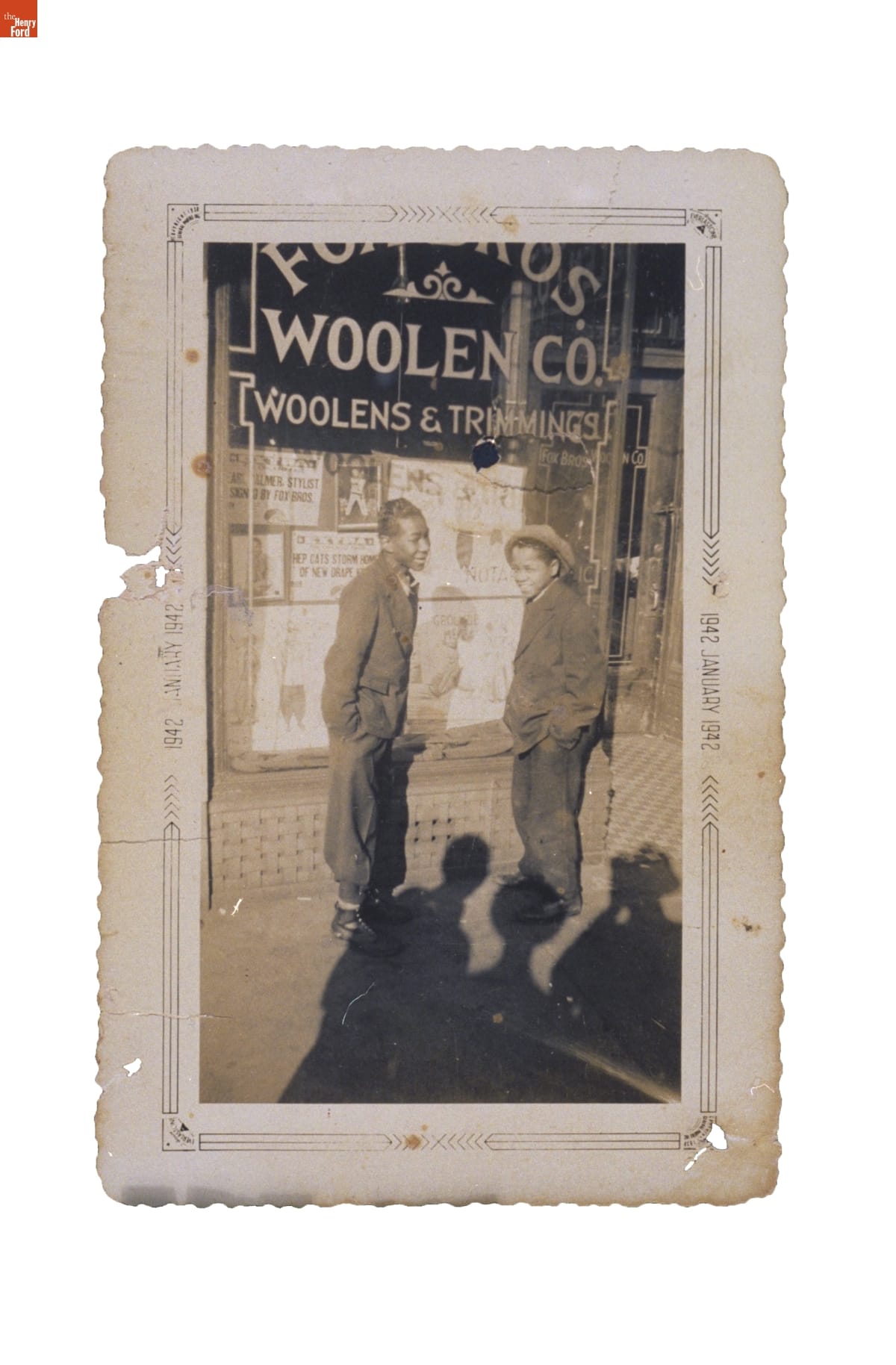
- Two Boys Wearing Zoot Suits outside Fox Brothers Clothier, Chicago, Illinois, January 1942 - Harold Fox (1910-1996) claimed to be the originator of the zoot suit, which he sold at his family's Chicago-based shop, Fox Brothers Clothier. Originating in the 1920s, the style was known for oversized silhouettes. In the early 1940s, zoot suits were especially popular with Black and Mexican Americans; however, they became controversial for excessive fabric use during wartime rationing.
- January 01, 1942
- Collections - Artifact
Two Boys Wearing Zoot Suits outside Fox Brothers Clothier, Chicago, Illinois, January 1942
Harold Fox (1910-1996) claimed to be the originator of the zoot suit, which he sold at his family's Chicago-based shop, Fox Brothers Clothier. Originating in the 1920s, the style was known for oversized silhouettes. In the early 1940s, zoot suits were especially popular with Black and Mexican Americans; however, they became controversial for excessive fabric use during wartime rationing.
- A Man and Woman Looking at the Display Window at Fox Brothers Clothier, Chicago, Illinois, May 1942 - Harold Fox (1910-1996) claimed to be the originator of the zoot suit, which he sold at his family's Chicago-based shop, Fox Brothers Clothier. Originating in the 1920s, the style was known for oversized silhouettes. In the early 1940s, zoot suits were especially popular with Black and Mexican Americans; however, they became controversial for excessive fabric use during wartime rationing.
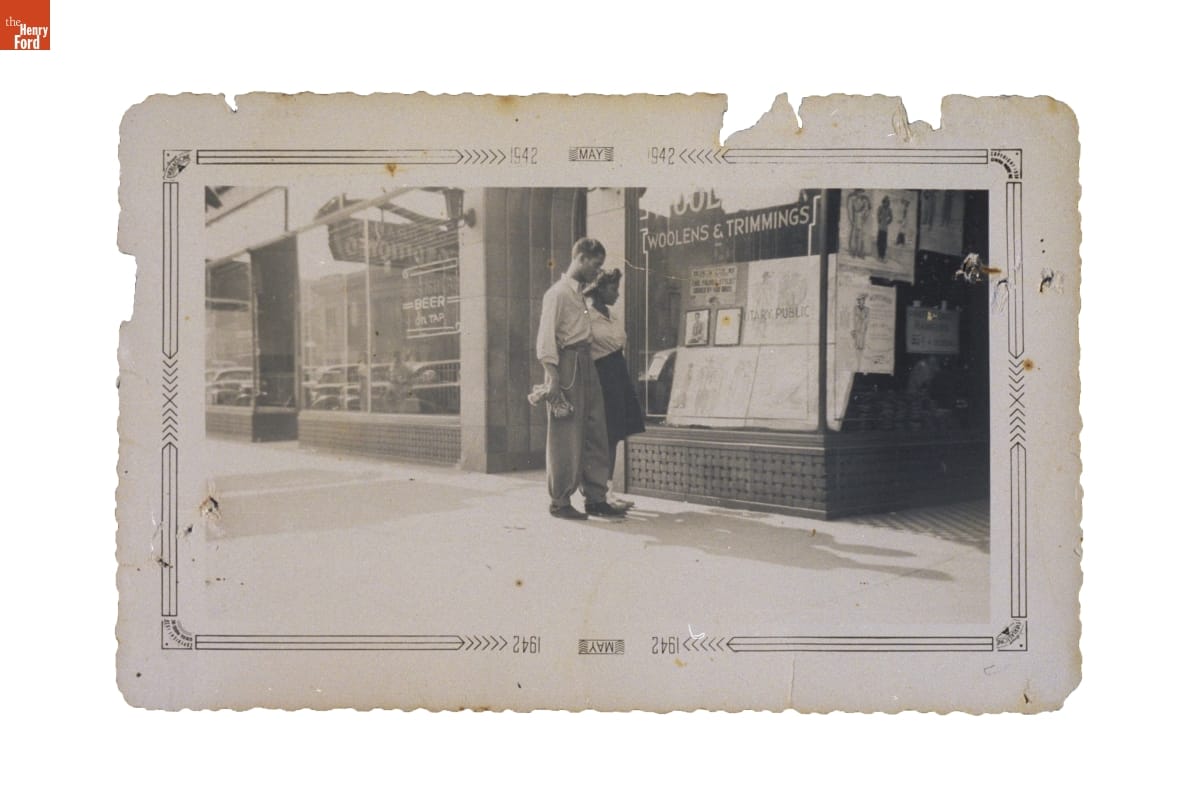
- May 01, 1942
- Collections - Artifact
A Man and Woman Looking at the Display Window at Fox Brothers Clothier, Chicago, Illinois, May 1942
Harold Fox (1910-1996) claimed to be the originator of the zoot suit, which he sold at his family's Chicago-based shop, Fox Brothers Clothier. Originating in the 1920s, the style was known for oversized silhouettes. In the early 1940s, zoot suits were especially popular with Black and Mexican Americans; however, they became controversial for excessive fabric use during wartime rationing.