
Search
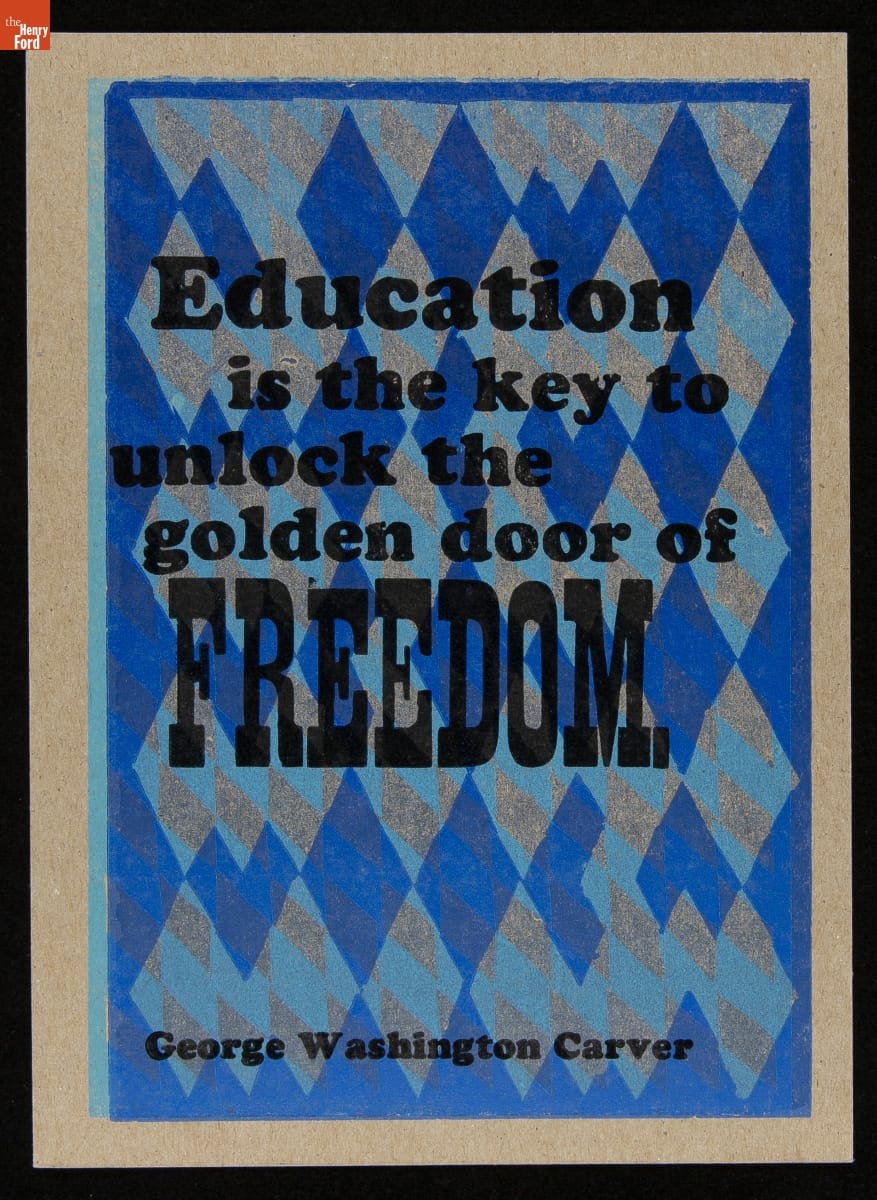
- Letterpress Print, "Education is the key to unlock the golden door of Freedom. George Washington Carver" -
- 2018
- Collections - Artifact
Letterpress Print, "Education is the key to unlock the golden door of Freedom. George Washington Carver"
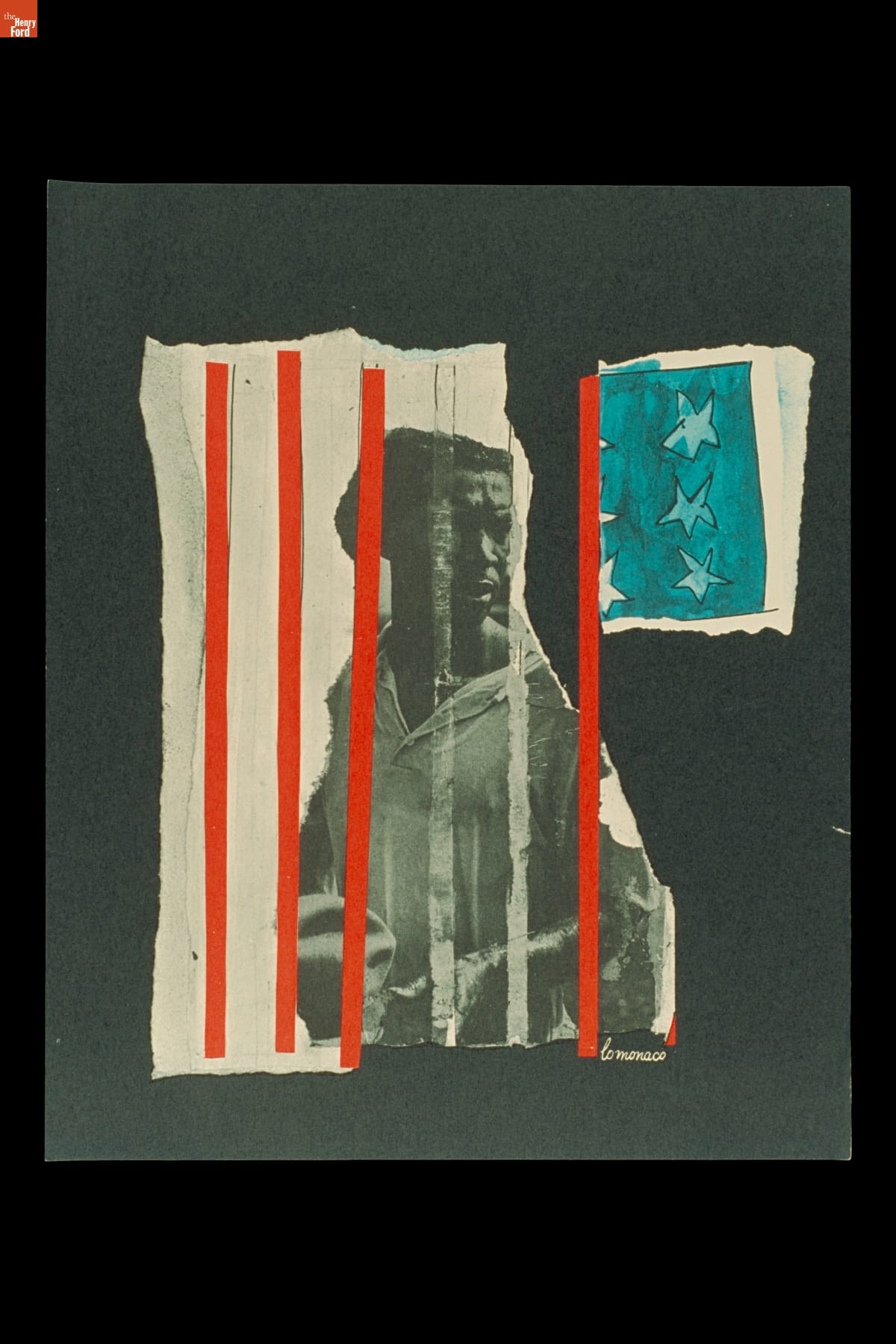
- "We Shall Overcome! A Jail Can Only Hold a Man's Body - His Mind and Heart Remain Free," 1963 - More than 250,000 civil rights advocates showed up at the 1963 March on Washington for Jobs and Freedom. This print, part of a souvenir portfolio made for the event, incorporated fragments of disturbing images from the movement. The artist intended these to symbolize man's inhumanity to his fellow man. Civil Rights activists hoped that they would stir people's emotions and incite action.
- August 28, 1963
- Collections - Artifact
"We Shall Overcome! A Jail Can Only Hold a Man's Body - His Mind and Heart Remain Free," 1963
More than 250,000 civil rights advocates showed up at the 1963 March on Washington for Jobs and Freedom. This print, part of a souvenir portfolio made for the event, incorporated fragments of disturbing images from the movement. The artist intended these to symbolize man's inhumanity to his fellow man. Civil Rights activists hoped that they would stir people's emotions and incite action.
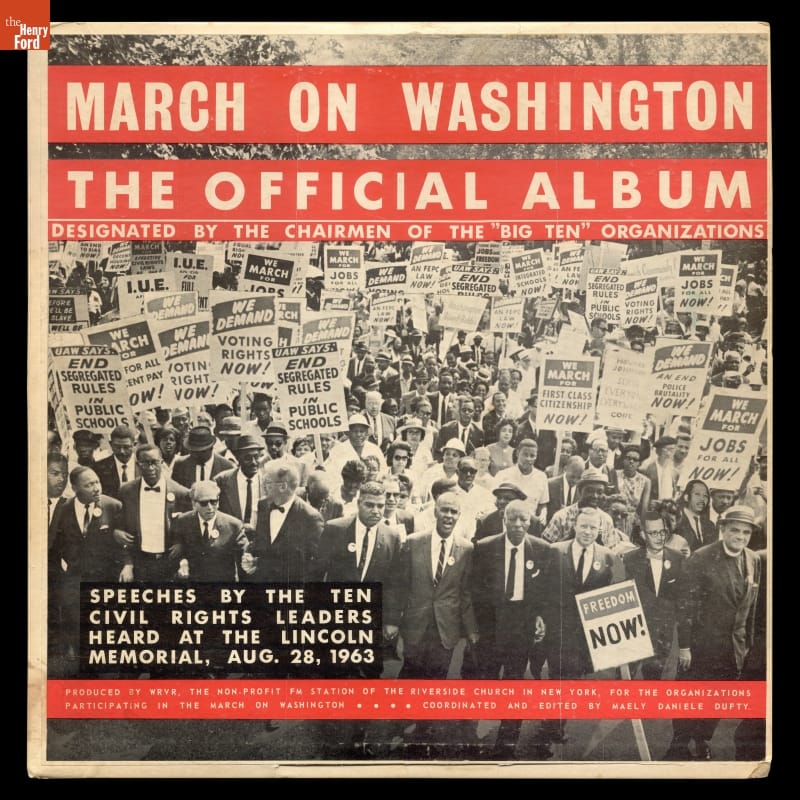
- Record Album, "March on Washington: The Official Album," 1963 - More than 250,000 civil rights advocates -- both African American and white -- showed up at this peaceful march on August 28, 1963, to support unity, jobs, and a new Civil Rights bill being proposed by President Kennedy. This LP record includes speeches by ten Civil Rights leaders heard at the Lincoln Memorial that day.
- August 28, 1963
- Collections - Artifact
Record Album, "March on Washington: The Official Album," 1963
More than 250,000 civil rights advocates -- both African American and white -- showed up at this peaceful march on August 28, 1963, to support unity, jobs, and a new Civil Rights bill being proposed by President Kennedy. This LP record includes speeches by ten Civil Rights leaders heard at the Lincoln Memorial that day.
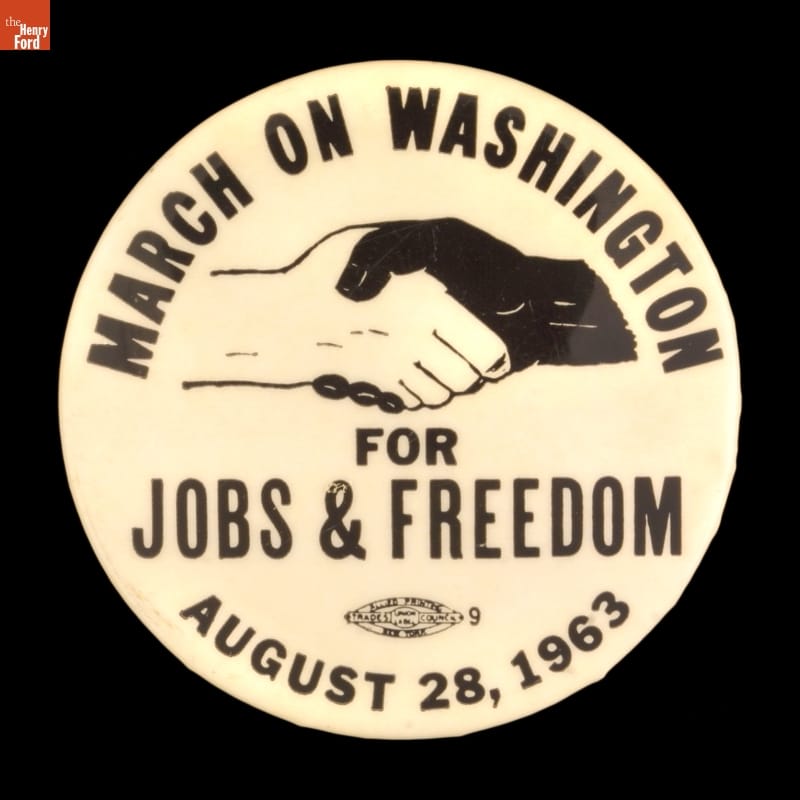
- Button, March on Washington for Jobs and Freedom, 1963 - More than 250,000 civil rights advocates showed up at this peaceful march to support unity, jobs, and a new Civil Rights bill being proposed by President Kennedy. Television viewers nationwide watched African Americans and whites march together, united behind a common cause. Songs and speeches at this march included Martin Luther King, Jr.'s famous "I Have a Dream" speech.
- August 28, 1963
- Collections - Artifact
Button, March on Washington for Jobs and Freedom, 1963
More than 250,000 civil rights advocates showed up at this peaceful march to support unity, jobs, and a new Civil Rights bill being proposed by President Kennedy. Television viewers nationwide watched African Americans and whites march together, united behind a common cause. Songs and speeches at this march included Martin Luther King, Jr.'s famous "I Have a Dream" speech.
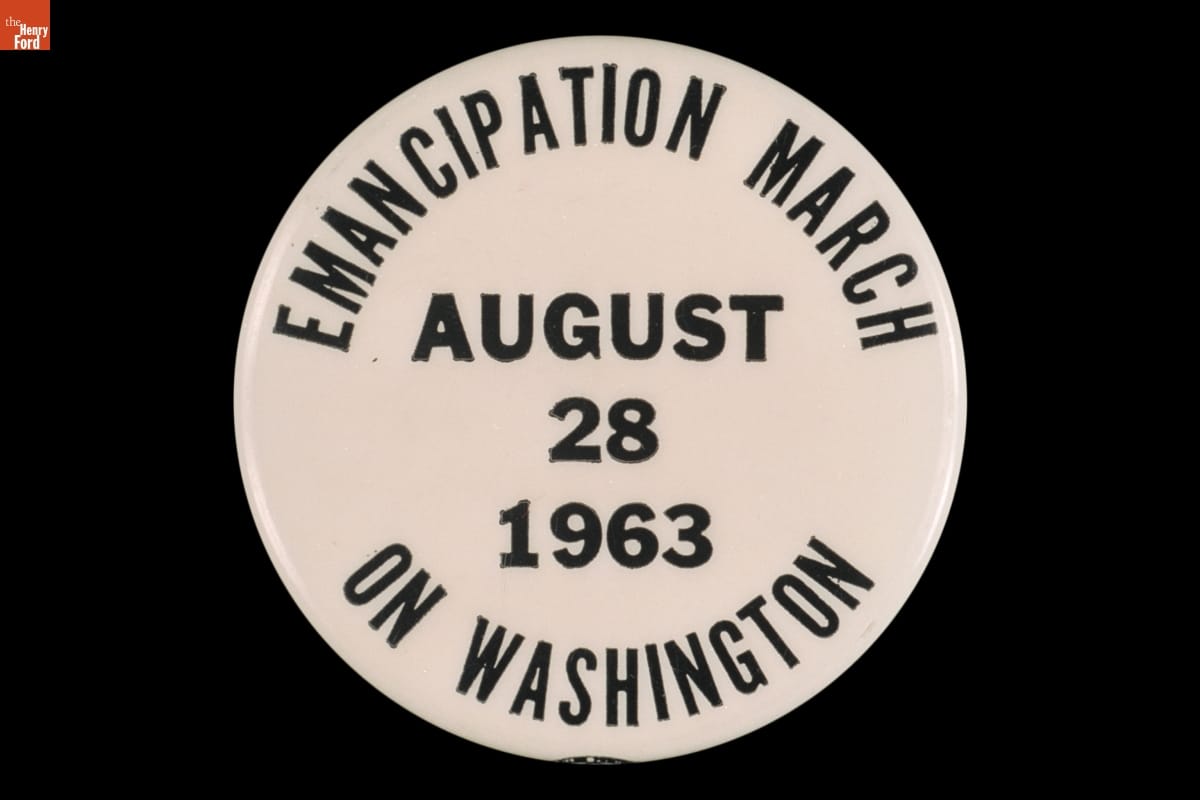
- Button, "Emancipation March on Washington," 1963 - More than 250,000 civil rights advocates showed up at this peaceful march to support unity, jobs, and a new Civil Rights bill being proposed by President Kennedy. Television viewers nationwide watched African Americans and whites march together, united behind a common cause. Songs and speeches at this march included Martin Luther King, Jr.'s famous "I Have a Dream" speech.
- August 28, 1963
- Collections - Artifact
Button, "Emancipation March on Washington," 1963
More than 250,000 civil rights advocates showed up at this peaceful march to support unity, jobs, and a new Civil Rights bill being proposed by President Kennedy. Television viewers nationwide watched African Americans and whites march together, united behind a common cause. Songs and speeches at this march included Martin Luther King, Jr.'s famous "I Have a Dream" speech.
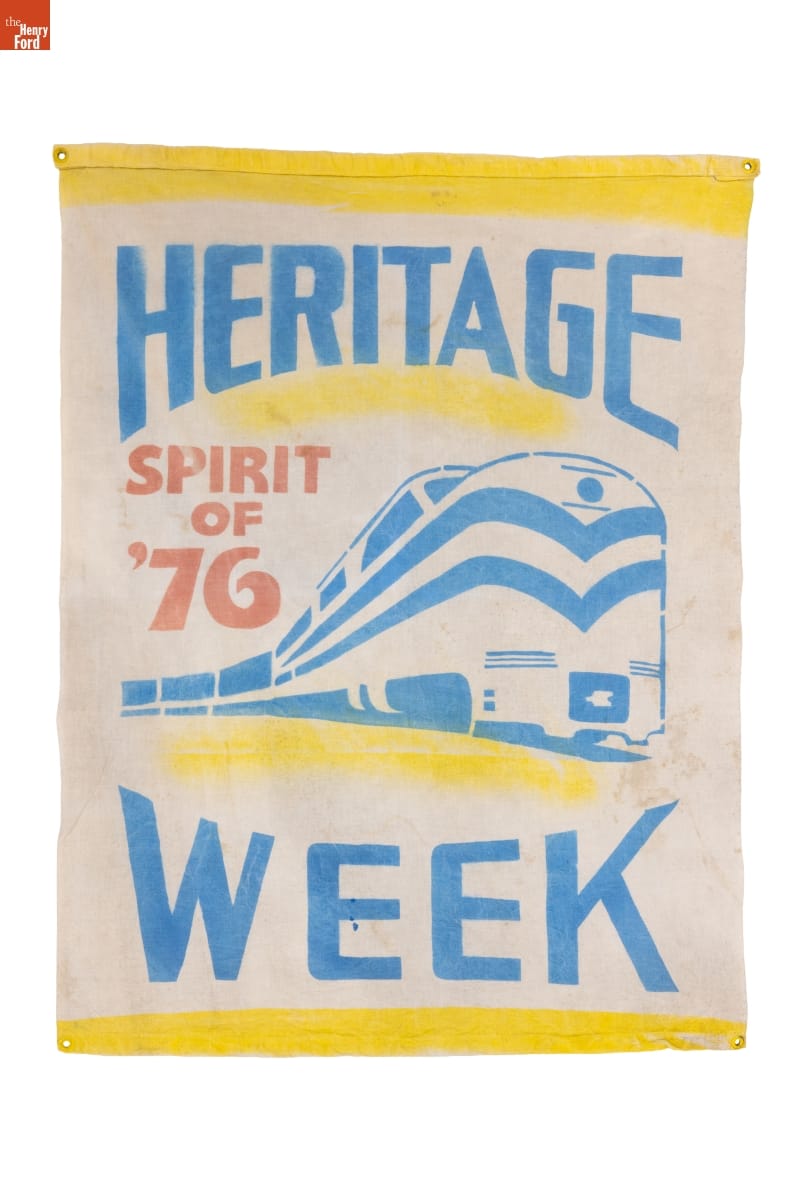
- American Freedom Train Banner, "Heritage Spirit of 76 Week", 1975-1976 - The 1976 Bicentennial heightened Americans' interest in their history. As part of the celebration, President Gerald Ford dedicated the American Freedom Train in December 1974. Over the next two years, the train visited all 48 contiguous states. More than 7 million people toured its display cars, which presented 200 years of American history through a variety of historical artifacts.
- 1975-1976
- Collections - Artifact
American Freedom Train Banner, "Heritage Spirit of 76 Week", 1975-1976
The 1976 Bicentennial heightened Americans' interest in their history. As part of the celebration, President Gerald Ford dedicated the American Freedom Train in December 1974. Over the next two years, the train visited all 48 contiguous states. More than 7 million people toured its display cars, which presented 200 years of American history through a variety of historical artifacts.
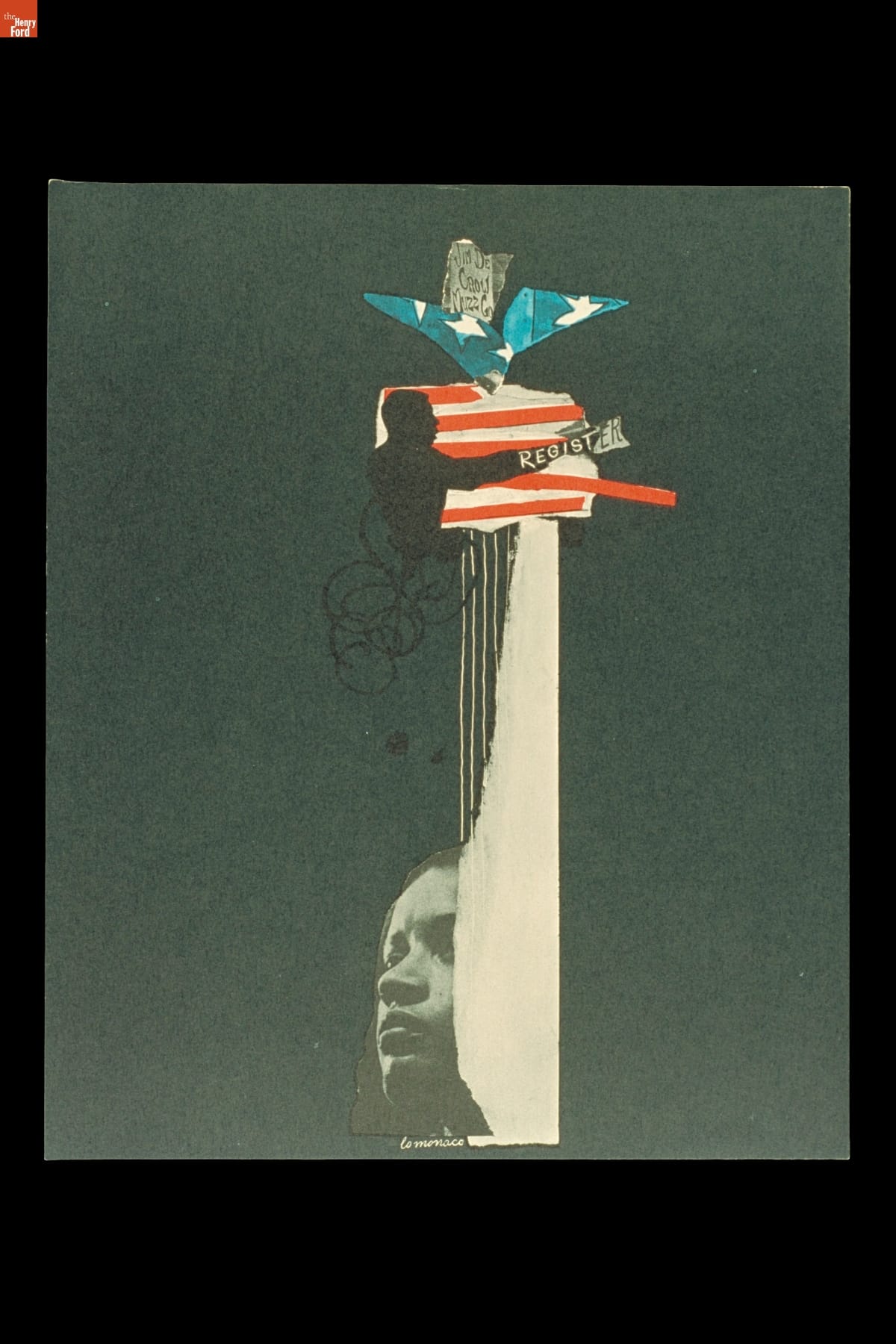
- Print, "We Shall Overcome! and in the Process Assume the Responsibilities as Well as the Rewards of Citizenship," 1963 - More than 250,000 civil rights advocates showed up at the 1963 March on Washington for Jobs and Freedom. This print, part of a souvenir portfolio made for the event, incorporated fragments of disturbing images from the movement. The artist intended these to symbolize man's inhumanity to his fellow man. Civil Rights activists hoped that they would stir people's emotions and incite action.
- August 28, 1963
- Collections - Artifact
Print, "We Shall Overcome! and in the Process Assume the Responsibilities as Well as the Rewards of Citizenship," 1963
More than 250,000 civil rights advocates showed up at the 1963 March on Washington for Jobs and Freedom. This print, part of a souvenir portfolio made for the event, incorporated fragments of disturbing images from the movement. The artist intended these to symbolize man's inhumanity to his fellow man. Civil Rights activists hoped that they would stir people's emotions and incite action.
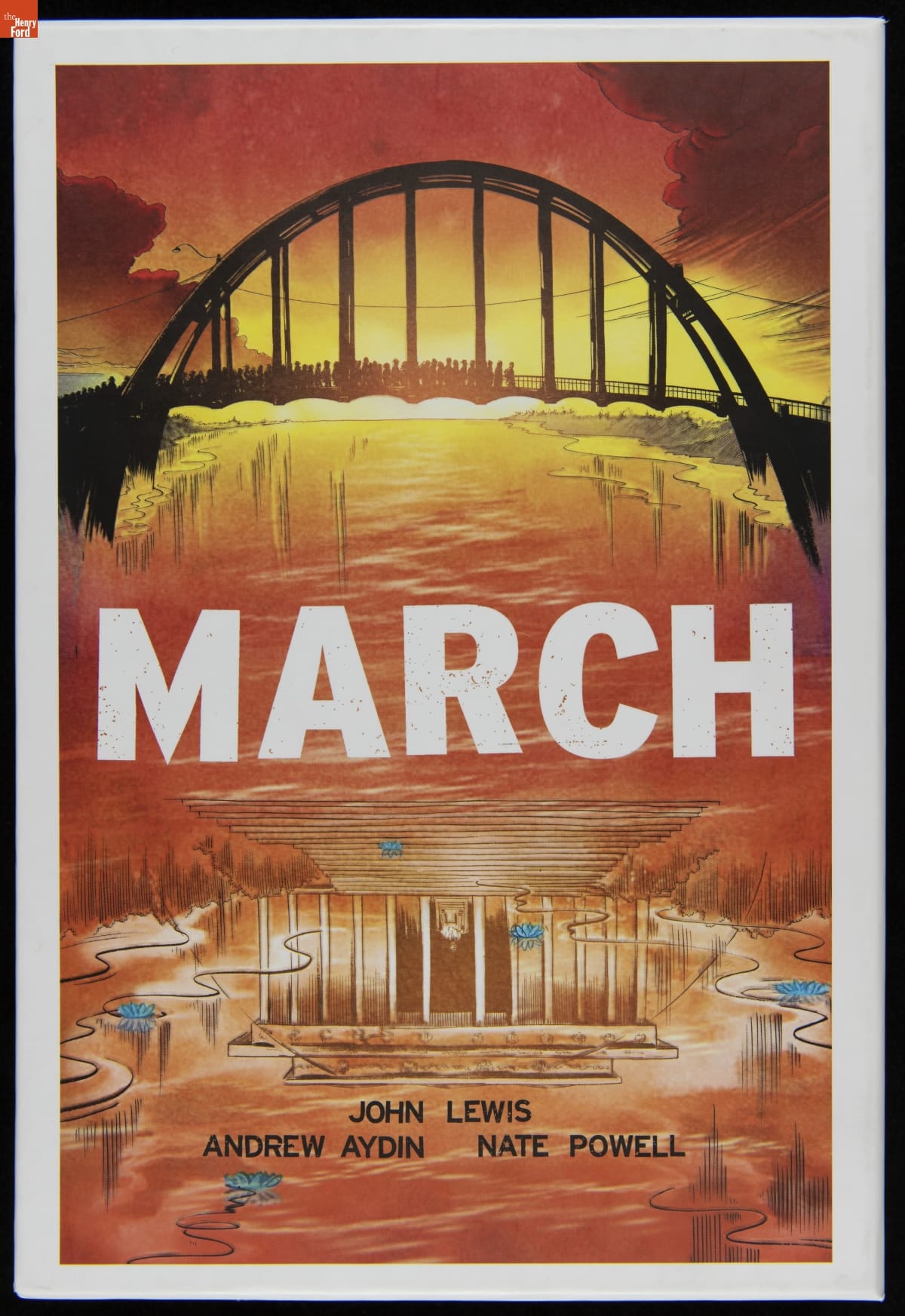
- March, 2016 - <html><body>John Lewis (1940-2020) was a civil rights activist and US congressman. In the mid-2010s, he co-wrote his autobiographical graphic novel series called <i>Mar</i><i>c</i><span style="font-style:normal"><i>h</i></span>. While the books follow Lewis throughout his life, they focus on his participation in civil rights protests such as the Freedom Rides in 1961 and the "Bloody Sunday" march in 1965. </body> </html>
- 2016
- Collections - Artifact
March, 2016
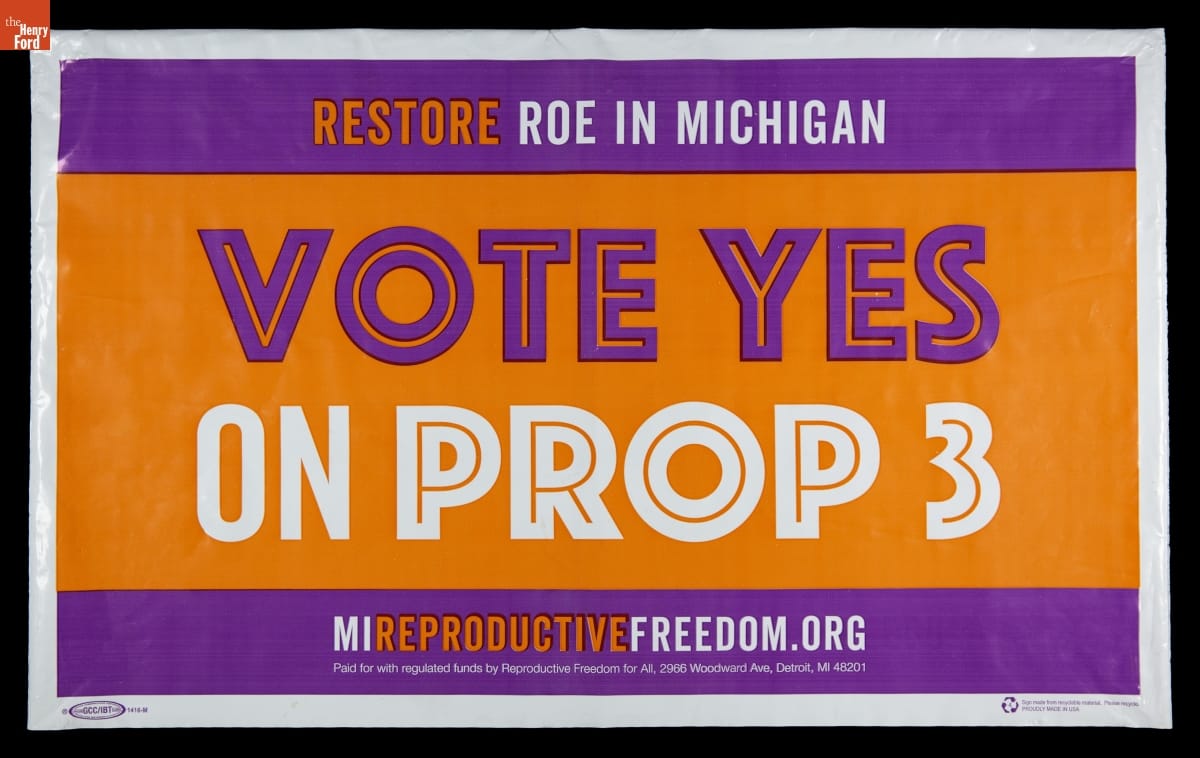
John Lewis (1940-2020) was a civil rights activist and US congressman. In the mid-2010s, he co-wrote his autobiographical graphic novel series called March. While the books follow Lewis throughout his life, they focus on his participation in civil rights protests such as the Freedom Rides in 1961 and the "Bloody Sunday" march in 1965. - "Vote Yes on Prop 3" Yard Sign, 2022 - In June 2022, the Supreme Court ruled that abortion was not a constitutionally protected right, overturning the court's previous decisions in <em>Roe v. Wade</em> (1973) and <em>Planned Parenthood v. Casey</em> (1992). Several states then moved to protect abortion rights, while others reinstated or introduced abortion restrictions. In Michigan, voters passed Proposal 3: a state constitutional amendment to protect reproductive rights, including abortion.
- 2022
- Collections - Artifact
"Vote Yes on Prop 3" Yard Sign, 2022
In June 2022, the Supreme Court ruled that abortion was not a constitutionally protected right, overturning the court's previous decisions in Roe v. Wade (1973) and Planned Parenthood v. Casey (1992). Several states then moved to protect abortion rights, while others reinstated or introduced abortion restrictions. In Michigan, voters passed Proposal 3: a state constitutional amendment to protect reproductive rights, including abortion.
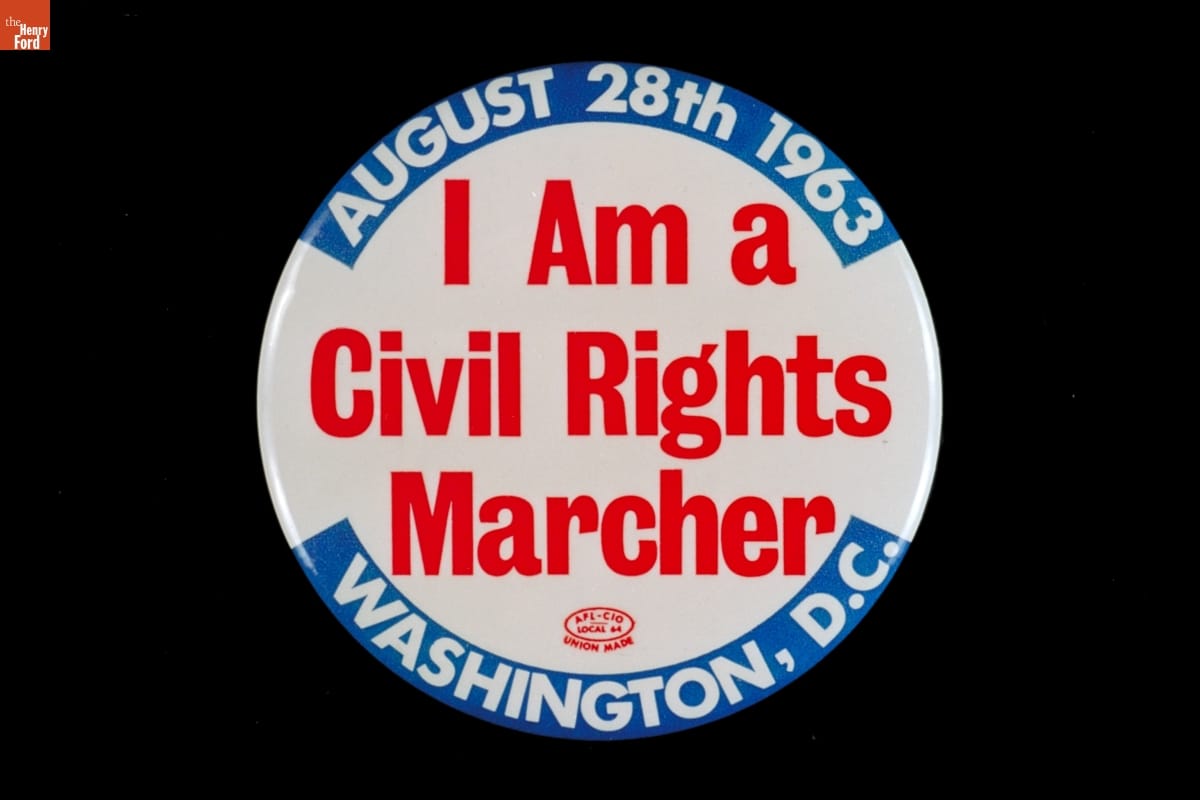
- Button, "I am a Civil Rights Marcher," 1963 - More than 250,000 civil rights advocates showed up at this peaceful march to support unity, jobs, and a new Civil Rights bill being proposed by President Kennedy. Television viewers nationwide watched African Americans and whites march together, united behind a common cause. Songs and speeches at this march included Martin Luther King, Jr.'s famous "I Have a Dream" speech.
- August 28, 1963
- Collections - Artifact
Button, "I am a Civil Rights Marcher," 1963
More than 250,000 civil rights advocates showed up at this peaceful march to support unity, jobs, and a new Civil Rights bill being proposed by President Kennedy. Television viewers nationwide watched African Americans and whites march together, united behind a common cause. Songs and speeches at this march included Martin Luther King, Jr.'s famous "I Have a Dream" speech.