
Search
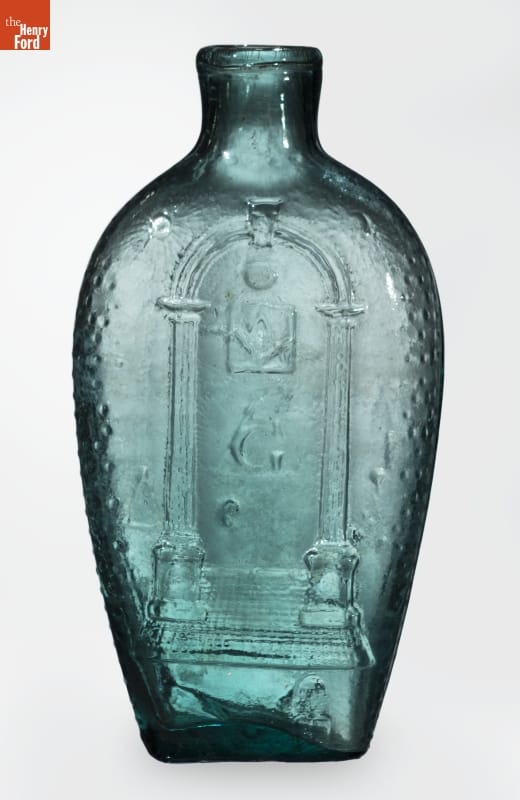
- Flask, 1815-1830 - Glass factories in America began producing inexpensive, mold-formed flasks in the early 1800s. These figured flasks, often decorated with symbols of national pride or political or cultural affiliation, appealed to America's common man. Membership in the Freemasons grew in the early decades of the 1800s. Supporters of the Masonic order would recognize the ritualistic symbols on this and other similar flasks.
- 1815-1830
- Collections - Artifact
Flask, 1815-1830
Glass factories in America began producing inexpensive, mold-formed flasks in the early 1800s. These figured flasks, often decorated with symbols of national pride or political or cultural affiliation, appealed to America's common man. Membership in the Freemasons grew in the early decades of the 1800s. Supporters of the Masonic order would recognize the ritualistic symbols on this and other similar flasks.
- Masonic Pendant, 1803 -
- 1803
- Collections - Artifact
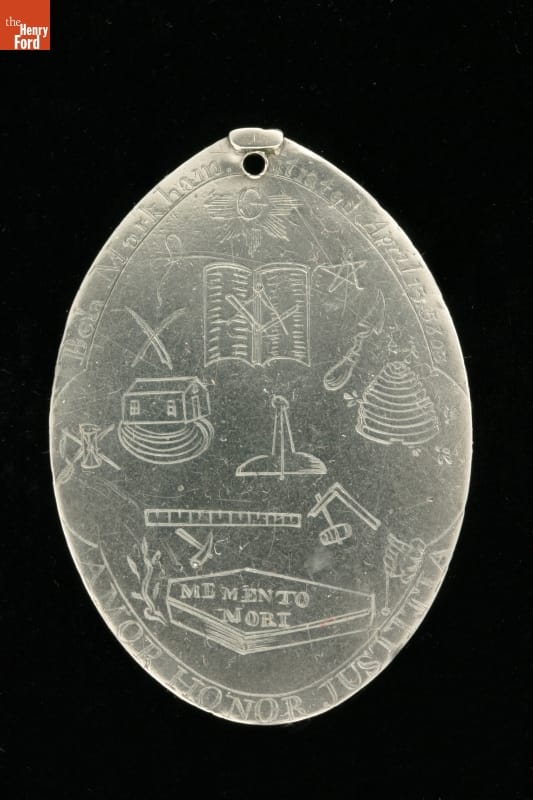
Masonic Pendant, 1803
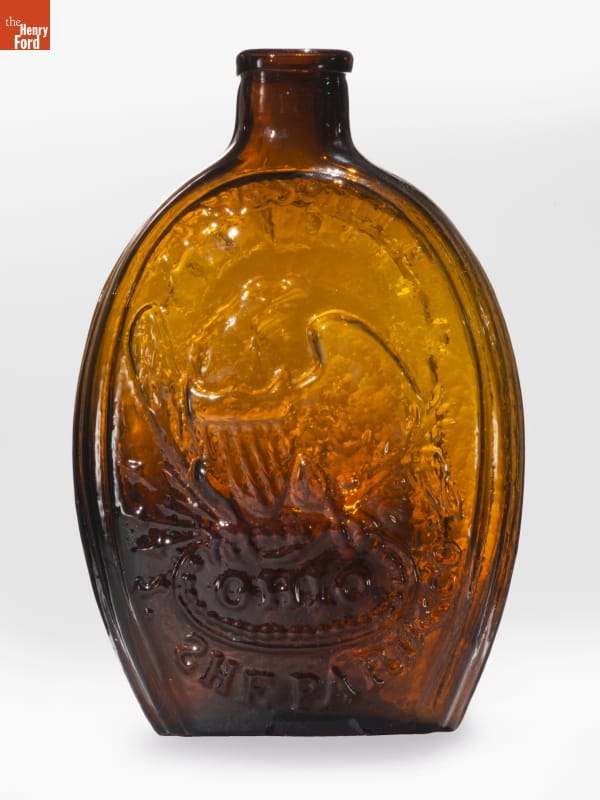
- Flask, 1822-1835 - Glass factories in America began producing inexpensive, mold-formed flasks in the early 1800s. These figured flasks, often decorated with symbols of national pride or political or cultural affiliation, appealed to America's common man. Membership in the Freemasons grew in the early decades of the 1800s. This flask combines Masonic imagery (arch and pavement) with an emblem of America's agrarian roots (farm tools and grain).
- 1822-1835
- Collections - Artifact
Flask, 1822-1835
Glass factories in America began producing inexpensive, mold-formed flasks in the early 1800s. These figured flasks, often decorated with symbols of national pride or political or cultural affiliation, appealed to America's common man. Membership in the Freemasons grew in the early decades of the 1800s. This flask combines Masonic imagery (arch and pavement) with an emblem of America's agrarian roots (farm tools and grain).
- Masonic Medal, 1812 -
- 1812
- Collections - Artifact
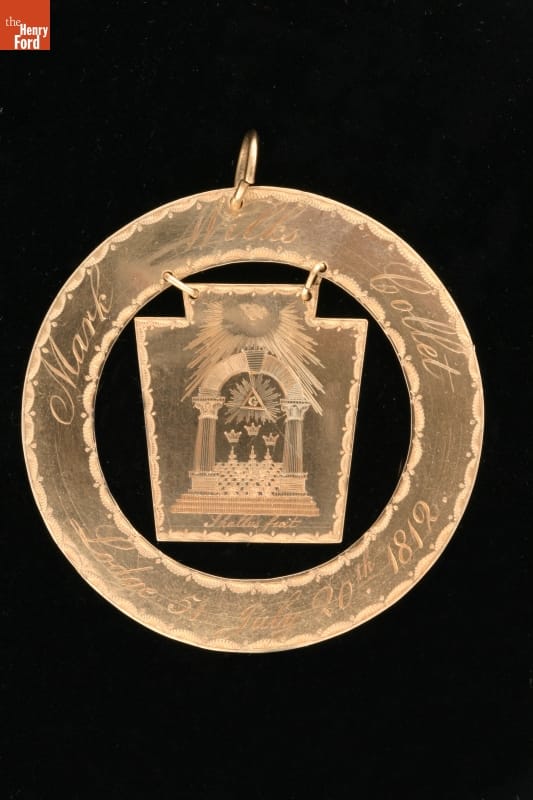
Masonic Medal, 1812
- Crazy Quilt, circa 1896 -
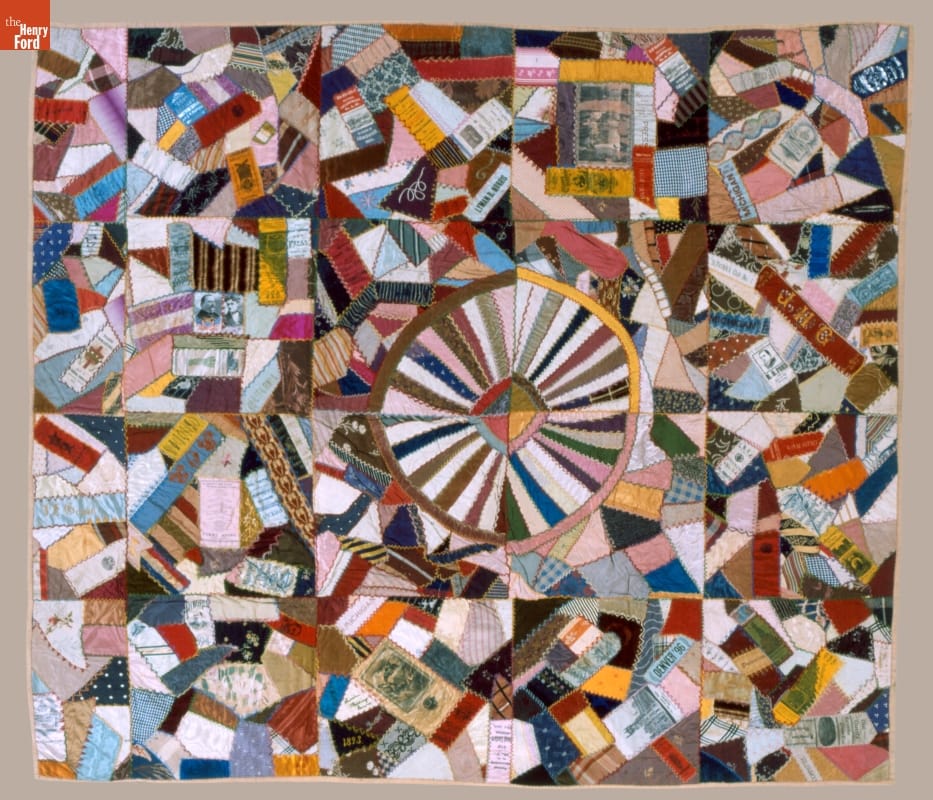
- circa 1896
- Collections - Artifact
Crazy Quilt, circa 1896
- Flask, 1815-1817 - Glass factories in America began producing inexpensive, mold-formed flasks in the early 1800s. These figured flasks, often decorated with symbols of national pride or political or cultural affiliation, appealed to America's common man. Membership in the Freemasons grew in the early decades of the 1800s. Supporters of the Masonic order would recognize the ritualistic symbols on this and other similar flasks.
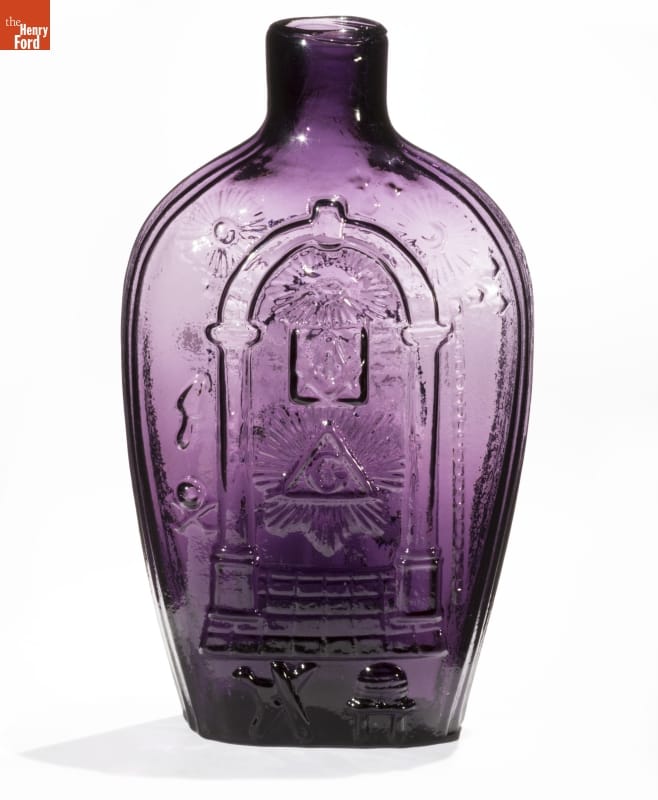
- 1815-1817
- Collections - Artifact
Flask, 1815-1817
Glass factories in America began producing inexpensive, mold-formed flasks in the early 1800s. These figured flasks, often decorated with symbols of national pride or political or cultural affiliation, appealed to America's common man. Membership in the Freemasons grew in the early decades of the 1800s. Supporters of the Masonic order would recognize the ritualistic symbols on this and other similar flasks.
- Masonic Pendant, 1806 -
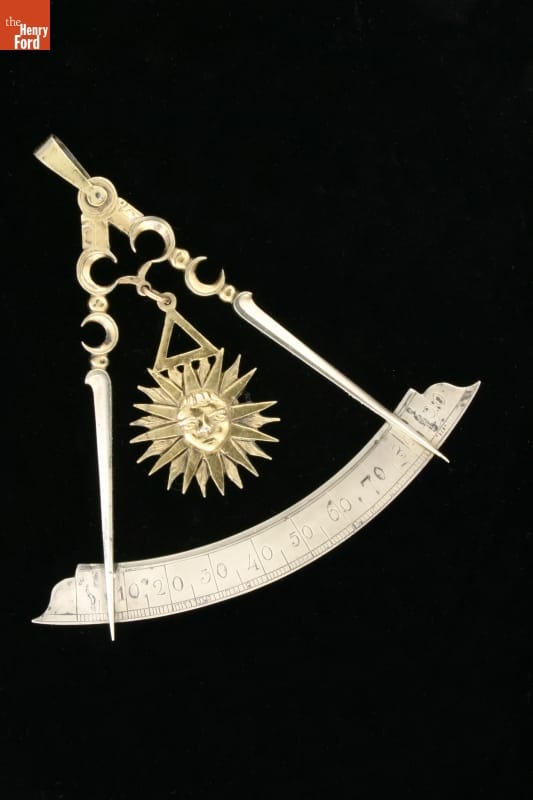
- 1806
- Collections - Artifact
Masonic Pendant, 1806
- Flask, 1818-1830 - Glass factories in America began producing inexpensive, mold-formed flasks in the early 1800s. These figured flasks, often decorated with symbols of national pride or political or cultural affiliation, appealed to America's common man. Membership in the Freemasons grew in the early decades of the 1800s. Supporters of the Masonic order would recognize the ritualistic symbols on this and other similar flasks.
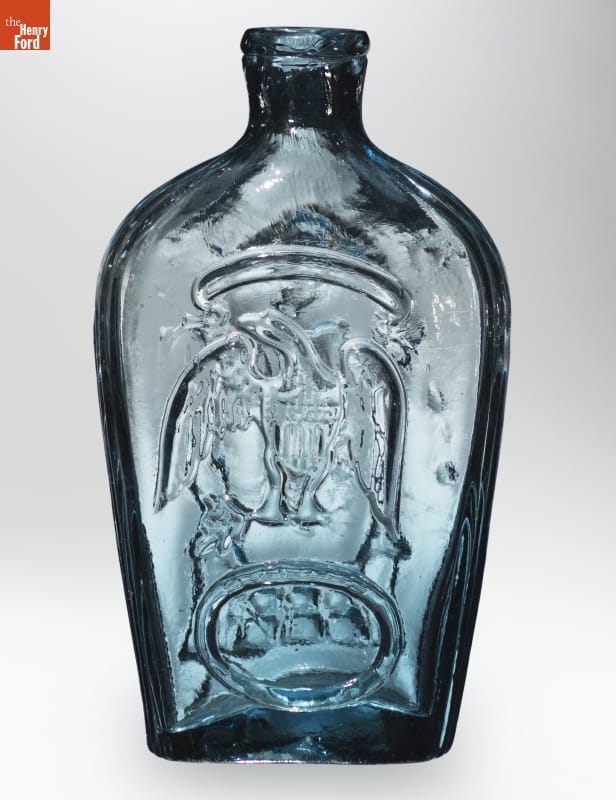
- 1818-1830
- Collections - Artifact
Flask, 1818-1830
Glass factories in America began producing inexpensive, mold-formed flasks in the early 1800s. These figured flasks, often decorated with symbols of national pride or political or cultural affiliation, appealed to America's common man. Membership in the Freemasons grew in the early decades of the 1800s. Supporters of the Masonic order would recognize the ritualistic symbols on this and other similar flasks.
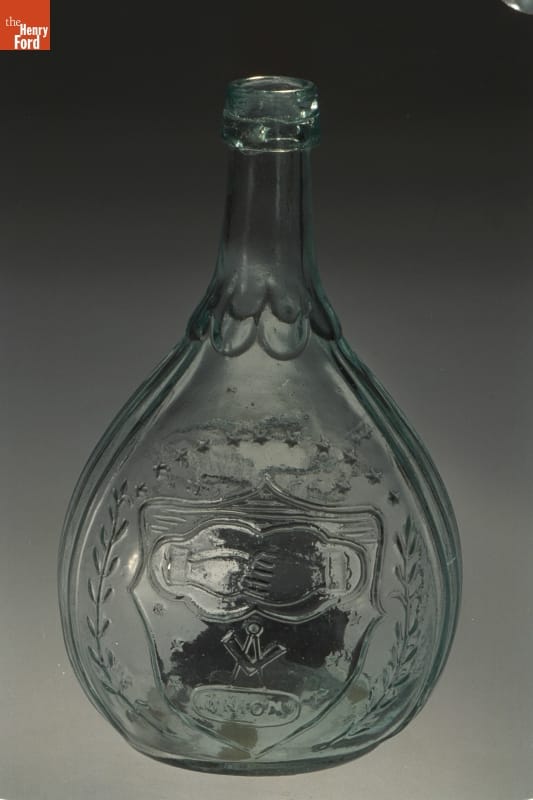
- Calabash Bottle, 1865-1875 - Glass factories in America began producing inexpensive, mold-formed flasks in the early 1800s. These figured glass containers were often decorated with symbols of national pride and political and cultural affiliations, which appealed to America's common man. This calabash -- a gourd-like form popular in the mid-19th century -- contains images associated with the Union (an eagle and clasping hands) and freemasonry (a square and compass).
- 1865-1875
- Collections - Artifact
Calabash Bottle, 1865-1875
Glass factories in America began producing inexpensive, mold-formed flasks in the early 1800s. These figured glass containers were often decorated with symbols of national pride and political and cultural affiliations, which appealed to America's common man. This calabash -- a gourd-like form popular in the mid-19th century -- contains images associated with the Union (an eagle and clasping hands) and freemasonry (a square and compass).
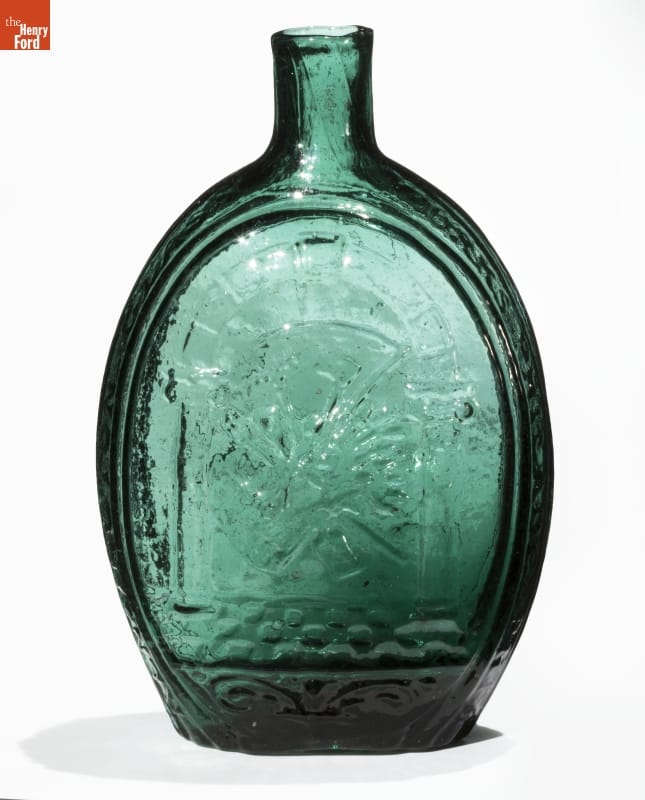
- Flask, 1822-1824 - Glass factories in America began producing inexpensive, mold-formed flasks in the early 1800s. These figured flasks, often decorated with phrases and symbols of national pride, appealed to the common man. The U. S. frigate <EM>Franklin</EM> and the War of 1812 slogan "Free Trade and Sailor's Rights" adorn this 1820s flask. Americans continued to use this patriotic slogan throughout the 19th century.
- 1822-1824
- Collections - Artifact
Flask, 1822-1824
Glass factories in America began producing inexpensive, mold-formed flasks in the early 1800s. These figured flasks, often decorated with phrases and symbols of national pride, appealed to the common man. The U. S. frigate Franklin and the War of 1812 slogan "Free Trade and Sailor's Rights" adorn this 1820s flask. Americans continued to use this patriotic slogan throughout the 19th century.