
Search
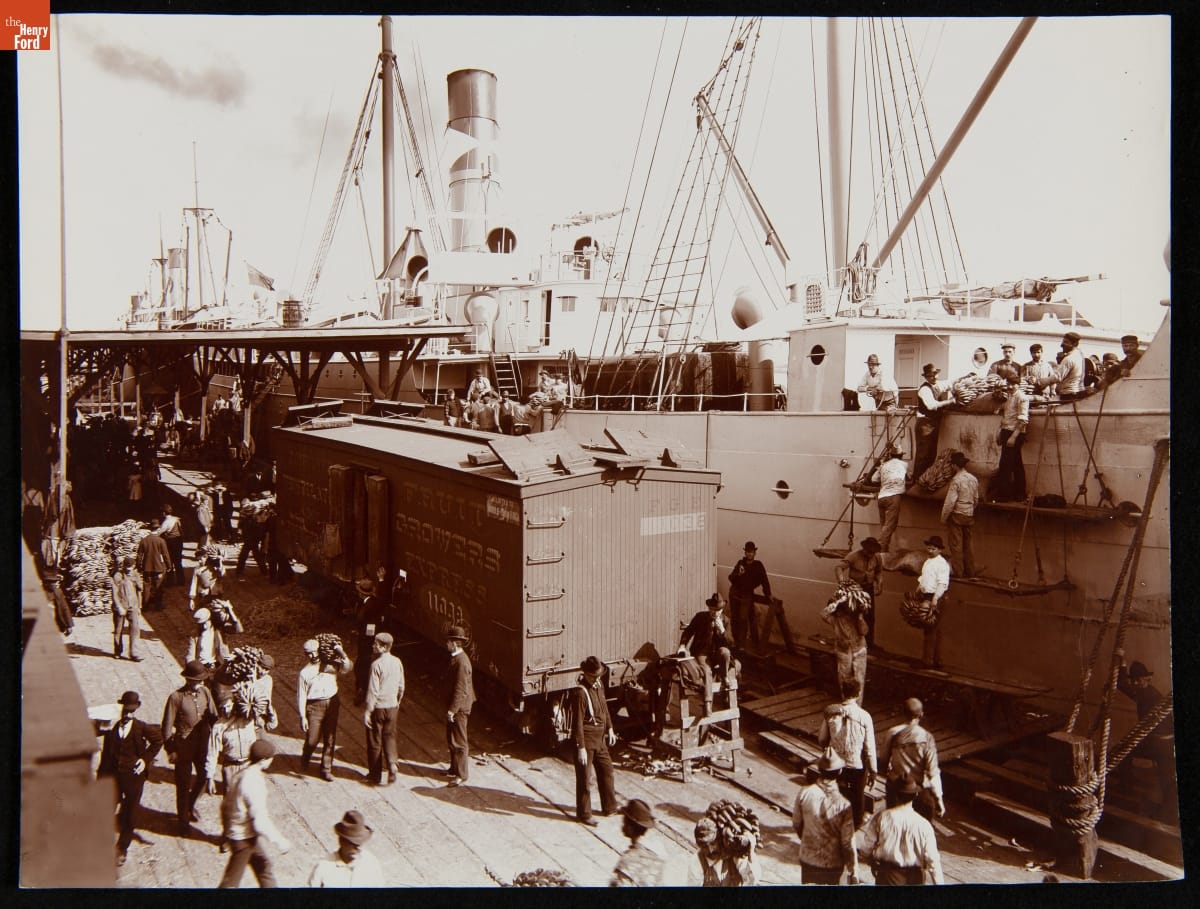
- Unloading Bananas from Steamer, New Orleans, Louisiana, 1900-1910 - Bananas arrived on grocery store shelves via a transportation system controlled by competing fruit companies and their government allies. Refrigerated railcars moved the crop from Central American plantations to ships bound for U.S. ports in the Gulf of Mexico. This photograph shows dockworkers in New Orleans, Louisiana, transferring bunches of bananas -- each weighing around 86 pounds -- to a refrigerated railcar for transport to market.
- 1900-1910
- Collections - Artifact
Unloading Bananas from Steamer, New Orleans, Louisiana, 1900-1910
Bananas arrived on grocery store shelves via a transportation system controlled by competing fruit companies and their government allies. Refrigerated railcars moved the crop from Central American plantations to ships bound for U.S. ports in the Gulf of Mexico. This photograph shows dockworkers in New Orleans, Louisiana, transferring bunches of bananas -- each weighing around 86 pounds -- to a refrigerated railcar for transport to market.
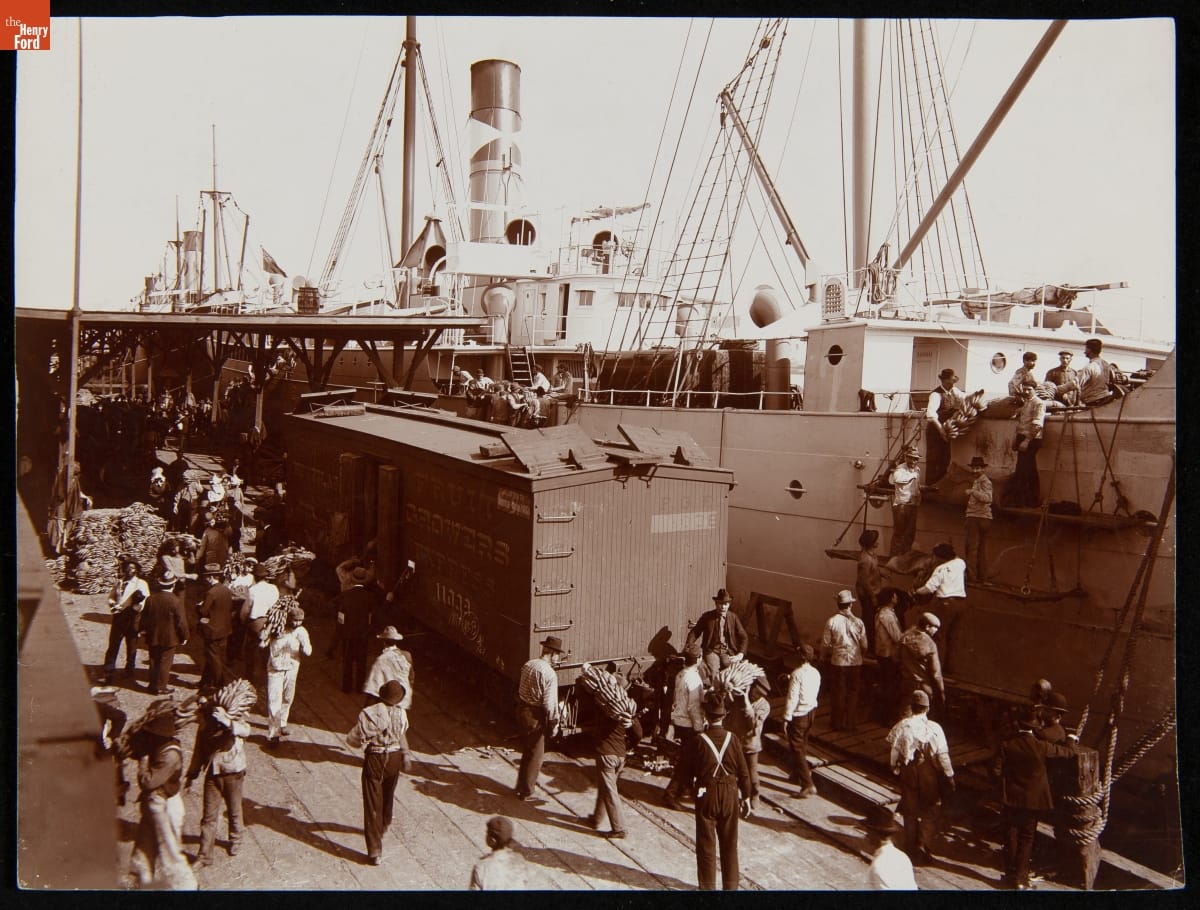
- Unloading Bananas from Steamer, New Orleans, Louisiana, 1900-1910 - Bananas arrived on grocery store shelves via a transportation system controlled by competing fruit companies and their government allies. Refrigerated railcars moved the crop from Central American plantations to ships bound for U.S. ports in the Gulf of Mexico. This photograph shows dockworkers in New Orleans, Louisiana, transferring bunches of bananas -- each weighing around 86 pounds -- to a refrigerated railcar for transport to market.
- 1900-1910
- Collections - Artifact
Unloading Bananas from Steamer, New Orleans, Louisiana, 1900-1910
Bananas arrived on grocery store shelves via a transportation system controlled by competing fruit companies and their government allies. Refrigerated railcars moved the crop from Central American plantations to ships bound for U.S. ports in the Gulf of Mexico. This photograph shows dockworkers in New Orleans, Louisiana, transferring bunches of bananas -- each weighing around 86 pounds -- to a refrigerated railcar for transport to market.
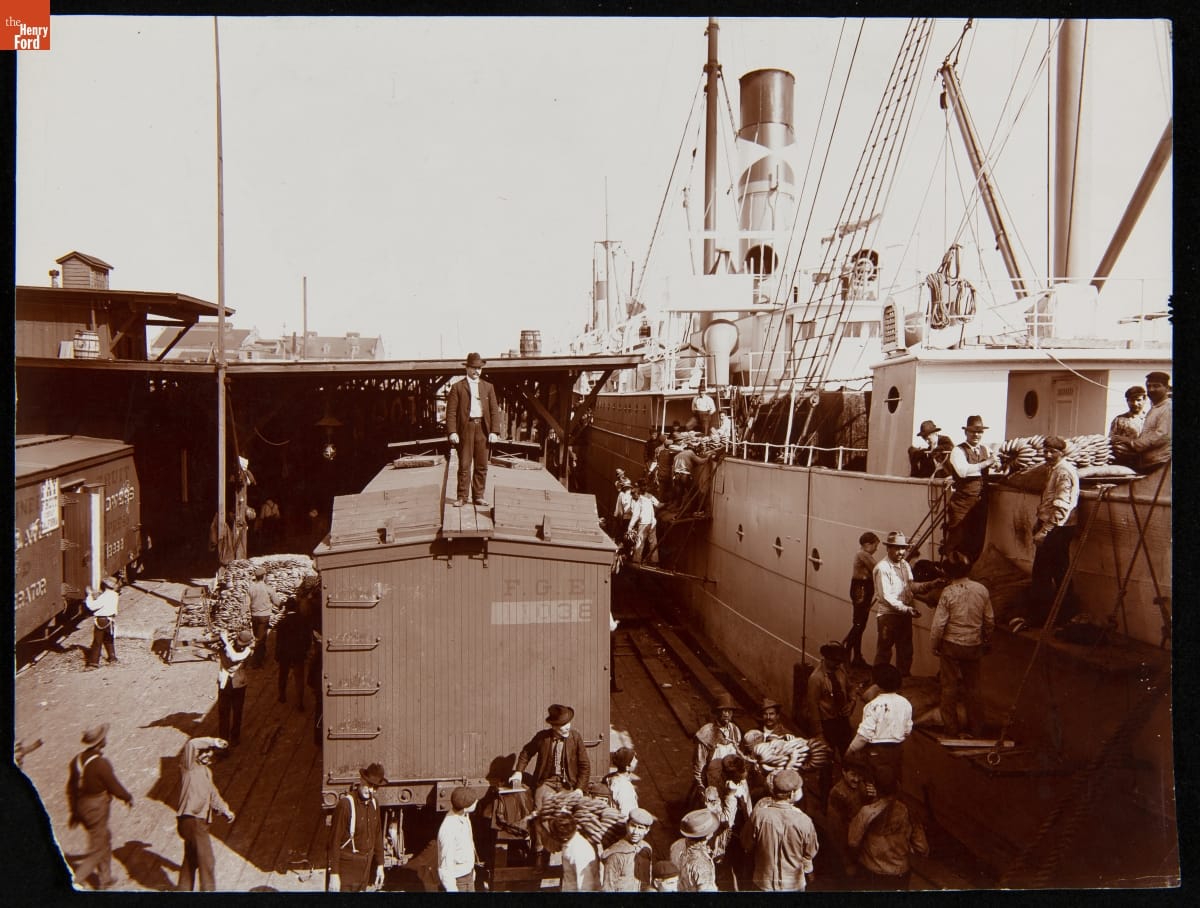
- Unloading Bananas from Steamer, New Orleans, Louisiana, 1900-1910 - Bananas arrived on grocery store shelves via a transportation system controlled by competing fruit companies and their government allies. Refrigerated railcars moved the crop from Central American plantations to ships bound for U.S. ports in the Gulf of Mexico. This photograph shows dockworkers in New Orleans, Louisiana, transferring bunches of bananas -- each weighing around 86 pounds -- to a refrigerated railcar for transport to market.
- 1900-1910
- Collections - Artifact
Unloading Bananas from Steamer, New Orleans, Louisiana, 1900-1910
Bananas arrived on grocery store shelves via a transportation system controlled by competing fruit companies and their government allies. Refrigerated railcars moved the crop from Central American plantations to ships bound for U.S. ports in the Gulf of Mexico. This photograph shows dockworkers in New Orleans, Louisiana, transferring bunches of bananas -- each weighing around 86 pounds -- to a refrigerated railcar for transport to market.
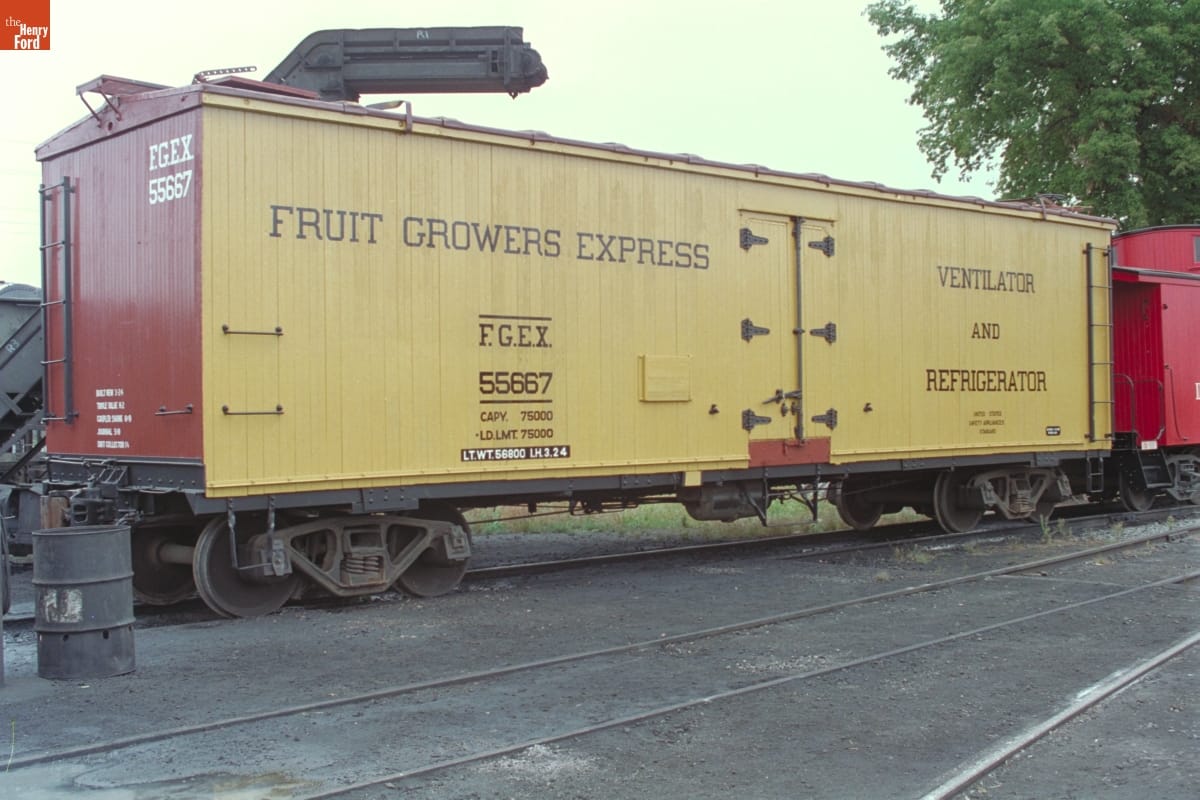
- 1924 Railroad Refrigerator Car, Used by Fruit Growers Express - Modern refrigerated rail cars have mechanical cooling units, but well into the 20th century, ice cooled refrigerator cars like this one. Since 45-55 pounds of ice melted each hour, icing stations had to be located at regular intervals along the route, and adherence to strict schedules was necessary to prevent spoilage. The ability to ship meats and produce in refrigerator cars, far from their points of origin, greatly expanded both farmers' markets, and consumers' food choices.
- March 01, 1924
- Collections - Artifact
1924 Railroad Refrigerator Car, Used by Fruit Growers Express
Modern refrigerated rail cars have mechanical cooling units, but well into the 20th century, ice cooled refrigerator cars like this one. Since 45-55 pounds of ice melted each hour, icing stations had to be located at regular intervals along the route, and adherence to strict schedules was necessary to prevent spoilage. The ability to ship meats and produce in refrigerator cars, far from their points of origin, greatly expanded both farmers' markets, and consumers' food choices.