
Search
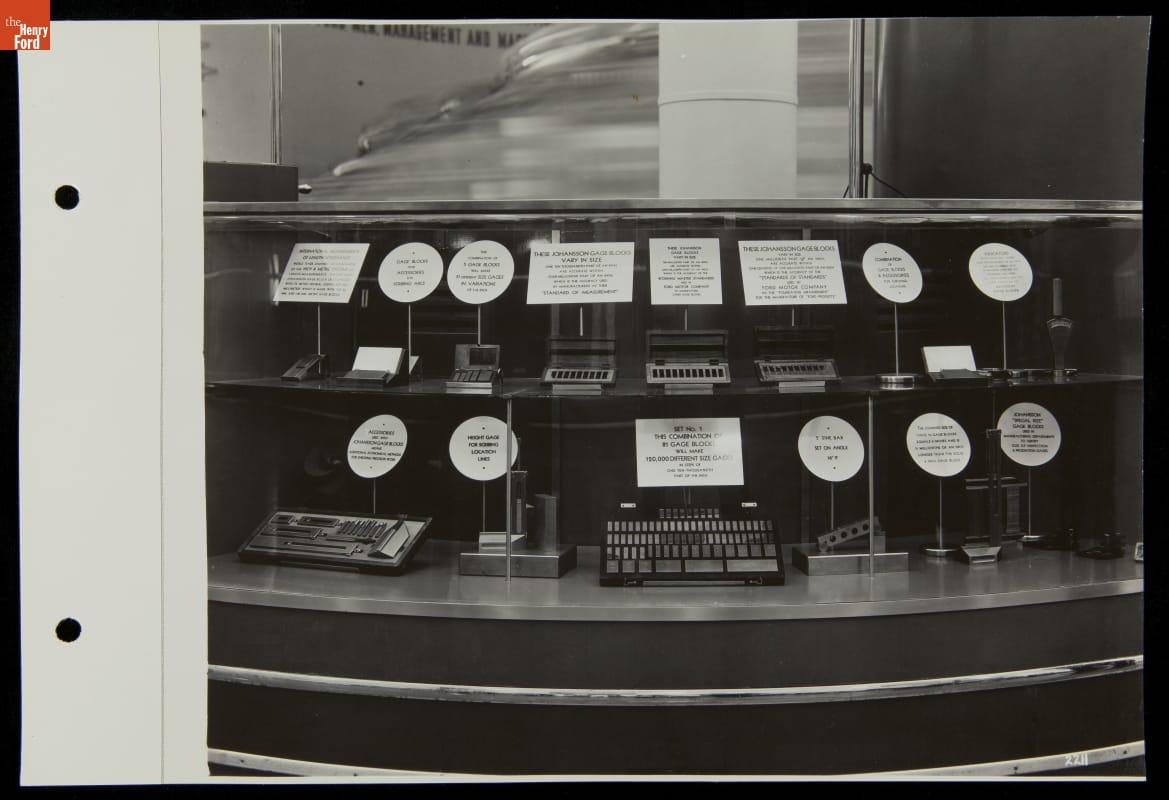
- Johansson Gage Blocks Exhibit, Ford Exposition, New York World's Fair, 1939 - Henry Ford viewed national expositions as business opportunities <EM>and</EM> platforms for public education. During the 1939-40 New York World's Fair, Ford Motor Company spent more than $5 million to build and maintain an elaborate exposition space. Informative displays and manufacturing demonstrations inside Ford's massive fair building offered visitors an in-depth, entertaining, and educational look at industrial processes.
- May 29, 1940
- Collections - Artifact
Johansson Gage Blocks Exhibit, Ford Exposition, New York World's Fair, 1939
Henry Ford viewed national expositions as business opportunities and platforms for public education. During the 1939-40 New York World's Fair, Ford Motor Company spent more than $5 million to build and maintain an elaborate exposition space. Informative displays and manufacturing demonstrations inside Ford's massive fair building offered visitors an in-depth, entertaining, and educational look at industrial processes.
- Brochure, "History of the Measurement of Length," circa 1960 -
- circa 1960
- Collections - Artifact
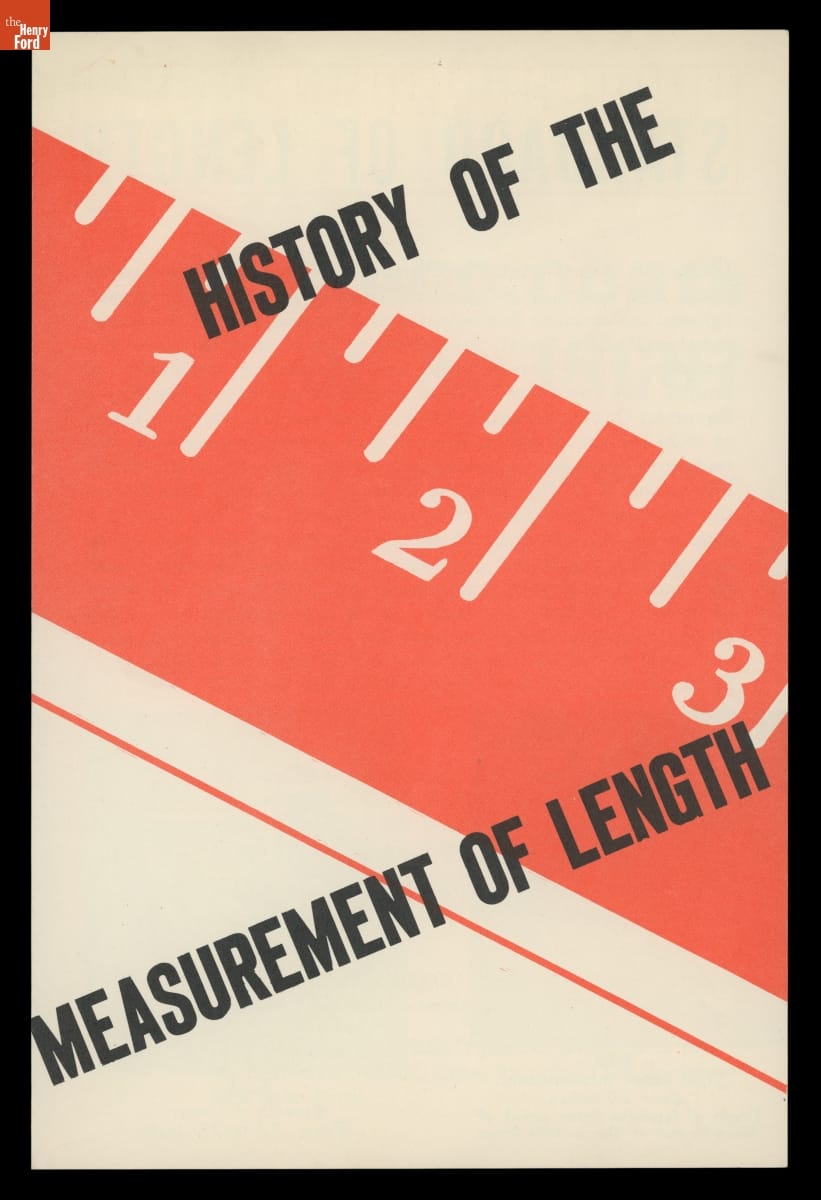
Brochure, "History of the Measurement of Length," circa 1960
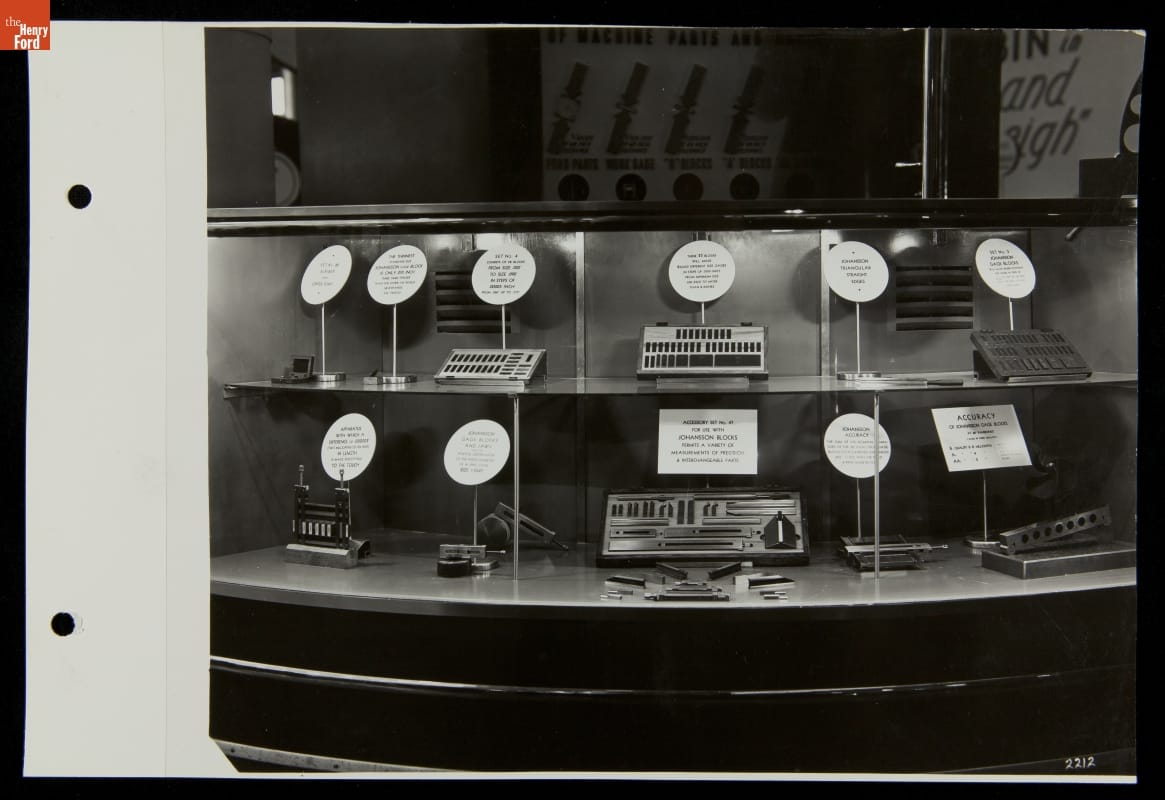
- Johansson Gage Blocks Exhibit, Ford Exposition, New York World's Fair, 1940 - Henry Ford viewed national expositions as business opportunities <EM>and</EM> platforms for public education. During the 1939-40 New York World's Fair, Ford Motor Company spent more than $5 million to build and maintain an elaborate exposition space. Informative displays and manufacturing demonstrations inside Ford's massive fair building offered visitors an in-depth, entertaining, and educational look at industrial processes.
- May 29, 1940
- Collections - Artifact
Johansson Gage Blocks Exhibit, Ford Exposition, New York World's Fair, 1940
Henry Ford viewed national expositions as business opportunities and platforms for public education. During the 1939-40 New York World's Fair, Ford Motor Company spent more than $5 million to build and maintain an elaborate exposition space. Informative displays and manufacturing demonstrations inside Ford's massive fair building offered visitors an in-depth, entertaining, and educational look at industrial processes.
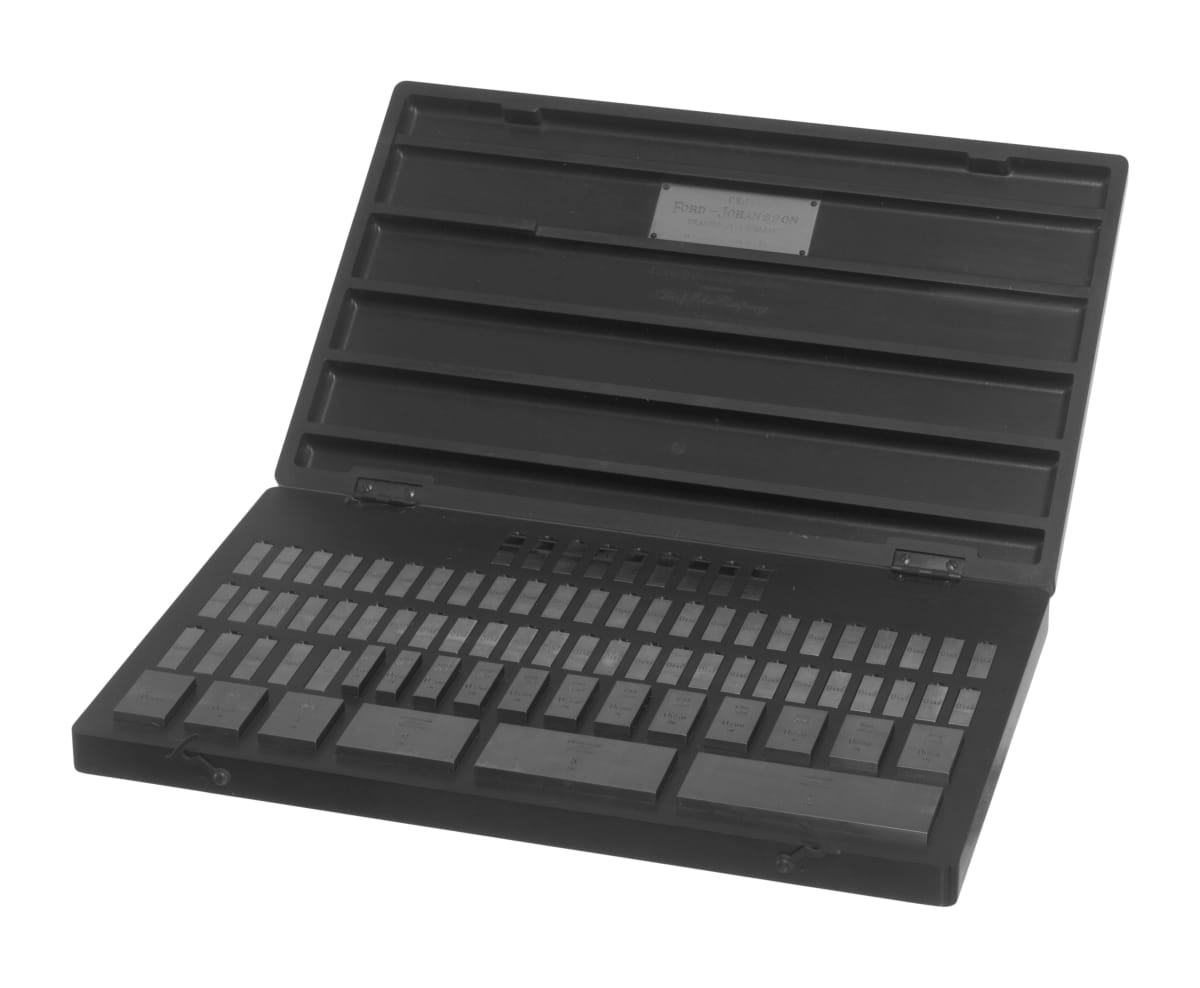
- Johansson Gauge Block Set, 1923 - Ford Motor Company's mass production methods depended on precision parts and tooling, and precision depended on exact measurements. Accuracy was so important that Henry Ford purchased C.E. Johansson, Inc. -- a Swedish company famous for its precision measuring instruments -- in 1923. Ford moved the company, complete with founder Carl Johansson, to Dearborn, Michigan.
- 1923
- Collections - Artifact
Johansson Gauge Block Set, 1923
Ford Motor Company's mass production methods depended on precision parts and tooling, and precision depended on exact measurements. Accuracy was so important that Henry Ford purchased C.E. Johansson, Inc. -- a Swedish company famous for its precision measuring instruments -- in 1923. Ford moved the company, complete with founder Carl Johansson, to Dearborn, Michigan.
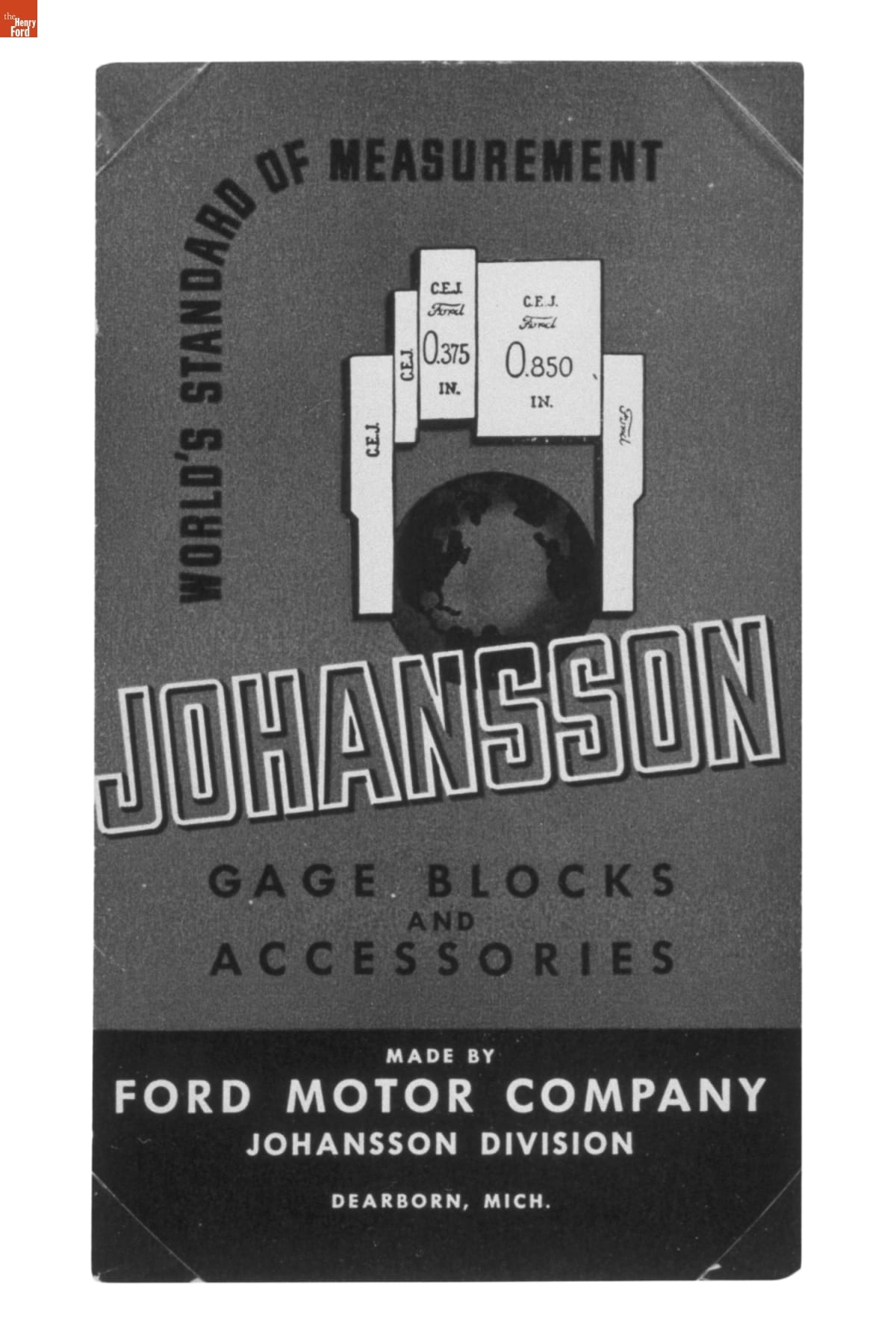
- Johansson Gage Blocks and Accessories, circa 1939 - Ford Motor Company's mass production methods depended on precision parts and tooling, and precision depended on exact measurements. Accuracy was so important that Henry Ford purchased C.E. Johansson, Inc. -- a Swedish company famous for its precision measuring instruments -- in 1923. Ford moved the company, complete with founder Carl Johansson, to Dearborn, Michigan.
- circa 1939
- Collections - Artifact
Johansson Gage Blocks and Accessories, circa 1939
Ford Motor Company's mass production methods depended on precision parts and tooling, and precision depended on exact measurements. Accuracy was so important that Henry Ford purchased C.E. Johansson, Inc. -- a Swedish company famous for its precision measuring instruments -- in 1923. Ford moved the company, complete with founder Carl Johansson, to Dearborn, Michigan.
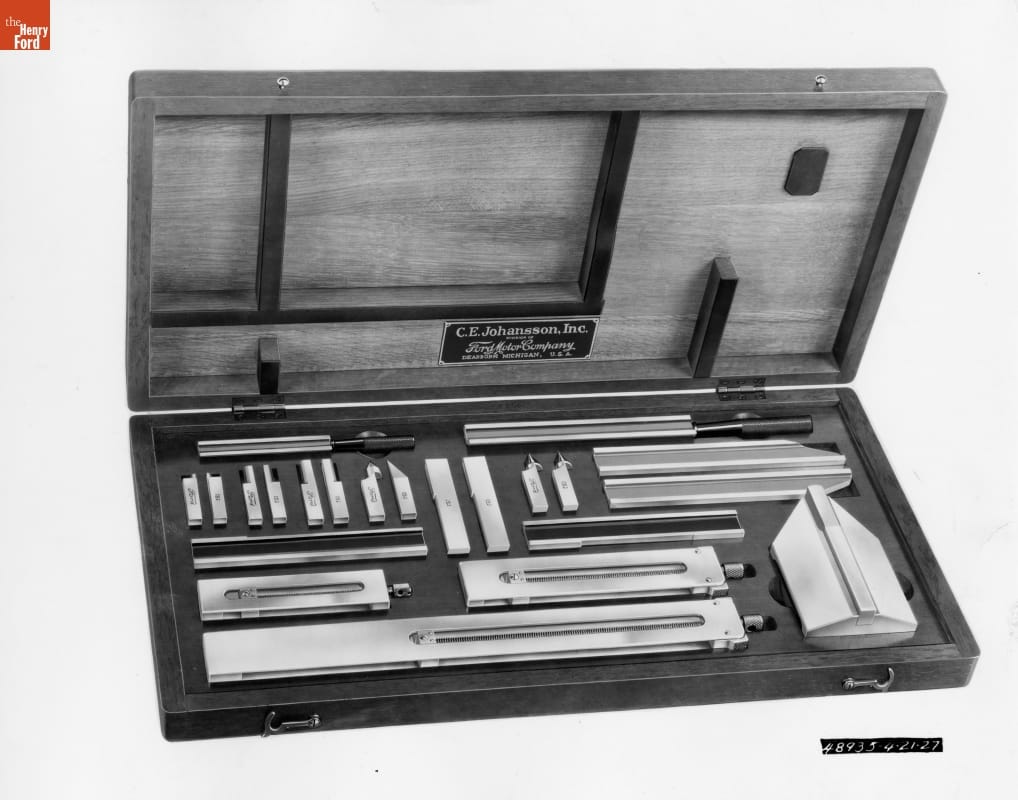
- Box of Johansson Gauges, 1927 - Ford Motor Company's mass production methods depended on precision parts and tooling, and precision depended on exact measurements. Accuracy was so important that Henry Ford purchased C.E. Johansson, Inc. -- a Swedish company famous for its precision measuring instruments -- in 1923. Ford moved the company, complete with founder Carl Johansson, to Dearborn, Michigan.
- April 21, 1927
- Collections - Artifact
Box of Johansson Gauges, 1927
Ford Motor Company's mass production methods depended on precision parts and tooling, and precision depended on exact measurements. Accuracy was so important that Henry Ford purchased C.E. Johansson, Inc. -- a Swedish company famous for its precision measuring instruments -- in 1923. Ford moved the company, complete with founder Carl Johansson, to Dearborn, Michigan.
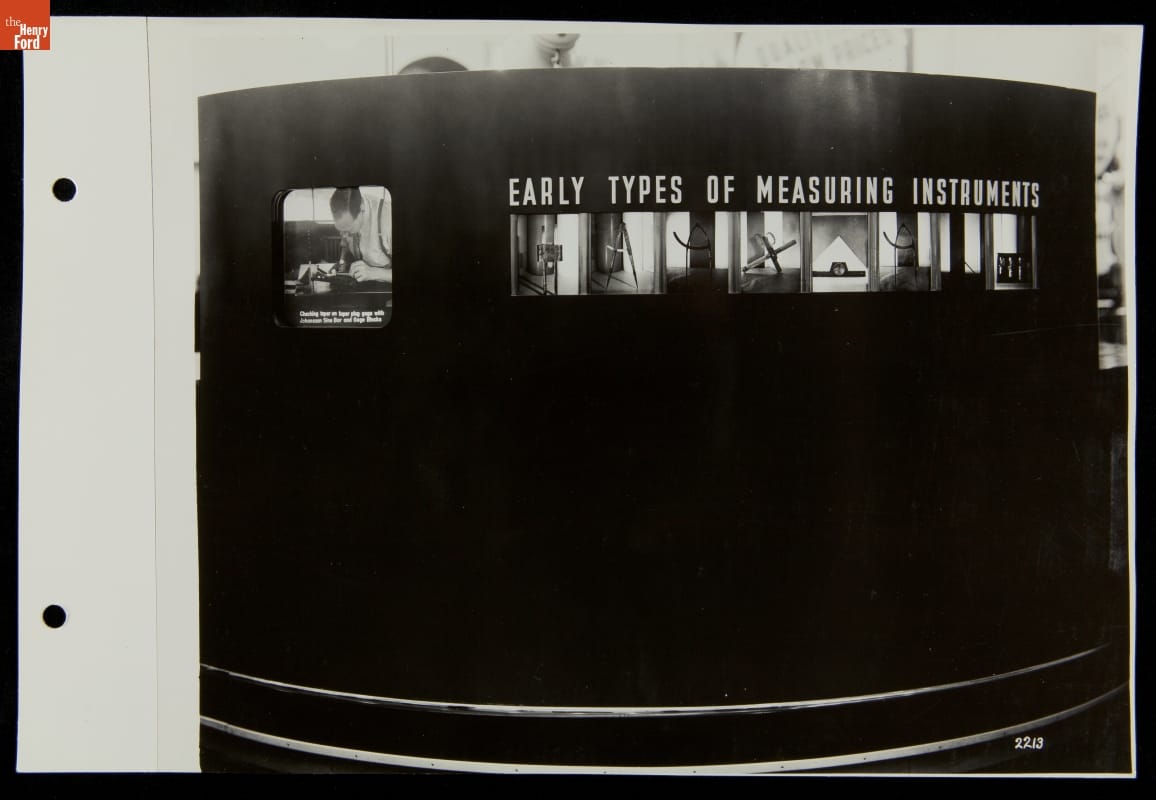
- Johansson Gage Blocks Exhibit, Ford Exposition, New York World's Fair, 1940 - Henry Ford viewed national expositions as business opportunities <EM>and</EM> platforms for public education. During the 1939-40 New York World's Fair, Ford Motor Company spent more than $5 million to build and maintain an elaborate exposition space. Informative displays and manufacturing demonstrations inside Ford's massive fair building offered visitors an in-depth, entertaining, and educational look at industrial processes.
- May 29, 1940
- Collections - Artifact
Johansson Gage Blocks Exhibit, Ford Exposition, New York World's Fair, 1940
Henry Ford viewed national expositions as business opportunities and platforms for public education. During the 1939-40 New York World's Fair, Ford Motor Company spent more than $5 million to build and maintain an elaborate exposition space. Informative displays and manufacturing demonstrations inside Ford's massive fair building offered visitors an in-depth, entertaining, and educational look at industrial processes.
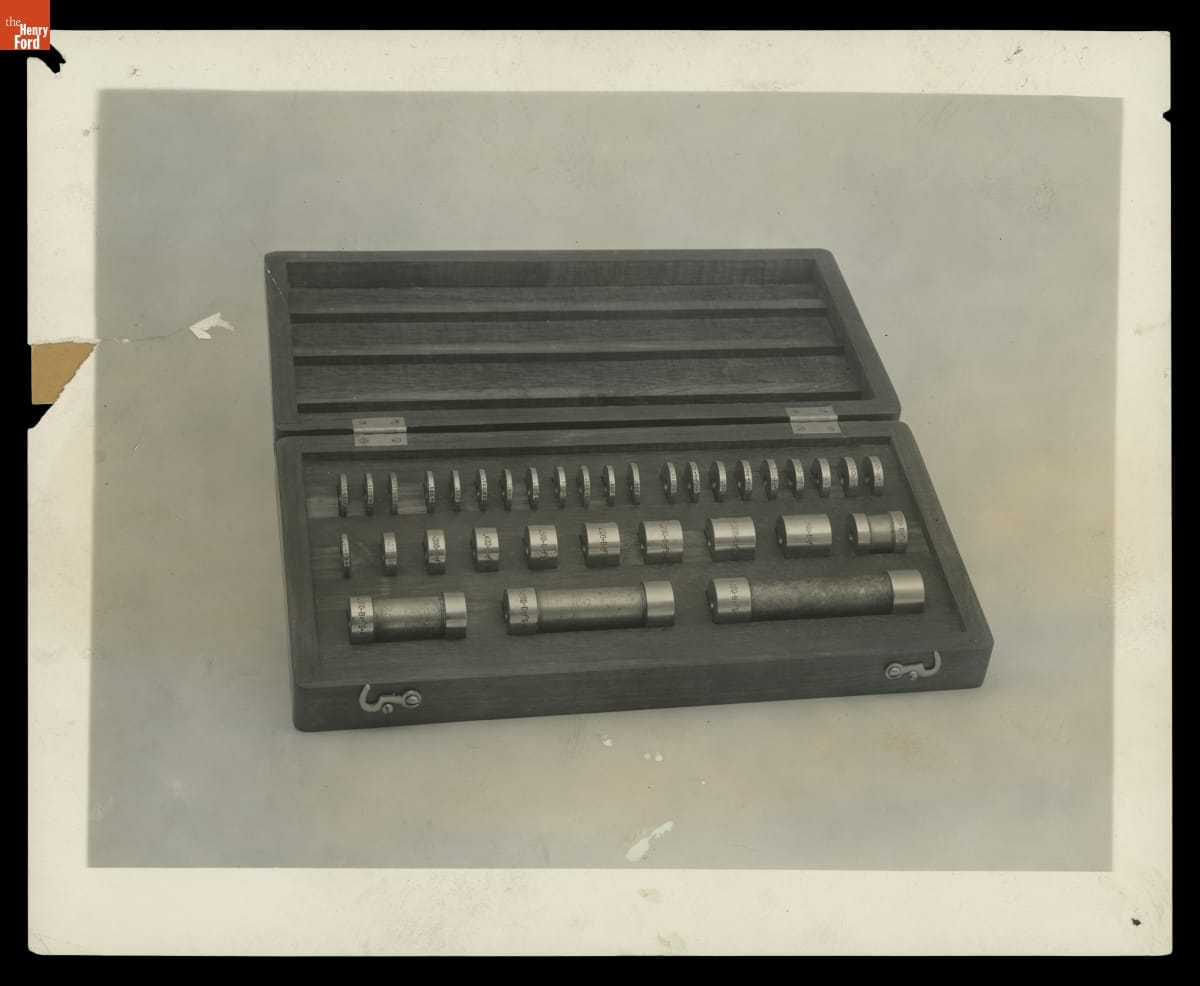
- Hoke Gage Blocks Made at the U.S. Bureau of Standards, 1919 -
- 1919
- Collections - Artifact
Hoke Gage Blocks Made at the U.S. Bureau of Standards, 1919