
Search
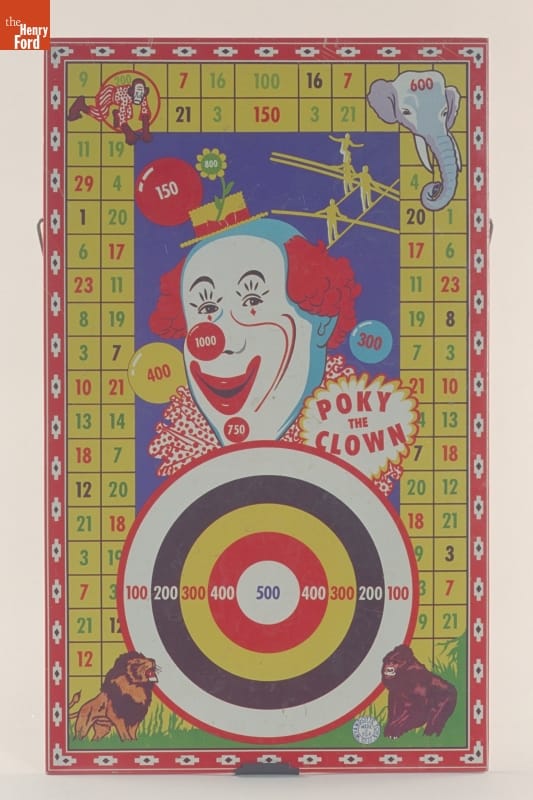
- Poky the Clown Target Board, 1940-1950 - Players shoot at Poky the Clown's nose in this game made by the All Metal Products Company, also known as Wyandotte Toys. The company produced a range of metal toys, including toy guns. At one time the company was the largest manufacturer of toy guns. This target game originally came with a dart gun and three suction cup darts.
- 1940-1950
- Collections - Artifact
Poky the Clown Target Board, 1940-1950
Players shoot at Poky the Clown's nose in this game made by the All Metal Products Company, also known as Wyandotte Toys. The company produced a range of metal toys, including toy guns. At one time the company was the largest manufacturer of toy guns. This target game originally came with a dart gun and three suction cup darts.
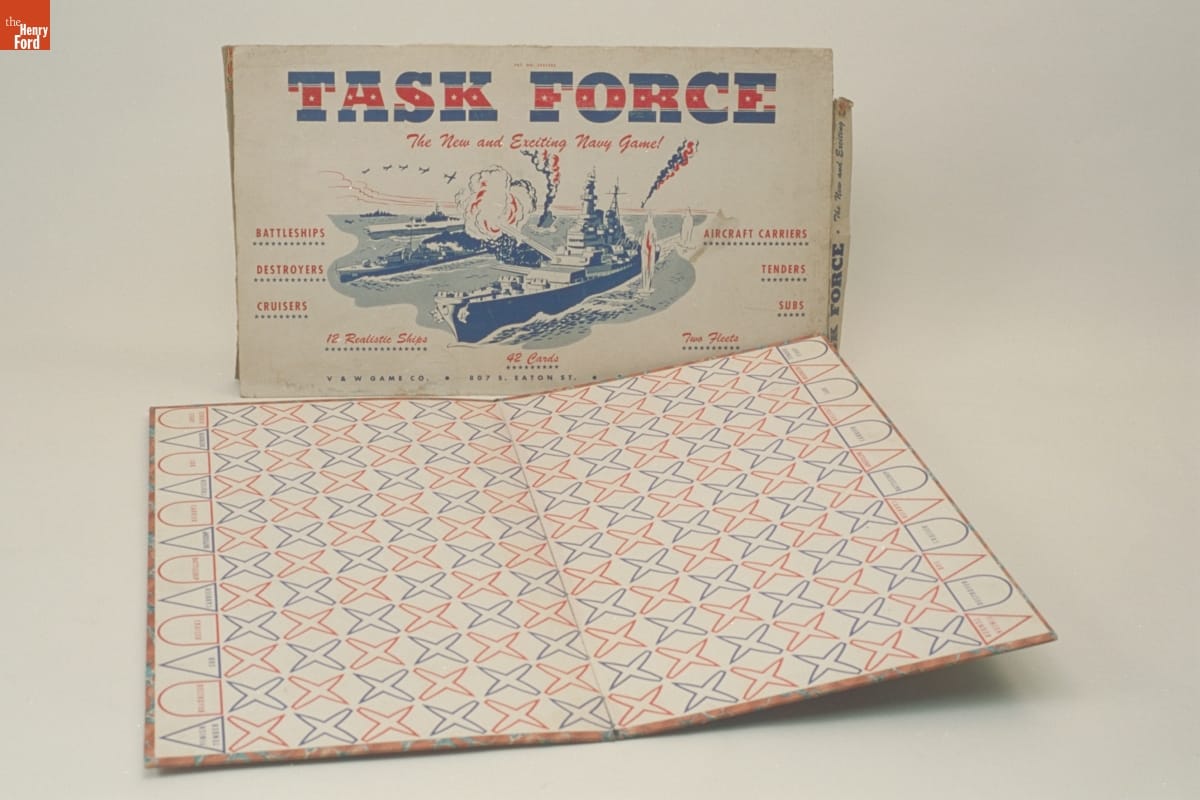
- Game, Task Force, circa 1951 - Guy W. Vitale, a World War II U. S. Navy veteran, patented this game in 1951. Players move ships across the board to their home ports. Along the way, players attack and try to destroy the enemy's (the opposing player's) fleet. The game was produced by a little-known game company in Albion, Michigan.
- circa 1951
- Collections - Artifact
Game, Task Force, circa 1951
Guy W. Vitale, a World War II U. S. Navy veteran, patented this game in 1951. Players move ships across the board to their home ports. Along the way, players attack and try to destroy the enemy's (the opposing player's) fleet. The game was produced by a little-known game company in Albion, Michigan.
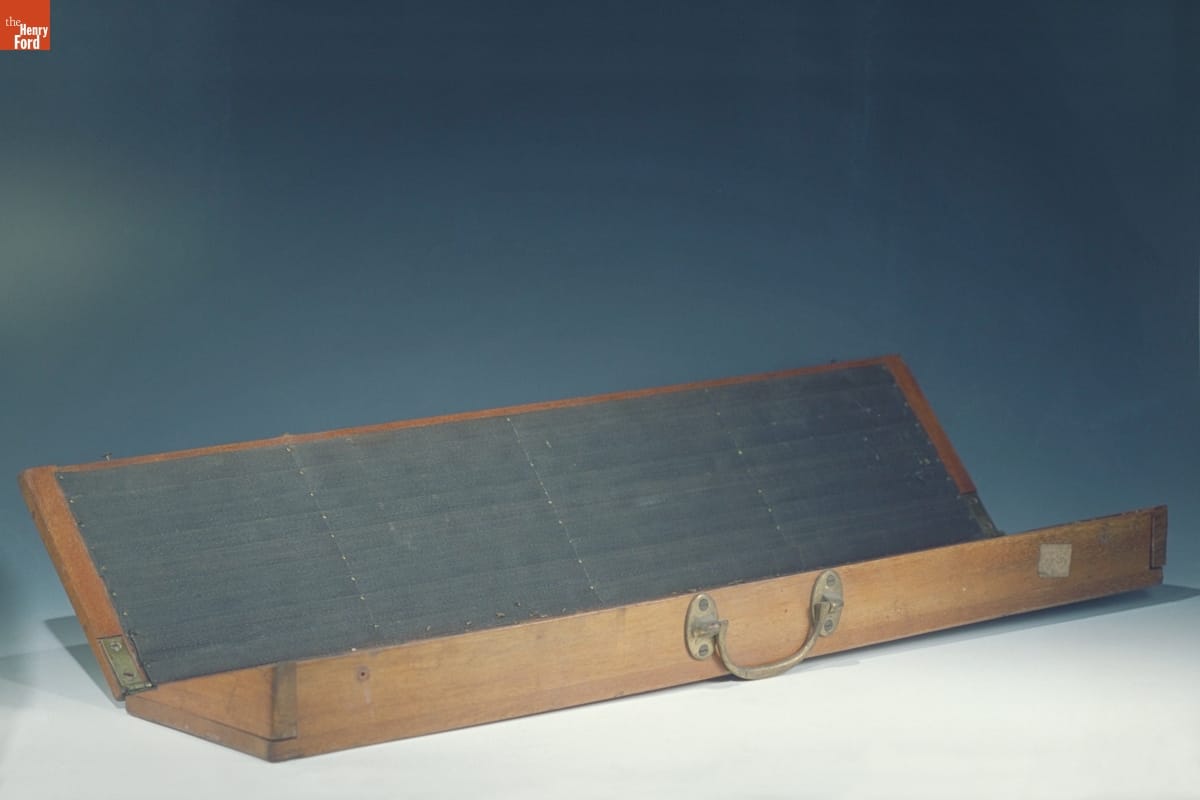
- Chastleton Patience Board, circa 1900 - This fold-out game board provides a solid surface for playing Patience -- a number of puzzle card games similar to Solitaire. Long fabric pockets secure cards in play, while wood slots provide storage. The board was designed by Mary Whitmore Jones who also authored works describing how to play the infinite varieties of the game.
- circa 1900
- Collections - Artifact
Chastleton Patience Board, circa 1900
This fold-out game board provides a solid surface for playing Patience -- a number of puzzle card games similar to Solitaire. Long fabric pockets secure cards in play, while wood slots provide storage. The board was designed by Mary Whitmore Jones who also authored works describing how to play the infinite varieties of the game.
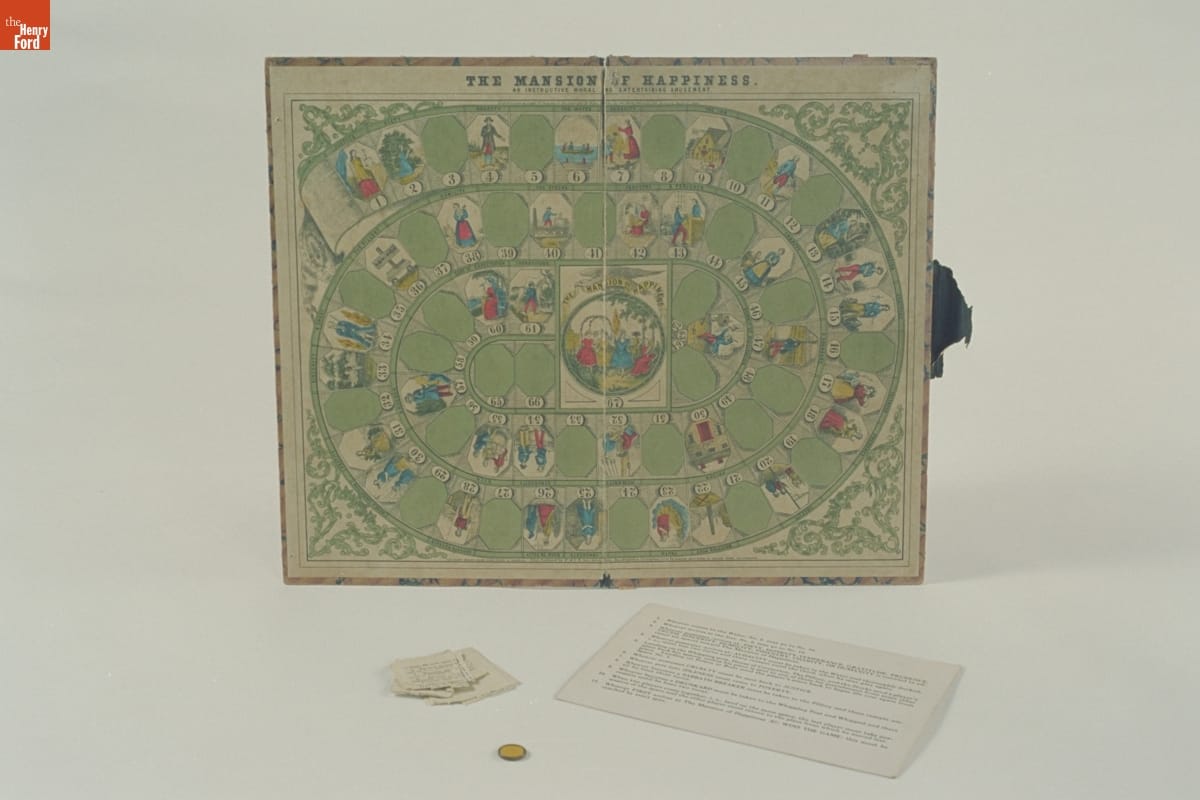
- The Mansion of Happiness Game, 1920-1950 - The 19th-century game "The Mansion of Happiness" taught children moral lessons and instilled values of thrift, honesty and industry as they journeyed around the board. Developed in the 1840s by Anne W. Abbott, a daughter of a New England clergyman, the game remained popular throughout the 1800s. Versions and copies of this moral-lessons game were made well into the 1900s.
- 1920-1950
- Collections - Artifact
The Mansion of Happiness Game, 1920-1950
The 19th-century game "The Mansion of Happiness" taught children moral lessons and instilled values of thrift, honesty and industry as they journeyed around the board. Developed in the 1840s by Anne W. Abbott, a daughter of a New England clergyman, the game remained popular throughout the 1800s. Versions and copies of this moral-lessons game were made well into the 1900s.
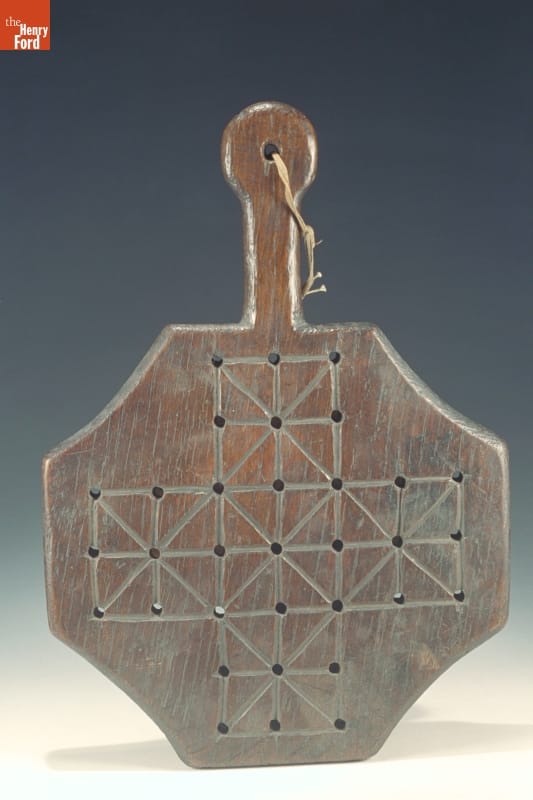
- Gameboard, 1850-1870 - This octagonal-shaped wooden game board was likely used for the game "Fox and Geese," which poses one fox against 13 geese. The geese move one space at a time, with the goal of surrounding the fox. The fox can capture geese by jumping them one at a time, with the goal of removing enough so he cannot be surrounded.
- 1850-1870
- Collections - Artifact
Gameboard, 1850-1870
This octagonal-shaped wooden game board was likely used for the game "Fox and Geese," which poses one fox against 13 geese. The geese move one space at a time, with the goal of surrounding the fox. The fox can capture geese by jumping them one at a time, with the goal of removing enough so he cannot be surrounded.
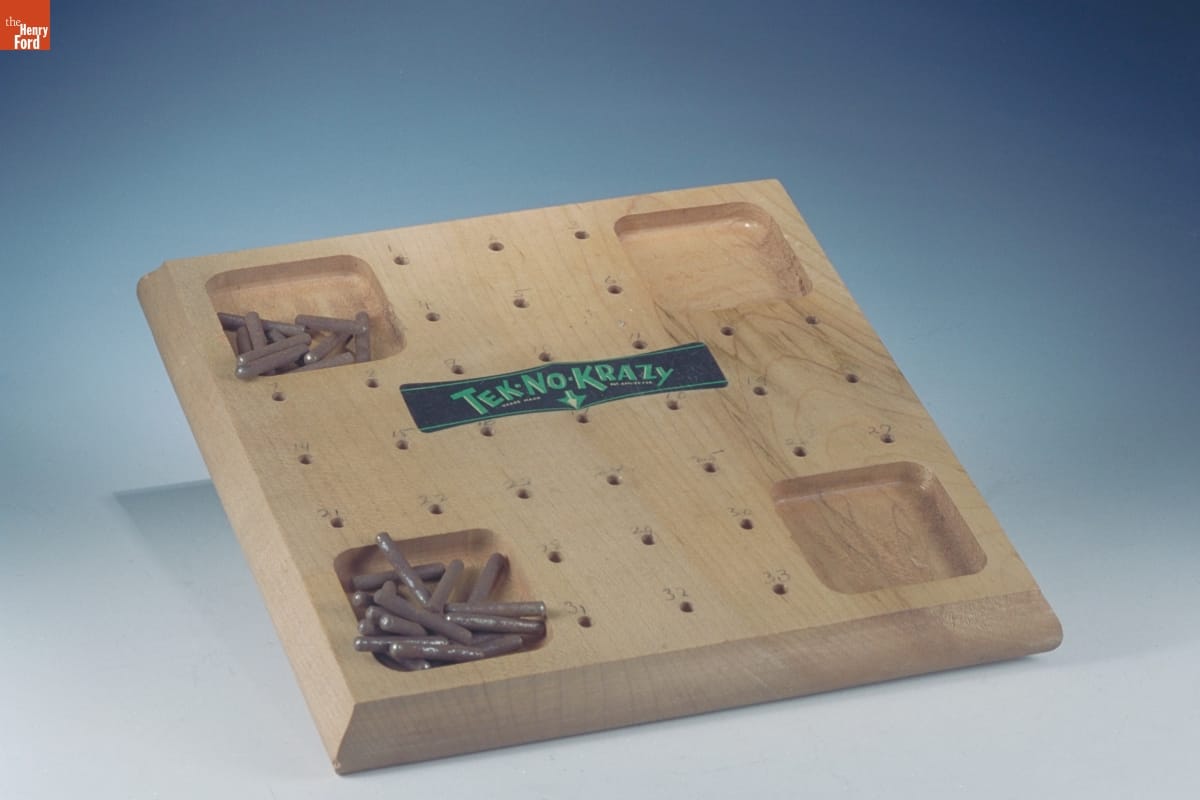
- Tek-No-Krazy Game, 1935-1950 - The old peg-jumping game of Solitaire was modernized with a futuristic-sounding name and an image of robots playing the game on the box. In the early-to-mid twentieth century, robots -- a term first coined in the 1920s -- caught Americans' fascination. Toy companies tried to capitalize on this interest, even if it meant only small, superficial changes to their product.
- 1935-1950
- Collections - Artifact
Tek-No-Krazy Game, 1935-1950
The old peg-jumping game of Solitaire was modernized with a futuristic-sounding name and an image of robots playing the game on the box. In the early-to-mid twentieth century, robots -- a term first coined in the 1920s -- caught Americans' fascination. Toy companies tried to capitalize on this interest, even if it meant only small, superficial changes to their product.
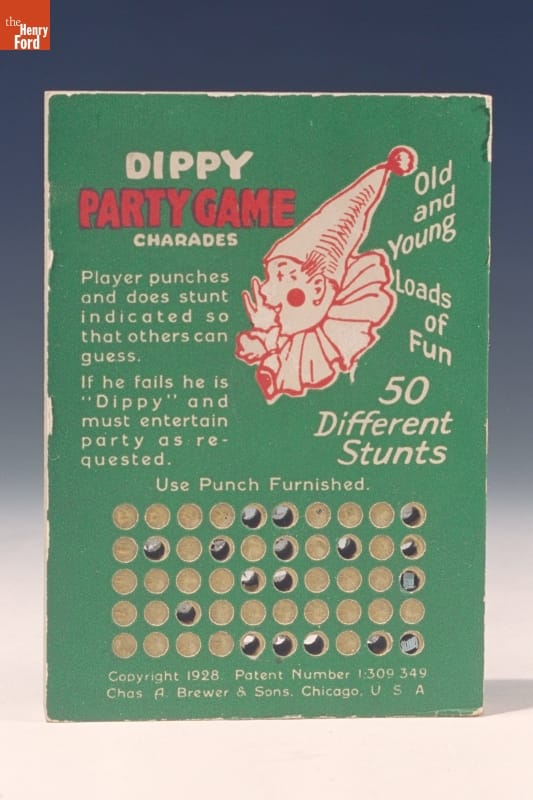
- Dippy Party Game Charades, 1928-1940 - In this game of charades a player chooses a stunt from the punchboard. The player then performs the stunt (without talking) while other partygoers try to guess what the stunt is. Failure to get the others to correctly guess, as the instructions relate, makes the actor a "Dippy." That player then must "entertain [the other partygoers] as requested."
- 1928-1940
- Collections - Artifact
Dippy Party Game Charades, 1928-1940
In this game of charades a player chooses a stunt from the punchboard. The player then performs the stunt (without talking) while other partygoers try to guess what the stunt is. Failure to get the others to correctly guess, as the instructions relate, makes the actor a "Dippy." That player then must "entertain [the other partygoers] as requested."
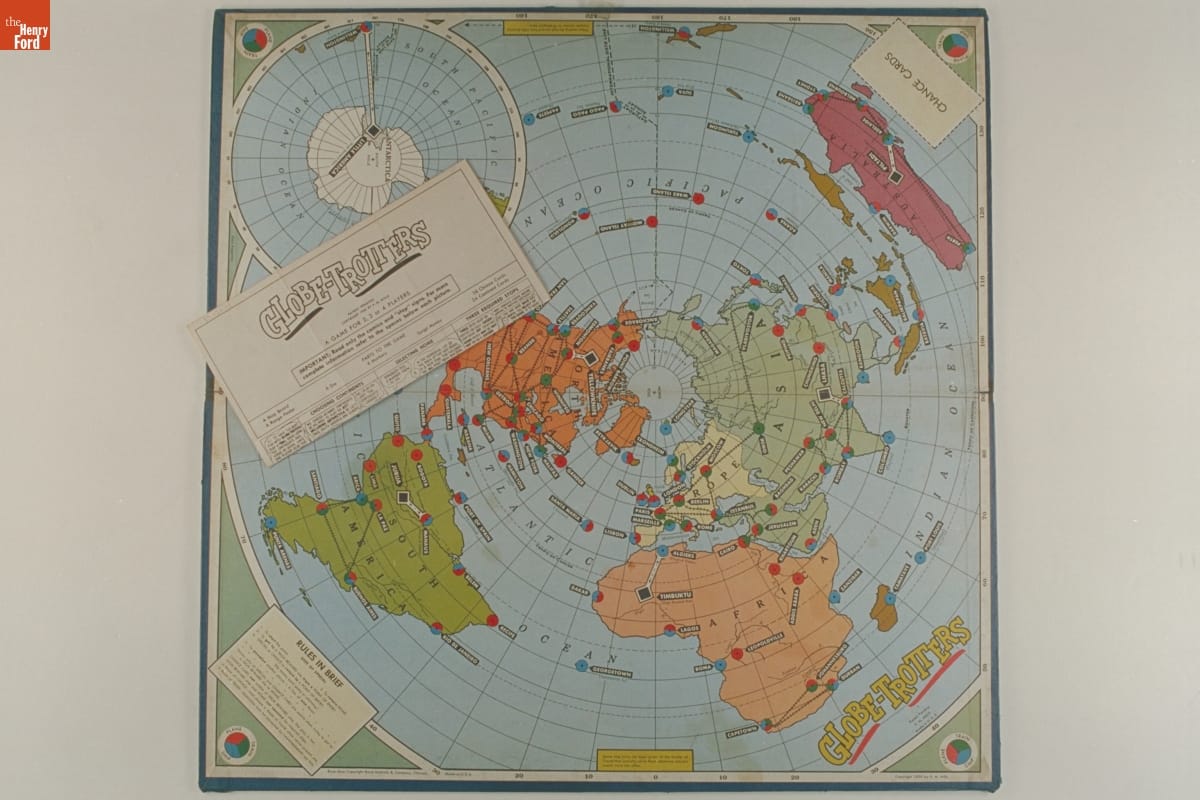
- Globe-Trotters Gameboard, 1950-1960 -
- 1950-1960
- Collections - Artifact
Globe-Trotters Gameboard, 1950-1960
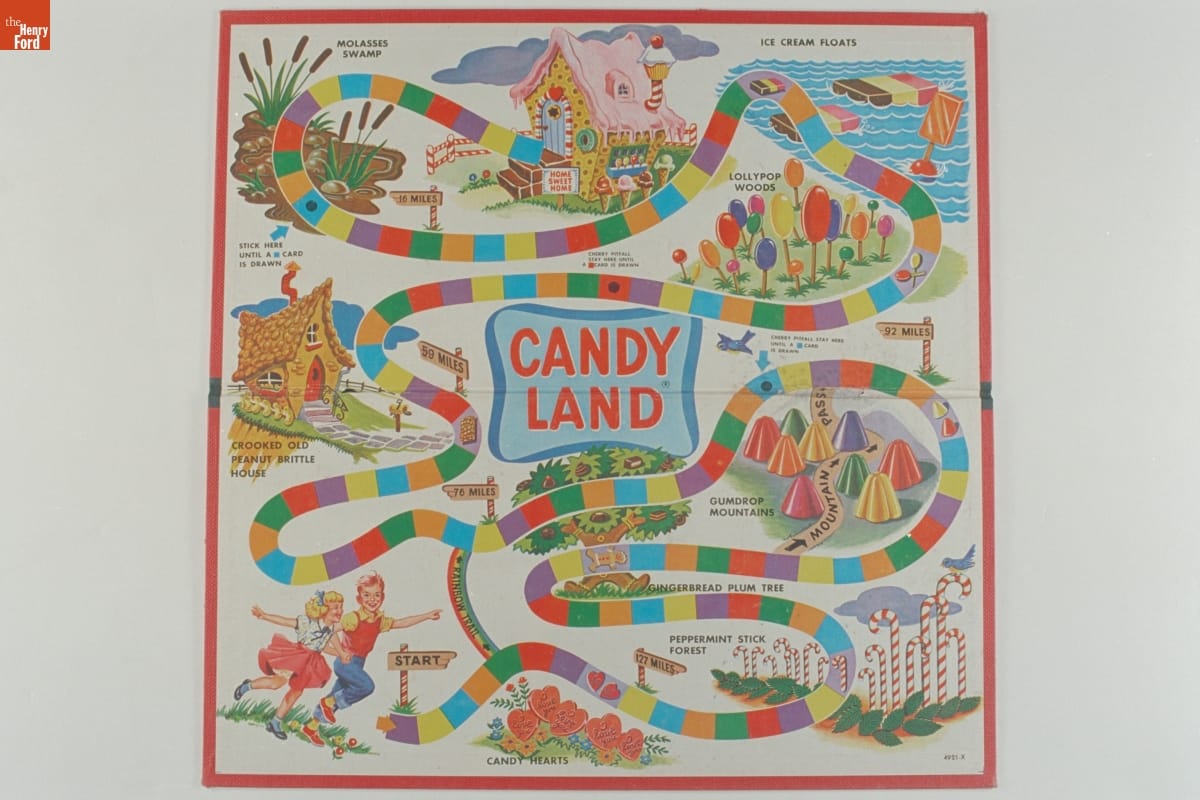
- Candy Land Gameboard, 1950-1960 - Eleanor Abbott, a schoolteacher recuperating from polio in a San Diego hospital, wanted to entertain children confined to the polio ward. In 1948, she developed Candy Land -- a colorful game that even kids too young to read or count could play. Milton Bradley published Candy Land in 1949, and it became one of the best-selling and most beloved board games of all time.
- 1950-1960
- Collections - Artifact
Candy Land Gameboard, 1950-1960
Eleanor Abbott, a schoolteacher recuperating from polio in a San Diego hospital, wanted to entertain children confined to the polio ward. In 1948, she developed Candy Land -- a colorful game that even kids too young to read or count could play. Milton Bradley published Candy Land in 1949, and it became one of the best-selling and most beloved board games of all time.
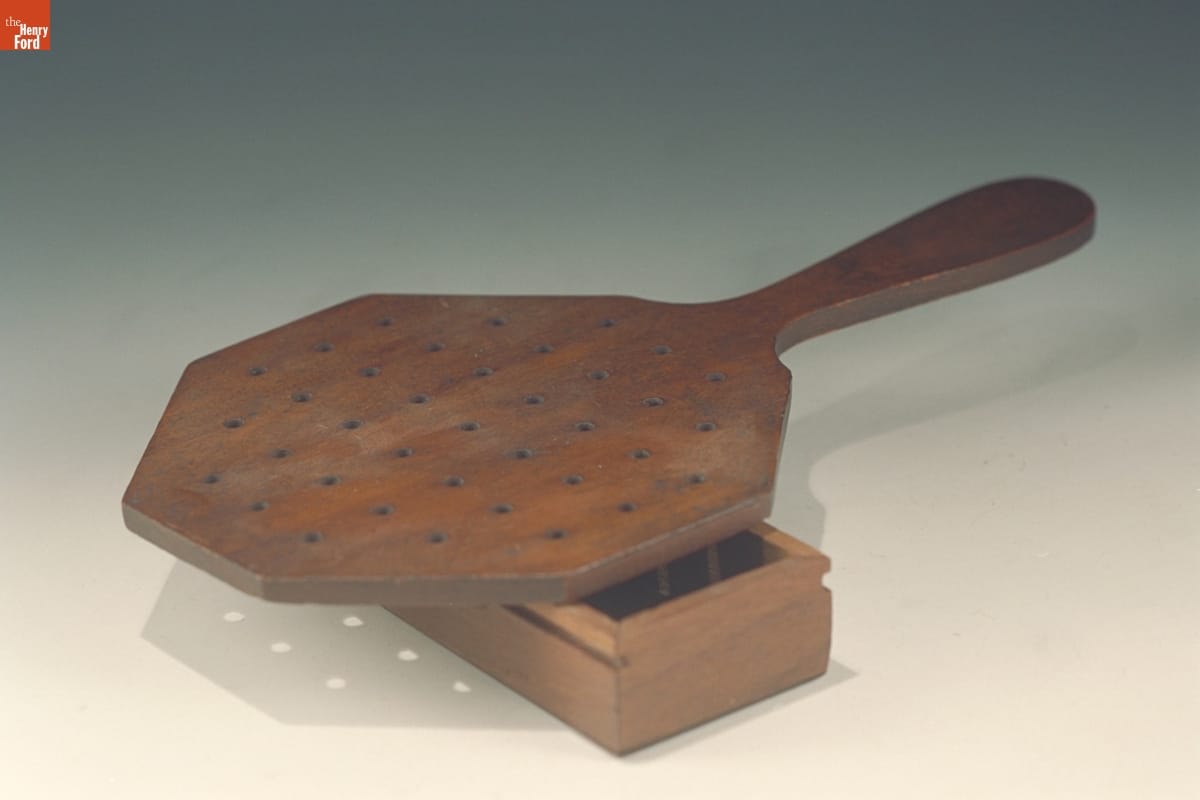
- Gameboard, 1890-1920 - A player uses this board to play Solitaire (not the computer card game played at office desks.) The game begins with all the holes, except the center one, filled with pegs. A player can only move by jumping over one peg into an empty hole -- the jumped peg is then removed. The object is to remove all but one peg.
- 1890-1920
- Collections - Artifact
Gameboard, 1890-1920
A player uses this board to play Solitaire (not the computer card game played at office desks.) The game begins with all the holes, except the center one, filled with pegs. A player can only move by jumping over one peg into an empty hole -- the jumped peg is then removed. The object is to remove all but one peg.