
Search
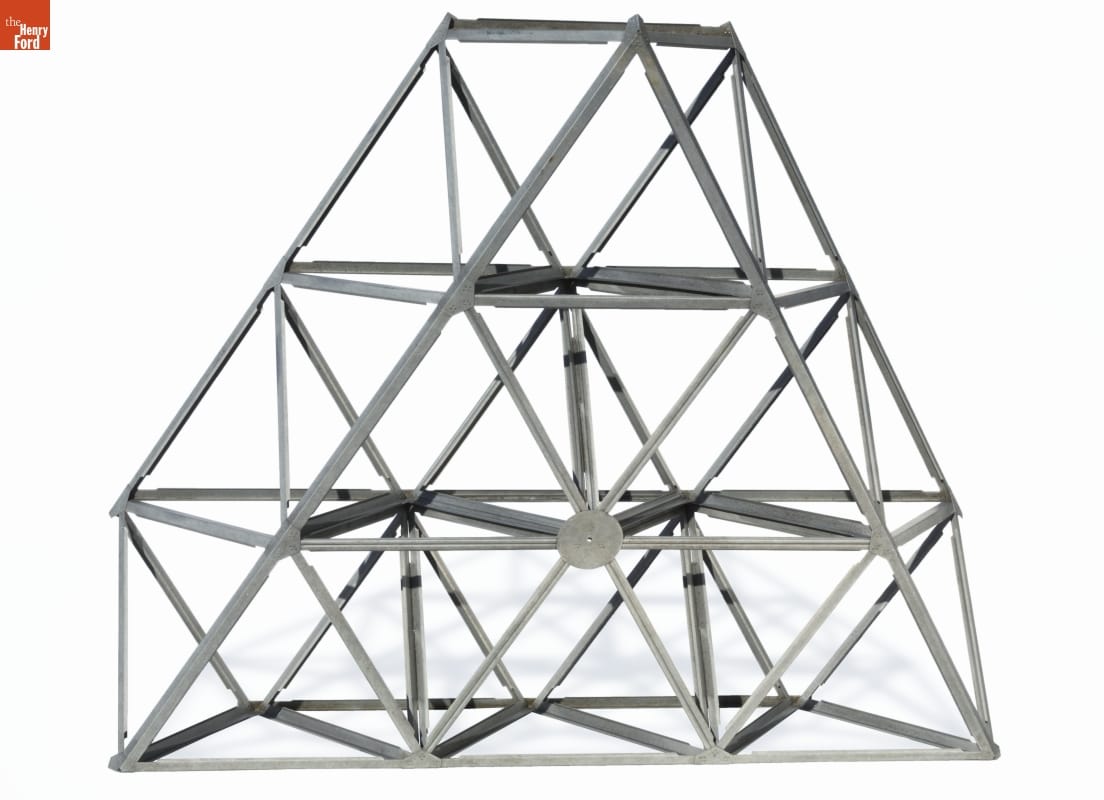
- Geodesic Dome Test Module, Designed by R. Buckminster Fuller, 1953 -
- 1953
- Collections - Artifact
Geodesic Dome Test Module, Designed by R. Buckminster Fuller, 1953
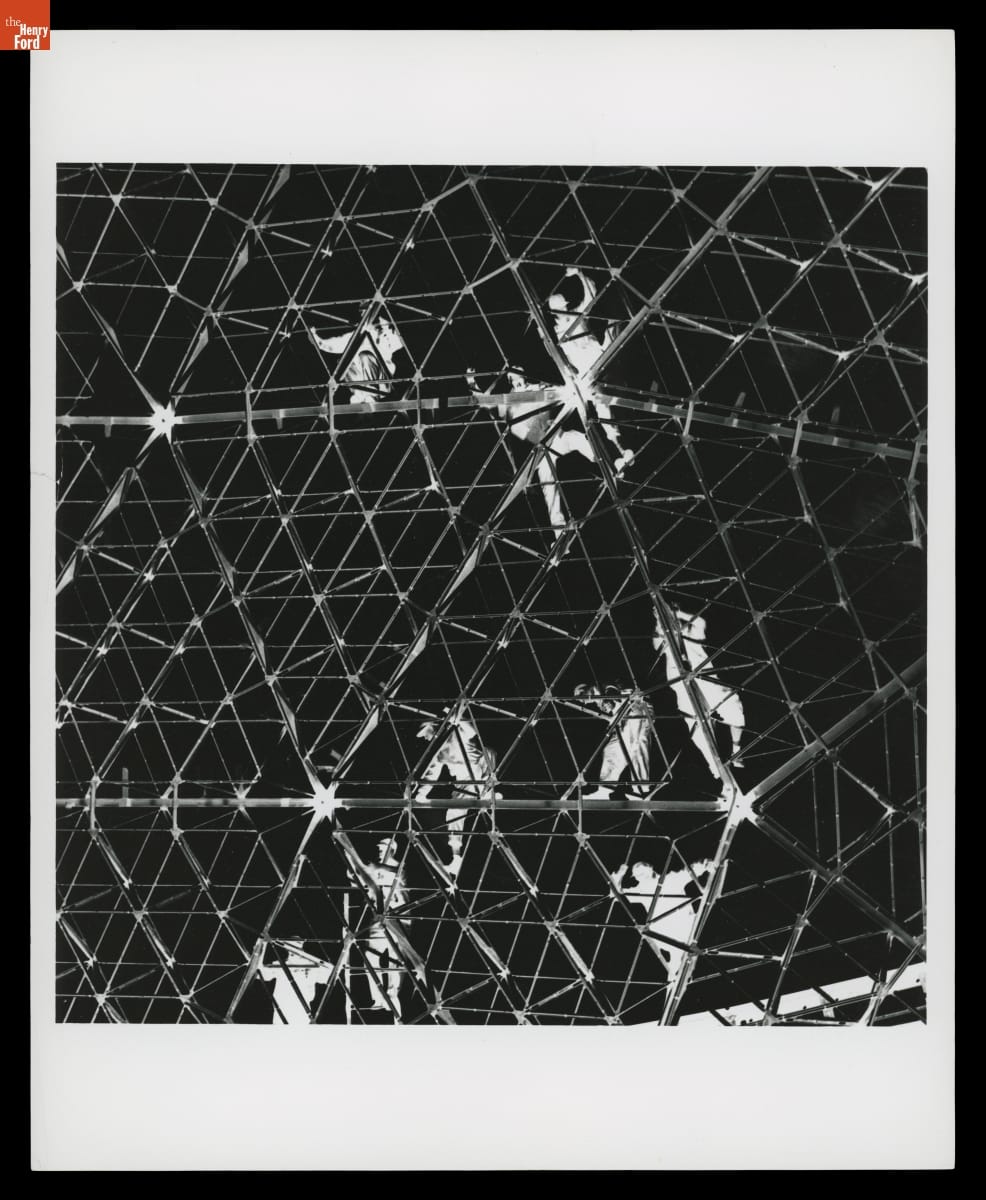
- Workers Assembling the Geodesic Dome Roof on Ford Rotunda Building, Dearborn, Michigan, 1953 - Ford Motor Company brought its central Rotunda building from the 1934 Century of Progress Exposition back to Dearborn and, from 1936 to 1962, recreated the excitement of a World's Fair exposition on its home turf. The Rotunda was renovated and reopened to the public in 1953. The renovations included a geodesic dome -- seen being assembled in this image -- designed by Buckminster Fuller.
- June 01, 1953
- Collections - Artifact
Workers Assembling the Geodesic Dome Roof on Ford Rotunda Building, Dearborn, Michigan, 1953
Ford Motor Company brought its central Rotunda building from the 1934 Century of Progress Exposition back to Dearborn and, from 1936 to 1962, recreated the excitement of a World's Fair exposition on its home turf. The Rotunda was renovated and reopened to the public in 1953. The renovations included a geodesic dome -- seen being assembled in this image -- designed by Buckminster Fuller.
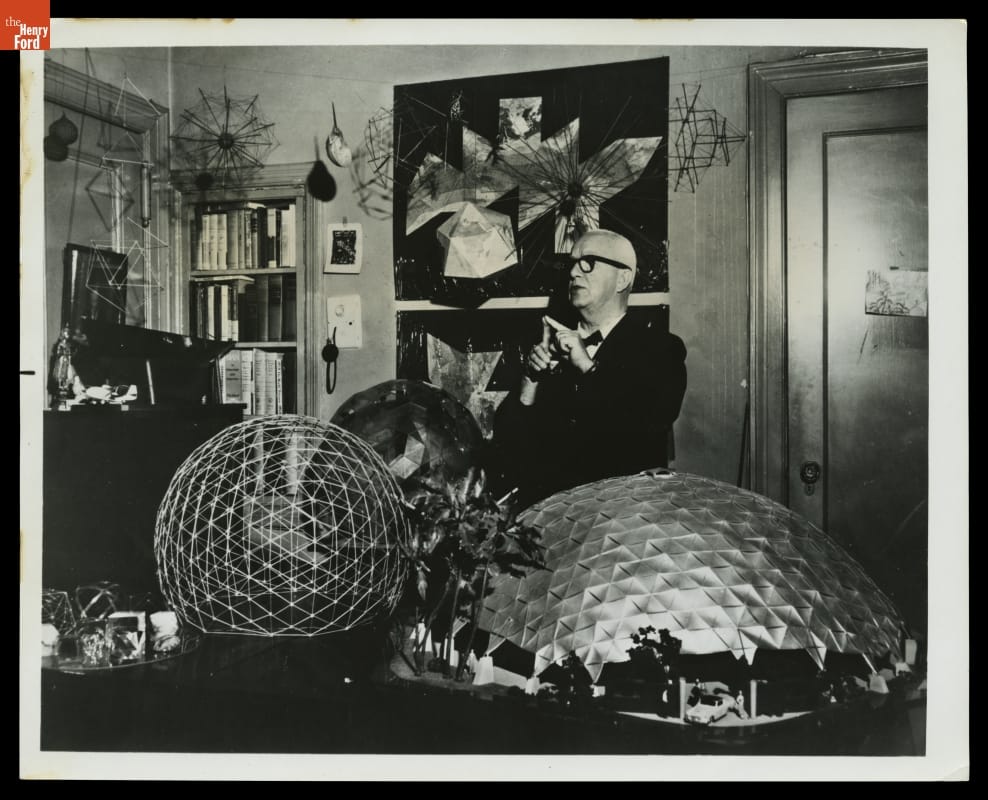
- Buckminster Fuller Surrounded by Geodesic Structures in His Office, circa 1951 -
- circa 1951
- Collections - Artifact
Buckminster Fuller Surrounded by Geodesic Structures in His Office, circa 1951
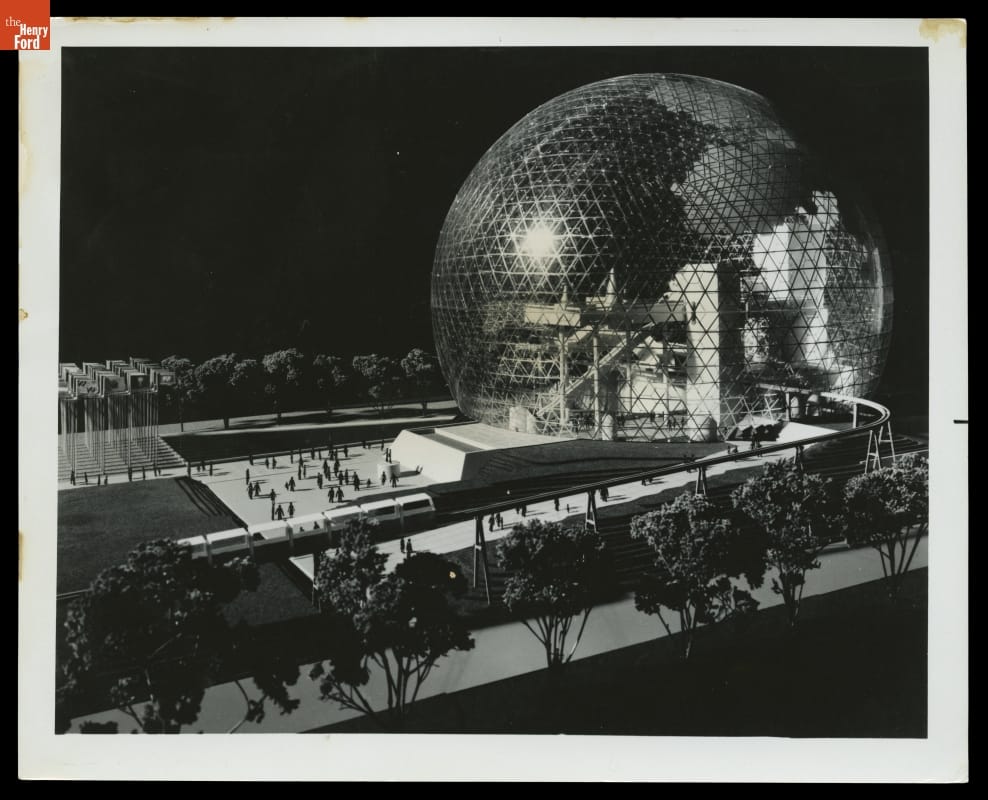
- Buckminster Fuller's Geodesic Dome Model for the United States Pavilion at Expo '67, circa 1967 - Expo 67, held in Montreal, Canada, was the most attended world's fair of the 20th century. The United States pavilion, a 250-foot-diameter geodesic dome designed by visionary Buckminster Fuller and architect Shoji Sadao, was an interactive environmental exhibit. It remains the most iconic and fondly remembered of Fuller's built designs. This pavilion survives today as an attraction called the Biosphere.
- circa 1967
- Collections - Artifact
Buckminster Fuller's Geodesic Dome Model for the United States Pavilion at Expo '67, circa 1967
Expo 67, held in Montreal, Canada, was the most attended world's fair of the 20th century. The United States pavilion, a 250-foot-diameter geodesic dome designed by visionary Buckminster Fuller and architect Shoji Sadao, was an interactive environmental exhibit. It remains the most iconic and fondly remembered of Fuller's built designs. This pavilion survives today as an attraction called the Biosphere.
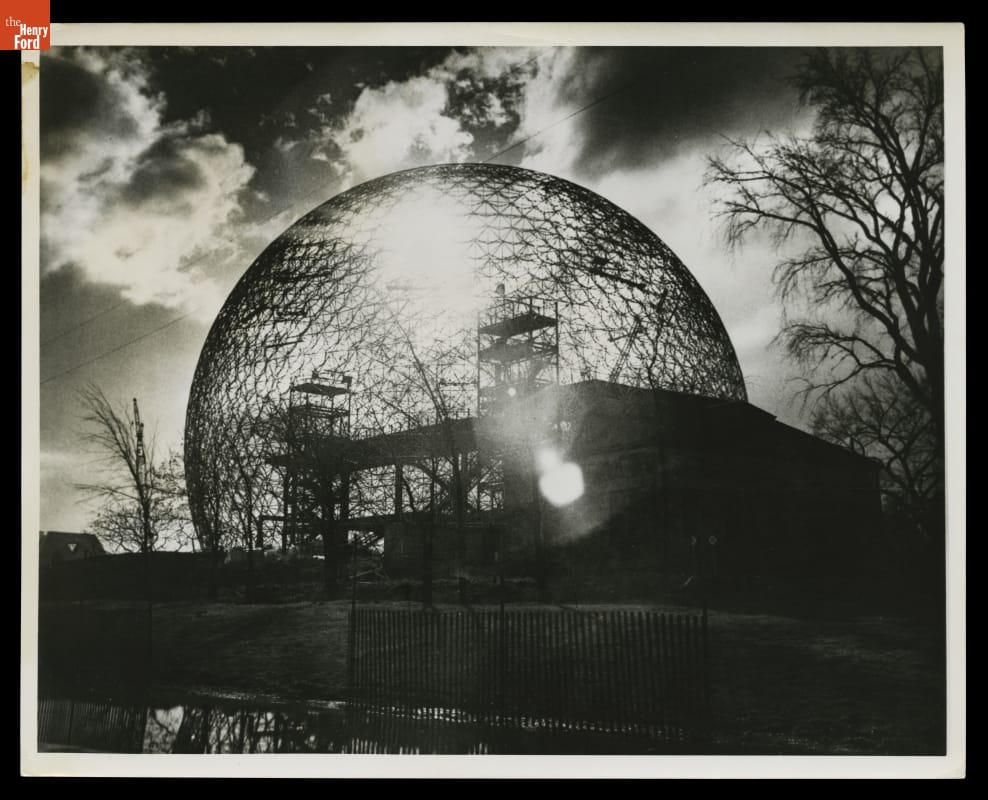
- Buckminster Fuller's Geodesic Dome Being Constructed for the United States Pavilion at Expo 67, 1966-1967 - Expo 67, held in Montreal, Canada, was the most attended world's fair of the 20th century. The United States pavilion, a 250-foot-diameter geodesic dome designed by visionary Buckminster Fuller and architect Shoji Sadao, was an interactive environmental exhibit. It remains the most iconic and fondly remembered of Fuller's built designs. This pavilion survives today as an attraction called the Biosphere.
- 1966-1967
- Collections - Artifact
Buckminster Fuller's Geodesic Dome Being Constructed for the United States Pavilion at Expo 67, 1966-1967
Expo 67, held in Montreal, Canada, was the most attended world's fair of the 20th century. The United States pavilion, a 250-foot-diameter geodesic dome designed by visionary Buckminster Fuller and architect Shoji Sadao, was an interactive environmental exhibit. It remains the most iconic and fondly remembered of Fuller's built designs. This pavilion survives today as an attraction called the Biosphere.
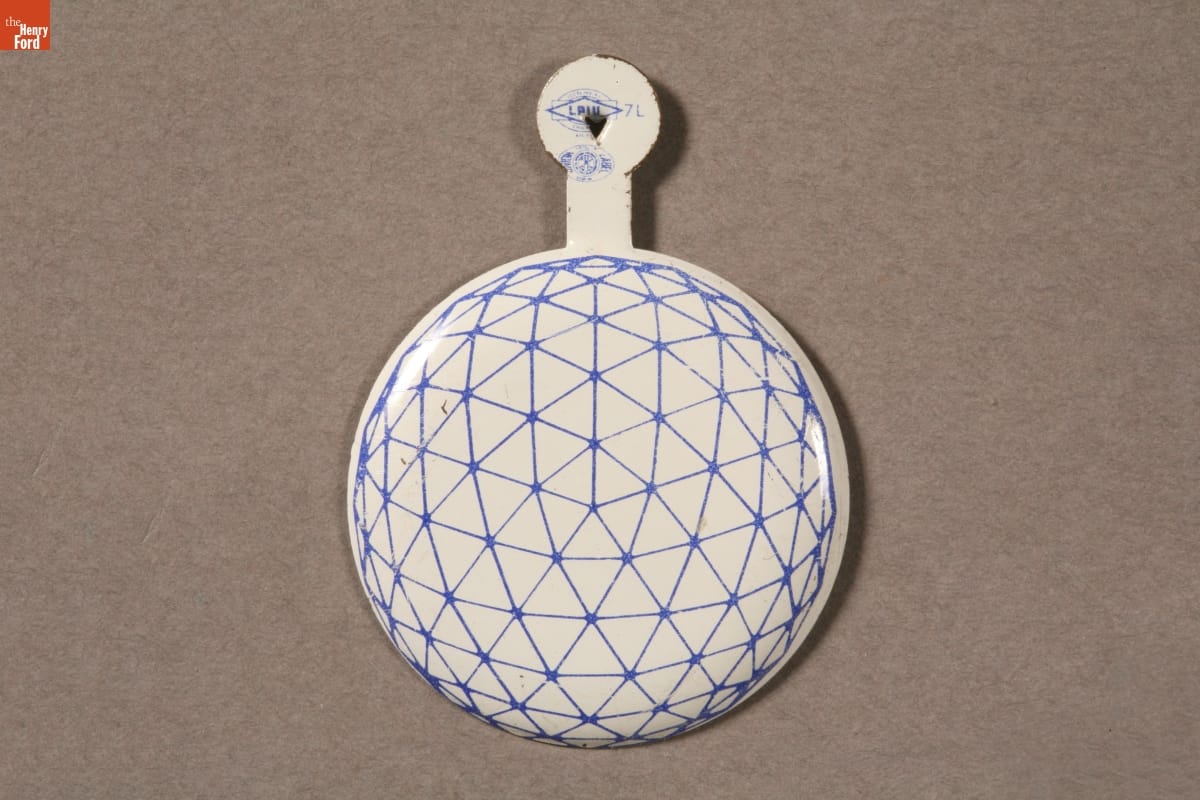
- Expo 67 United States Pavilion Button, 1967 - Expo 67, held in Montreal, Canada, was the most attended World's Fair of the 20th century. The United States pavilion, a 250-foot-diameter geodesic dome designed by visionary Buckminster Fuller and architect Shoji Sadao, remains the most iconic and fondly remembered of Fuller's built designs. This button implies that, even at the time, the design was recognizable without additional text needed.
- 1967
- Collections - Artifact
Expo 67 United States Pavilion Button, 1967
Expo 67, held in Montreal, Canada, was the most attended World's Fair of the 20th century. The United States pavilion, a 250-foot-diameter geodesic dome designed by visionary Buckminster Fuller and architect Shoji Sadao, remains the most iconic and fondly remembered of Fuller's built designs. This button implies that, even at the time, the design was recognizable without additional text needed.
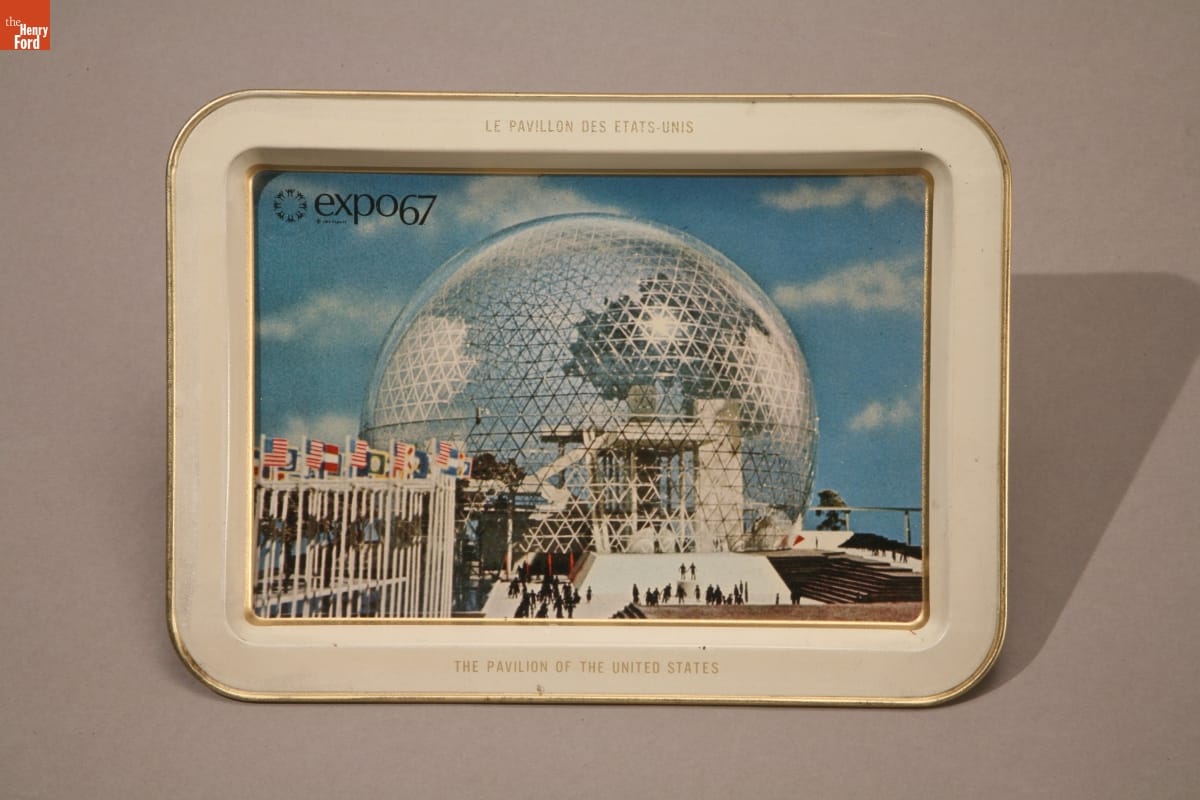
- Expo 67 United States Pavilion Souvenir Tray, 1967 - Expo 67, held in Montreal, Canada, was the most attended world's fair of the 20th century. The United States pavilion, a 250-foot-diameter geodesic dome designed by visionary Buckminster Fuller and architect Shoji Sadao, was an interactive environmental exhibit. It remains the most iconic and fondly remembered of Fuller's built designs. This pavilion survives today as an attraction called the Biosphere.
- 1967
- Collections - Artifact
Expo 67 United States Pavilion Souvenir Tray, 1967
Expo 67, held in Montreal, Canada, was the most attended world's fair of the 20th century. The United States pavilion, a 250-foot-diameter geodesic dome designed by visionary Buckminster Fuller and architect Shoji Sadao, was an interactive environmental exhibit. It remains the most iconic and fondly remembered of Fuller's built designs. This pavilion survives today as an attraction called the Biosphere.
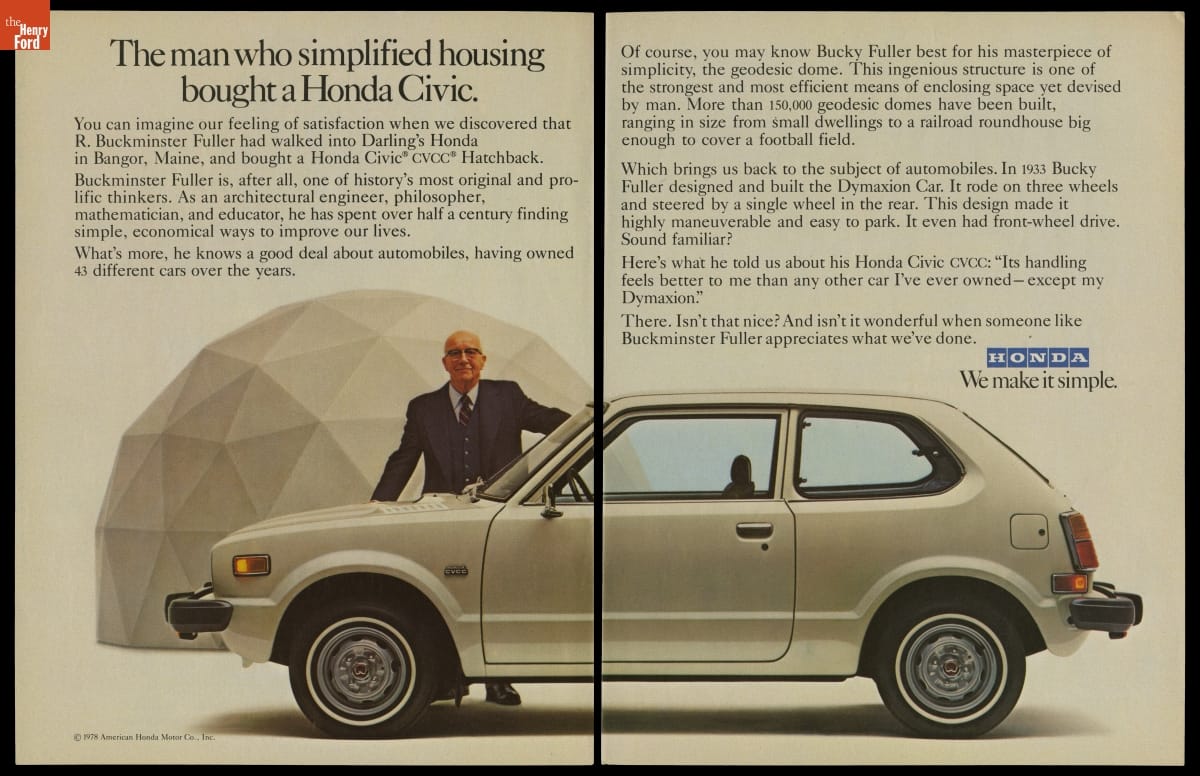
- "The Man Who Simplified Housing Bought a Honda Civic," Honda Civic Advertisement Featuring R. Buckminster Fuller, 1978 - The automobile is a paradox -- a practical tool that plays host to both human needs and fantasies. Like car consumers, automotive ads seem to land somewhere between fantasy and reality, emotions and rationality. Many ads incorporate apparent opposites: fantasy can sell practicality, and vice versa. Sometimes the car has disappeared completely -- an emotional appeal prompts us to complete the ad.
- 1978
- Collections - Artifact
"The Man Who Simplified Housing Bought a Honda Civic," Honda Civic Advertisement Featuring R. Buckminster Fuller, 1978
The automobile is a paradox -- a practical tool that plays host to both human needs and fantasies. Like car consumers, automotive ads seem to land somewhere between fantasy and reality, emotions and rationality. Many ads incorporate apparent opposites: fantasy can sell practicality, and vice versa. Sometimes the car has disappeared completely -- an emotional appeal prompts us to complete the ad.
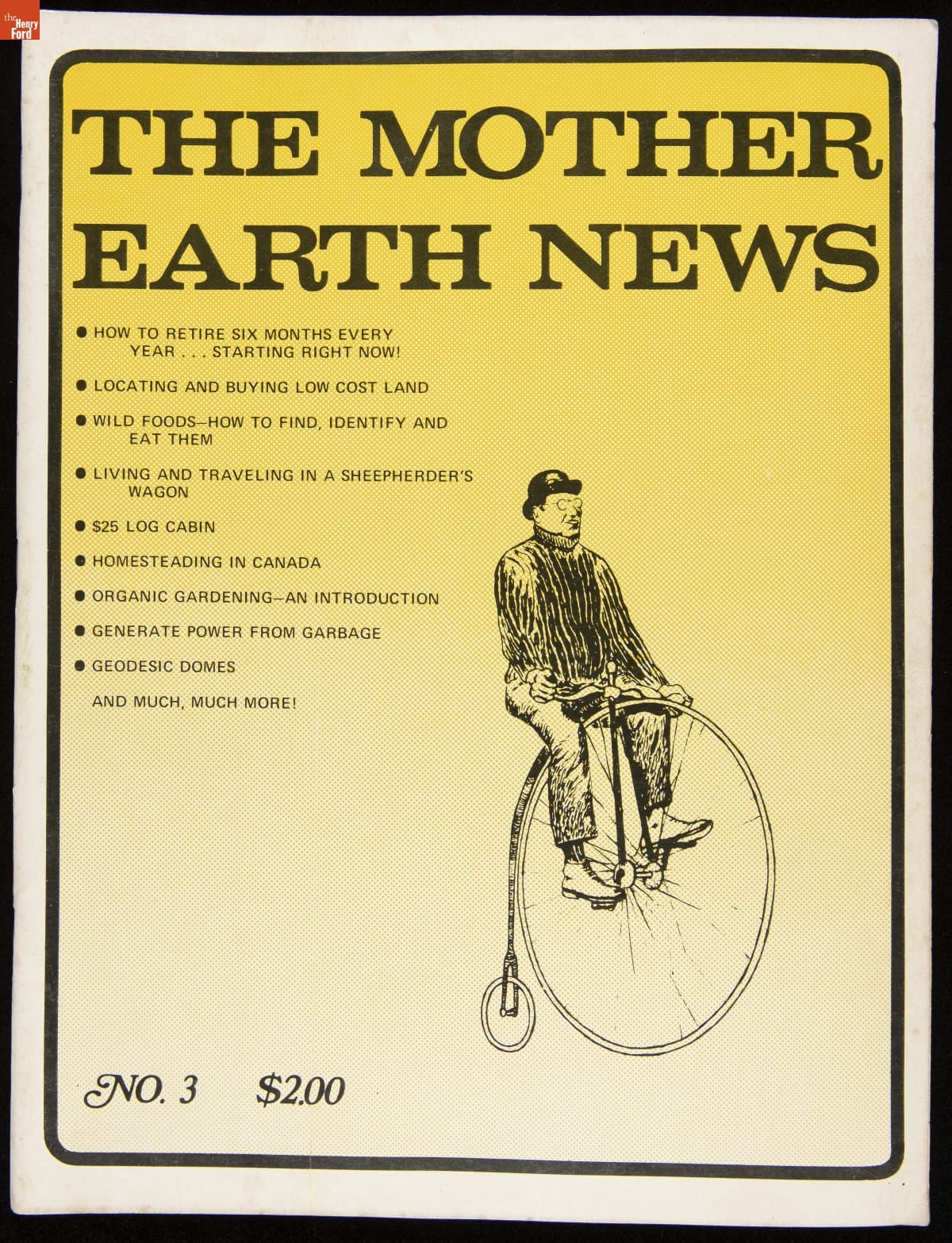
- The Mother Earth News, Vol. 1, No. 3, 1970 - <em>The Mother Earth News</em> appealed to young, "hip" readers who invested in back-to-the-land philosophies and do-it-yourself approaches. Launched in January 1970, it remains in publication as the longest-running magazine devoted to readers who want to live in a more sustainable way.
- 1970
- Collections - Artifact
The Mother Earth News, Vol. 1, No. 3, 1970
The Mother Earth News appealed to young, "hip" readers who invested in back-to-the-land philosophies and do-it-yourself approaches. Launched in January 1970, it remains in publication as the longest-running magazine devoted to readers who want to live in a more sustainable way.
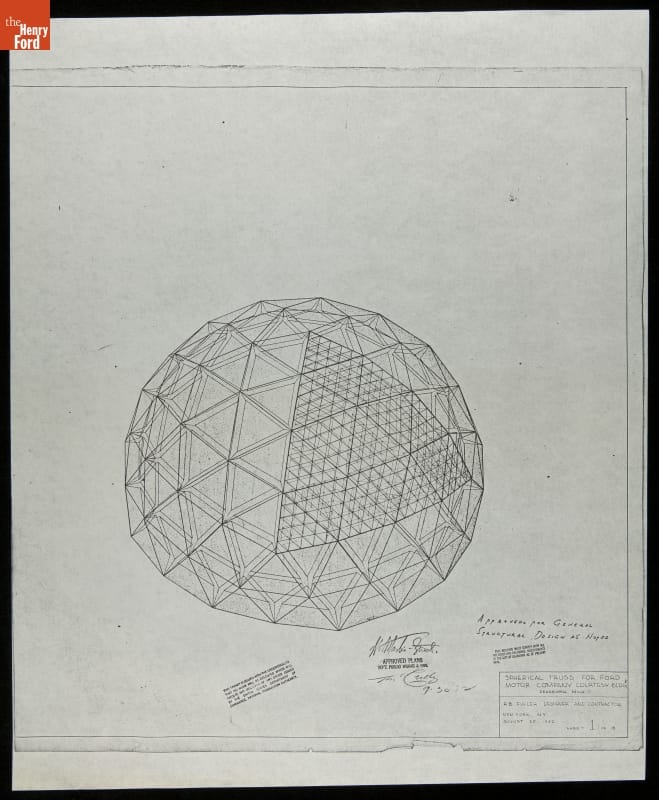
- Drawing, "Spherical Truss for Ford Motor Company Courtesy Building," 1952 - Ford Motor Company brought its central Rotunda building from the 1934 Century of Progress Exposition back to Dearborn and, from 1936 to 1962, recreated the excitement of a World's Fair exposition on its home turf. The Rotunda was renovated and reopened to the public in 1953. The renovations included a geodesic dome designed by Buckminster Fuller.
- August 30, 1952
- Collections - Artifact
Drawing, "Spherical Truss for Ford Motor Company Courtesy Building," 1952
Ford Motor Company brought its central Rotunda building from the 1934 Century of Progress Exposition back to Dearborn and, from 1936 to 1962, recreated the excitement of a World's Fair exposition on its home turf. The Rotunda was renovated and reopened to the public in 1953. The renovations included a geodesic dome designed by Buckminster Fuller.