
Search
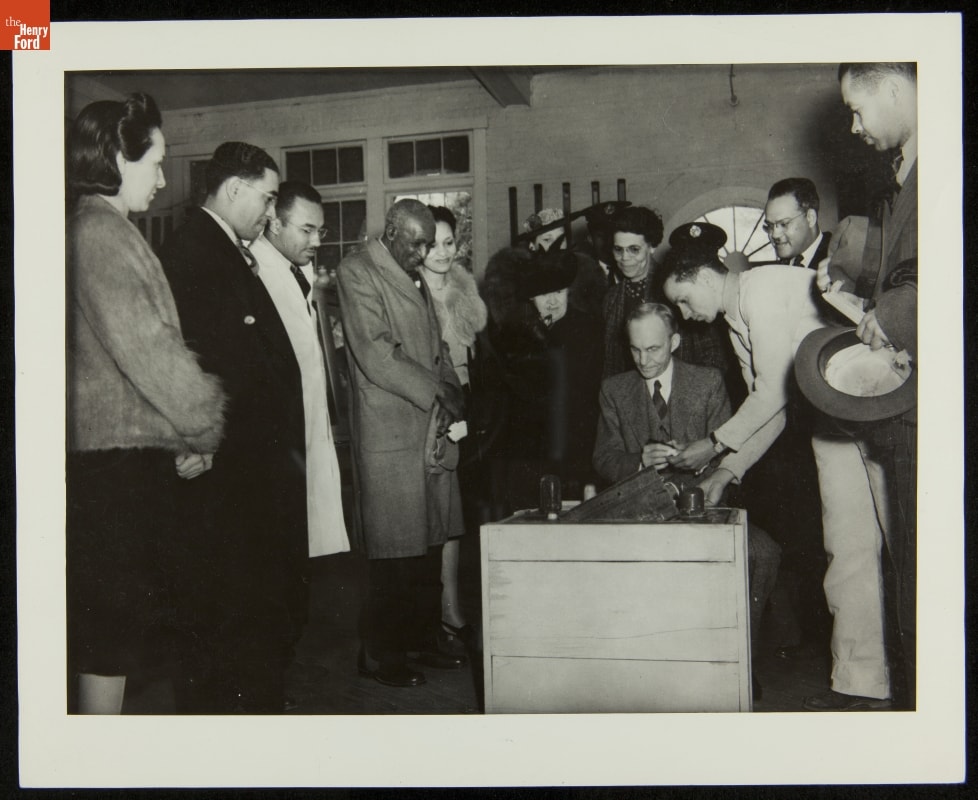
- Henry Ford Inscribing Cement Block at Dedication of George Washington Carver Museum, March 1941 - Henry and Clara Ford helped formally dedicate the George Washington Carver Museum at Tuskegee, Alabama, in March 1941. Dr. Carver watched as the Fords signed their names into a cement block. Bottles of soybeans and plant-based plastic automobile parts inserted in the block signified the lifetime of agricultural discoveries by the scientist and their innovative applications by the industrialist.
- March 01, 1941
- Collections - Artifact
Henry Ford Inscribing Cement Block at Dedication of George Washington Carver Museum, March 1941
Henry and Clara Ford helped formally dedicate the George Washington Carver Museum at Tuskegee, Alabama, in March 1941. Dr. Carver watched as the Fords signed their names into a cement block. Bottles of soybeans and plant-based plastic automobile parts inserted in the block signified the lifetime of agricultural discoveries by the scientist and their innovative applications by the industrialist.
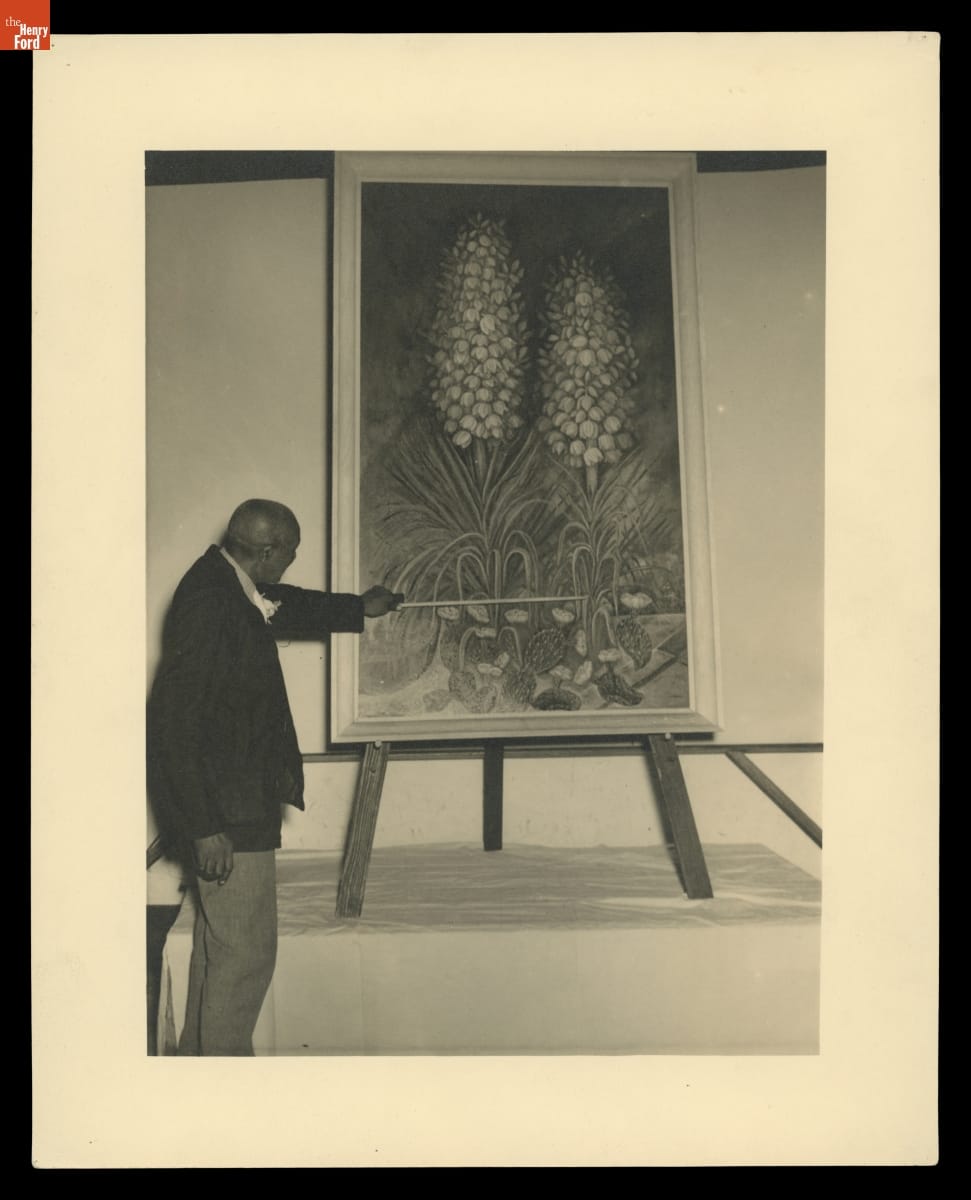
- George Washington Carver with His Painting, "Yucca and Cactus," 1941 -
- 1941
- Collections - Artifact
George Washington Carver with His Painting, "Yucca and Cactus," 1941
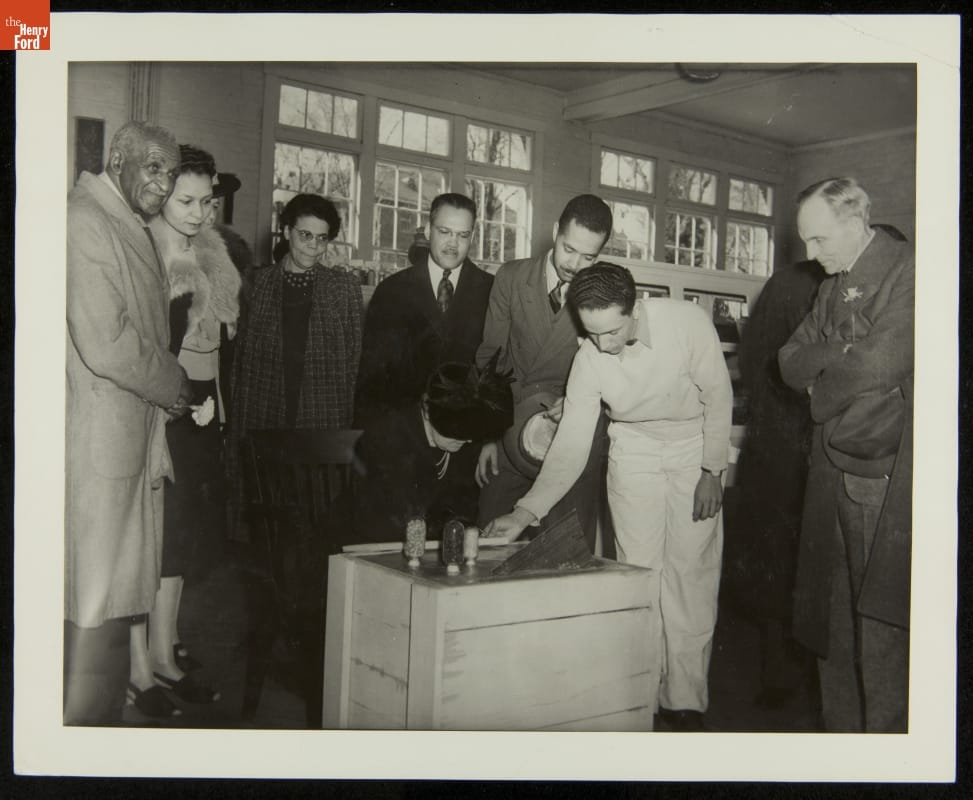
- George Washington Carver, Clara Ford, and Henry Ford at Dedication of George Washington Carver Museum, March 1941 - Henry and Clara Ford helped formally dedicate the George Washington Carver Museum at Tuskegee, Alabama, in March 1941. Dr. Carver watched as the Fords signed their names into a cement block. Bottles of soybeans and plant-based plastic automobile parts inserted in the block signified the lifetime of agricultural discoveries by the scientist and their innovative applications by the industrialist.
- March 01, 1941
- Collections - Artifact
George Washington Carver, Clara Ford, and Henry Ford at Dedication of George Washington Carver Museum, March 1941
Henry and Clara Ford helped formally dedicate the George Washington Carver Museum at Tuskegee, Alabama, in March 1941. Dr. Carver watched as the Fords signed their names into a cement block. Bottles of soybeans and plant-based plastic automobile parts inserted in the block signified the lifetime of agricultural discoveries by the scientist and their innovative applications by the industrialist.
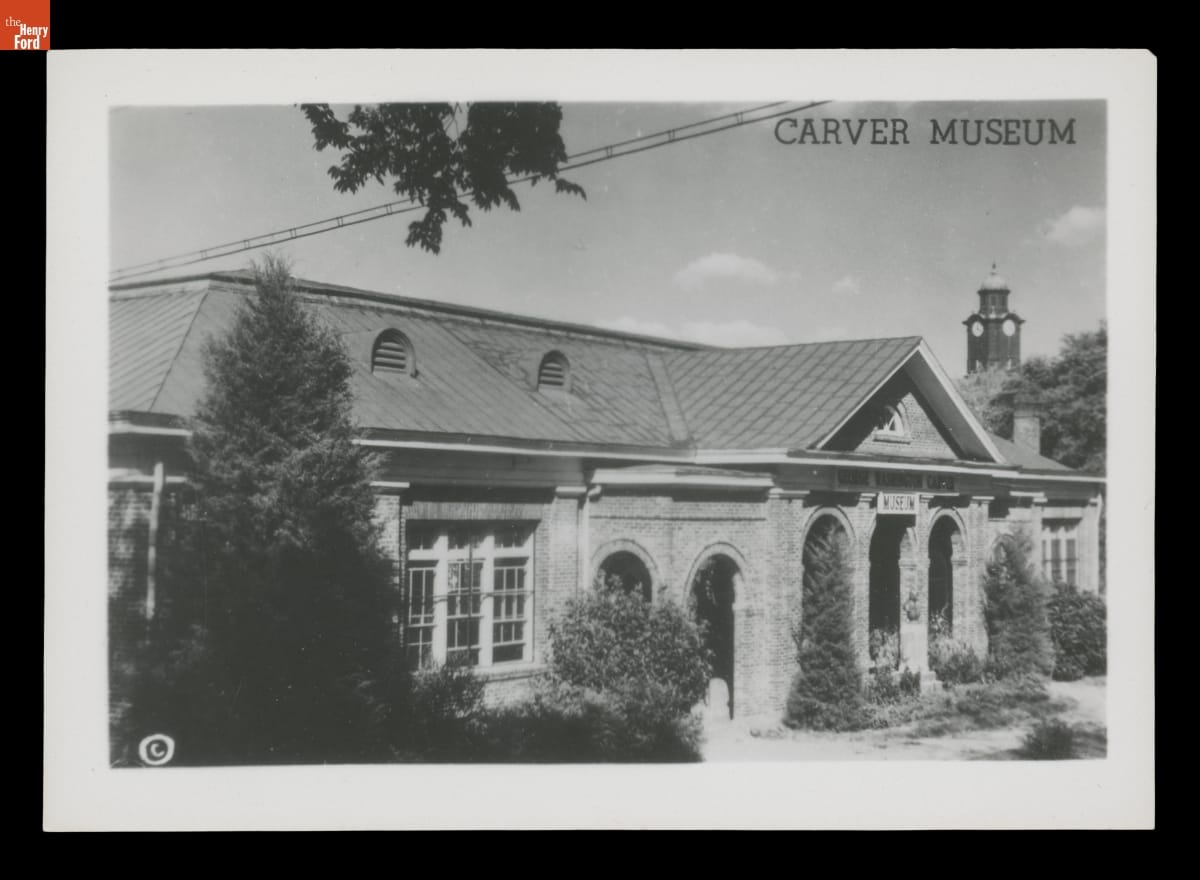
- George Washington Carver Museum at Tuskegee Institute, "Carver Museum," circa 1941 - The trustees of Tuskegee Institute authorized creation of the George Washington Carver Museum in honor of the renowned agricultural scientist who spent his entire career at Tuskegee. The museum, dedicated in 1941, displayed Carver's collection of plants, minerals, paintings, drawings, and textile arts. After Carver's death, the Carver Seal Committee sold this and other images to benefit the George Washington Carver Foundation (formed in 1940).
- circa 1941
- Collections - Artifact
George Washington Carver Museum at Tuskegee Institute, "Carver Museum," circa 1941
The trustees of Tuskegee Institute authorized creation of the George Washington Carver Museum in honor of the renowned agricultural scientist who spent his entire career at Tuskegee. The museum, dedicated in 1941, displayed Carver's collection of plants, minerals, paintings, drawings, and textile arts. After Carver's death, the Carver Seal Committee sold this and other images to benefit the George Washington Carver Foundation (formed in 1940).