
Search
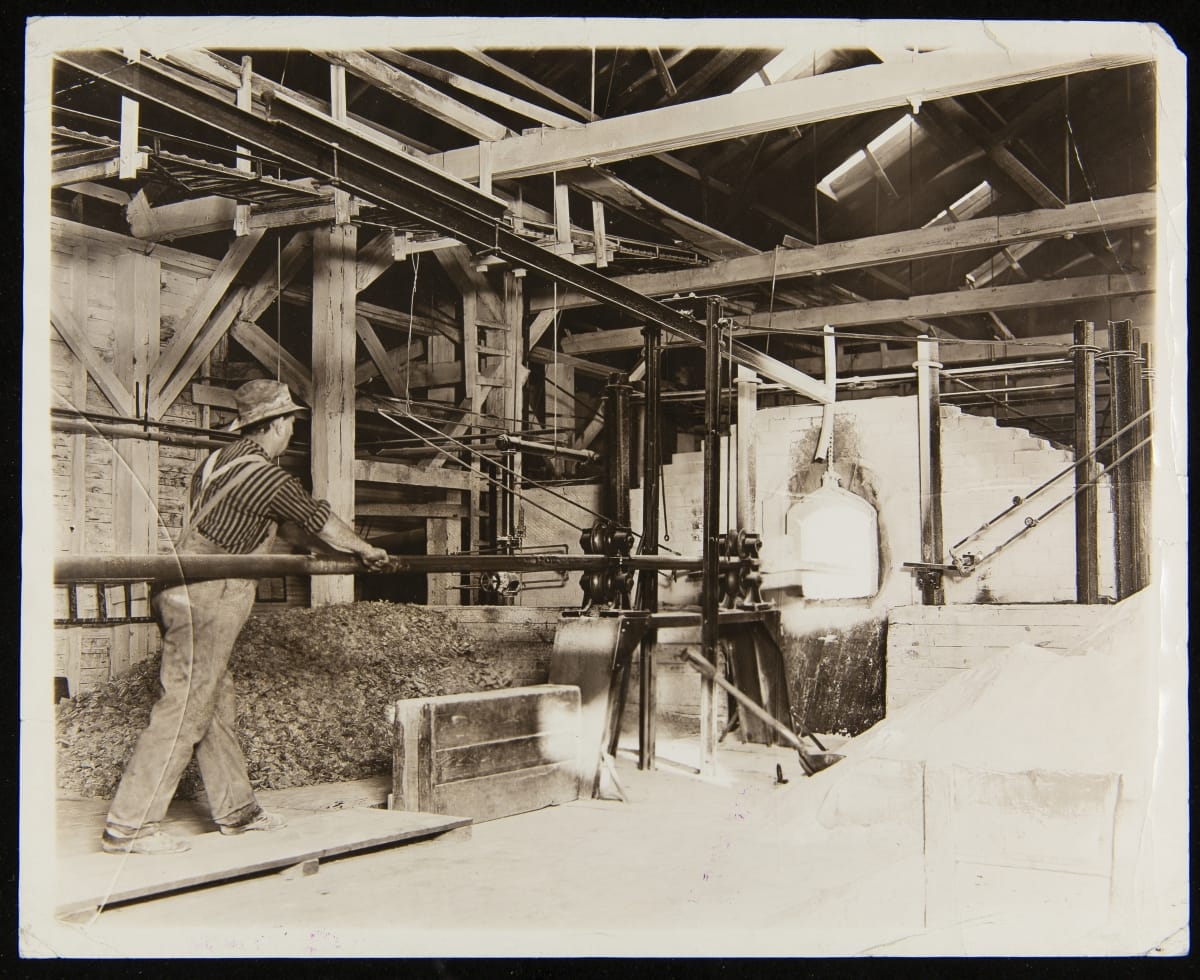
- Employee Working at Heinz Glass Factory, Sharpsburg, Pennsylvania, 1885-1910 - Before complete mechanization of the manufacturing process, many tasks at the Heinz factory were done by hand. The H.J. Heinz Company made their own boxes, glassware, cans, advertisements, and labels, allowing most production to be completed in-house. This photograph features a worker at the Heinz Glass Factory.
- 1885-1910
- Collections - Artifact
Employee Working at Heinz Glass Factory, Sharpsburg, Pennsylvania, 1885-1910
Before complete mechanization of the manufacturing process, many tasks at the Heinz factory were done by hand. The H.J. Heinz Company made their own boxes, glassware, cans, advertisements, and labels, allowing most production to be completed in-house. This photograph features a worker at the Heinz Glass Factory.
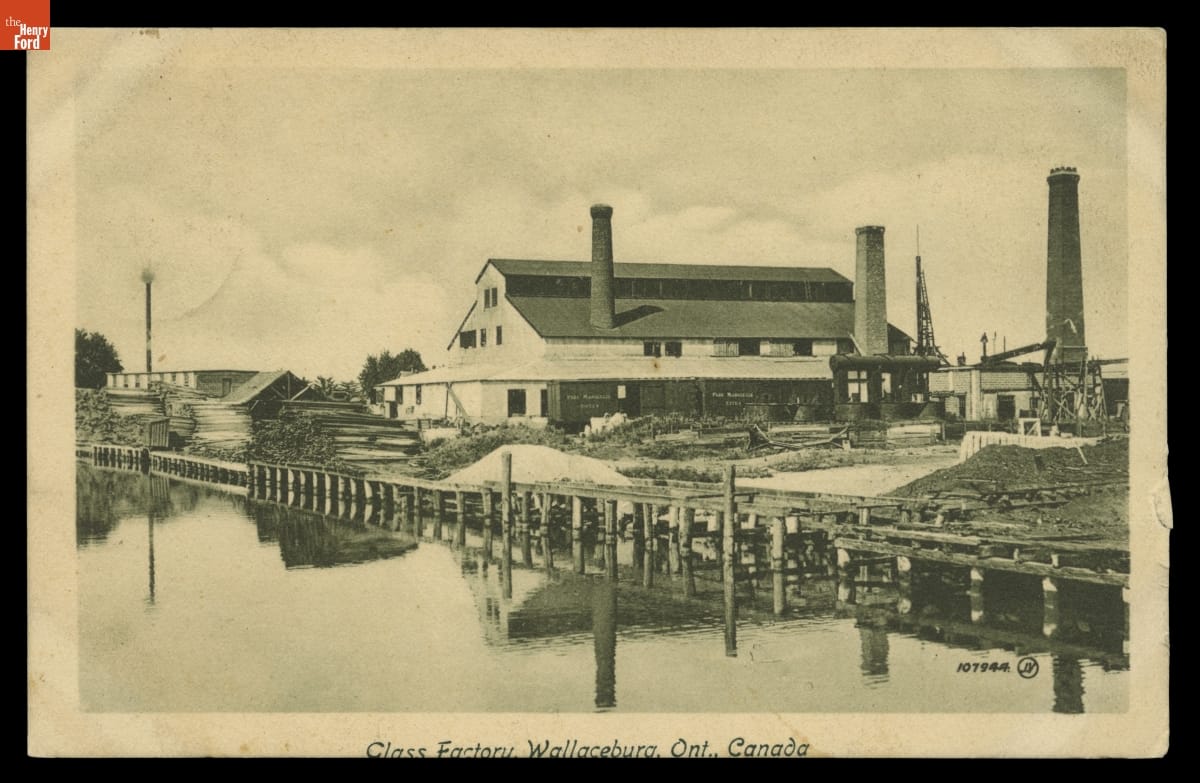
- Glass Factory, Wallaceburg, Ontario, Canada, circa 1910 - By the early 1890s, the lumber industry around Wallaceburg, Ontario, Canada was in decline. Local businessmen believed glass manufacturing would revive the area's failing economy. They formed the Sydenham Glass Company (later Dominion Glass Company Limited), built a factory and by 1895 produced their first glass product. The factory burned in 1901, but investors rebuilt. Their new glassworks is shown in this postcard.
- circa 1910
- Collections - Artifact
Glass Factory, Wallaceburg, Ontario, Canada, circa 1910
By the early 1890s, the lumber industry around Wallaceburg, Ontario, Canada was in decline. Local businessmen believed glass manufacturing would revive the area's failing economy. They formed the Sydenham Glass Company (later Dominion Glass Company Limited), built a factory and by 1895 produced their first glass product. The factory burned in 1901, but investors rebuilt. Their new glassworks is shown in this postcard.
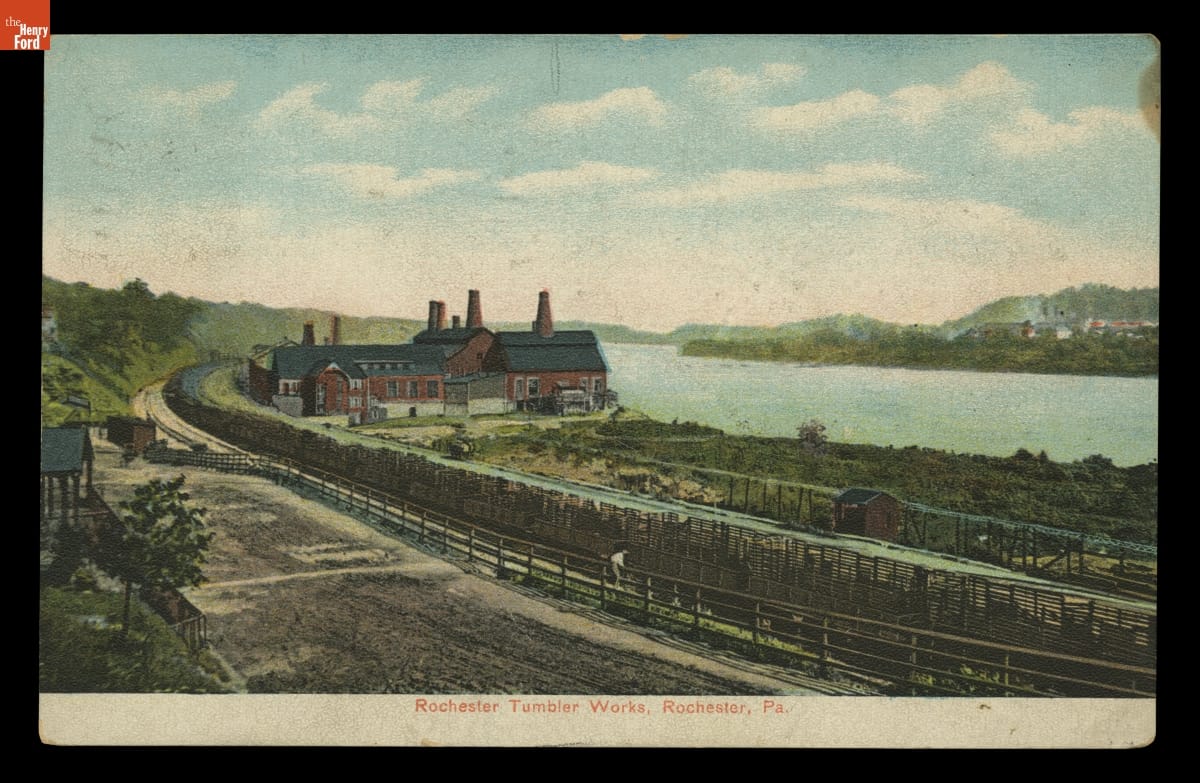
- Rochester Tumbler Works, Rochester, Pennsylvania, Postcard Mailed October 1911 - In 1900, the Rochester Tumbler Works with its 1200 employees could produce tens of thousands of tumblers and other glass tableware a week. The Pennsylvania factory was part of the National Glass Company, a combination of several independent glass firms created in 1899. Tragically, the glassworks burned in 1901, but a new factory, seen in this postcard, was built.
- October 01, 1911
- Collections - Artifact
Rochester Tumbler Works, Rochester, Pennsylvania, Postcard Mailed October 1911
In 1900, the Rochester Tumbler Works with its 1200 employees could produce tens of thousands of tumblers and other glass tableware a week. The Pennsylvania factory was part of the National Glass Company, a combination of several independent glass firms created in 1899. Tragically, the glassworks burned in 1901, but a new factory, seen in this postcard, was built.
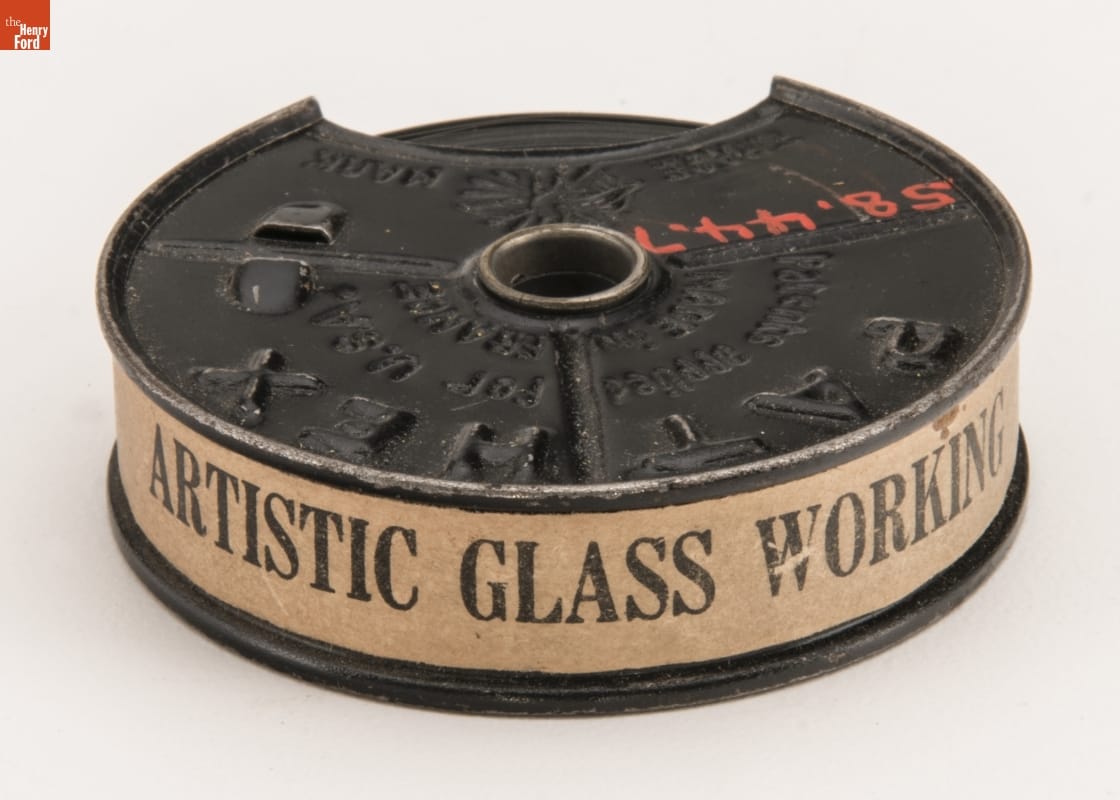
- Pathex Motion Picture, Titled "Artistic Glass Working," 1923-1931 - Pathe, a French phonograph and cinema equipment company, developed a small, affordable film projector for home use in the early 1920s. The projector ran 9.5-millimeter film -- a competitor to the more expensive 16-millimeter film made by the U. S. firm, Kodak. The company's U. S. Subsidiary, Pathex, also distributed a variety of humorous and educational films for the home entertainment market.
- 1923-1931
- Collections - Artifact
Pathex Motion Picture, Titled "Artistic Glass Working," 1923-1931
Pathe, a French phonograph and cinema equipment company, developed a small, affordable film projector for home use in the early 1920s. The projector ran 9.5-millimeter film -- a competitor to the more expensive 16-millimeter film made by the U. S. firm, Kodak. The company's U. S. Subsidiary, Pathex, also distributed a variety of humorous and educational films for the home entertainment market.
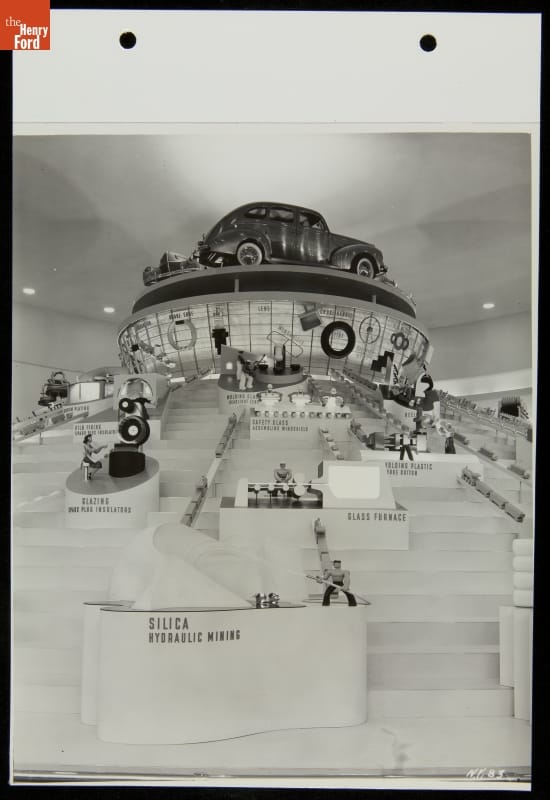
- Glass Display, Ford Exposition, New York World's Fair, 1939 - Ford Motor Company poured resources into the 1939-40 New York World's Fair, spending more than $5 million to construct and maintain its elaborate and well-attended exposition space. Ford's massive exhibition building attracted fairgoers with industrial demonstrations and informative displays. The huge, revolving "Ford Cycle of Production" - which explained how raw materials became Ford automobile parts - particularly impressed visitors.
- May 04, 1939
- Collections - Artifact
Glass Display, Ford Exposition, New York World's Fair, 1939
Ford Motor Company poured resources into the 1939-40 New York World's Fair, spending more than $5 million to construct and maintain its elaborate and well-attended exposition space. Ford's massive exhibition building attracted fairgoers with industrial demonstrations and informative displays. The huge, revolving "Ford Cycle of Production" - which explained how raw materials became Ford automobile parts - particularly impressed visitors.
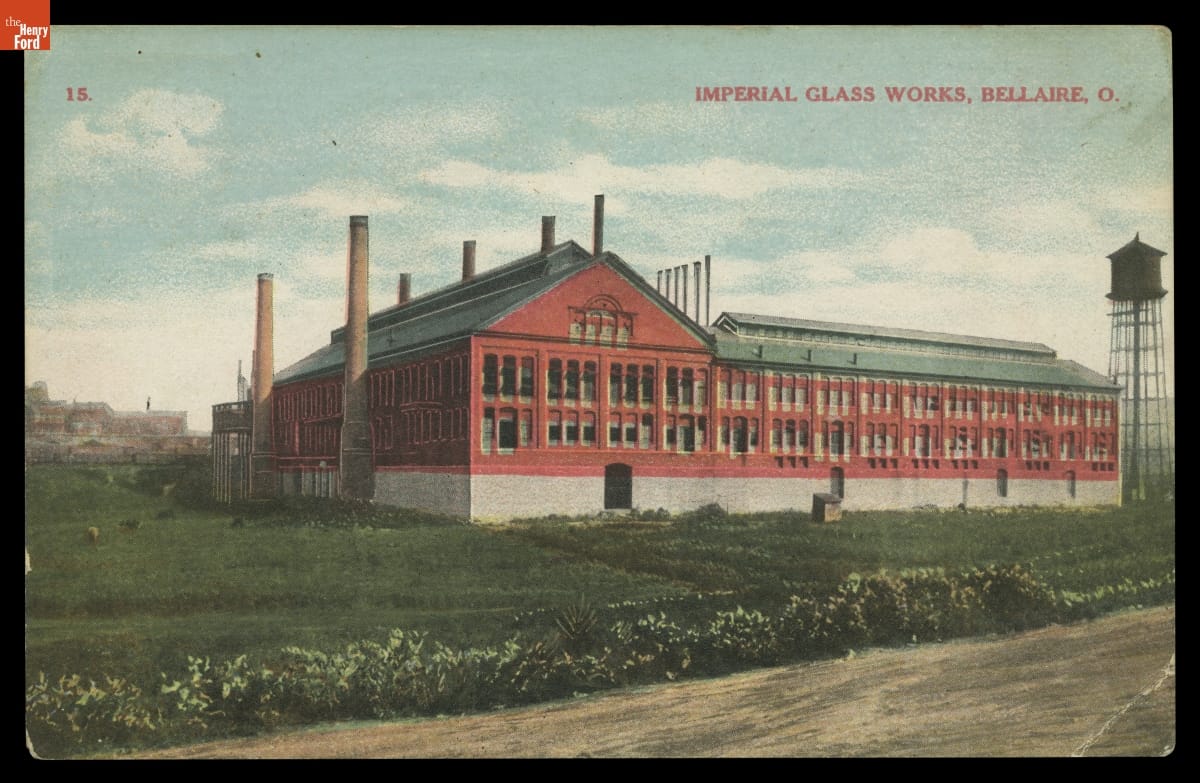
- Imperial Glass Works, Bellaire, Ohio, circa 1909 - The Imperial Glass Company was established in 1901. Investors built a massive multi-furnace factory in Bellaire, Ohio, and employed hundreds of workers to create a wide range of glass tableware for the growing American market. Imperial created a number of popular production designs and continued manufacturing well into the century.
- circa 1909
- Collections - Artifact
Imperial Glass Works, Bellaire, Ohio, circa 1909
The Imperial Glass Company was established in 1901. Investors built a massive multi-furnace factory in Bellaire, Ohio, and employed hundreds of workers to create a wide range of glass tableware for the growing American market. Imperial created a number of popular production designs and continued manufacturing well into the century.
- Sales Catalog of the H. J. Heinz Company and Products, Pittsburgh, Pennsylvania, circa 1910 - With humble beginnings exclusively selling horseradish in 1869, H.J. Heinz continued to expand his product line to build the "House of Heinz" and become a leader in the manufactured food industry. This sales catalog highlights the manufacturing process and provides photographs of the factories, branch houses, and employees. It also contains information and photographs of each of the "57 Varieties" of Heinz products.
- 1910
- Collections - Artifact
Sales Catalog of the H. J. Heinz Company and Products, Pittsburgh, Pennsylvania, circa 1910
With humble beginnings exclusively selling horseradish in 1869, H.J. Heinz continued to expand his product line to build the "House of Heinz" and become a leader in the manufactured food industry. This sales catalog highlights the manufacturing process and provides photographs of the factories, branch houses, and employees. It also contains information and photographs of each of the "57 Varieties" of Heinz products.
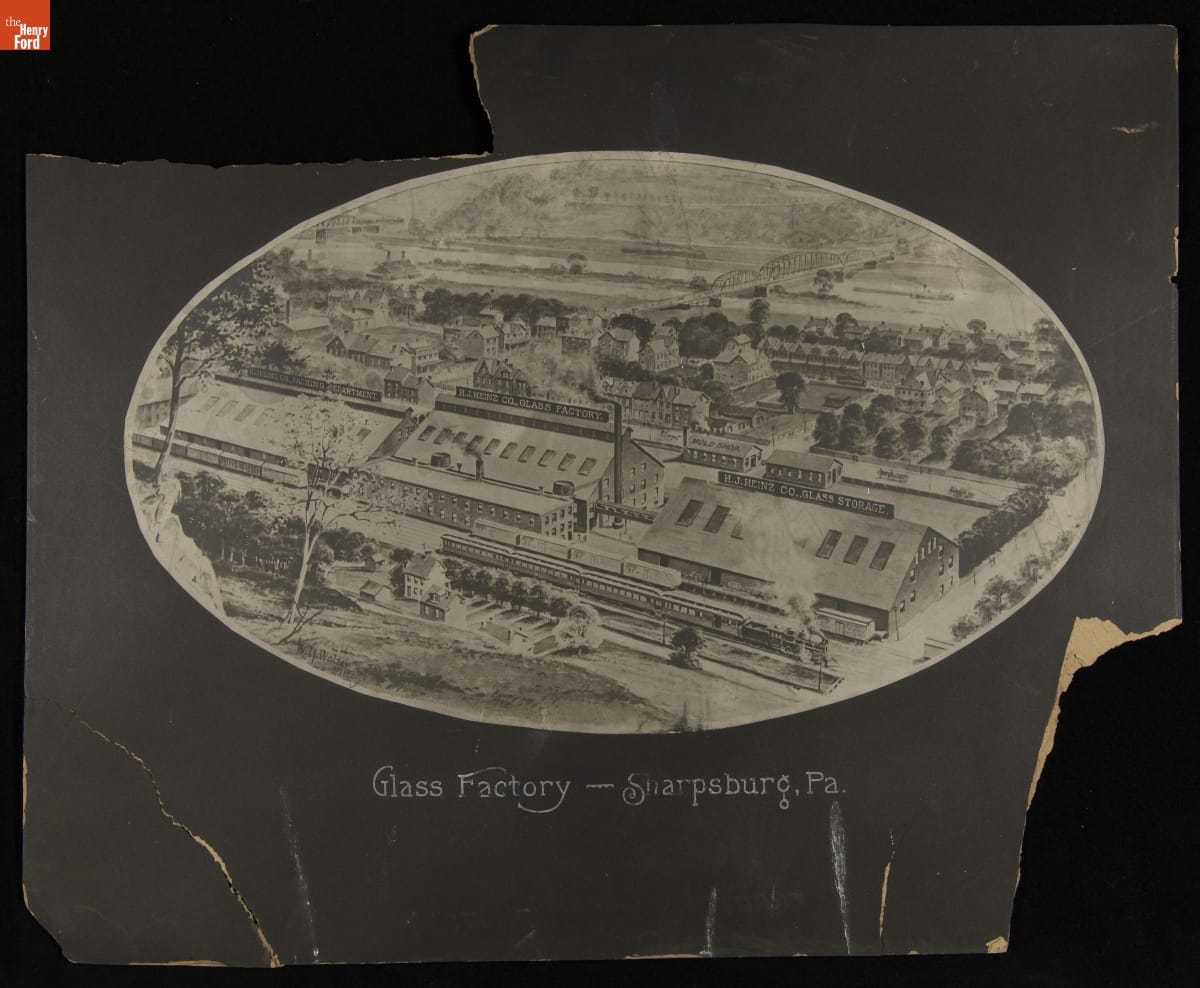
- Heinz Glass Factory in Sharpsburg, Pennsylvania, 1885-1910 - The H.J. Heinz Company had departments and facilities to produce its own crates and boxes, glassware, cans, advertisements, and labels, allowing most production to be completed in-house. This photograph shows the Heinz Glass Factory located in Sharpsburg, Pennsylvania.
- 1885-1910
- Collections - Artifact
Heinz Glass Factory in Sharpsburg, Pennsylvania, 1885-1910
The H.J. Heinz Company had departments and facilities to produce its own crates and boxes, glassware, cans, advertisements, and labels, allowing most production to be completed in-house. This photograph shows the Heinz Glass Factory located in Sharpsburg, Pennsylvania.
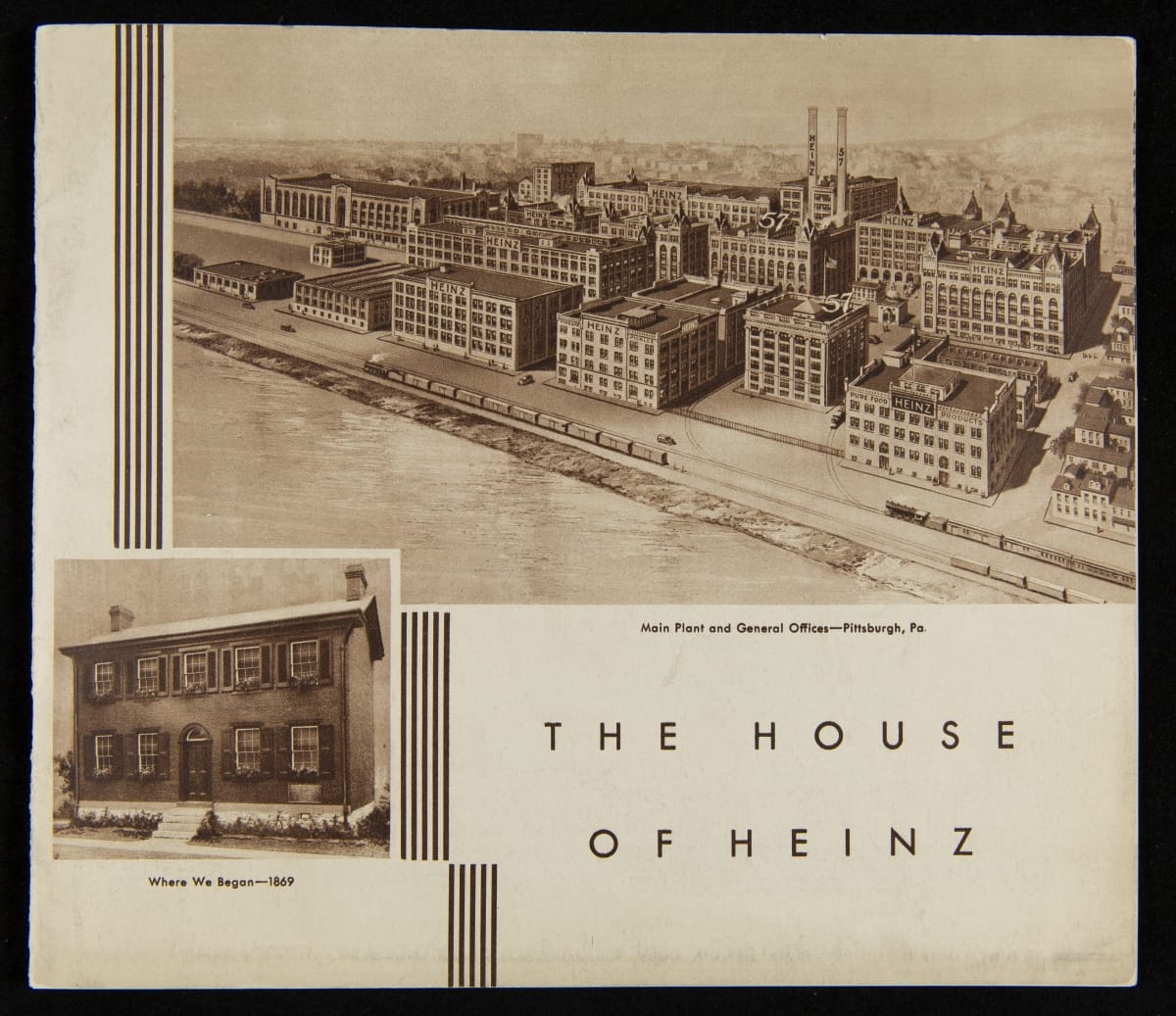
- The House of Heinz, circa 1929 - The H.J. Heinz Company was founded from humble beginnings in 1869. By the turn of the century it had become a well-known manufacturer of processed food. Its rapid success resulted in the expansion of its operations at home and abroad. This booklet from 1929 provides an overview of the many branch factories and buildings operated by the company, referred to as "The House of Heinz."
- circa 1929
- Collections - Artifact
The House of Heinz, circa 1929
The H.J. Heinz Company was founded from humble beginnings in 1869. By the turn of the century it had become a well-known manufacturer of processed food. Its rapid success resulted in the expansion of its operations at home and abroad. This booklet from 1929 provides an overview of the many branch factories and buildings operated by the company, referred to as "The House of Heinz."
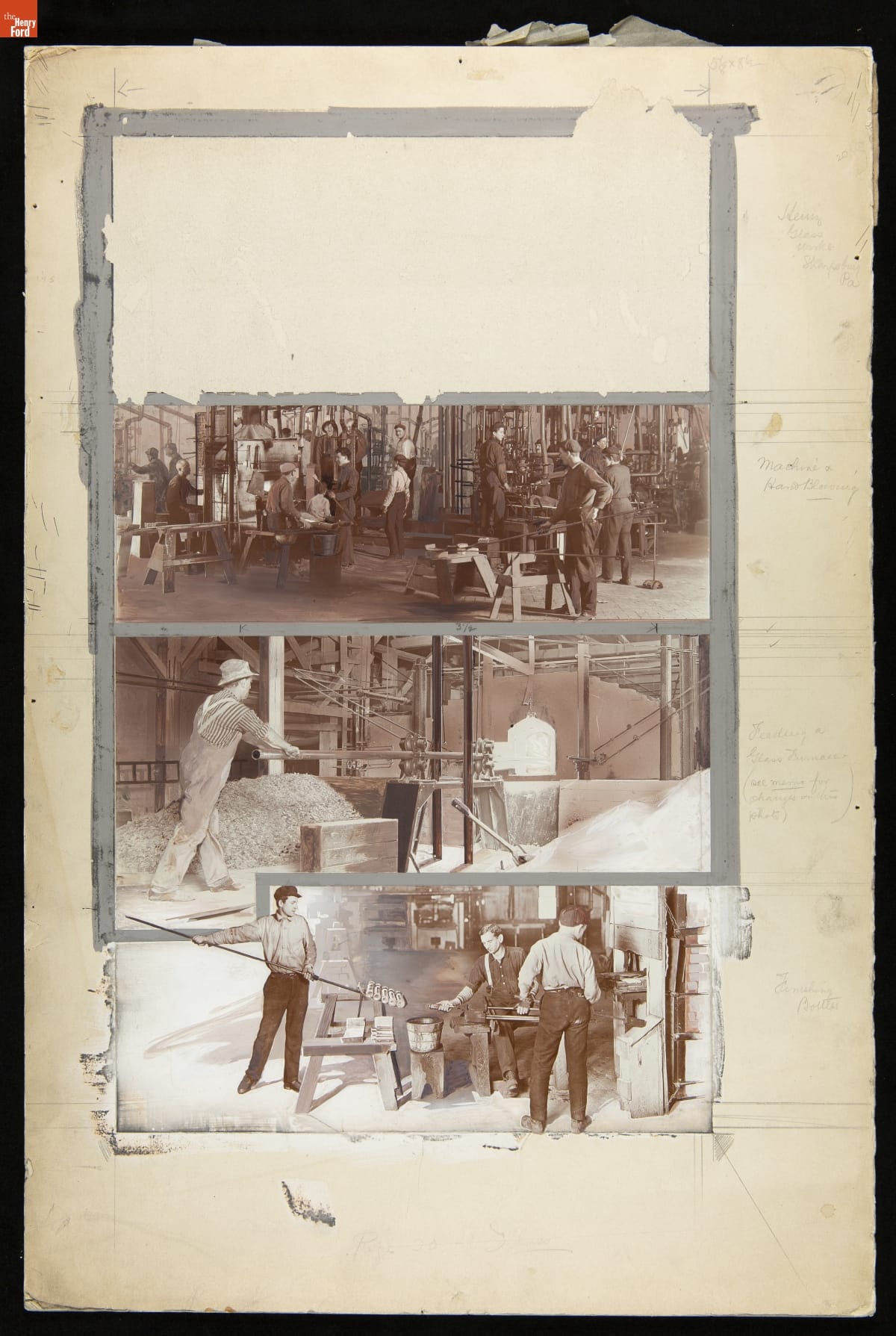
- Photomontage of Heinz Glass Works Photos, 1909 - Photographs of the H.J. Heinz factory -- including buildings, employees, and the manufacturing process -- were often taken and then modified for advertising and publications. This advertising layout features several modified photographs of the Heinz glass factory. This arrangement of photos, featured in the catalog, "Home of the 57 Varieties," is a visual representation of the glass works of the H.J. Heinz Company.
- 1909
- Collections - Artifact
Photomontage of Heinz Glass Works Photos, 1909
Photographs of the H.J. Heinz factory -- including buildings, employees, and the manufacturing process -- were often taken and then modified for advertising and publications. This advertising layout features several modified photographs of the Heinz glass factory. This arrangement of photos, featured in the catalog, "Home of the 57 Varieties," is a visual representation of the glass works of the H.J. Heinz Company.