
Search
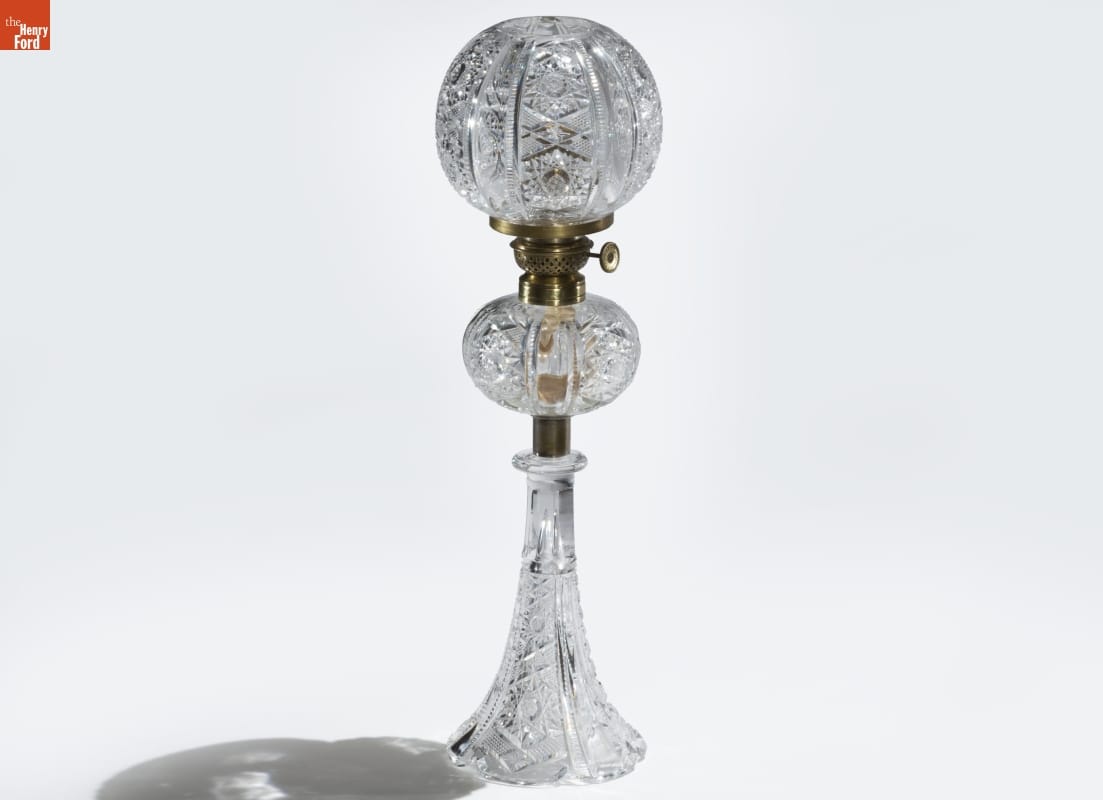
- Kerosene Lamp, 1895-1905 -
- 1895-1905
- Collections - Artifact
Kerosene Lamp, 1895-1905
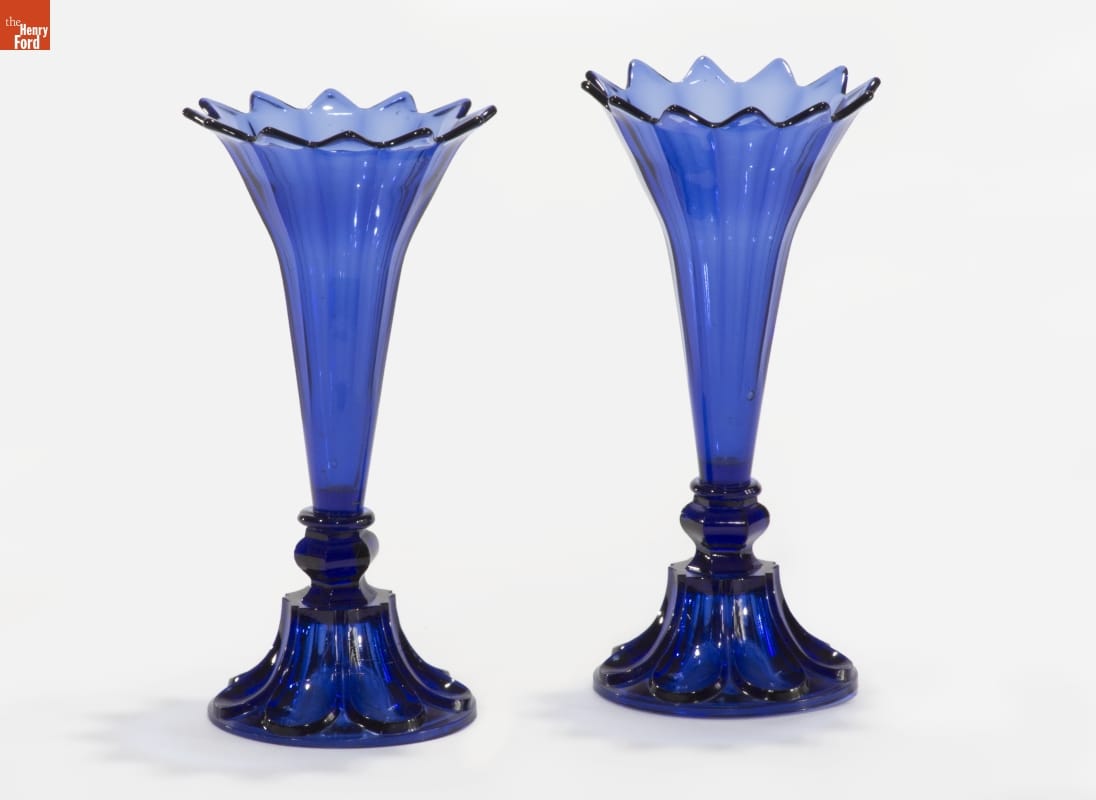
- Vases, 1840-1855 - Nineteenth-century American glassmakers experimented with new methods to create products for a growing consumer market. In the 1820s, pressing glass into metal molds by machine was perfected, and by the mid-1800s, manufacturers were creating a variety of inexpensive pressed glass housewares. America's middle-class consumers could now decorate their homes with attractive glass bowls, creamers, dishes, plates, vases, and other tableware.
- 1840-1855
- Collections - Artifact
Vases, 1840-1855
Nineteenth-century American glassmakers experimented with new methods to create products for a growing consumer market. In the 1820s, pressing glass into metal molds by machine was perfected, and by the mid-1800s, manufacturers were creating a variety of inexpensive pressed glass housewares. America's middle-class consumers could now decorate their homes with attractive glass bowls, creamers, dishes, plates, vases, and other tableware.
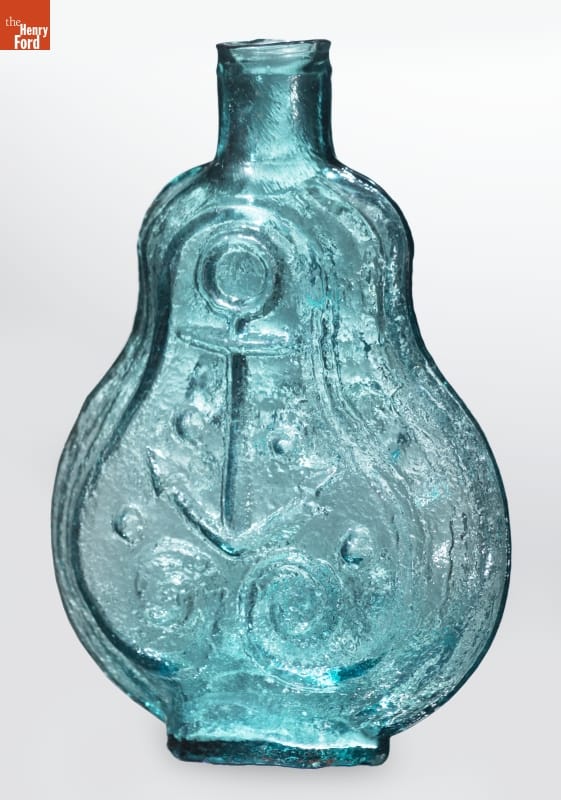
- Flask, 1830-1834 - Glass factories in America began producing inexpensive, mold-formed flasks in the early 1800s. These figured flasks appealed to America's common man. Many of these flasks contained symbols of national pride or political or cultural affiliation. Embellishments on other flasks, like this one, were purely decorative, though you will find an anchor -- a symbol of hope -- on the reverse.
- 1830-1834
- Collections - Artifact
Flask, 1830-1834
Glass factories in America began producing inexpensive, mold-formed flasks in the early 1800s. These figured flasks appealed to America's common man. Many of these flasks contained symbols of national pride or political or cultural affiliation. Embellishments on other flasks, like this one, were purely decorative, though you will find an anchor -- a symbol of hope -- on the reverse.
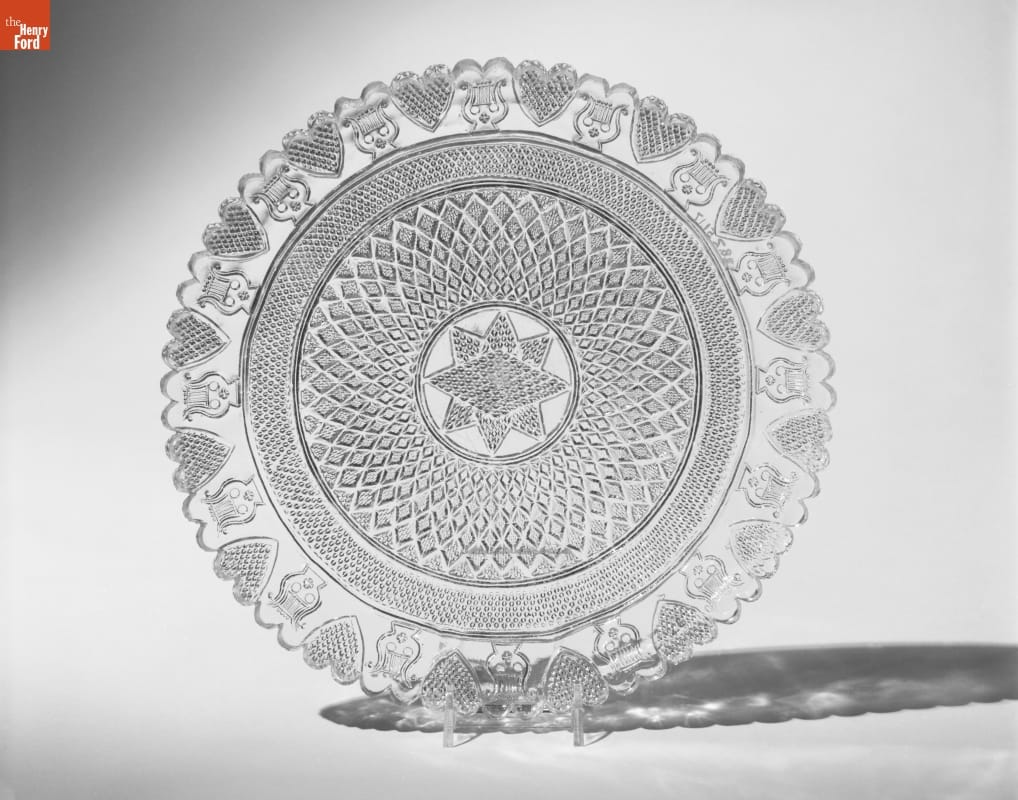
- Dish, 1825-1845 - Mechanically pressed glass was an innovation in glass history, making decorative, "patterned" glass available to a broad audience. One of the earliest types of pressed glass, dating to the 1830s is known as "Lacy Glass". Complex stippled patterns were developed to help hide technical defects caused by early presses, when the glass gather was cut off and dropped into a mold.
- 1825-1845
- Collections - Artifact
Dish, 1825-1845
Mechanically pressed glass was an innovation in glass history, making decorative, "patterned" glass available to a broad audience. One of the earliest types of pressed glass, dating to the 1830s is known as "Lacy Glass". Complex stippled patterns were developed to help hide technical defects caused by early presses, when the glass gather was cut off and dropped into a mold.
- Bowl, 1830-1835 -
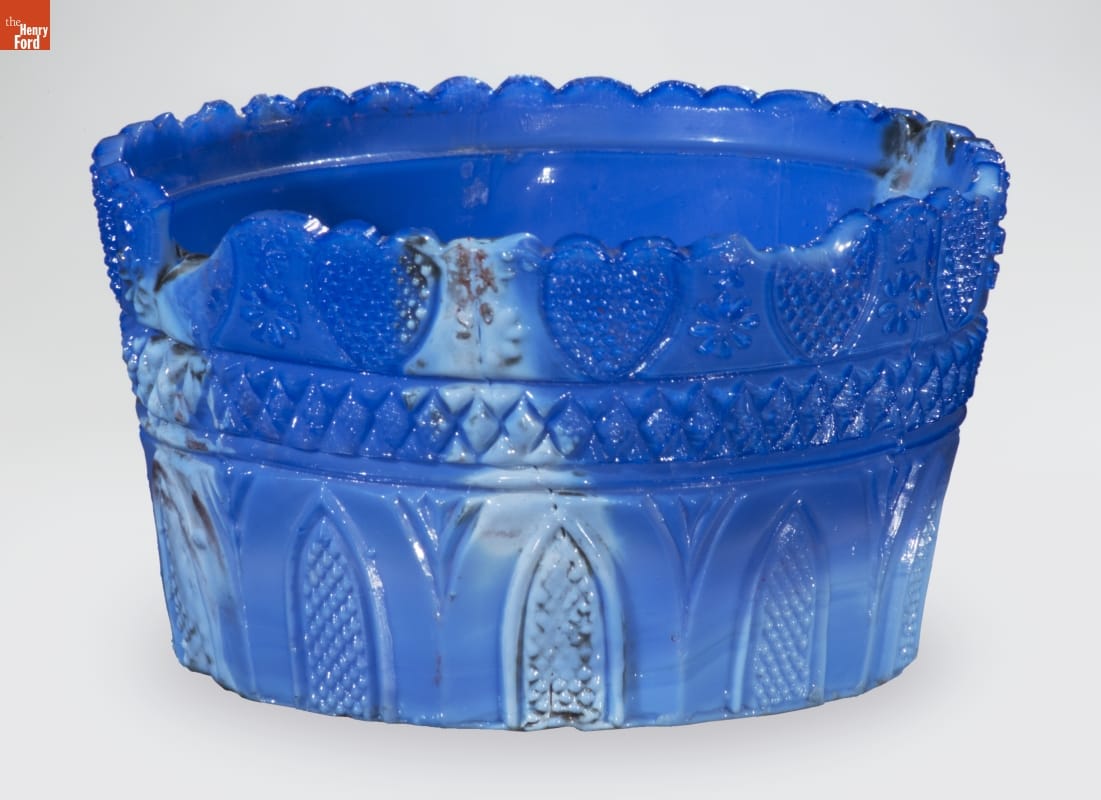
- 1830-1835
- Collections - Artifact
Bowl, 1830-1835
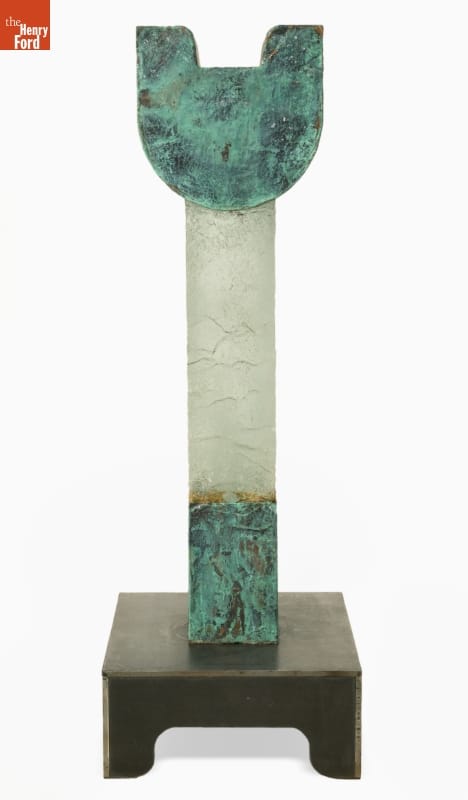
- "Structure 25" by Howard Ben Tre, 1985 - Howard Ben Tré took a unique path in the studio glass world when he exchanged traditional glassblowing techniques to cast monumental sculptures of solid glass. The rough glass surface of this piece has patinated sheet copper attached giving it a weathered look. Ben Tré states, "I hope that people without any history of looking at art, can be drawn in, and have a connection to it."
- 1985
- Collections - Artifact
"Structure 25" by Howard Ben Tre, 1985
Howard Ben Tré took a unique path in the studio glass world when he exchanged traditional glassblowing techniques to cast monumental sculptures of solid glass. The rough glass surface of this piece has patinated sheet copper attached giving it a weathered look. Ben Tré states, "I hope that people without any history of looking at art, can be drawn in, and have a connection to it."
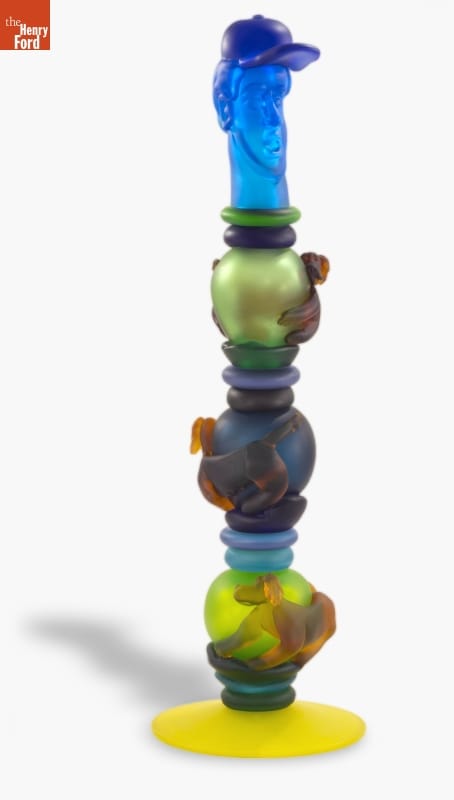
- "Settling In" by Richard Jolley, 1998 -
- 1998
- Collections - Artifact
"Settling In" by Richard Jolley, 1998
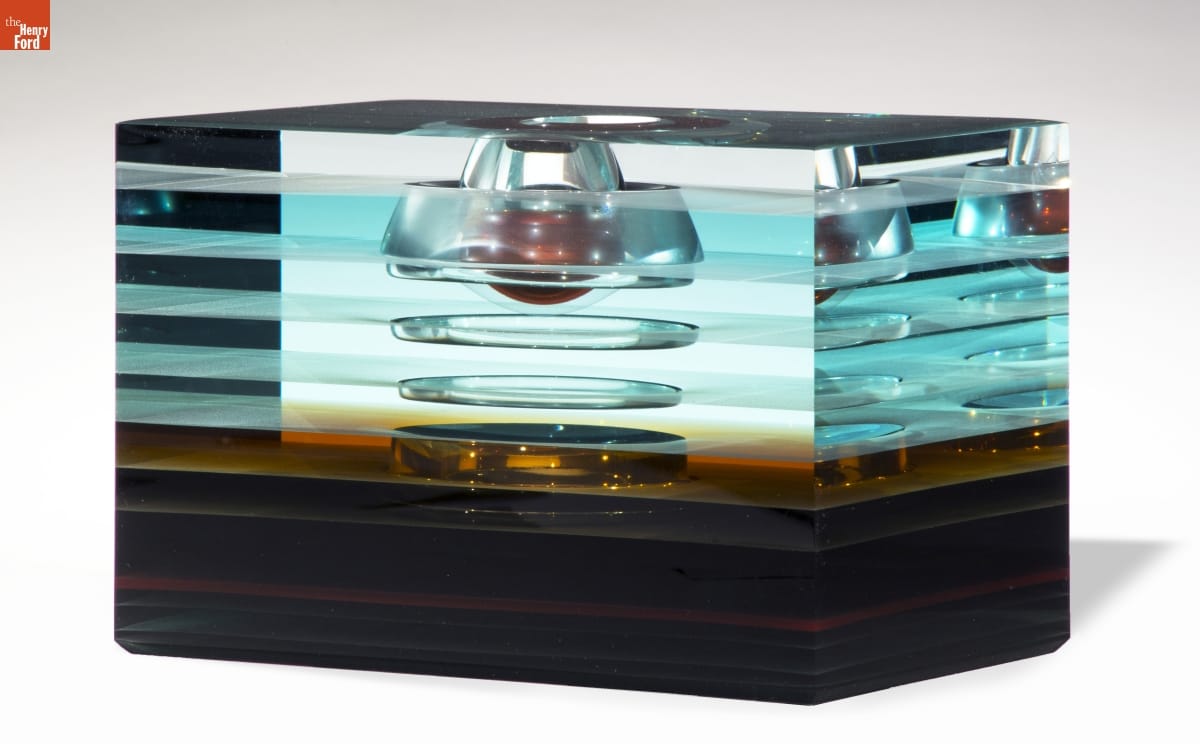
- "Lumina Green With Red Ring" by Tom Patti, 1993 - The beauty of art and the innovation of technology are combined in Tom Patti's work. He approaches glass with a voracious curiosity to discover what the material can do. His career in art began when he discovered how to create small glass sculptures of layered industrial glass with a bubble inside. Sculptures such as this one explore color and spatial perception.
- 1993
- Collections - Artifact
"Lumina Green With Red Ring" by Tom Patti, 1993
The beauty of art and the innovation of technology are combined in Tom Patti's work. He approaches glass with a voracious curiosity to discover what the material can do. His career in art began when he discovered how to create small glass sculptures of layered industrial glass with a bubble inside. Sculptures such as this one explore color and spatial perception.
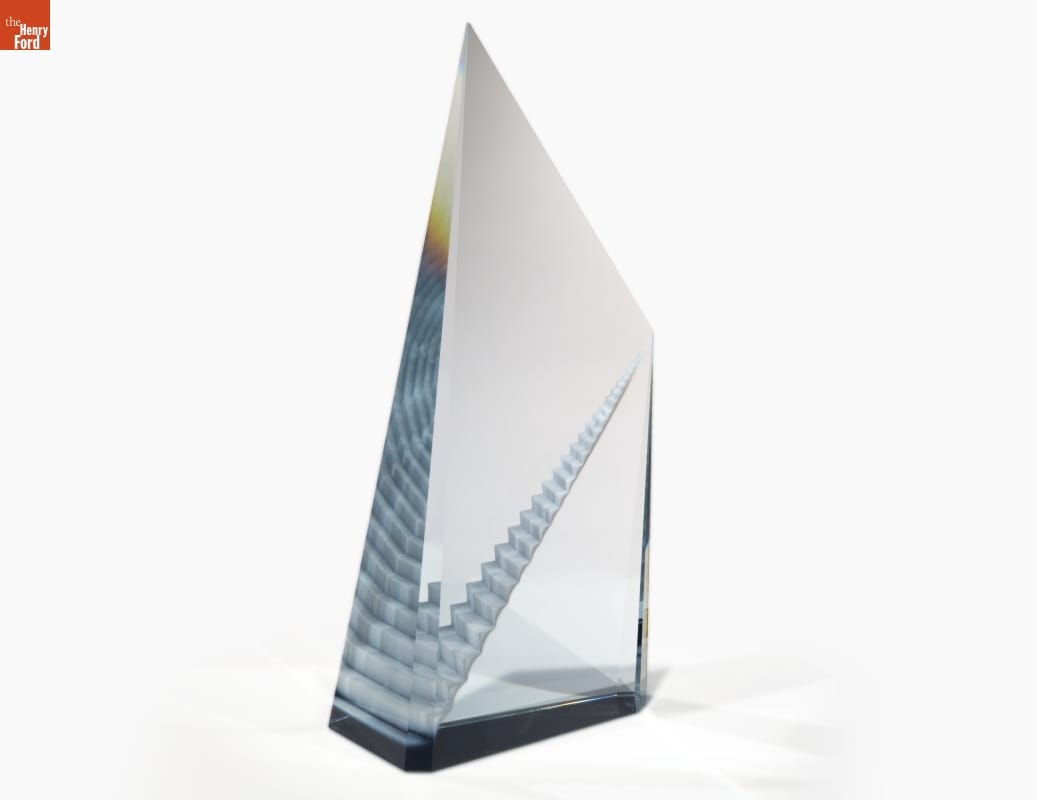
- "Ascension" by Mark Peiser, 1987 - "For me, technique is not cheap -- it's imperative," asserts Mark Peiser. This contrasts with the comment made by Harvey Littleton, the founder of the studio glass movement, that, "Technique is cheap." Peiser creates innovative technical processes that express his ideas. His Innerspace Series (1983-1994) explores how to compose a solid three dimensional image within a mass of a different color.
- 1987
- Collections - Artifact
"Ascension" by Mark Peiser, 1987
"For me, technique is not cheap -- it's imperative," asserts Mark Peiser. This contrasts with the comment made by Harvey Littleton, the founder of the studio glass movement, that, "Technique is cheap." Peiser creates innovative technical processes that express his ideas. His Innerspace Series (1983-1994) explores how to compose a solid three dimensional image within a mass of a different color.
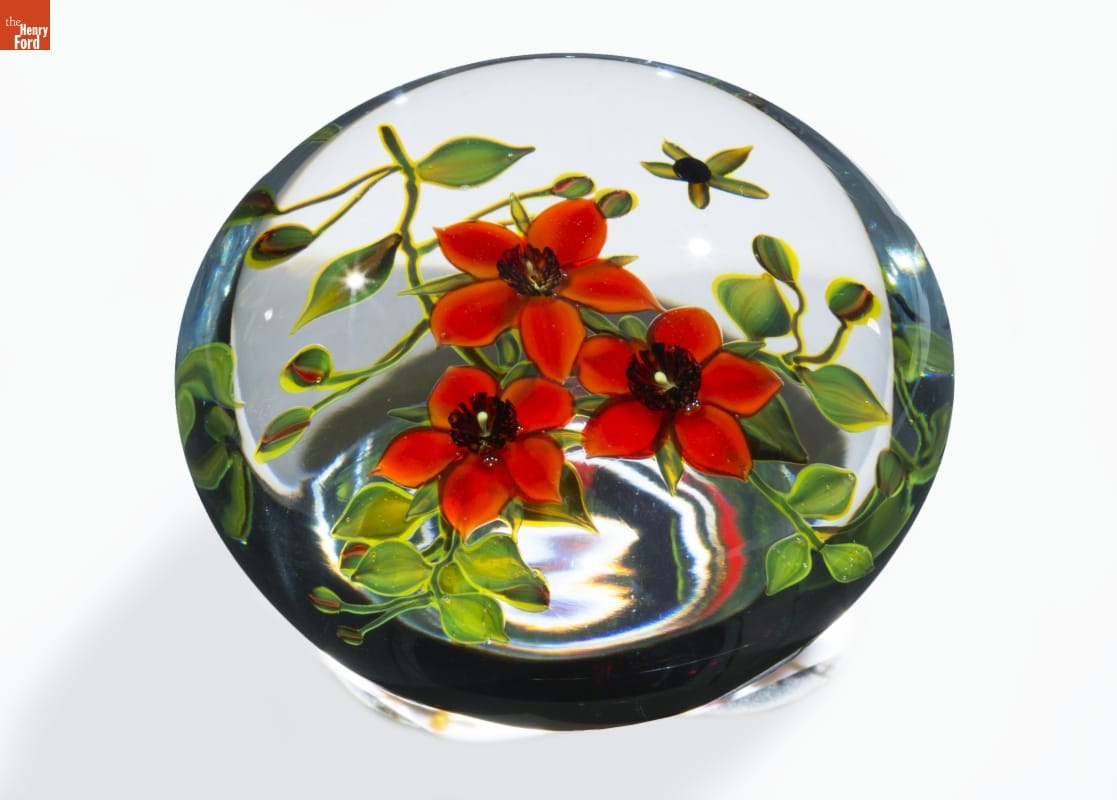
- "St. Anthony's Fire" by Paul J. Stankard, 1976 - Paul Stankard is one of the founders of the Studio Glass movement of the 1960s and 70s. Most early Studio Glass artists began their careers creating paperweights and moved on to other forms. Stankard concentrated on creating the most technically sophisticated and beautiful paperweights he could imagine. Today, Stankard is acclaimed for his miniature worlds, consisting of imaginary botanicals, bees and sometimes human figures.
- 1976
- Collections - Artifact
"St. Anthony's Fire" by Paul J. Stankard, 1976
Paul Stankard is one of the founders of the Studio Glass movement of the 1960s and 70s. Most early Studio Glass artists began their careers creating paperweights and moved on to other forms. Stankard concentrated on creating the most technically sophisticated and beautiful paperweights he could imagine. Today, Stankard is acclaimed for his miniature worlds, consisting of imaginary botanicals, bees and sometimes human figures.