
Search
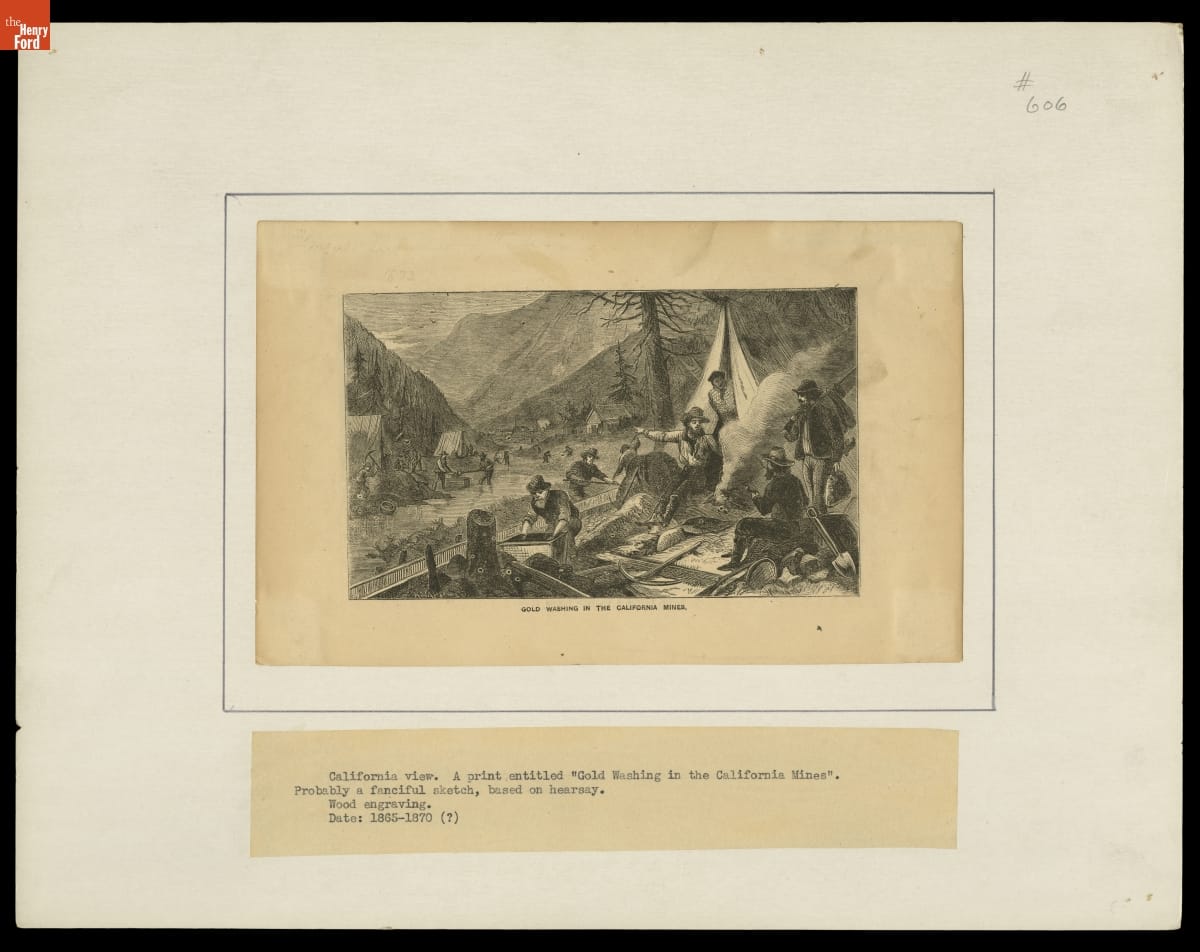
- Gold Washing in the California Mine, 1865-1870 -
- 1865-1870
- Collections - Artifact
Gold Washing in the California Mine, 1865-1870
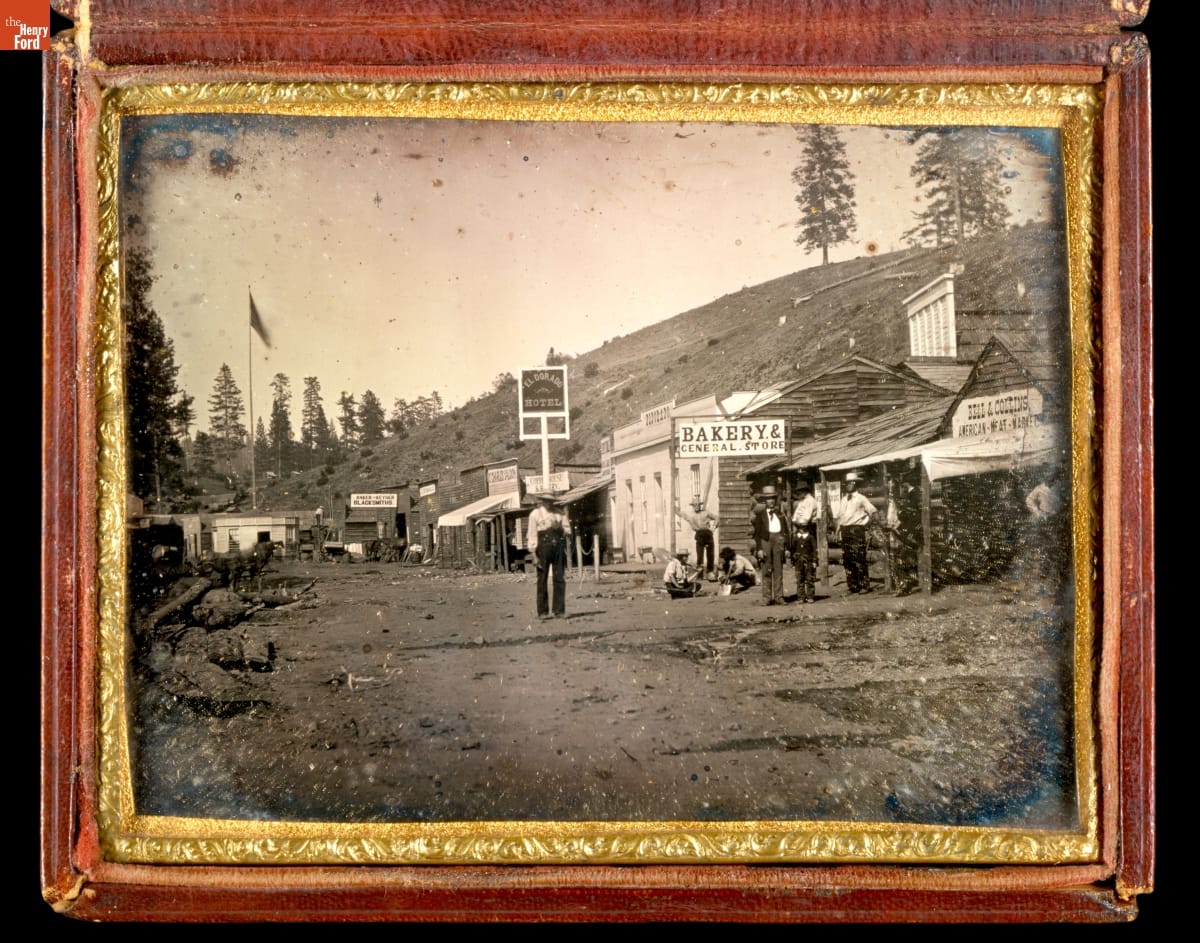
- Street Scene of a California Gold Mining Town, about 1850 - Placerville, a California gold-mining town, is the subject of this daguerreotype from about 1850. The two men panning for gold on the street are posing, but the buildings -- including hotel, general store, saloon, and "Legal Coin in Exchange for Dust" shop -- offer an authentic view of daily life for gold-seekers and merchants during the California Gold Rush.
- circa 1850
- Collections - Artifact
Street Scene of a California Gold Mining Town, about 1850
Placerville, a California gold-mining town, is the subject of this daguerreotype from about 1850. The two men panning for gold on the street are posing, but the buildings -- including hotel, general store, saloon, and "Legal Coin in Exchange for Dust" shop -- offer an authentic view of daily life for gold-seekers and merchants during the California Gold Rush.
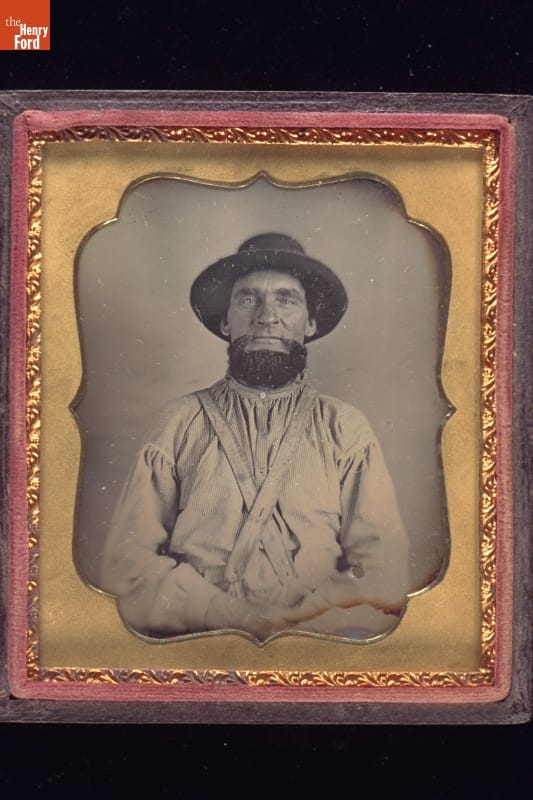
- Portrait of Mr. Thurston, a Gold Miner, circa 1850 - The daguerreotype, popular in the early 1840s-late 1850s, was the first form of photography available to the public. Sheets of silver-plated copper--polished to a mirror finish--were bathed in photosensitive vapors, and exposed in cameras. In formal studios and traveling booths, photographers created affordable portraits. For the first time, people saw their likenesses--fixed permanently in time and place.
- circa 1850
- Collections - Artifact
Portrait of Mr. Thurston, a Gold Miner, circa 1850
The daguerreotype, popular in the early 1840s-late 1850s, was the first form of photography available to the public. Sheets of silver-plated copper--polished to a mirror finish--were bathed in photosensitive vapors, and exposed in cameras. In formal studios and traveling booths, photographers created affordable portraits. For the first time, people saw their likenesses--fixed permanently in time and place.
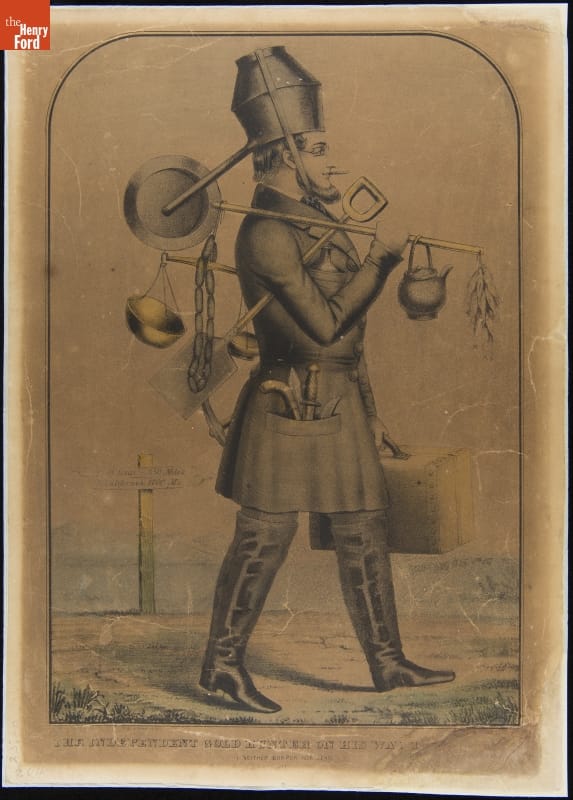
- "The Independent Gold Hunter on His Way to California, I Neither Borrow Nor Lend," circa 1850 -
- circa 1849
- Collections - Artifact
"The Independent Gold Hunter on His Way to California, I Neither Borrow Nor Lend," circa 1850
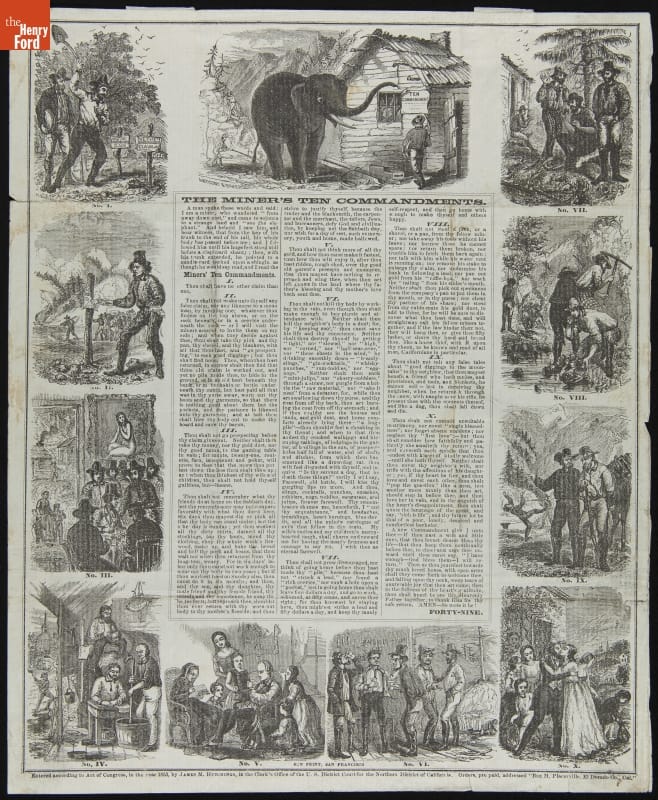
- The Miner's Ten Commandments, 1853 - Englishman James H. Hutchings immigrated to California during the gold rush. Finding success, he authored these rules to live by for miners also looking to make a fortune. Later, lured by stories of breathtaking scenery, Hutchings became one of the first settlers in the Yosemite Valley and would eventually advocate for the creation of Yosemite National Park.
- 1853
- Collections - Artifact
The Miner's Ten Commandments, 1853
Englishman James H. Hutchings immigrated to California during the gold rush. Finding success, he authored these rules to live by for miners also looking to make a fortune. Later, lured by stories of breathtaking scenery, Hutchings became one of the first settlers in the Yosemite Valley and would eventually advocate for the creation of Yosemite National Park.
- "Life," July-September 1950 - First published in 1883, <em> Life </em> magazine became America's first all-photographic weekly news magazine after being purchased and re-envisioned by publisher Henry Luce in 1936. Under Luce, its popularity boomed, and by the 1950s more than 22 million Americans read the publication. Articles in this July to September 1950 bound volume include Margaret Bourke-White's early coverage of apartheid in South Africa.

- July 1950-September 1950
- Collections - Artifact
"Life," July-September 1950
First published in 1883, Life magazine became America's first all-photographic weekly news magazine after being purchased and re-envisioned by publisher Henry Luce in 1936. Under Luce, its popularity boomed, and by the 1950s more than 22 million Americans read the publication. Articles in this July to September 1950 bound volume include Margaret Bourke-White's early coverage of apartheid in South Africa.
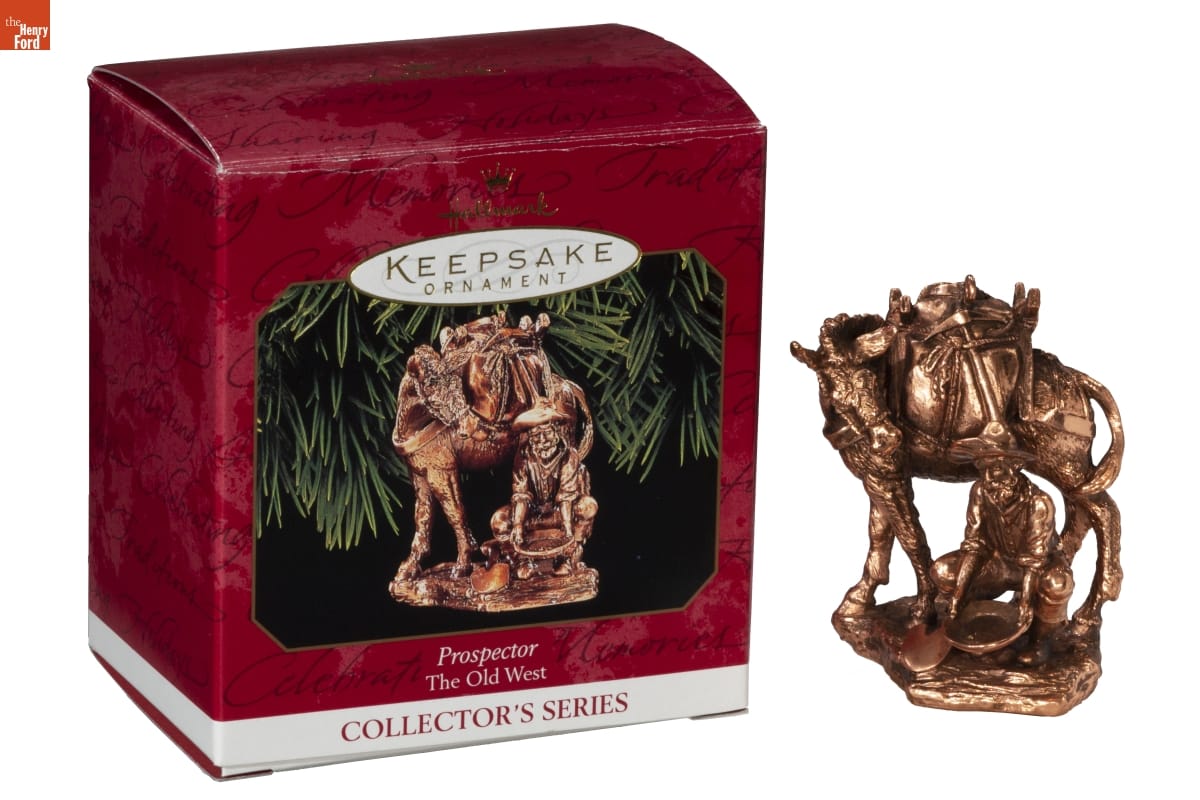
- Hallmark "The Old West Series: Prospector" Christmas Ornament, 1999 - Already known for greeting cards, Hallmark introduced a line of Christmas ornaments in 1973. The company's annual release of an increasing array of ornaments revolutionized Christmas decorating, appealing to customers' interest in marking memories and milestones as well as expressing one's personality and unique tastes.
- 1999
- Collections - Artifact
Hallmark "The Old West Series: Prospector" Christmas Ornament, 1999
Already known for greeting cards, Hallmark introduced a line of Christmas ornaments in 1973. The company's annual release of an increasing array of ornaments revolutionized Christmas decorating, appealing to customers' interest in marking memories and milestones as well as expressing one's personality and unique tastes.