
Search
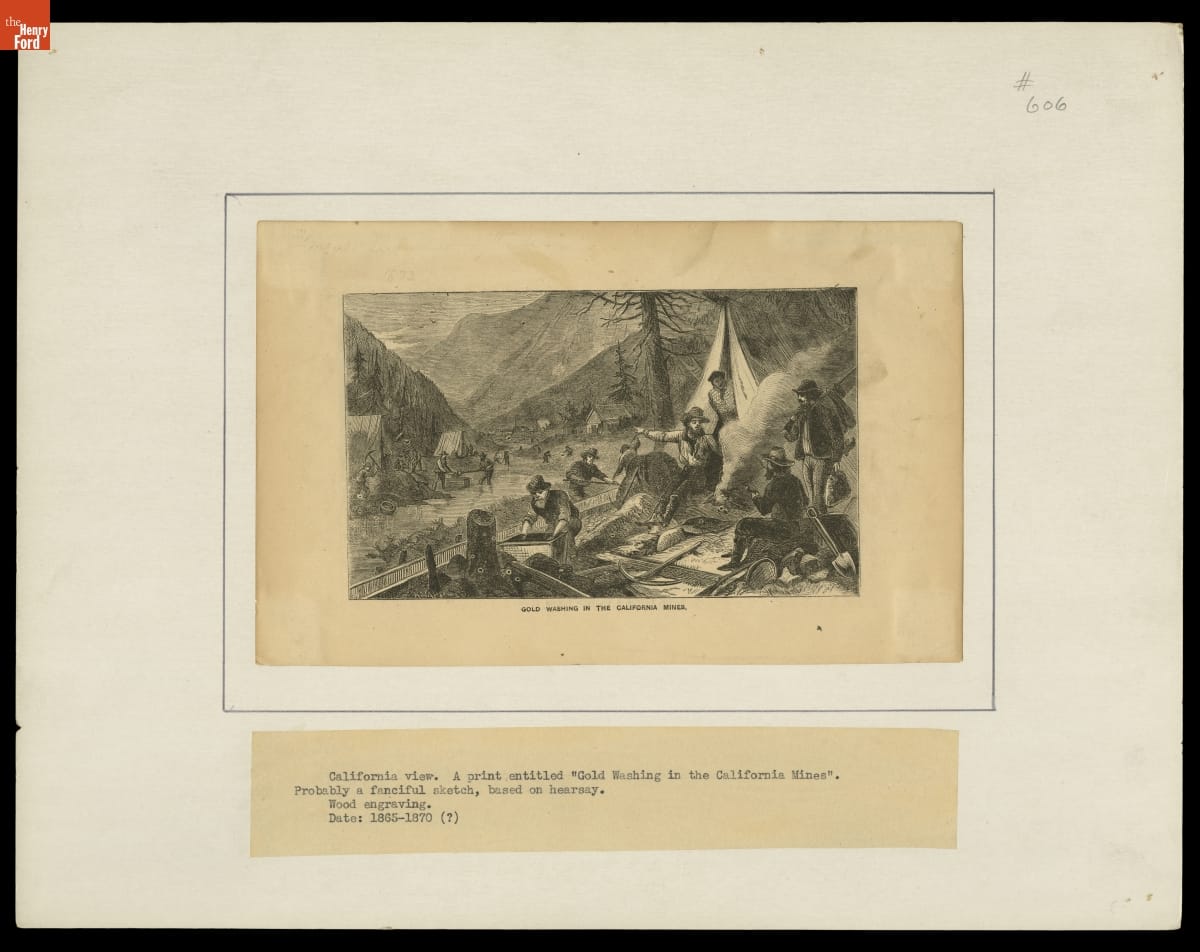
- Gold Washing in the California Mine, 1865-1870 -
- 1865-1870
- Collections - Artifact
Gold Washing in the California Mine, 1865-1870
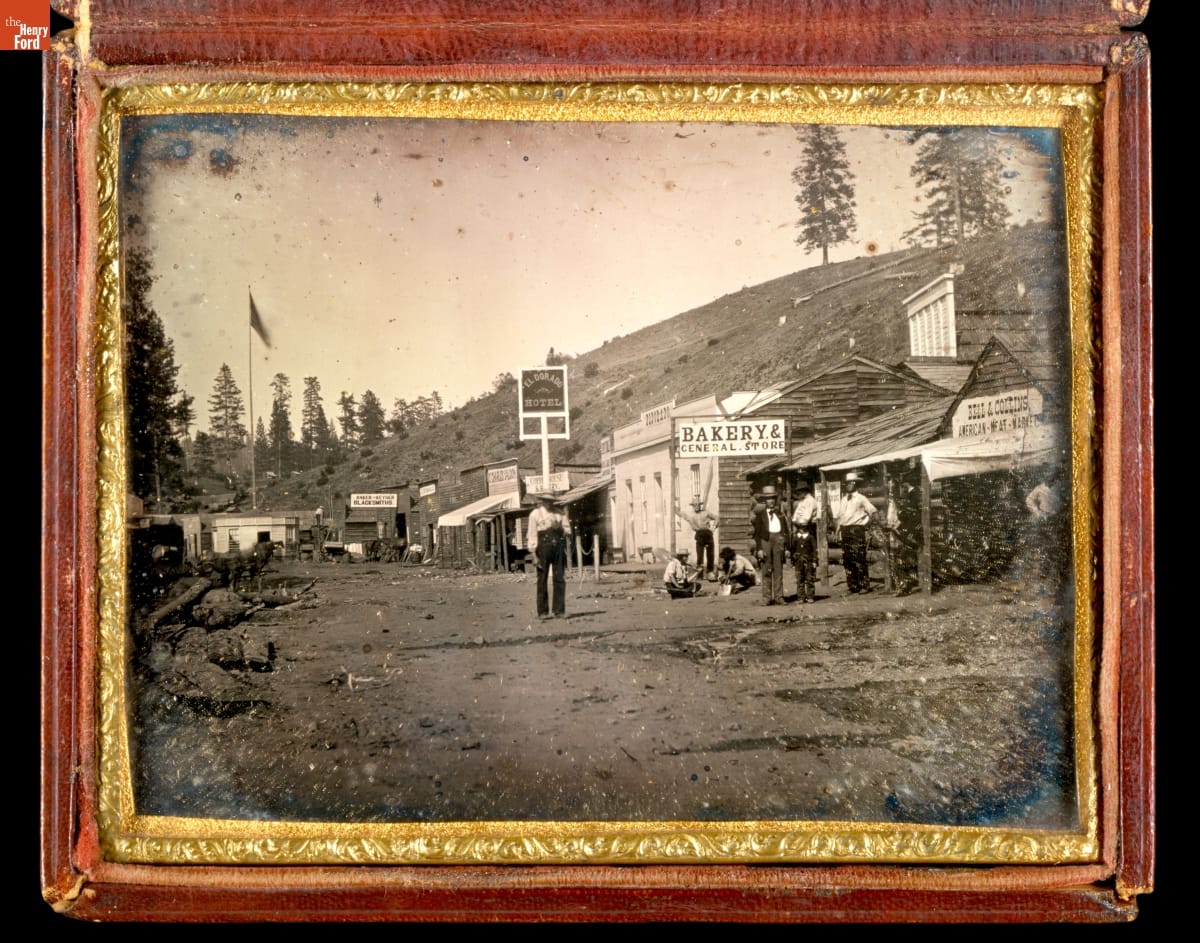
- Street Scene of a California Gold Mining Town, about 1850 - Placerville, a California gold-mining town, is the subject of this daguerreotype from about 1850. The two men panning for gold on the street are posing, but the buildings -- including hotel, general store, saloon, and "Legal Coin in Exchange for Dust" shop -- offer an authentic view of daily life for gold-seekers and merchants during the California Gold Rush.
- circa 1850
- Collections - Artifact
Street Scene of a California Gold Mining Town, about 1850
Placerville, a California gold-mining town, is the subject of this daguerreotype from about 1850. The two men panning for gold on the street are posing, but the buildings -- including hotel, general store, saloon, and "Legal Coin in Exchange for Dust" shop -- offer an authentic view of daily life for gold-seekers and merchants during the California Gold Rush.
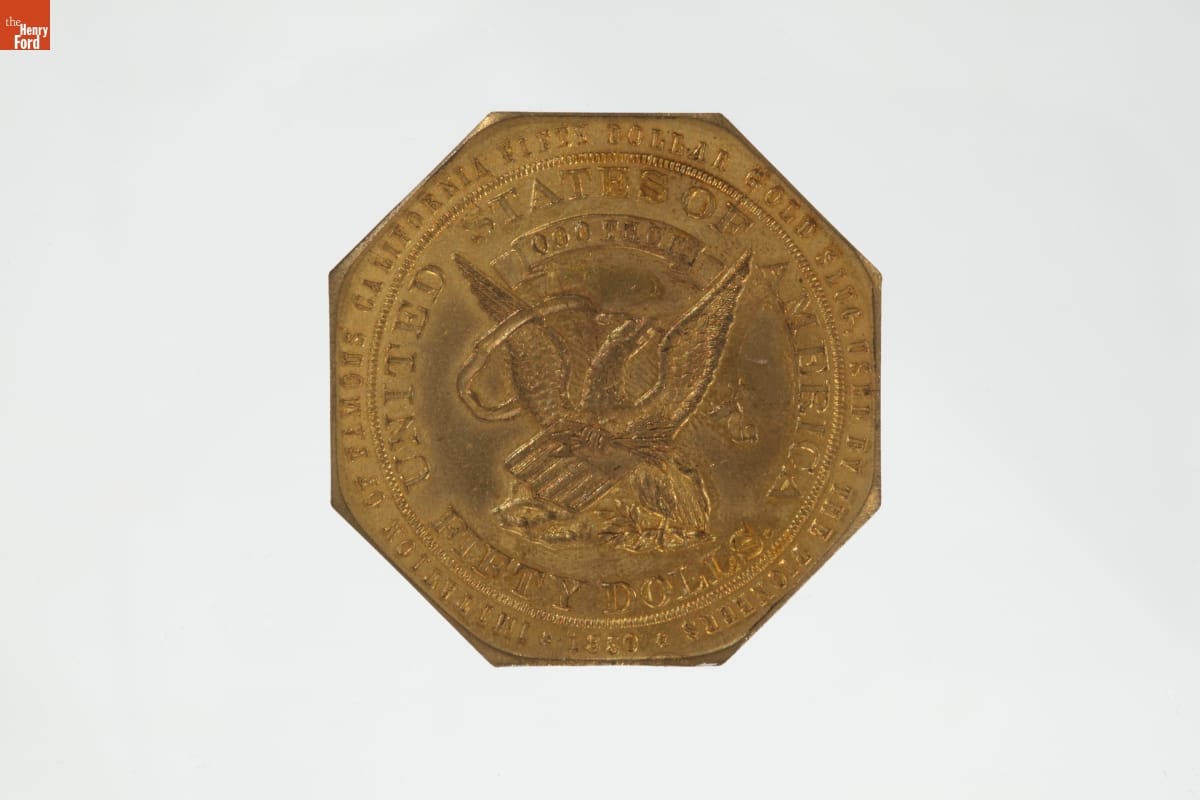
- Panama-Pacific International Exposition Souvenir Token Honoring California Gold Rush, 1915 - The Panama-Pacific International Exposition celebrated the 1914 completion of the Panama Canal and the 400th anniversary of the discovery of the Pacific Ocean. Nearly nineteen million people visited San Francisco, recently recovered from a devastating 1906 earthquake, during the fair in 1915. Many returned home with mementos, such as this souvenir token honoring the California Gold Rush of 1849.
- 1915
- Collections - Artifact
Panama-Pacific International Exposition Souvenir Token Honoring California Gold Rush, 1915
The Panama-Pacific International Exposition celebrated the 1914 completion of the Panama Canal and the 400th anniversary of the discovery of the Pacific Ocean. Nearly nineteen million people visited San Francisco, recently recovered from a devastating 1906 earthquake, during the fair in 1915. Many returned home with mementos, such as this souvenir token honoring the California Gold Rush of 1849.
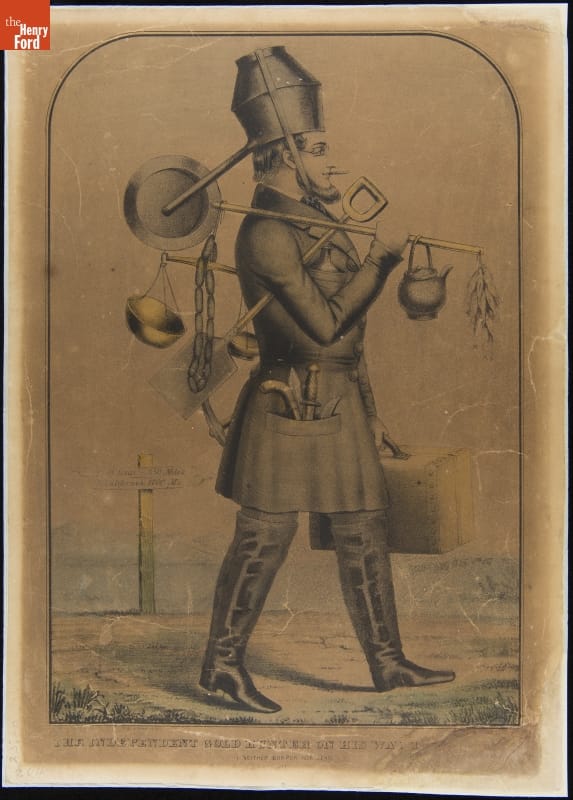
- "The Independent Gold Hunter on His Way to California, I Neither Borrow Nor Lend," circa 1850 -
- circa 1849
- Collections - Artifact
"The Independent Gold Hunter on His Way to California, I Neither Borrow Nor Lend," circa 1850
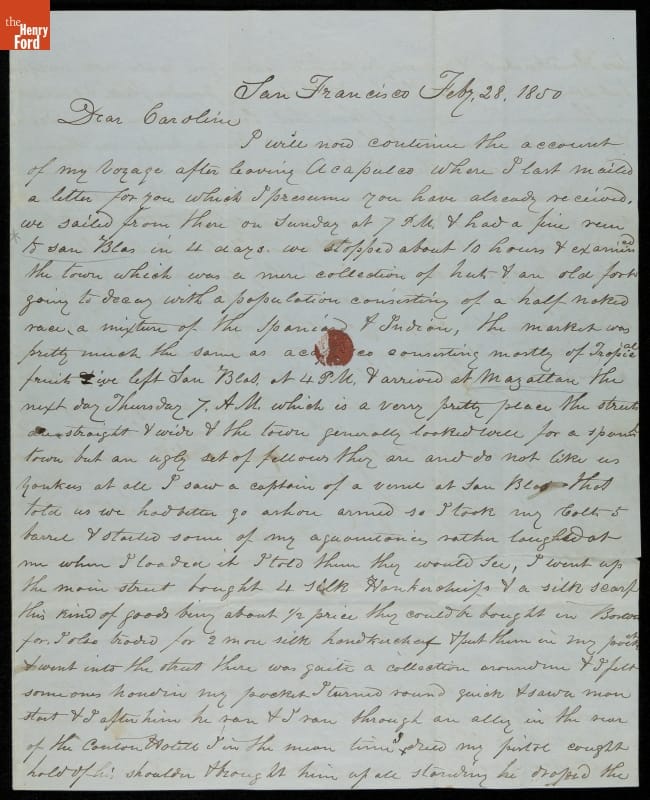
- Letter by California Gold Rush Venturer Charles A. Wood, Written from San Francisco, California, February 28, 1850 - Letter from Charles A. Wood to his wife, Caroline Wood in Neponsett, MA, dated San Francisco, February 28, 1850, describing his voyage from Acapulco, Mexico to San Francisco, via San Blas and Mazatlan, Mexico, and San Diego and Monterey, California. He describes the conditions of the towns named above, and tells about some of the incidents which happened to him and his fellow travelers during their brief stops in them. He is particularly taken with San Diego "consisting of two or three storehouses and about a dozen huts and the headquarters of a company of U.S. troops"; and Monterey which he "found . . . very pleasant . . . and well laid out" -- a town destined, he says, to grow into a place of great importance. He also tells of his arrival in San Francisco and describes the city, especially the markets, and tells of his first preparations for going into the gold fields.
- February 28, 1850
- Collections - Artifact
Letter by California Gold Rush Venturer Charles A. Wood, Written from San Francisco, California, February 28, 1850
Letter from Charles A. Wood to his wife, Caroline Wood in Neponsett, MA, dated San Francisco, February 28, 1850, describing his voyage from Acapulco, Mexico to San Francisco, via San Blas and Mazatlan, Mexico, and San Diego and Monterey, California. He describes the conditions of the towns named above, and tells about some of the incidents which happened to him and his fellow travelers during their brief stops in them. He is particularly taken with San Diego "consisting of two or three storehouses and about a dozen huts and the headquarters of a company of U.S. troops"; and Monterey which he "found . . . very pleasant . . . and well laid out" -- a town destined, he says, to grow into a place of great importance. He also tells of his arrival in San Francisco and describes the city, especially the markets, and tells of his first preparations for going into the gold fields.
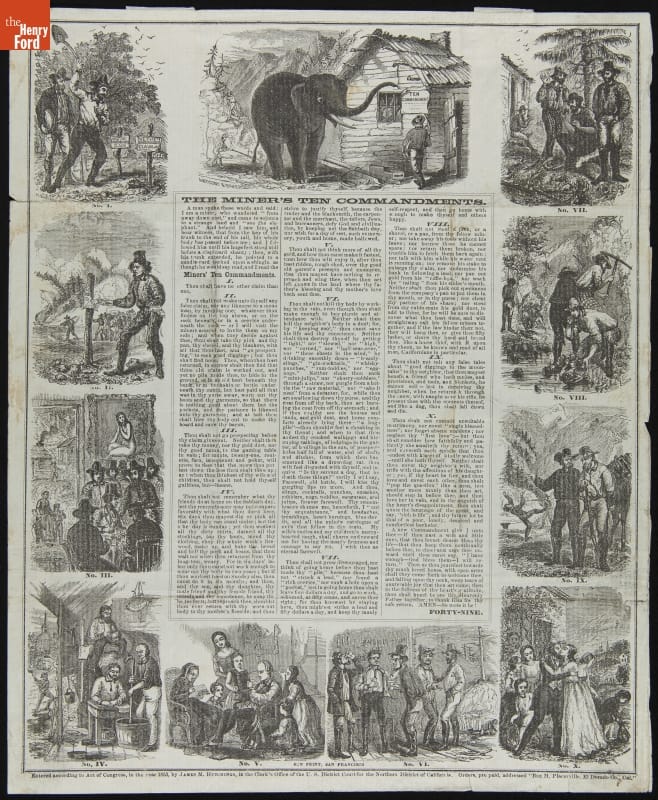
- The Miner's Ten Commandments, 1853 - Englishman James H. Hutchings immigrated to California during the gold rush. Finding success, he authored these rules to live by for miners also looking to make a fortune. Later, lured by stories of breathtaking scenery, Hutchings became one of the first settlers in the Yosemite Valley and would eventually advocate for the creation of Yosemite National Park.
- 1853
- Collections - Artifact
The Miner's Ten Commandments, 1853
Englishman James H. Hutchings immigrated to California during the gold rush. Finding success, he authored these rules to live by for miners also looking to make a fortune. Later, lured by stories of breathtaking scenery, Hutchings became one of the first settlers in the Yosemite Valley and would eventually advocate for the creation of Yosemite National Park.
- "Life," July-September 1950 - First published in 1883, <em> Life </em> magazine became America's first all-photographic weekly news magazine after being purchased and re-envisioned by publisher Henry Luce in 1936. Under Luce, its popularity boomed, and by the 1950s more than 22 million Americans read the publication. Articles in this July to September 1950 bound volume include Margaret Bourke-White's early coverage of apartheid in South Africa.

- July 1950-September 1950
- Collections - Artifact
"Life," July-September 1950
First published in 1883, Life magazine became America's first all-photographic weekly news magazine after being purchased and re-envisioned by publisher Henry Luce in 1936. Under Luce, its popularity boomed, and by the 1950s more than 22 million Americans read the publication. Articles in this July to September 1950 bound volume include Margaret Bourke-White's early coverage of apartheid in South Africa.
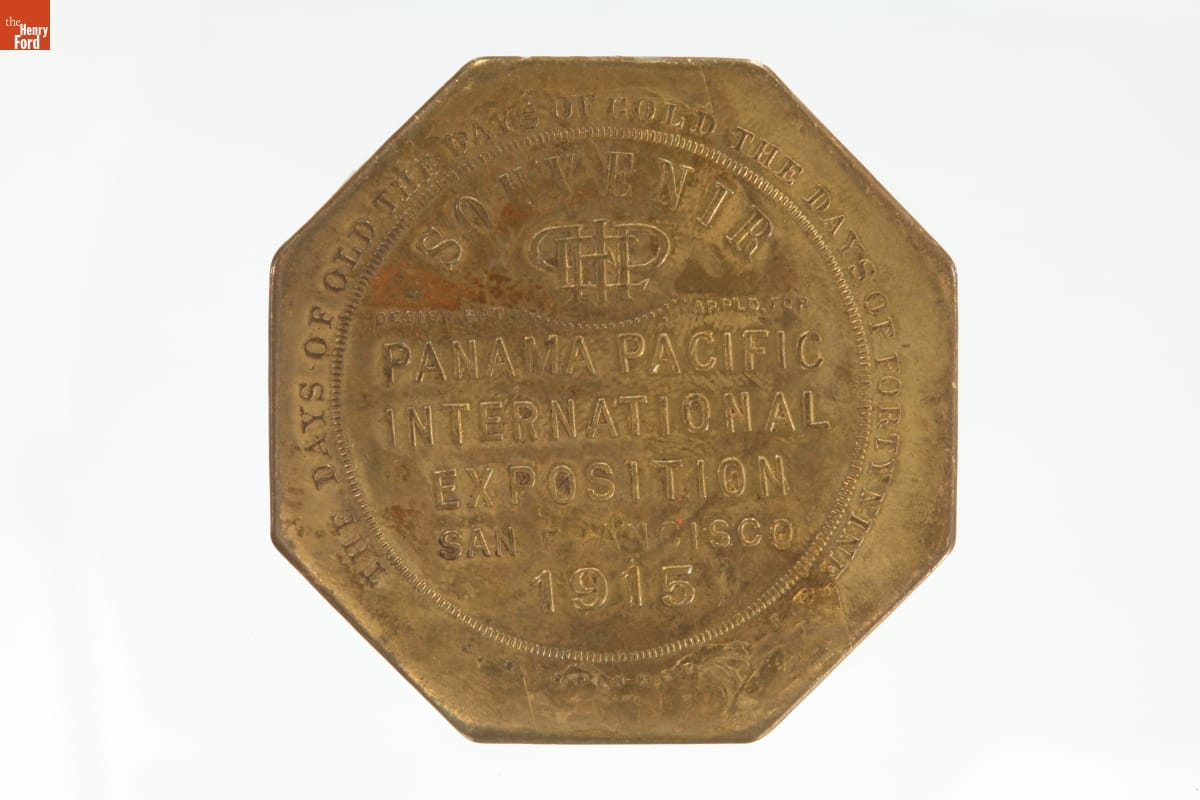
- Panama-Pacific International Exposition Souvenir Token Honoring California Gold Rush, 1915 - The Panama-Pacific International Exposition celebrated the 1914 completion of the Panama Canal and the 400th anniversary of the discovery of the Pacific Ocean. Nearly nineteen million people visited San Francisco, recently recovered from a devastating 1906 earthquake, during the fair in 1915. Many returned home with mementos, such as this souvenir token honoring the California Gold Rush of 1849.
- 1915
- Collections - Artifact
Panama-Pacific International Exposition Souvenir Token Honoring California Gold Rush, 1915
The Panama-Pacific International Exposition celebrated the 1914 completion of the Panama Canal and the 400th anniversary of the discovery of the Pacific Ocean. Nearly nineteen million people visited San Francisco, recently recovered from a devastating 1906 earthquake, during the fair in 1915. Many returned home with mementos, such as this souvenir token honoring the California Gold Rush of 1849.