
Search
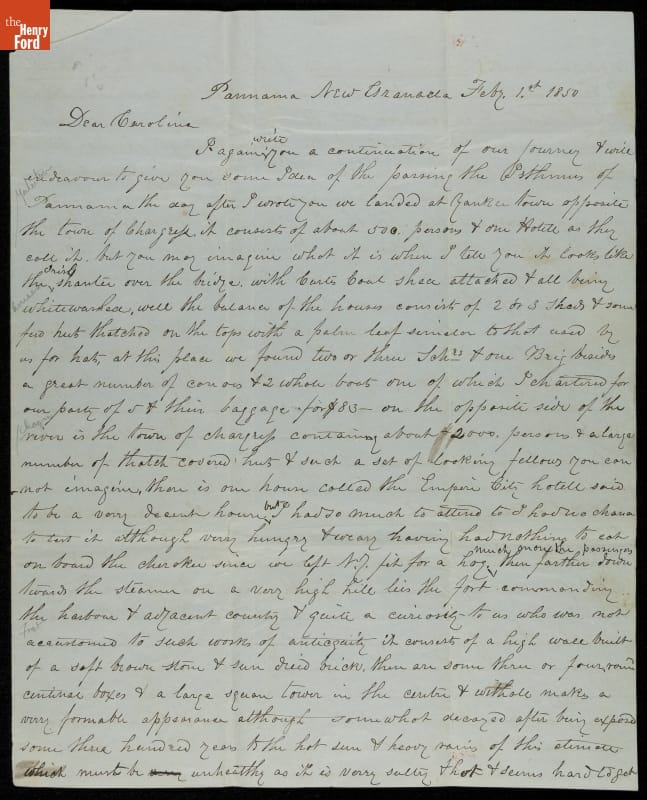
- Letter by California Gold Rush Venturer Charles A. Wood, Written from the Isthmus of Panama, February 1, 1850 - Letter from Charles A. Wood to his wife, Caroline Wood in Neponsett, MA, dated New Oranada, Panama, February 1, 1850, giving a description of his overland trip through the Isthmus of Panama from Yankeetown (Chagres) to New Oranada as part of his journey to California. He gives a detailed description of Yankeetown and Chagres; the vegetation and physical configuration of the jungles; the natives; the "ranchos" owned by Americans which were visited along the route; the conditions on board the steamship "Cherokee" which brought him to Panama; the inland town of Gorgona. Also included is one leaf on which is drawn a rough diagram of the settlement at Yankeetown and a picture of a "rancho" on the River Chagre "as seen from a canoe". On the reverse is a rough architectural drawings of a church and a courthouse.
- February 01, 1850
- Collections - Artifact
Letter by California Gold Rush Venturer Charles A. Wood, Written from the Isthmus of Panama, February 1, 1850
Letter from Charles A. Wood to his wife, Caroline Wood in Neponsett, MA, dated New Oranada, Panama, February 1, 1850, giving a description of his overland trip through the Isthmus of Panama from Yankeetown (Chagres) to New Oranada as part of his journey to California. He gives a detailed description of Yankeetown and Chagres; the vegetation and physical configuration of the jungles; the natives; the "ranchos" owned by Americans which were visited along the route; the conditions on board the steamship "Cherokee" which brought him to Panama; the inland town of Gorgona. Also included is one leaf on which is drawn a rough diagram of the settlement at Yankeetown and a picture of a "rancho" on the River Chagre "as seen from a canoe". On the reverse is a rough architectural drawings of a church and a courthouse.
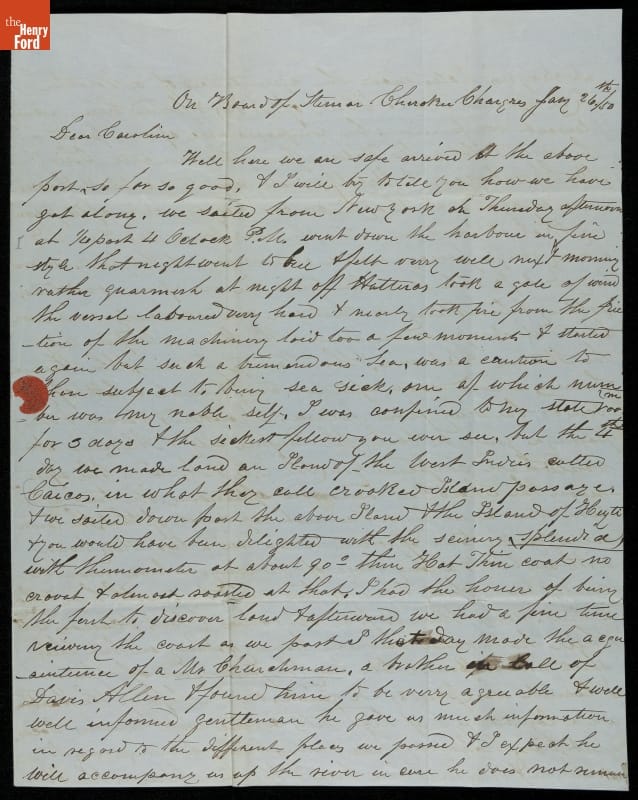
- Letter by California Gold Rush Venturer Charles A. Wood, Written from Chagres Port, Panama, January 26, 1850 - Letter from Charles A. Wood to his wife, Caroline Wood in Neponsett, Mass., dated on board the Steamship "Cherokee" at the port of Chargres (Chagres), Panama, January 26, 1850, concerning the first leg of his trip from New York to the California gold fields by way of Panama. He tells of the people he has met, including Mr. Chamberlain, Mr. Churchman, Mr. Wilder, David Allen (U.S. Consul to the Sandwich Islands), George Welles, and Chris Lilley, a Prizefighter, among others; the ships they have passed, including the Caicos, Empire City, Alabama, Falcon and Severn. He also describes in detail the port of Chagres and the conditions onboard the Cherokee, and gives the latest word from California (i.e., a fire at San Francisco and a murder at Stockton).
- January 26, 1850
- Collections - Artifact
Letter by California Gold Rush Venturer Charles A. Wood, Written from Chagres Port, Panama, January 26, 1850
Letter from Charles A. Wood to his wife, Caroline Wood in Neponsett, Mass., dated on board the Steamship "Cherokee" at the port of Chargres (Chagres), Panama, January 26, 1850, concerning the first leg of his trip from New York to the California gold fields by way of Panama. He tells of the people he has met, including Mr. Chamberlain, Mr. Churchman, Mr. Wilder, David Allen (U.S. Consul to the Sandwich Islands), George Welles, and Chris Lilley, a Prizefighter, among others; the ships they have passed, including the Caicos, Empire City, Alabama, Falcon and Severn. He also describes in detail the port of Chagres and the conditions onboard the Cherokee, and gives the latest word from California (i.e., a fire at San Francisco and a murder at Stockton).
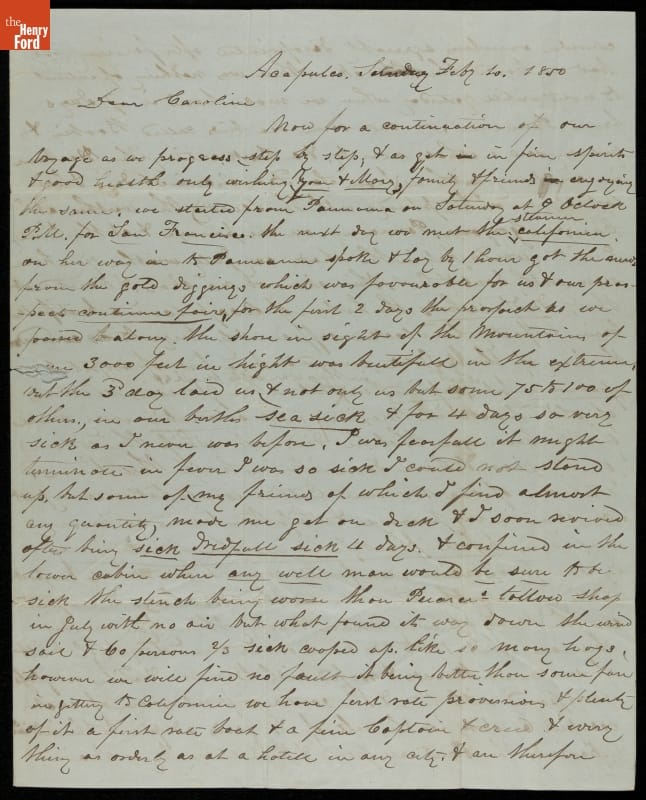
- Letter by California Gold Rush Venturer Charles A. Wood, Written from Acapulco, Mexico, February 10, 1850 - Letter from Charles A. Wood to his wife, Caroline Wood in Neponsett, Massachusetts, dated Acapulco, Mexico, February 10, 1850, describing his voyage from Panama to Acapulco undertaken as part of his journey to California. He describes in detail his voyage including the outbreak of seasickness among the passengers; gives the latest word from the California gold fields which was received from the steamship <em>California</em> out of the port of San Francisco; and describes the city of Acapulco.
- February 10, 1850
- Collections - Artifact
Letter by California Gold Rush Venturer Charles A. Wood, Written from Acapulco, Mexico, February 10, 1850
Letter from Charles A. Wood to his wife, Caroline Wood in Neponsett, Massachusetts, dated Acapulco, Mexico, February 10, 1850, describing his voyage from Panama to Acapulco undertaken as part of his journey to California. He describes in detail his voyage including the outbreak of seasickness among the passengers; gives the latest word from the California gold fields which was received from the steamship California out of the port of San Francisco; and describes the city of Acapulco.
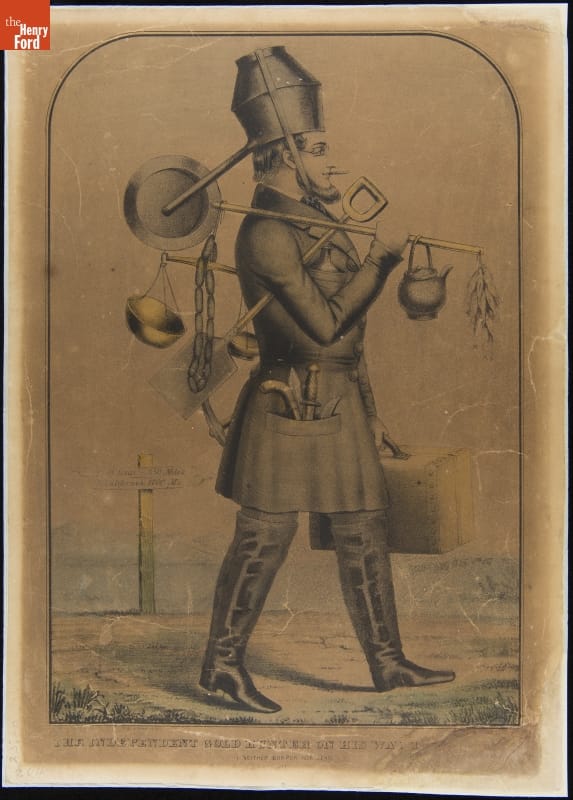
- "The Independent Gold Hunter on His Way to California, I Neither Borrow Nor Lend," circa 1850 -
- circa 1849
- Collections - Artifact
"The Independent Gold Hunter on His Way to California, I Neither Borrow Nor Lend," circa 1850
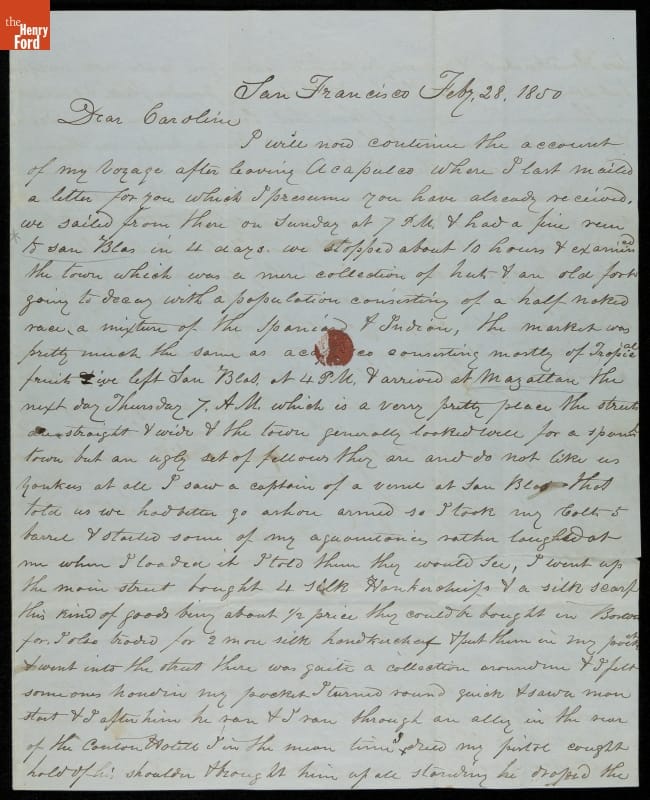
- Letter by California Gold Rush Venturer Charles A. Wood, Written from San Francisco, California, February 28, 1850 - Letter from Charles A. Wood to his wife, Caroline Wood in Neponsett, MA, dated San Francisco, February 28, 1850, describing his voyage from Acapulco, Mexico to San Francisco, via San Blas and Mazatlan, Mexico, and San Diego and Monterey, California. He describes the conditions of the towns named above, and tells about some of the incidents which happened to him and his fellow travelers during their brief stops in them. He is particularly taken with San Diego "consisting of two or three storehouses and about a dozen huts and the headquarters of a company of U.S. troops"; and Monterey which he "found . . . very pleasant . . . and well laid out" -- a town destined, he says, to grow into a place of great importance. He also tells of his arrival in San Francisco and describes the city, especially the markets, and tells of his first preparations for going into the gold fields.
- February 28, 1850
- Collections - Artifact
Letter by California Gold Rush Venturer Charles A. Wood, Written from San Francisco, California, February 28, 1850
Letter from Charles A. Wood to his wife, Caroline Wood in Neponsett, MA, dated San Francisco, February 28, 1850, describing his voyage from Acapulco, Mexico to San Francisco, via San Blas and Mazatlan, Mexico, and San Diego and Monterey, California. He describes the conditions of the towns named above, and tells about some of the incidents which happened to him and his fellow travelers during their brief stops in them. He is particularly taken with San Diego "consisting of two or three storehouses and about a dozen huts and the headquarters of a company of U.S. troops"; and Monterey which he "found . . . very pleasant . . . and well laid out" -- a town destined, he says, to grow into a place of great importance. He also tells of his arrival in San Francisco and describes the city, especially the markets, and tells of his first preparations for going into the gold fields.
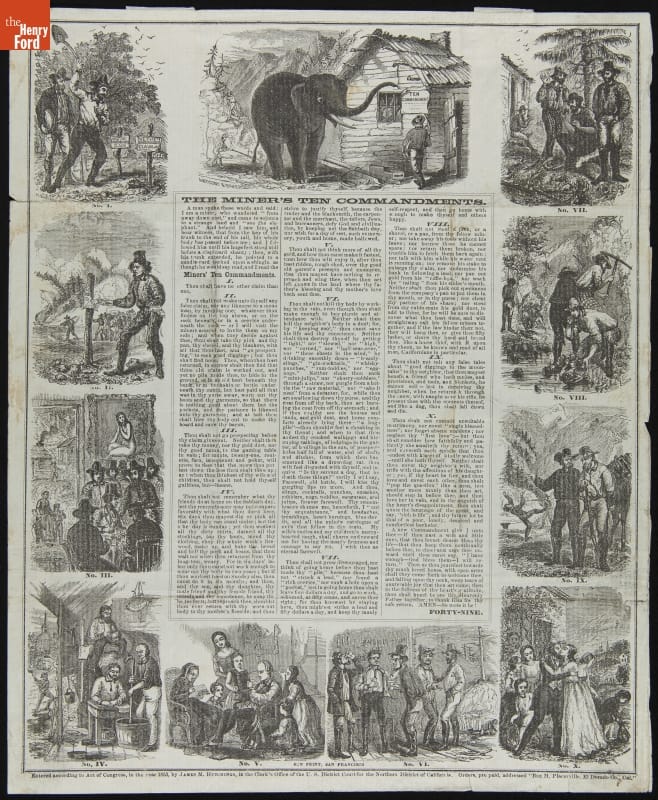
- The Miner's Ten Commandments, 1853 - Englishman James H. Hutchings immigrated to California during the gold rush. Finding success, he authored these rules to live by for miners also looking to make a fortune. Later, lured by stories of breathtaking scenery, Hutchings became one of the first settlers in the Yosemite Valley and would eventually advocate for the creation of Yosemite National Park.
- 1853
- Collections - Artifact
The Miner's Ten Commandments, 1853
Englishman James H. Hutchings immigrated to California during the gold rush. Finding success, he authored these rules to live by for miners also looking to make a fortune. Later, lured by stories of breathtaking scenery, Hutchings became one of the first settlers in the Yosemite Valley and would eventually advocate for the creation of Yosemite National Park.
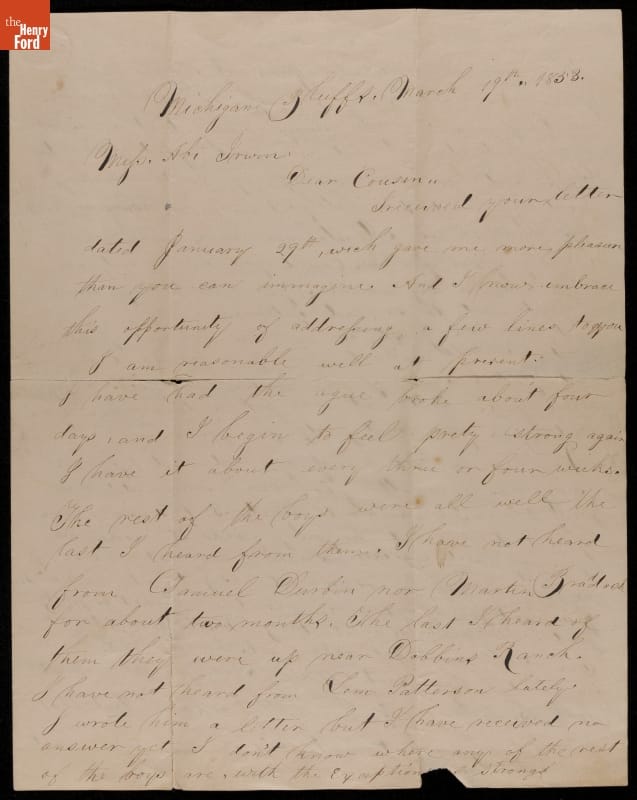
- Letter from Samuel Popham concerning the California Gold Rush, 1853 -
- March 19, 1853
- Collections - Artifact
Letter from Samuel Popham concerning the California Gold Rush, 1853
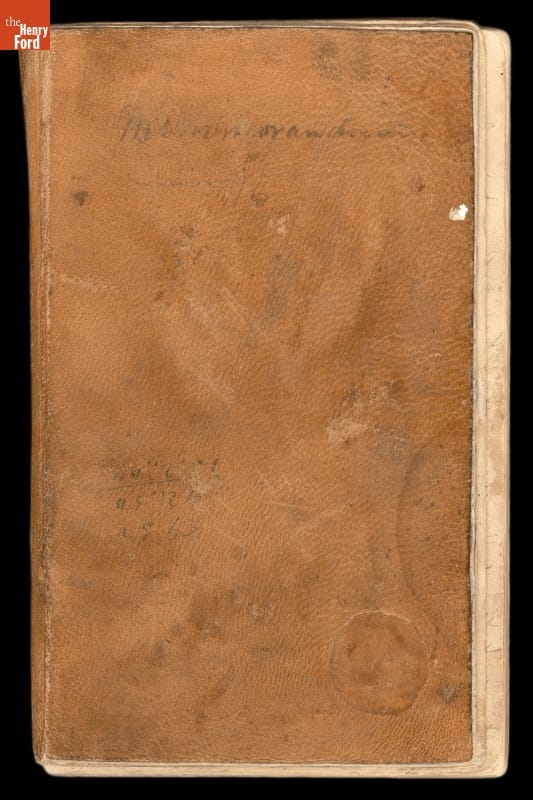
- Diary of a Young Man Journeying Westward across America to California, 1860-1862 -
- 1860-1862
- Collections - Artifact
Diary of a Young Man Journeying Westward across America to California, 1860-1862
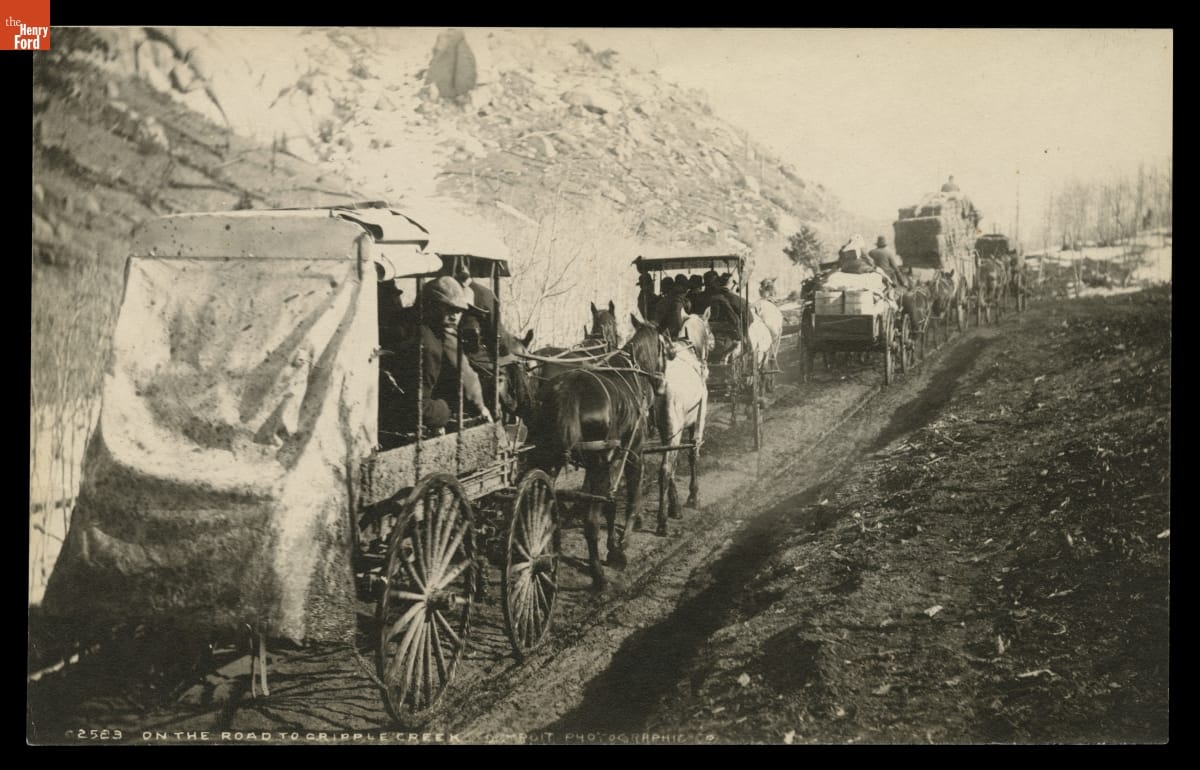
- On the Road to Cripple Creek, Colorado, circa 1885 - From 1895 to 1924, the Detroit Publishing Company was one of the major image publishers in the world. The company's wide-ranging stock of original photographs documented life and landscapes from across the nation and around the globe. From the tens of thousands of negatives, the company created prints, postcards, lantern slides, panoramas, and other merchandise for sale to educators, businessmen, advertisers, homeowners and travelers.
- circa 1885
- Collections - Artifact
On the Road to Cripple Creek, Colorado, circa 1885
From 1895 to 1924, the Detroit Publishing Company was one of the major image publishers in the world. The company's wide-ranging stock of original photographs documented life and landscapes from across the nation and around the globe. From the tens of thousands of negatives, the company created prints, postcards, lantern slides, panoramas, and other merchandise for sale to educators, businessmen, advertisers, homeowners and travelers.
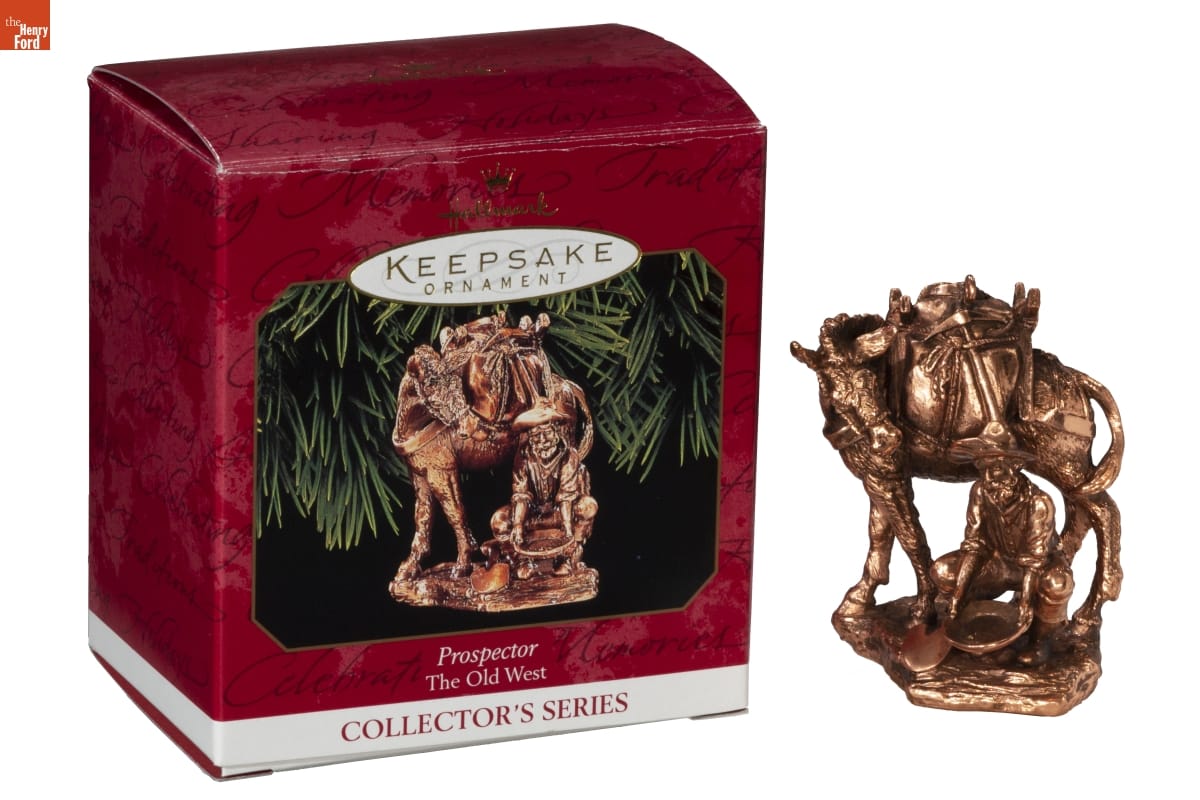
- Hallmark "The Old West Series: Prospector" Christmas Ornament, 1999 - Already known for greeting cards, Hallmark introduced a line of Christmas ornaments in 1973. The company's annual release of an increasing array of ornaments revolutionized Christmas decorating, appealing to customers' interest in marking memories and milestones as well as expressing one's personality and unique tastes.
- 1999
- Collections - Artifact
Hallmark "The Old West Series: Prospector" Christmas Ornament, 1999
Already known for greeting cards, Hallmark introduced a line of Christmas ornaments in 1973. The company's annual release of an increasing array of ornaments revolutionized Christmas decorating, appealing to customers' interest in marking memories and milestones as well as expressing one's personality and unique tastes.