
Search
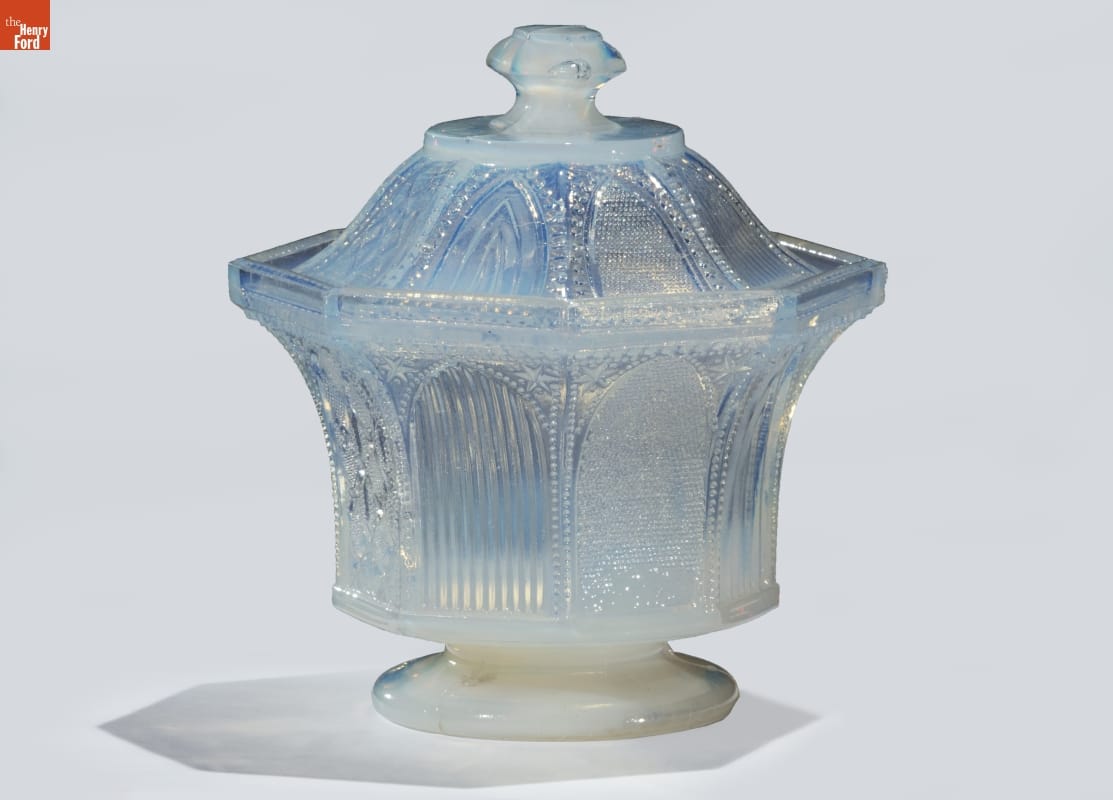
- Sugar Bowl, 1835-1850 - Mechanically pressed glass was an innovation in glass history, making decorative, "patterned" glass available to a broad audience. One of the earliest types of pressed glass, dating to the 1830s is known as "Lacy Glass". Complex stippled patterns were developed to help hide technical defects caused by early presses, when the glass gather was cut off and dropped into a mold.
- 1835-1850
- Collections - Artifact
Sugar Bowl, 1835-1850
Mechanically pressed glass was an innovation in glass history, making decorative, "patterned" glass available to a broad audience. One of the earliest types of pressed glass, dating to the 1830s is known as "Lacy Glass". Complex stippled patterns were developed to help hide technical defects caused by early presses, when the glass gather was cut off and dropped into a mold.
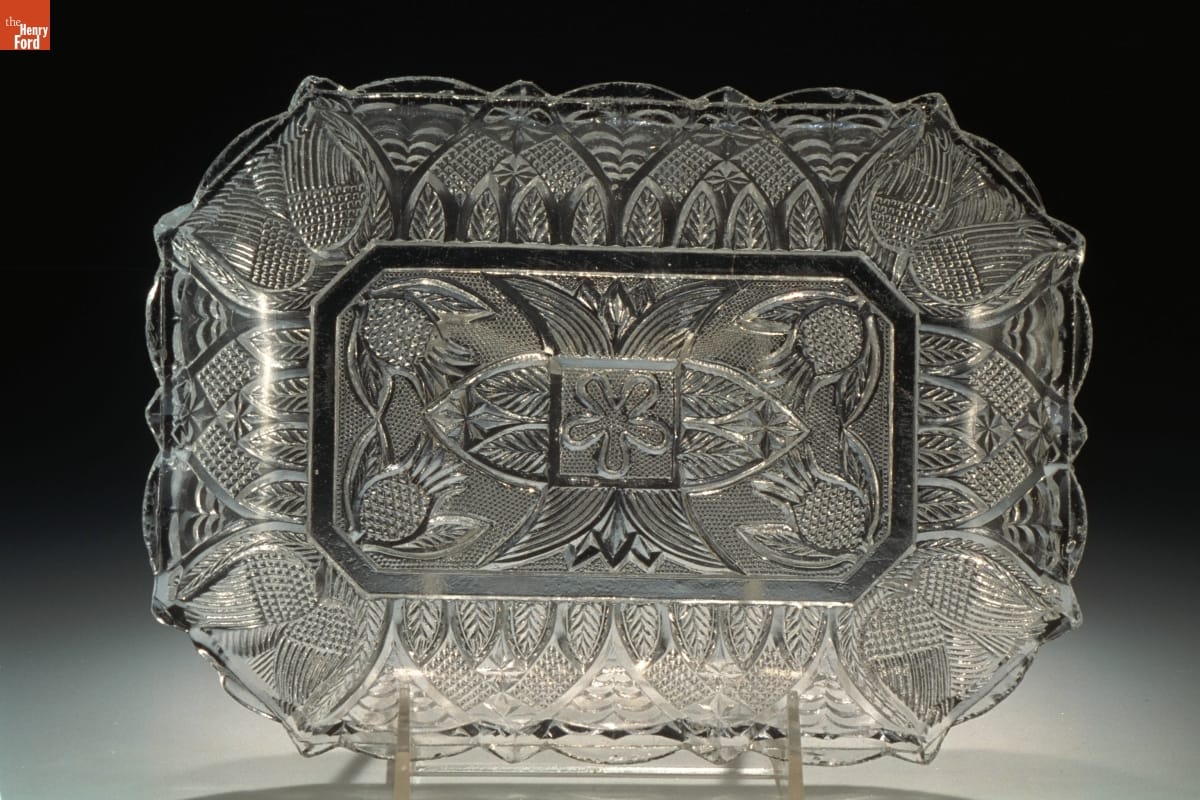
- Dish, 1835-1850 - Mechanically pressed glass was an innovation in glass history, making decorative, "patterned" glass available to a broad audience. One of the earliest types of pressed glass, dating to the 1830s is known as "Lacy Glass". Complex stippled patterns were developed to help hide technical defects caused by early presses, when the glass gather was cut off and dropped into a mold.
- 1835-1850
- Collections - Artifact
Dish, 1835-1850
Mechanically pressed glass was an innovation in glass history, making decorative, "patterned" glass available to a broad audience. One of the earliest types of pressed glass, dating to the 1830s is known as "Lacy Glass". Complex stippled patterns were developed to help hide technical defects caused by early presses, when the glass gather was cut off and dropped into a mold.
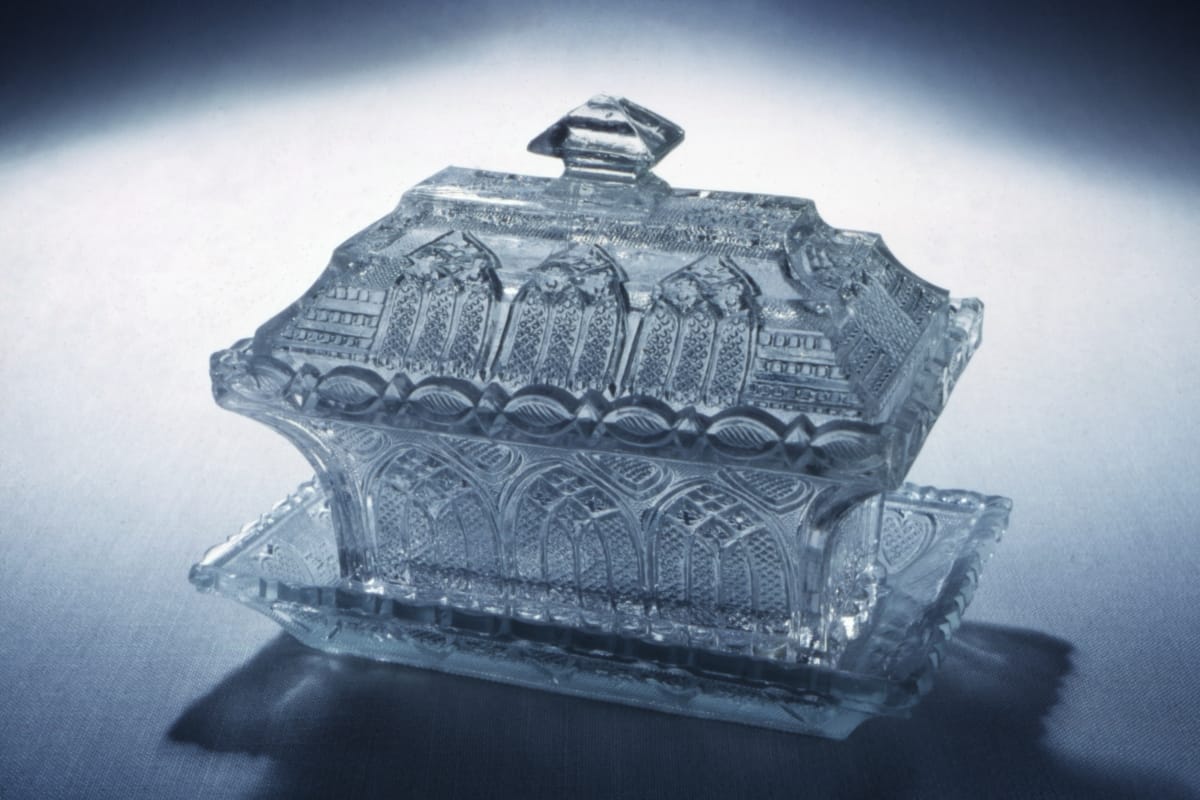
- Casket, 1830-1840 - This mold-made, pressed glass box was intended to hold a middle class lady's jewelry. It was made in the lacy glass technique, in which decoration covers the entire surface of the mold, and is raised against a background of small dots, to create a stippled appearance on the surface. The dots catch any ambient light, making the surface shimmer.
- 1830-1840
- Collections - Artifact
Casket, 1830-1840
This mold-made, pressed glass box was intended to hold a middle class lady's jewelry. It was made in the lacy glass technique, in which decoration covers the entire surface of the mold, and is raised against a background of small dots, to create a stippled appearance on the surface. The dots catch any ambient light, making the surface shimmer.
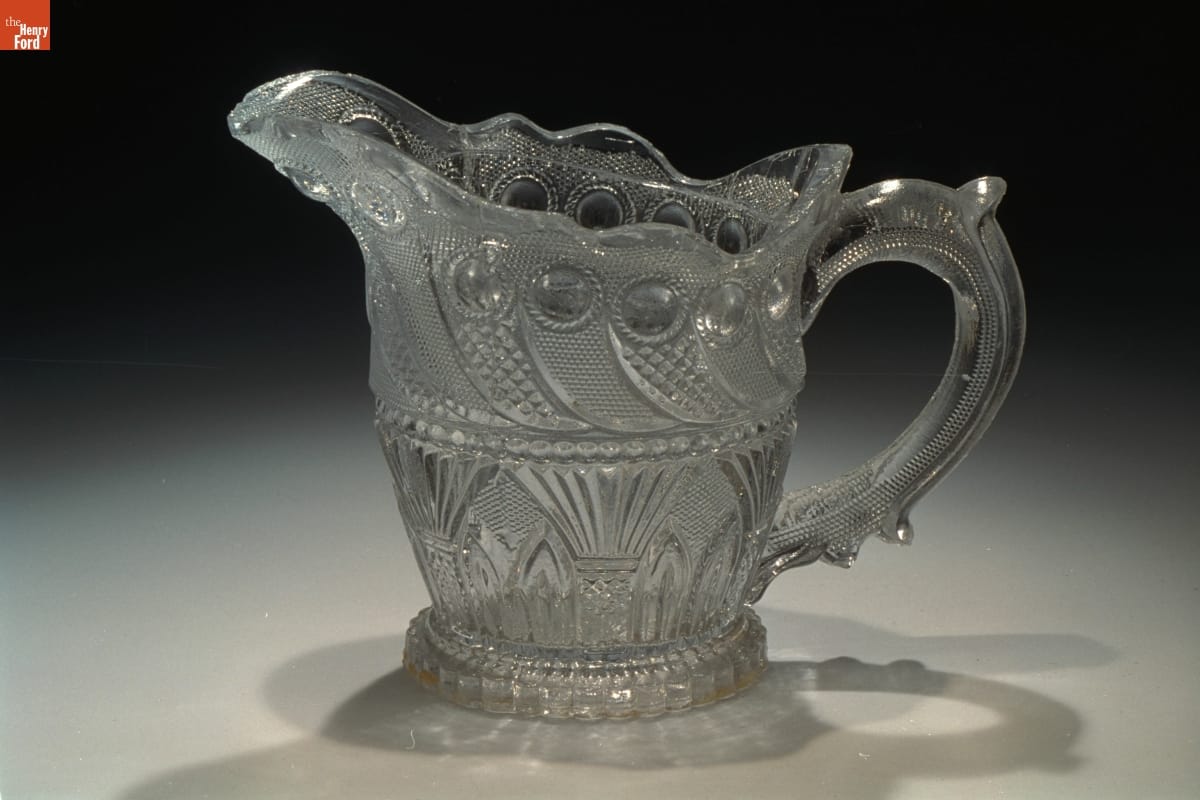
- Creamer, 1830-1840 - Mechanically pressed glass was an innovation in glass history, making decorative, "patterned" glass available to a broad audience. One of the earliest types of pressed glass, dating to the 1830s is known as "Lacy Glass". Complex stippled patterns were developed to help hide technical defects caused by early presses, when the glass gather was cut off and dropped into a mold.
- 1830-1840
- Collections - Artifact
Creamer, 1830-1840
Mechanically pressed glass was an innovation in glass history, making decorative, "patterned" glass available to a broad audience. One of the earliest types of pressed glass, dating to the 1830s is known as "Lacy Glass". Complex stippled patterns were developed to help hide technical defects caused by early presses, when the glass gather was cut off and dropped into a mold.
- Celery Vase, 1830-1840 -
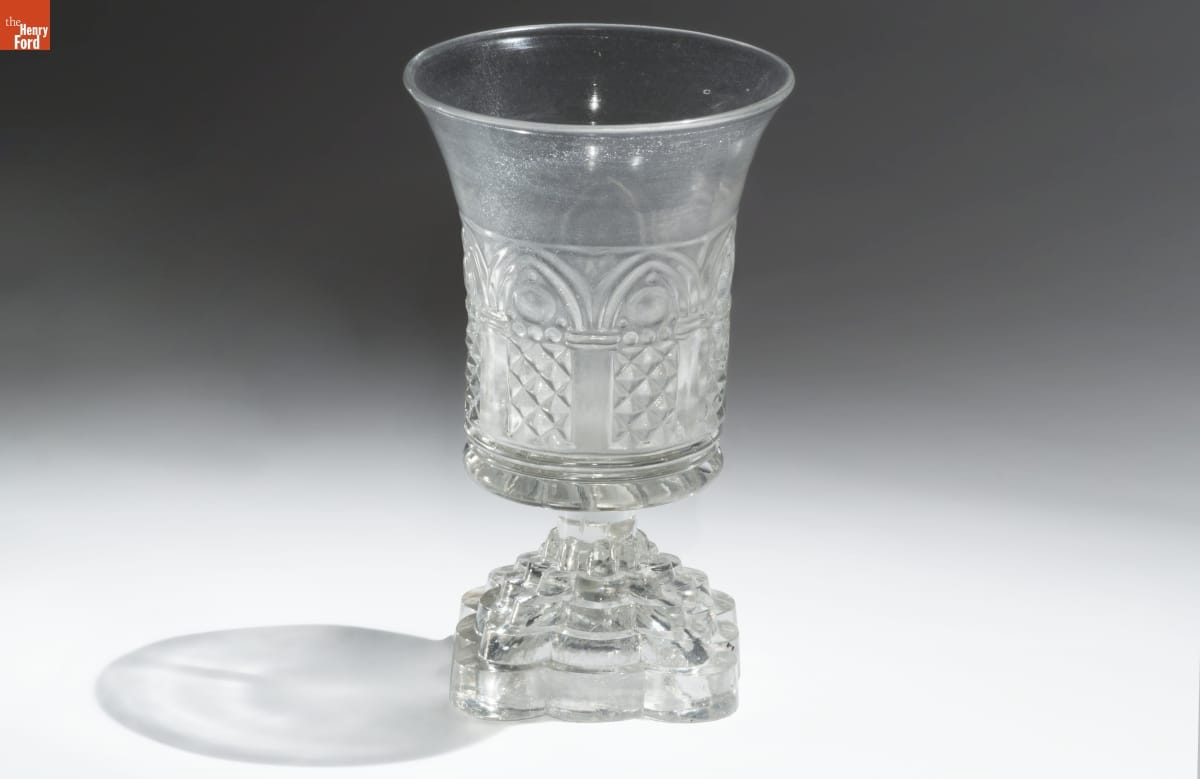
- 1830-1840
- Collections - Artifact
Celery Vase, 1830-1840
- Dish, 1825-1850 - Mechanically pressed glass was an innovation in glass history, making decorative, "patterned" glass available to a broad audience. One of the earliest types of pressed glass, dating to the 1830s is known as "Lacy Glass". Complex stippled patterns were developed to help hide technical defects caused by early presses, when the glass gather was cut off and dropped into a mold.
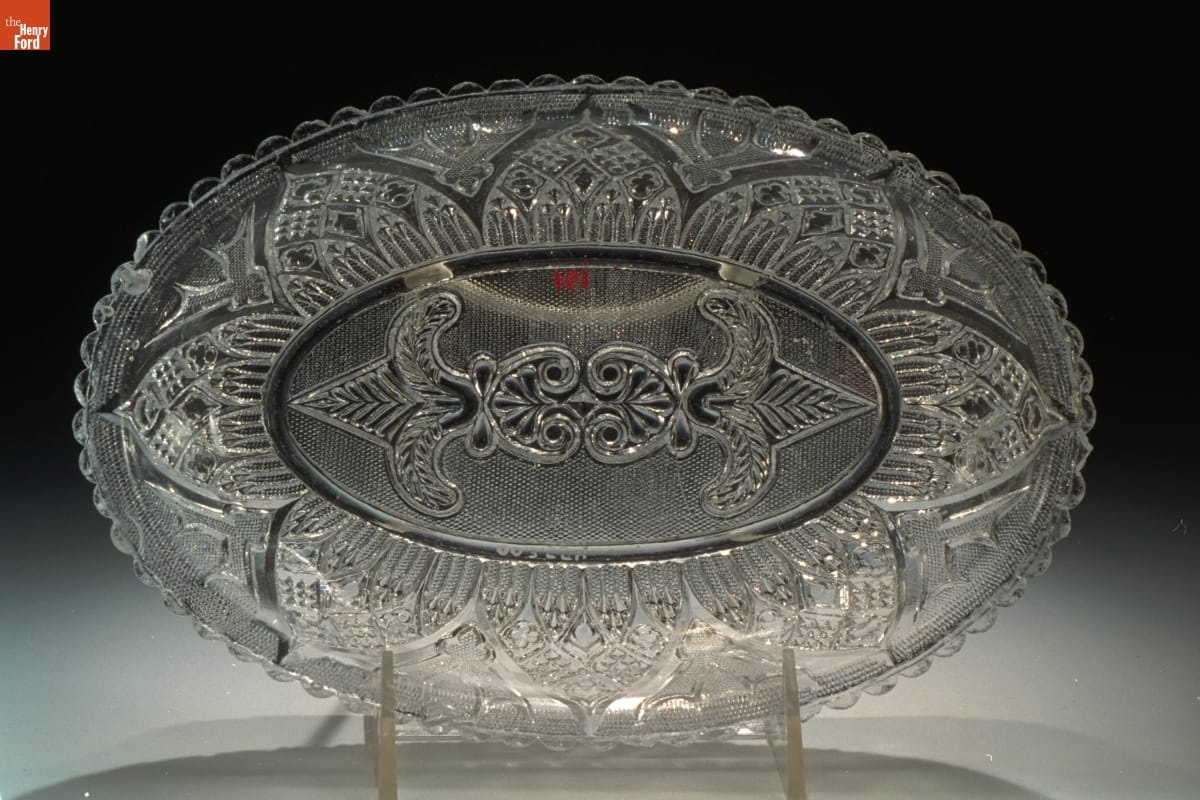
- 1825-1850
- Collections - Artifact
Dish, 1825-1850
Mechanically pressed glass was an innovation in glass history, making decorative, "patterned" glass available to a broad audience. One of the earliest types of pressed glass, dating to the 1830s is known as "Lacy Glass". Complex stippled patterns were developed to help hide technical defects caused by early presses, when the glass gather was cut off and dropped into a mold.
- Sugar Bowl, 1835-1850 - Mechanically pressed glass was an innovation in glass history, making decorative, "patterned" glass available to a broad audience. One of the earliest types of pressed glass, dating to the 1830s is known as "Lacy Glass". Complex stippled patterns were developed to help hide technical defects caused by early presses, when the glass gather was cut off and dropped into a mold.
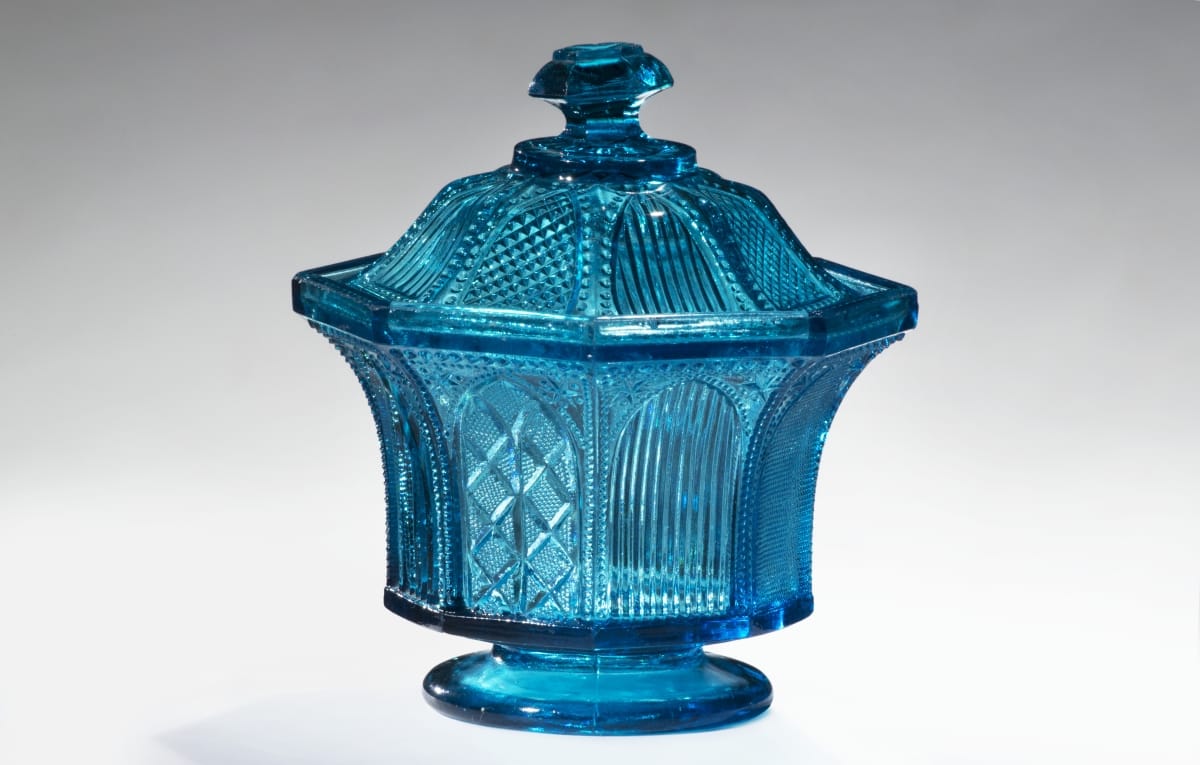
- 1835-1850
- Collections - Artifact
Sugar Bowl, 1835-1850
Mechanically pressed glass was an innovation in glass history, making decorative, "patterned" glass available to a broad audience. One of the earliest types of pressed glass, dating to the 1830s is known as "Lacy Glass". Complex stippled patterns were developed to help hide technical defects caused by early presses, when the glass gather was cut off and dropped into a mold.