
Search
- Massachusetts State House, Where Amelia Earhart and the "Friendship" Crew Were Honored, July 9, 1928 - After her successful June 17-18, 1928, transatlantic flight, Amelia Earhart embarked on a publicity tour arranged by her publicist (and eventual husband) George Putnam. She visited New York City, Boston, Pittsburgh, Toledo, and Chicago on the whirlwind trip. While in Boston, Earhart's home at the time, she received greetings and commendations from the city's mayor and the Massachusetts governor.
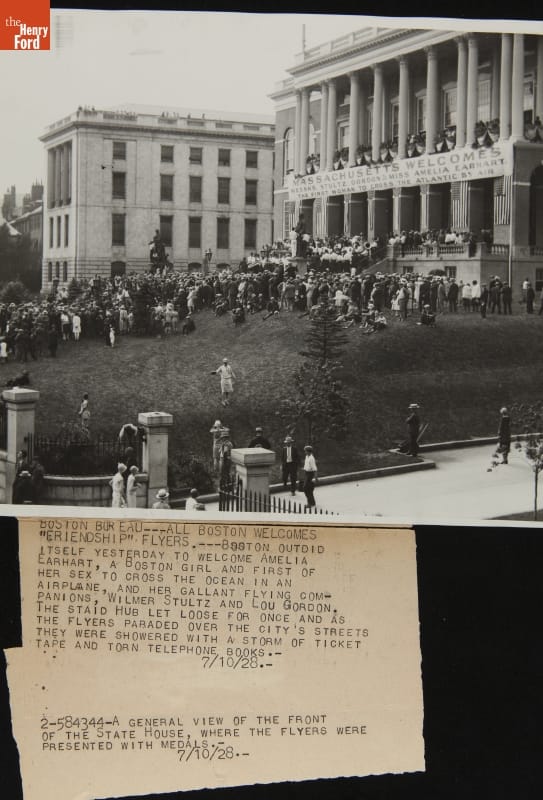
- July 09, 1928
- Collections - Artifact
Massachusetts State House, Where Amelia Earhart and the "Friendship" Crew Were Honored, July 9, 1928
After her successful June 17-18, 1928, transatlantic flight, Amelia Earhart embarked on a publicity tour arranged by her publicist (and eventual husband) George Putnam. She visited New York City, Boston, Pittsburgh, Toledo, and Chicago on the whirlwind trip. While in Boston, Earhart's home at the time, she received greetings and commendations from the city's mayor and the Massachusetts governor.
- "The Old State House," Vandalia, Illinois, 1937-1939 Postcard - By the early 20th century, the real Abraham Lincoln had long since faded from people's memory. A new generation of Americans had come of age who only knew the stories, the myths, the legends. This generation transformed Lincoln the man into Lincoln the hero. The State of Illinois preserved several Lincoln-related sites, including the Old State House where Lincoln served as a legislator in the 1830s.
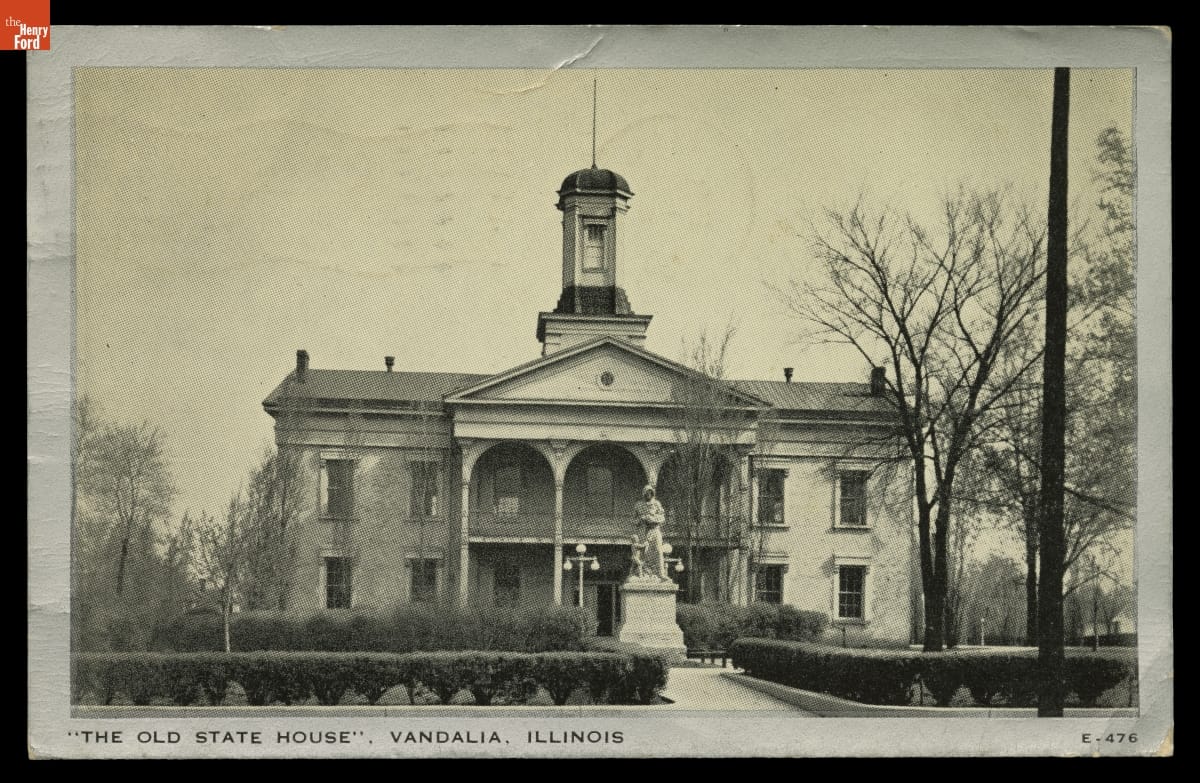
- 1937-1939
- Collections - Artifact
"The Old State House," Vandalia, Illinois, 1937-1939 Postcard
By the early 20th century, the real Abraham Lincoln had long since faded from people's memory. A new generation of Americans had come of age who only knew the stories, the myths, the legends. This generation transformed Lincoln the man into Lincoln the hero. The State of Illinois preserved several Lincoln-related sites, including the Old State House where Lincoln served as a legislator in the 1830s.
- The U.S. Patent Office, circa 1869 - In 1836, the U.S. Congress authorized the building of a new patent office. The white marble neoclassical building, located in the center of Washington, D.C., was to be a general repository of American inventions and improvements in machinery and manufactures. During the Civil War, the three-story building served as a makeshift hospital and as site of President Abraham Lincoln's second Inaugural Ball.

- circa 1869
- Collections - Artifact
The U.S. Patent Office, circa 1869
In 1836, the U.S. Congress authorized the building of a new patent office. The white marble neoclassical building, located in the center of Washington, D.C., was to be a general repository of American inventions and improvements in machinery and manufactures. During the Civil War, the three-story building served as a makeshift hospital and as site of President Abraham Lincoln's second Inaugural Ball.
- Park Street, Toward State House, Boston, Massachusetts, circa 1905 - As one of the world's major image publishers from 1895 to 1924, the Detroit Publishing Company had a wide-ranging stock of original photographs. This view down Boston's Park Street shows the 23-karat-gold-covered dome of the Massachusetts State House. The State House faces Boston Common, the oldest public park in the United States (dating from 1634).
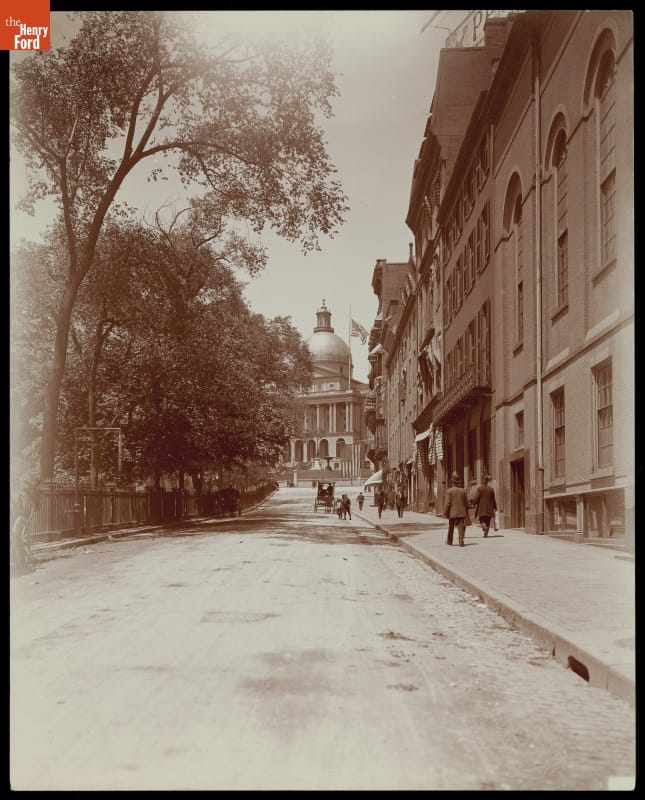
- circa 1905
- Collections - Artifact
Park Street, Toward State House, Boston, Massachusetts, circa 1905
As one of the world's major image publishers from 1895 to 1924, the Detroit Publishing Company had a wide-ranging stock of original photographs. This view down Boston's Park Street shows the 23-karat-gold-covered dome of the Massachusetts State House. The State House faces Boston Common, the oldest public park in the United States (dating from 1634).
- U. S. Capitol Building, Washington, D.C., 1902 - From 1895 to 1924, the Detroit Publishing Company was one of the major image publishers in the world. The company had a wide-ranging stock of original photographs, including many scenes from around the world. These colorful prints were reproduced for ads, purchased to decorate homes and offices, bought as souvenirs, and used as teaching tools in schools and libraries.
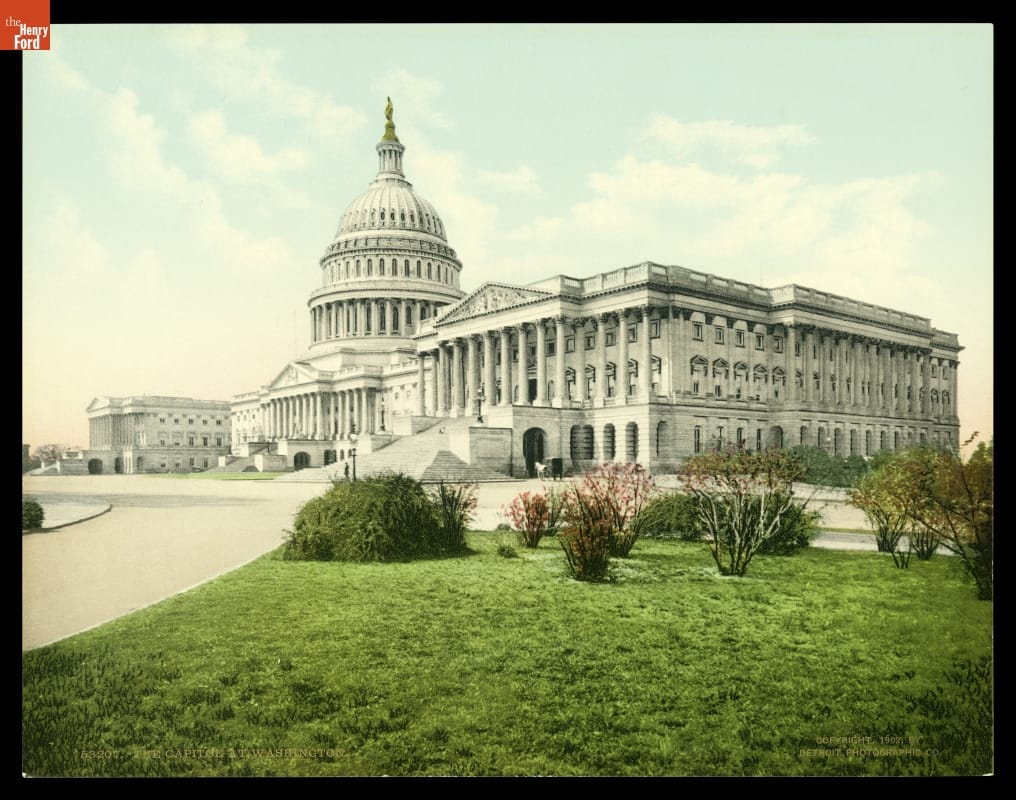
- 1902
- Collections - Artifact
U. S. Capitol Building, Washington, D.C., 1902
From 1895 to 1924, the Detroit Publishing Company was one of the major image publishers in the world. The company had a wide-ranging stock of original photographs, including many scenes from around the world. These colorful prints were reproduced for ads, purchased to decorate homes and offices, bought as souvenirs, and used as teaching tools in schools and libraries.
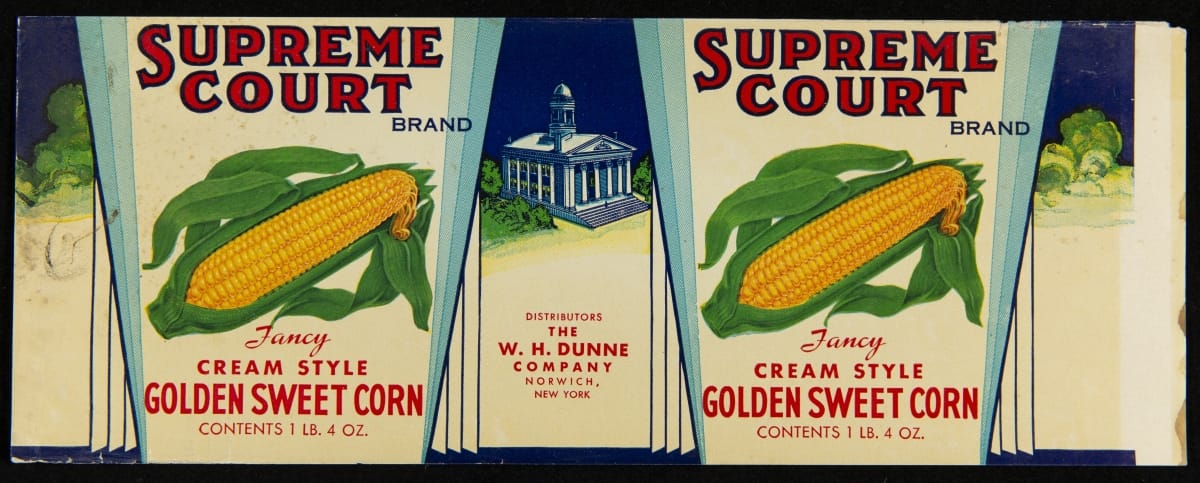
- Can Label, "Supreme Court Brand Cream Style Golden Sweet Corn," 1899-1928 - Manufacturers of similar products sought ways to make their company's goods stand out on store shelves. Attractive labels, like this design for Supreme Court Brand Cream Style Golden Sweet Corn, helped catch the attention of potential customers -- hopefully encouraging them to purchase the company's product rather than that of a competitor.
- 1899-1928
- Collections - Artifact
Can Label, "Supreme Court Brand Cream Style Golden Sweet Corn," 1899-1928
Manufacturers of similar products sought ways to make their company's goods stand out on store shelves. Attractive labels, like this design for Supreme Court Brand Cream Style Golden Sweet Corn, helped catch the attention of potential customers -- hopefully encouraging them to purchase the company's product rather than that of a competitor.
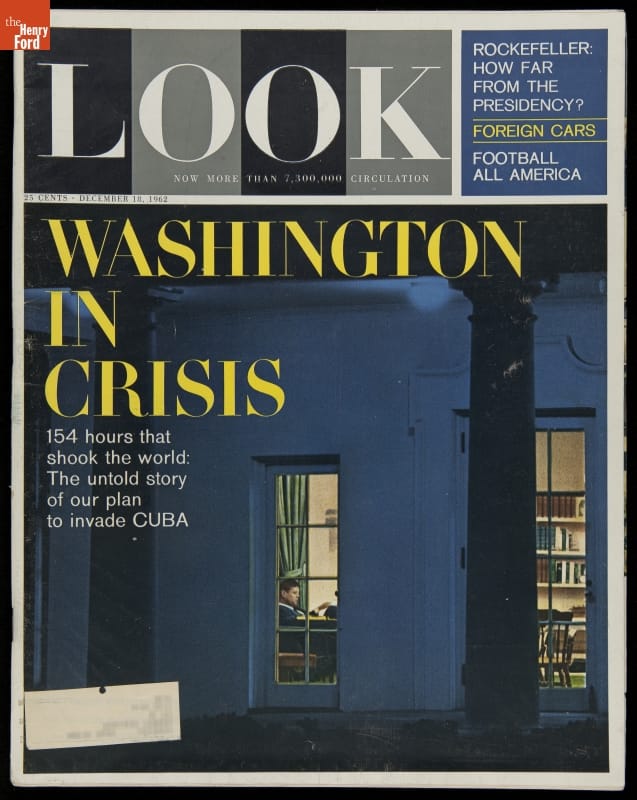
- Look Magazine for December 18, 1962, "Washington in Crisis" - <EM>Look</EM> magazine was one of the popular documenters of American life at the time of John F. Kennedy's presidency. This cover feature details the "untold story" of President Kennedy's cancelled plan to invade Cuba, a tense 154-hour period during which "the world faced the possibility of nuclear conflict."
- December 18, 1962
- Collections - Artifact
Look Magazine for December 18, 1962, "Washington in Crisis"
Look magazine was one of the popular documenters of American life at the time of John F. Kennedy's presidency. This cover feature details the "untold story" of President Kennedy's cancelled plan to invade Cuba, a tense 154-hour period during which "the world faced the possibility of nuclear conflict."
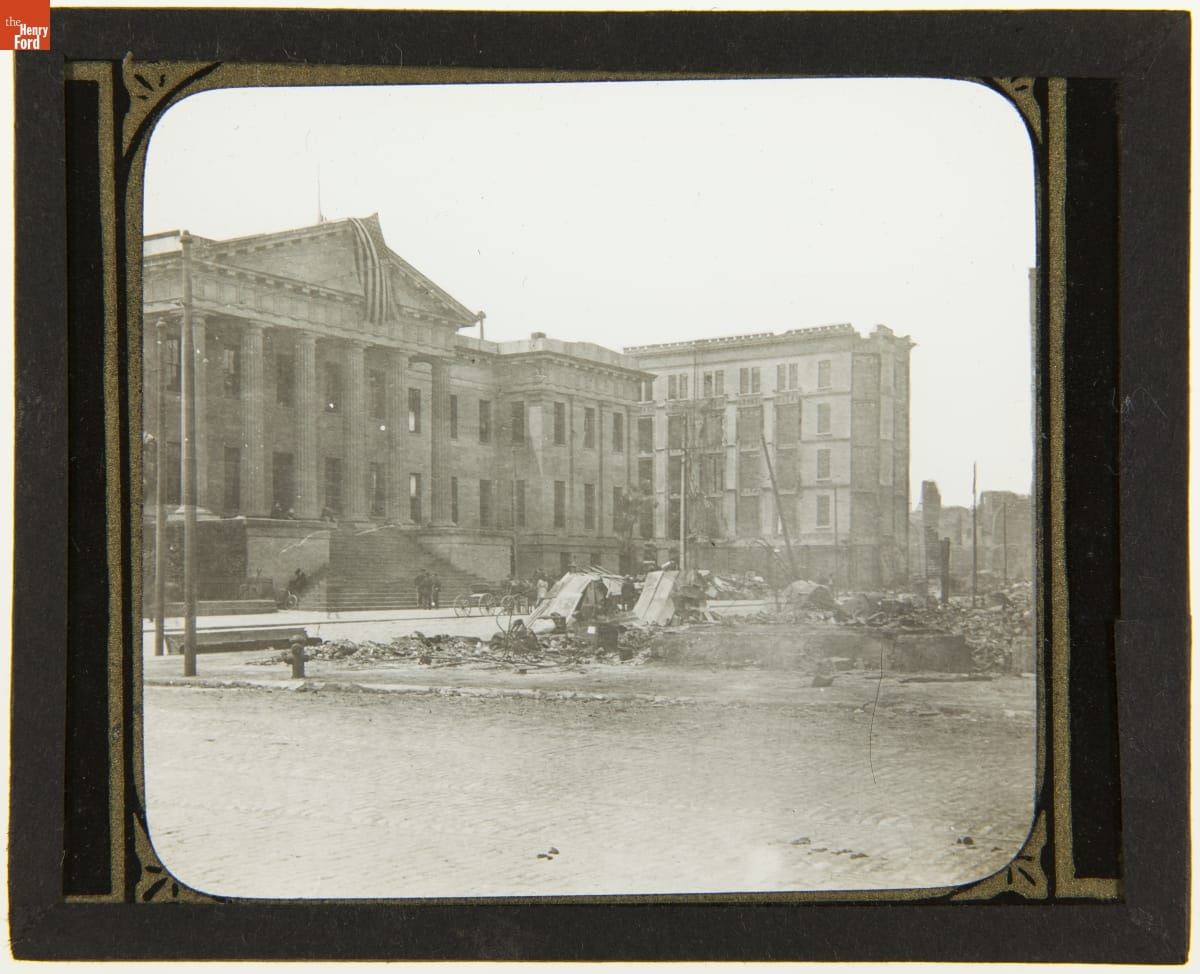
- U.S. Mint Untouched by Fire after the San Francisco Earthquake, 1906 - On April 18, 1906, San Francisco and the northern California coast were hit by a major earthquake with an estimated magnitude of 7.9. Following the earthquake, ruptured gas lines fed fires that destroyed some 25,000 buildings in the city. More than 3,000 people were killed and San Francisco was devastated. This lantern slide documents some of the damage.
- 1906
- Collections - Artifact
U.S. Mint Untouched by Fire after the San Francisco Earthquake, 1906
On April 18, 1906, San Francisco and the northern California coast were hit by a major earthquake with an estimated magnitude of 7.9. Following the earthquake, ruptured gas lines fed fires that destroyed some 25,000 buildings in the city. More than 3,000 people were killed and San Francisco was devastated. This lantern slide documents some of the damage.
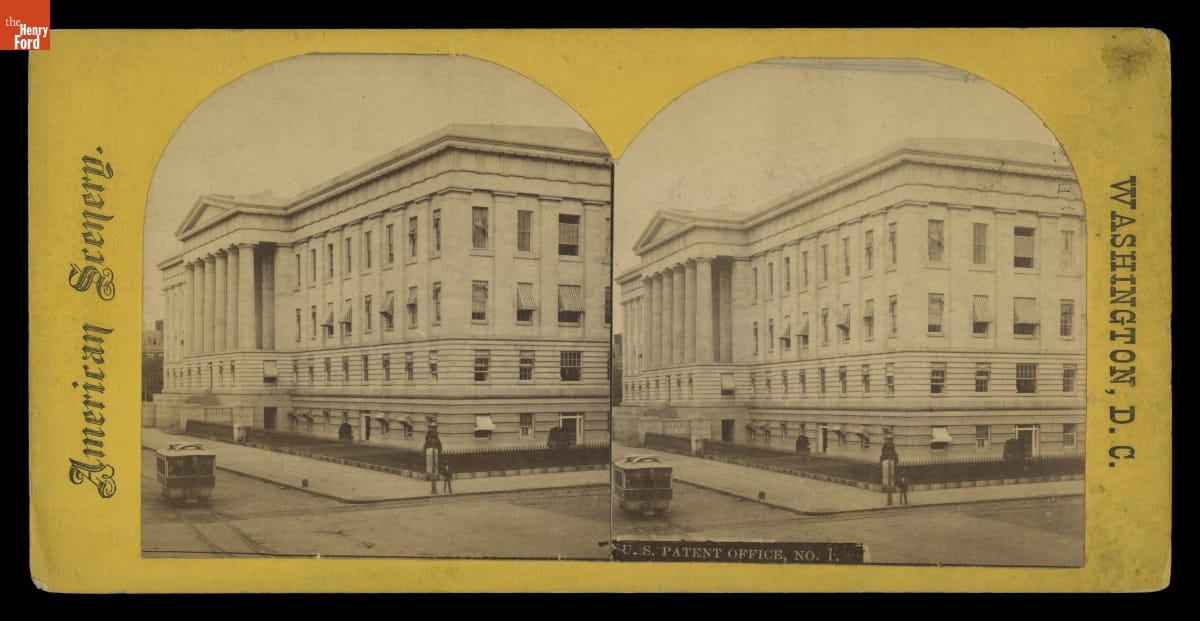
- The U.S. Patent Office, Washington, D.C., 1880-1900 - In 1836, the U.S. Congress authorized the building of a new patent office. The white marble neoclassical building, located in the center of Washington, D.C., was to be a general repository of American inventions and improvements in machinery and manufactures. Inside the three-story building, government officials displayed thousands of patent models along with other national treasures.
- 1880-1900
- Collections - Artifact
The U.S. Patent Office, Washington, D.C., 1880-1900
In 1836, the U.S. Congress authorized the building of a new patent office. The white marble neoclassical building, located in the center of Washington, D.C., was to be a general repository of American inventions and improvements in machinery and manufactures. Inside the three-story building, government officials displayed thousands of patent models along with other national treasures.
- The U.S. Patent Office, Washington, D.C., 1880-1900 - In 1836, the U.S. Congress authorized the building of a new patent office. The white marble neoclassical building, located in the center of Washington, D.C., was to be a general repository of American inventions and improvements in machinery and manufactures. Inside the three-story building, government officials displayed thousands of patent models along with other national treasures.
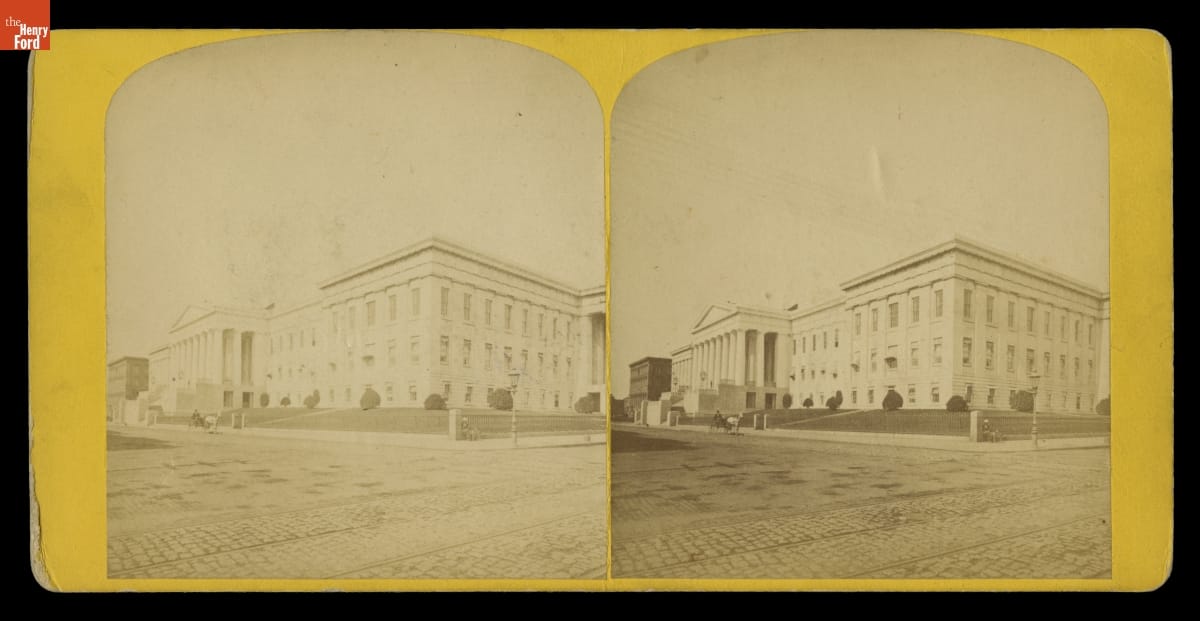
- 1880-1900
- Collections - Artifact
The U.S. Patent Office, Washington, D.C., 1880-1900
In 1836, the U.S. Congress authorized the building of a new patent office. The white marble neoclassical building, located in the center of Washington, D.C., was to be a general repository of American inventions and improvements in machinery and manufactures. Inside the three-story building, government officials displayed thousands of patent models along with other national treasures.