
Search
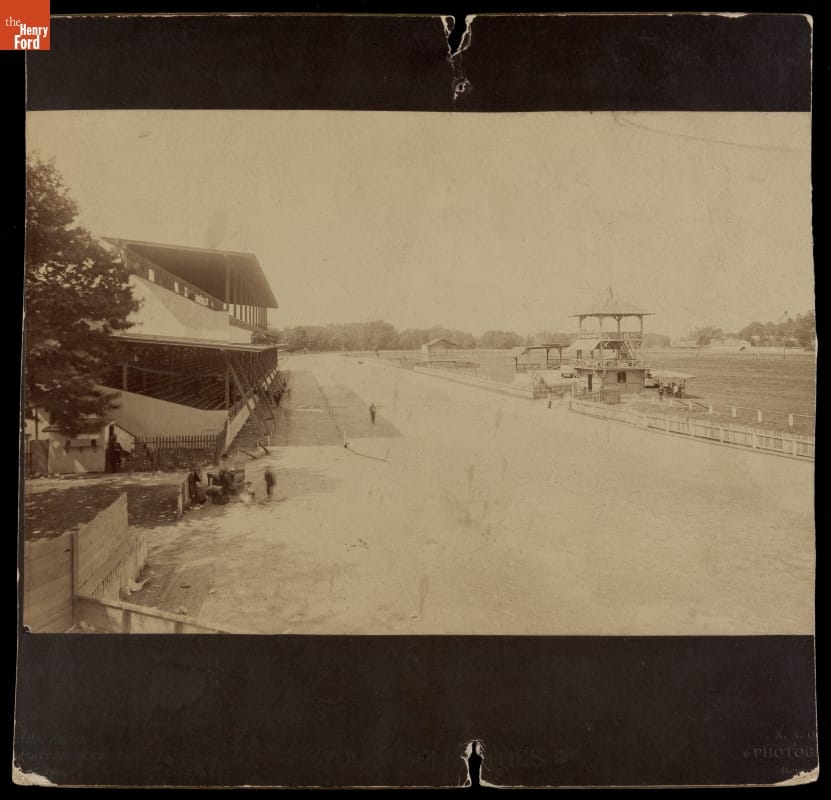
- Hampden Park Racetrack, Springfield, Massachusetts, circa 1885 - American bicycle racing flourished in the late 19th century. Horse tracks could be converted for bicycle racing -- a shorter oval was created while still using the stretch in front of the grandstands. This photograph shows the Hampden Park race track in Springfield, Massachusetts. On the back is a drawing showing the bicycle oval in relation to the horse racing track.
- circa 1885
- Collections - Artifact
Hampden Park Racetrack, Springfield, Massachusetts, circa 1885
American bicycle racing flourished in the late 19th century. Horse tracks could be converted for bicycle racing -- a shorter oval was created while still using the stretch in front of the grandstands. This photograph shows the Hampden Park race track in Springfield, Massachusetts. On the back is a drawing showing the bicycle oval in relation to the horse racing track.
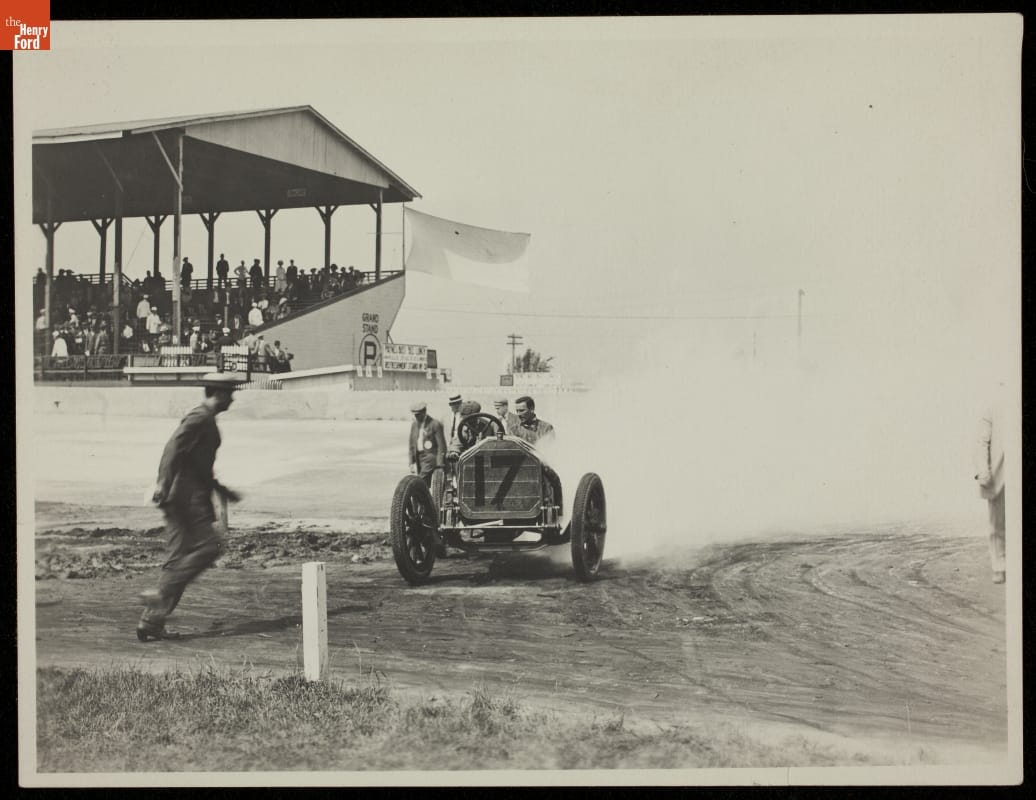
- Buick Race Car Driven by Charles Basle in the 1911 Indianapolis 500 Race, Photograph Taken by Henry Ford - Indianapolis Motor Speedway opened in 1909 with multiple races each season. In 1911, track promoters decided instead to host just one spectacular event each Memorial Day. The inaugural Indianapolis 500-Mile Race, with $27,500 in prizes, drew 40 qualifying cars and 80,000 spectators. Ray Harroun won with the yellow #32 Marmon Wasp, and the Indianapolis 500 became an American institution.
- 1911
- Collections - Artifact
Buick Race Car Driven by Charles Basle in the 1911 Indianapolis 500 Race, Photograph Taken by Henry Ford
Indianapolis Motor Speedway opened in 1909 with multiple races each season. In 1911, track promoters decided instead to host just one spectacular event each Memorial Day. The inaugural Indianapolis 500-Mile Race, with $27,500 in prizes, drew 40 qualifying cars and 80,000 spectators. Ray Harroun won with the yellow #32 Marmon Wasp, and the Indianapolis 500 became an American institution.
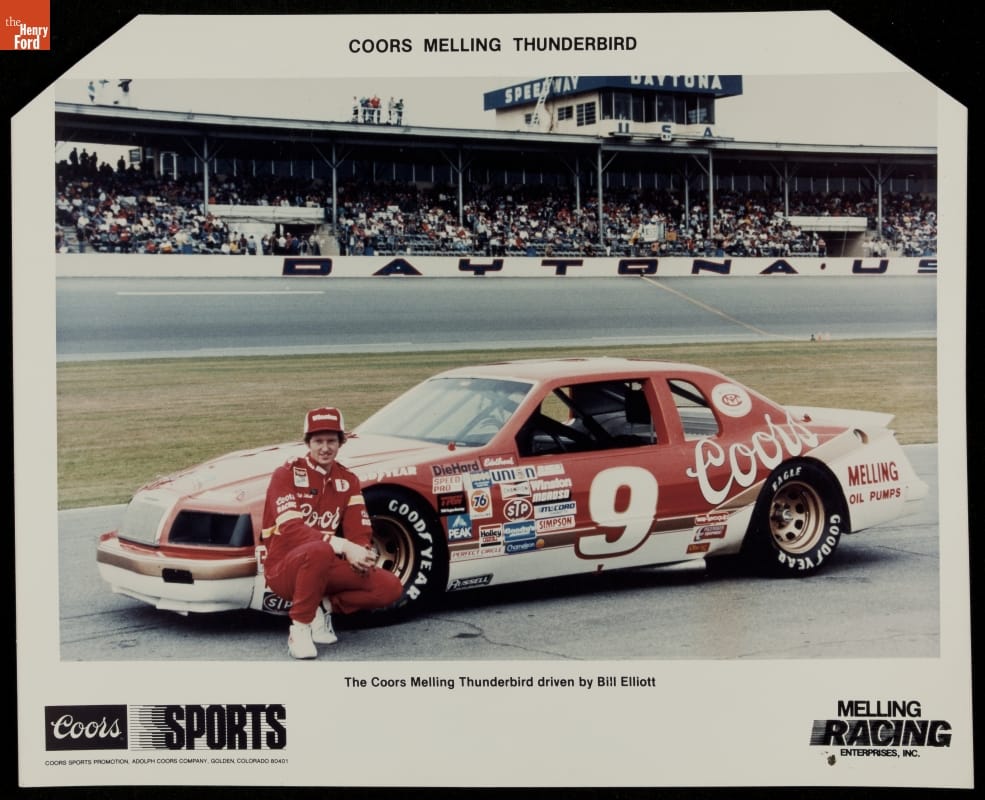
- Coors Melling Thunderbird Being Driven by Bill Elliott, 1985 - Bill Elliott made his NASCAR Cup Series debut in 1976 and took his first checkered flag in 1983. Elliott's 1985 season was particularly memorable. He won 11 races, including the Daytona 500, and he earned pole position in five consecutive events. That September, Elliott made the cover of <EM>Sports Illustrated</EM> magazine -- a rare feat for a NASCAR driver at the time.
- 1985
- Collections - Artifact
Coors Melling Thunderbird Being Driven by Bill Elliott, 1985
Bill Elliott made his NASCAR Cup Series debut in 1976 and took his first checkered flag in 1983. Elliott's 1985 season was particularly memorable. He won 11 races, including the Daytona 500, and he earned pole position in five consecutive events. That September, Elliott made the cover of Sports Illustrated magazine -- a rare feat for a NASCAR driver at the time.
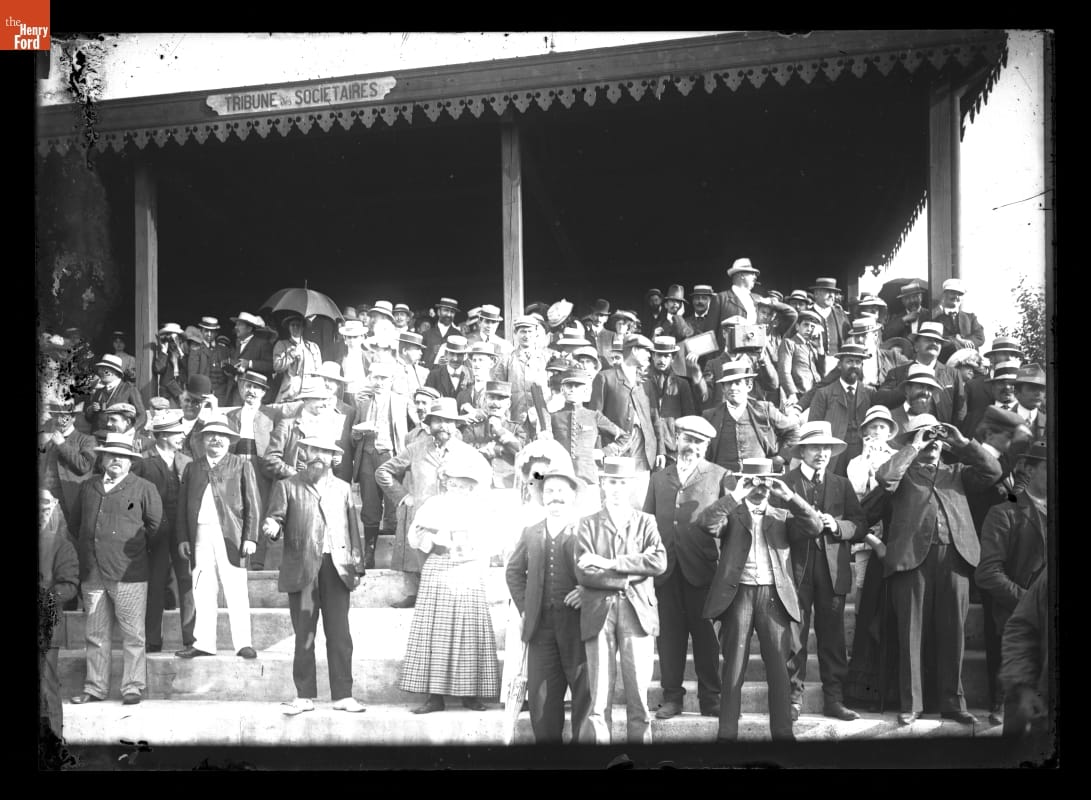
- Crowd Awaiting Demonstration Flights by Wilbur Wright, Hunaudieres Race Course, Le Mans, France, August 1908 - Worried that rivals would steal their yet-to-be patented designs, the Wright brothers stopped flying publicly for nearly three years in late 1905. People began to doubt that the Wrights had ever flown. Skeptics were silenced in August 1908 when Wilbur Wright made a series of spectacular demonstration flights at Le Mans, France, achieving more distance and control than anyone else.
- August 01, 1908
- Collections - Artifact
Crowd Awaiting Demonstration Flights by Wilbur Wright, Hunaudieres Race Course, Le Mans, France, August 1908
Worried that rivals would steal their yet-to-be patented designs, the Wright brothers stopped flying publicly for nearly three years in late 1905. People began to doubt that the Wrights had ever flown. Skeptics were silenced in August 1908 when Wilbur Wright made a series of spectacular demonstration flights at Le Mans, France, achieving more distance and control than anyone else.
- Crowd Gathered for Wilbur Wright Demonstration Flight at Hunaudieres Race Course, Le Mans, France, August 1908 - Wilbur Wright's many demonstration flights in France in 1908 and 1909 were spectacular events. Some in Europe had begun to doubt the Wrights' achievement at Kill Devil Hills. When Wilbur took to the skies over Le Mans, demonstrating more control and achieving more distance than his rivals, crowds flocked to watch his apparent mastery of the airplane. The skeptics were silenced.
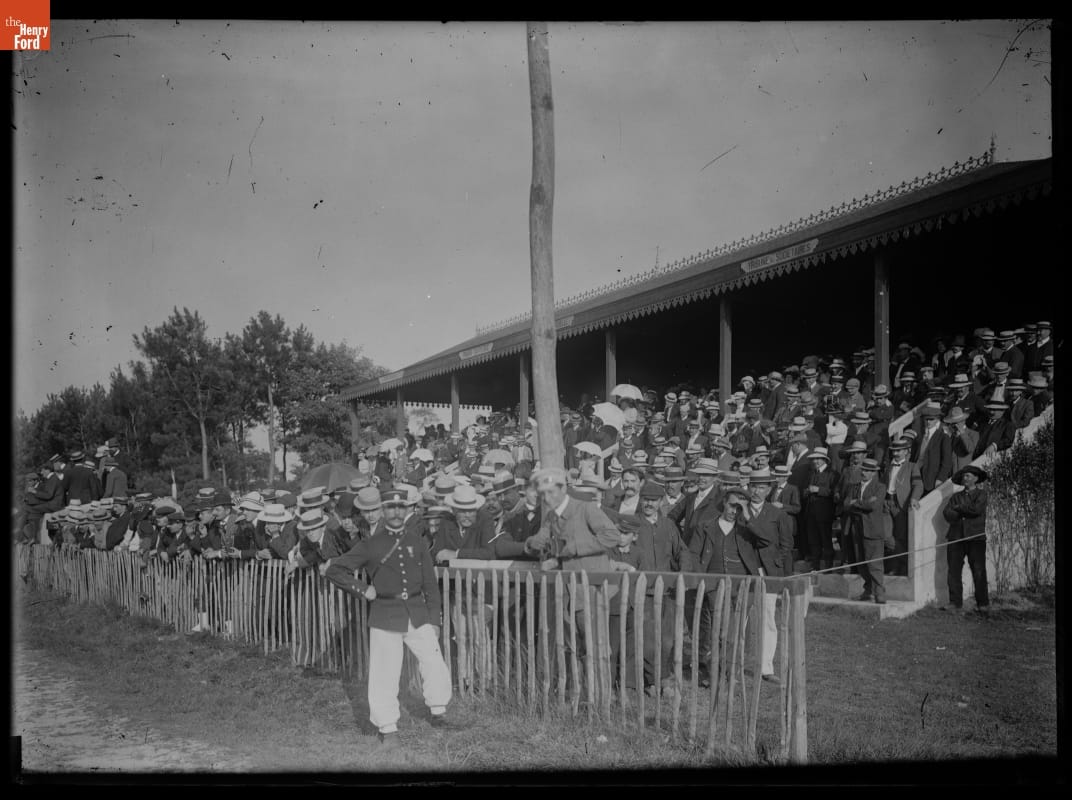
- August 01, 1908
- Collections - Artifact
Crowd Gathered for Wilbur Wright Demonstration Flight at Hunaudieres Race Course, Le Mans, France, August 1908
Wilbur Wright's many demonstration flights in France in 1908 and 1909 were spectacular events. Some in Europe had begun to doubt the Wrights' achievement at Kill Devil Hills. When Wilbur took to the skies over Le Mans, demonstrating more control and achieving more distance than his rivals, crowds flocked to watch his apparent mastery of the airplane. The skeptics were silenced.
- Orville and Wilbur Wright Accepting Medals at the Wright Brothers Homecoming Celebration, Dayton, Ohio, June 1909 - Five and a half years after their first flight, Wilbur and Orville Wright were honored for their achievement by their hometown of Dayton, Ohio. On June 17-18, 1909, banners decorated Dayton's streets, fireworks lit the sky, and the brothers received medals from the U.S. Congress, the State of Ohio, and the City of Dayton in a gala public ceremony.
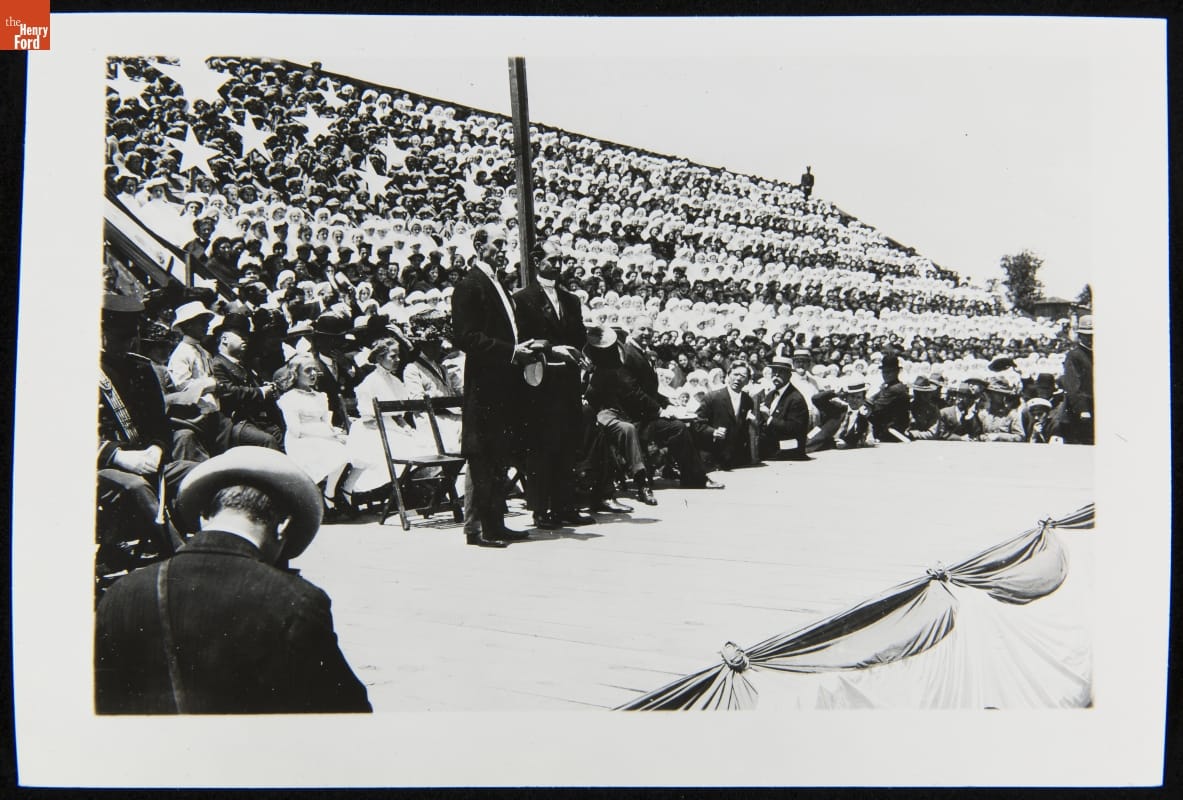
- 17 June 1909-18 June 1909
- Collections - Artifact
Orville and Wilbur Wright Accepting Medals at the Wright Brothers Homecoming Celebration, Dayton, Ohio, June 1909
Five and a half years after their first flight, Wilbur and Orville Wright were honored for their achievement by their hometown of Dayton, Ohio. On June 17-18, 1909, banners decorated Dayton's streets, fireworks lit the sky, and the brothers received medals from the U.S. Congress, the State of Ohio, and the City of Dayton in a gala public ceremony.
- William Clay Ford with Ford "999" Racer at Indianapolis 500, May 1953 - Ford Motor Company was featured at the Indianapolis 500 in 1953, the automaker's 50th anniversary. That year's pace car was a 1953 Ford Sunliner convertible. During pre-race activities, William Clay Ford entertained the crowd with a demonstration of the "999," a race car built by his grandfather, Henry Ford, in 1902.
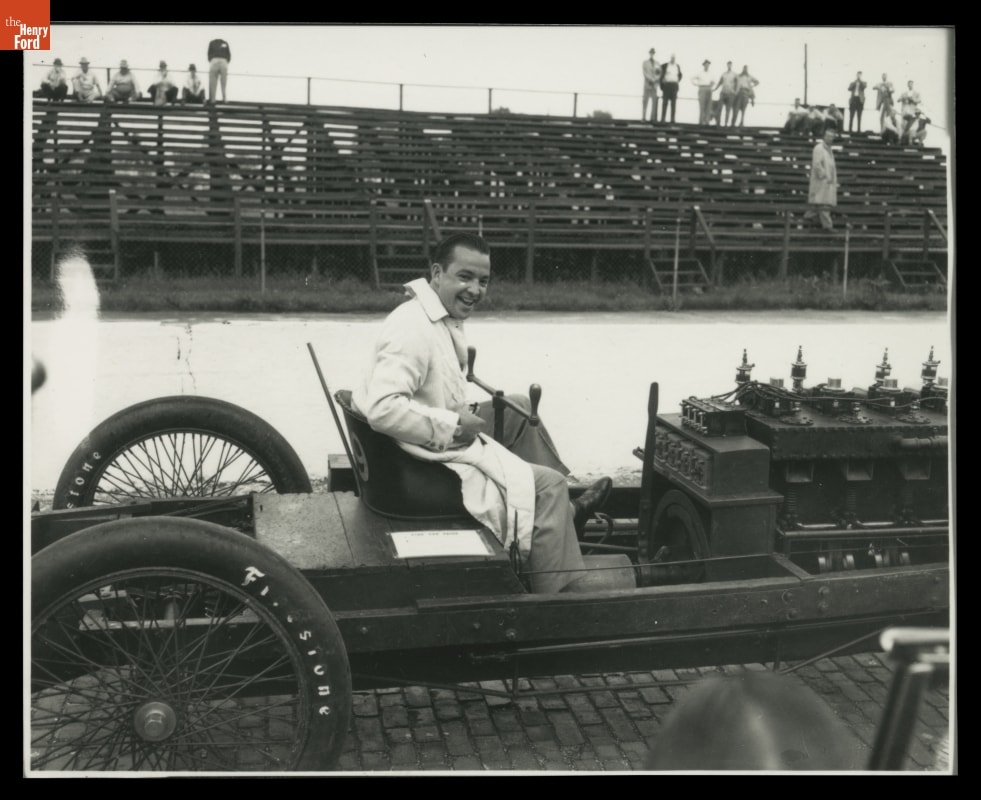
- May 17, 1953
- Collections - Artifact
William Clay Ford with Ford "999" Racer at Indianapolis 500, May 1953
Ford Motor Company was featured at the Indianapolis 500 in 1953, the automaker's 50th anniversary. That year's pace car was a 1953 Ford Sunliner convertible. During pre-race activities, William Clay Ford entertained the crowd with a demonstration of the "999," a race car built by his grandfather, Henry Ford, in 1902.
- Indianapolis 500 Race, 1960 - The running of the 1960 Indianapolis 500 was the last time this particular race would be included in the Formula One World Drivers' Championship. More significantly, the 1960s marked a time when oval tracks went from dirt to pavement and the days of front-engine designed Indy cars were numbered as European cars with rear-mounted engines achieved greater success.
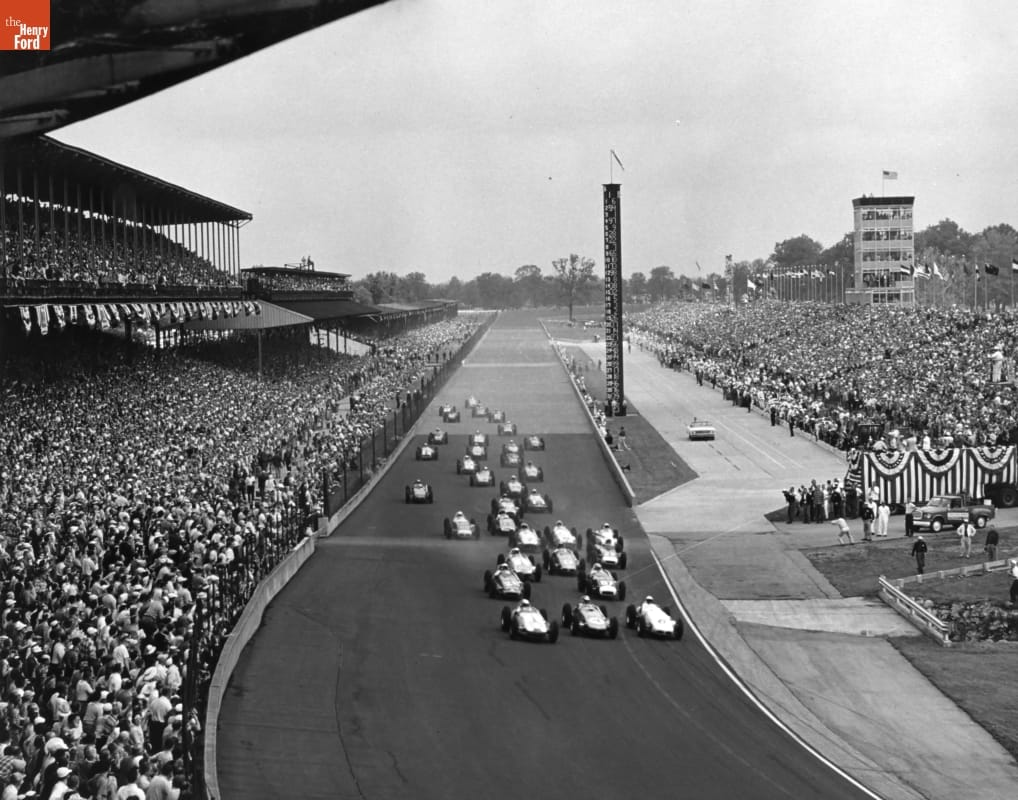
- May 30, 1960
- Collections - Artifact
Indianapolis 500 Race, 1960
The running of the 1960 Indianapolis 500 was the last time this particular race would be included in the Formula One World Drivers' Championship. More significantly, the 1960s marked a time when oval tracks went from dirt to pavement and the days of front-engine designed Indy cars were numbered as European cars with rear-mounted engines achieved greater success.
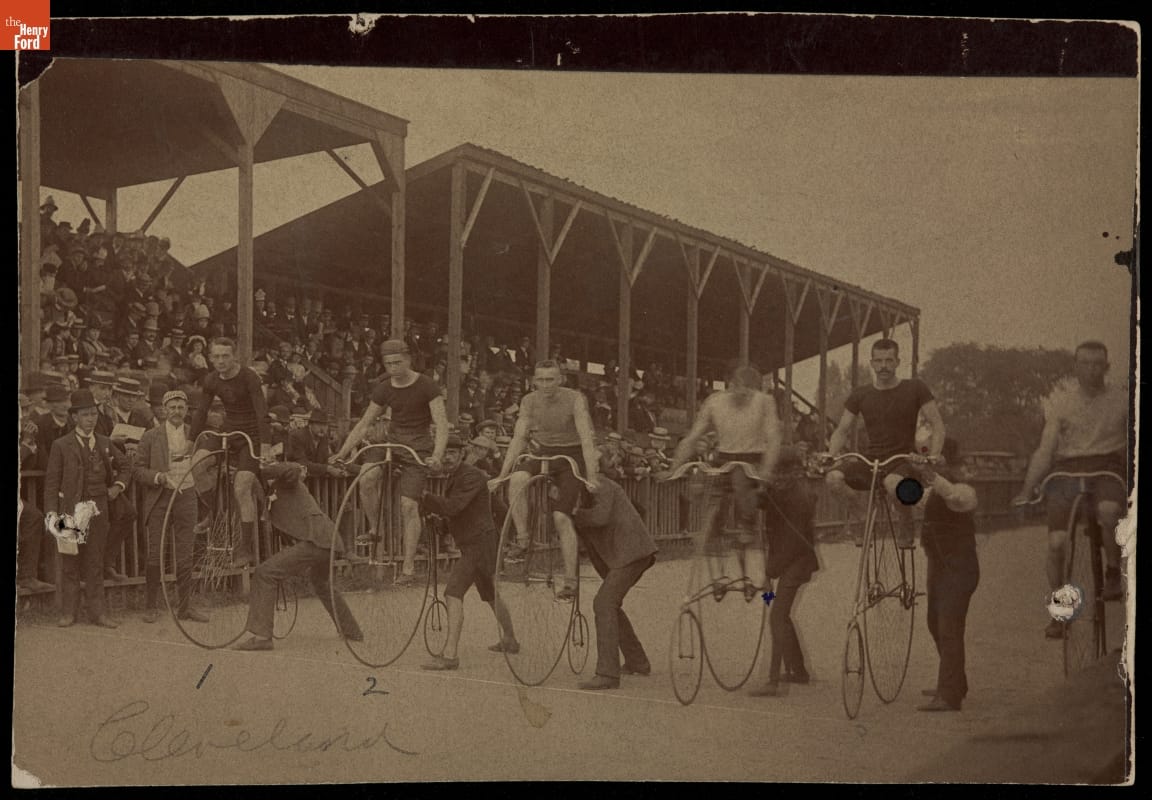
- Start of a Bicycle Race, Cleveland, Ohio, 1886 - Six men line up for the start of a race in Cleveland, Ohio. Identified cyclists include A.B. Rich, W.E. Crist, and Charles Frazier -- recognized racing names found in the pages of cycling journals of the period. Frazier, second from the left, rides a Star Safety -- a high wheeler with the small wheel in front to help prevent headers.
- 1886
- Collections - Artifact
Start of a Bicycle Race, Cleveland, Ohio, 1886
Six men line up for the start of a race in Cleveland, Ohio. Identified cyclists include A.B. Rich, W.E. Crist, and Charles Frazier -- recognized racing names found in the pages of cycling journals of the period. Frazier, second from the left, rides a Star Safety -- a high wheeler with the small wheel in front to help prevent headers.
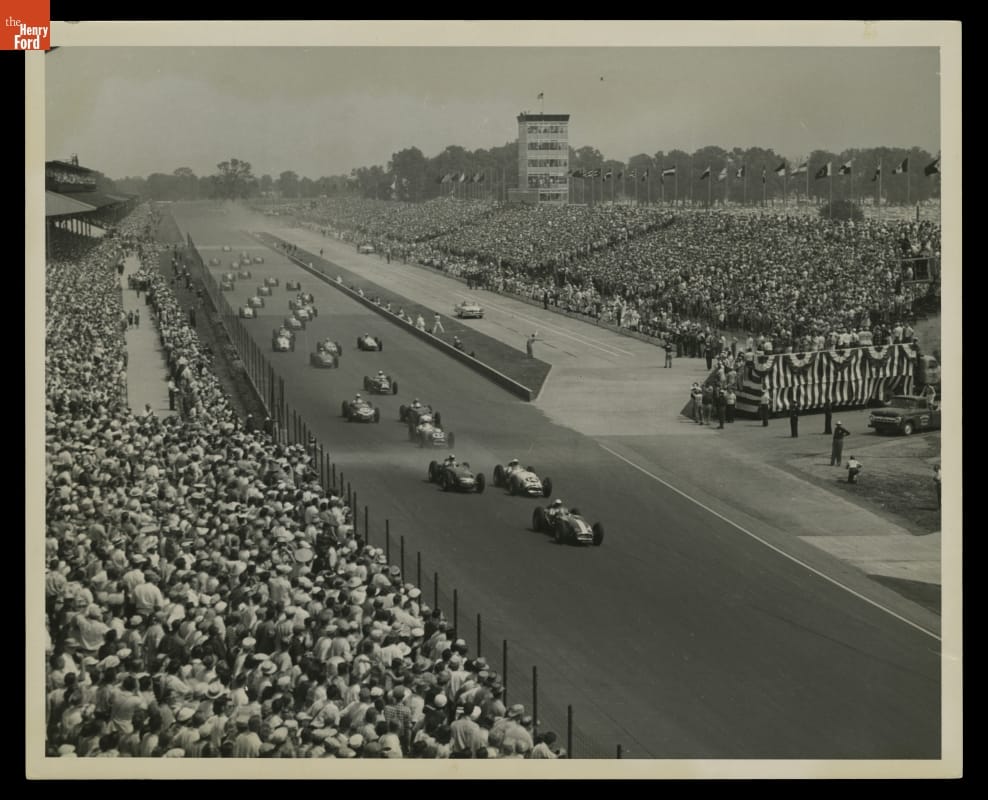
- Race Cars at the Start of the 1958 Indianapolis 500 - Race cars head down the straightaway in front of the grandstands at the start of the 1958 Indianapolis 500. Jimmy Bryan would win the 200 lap, 500 mile racing classic. The 1958 race would also be remembered for a first lap, 15-car pileup that killed one driver.
- May 30, 1958
- Collections - Artifact
Race Cars at the Start of the 1958 Indianapolis 500
Race cars head down the straightaway in front of the grandstands at the start of the 1958 Indianapolis 500. Jimmy Bryan would win the 200 lap, 500 mile racing classic. The 1958 race would also be remembered for a first lap, 15-car pileup that killed one driver.