
Search
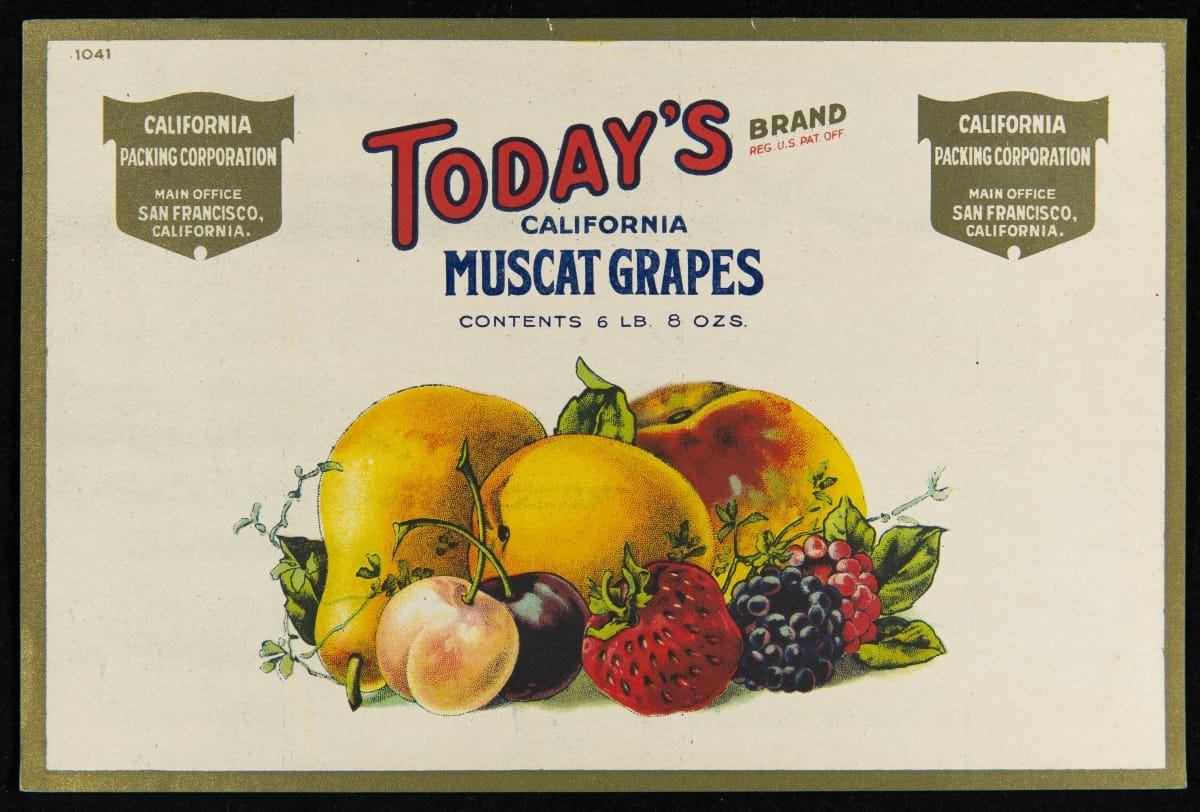
- Crate Label, "Today's Brand California Muscat Grapes," 1920-1940 - In 1869, the transcontinental railroad opened eastern markets to the West Coast produce industry for the first time. As produce companies shipped crates of fruits and vegetables across the country, they needed a way to distinguish their goods from their competitors'. Colorful, eye-catching labels, like this one for Today's Brand California Muscat Grapes, were created to attract grocers purchasing goods from wholesale markets.
- 1920-1940
- Collections - Artifact
Crate Label, "Today's Brand California Muscat Grapes," 1920-1940
In 1869, the transcontinental railroad opened eastern markets to the West Coast produce industry for the first time. As produce companies shipped crates of fruits and vegetables across the country, they needed a way to distinguish their goods from their competitors'. Colorful, eye-catching labels, like this one for Today's Brand California Muscat Grapes, were created to attract grocers purchasing goods from wholesale markets.
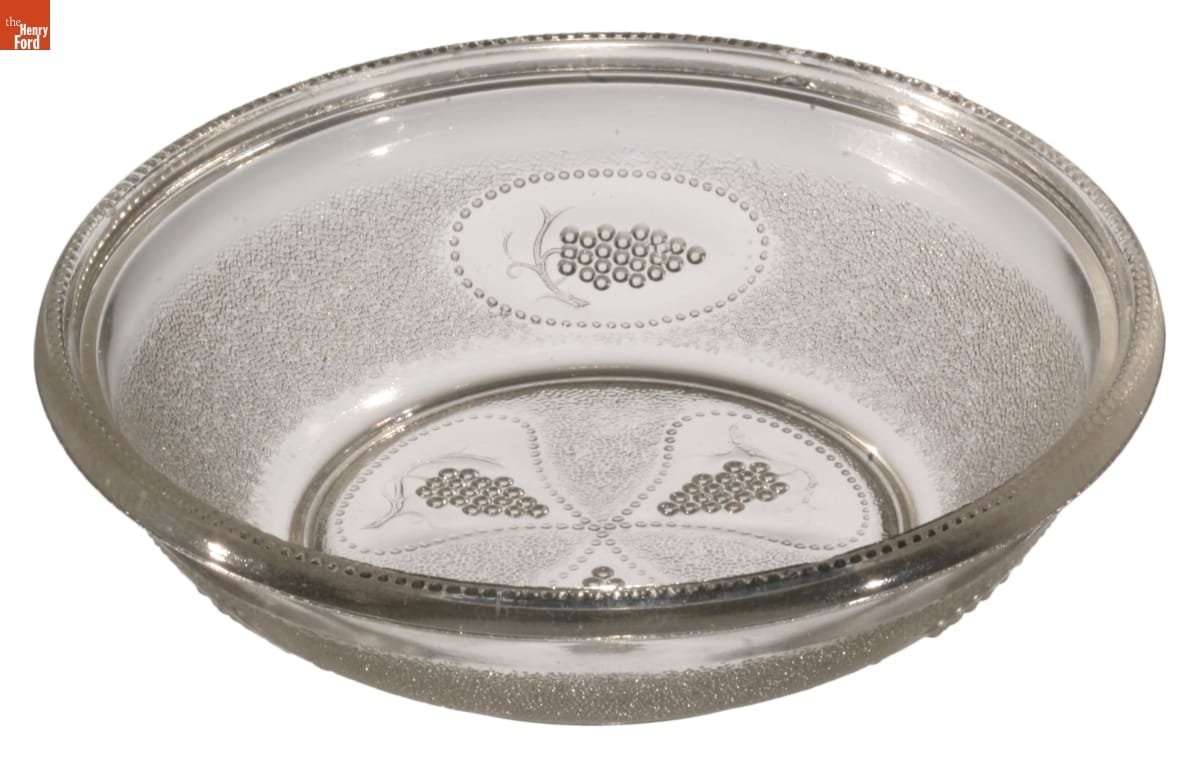
- Bowl, 1869-1871 - The Boston Silver Glass Company was established in East Cambridge, Massachusetts, in about 1857. Starting in 1869, the company produced pressed glass tableware in its "beaded grape medallion" pattern. The inexpensive glassware came in various forms: plates, dishes, bowls, compotes, goblets, and pitchers, among others. The company operated until about 1871.
- 1869-1871
- Collections - Artifact
Bowl, 1869-1871
The Boston Silver Glass Company was established in East Cambridge, Massachusetts, in about 1857. Starting in 1869, the company produced pressed glass tableware in its "beaded grape medallion" pattern. The inexpensive glassware came in various forms: plates, dishes, bowls, compotes, goblets, and pitchers, among others. The company operated until about 1871.
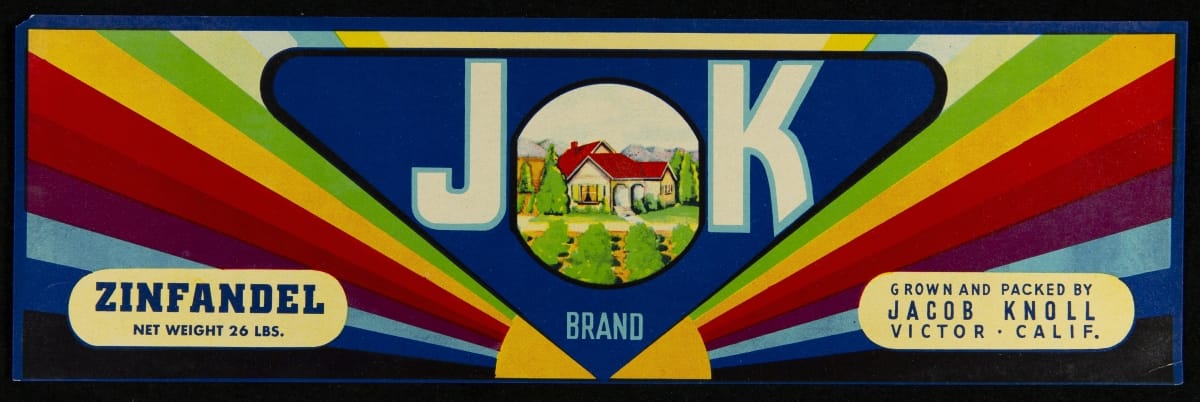
- Crate Label, "J.K. Brand Zinfandel Grapes," circa 1940 - In 1869, the transcontinental railroad opened eastern markets to the West Coast produce industry for the first time. As produce companies shipped crates of fruits and vegetables across the country, they needed a way to distinguish their goods from their competitors'. Colorful, eye-catching labels, like this one for J.K. Brand Zinfandel Grapes, were created to attract grocers purchasing goods from wholesale markets.
- circa 1940
- Collections - Artifact
Crate Label, "J.K. Brand Zinfandel Grapes," circa 1940
In 1869, the transcontinental railroad opened eastern markets to the West Coast produce industry for the first time. As produce companies shipped crates of fruits and vegetables across the country, they needed a way to distinguish their goods from their competitors'. Colorful, eye-catching labels, like this one for J.K. Brand Zinfandel Grapes, were created to attract grocers purchasing goods from wholesale markets.
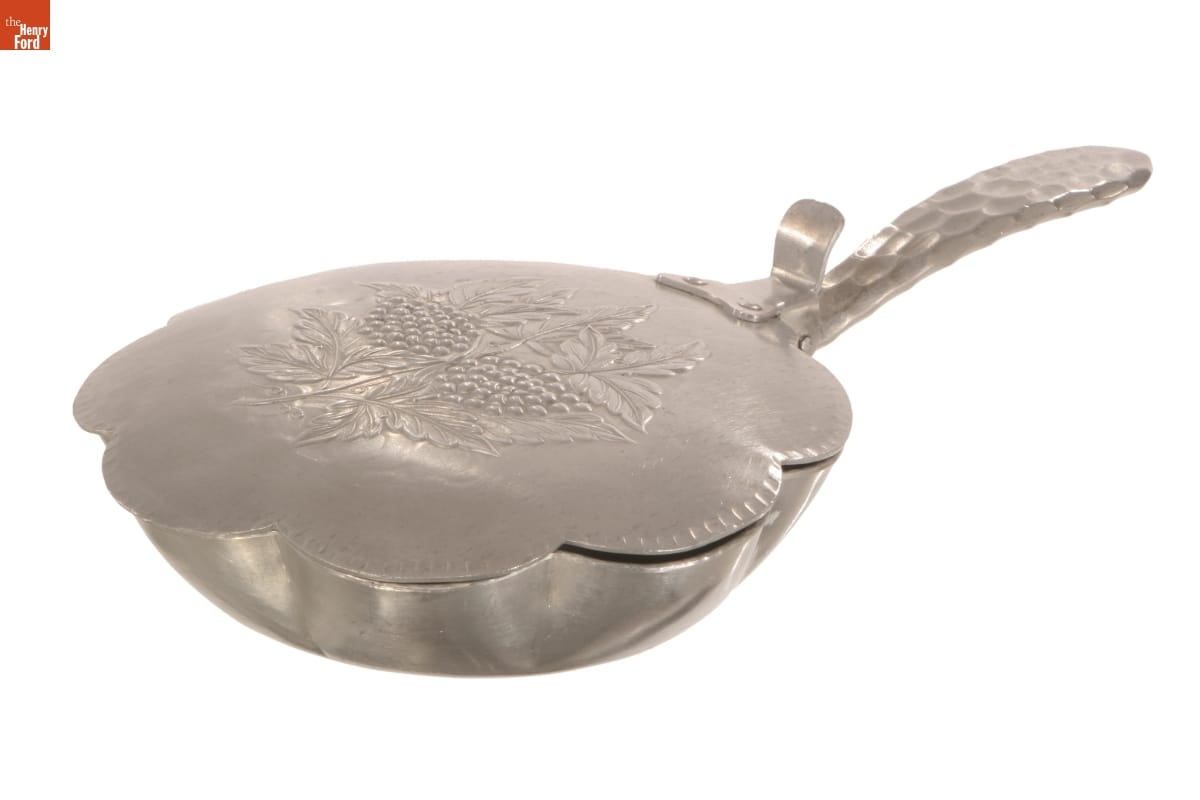
- Everlast "Forged Grape" Silent Butler, 1947-1951 - In 1932, Louis Schnitzer and Nathan Gelfman formed Everlast Metal Products Corporation, producing high-quality, hand-forged aluminum giftware. In an era of growing uniformity via factory production, the "made by hand" aspect of these products held an aesthetic appeal for consumers. In 1933, Everlast introduced its first product line, "Forged Giftware" featuring Colonial Revival inspired designs.
- 1947-1951
- Collections - Artifact
Everlast "Forged Grape" Silent Butler, 1947-1951
In 1932, Louis Schnitzer and Nathan Gelfman formed Everlast Metal Products Corporation, producing high-quality, hand-forged aluminum giftware. In an era of growing uniformity via factory production, the "made by hand" aspect of these products held an aesthetic appeal for consumers. In 1933, Everlast introduced its first product line, "Forged Giftware" featuring Colonial Revival inspired designs.
- Everlast "Forged Grape" Ice Pail and Ladle, 1937-1950 - In 1932, Louis Schnitzer and Nathan Gelfman formed Everlast Metal Products Corporation, producing high-quality, hand-forged aluminum giftware. In an era of growing uniformity via factory production, the "made by hand" aspect of these products held an aesthetic appeal for consumers. In 1933, Everlast introduced its first product line, "Forged Giftware" featuring Colonial Revival inspired designs.
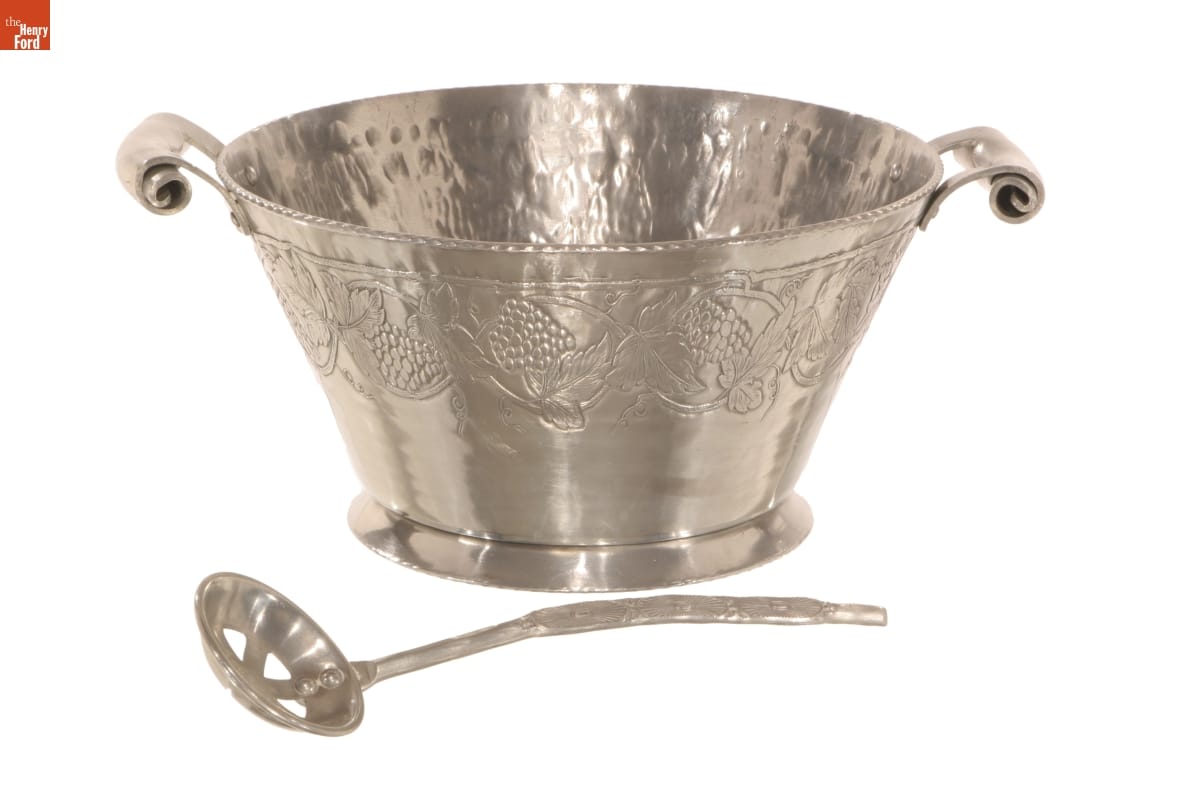
- 1937-1950
- Collections - Artifact
Everlast "Forged Grape" Ice Pail and Ladle, 1937-1950
In 1932, Louis Schnitzer and Nathan Gelfman formed Everlast Metal Products Corporation, producing high-quality, hand-forged aluminum giftware. In an era of growing uniformity via factory production, the "made by hand" aspect of these products held an aesthetic appeal for consumers. In 1933, Everlast introduced its first product line, "Forged Giftware" featuring Colonial Revival inspired designs.
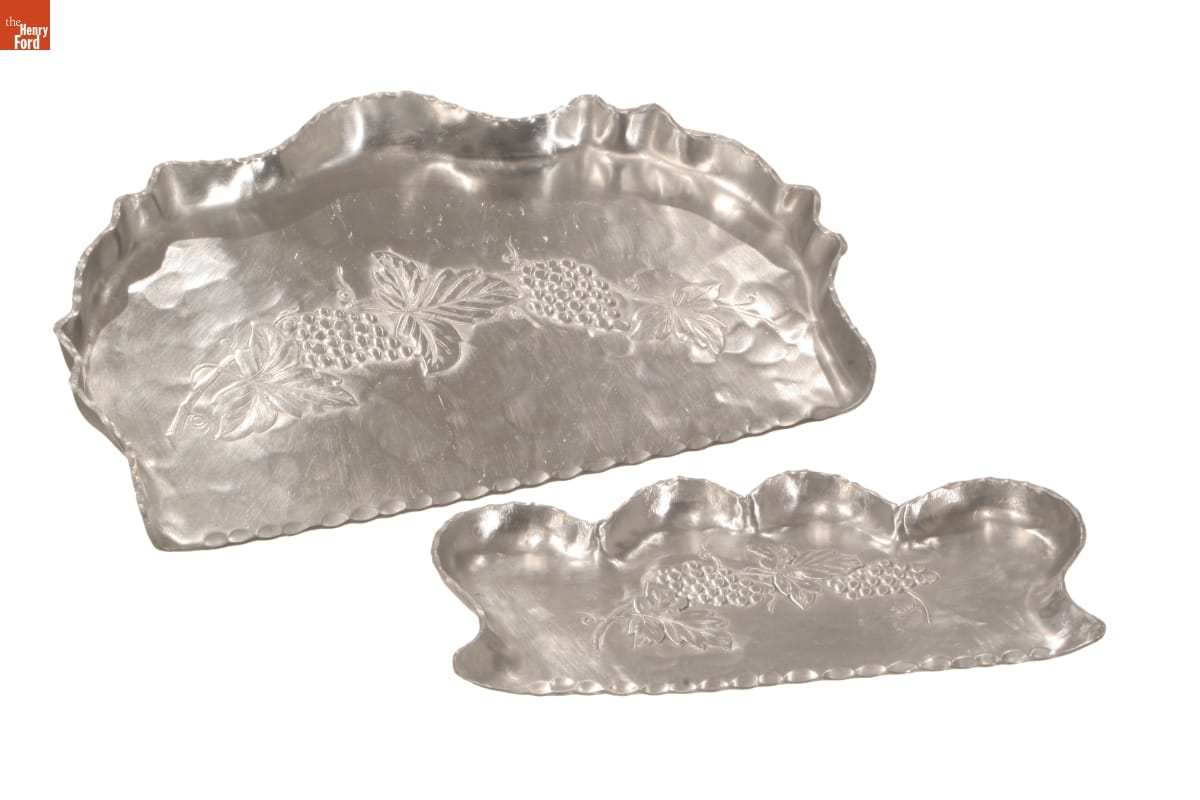
- Everlast "Forged Grape" Crumb Tray, 1937-1950 - In 1932, Louis Schnitzer and Nathan Gelfman formed Everlast Metal Products Corporation, producing high-quality, hand-forged aluminum giftware. In an era of growing uniformity via factory production, the "made by hand" aspect of these products held an aesthetic appeal for consumers. In 1933, Everlast introduced its first product line, "Forged Giftware" featuring Colonial Revival inspired designs.
- 1937-1950
- Collections - Artifact
Everlast "Forged Grape" Crumb Tray, 1937-1950
In 1932, Louis Schnitzer and Nathan Gelfman formed Everlast Metal Products Corporation, producing high-quality, hand-forged aluminum giftware. In an era of growing uniformity via factory production, the "made by hand" aspect of these products held an aesthetic appeal for consumers. In 1933, Everlast introduced its first product line, "Forged Giftware" featuring Colonial Revival inspired designs.
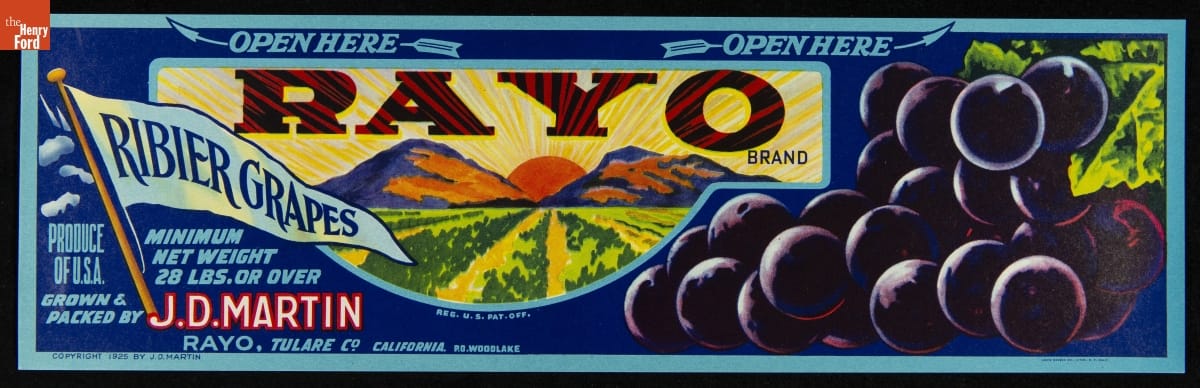
- Crate Label, "Rayo Brand Ribier Grapes," 1925 - In 1869, the transcontinental railroad opened eastern markets to the West Coast produce industry for the first time. As produce companies shipped crates of fruits and vegetables across the country, they needed a way to distinguish their goods from their competitors'. Colorful, eye-catching labels, like this one for Rayo Brand Ribier Grapes, were created to attract grocers purchasing goods from wholesale markets.
- 1925
- Collections - Artifact
Crate Label, "Rayo Brand Ribier Grapes," 1925
In 1869, the transcontinental railroad opened eastern markets to the West Coast produce industry for the first time. As produce companies shipped crates of fruits and vegetables across the country, they needed a way to distinguish their goods from their competitors'. Colorful, eye-catching labels, like this one for Rayo Brand Ribier Grapes, were created to attract grocers purchasing goods from wholesale markets.
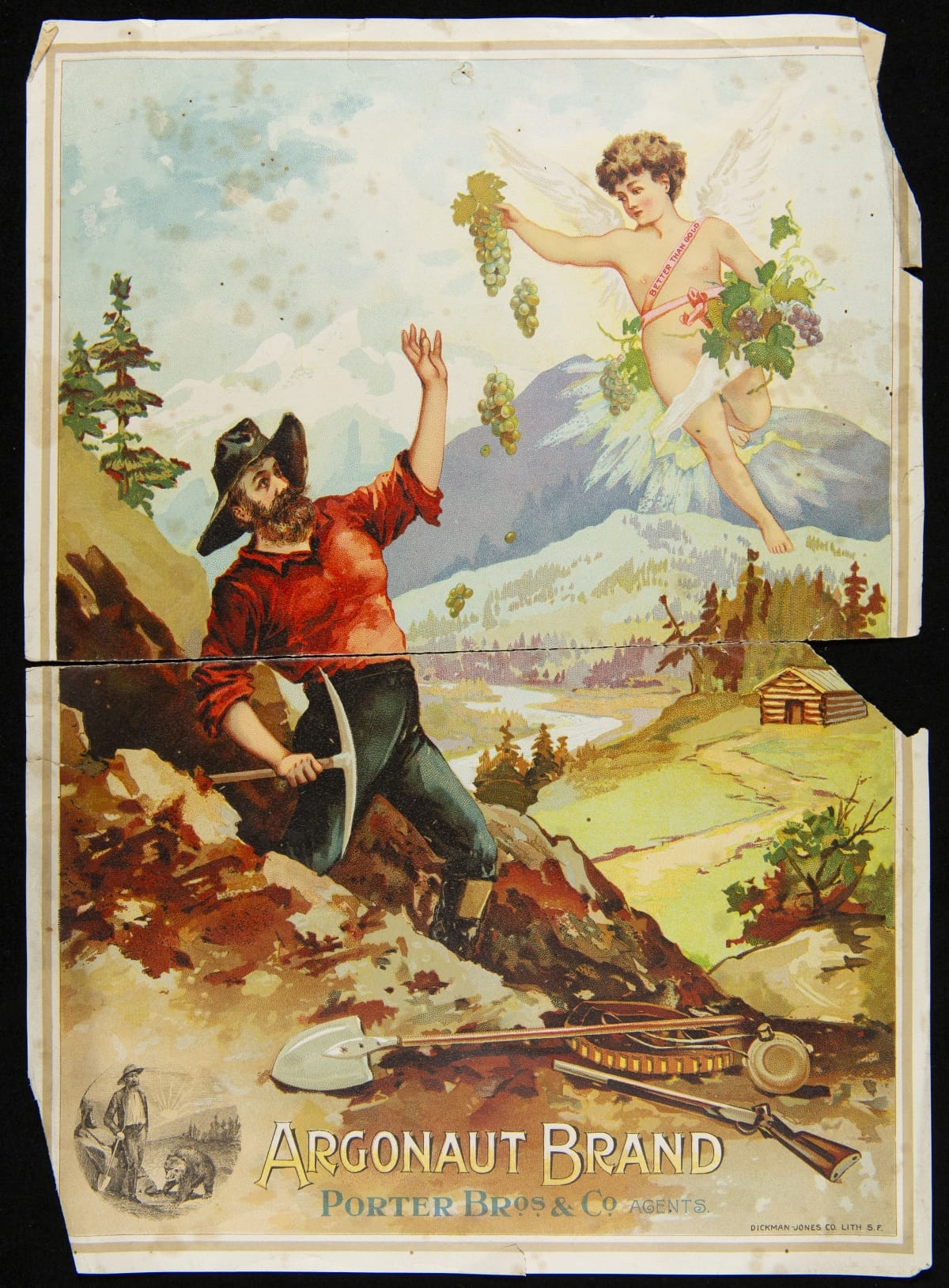
- Label, "Argonaut Brand Grapes," 1888-1899 -
- 1888-1899
- Collections - Artifact
Label, "Argonaut Brand Grapes," 1888-1899
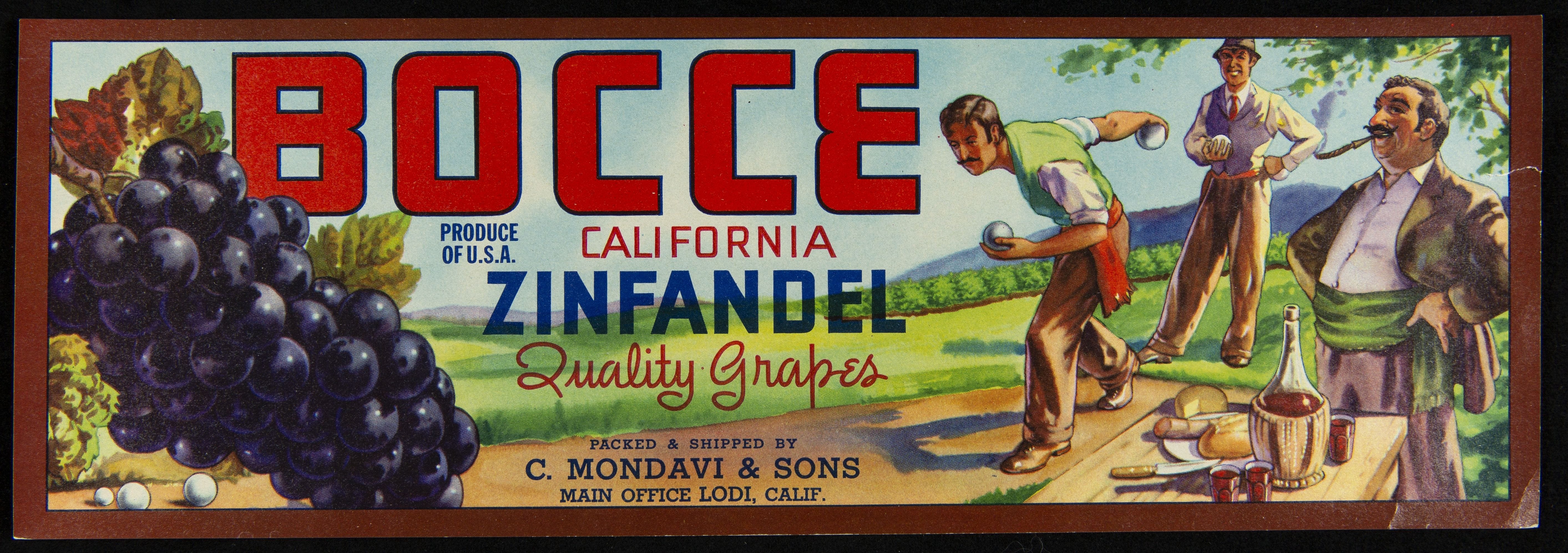
- Crate Label, "Bocce Brand Zinfandel Grapes," circa 1940 - As produce companies shipped crates of fruits and vegetables across the country, they needed a way to distinguish their goods from their competitors'. Colorful, eye-catching labels were created to attract the attention of grocers purchasing goods from wholesale markets. C. Mondavi & Sons played up their Italian roots by featuring men playing bocce on their label -- a popular recreation sport in Italy.
- circa 1940
- Collections - Artifact
Crate Label, "Bocce Brand Zinfandel Grapes," circa 1940
As produce companies shipped crates of fruits and vegetables across the country, they needed a way to distinguish their goods from their competitors'. Colorful, eye-catching labels were created to attract the attention of grocers purchasing goods from wholesale markets. C. Mondavi & Sons played up their Italian roots by featuring men playing bocce on their label -- a popular recreation sport in Italy.
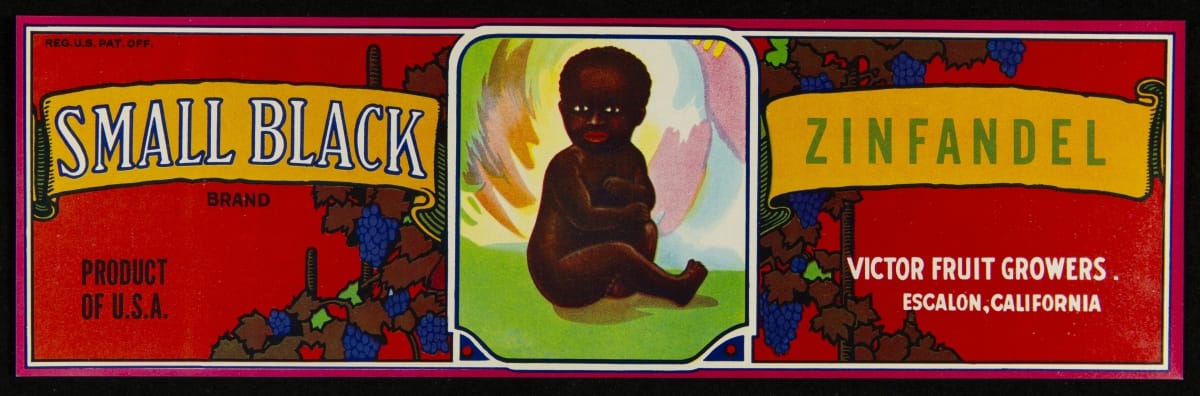
- Crate Label, "Small Black Brand Zinfandel Grapes," circa 1940 - Lithographers created colorful, eye-catching labels to help sell products. Designs often featured popular themes or motifs; some also reflected the prejudices of the time. This mid-20th-century label depicts a small black child with pronounced red lips -- a pernicious and persistent stereotype. These images dehumanized African Americans and affirmed the discriminatory biases many white Americans held.
- circa 1940
- Collections - Artifact
Crate Label, "Small Black Brand Zinfandel Grapes," circa 1940
Lithographers created colorful, eye-catching labels to help sell products. Designs often featured popular themes or motifs; some also reflected the prejudices of the time. This mid-20th-century label depicts a small black child with pronounced red lips -- a pernicious and persistent stereotype. These images dehumanized African Americans and affirmed the discriminatory biases many white Americans held.