
Search
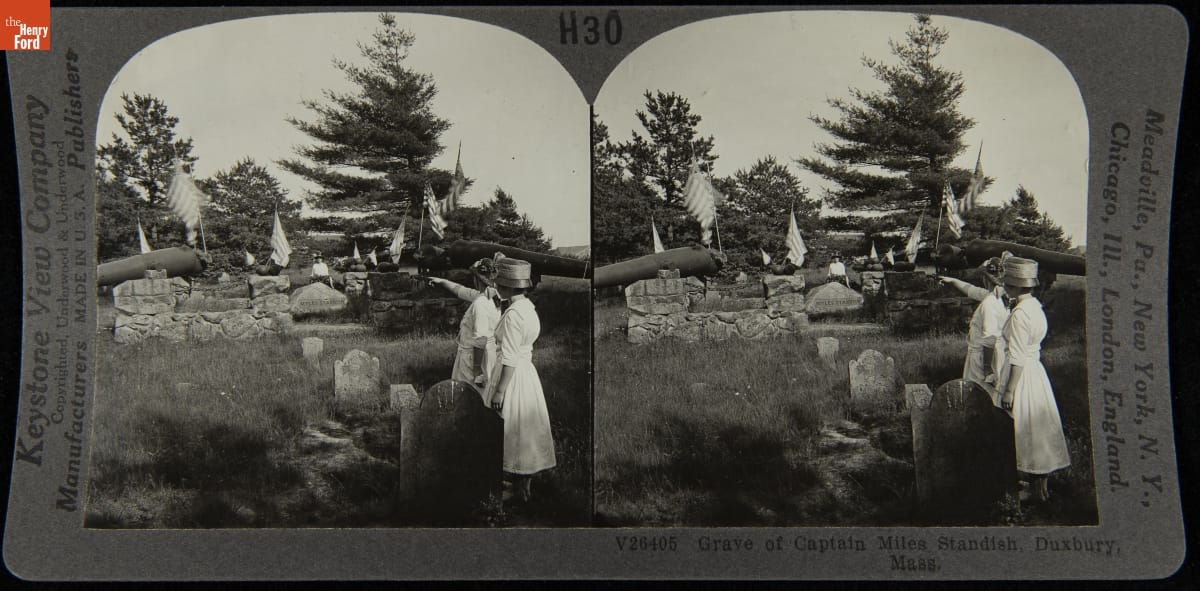
- Grave of Captain Miles Standish, 1926 -
- 1920-1926
- Collections - Artifact
Grave of Captain Miles Standish, 1926
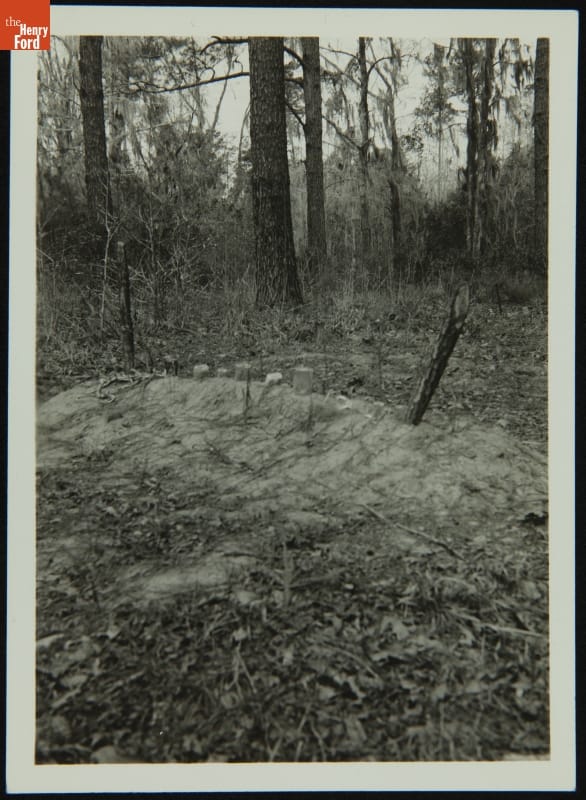
- African American Grave at Richmond Hill Cemetery, circa 1935 -
- circa 1935
- Collections - Artifact
African American Grave at Richmond Hill Cemetery, circa 1935
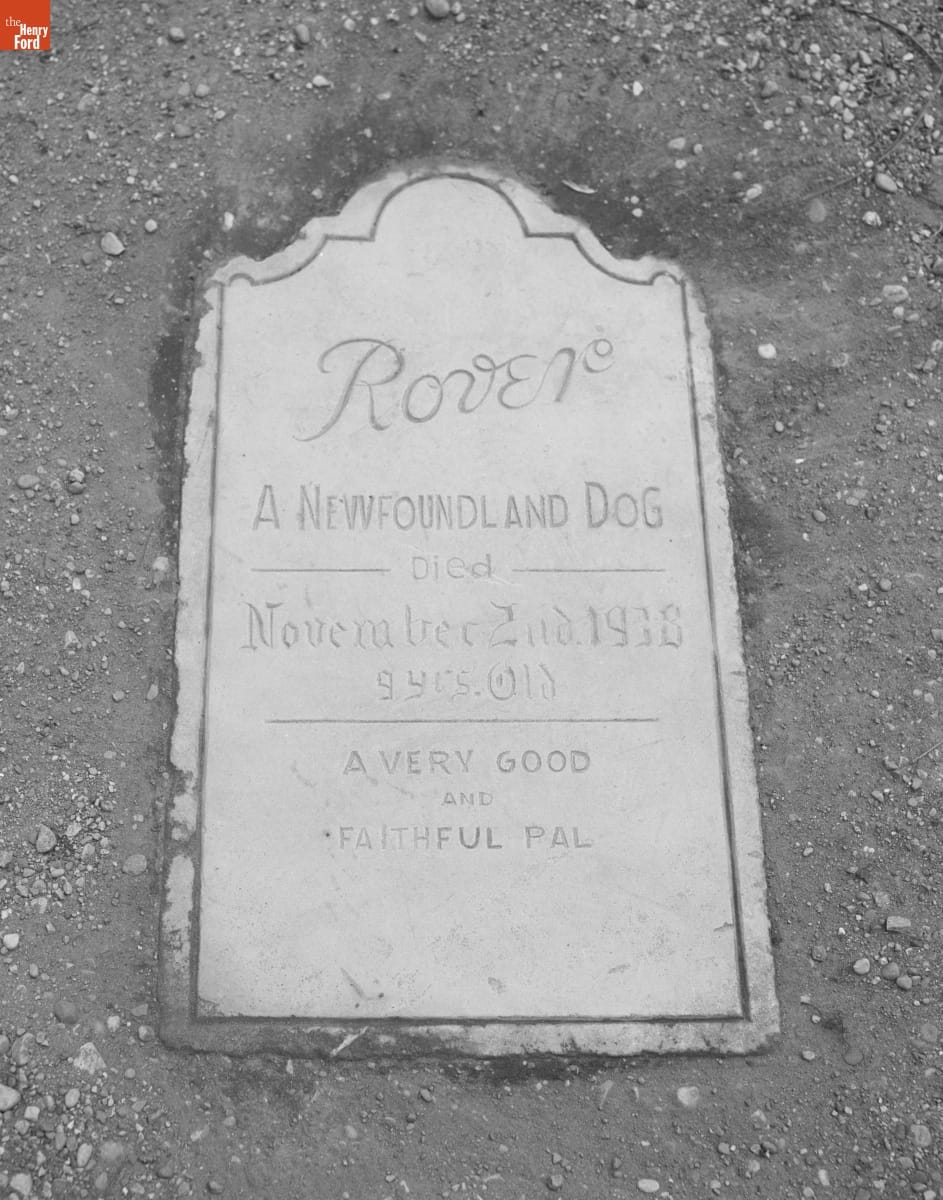
- Grave of "Rover," a Greenfield Village Dog, April 1977 - Henry Ford purchased a black Newfoundland puppy in 1930. The dog, named Rover, would help guard sheep at Greenfield Village's Cotswold Cottage. (Ford envisioned the interpretation of the cottage as the home of an English sheepherder.) The dog became a fixture in the Village. Rover was beloved by many: Gus Munchow--his trainer, Ford, and the schoolchildren of the Edison Institute.
- April 01, 1977
- Collections - Artifact
Grave of "Rover," a Greenfield Village Dog, April 1977
Henry Ford purchased a black Newfoundland puppy in 1930. The dog, named Rover, would help guard sheep at Greenfield Village's Cotswold Cottage. (Ford envisioned the interpretation of the cottage as the home of an English sheepherder.) The dog became a fixture in the Village. Rover was beloved by many: Gus Munchow--his trainer, Ford, and the schoolchildren of the Edison Institute.
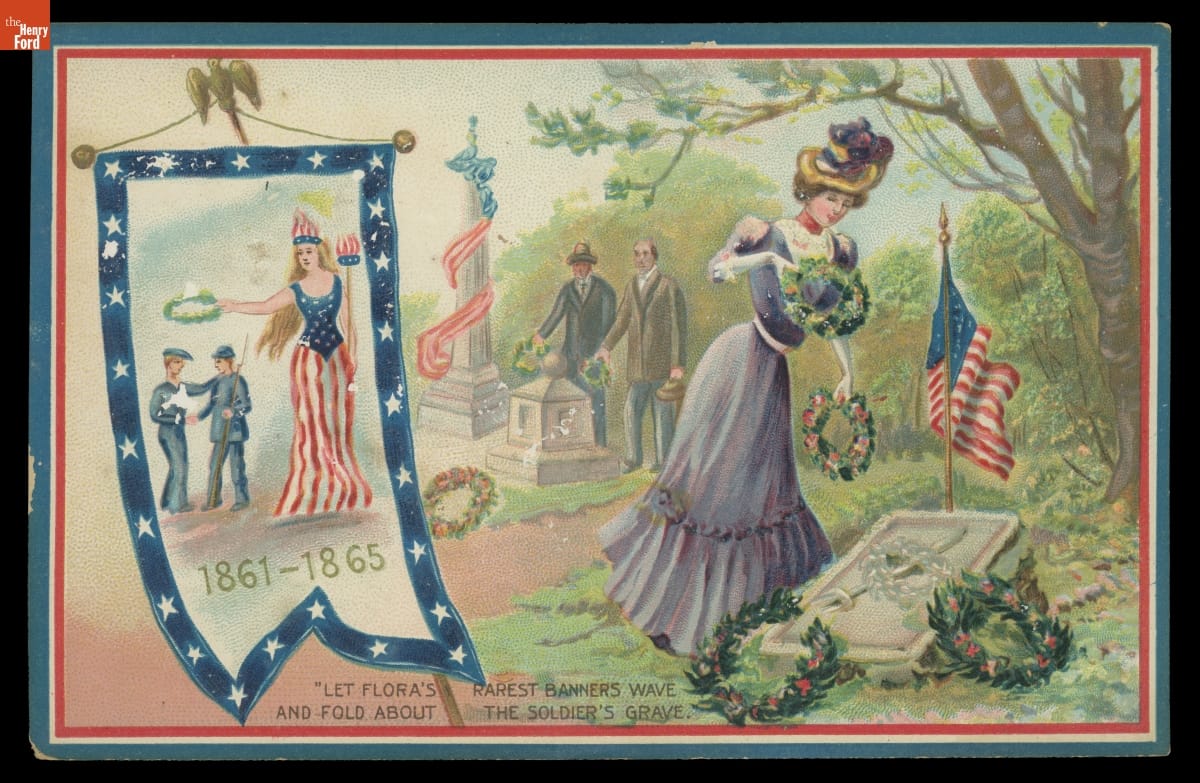
- Decoration Day Postcard, "Let Flora's Rarest Banners Wave and Fold about the Soldier's Grave," 1908 - Beginning in 1868, May 30 was proclaimed "Decoration Day" as a day for mourners to honor the Civil War dead by decorating their graves with flowers. After World War I, the observance became better known as Memorial Day, and it broadened to honor the dead of all America's wars. Memorial Day was declared a national holiday in 1971.
- 1905
- Collections - Artifact
Decoration Day Postcard, "Let Flora's Rarest Banners Wave and Fold about the Soldier's Grave," 1908
Beginning in 1868, May 30 was proclaimed "Decoration Day" as a day for mourners to honor the Civil War dead by decorating their graves with flowers. After World War I, the observance became better known as Memorial Day, and it broadened to honor the dead of all America's wars. Memorial Day was declared a national holiday in 1971.
- Dr. Alonson B. Howard's Tombstone at Windfall Cemetery, Tekonsha, Michigan, August 1959 - Alonson Howard, Jr. (1823-1883) studied medicine in Ohio and Michigan before setting up a medical practice in the 1850s in Tekonsha Township, Michigan. Dr. Howard performed surgeries, delivered babies, produced herbal remedies and homemade medicines, and treated illnesses--adapting his treatments to what worked best for his patients. He served his community for more than thirty years.
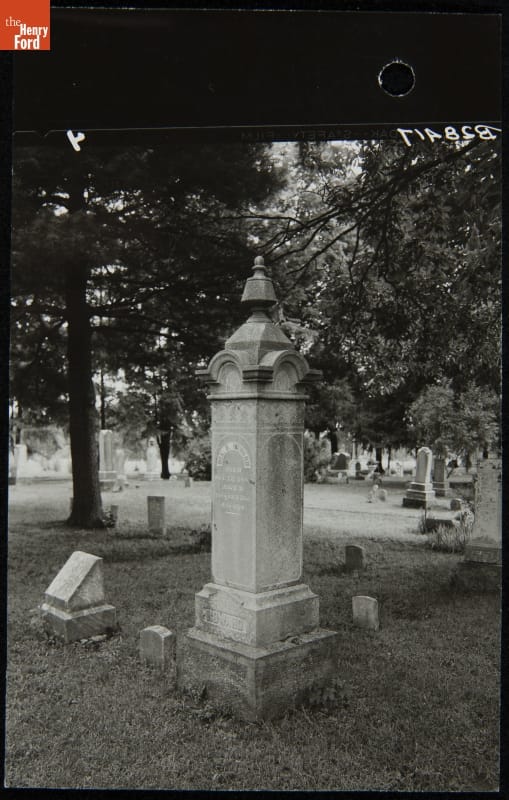
- August 01, 1959
- Collections - Artifact
Dr. Alonson B. Howard's Tombstone at Windfall Cemetery, Tekonsha, Michigan, August 1959
Alonson Howard, Jr. (1823-1883) studied medicine in Ohio and Michigan before setting up a medical practice in the 1850s in Tekonsha Township, Michigan. Dr. Howard performed surgeries, delivered babies, produced herbal remedies and homemade medicines, and treated illnesses--adapting his treatments to what worked best for his patients. He served his community for more than thirty years.
- Monuments in a Cemetery -
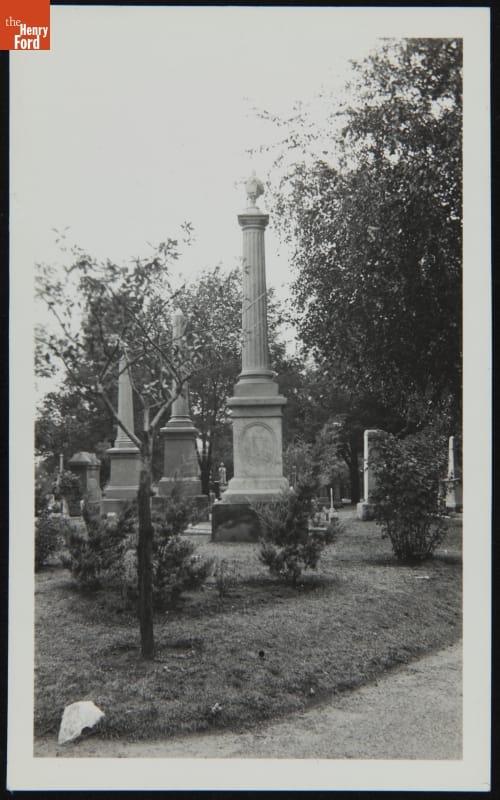
- Collections - Artifact
Monuments in a Cemetery
- Cemetery Monument for Edward Magill and his Wife Hannah Mason -
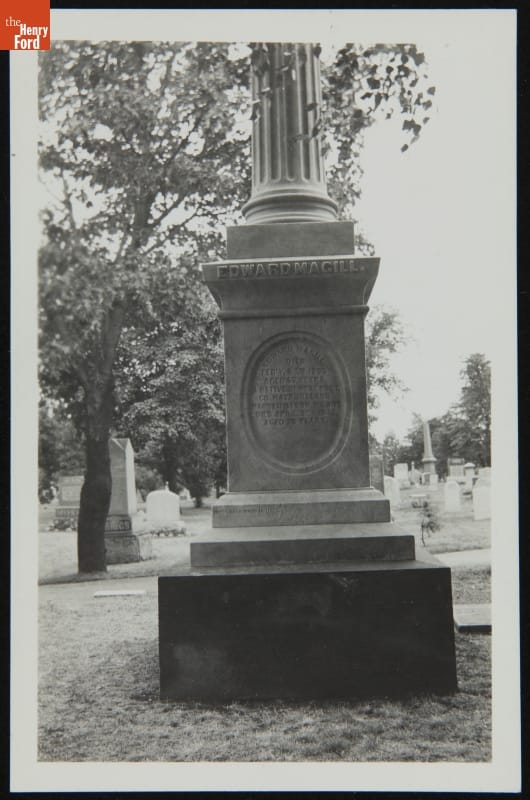
- Collections - Artifact
Cemetery Monument for Edward Magill and his Wife Hannah Mason
- Monument in a Cemetery -
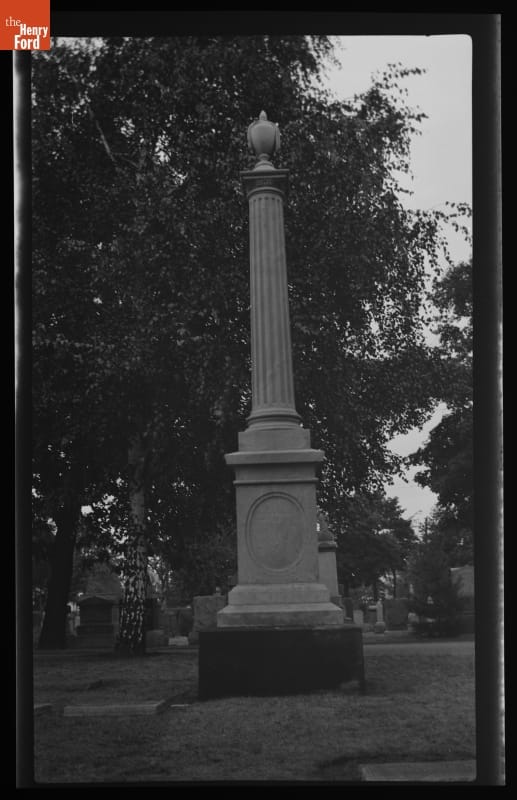
- Collections - Artifact
Monument in a Cemetery
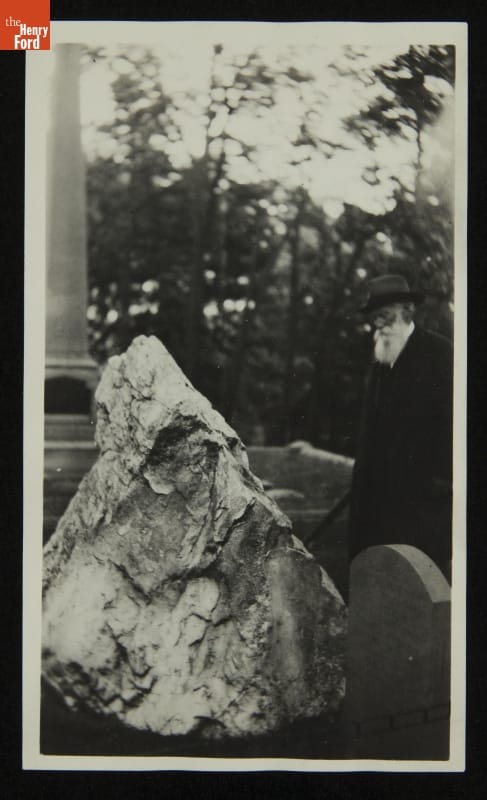
- John Burroughs at Ralph Waldo Emerson's Grave, 1917 - Ralph Waldo Emerson (1803-1882) greatly influenced John Burroughs. Burroughs first read Emerson's works in 1856 when Burroughs was a 19-year-old preparatory school student. A few years later, Burroughs's first significant essay was mistakenly attributed to Emerson. Other writers knew and shaped the budding naturalist, but Emerson remained his spiritual father. This photo shows the aged Burroughs visiting Emerson's grave in Concord, Massachusetts.
- October 02, 1917
- Collections - Artifact
John Burroughs at Ralph Waldo Emerson's Grave, 1917
Ralph Waldo Emerson (1803-1882) greatly influenced John Burroughs. Burroughs first read Emerson's works in 1856 when Burroughs was a 19-year-old preparatory school student. A few years later, Burroughs's first significant essay was mistakenly attributed to Emerson. Other writers knew and shaped the budding naturalist, but Emerson remained his spiritual father. This photo shows the aged Burroughs visiting Emerson's grave in Concord, Massachusetts.
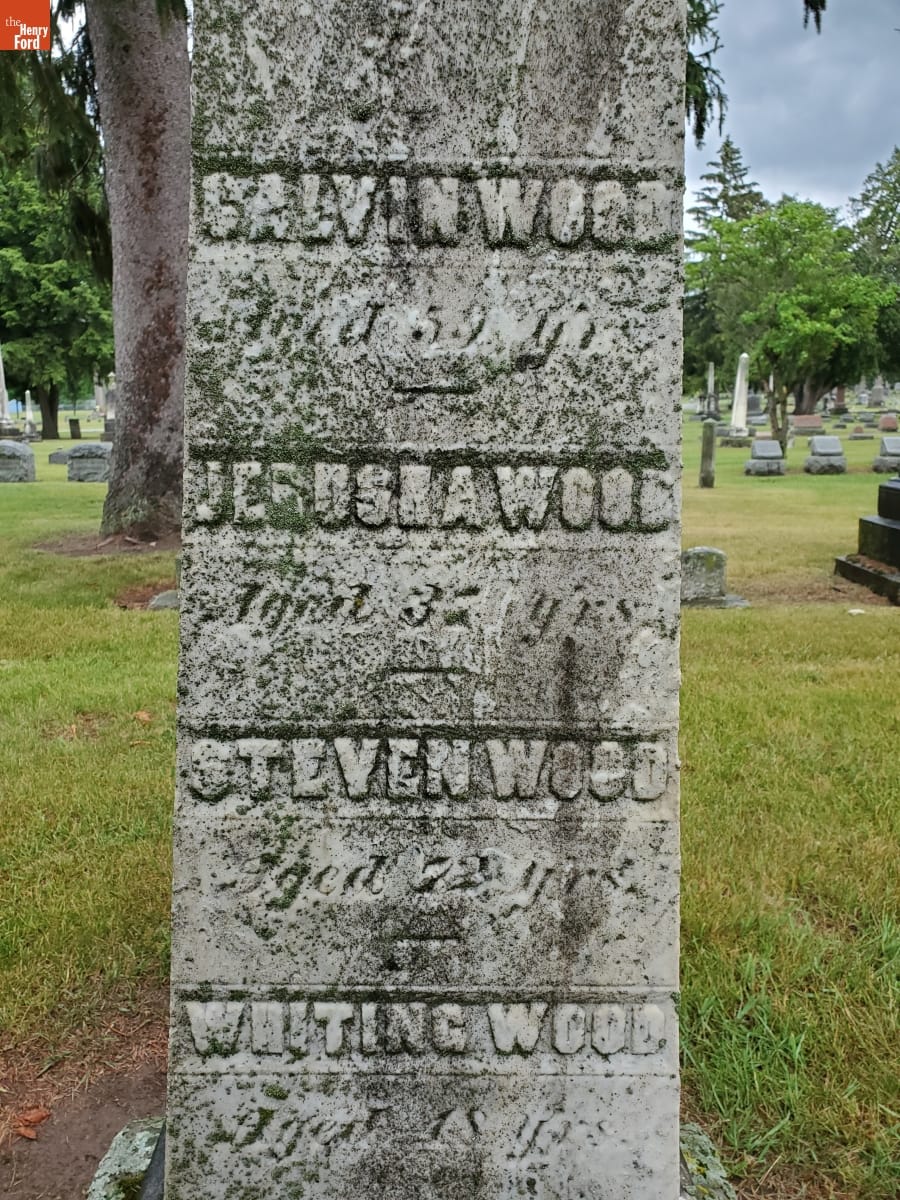
- Wood Family Gravesite, Tecumseh, Michigan, June 2021 -
- June 19, 2021
- Collections - Artifact
Wood Family Gravesite, Tecumseh, Michigan, June 2021