
Search
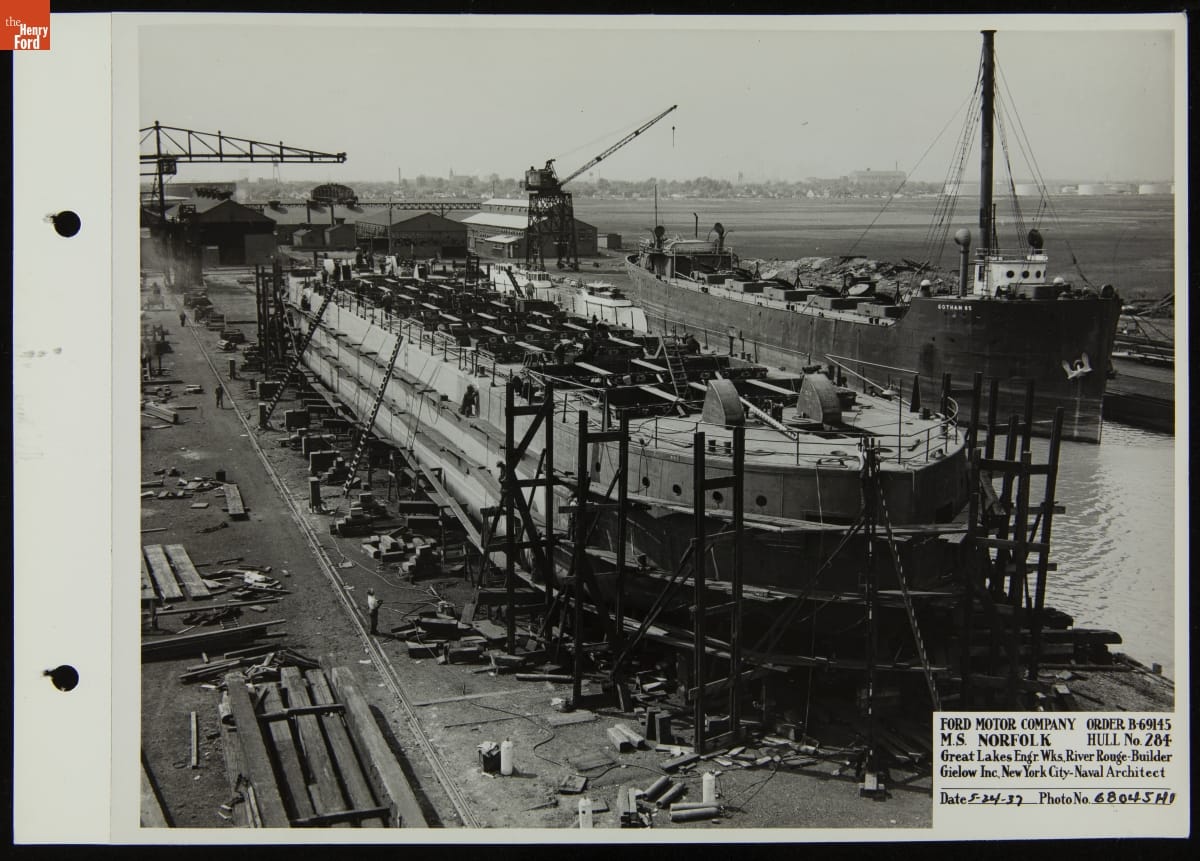
- Ford Freighter "Norfolk" under Construction at Great Lakes Engineering Works, May 24, 1937 - Ford Motor Company built four canal boats in the 1930s to transport finished auto parts between Ford's production plants on the East Coast and its River Rouge complex in Michigan. The freighters were designed to travel on the New York State Barge Canal. The <em>Norfolk</em>, named for the location of one of the Ford's East Coast plants, began service in 1937.
- April 30, 1937
- Collections - Artifact
Ford Freighter "Norfolk" under Construction at Great Lakes Engineering Works, May 24, 1937
Ford Motor Company built four canal boats in the 1930s to transport finished auto parts between Ford's production plants on the East Coast and its River Rouge complex in Michigan. The freighters were designed to travel on the New York State Barge Canal. The Norfolk, named for the location of one of the Ford's East Coast plants, began service in 1937.
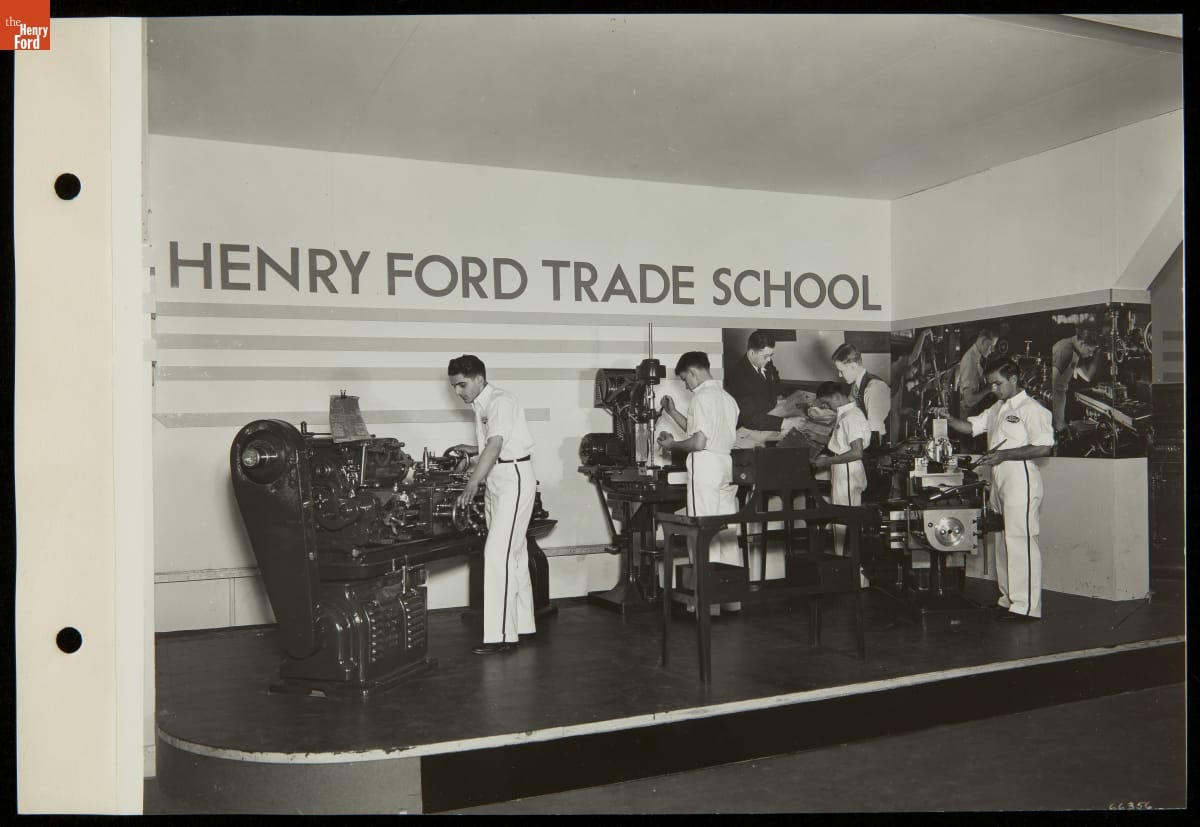
- Henry Ford Trade School Students at Great Lakes Exposition, Cleveland, Ohio, 1936-1937 - Cleveland celebrated its centennial with the Great Lakes Exposition. For two summers during 1936 and 1937, over seven million visitors came through the gates. Fair officials consigned Ford and the other automobile companies to the Automotive Building -- no separate corporate buildings were constructed. Ford supplemented its vehicle displays with other exhibitions, including demonstrations by students from the Henry Ford Trade School.
- June 29, 1936
- Collections - Artifact
Henry Ford Trade School Students at Great Lakes Exposition, Cleveland, Ohio, 1936-1937
Cleveland celebrated its centennial with the Great Lakes Exposition. For two summers during 1936 and 1937, over seven million visitors came through the gates. Fair officials consigned Ford and the other automobile companies to the Automotive Building -- no separate corporate buildings were constructed. Ford supplemented its vehicle displays with other exhibitions, including demonstrations by students from the Henry Ford Trade School.
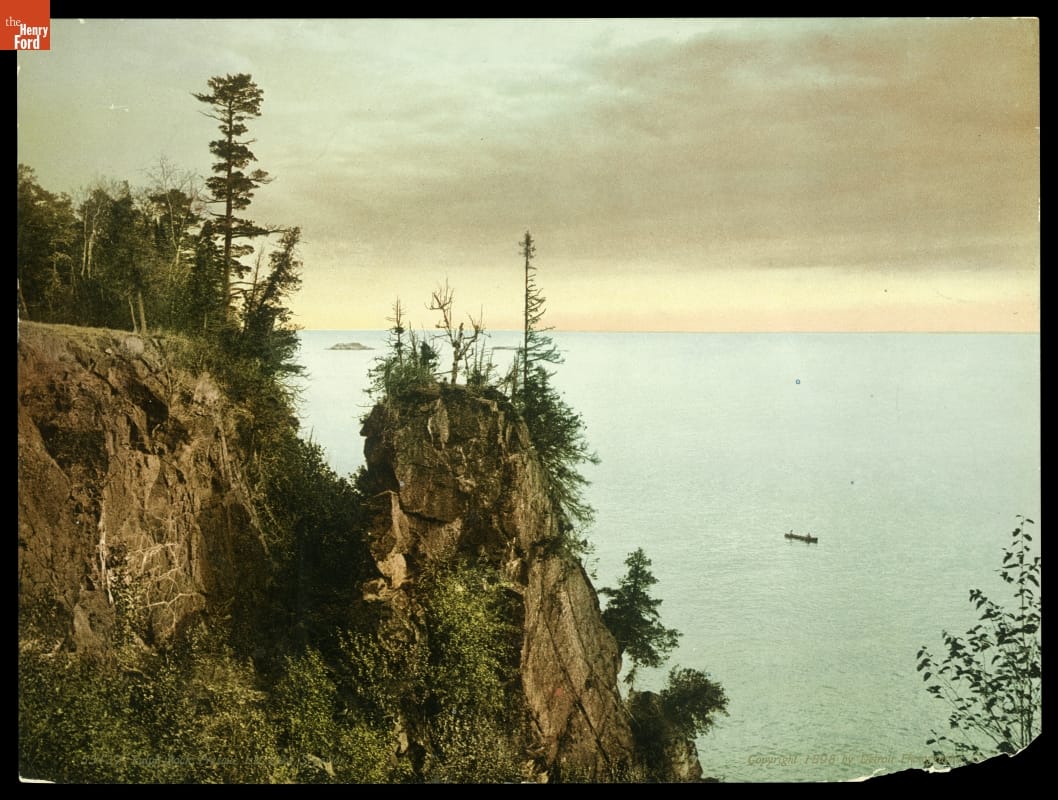
- "Pulpit Rock on Presque Isle," Lake Superior near Marquette, Michigan, 1898 - From 1895 to 1924, the Detroit Publishing Company was one of the major image publishers in the world. The company had a wide-ranging stock of original photographs, including many scenes from around the world. These colorful prints were reproduced for ads, purchased to decorate homes and offices, bought as souvenirs, and used as teaching tools in schools and libraries.
- 1898
- Collections - Artifact
"Pulpit Rock on Presque Isle," Lake Superior near Marquette, Michigan, 1898
From 1895 to 1924, the Detroit Publishing Company was one of the major image publishers in the world. The company had a wide-ranging stock of original photographs, including many scenes from around the world. These colorful prints were reproduced for ads, purchased to decorate homes and offices, bought as souvenirs, and used as teaching tools in schools and libraries.
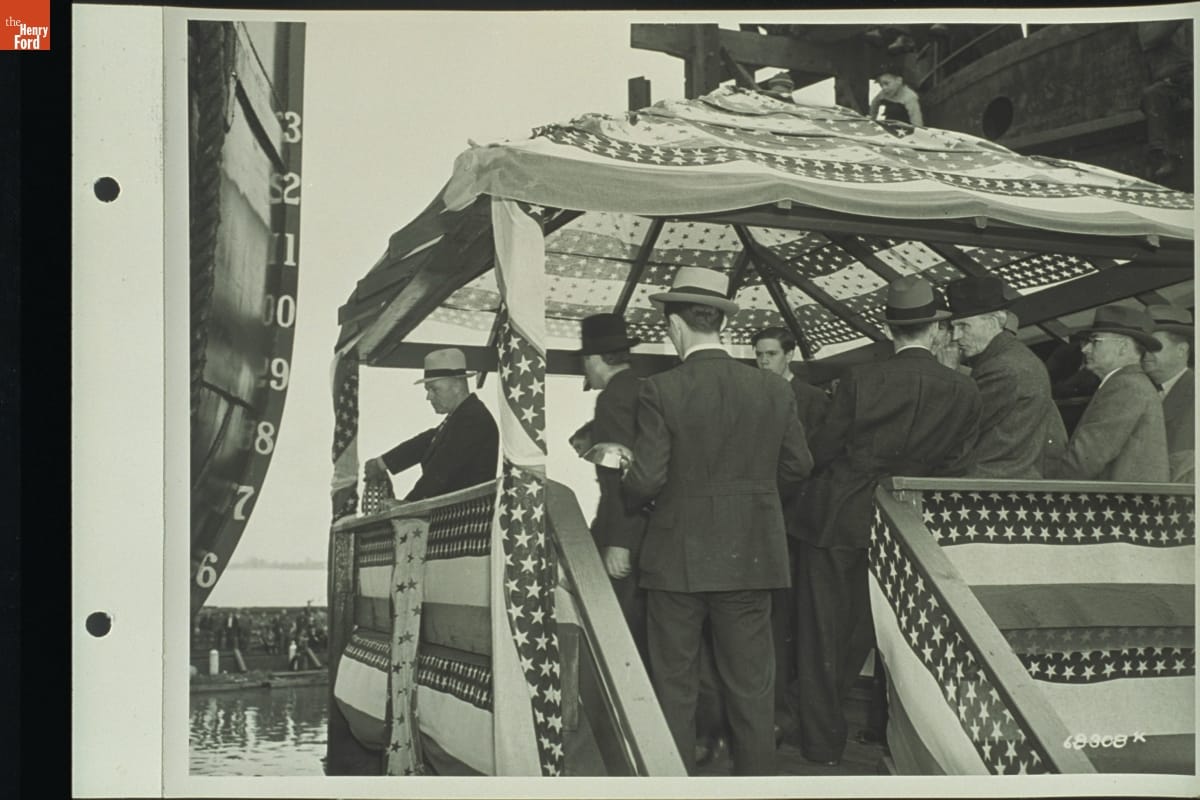
- Launching the Green Island Freighter at the Great Lakes Engineering Works, Ecorse, Michigan, May 1937 - Ford Motor Company launched the MS <EM>Green Island</EM> in 1937. The 300-foot vessel was part of a fleet that carried raw material, auto parts and other goods to and from Ford's mines, mills and factories. <EM>Green Island</EM>, with its low twelve-foot draft, was one of the longest ships to move through the New York State Barge Canal system.
- May 15, 1937
- Collections - Artifact
Launching the Green Island Freighter at the Great Lakes Engineering Works, Ecorse, Michigan, May 1937
Ford Motor Company launched the MS Green Island in 1937. The 300-foot vessel was part of a fleet that carried raw material, auto parts and other goods to and from Ford's mines, mills and factories. Green Island, with its low twelve-foot draft, was one of the longest ships to move through the New York State Barge Canal system.
- "Wreck of the Edmund Fitzgerald," Drawing by Kathy Jakobsen, 1977 - On November 10, 1975, Great Lakes freighter <em>Edmund Fitzgerald</em> sank in Lake Superior during a severe storm with near hurricane-force winds and 35-foot-high waves. All 29 crewmen aboard perished. Moved by this tragedy, folk artist and Michigan resident Kathy Jakobsen created this highly stylized ink and watercolor tribute in 1977.
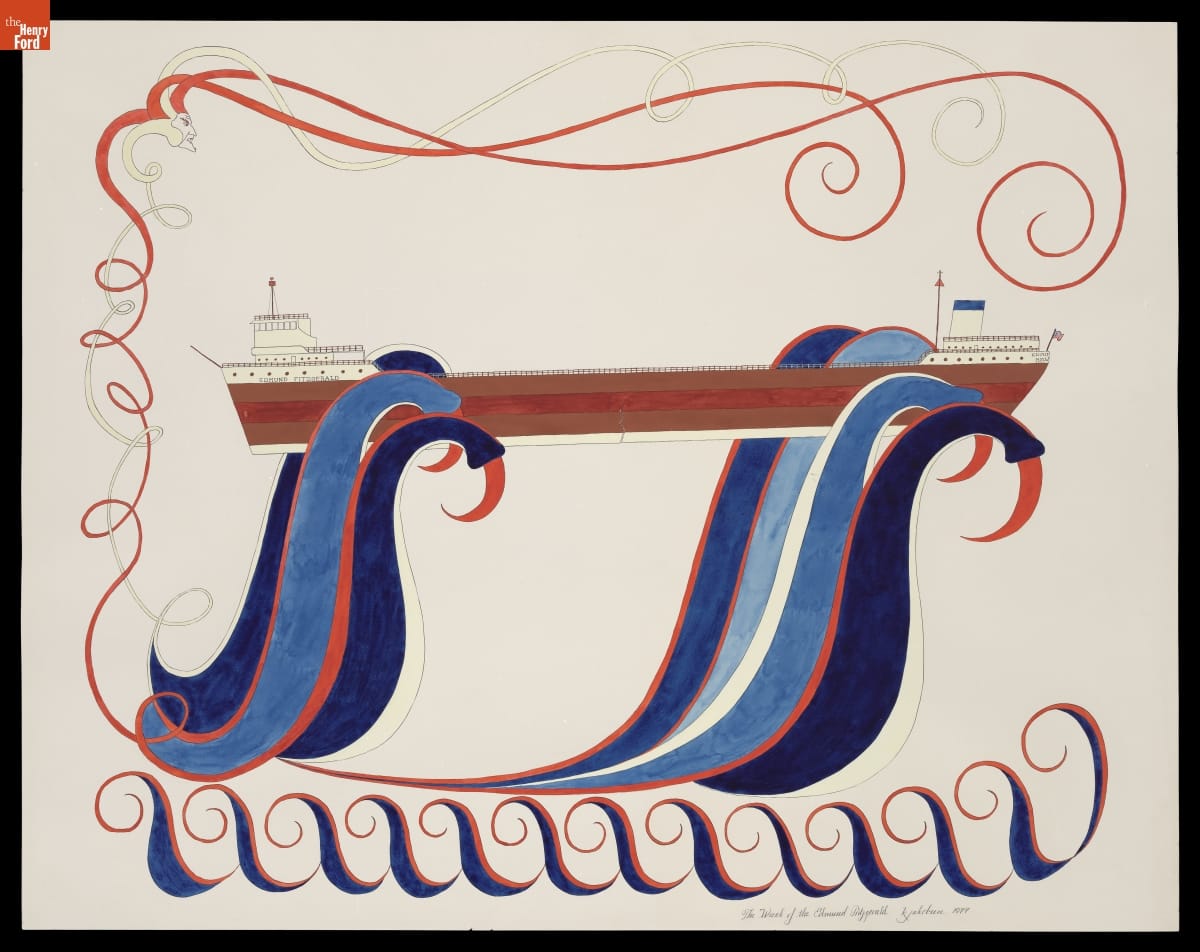
- November 10, 1975
- Collections - Artifact
"Wreck of the Edmund Fitzgerald," Drawing by Kathy Jakobsen, 1977
On November 10, 1975, Great Lakes freighter Edmund Fitzgerald sank in Lake Superior during a severe storm with near hurricane-force winds and 35-foot-high waves. All 29 crewmen aboard perished. Moved by this tragedy, folk artist and Michigan resident Kathy Jakobsen created this highly stylized ink and watercolor tribute in 1977.
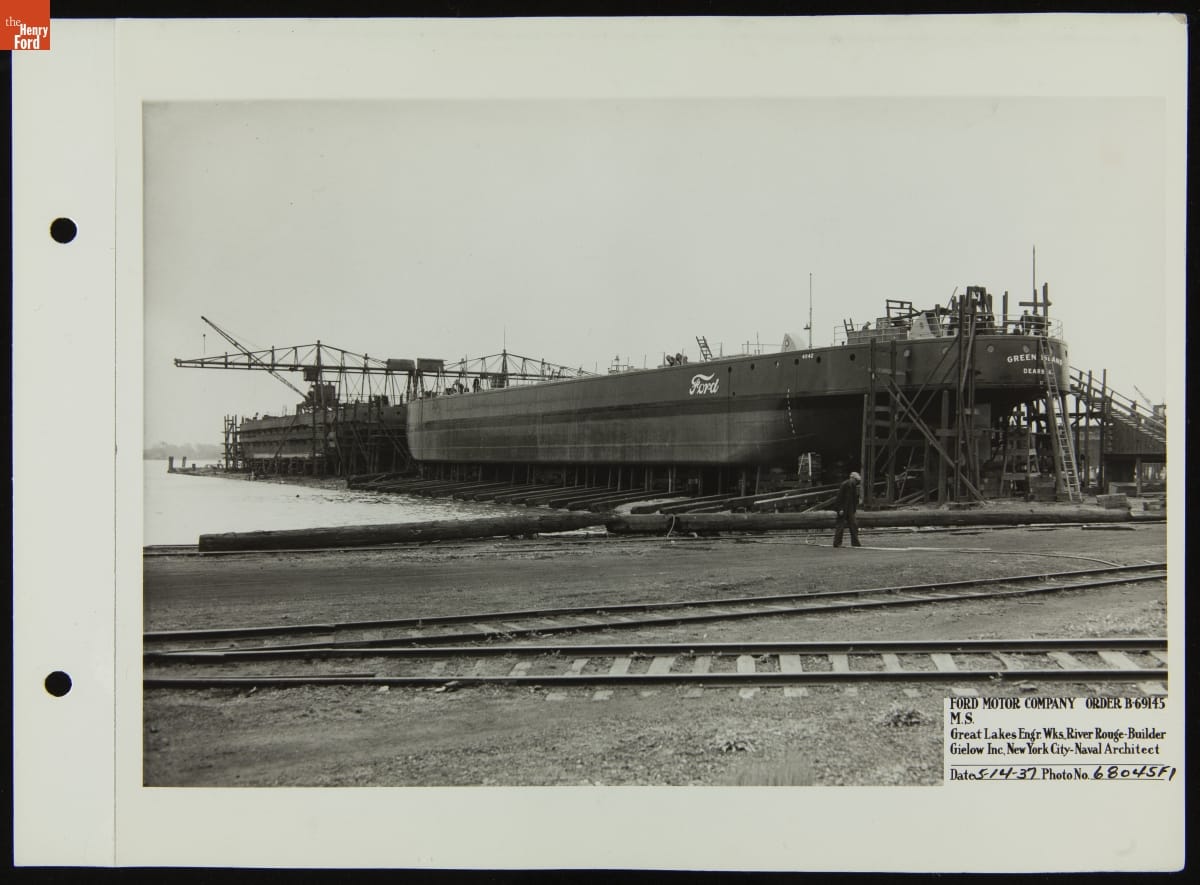
- Ford Freighter "Green Island" under Construction at Great Lakes Engineering Works, May 14, 1937 - Ford Motor Company built four canal boats in the 1930s to transport finished auto parts between Ford's production plants on the East Coast and its River Rouge complex in Michigan. The freighters were designed to travel on the New York State Barge Canal. The <em>Green Island</em>, named for the location of one of Ford's East Coast plants, began service in 1937.
- May 14, 1937
- Collections - Artifact
Ford Freighter "Green Island" under Construction at Great Lakes Engineering Works, May 14, 1937
Ford Motor Company built four canal boats in the 1930s to transport finished auto parts between Ford's production plants on the East Coast and its River Rouge complex in Michigan. The freighters were designed to travel on the New York State Barge Canal. The Green Island, named for the location of one of Ford's East Coast plants, began service in 1937.
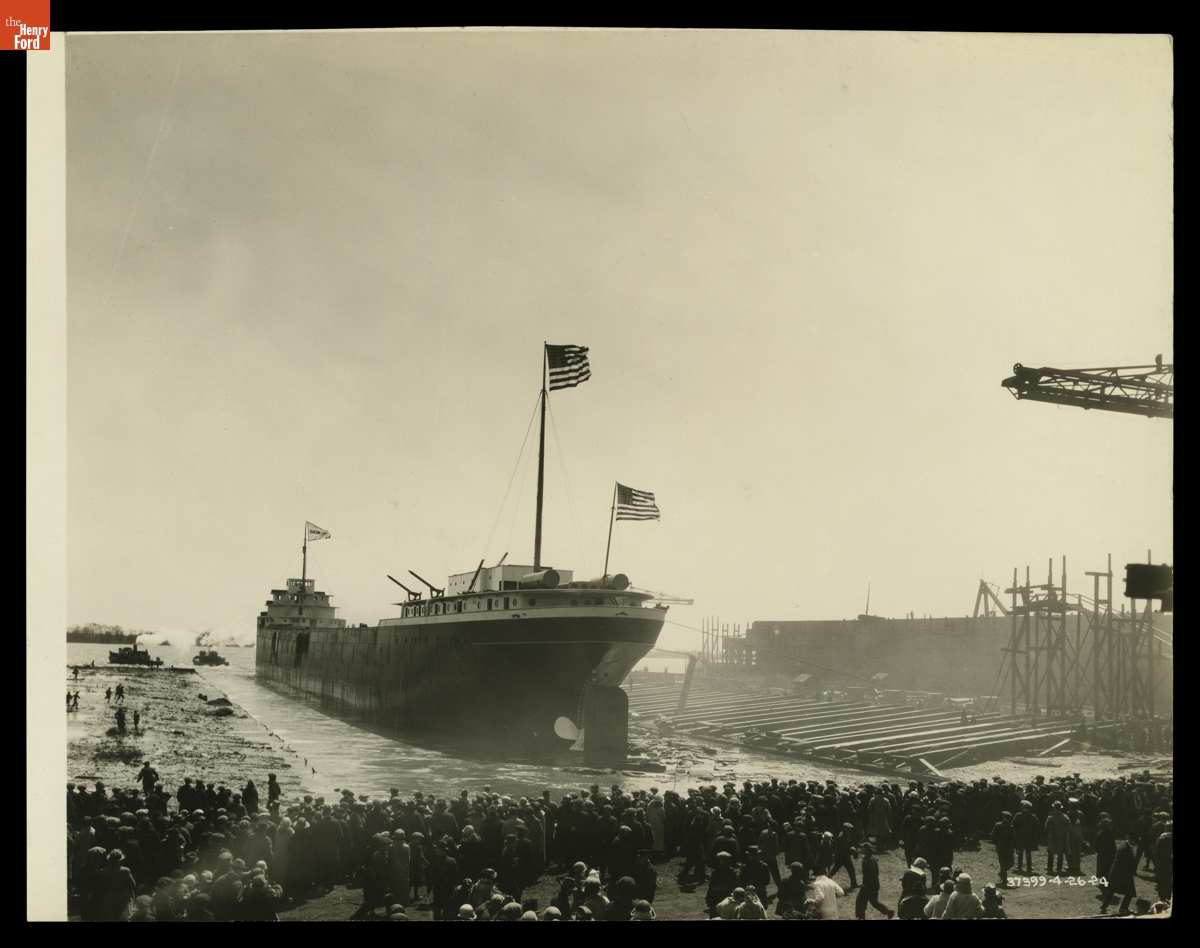
- Launch of Ford Motor Company Ship "Benson Ford," Ecorse, Michigan, 1924 - Henry Ford had two ore freighters built in 1924 and named them after his grandsons, Henry Ford II and Benson Ford. The ships plied the Great Lakes, transporting raw materials and finished products to and from Ford's River Rouge manufacturing complex. This photo shows the <EM>Benson Ford</EM> being launched at the Great Lakes Engineering Works in Ecorse, Michigan.
- April 26, 1924
- Collections - Artifact
Launch of Ford Motor Company Ship "Benson Ford," Ecorse, Michigan, 1924
Henry Ford had two ore freighters built in 1924 and named them after his grandsons, Henry Ford II and Benson Ford. The ships plied the Great Lakes, transporting raw materials and finished products to and from Ford's River Rouge manufacturing complex. This photo shows the Benson Ford being launched at the Great Lakes Engineering Works in Ecorse, Michigan.
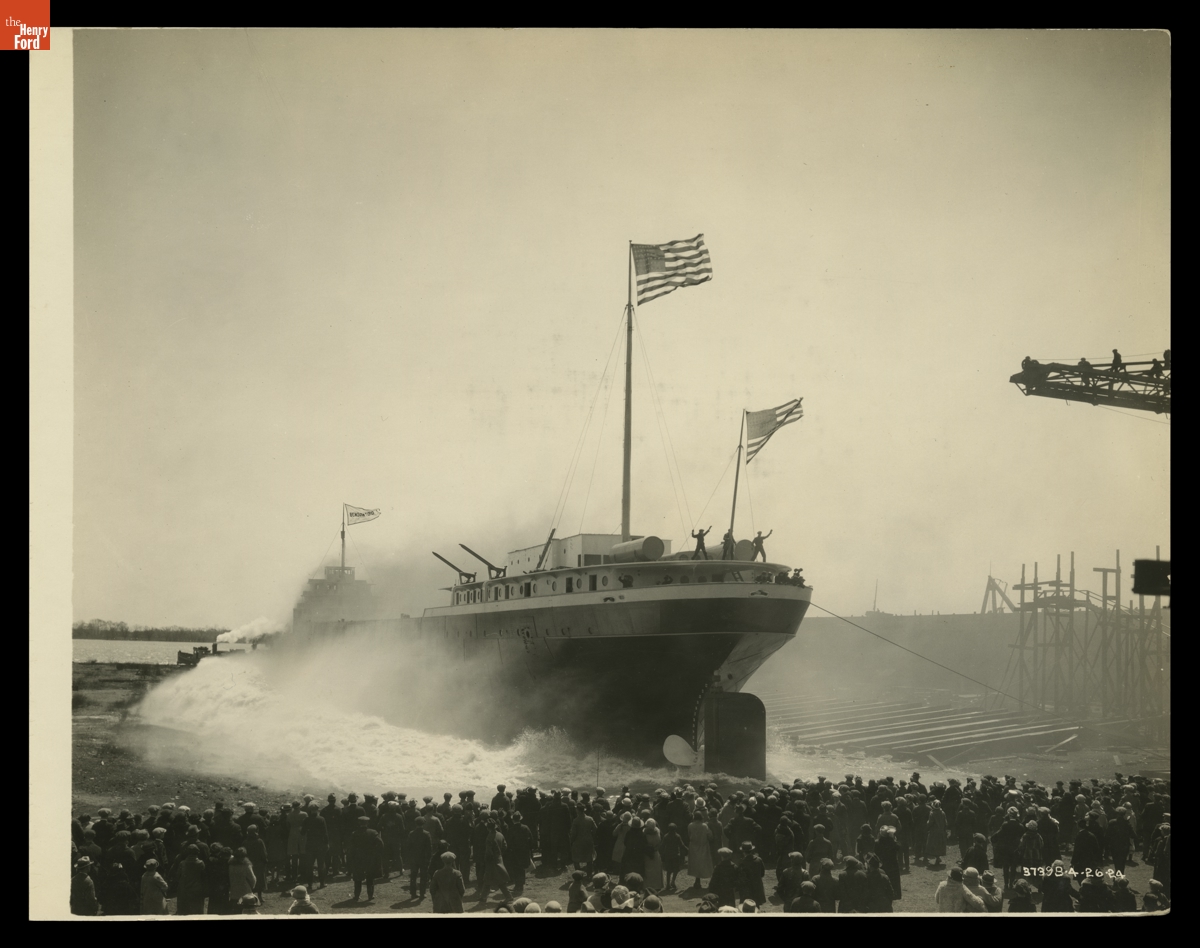
- Launch of the Benson Ford Freighter as it Hits the Water, April 26, 1924 - Henry Ford had two ore freighters built in 1924 and named them after his grandsons, Henry Ford II and Benson Ford. The ships plied the Great Lakes, transporting raw materials and finished products to and from Ford's River Rouge manufacturing complex. This photo shows the <EM>Benson Ford</EM> being launched at the Great Lakes Engineering Works in Ecorse, Michigan.
- April 26, 1924
- Collections - Artifact
Launch of the Benson Ford Freighter as it Hits the Water, April 26, 1924
Henry Ford had two ore freighters built in 1924 and named them after his grandsons, Henry Ford II and Benson Ford. The ships plied the Great Lakes, transporting raw materials and finished products to and from Ford's River Rouge manufacturing complex. This photo shows the Benson Ford being launched at the Great Lakes Engineering Works in Ecorse, Michigan.
- Ship's Log for MS Benson Ford, Trip 1, April 16-24, 1940 - Henry Ford had two ore freighters built in 1924 and named them after his grandsons, Henry Ford II and Benson Ford. The ships plied the Great Lakes, transporting raw materials to and from Ford's River Rouge manufacturing complex. A ship's log kept record of the cargo, loading and unloading ports, sailing dates, general weather conditions, and reasons for delay.
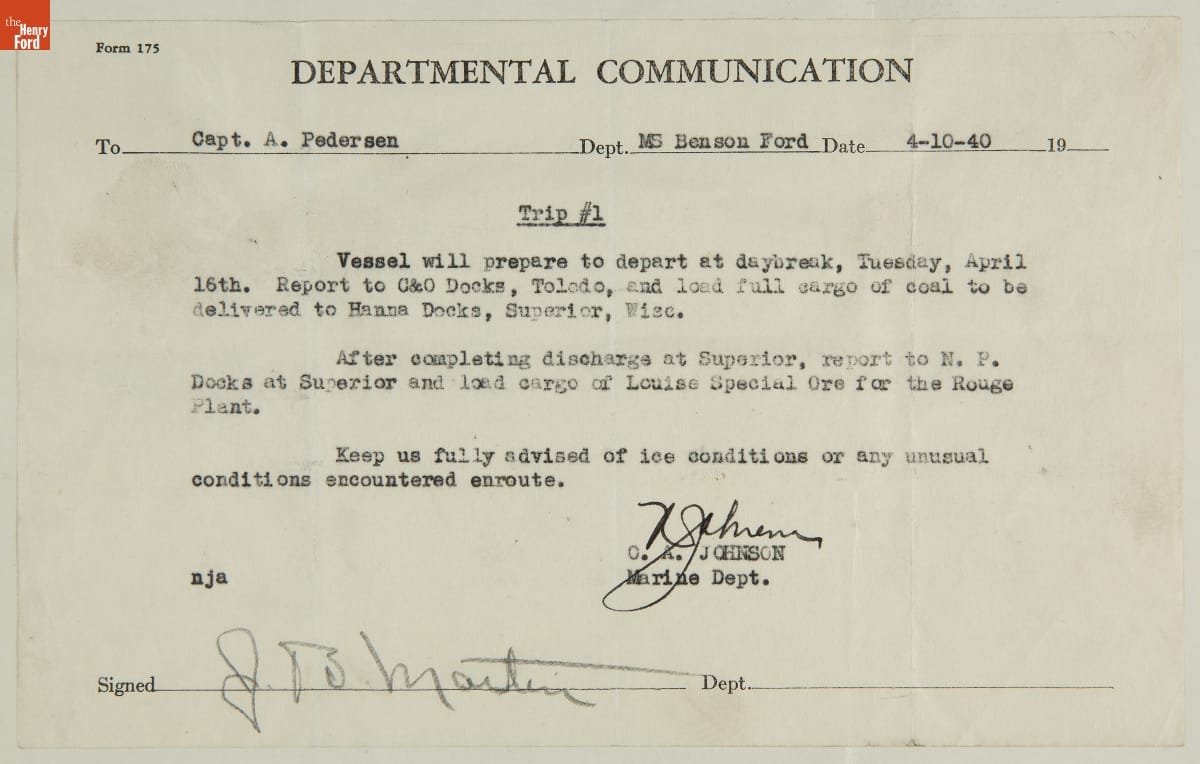
- 16 April 1940-24 April 1940
- Collections - Artifact
Ship's Log for MS Benson Ford, Trip 1, April 16-24, 1940
Henry Ford had two ore freighters built in 1924 and named them after his grandsons, Henry Ford II and Benson Ford. The ships plied the Great Lakes, transporting raw materials to and from Ford's River Rouge manufacturing complex. A ship's log kept record of the cargo, loading and unloading ports, sailing dates, general weather conditions, and reasons for delay.
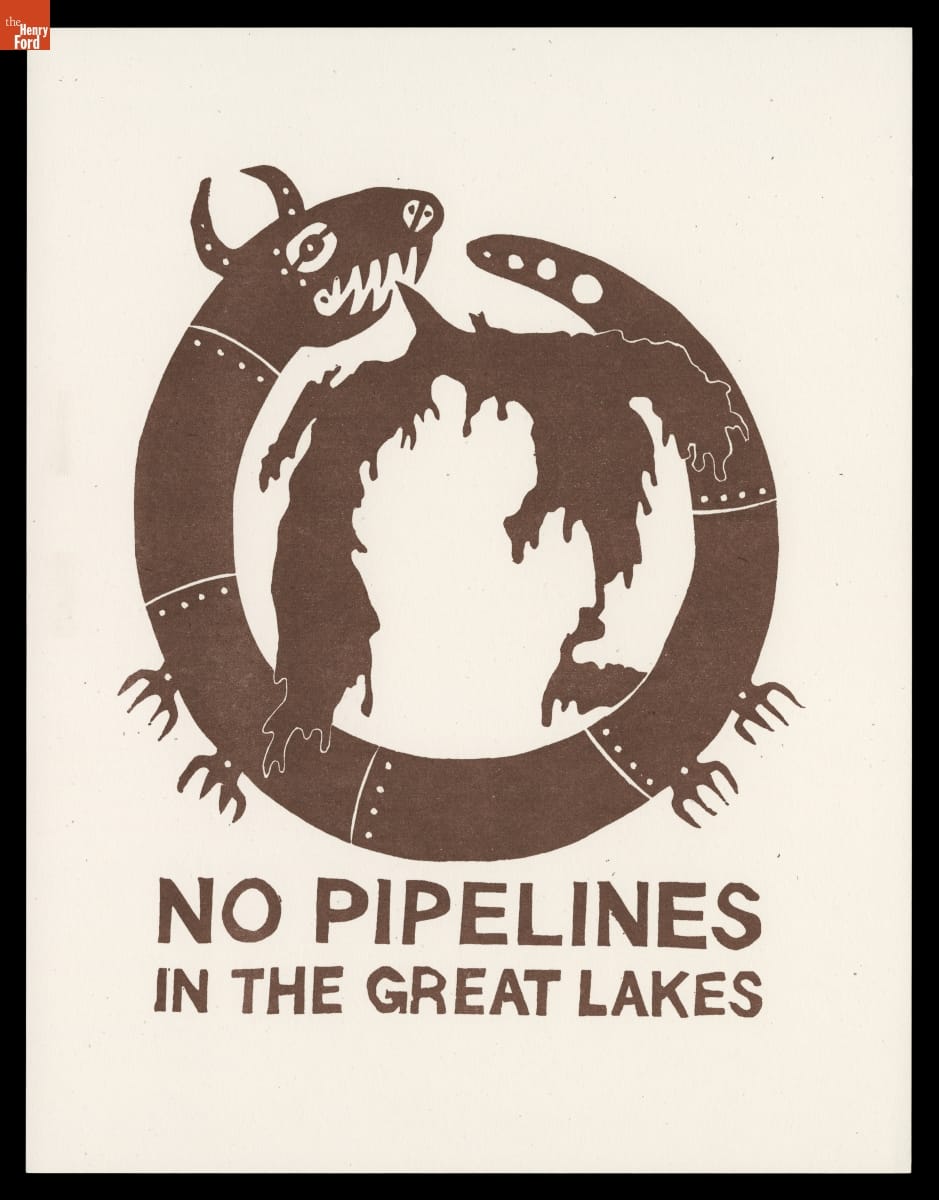
- "No Pipelines in the Great Lakes," July 2020 -
- July 01, 2020
- Collections - Artifact
"No Pipelines in the Great Lakes," July 2020