
Search
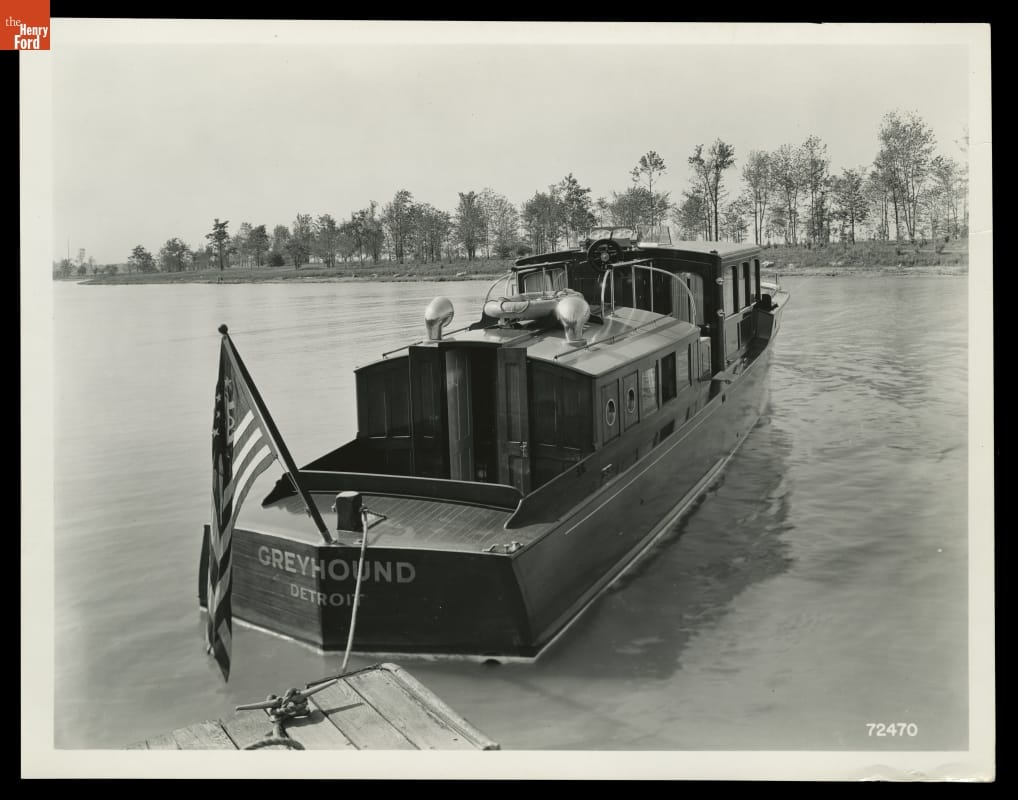
- Edsel Ford's Yacht "Greyhound," August 1923 - Edsel Ford enjoyed boating. He owned an impressive collection of watercraft from large pleasure yachts to powerboats. In 1920, Edsel purchased the 58-foot, mahogany-hulled yacht <EM>Greyhound</EM>. According to a popular boating publication from that time, among the newly acquired pleasure craft's uses was to transport Edsel and his family to and from a new Ford summer retreat in Harbor Beach, Michigan.
- August 20, 1923
- Collections - Artifact
Edsel Ford's Yacht "Greyhound," August 1923
Edsel Ford enjoyed boating. He owned an impressive collection of watercraft from large pleasure yachts to powerboats. In 1920, Edsel purchased the 58-foot, mahogany-hulled yacht Greyhound. According to a popular boating publication from that time, among the newly acquired pleasure craft's uses was to transport Edsel and his family to and from a new Ford summer retreat in Harbor Beach, Michigan.
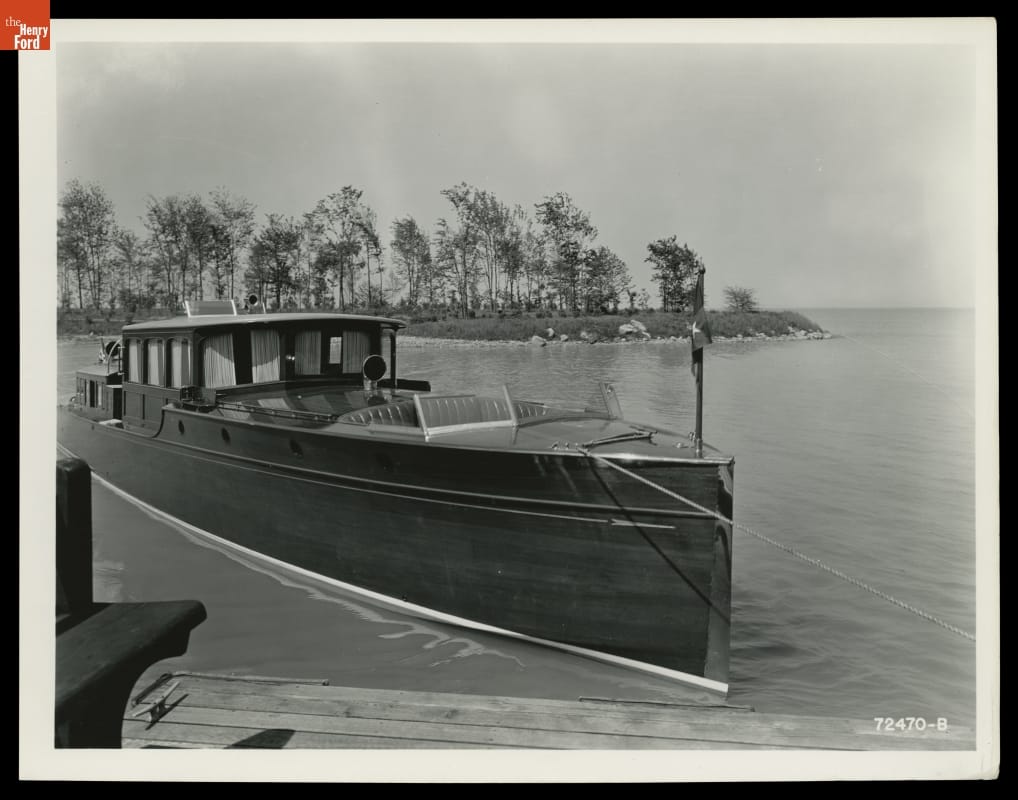
- Edsel Ford's Yacht "Greyhound," August 1923 - Edsel Ford enjoyed boating. He owned an impressive collection of watercraft from large pleasure yachts to powerboats. In 1920, Edsel purchased the 58-foot, mahogany-hulled yacht <EM>Greyhound</EM>. According to a popular boating publication from that time, among the newly acquired pleasure craft's uses was to transport Edsel and his family to and from a new Ford summer retreat in Harbor Beach, Michigan.
- August 20, 1923
- Collections - Artifact
Edsel Ford's Yacht "Greyhound," August 1923
Edsel Ford enjoyed boating. He owned an impressive collection of watercraft from large pleasure yachts to powerboats. In 1920, Edsel purchased the 58-foot, mahogany-hulled yacht Greyhound. According to a popular boating publication from that time, among the newly acquired pleasure craft's uses was to transport Edsel and his family to and from a new Ford summer retreat in Harbor Beach, Michigan.
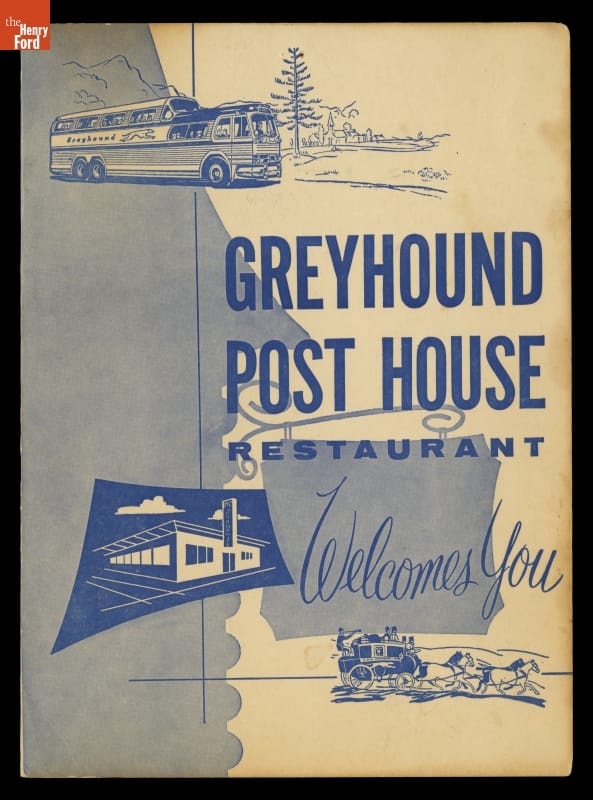
- Menu, "Greyhound Post House Restaurant Welcomes You," Omaha, Nebraska, 1955 - Many long-distance bus companies operated special restaurants to service their travelers. This 1955 menu from the Greyhound line explains that Greyhound's post houses were established to guarantee quality food and sanitary conditions for their travelers. In the days of stagecoach travel, post houses were stops along the way where travelers could rest, eat, and possibly even secure lodgings.
- 1955
- Collections - Artifact
Menu, "Greyhound Post House Restaurant Welcomes You," Omaha, Nebraska, 1955
Many long-distance bus companies operated special restaurants to service their travelers. This 1955 menu from the Greyhound line explains that Greyhound's post houses were established to guarantee quality food and sanitary conditions for their travelers. In the days of stagecoach travel, post houses were stops along the way where travelers could rest, eat, and possibly even secure lodgings.
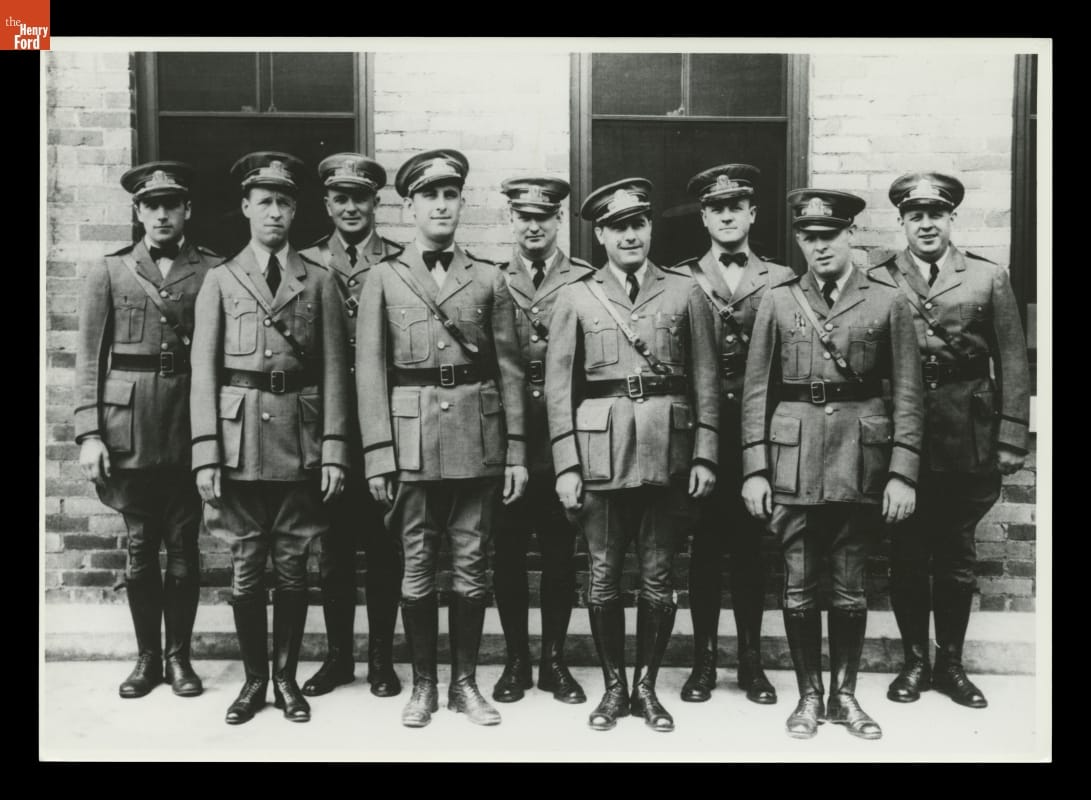
- Northland Greyhound Bus Drivers in New Uniforms, circa 1930 - Greyhound bus drivers pose in their new uniforms in the late 1920s. These uniform jackets, pants, caps and boots gave drivers a very professional appearance--implying that Greyhound bus riders would enjoy a safe and comfortable trip with these experts at the wheel.
- circa 1930
- Collections - Artifact
Northland Greyhound Bus Drivers in New Uniforms, circa 1930
Greyhound bus drivers pose in their new uniforms in the late 1920s. These uniform jackets, pants, caps and boots gave drivers a very professional appearance--implying that Greyhound bus riders would enjoy a safe and comfortable trip with these experts at the wheel.
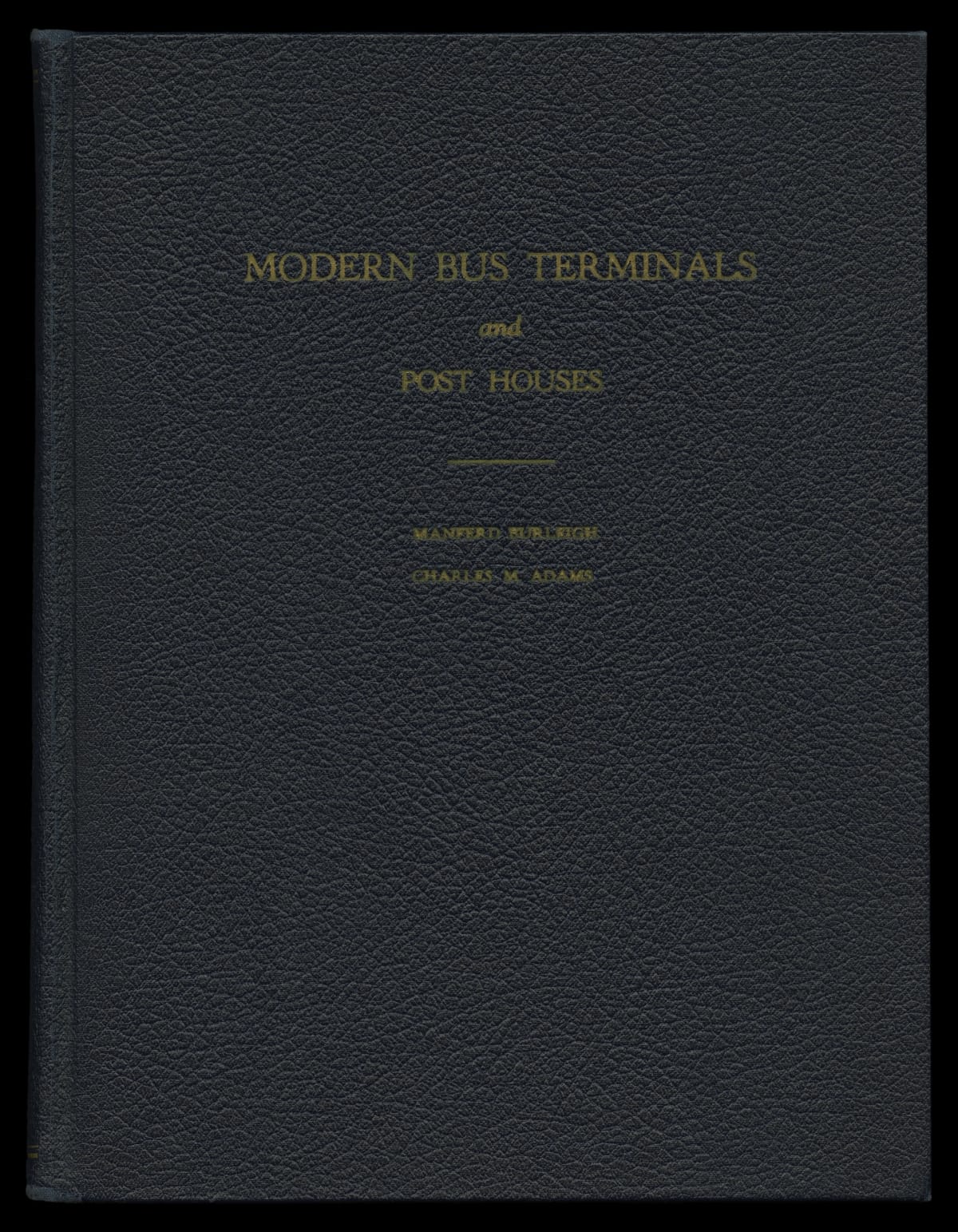
- Book, "Modern Bus Terminals and Post Houses," 1941 - Like railroad stations before them, urban bus terminals were often attractive as well as practical. In the 1930s and 1940s, many bus terminals featured streamlined facades that projected a clean, modern appearance. Detroit's sleek terminal was one of 45 facilities featured in the 1941 book <em>Modern Bus Terminals and Post Houses</em>.
- 1941
- Collections - Artifact
Book, "Modern Bus Terminals and Post Houses," 1941
Like railroad stations before them, urban bus terminals were often attractive as well as practical. In the 1930s and 1940s, many bus terminals featured streamlined facades that projected a clean, modern appearance. Detroit's sleek terminal was one of 45 facilities featured in the 1941 book Modern Bus Terminals and Post Houses.
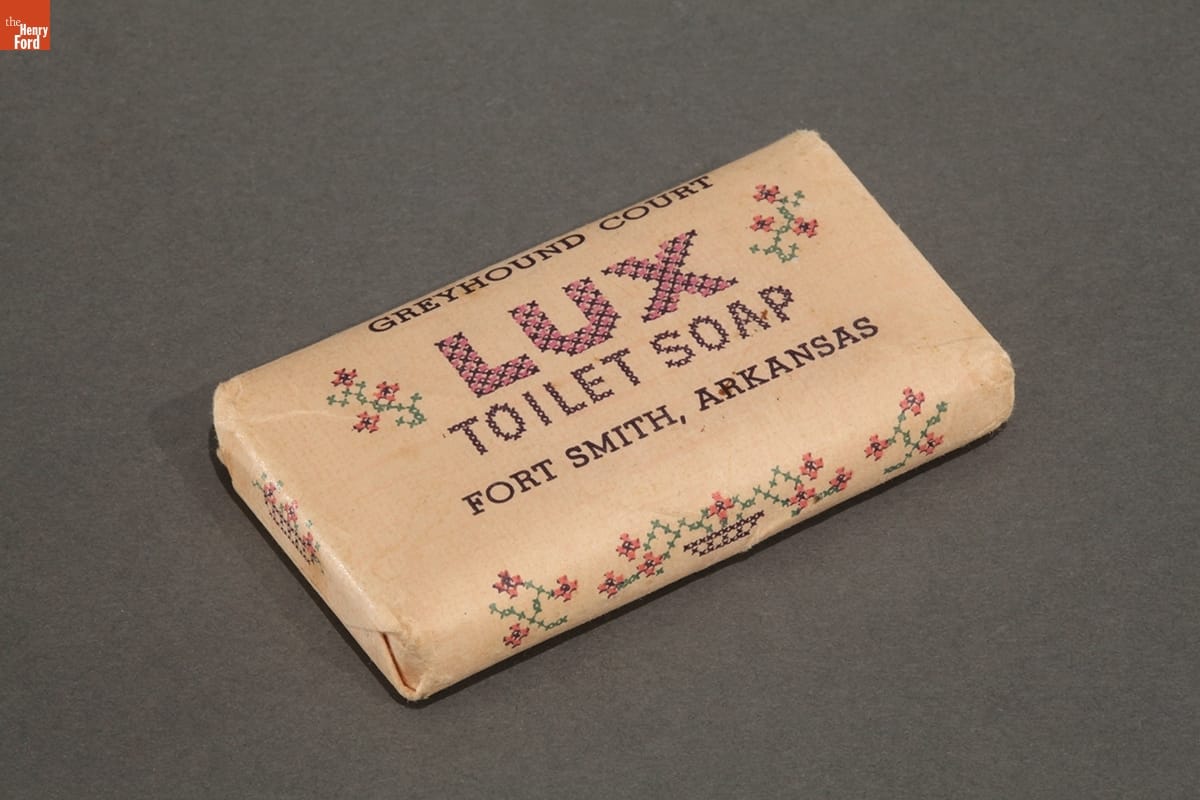
- Lux Toilet Soap, Complimentary Size, From Greyhound Court, 1940-1959 -
- 1940-1959
- Collections - Artifact
Lux Toilet Soap, Complimentary Size, From Greyhound Court, 1940-1959
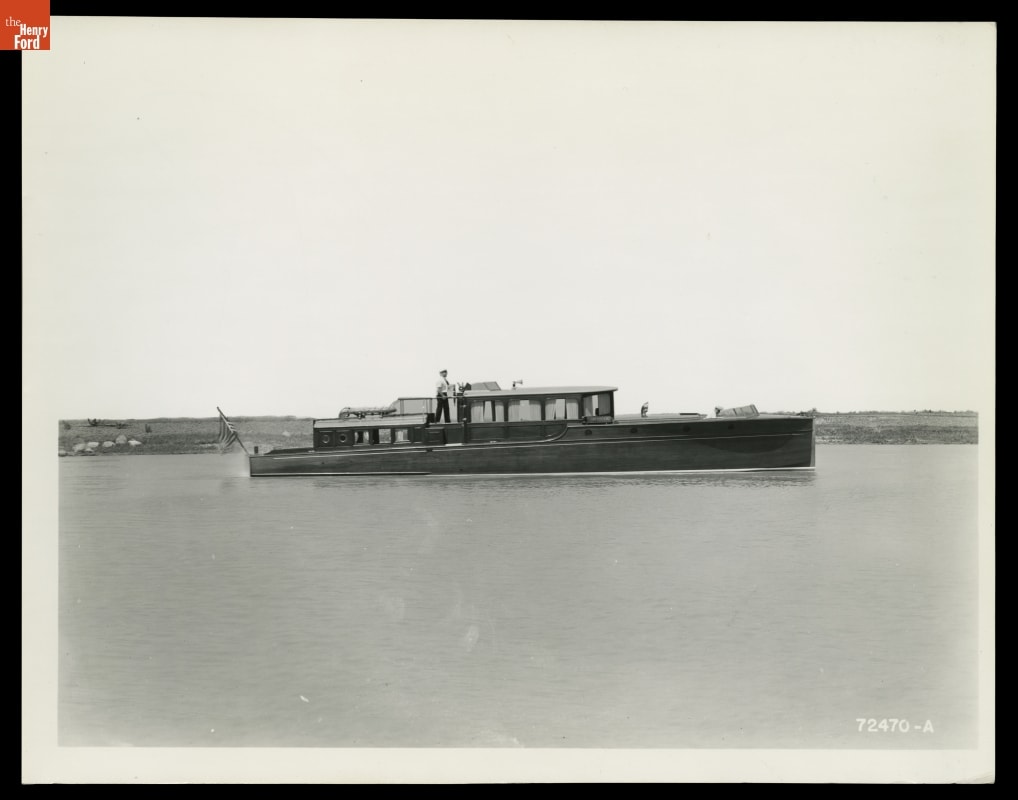
- Edsel Ford's Yacht "Greyhound," August 1923 - Edsel Ford enjoyed boating. He owned an impressive collection of watercraft from large pleasure yachts to powerboats. In 1920, Edsel purchased the 58-foot, mahogany-hulled yacht <EM>Greyhound</EM>. According to a popular boating publication from that time, among the newly acquired pleasure craft's uses was to transport Edsel and his family to and from a new Ford summer retreat in Harbor Beach, Michigan.
- August 20, 1923
- Collections - Artifact
Edsel Ford's Yacht "Greyhound," August 1923
Edsel Ford enjoyed boating. He owned an impressive collection of watercraft from large pleasure yachts to powerboats. In 1920, Edsel purchased the 58-foot, mahogany-hulled yacht Greyhound. According to a popular boating publication from that time, among the newly acquired pleasure craft's uses was to transport Edsel and his family to and from a new Ford summer retreat in Harbor Beach, Michigan.
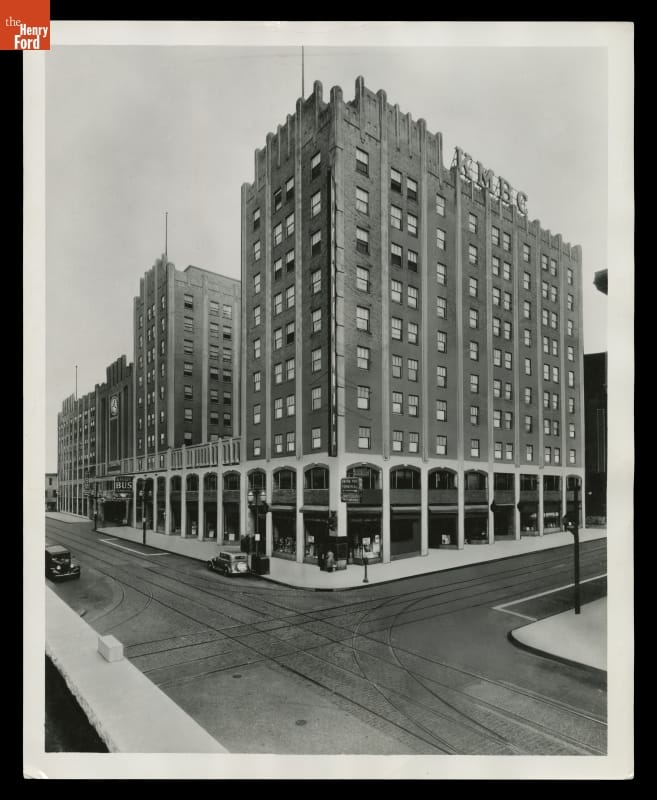
- Pickwick Hotel with Greyhound Bus Terminal, Kansas City, Missouri, circa 1931 - Bus terminals of the 1920s and 1930s were often located in hotels. The Pickwick organization owned the Pickwick bus line and operated a chain of hotels. They often built terminals inside or adjacent to their hotels. The bus terminal in their Kansas City, Missouri, hotel featured a turntable that rotated buses 180 degrees -- allowing buses to exit the same way they entered.
- circa 1931
- Collections - Artifact
Pickwick Hotel with Greyhound Bus Terminal, Kansas City, Missouri, circa 1931
Bus terminals of the 1920s and 1930s were often located in hotels. The Pickwick organization owned the Pickwick bus line and operated a chain of hotels. They often built terminals inside or adjacent to their hotels. The bus terminal in their Kansas City, Missouri, hotel featured a turntable that rotated buses 180 degrees -- allowing buses to exit the same way they entered.
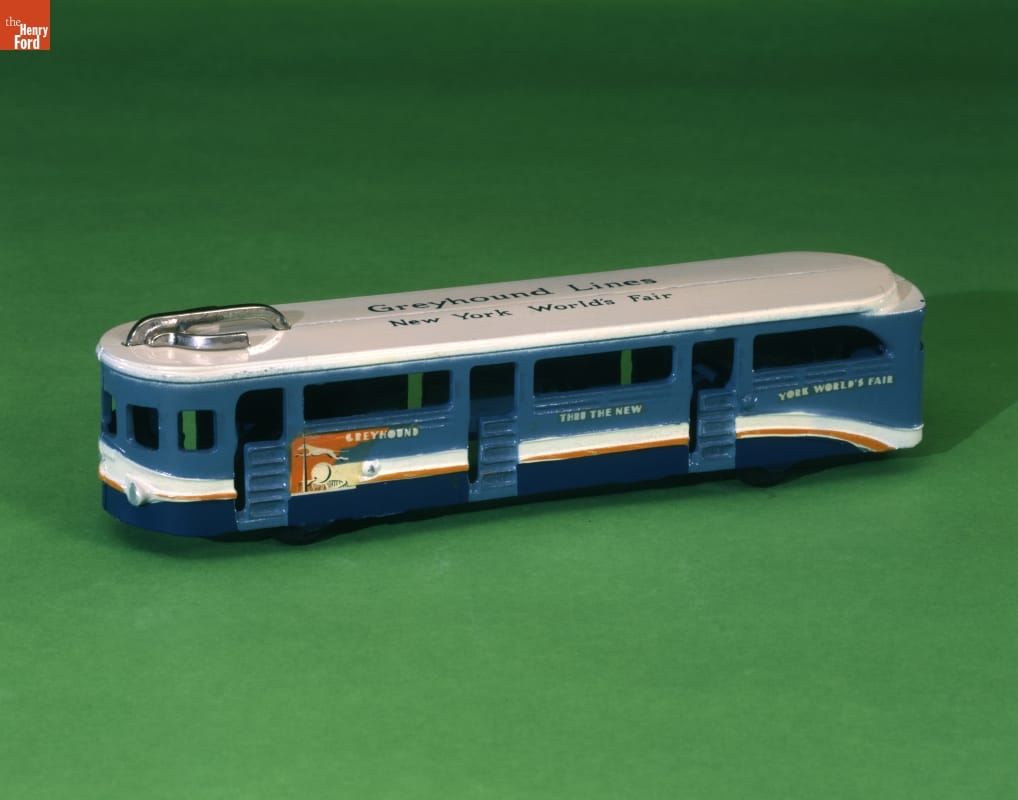
- New York World's Fair Souvenir Toy Bus, 1939 - The 1939-40 New York World's Fair - themed "Building the World of Tomorrow" - encouraged a depression-weary public that the future would be rosy. The fair also provided the opportunity for companies to advertise to millions of people through souvenirs, such as this toy bus sold or distributed by Greyhound Lines.
- 1939
- Collections - Artifact
New York World's Fair Souvenir Toy Bus, 1939
The 1939-40 New York World's Fair - themed "Building the World of Tomorrow" - encouraged a depression-weary public that the future would be rosy. The fair also provided the opportunity for companies to advertise to millions of people through souvenirs, such as this toy bus sold or distributed by Greyhound Lines.
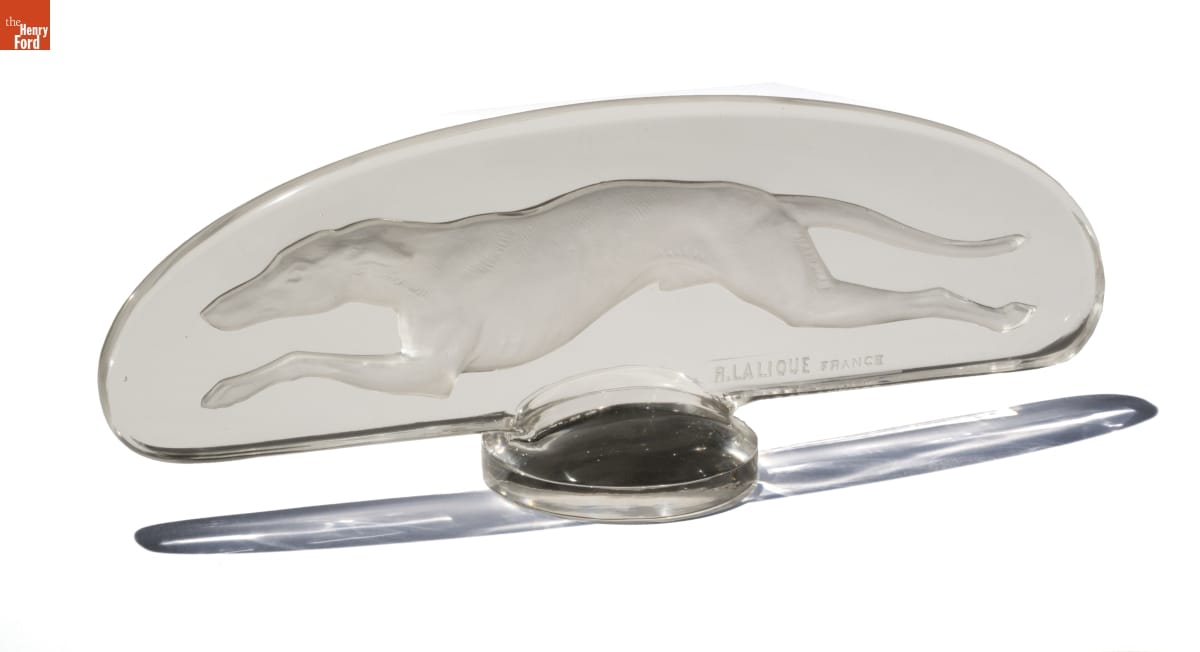
- Lalique "Levrier" Greyhound Hood Ornament, circa 1930 - Rene Lalique created some of the most striking automobile mascots or hood ornaments. Lalique's elegant, molded-glass models enhanced the front of any luxury vehicle. The mascots could also be lit from below making them all the more impressive. These decorative mascots became a symbol of the car owner's wealth, status, and good taste.
- circa 1930
- Collections - Artifact
Lalique "Levrier" Greyhound Hood Ornament, circa 1930
Rene Lalique created some of the most striking automobile mascots or hood ornaments. Lalique's elegant, molded-glass models enhanced the front of any luxury vehicle. The mascots could also be lit from below making them all the more impressive. These decorative mascots became a symbol of the car owner's wealth, status, and good taste.