
Search
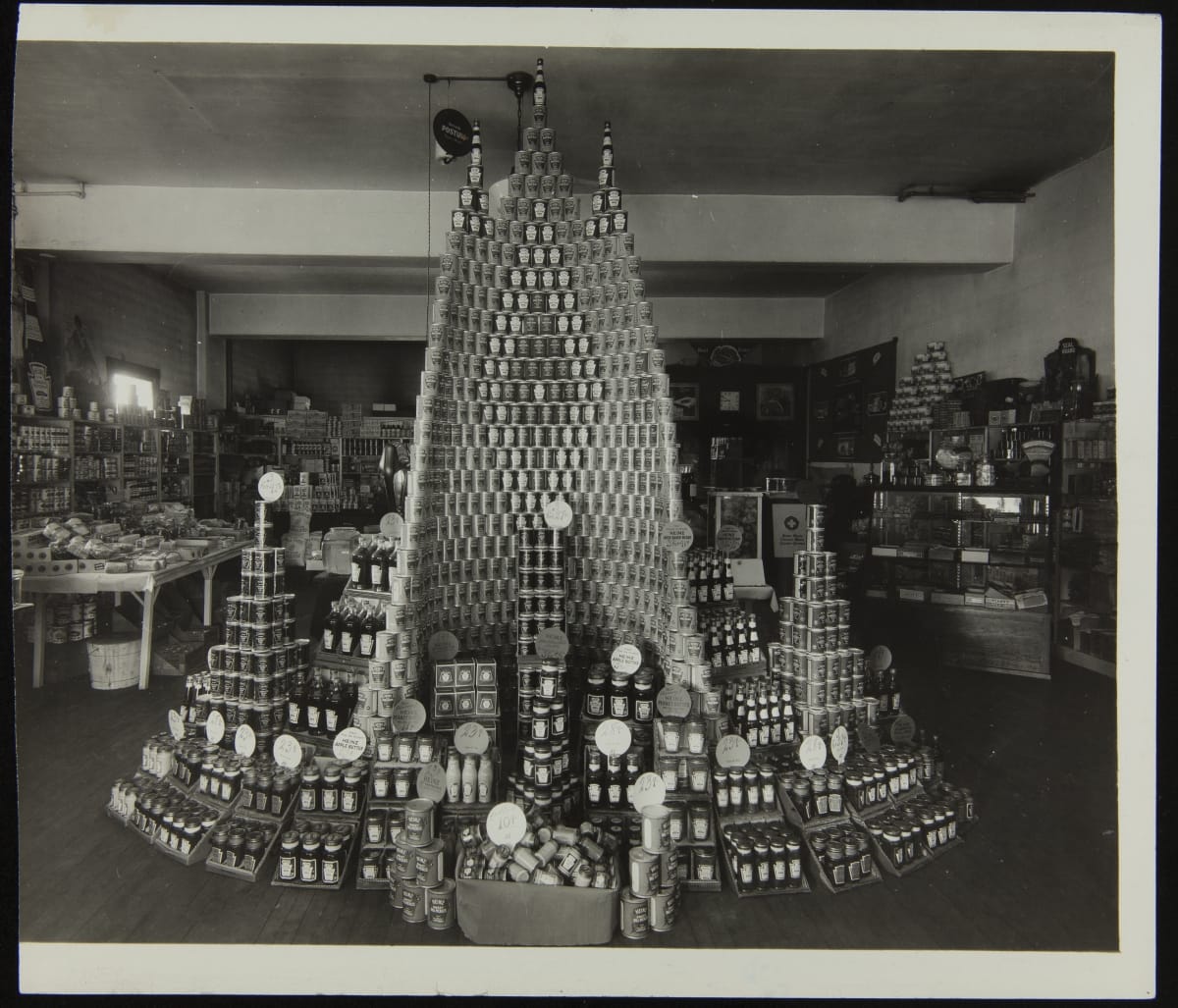
- O. C. Bedell Grocery Store, Floor Display of Heinz Products, Newton, Ohio, circa 1930 - H. J. Heinz was at the forefront of creative marketing in the manufactured food industry. He developed a comprehensive advertising strategy that included elaborate product displays in local grocery stores. Shoppers were greeted with colorful posters and meticulously designed floor-to-ceiling pyramids of canned and jarred products created by Heinz salespeople.
- circa 1930
- Collections - Artifact
O. C. Bedell Grocery Store, Floor Display of Heinz Products, Newton, Ohio, circa 1930
H. J. Heinz was at the forefront of creative marketing in the manufactured food industry. He developed a comprehensive advertising strategy that included elaborate product displays in local grocery stores. Shoppers were greeted with colorful posters and meticulously designed floor-to-ceiling pyramids of canned and jarred products created by Heinz salespeople.
- Sam Joseph Grocery Store Display of Heinz Products, Grand Rapids, Michigan, 1929 - "Pickle King" H. J. Heinz's confidence in his products prompted his extraordinary guarantee -- if you didn't find his food satisfactory, you could get your money back. His faith in his product established trust in his customers and provided them with zero financial risk in trying a new product. His guarantee is featured here in the middle of his other advertisements.

- 1929
- Collections - Artifact
Sam Joseph Grocery Store Display of Heinz Products, Grand Rapids, Michigan, 1929
"Pickle King" H. J. Heinz's confidence in his products prompted his extraordinary guarantee -- if you didn't find his food satisfactory, you could get your money back. His faith in his product established trust in his customers and provided them with zero financial risk in trying a new product. His guarantee is featured here in the middle of his other advertisements.
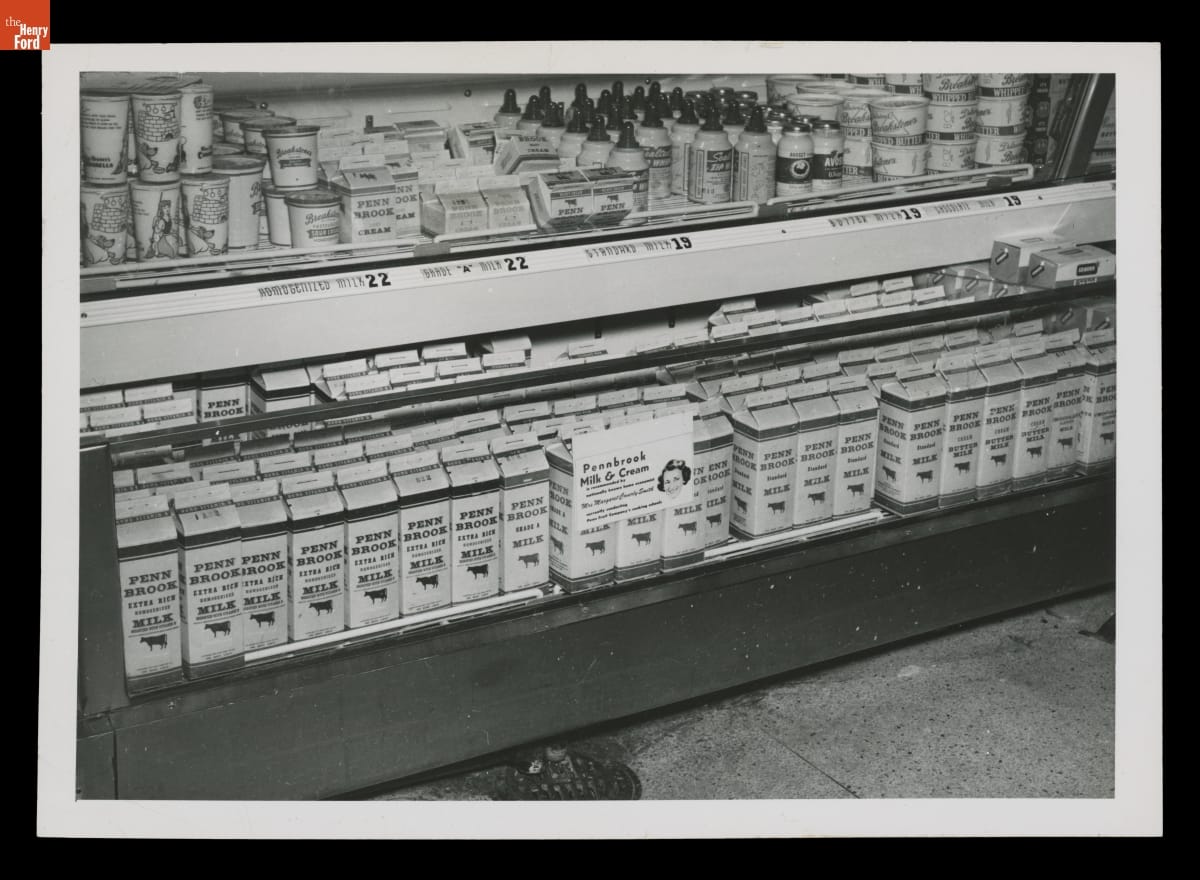
- Grocery Store Dairy Case Stocked with Pennbrook Milk Company Products, circa 1950 -
- circa 1950
- Collections - Artifact
Grocery Store Dairy Case Stocked with Pennbrook Milk Company Products, circa 1950
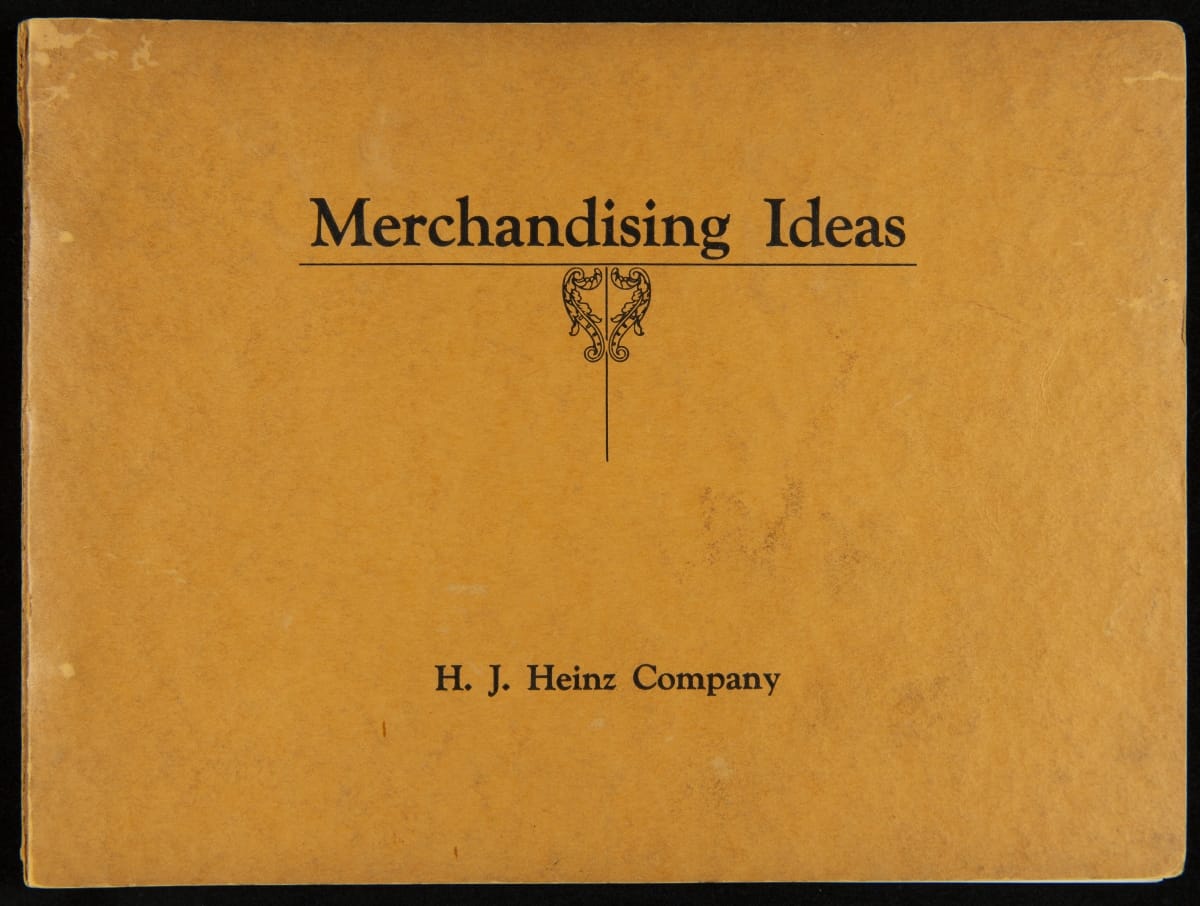
- "Merchandising Ideas," Instruction Booklet for Heinz Product and Advertising Displays, H. J. Heinz Company, circa 1935 - The H.J. Heinz Company's advertising strategy was a recipe for success. Elaborate and creative displays and signage encouraged customers to buy Heinz products. This booklet provided grocers with suggestions for counter, floor, and window displays, explained how to set-up a "Saturday sampling" table, and included an extensive selection of advertising designs available for purchase.
- circa 1935
- Collections - Artifact
"Merchandising Ideas," Instruction Booklet for Heinz Product and Advertising Displays, H. J. Heinz Company, circa 1935
The H.J. Heinz Company's advertising strategy was a recipe for success. Elaborate and creative displays and signage encouraged customers to buy Heinz products. This booklet provided grocers with suggestions for counter, floor, and window displays, explained how to set-up a "Saturday sampling" table, and included an extensive selection of advertising designs available for purchase.
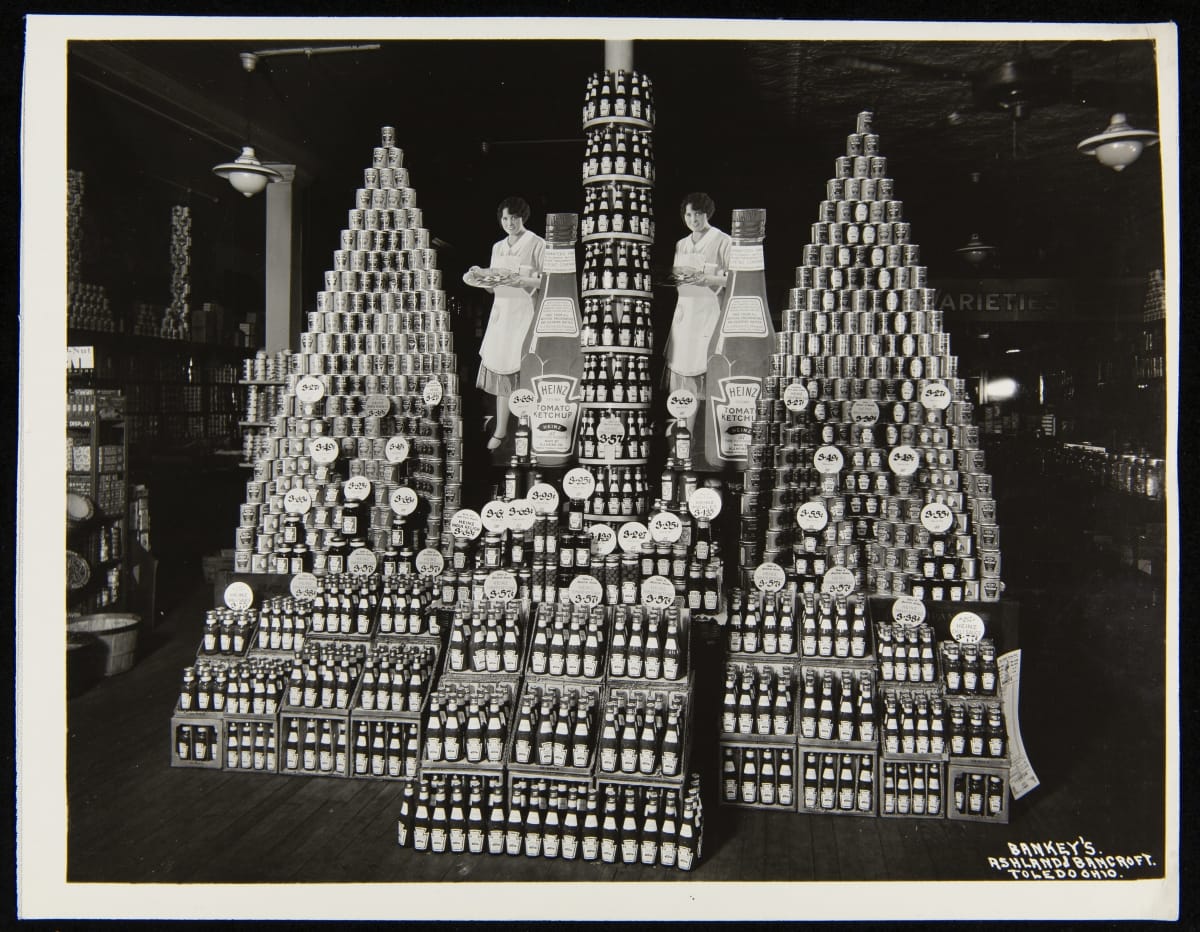
- Bankey Grocery Store Display of Heinz Products, Toledo, Ohio, circa 1929 - H. J. Heinz was at the forefront of creative marketing in the manufactured food industry. He developed a comprehensive advertising strategy that included elaborate product displays in local grocery stores. Shoppers were greeted with colorful posters and meticulously designed floor-to-ceiling pyramids of canned and jarred products created by Heinz salespeople.
- circa 1929
- Collections - Artifact
Bankey Grocery Store Display of Heinz Products, Toledo, Ohio, circa 1929
H. J. Heinz was at the forefront of creative marketing in the manufactured food industry. He developed a comprehensive advertising strategy that included elaborate product displays in local grocery stores. Shoppers were greeted with colorful posters and meticulously designed floor-to-ceiling pyramids of canned and jarred products created by Heinz salespeople.
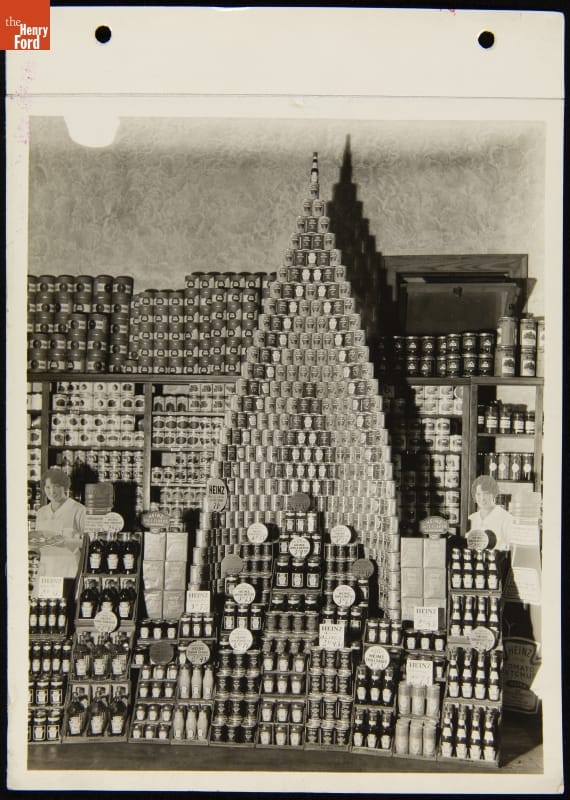
- GEM Grocery Company Display of Heinz Products, Topeka, Kansas, circa 1930 - H. J. Heinz was at the forefront of creative marketing in the manufactured food industry. He developed a comprehensive advertising strategy that included elaborate product displays in local grocery stores. Shoppers were greeted with colorful posters and meticulously designed floor-to-ceiling pyramids of canned and jarred products created by Heinz salespeople.
- circa 1930
- Collections - Artifact
GEM Grocery Company Display of Heinz Products, Topeka, Kansas, circa 1930
H. J. Heinz was at the forefront of creative marketing in the manufactured food industry. He developed a comprehensive advertising strategy that included elaborate product displays in local grocery stores. Shoppers were greeted with colorful posters and meticulously designed floor-to-ceiling pyramids of canned and jarred products created by Heinz salespeople.
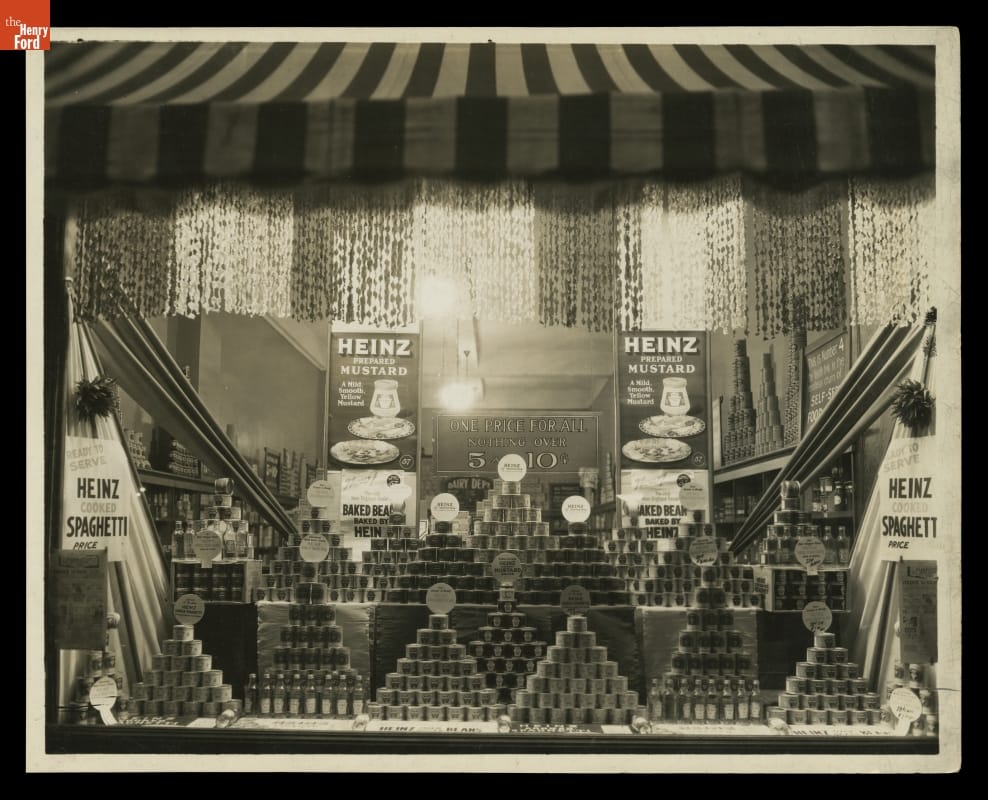
- Heinz Products in Manhattan Food Store Display, Boston, Massachusetts, circa 1930 - The H.J. Heinz Company employed a robust, well-trained sales force to work directly with grocery stores throughout the country. After securing a store's business, Heinz salesmen visited regularly to introduce new products, clear expired or otherwise unsaleable merchandise, and create product displays. These neat, orderly presentations caught shoppers' attention and helped reinforce the notion that Heinz products were of consistent, high quality.
- circa 1930
- Collections - Artifact
Heinz Products in Manhattan Food Store Display, Boston, Massachusetts, circa 1930
The H.J. Heinz Company employed a robust, well-trained sales force to work directly with grocery stores throughout the country. After securing a store's business, Heinz salesmen visited regularly to introduce new products, clear expired or otherwise unsaleable merchandise, and create product displays. These neat, orderly presentations caught shoppers' attention and helped reinforce the notion that Heinz products were of consistent, high quality.
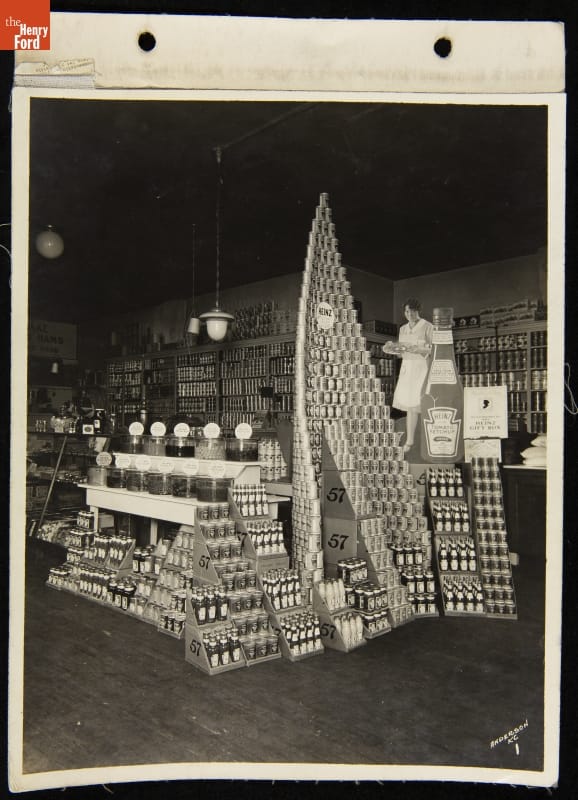
- Grocery Store Floor Display of Heinz Products, circa 1930 - H. J. Heinz was at the forefront of creative marketing in the manufactured food industry. He developed a comprehensive advertising strategy that included elaborate product displays in local grocery stores. Shoppers were greeted with colorful posters and meticulously designed floor-to-ceiling pyramids of canned and jarred products created by Heinz salespeople.
- circa 1930
- Collections - Artifact
Grocery Store Floor Display of Heinz Products, circa 1930
H. J. Heinz was at the forefront of creative marketing in the manufactured food industry. He developed a comprehensive advertising strategy that included elaborate product displays in local grocery stores. Shoppers were greeted with colorful posters and meticulously designed floor-to-ceiling pyramids of canned and jarred products created by Heinz salespeople.
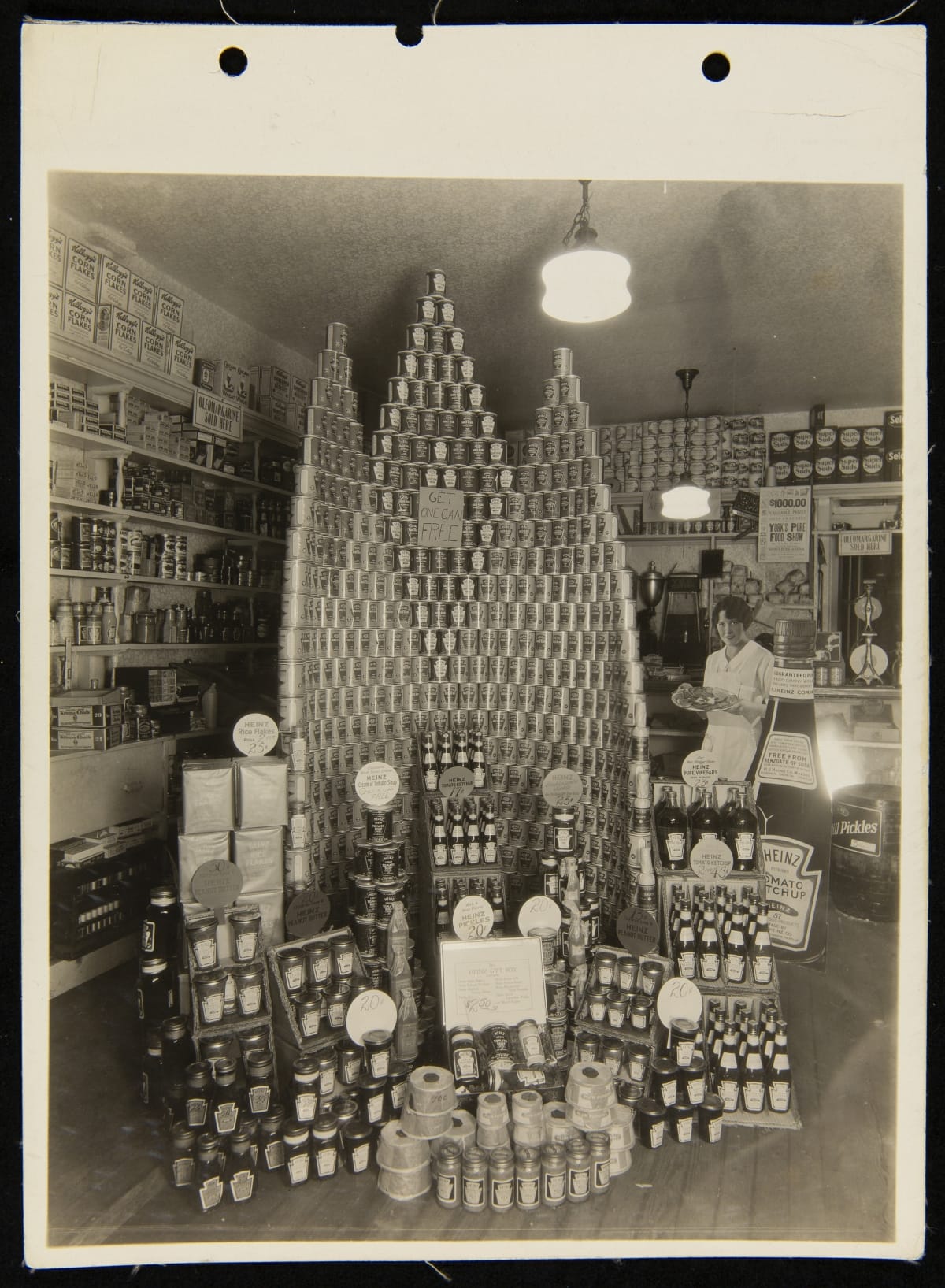
- A. L. Ernest Grocery Store Floor Display of Heinz Products, York, Pennsylvania, circa 1930 - H. J. Heinz was at the forefront of creative marketing in the manufactured food industry. He developed a comprehensive advertising strategy that included elaborate product displays in local grocery stores. Shoppers were greeted with colorful posters and meticulously designed floor-to-ceiling pyramids of canned and jarred products created by Heinz salespeople.
- circa 1930
- Collections - Artifact
A. L. Ernest Grocery Store Floor Display of Heinz Products, York, Pennsylvania, circa 1930
H. J. Heinz was at the forefront of creative marketing in the manufactured food industry. He developed a comprehensive advertising strategy that included elaborate product displays in local grocery stores. Shoppers were greeted with colorful posters and meticulously designed floor-to-ceiling pyramids of canned and jarred products created by Heinz salespeople.
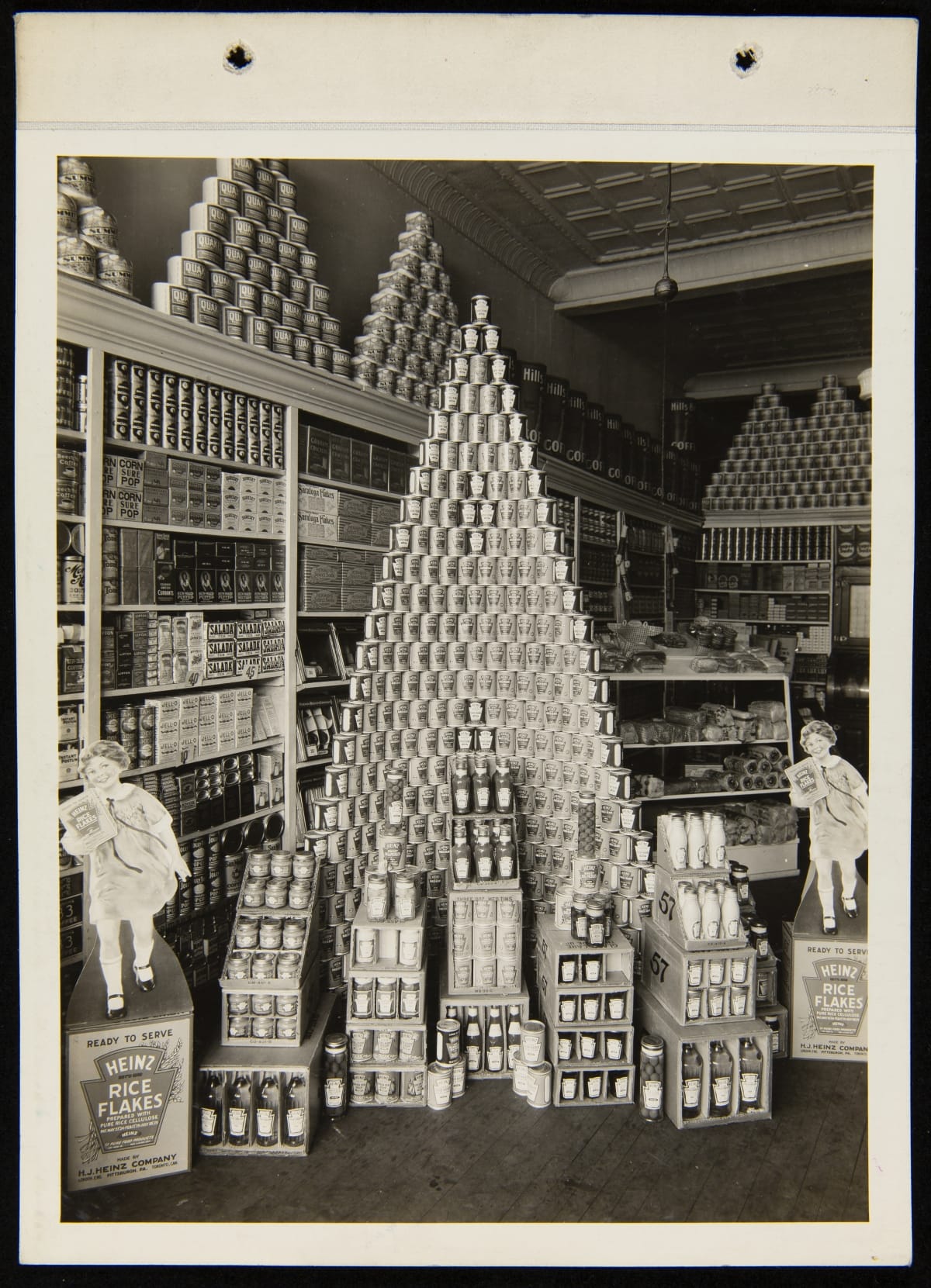
- Pastoor's Market Store Floor Display of Heinz Products, Grand Rapids, Michigan, circa 1930 - H. J. Heinz was at the forefront of creative marketing in the manufactured food industry. He developed a comprehensive advertising strategy that included elaborate product displays in local grocery stores. Shoppers were greeted with colorful posters and meticulously designed floor-to-ceiling pyramids of canned and jarred products created by Heinz salespeople.
- circa 1930
- Collections - Artifact
Pastoor's Market Store Floor Display of Heinz Products, Grand Rapids, Michigan, circa 1930
H. J. Heinz was at the forefront of creative marketing in the manufactured food industry. He developed a comprehensive advertising strategy that included elaborate product displays in local grocery stores. Shoppers were greeted with colorful posters and meticulously designed floor-to-ceiling pyramids of canned and jarred products created by Heinz salespeople.