
Search
- Lotus Racer with Ford Engine, Jim Clark at the Wheel, Indianapolis 500 Race, 1965 - Jim Clark won the 1965 Indianapolis 500 in a Lotus chassis powered by a rear-mounted Ford V-8. It was the first Indy 500 win for a rear-engine car, and it revolutionized the race. No front-engine car has won the Indianapolis 500 since. Clark is seen here posing in his groundbreaking car at the Indianapolis Motor Speedway.
- May 01, 1965
- Collections - Artifact
Lotus Racer with Ford Engine, Jim Clark at the Wheel, Indianapolis 500 Race, 1965
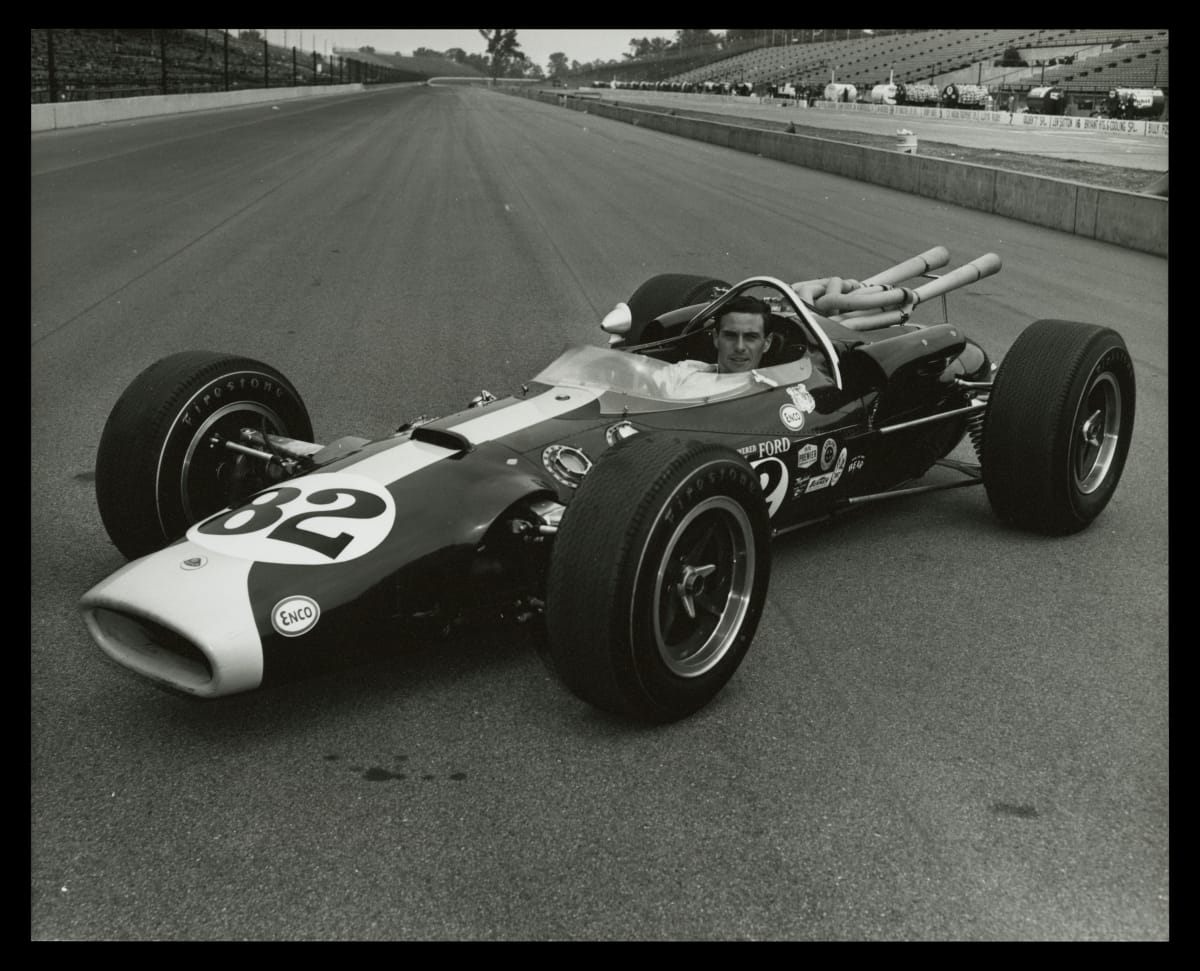
Jim Clark won the 1965 Indianapolis 500 in a Lotus chassis powered by a rear-mounted Ford V-8. It was the first Indy 500 win for a rear-engine car, and it revolutionized the race. No front-engine car has won the Indianapolis 500 since. Clark is seen here posing in his groundbreaking car at the Indianapolis Motor Speedway.
- Jim Clark Seated in Lotus Racer, with Colin Chapman and Pit Crew at Indianapolis 500 Race, 1965 - Driver Jimmy Clark conferred with Team Lotus director Colin Chapman (in sunglasses) at the 1965 Indianapolis 500. Clark's #82 rear-engine Lotus Type 38, powered by a 256-cubic-inch Ford V-8, won that year's race -- the first rear-engine car to take the checkered flag at Indy.
- May 01, 1965
- Collections - Artifact
Jim Clark Seated in Lotus Racer, with Colin Chapman and Pit Crew at Indianapolis 500 Race, 1965
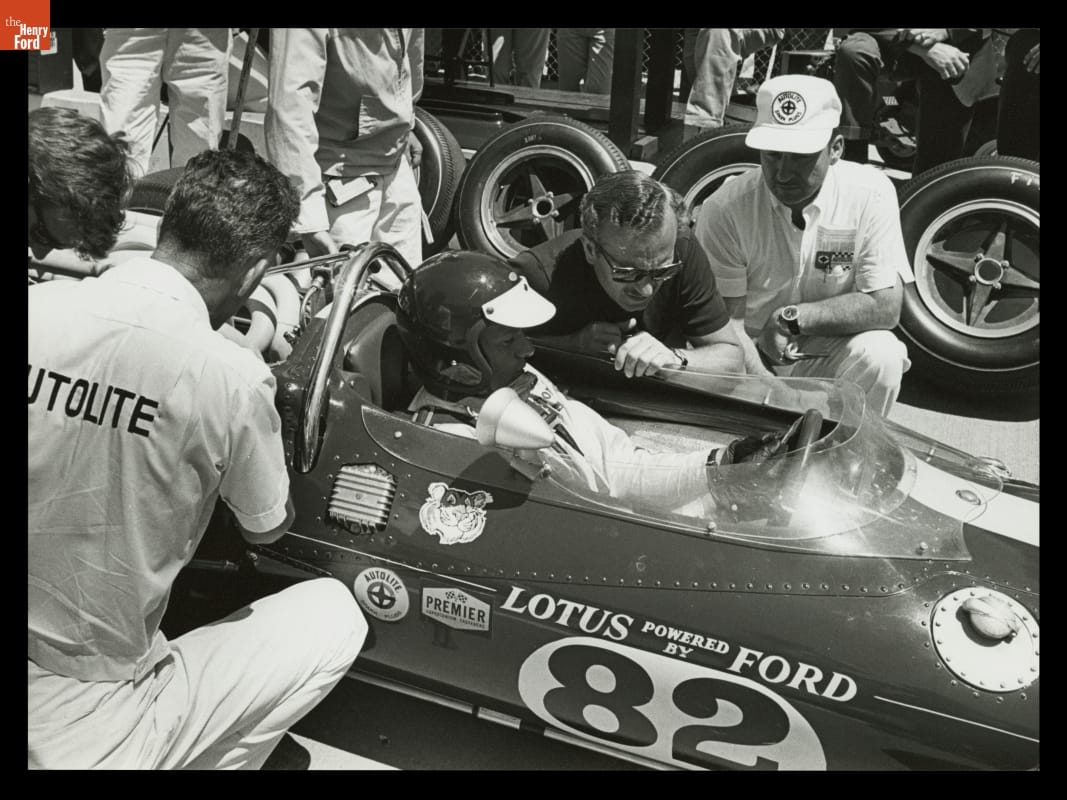
Driver Jimmy Clark conferred with Team Lotus director Colin Chapman (in sunglasses) at the 1965 Indianapolis 500. Clark's #82 rear-engine Lotus Type 38, powered by a 256-cubic-inch Ford V-8, won that year's race -- the first rear-engine car to take the checkered flag at Indy.
- Dan Gurney, Colin Chapman and Mechanics with Smoking Engine, Lotus Ford Test, February, 1963 - In February 1963, drivers Jim Clark and Dan Gurney, and Lotus designer Colin Chapman, gathered with Ford engineers to test their theory that a rear-engine, Formula One style car could compete against the front-engine roadsters that dominated the Indianapolis 500. Clark proved the theory correct in 1965, winning at Indy in a Lotus powered by a rear-mounted Ford V-8 engine.
- February 01, 1963
- Collections - Artifact
Dan Gurney, Colin Chapman and Mechanics with Smoking Engine, Lotus Ford Test, February, 1963
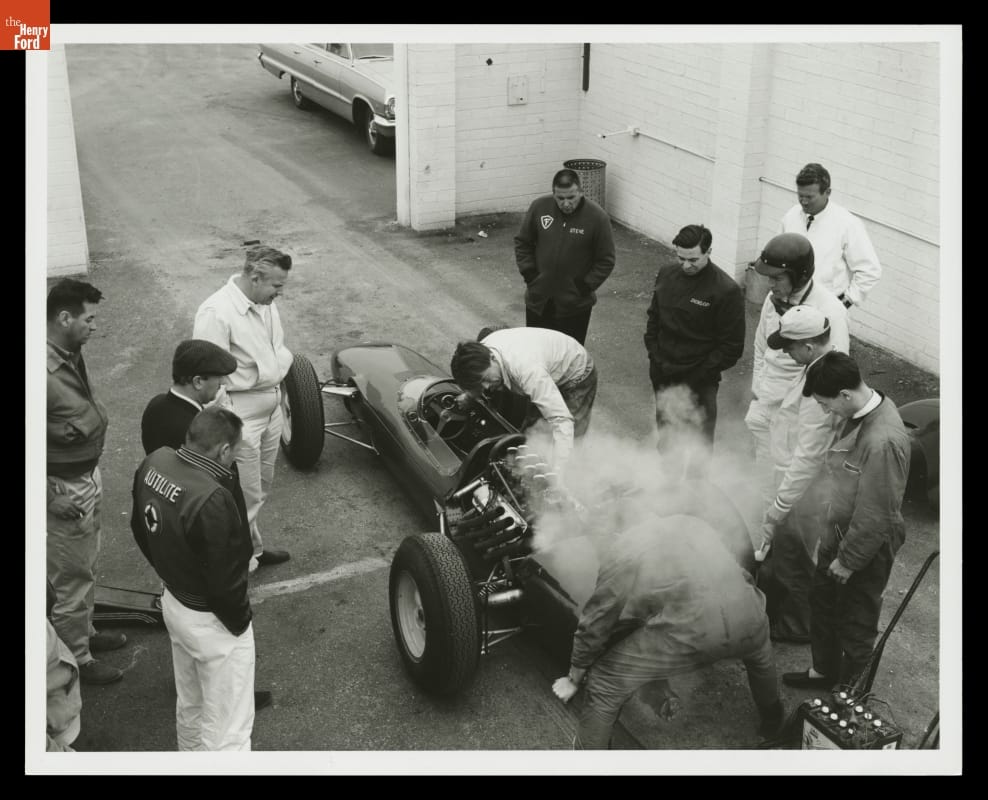
In February 1963, drivers Jim Clark and Dan Gurney, and Lotus designer Colin Chapman, gathered with Ford engineers to test their theory that a rear-engine, Formula One style car could compete against the front-engine roadsters that dominated the Indianapolis 500. Clark proved the theory correct in 1965, winning at Indy in a Lotus powered by a rear-mounted Ford V-8 engine.
- Dan Gurney, Colin Chapman and Mechanics at the Lotus Ford Test, February, 1963 - In February 1963, drivers Jim Clark and Dan Gurney, and Lotus designer Colin Chapman, gathered with Ford engineers to test their theory that a rear-engine, Formula One style car could compete against the front-engine roadsters that dominated the Indianapolis 500. Clark proved the theory correct in 1965, winning at Indy in a Lotus powered by a rear-mounted Ford V-8 engine.
- February 01, 1963
- Collections - Artifact
Dan Gurney, Colin Chapman and Mechanics at the Lotus Ford Test, February, 1963
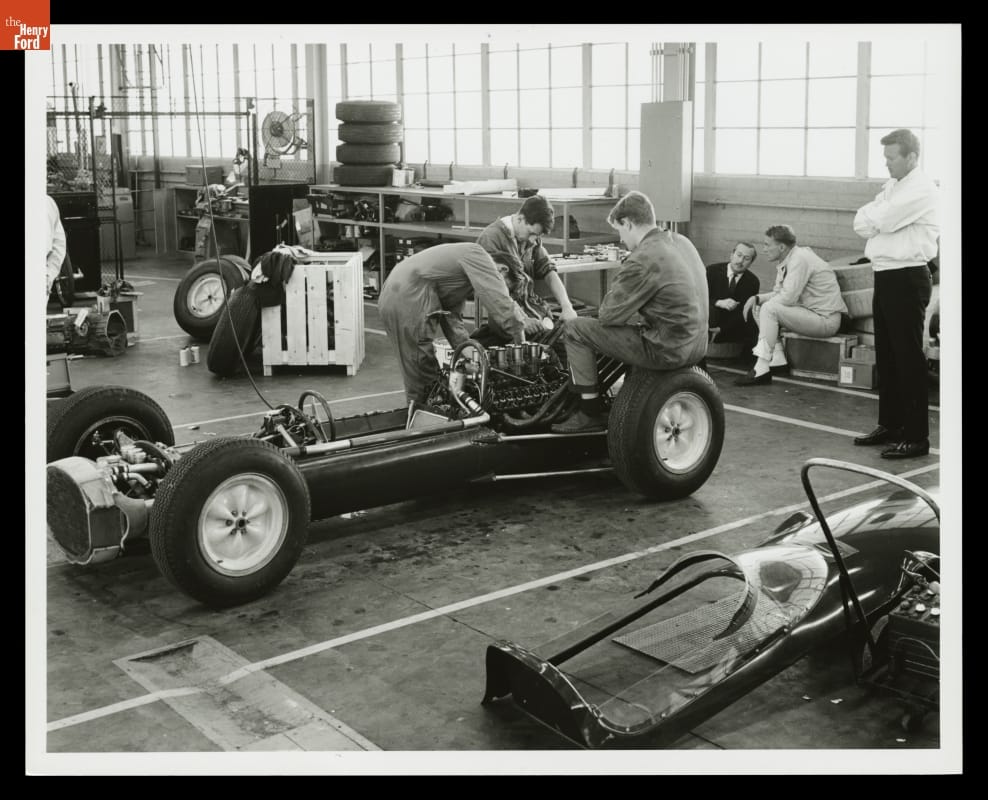
In February 1963, drivers Jim Clark and Dan Gurney, and Lotus designer Colin Chapman, gathered with Ford engineers to test their theory that a rear-engine, Formula One style car could compete against the front-engine roadsters that dominated the Indianapolis 500. Clark proved the theory correct in 1965, winning at Indy in a Lotus powered by a rear-mounted Ford V-8 engine.
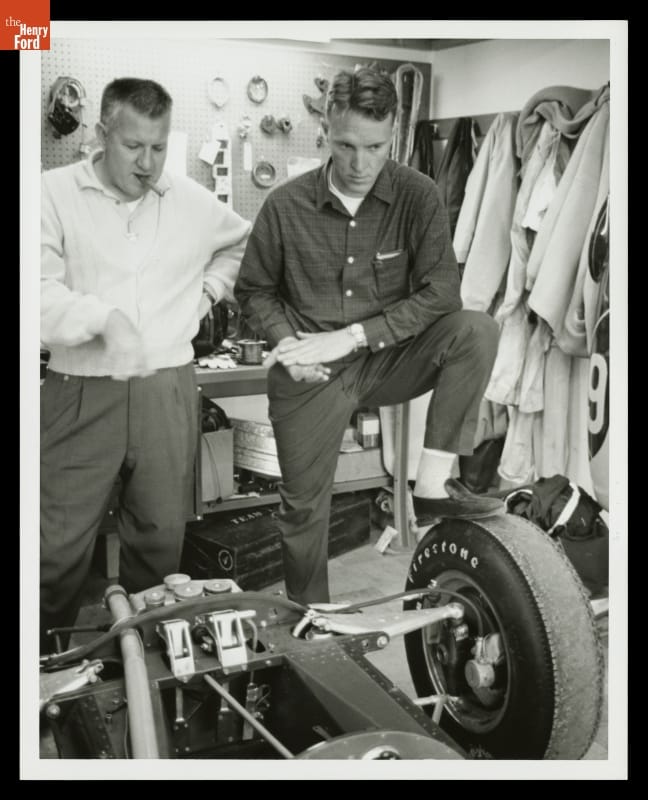
- Dan Gurney Looking at Chassis, Lotus Kingman Test, February, 1963 - In 1962, Dan Gurney brought Team Lotus founder Colin Chapman together with Ford Motor Company to create a light Indianapolis 500 racer with a rear-mounted V-8 engine. Testing at Ford's Kingman, Arizona, proving ground in early 1963 saw an experimental Lotus-Ford car hit 165 mph. Two years later, Jim Clark won the Indy 500 with a Lotus-Ford Type 38.
- February 01, 1963
- Collections - Artifact
Dan Gurney Looking at Chassis, Lotus Kingman Test, February, 1963
In 1962, Dan Gurney brought Team Lotus founder Colin Chapman together with Ford Motor Company to create a light Indianapolis 500 racer with a rear-mounted V-8 engine. Testing at Ford's Kingman, Arizona, proving ground in early 1963 saw an experimental Lotus-Ford car hit 165 mph. Two years later, Jim Clark won the Indy 500 with a Lotus-Ford Type 38.
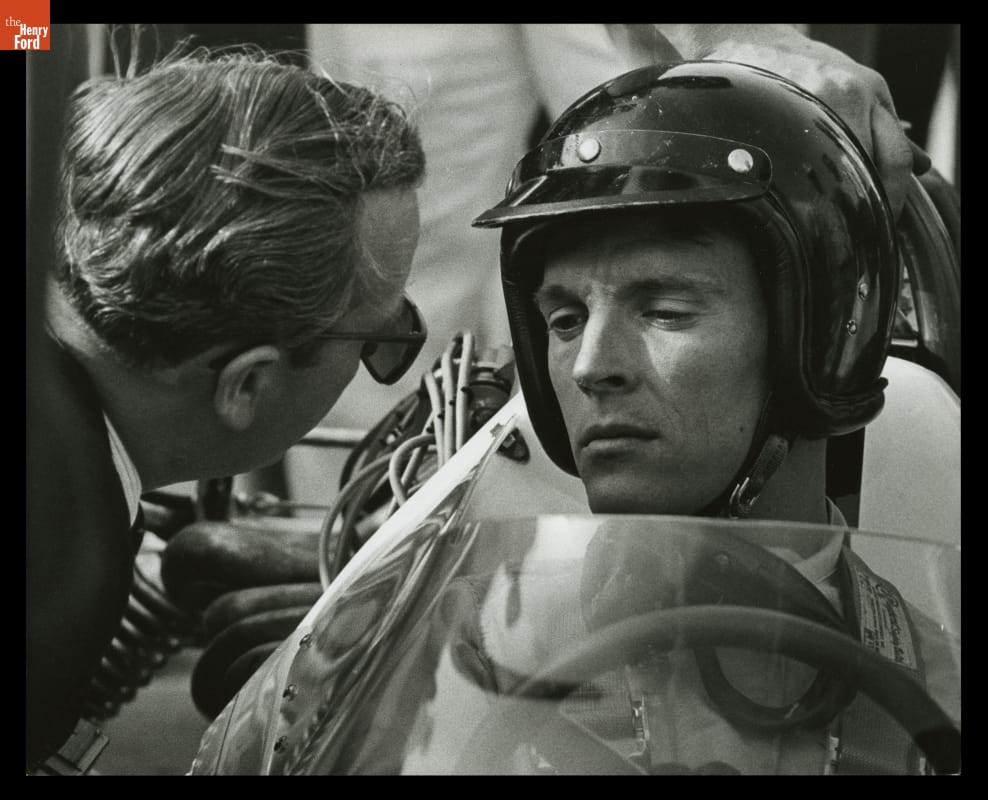
- Dan Gurney and Colin Chapman, Indianapolis 500 Race, 1963 - Even though front-engine cars dominated the Indianapolis 500, Dan Gurney (right) believed that a rear-engine Formula One style car could win. In 1962 he brought British F1 designer and Team Lotus founder Colin Chapman (left) together with Ford Motor Company. Chapman's Lotus 38, powered by a rear-mounted Ford V-8, proved Gurney right with an Indy win in 1965.
- May 30, 1963
- Collections - Artifact
Dan Gurney and Colin Chapman, Indianapolis 500 Race, 1963
Even though front-engine cars dominated the Indianapolis 500, Dan Gurney (right) believed that a rear-engine Formula One style car could win. In 1962 he brought British F1 designer and Team Lotus founder Colin Chapman (left) together with Ford Motor Company. Chapman's Lotus 38, powered by a rear-mounted Ford V-8, proved Gurney right with an Indy win in 1965.
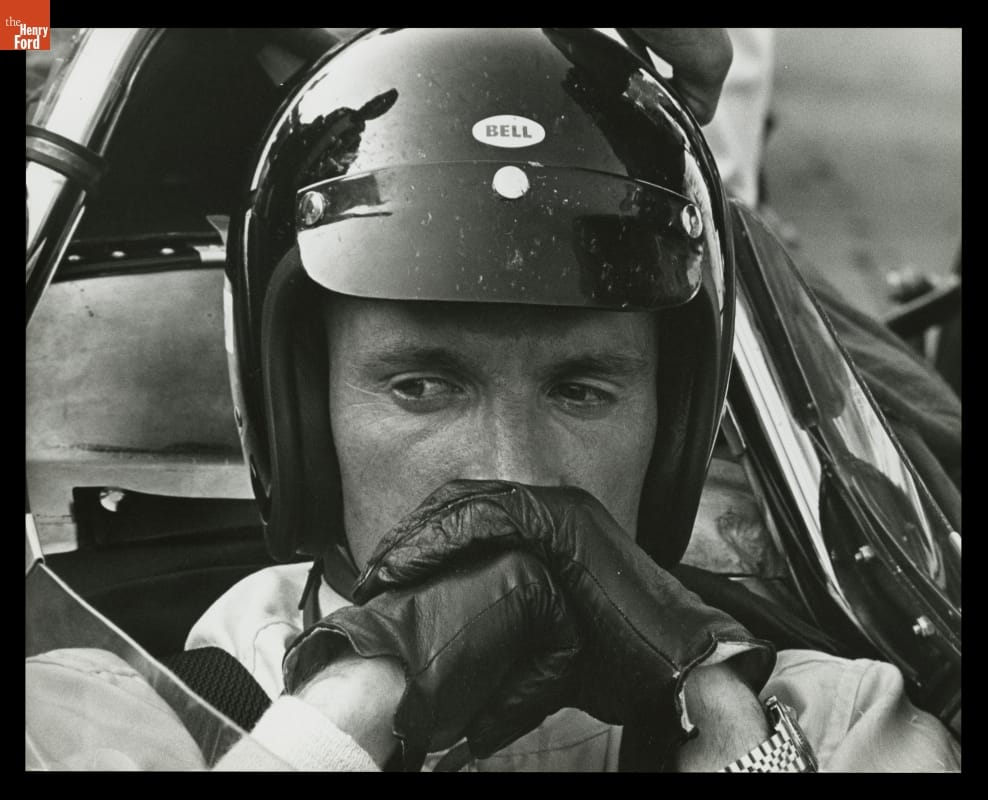
- Driver Dan Gurney at the Indianapolis 500 Race, 1965 - Dan Gurney forged one of the most versatile and successful careers in motorsport. His 51 wins as a driver included Grand Prix, Indy car, NASCAR, and sports car events. His accomplishments as an engineer, car builder, and team owner with his company All American Racers included the "Gurney flap" spoiler extension, the innovative Alligator motorcycle, and 158 AAR-built Eagle race cars.
- May 31, 1965
- Collections - Artifact
Driver Dan Gurney at the Indianapolis 500 Race, 1965
Dan Gurney forged one of the most versatile and successful careers in motorsport. His 51 wins as a driver included Grand Prix, Indy car, NASCAR, and sports car events. His accomplishments as an engineer, car builder, and team owner with his company All American Racers included the "Gurney flap" spoiler extension, the innovative Alligator motorcycle, and 158 AAR-built Eagle race cars.
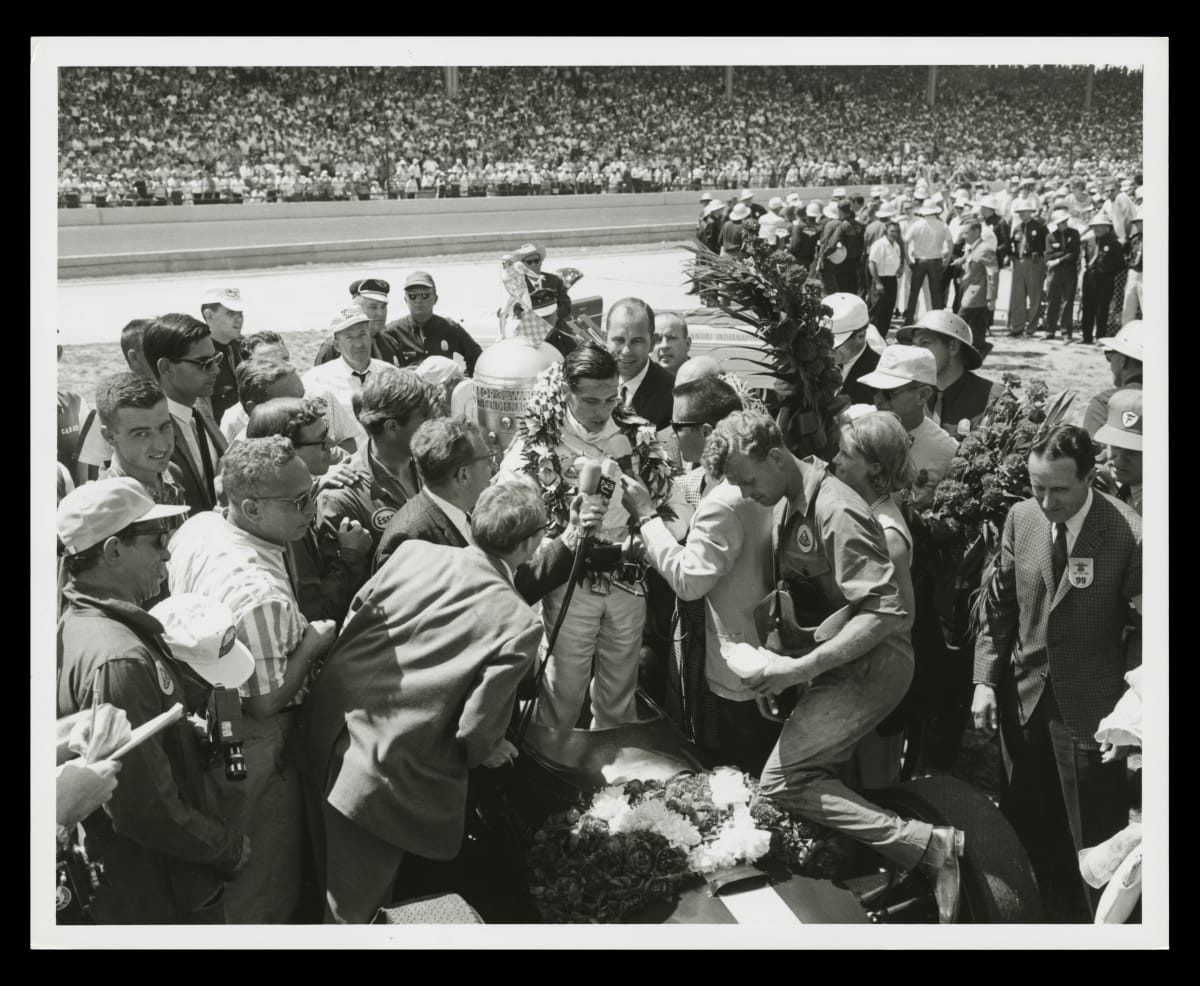
- Jim Clark Standing in Lotus Ford Racer after Winning the Indianapolis 500 Race, 1965 - Jim Clark stood in the cockpit of his #82 Lotus-Ford Type 38 immediately after winning the 1965 Indianapolis 500. The Borg-Warner Trophy, the race's official prize, stood behind him. Clark's victory was the first Indy win in a rear-engine car, and it represented a major technological shift in America's premier motor race.
- May 01, 1965
- Collections - Artifact
Jim Clark Standing in Lotus Ford Racer after Winning the Indianapolis 500 Race, 1965
Jim Clark stood in the cockpit of his #82 Lotus-Ford Type 38 immediately after winning the 1965 Indianapolis 500. The Borg-Warner Trophy, the race's official prize, stood behind him. Clark's victory was the first Indy win in a rear-engine car, and it represented a major technological shift in America's premier motor race.
- Lotus Racer with Ford Engine at the Indianapolis 500 Race, 1965 - Scotsman Jimmy Clark piloted his #82 Ford-powered Lotus Type 38 around Indianapolis Motor Speedway in 1965. Clark won that year's Indianapolis 500 with an average race speed of 150.686 miles per hour. He was the first driver to win Indy in a rear-engine car, and the first foreign driver to win since 1916.
- May 01, 1965
- Collections - Artifact
Lotus Racer with Ford Engine at the Indianapolis 500 Race, 1965
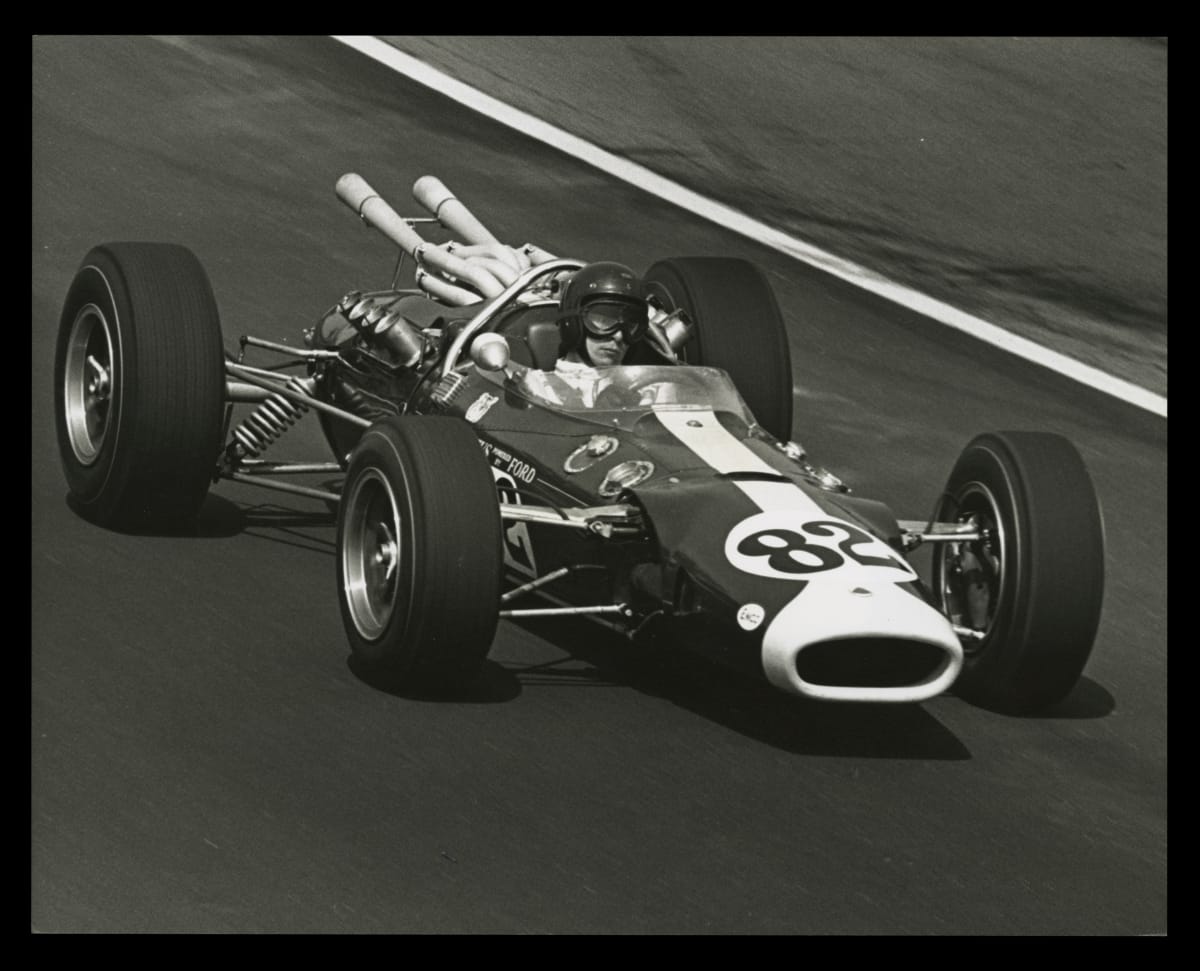
Scotsman Jimmy Clark piloted his #82 Ford-powered Lotus Type 38 around Indianapolis Motor Speedway in 1965. Clark won that year's Indianapolis 500 with an average race speed of 150.686 miles per hour. He was the first driver to win Indy in a rear-engine car, and the first foreign driver to win since 1916.
- Lotus Racer with Ford Engine during Indianapolis 500 Race, 1965 - Scotsman Jimmy Clark piloted his #82 Ford-powered Lotus Type 38 around Indianapolis Motor Speedway in 1965. Clark won that year's Indianapolis 500 with an average race speed of 150.686 miles per hour. He was the first driver to win Indy in a rear-engine car, and the first foreign driver to win since 1916.
- May 01, 1965
- Collections - Artifact
Lotus Racer with Ford Engine during Indianapolis 500 Race, 1965
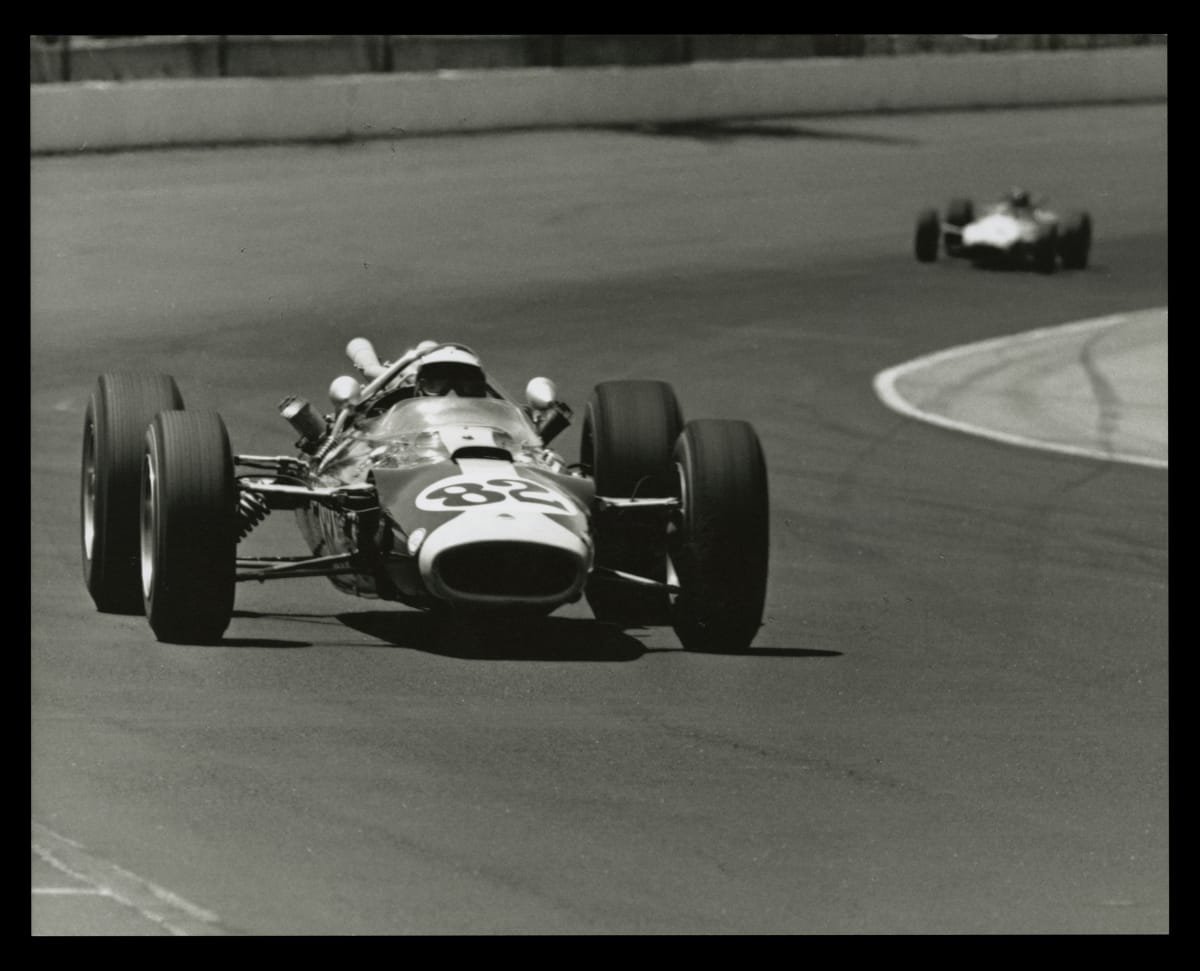
Scotsman Jimmy Clark piloted his #82 Ford-powered Lotus Type 38 around Indianapolis Motor Speedway in 1965. Clark won that year's Indianapolis 500 with an average race speed of 150.686 miles per hour. He was the first driver to win Indy in a rear-engine car, and the first foreign driver to win since 1916.