
Search
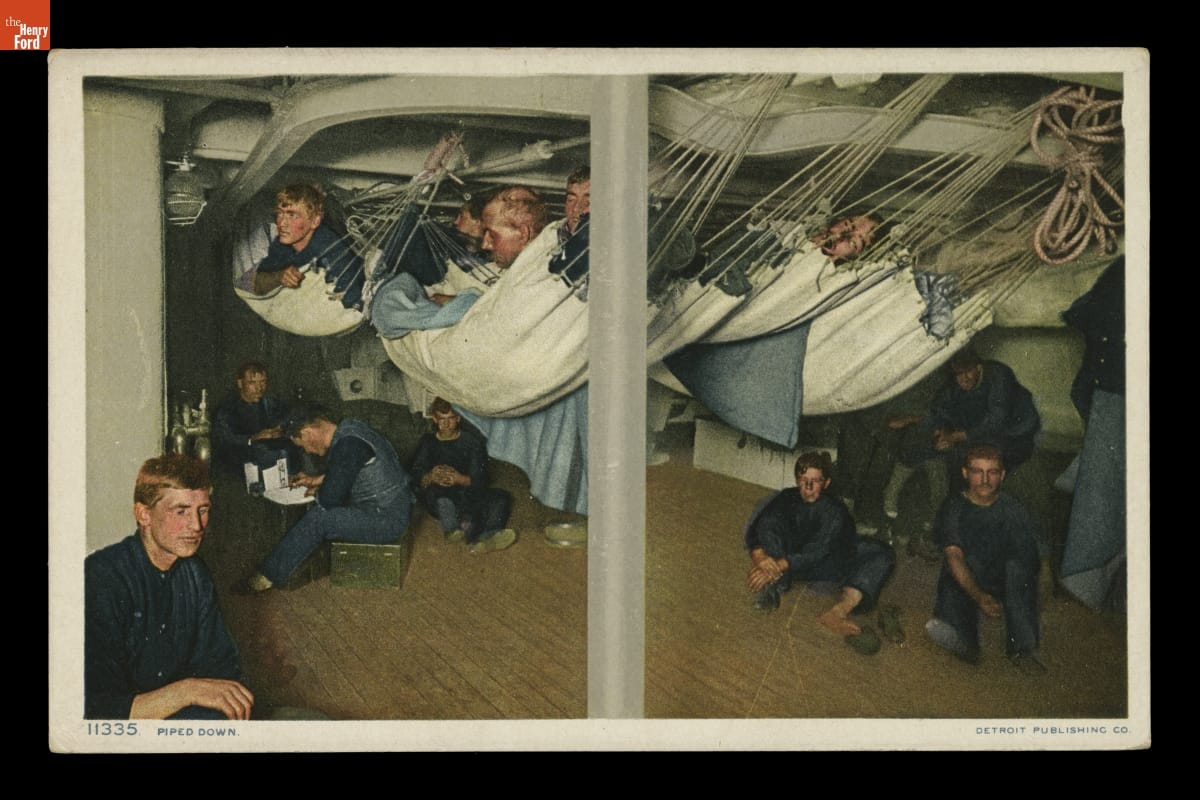
- "Piped Down," Sailors on the Berth Deck of the USS Massachusetts, 1896-1901 - From 1895 to 1924, the Detroit Publishing Company was one of the major image publishers in the world. It had a wide-ranging stock of original photographs, many of which were colored using the company's patented "Phostint" process. Popular "Phostint" postcards, the Detroit Publishing Company claimed, were delicately "executed in Nature's Coloring" to be truthful, tasteful, beautiful, and educational.
- 1896-1901
- Collections - Artifact
"Piped Down," Sailors on the Berth Deck of the USS Massachusetts, 1896-1901
From 1895 to 1924, the Detroit Publishing Company was one of the major image publishers in the world. It had a wide-ranging stock of original photographs, many of which were colored using the company's patented "Phostint" process. Popular "Phostint" postcards, the Detroit Publishing Company claimed, were delicately "executed in Nature's Coloring" to be truthful, tasteful, beautiful, and educational.
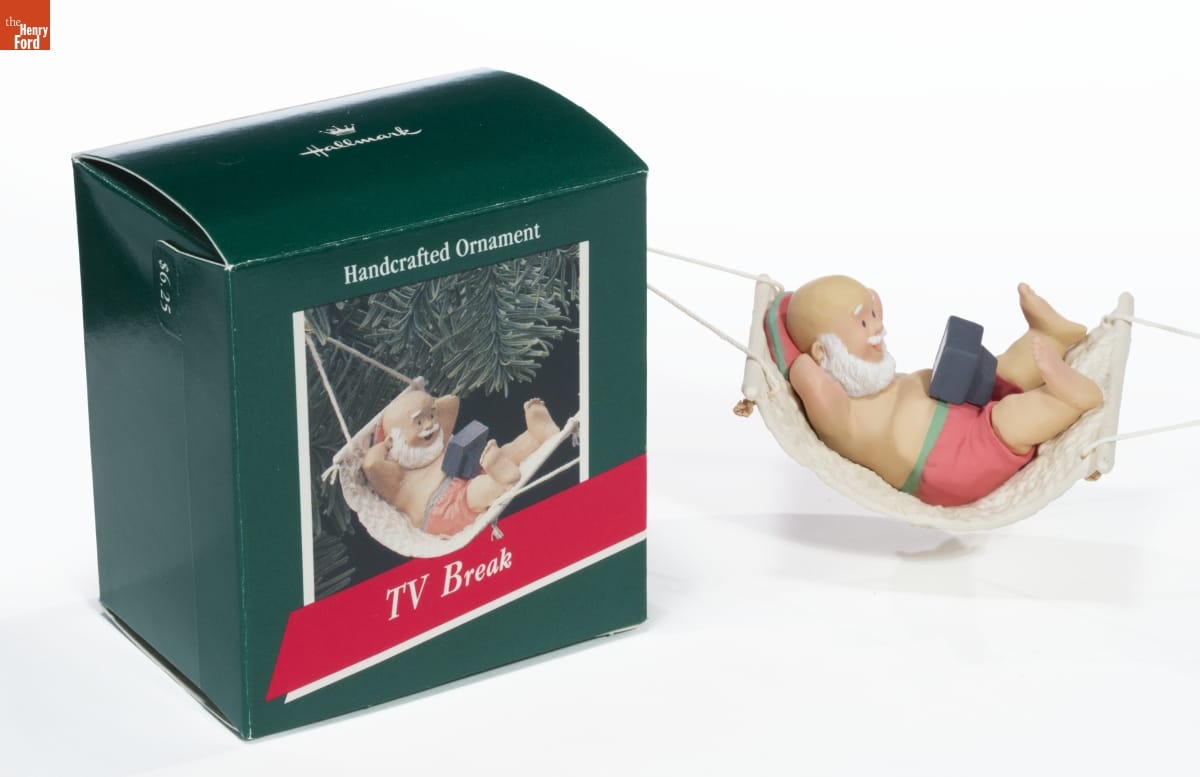
- Hallmark "TV Break" Christmas Ornament, 1989 - Already known for greeting cards, Hallmark introduced a line of Christmas ornaments in 1973. The company's annual release of an increasing array of ornaments revolutionized Christmas decorating, appealing to customers' interest in marking memories and milestones as well as expressing one's personality and unique tastes.
- 1989
- Collections - Artifact
Hallmark "TV Break" Christmas Ornament, 1989
Already known for greeting cards, Hallmark introduced a line of Christmas ornaments in 1973. The company's annual release of an increasing array of ornaments revolutionized Christmas decorating, appealing to customers' interest in marking memories and milestones as well as expressing one's personality and unique tastes.
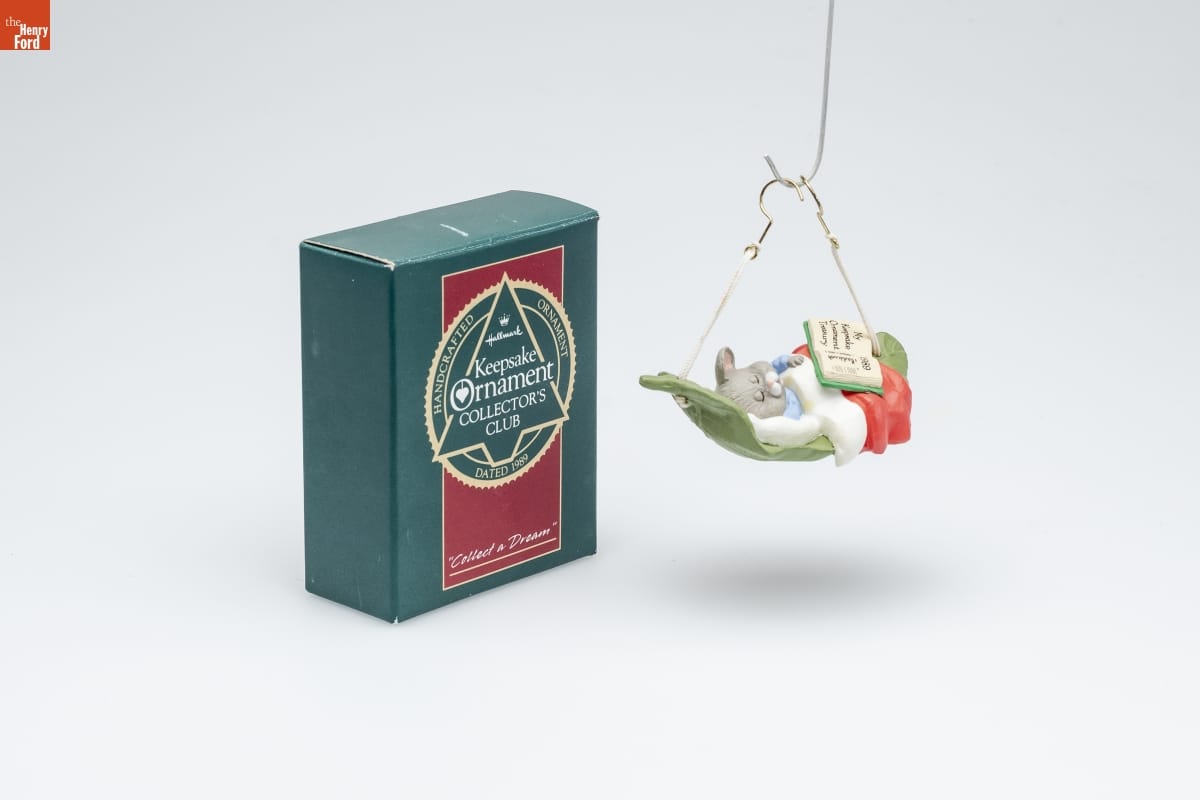
- Hallmark "Collect a Dream" Collector's Club Christmas Ornament, 1989 - Already known for greeting cards, Hallmark introduced a line of Christmas ornaments in 1973. The company's annual release of an increasing array of ornaments revolutionized Christmas decorating, appealing to customers' interest in marking memories and milestones as well as expressing one's personality and unique tastes.
- 1989
- Collections - Artifact
Hallmark "Collect a Dream" Collector's Club Christmas Ornament, 1989
Already known for greeting cards, Hallmark introduced a line of Christmas ornaments in 1973. The company's annual release of an increasing array of ornaments revolutionized Christmas decorating, appealing to customers' interest in marking memories and milestones as well as expressing one's personality and unique tastes.
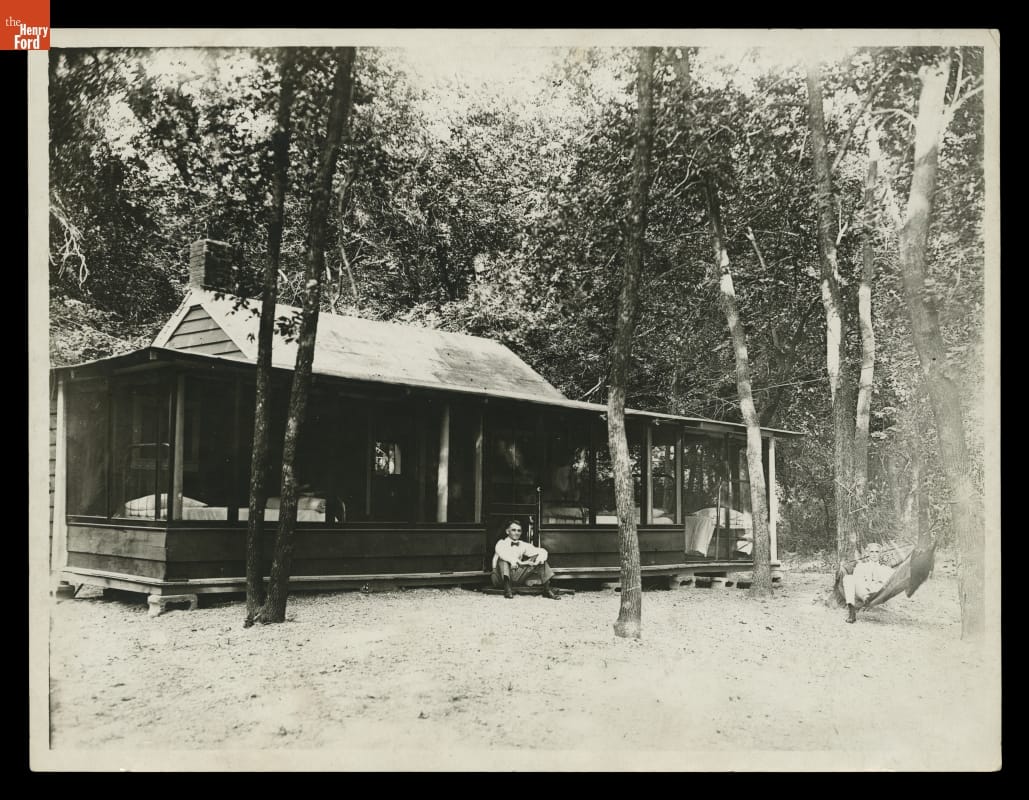
- Henry Ford and George Holley at a Fremont, Nebraska Camp, 1916 - George Holley, with his brother Earl, formed his first automotive company in 1896 and began manufacturing carburetors in 1903. Henry Ford used Holley carburetors in Ford Motor Company's original Model A, and later in the Model T. Other early Holley customers included Buick, Winton and Pierce-Arrow.
- August 01, 1916
- Collections - Artifact
Henry Ford and George Holley at a Fremont, Nebraska Camp, 1916
George Holley, with his brother Earl, formed his first automotive company in 1896 and began manufacturing carburetors in 1903. Henry Ford used Holley carburetors in Ford Motor Company's original Model A, and later in the Model T. Other early Holley customers included Buick, Winton and Pierce-Arrow.
- Illustrated Industries and Geography of America, 1882 -
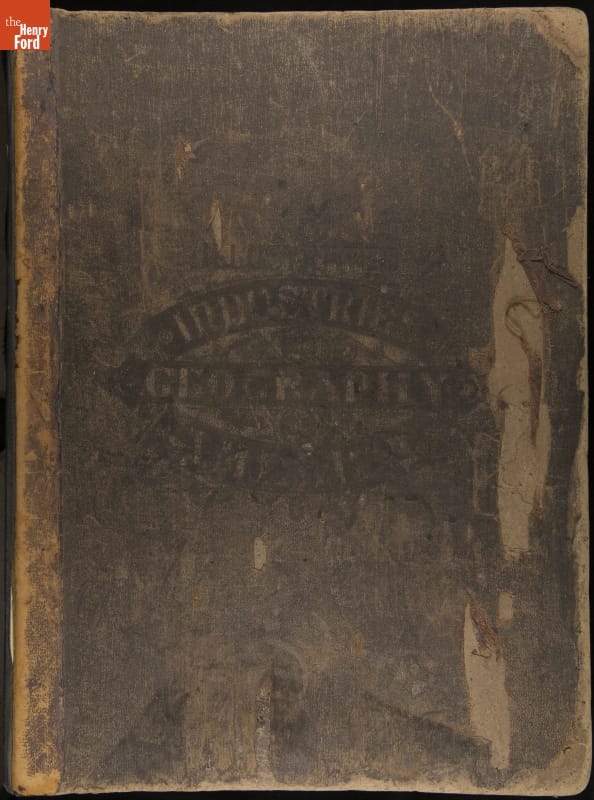
- 1882
- Collections - Artifact
Illustrated Industries and Geography of America, 1882
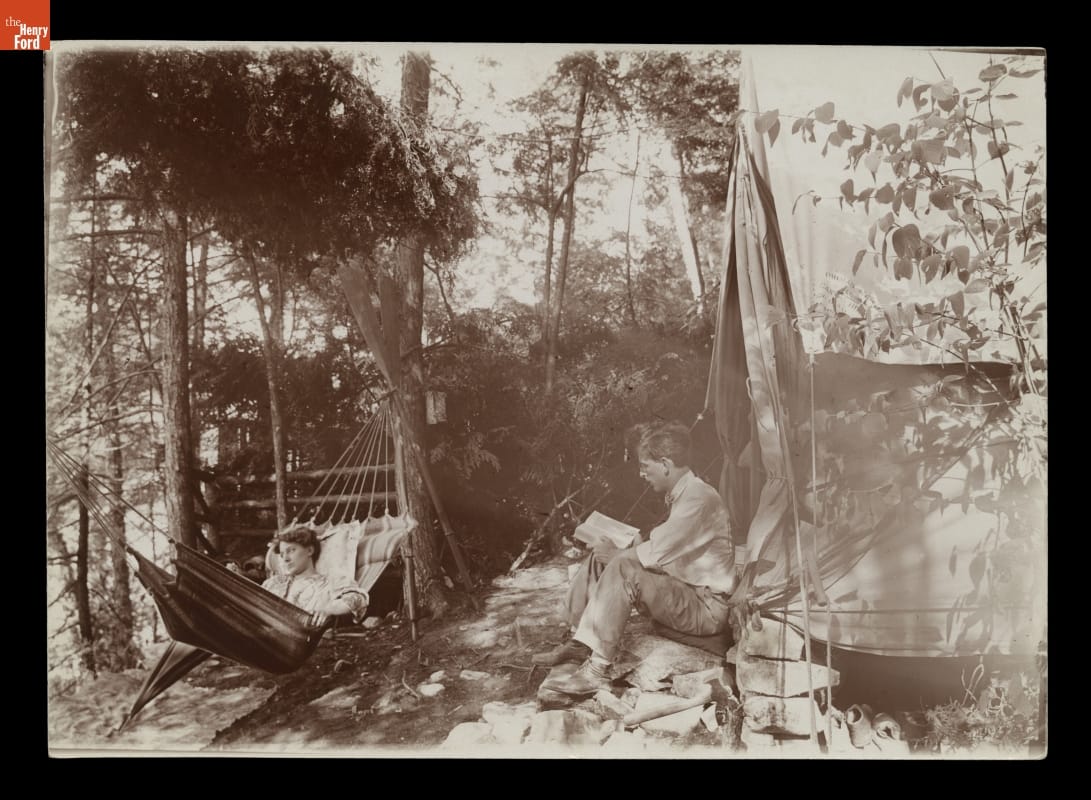
- Typical Campsite, Camp Iroquois, Glen Eyrie, Lake George, New York, 1911 - Camping out became a popular form of vacationing for city dwellers during the late 19th century. According to the rhetoric of the period, the couple camping in this secluded spot of Glen Eyrie, Lake George, New York, would find relief from the artificiality and confinement of the city and attain a more wholesome life by communing with nature.
- August 22, 1911
- Collections - Artifact
Typical Campsite, Camp Iroquois, Glen Eyrie, Lake George, New York, 1911
Camping out became a popular form of vacationing for city dwellers during the late 19th century. According to the rhetoric of the period, the couple camping in this secluded spot of Glen Eyrie, Lake George, New York, would find relief from the artificiality and confinement of the city and attain a more wholesome life by communing with nature.