
Search
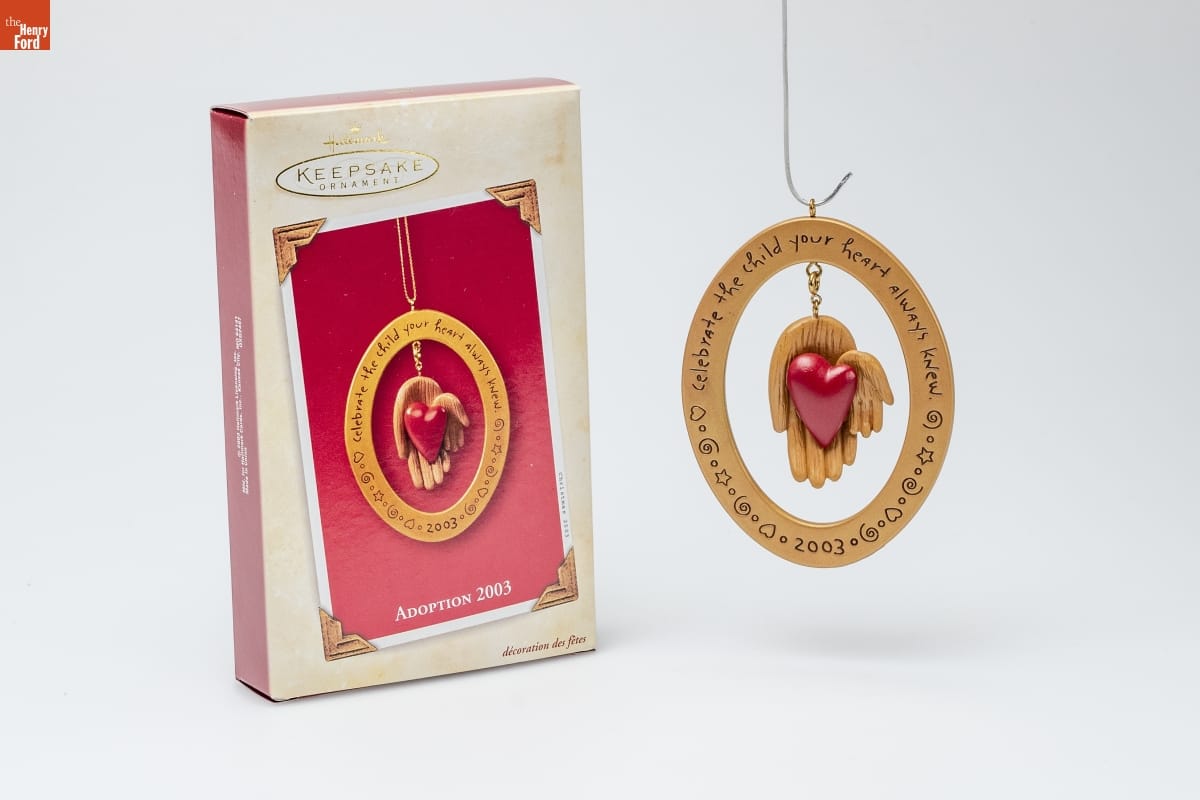
- Hallmark "Adoption 2003" Christmas Ornament, 2003 - Already known for greeting cards, Hallmark introduced a line of Christmas ornaments in 1973. The company's annual release of an increasing array of ornaments revolutionized Christmas decorating, appealing to customers' interest in marking memories and milestones as well as expressing one's personality and unique tastes.
- 2003
- Collections - Artifact
Hallmark "Adoption 2003" Christmas Ornament, 2003
Already known for greeting cards, Hallmark introduced a line of Christmas ornaments in 1973. The company's annual release of an increasing array of ornaments revolutionized Christmas decorating, appealing to customers' interest in marking memories and milestones as well as expressing one's personality and unique tastes.
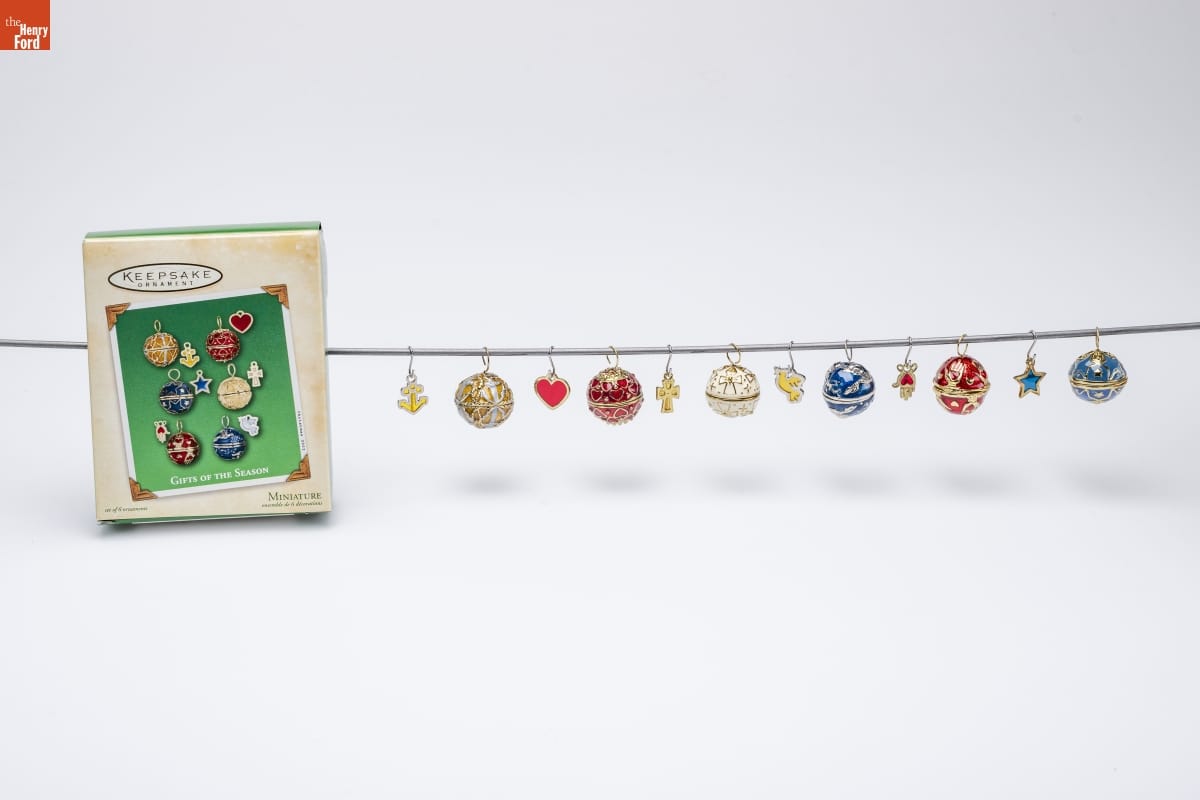
- Hallmark "Gifts of the Season" Miniature Christmas Ornaments, 2002 - Already known for greeting cards, Hallmark introduced a line of Christmas ornaments in 1973. The company's annual release of an increasing array of ornaments revolutionized Christmas decorating, appealing to customers' interest in marking memories and milestones as well as expressing one's personality and unique tastes.
- 2002
- Collections - Artifact
Hallmark "Gifts of the Season" Miniature Christmas Ornaments, 2002
Already known for greeting cards, Hallmark introduced a line of Christmas ornaments in 1973. The company's annual release of an increasing array of ornaments revolutionized Christmas decorating, appealing to customers' interest in marking memories and milestones as well as expressing one's personality and unique tastes.
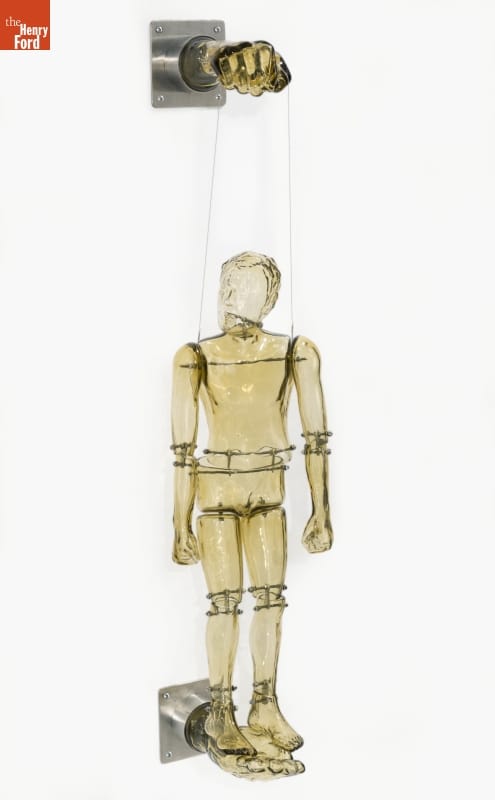
- Above and Below Series by Simon Maberley, 2006 -
- 2006
- Collections - Artifact
Above and Below Series by Simon Maberley, 2006
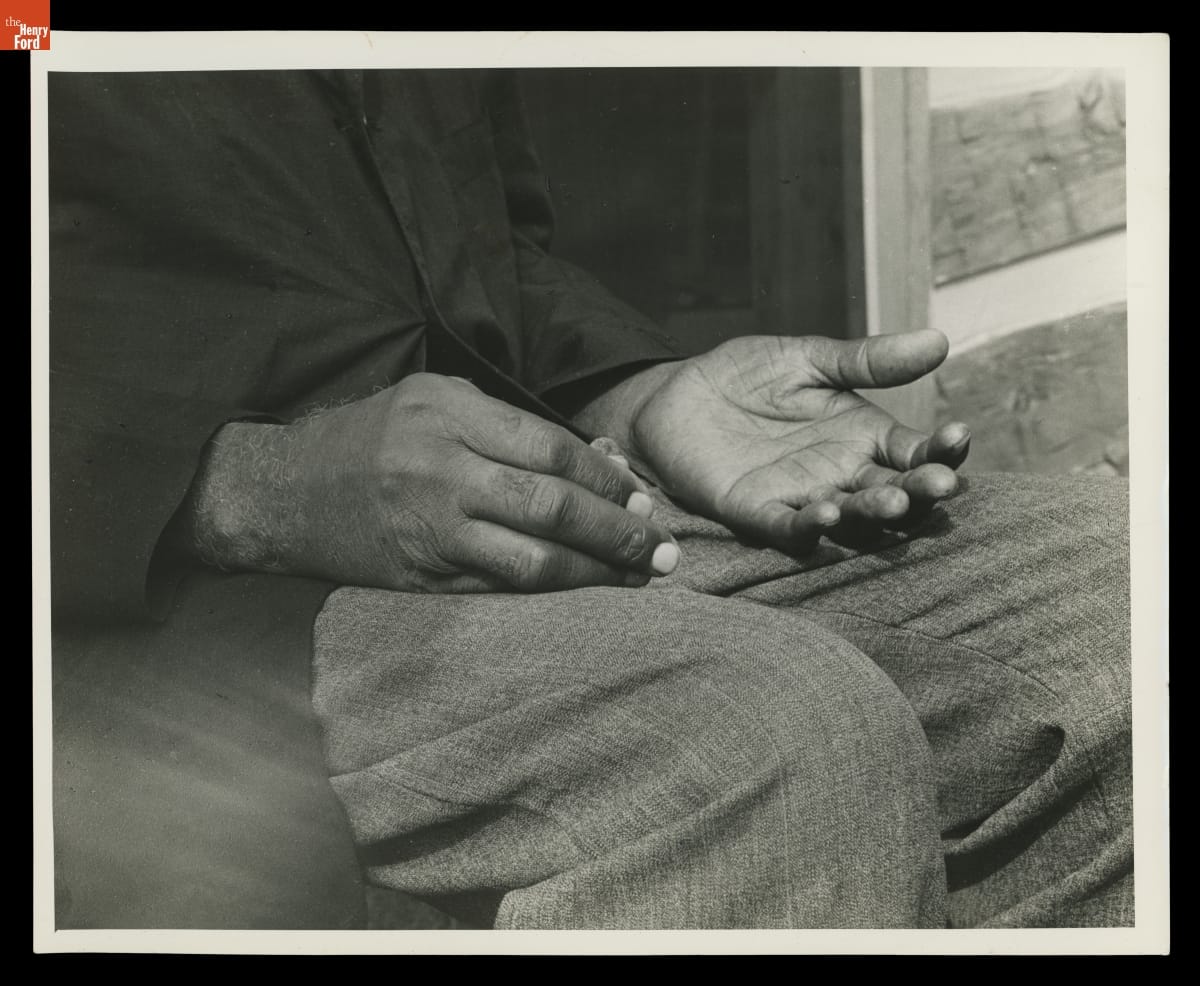
- View of George Washington Carver's Hands Taken for Use as Reference for Irving Bacon's Painting of Carver, August 1942 - Henry Ford commissioned his personal artist, Irving Bacon, to paint a portrait of Ford's friend, the agricultural scientist George Washington Carver. Carver sat for the painting during his visit to Dearborn in 1942. This photograph, used as a reference for Bacon to complete the portrait, shows Carver's hands. In Bacon's finished painting, Carver holds a milkweed pod and a peanut.
- August 01, 1942
- Collections - Artifact
View of George Washington Carver's Hands Taken for Use as Reference for Irving Bacon's Painting of Carver, August 1942
Henry Ford commissioned his personal artist, Irving Bacon, to paint a portrait of Ford's friend, the agricultural scientist George Washington Carver. Carver sat for the painting during his visit to Dearborn in 1942. This photograph, used as a reference for Bacon to complete the portrait, shows Carver's hands. In Bacon's finished painting, Carver holds a milkweed pod and a peanut.
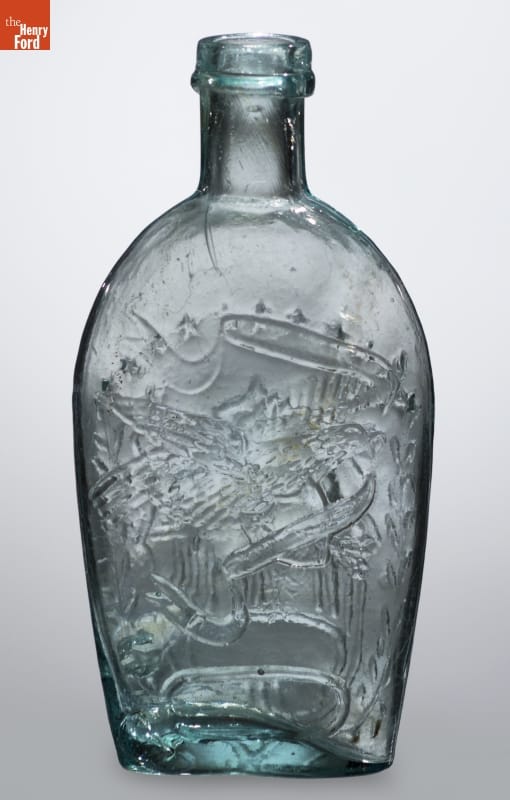
- Flask, 1865-1875 - Glass factories in America began producing inexpensive, mold-formed flasks in the early 1800s. These figured flasks, often decorated with symbols of national pride or political or cultural affiliation, appealed to America's common man. The clasping hands, shield and eagle represent the Union -- a cause many Americans fought to uphold during the Civil War.
- 1865-1875
- Collections - Artifact
Flask, 1865-1875
Glass factories in America began producing inexpensive, mold-formed flasks in the early 1800s. These figured flasks, often decorated with symbols of national pride or political or cultural affiliation, appealed to America's common man. The clasping hands, shield and eagle represent the Union -- a cause many Americans fought to uphold during the Civil War.
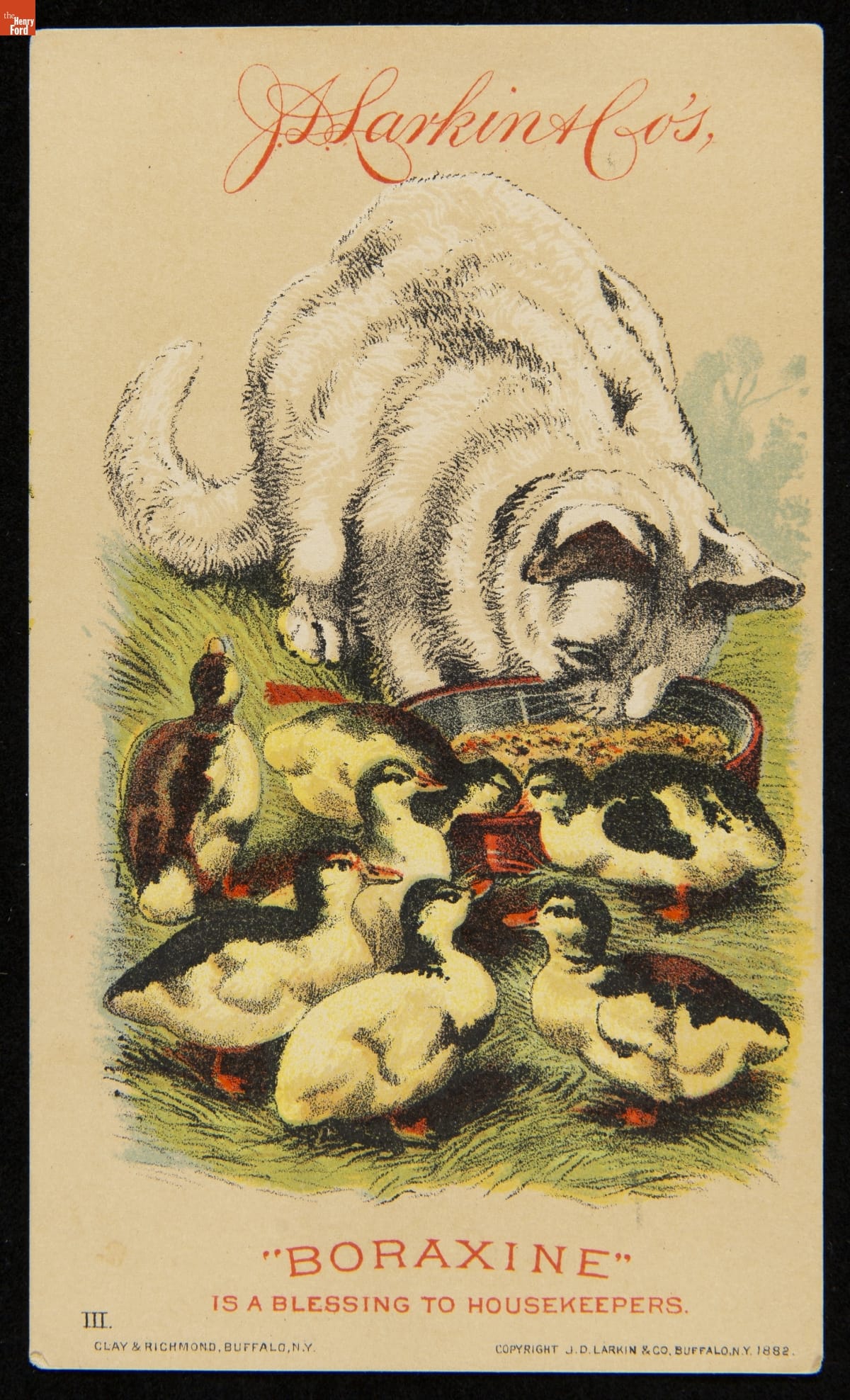
- Trade Card for "Boraxine" Soap, J.D. Larkin & Co., 1882 - As color printing gained momentum in the late 19th century, advertisers bombarded potential customers with trade cards. Americans enjoyed and often saved the little advertisements found in product packages or distributed by local merchants. J.D. Larkin & Co. began as a soap manufacturer before producing a wide variety of products as the Larkin Company. This trade card features J.D. Larkin's popular soap product, Boraxine.
- 1882
- Collections - Artifact
Trade Card for "Boraxine" Soap, J.D. Larkin & Co., 1882
As color printing gained momentum in the late 19th century, advertisers bombarded potential customers with trade cards. Americans enjoyed and often saved the little advertisements found in product packages or distributed by local merchants. J.D. Larkin & Co. began as a soap manufacturer before producing a wide variety of products as the Larkin Company. This trade card features J.D. Larkin's popular soap product, Boraxine.
- X-Ray Images of Lillian Schwartz's Hands, November 1974 - Lillian Schwartz is a pioneer of computer-generated art. From 1969-2002, she was a "resident visitor" at Bell Laboratories, producing groundbreaking films, videos, and multimedia works. The Schwartz Collection spans Lillian's childhood into her late career, documenting an expansive mindset, mastery over traditional and experimental mediums alike--and above all--an ability to create inspirational connections between science, art, and technology.

- November 01, 1974
- Collections - Artifact
X-Ray Images of Lillian Schwartz's Hands, November 1974
Lillian Schwartz is a pioneer of computer-generated art. From 1969-2002, she was a "resident visitor" at Bell Laboratories, producing groundbreaking films, videos, and multimedia works. The Schwartz Collection spans Lillian's childhood into her late career, documenting an expansive mindset, mastery over traditional and experimental mediums alike--and above all--an ability to create inspirational connections between science, art, and technology.
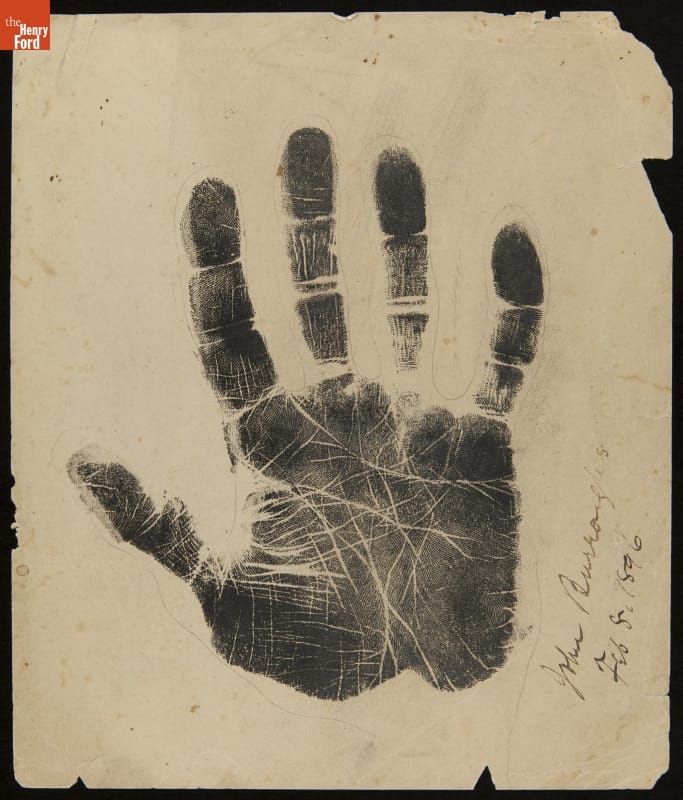
- John Burroughs' Handprint, February 8, 1896 -
- February 08, 1896
- Collections - Artifact
John Burroughs' Handprint, February 8, 1896
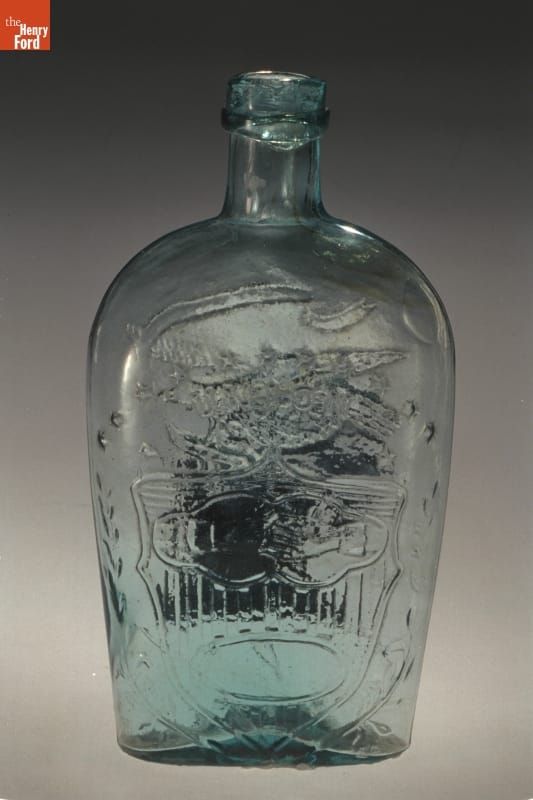
- Flask, 1865-1875 - Glass factories in America began producing inexpensive, mold-formed flasks in the early 1800s. These figured flasks, often decorated with symbols of national pride or political or cultural affiliation, appealed to America's common man. The clasping hands, shield and eagle represent the Union -- a cause many Americans fought to uphold during the Civil War.
- 1865-1875
- Collections - Artifact
Flask, 1865-1875
Glass factories in America began producing inexpensive, mold-formed flasks in the early 1800s. These figured flasks, often decorated with symbols of national pride or political or cultural affiliation, appealed to America's common man. The clasping hands, shield and eagle represent the Union -- a cause many Americans fought to uphold during the Civil War.
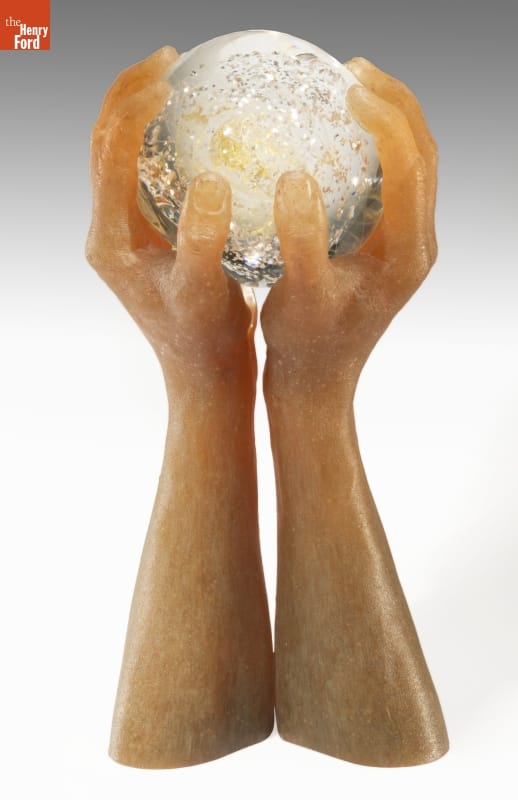
- "Intangible" by John Littleton and Kate Vogel, 2000 -
- 2000
- Collections - Artifact
"Intangible" by John Littleton and Kate Vogel, 2000