
Search
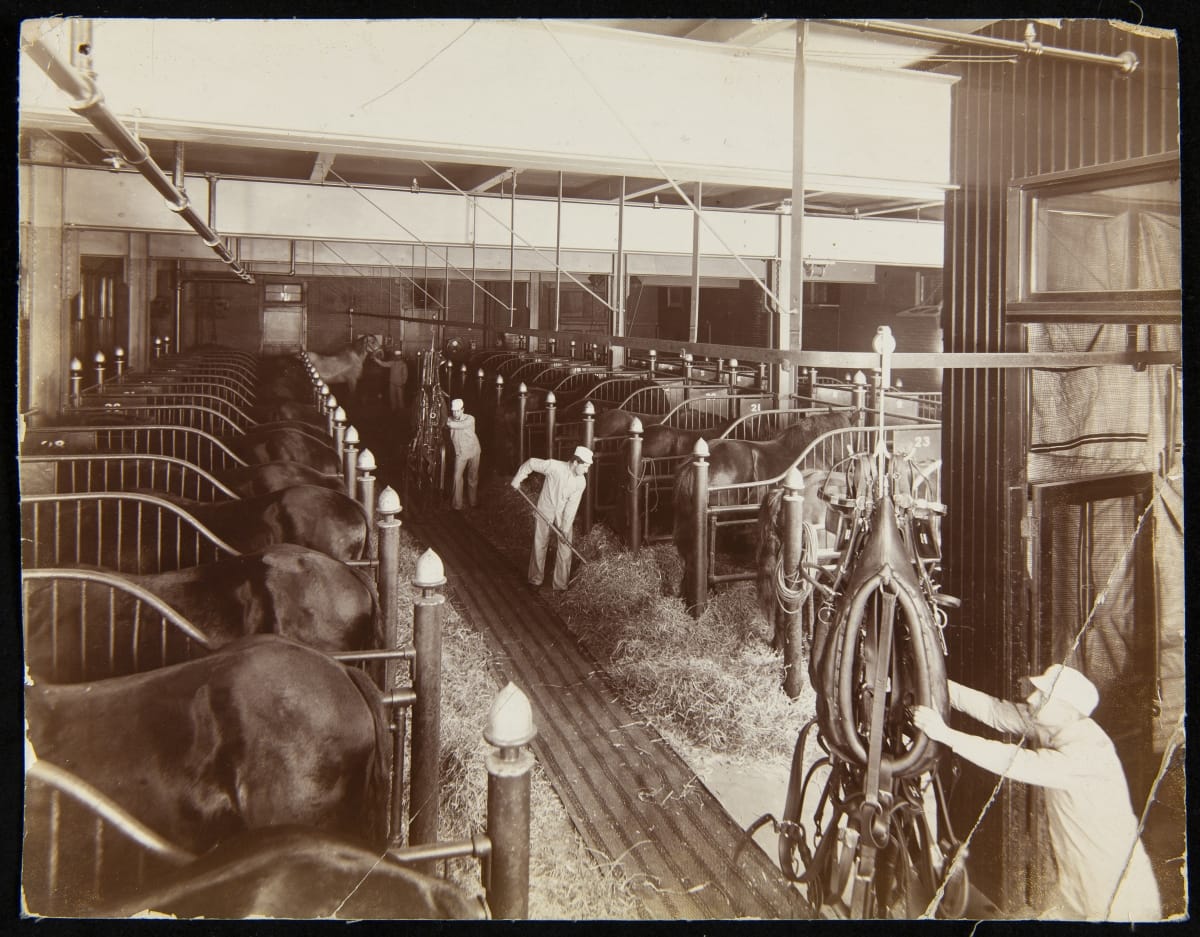
- Second Floor of H. J. Heinz Company Stables, Pittsburgh, Pennsylvania, circa 1910 - The H.J. Heinz Company spared no expense when caring for its Percheron horses. The processed food manufacturer stabled horses on the second floor of a three-story "equine palace" in Pittsburgh. Grooms spread high-quality bedding, as this photograph shows, to help keep their charges clean between shifts hitched to Heinz delivery wagons.
- circa 1910
- Collections - Artifact
Second Floor of H. J. Heinz Company Stables, Pittsburgh, Pennsylvania, circa 1910
The H.J. Heinz Company spared no expense when caring for its Percheron horses. The processed food manufacturer stabled horses on the second floor of a three-story "equine palace" in Pittsburgh. Grooms spread high-quality bedding, as this photograph shows, to help keep their charges clean between shifts hitched to Heinz delivery wagons.
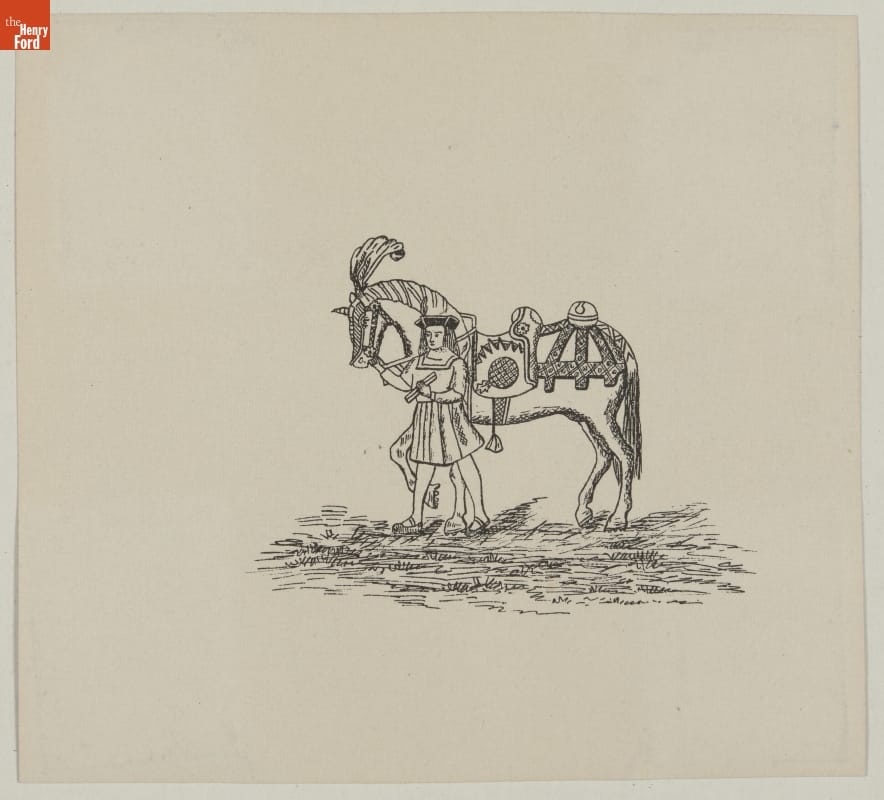
- Wood Engraving Depicting Equipment of an English Saddle Horse, circa 1575 -
- circa 1575
- Collections - Artifact
Wood Engraving Depicting Equipment of an English Saddle Horse, circa 1575
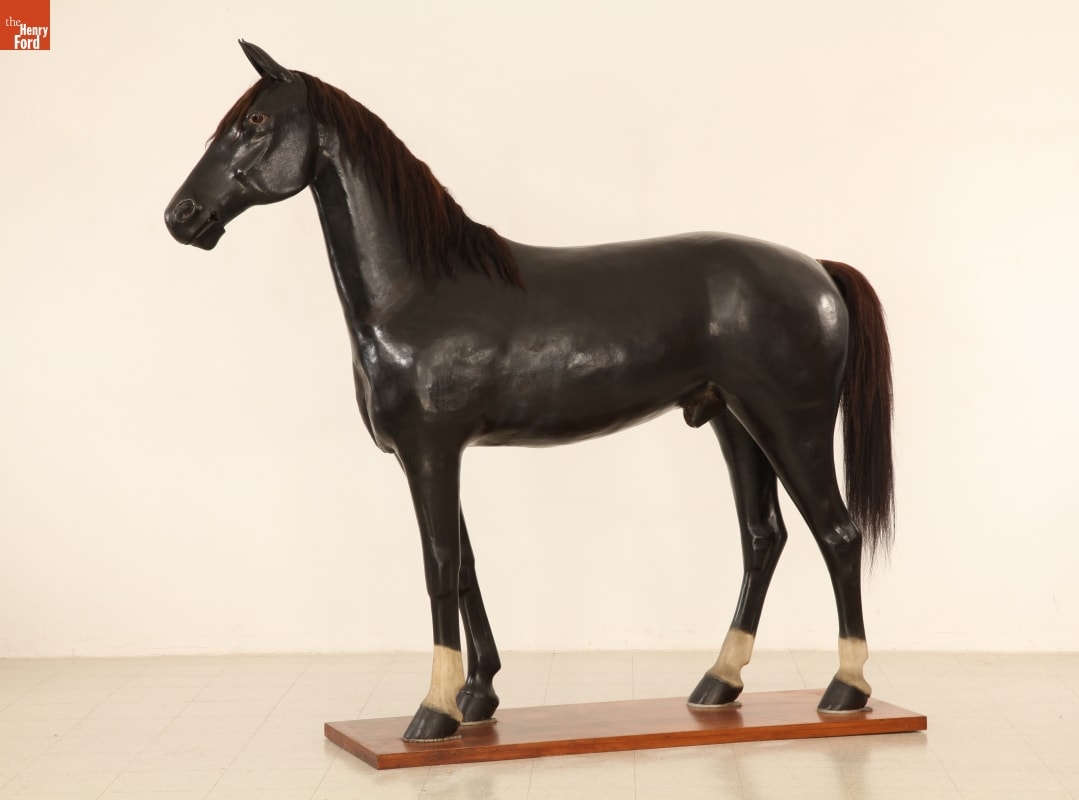
- Horse Mannequin, 1895-1910 - Horses were an important part of transportation until the car took over -- and buying the right equipment was essential to horse owners. Late 19th and early 20th century shops that sold saddles, harness, and tack used horse display mannequins, much like this one, to encourage horse owners to purchase the equipment from their stores.
- 1895-1910
- Collections - Artifact
Horse Mannequin, 1895-1910
Horses were an important part of transportation until the car took over -- and buying the right equipment was essential to horse owners. Late 19th and early 20th century shops that sold saddles, harness, and tack used horse display mannequins, much like this one, to encourage horse owners to purchase the equipment from their stores.
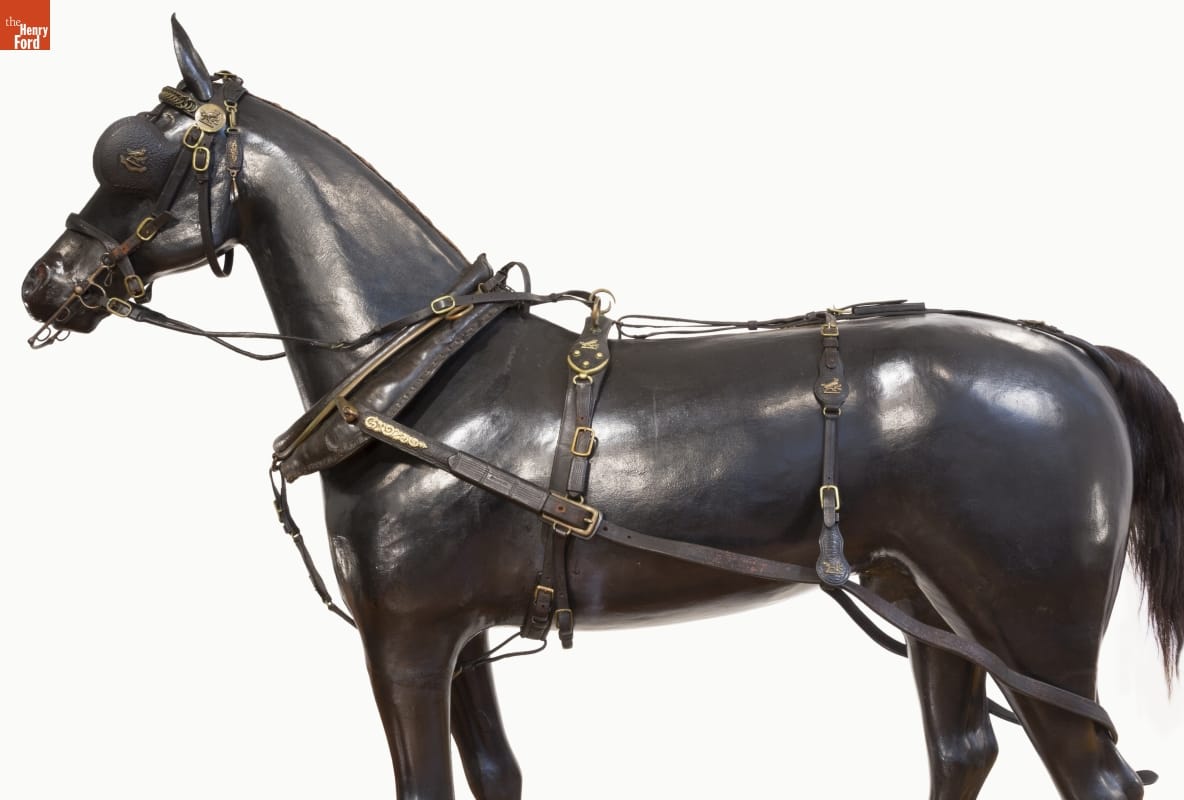
- Double Brougham Harness, Used by the Hewitt Family, 1870-1900 - Abram Hewitt and Edward Cooper formed the Trenton Iron Works in 1847. Hewitt married Cooper's sister, Sarah Amelia Cooper, in 1855. The Cooper and Hewitt families co-owned several subsequent businesses, and they shared a summer estate, Ringwood Manor, in northern New Jersey. Abram Hewitt served in the U.S. House of Representatives and as mayor of New York City.
- 1870-1900
- Collections - Artifact
Double Brougham Harness, Used by the Hewitt Family, 1870-1900
Abram Hewitt and Edward Cooper formed the Trenton Iron Works in 1847. Hewitt married Cooper's sister, Sarah Amelia Cooper, in 1855. The Cooper and Hewitt families co-owned several subsequent businesses, and they shared a summer estate, Ringwood Manor, in northern New Jersey. Abram Hewitt served in the U.S. House of Representatives and as mayor of New York City.
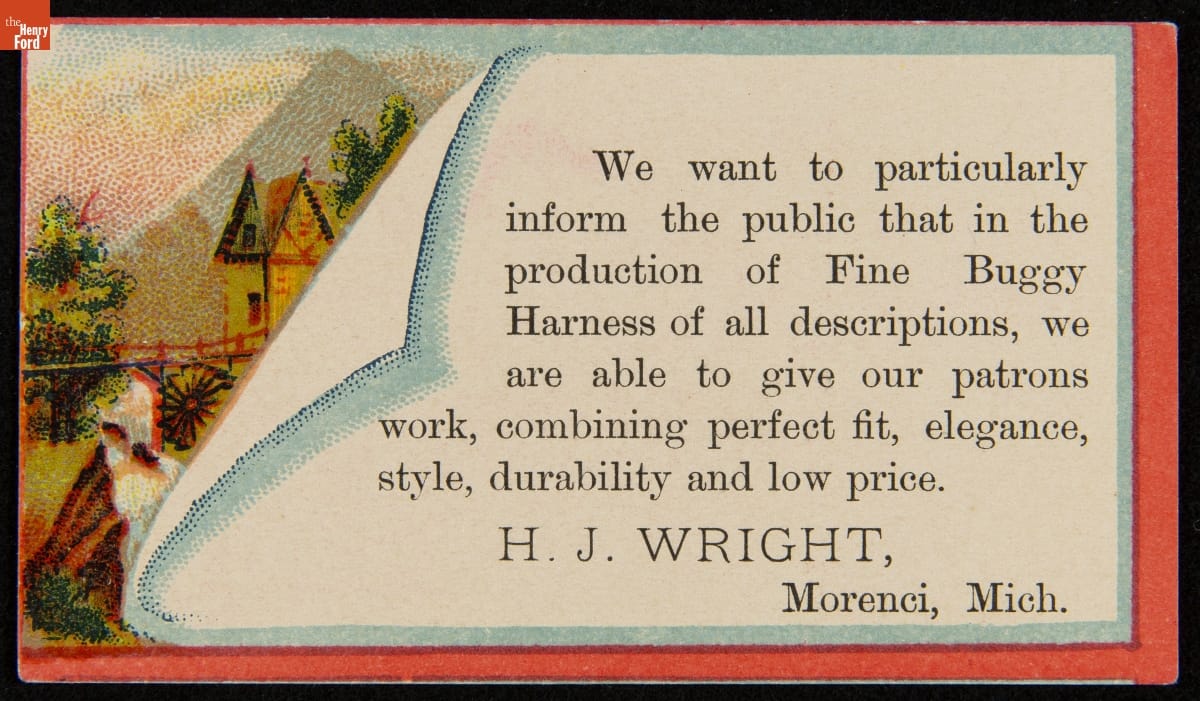
- Trade Card for H.J. Wright's Fine Buggy Harnesses, 1880-1890 - In the last third of the nineteenth century, an unprecedented variety of consumer goods and services flooded the American market. Advertisers, armed with new methods of color printing, bombarded potential customers with trade cards. Americans enjoyed and often saved the vibrant little advertisements found in product packages or distributed by local merchants. Many survive as historical records of commercialism in the United States.
- 1880-1890
- Collections - Artifact
Trade Card for H.J. Wright's Fine Buggy Harnesses, 1880-1890
In the last third of the nineteenth century, an unprecedented variety of consumer goods and services flooded the American market. Advertisers, armed with new methods of color printing, bombarded potential customers with trade cards. Americans enjoyed and often saved the vibrant little advertisements found in product packages or distributed by local merchants. Many survive as historical records of commercialism in the United States.
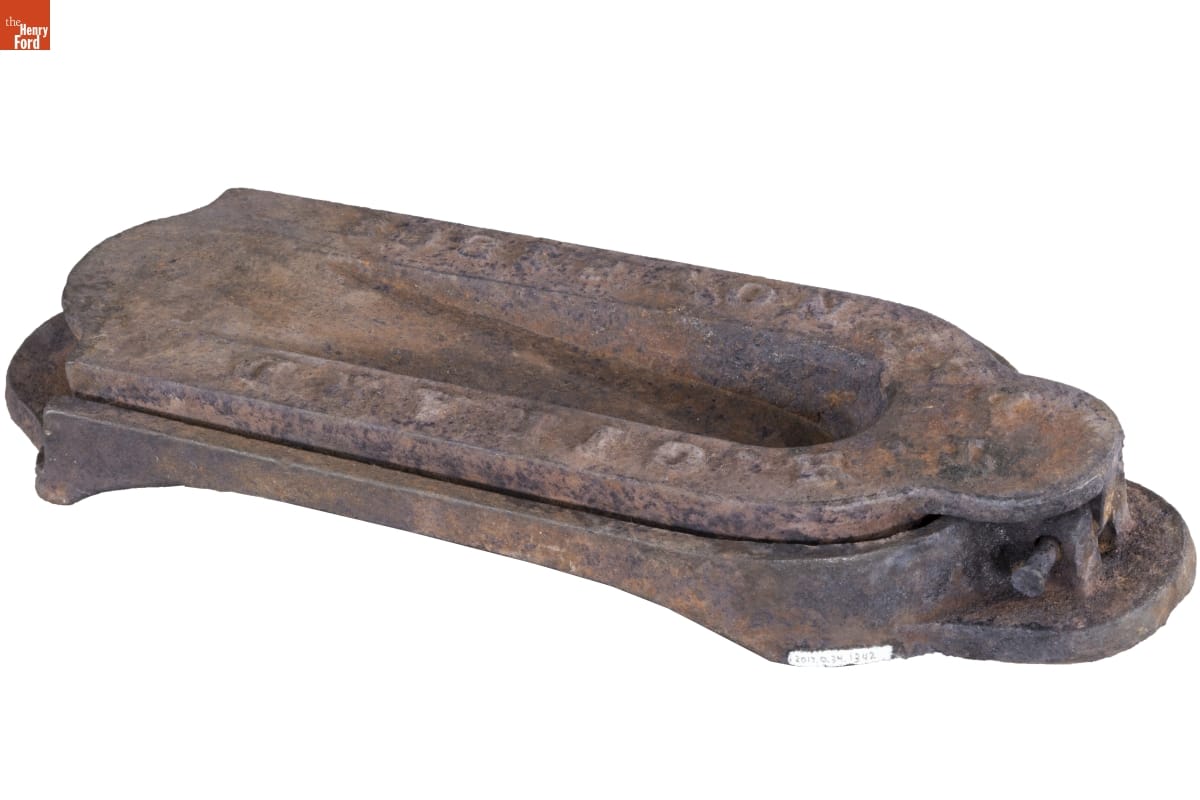
- Harness Pad Mold -
- Collections - Artifact
Harness Pad Mold
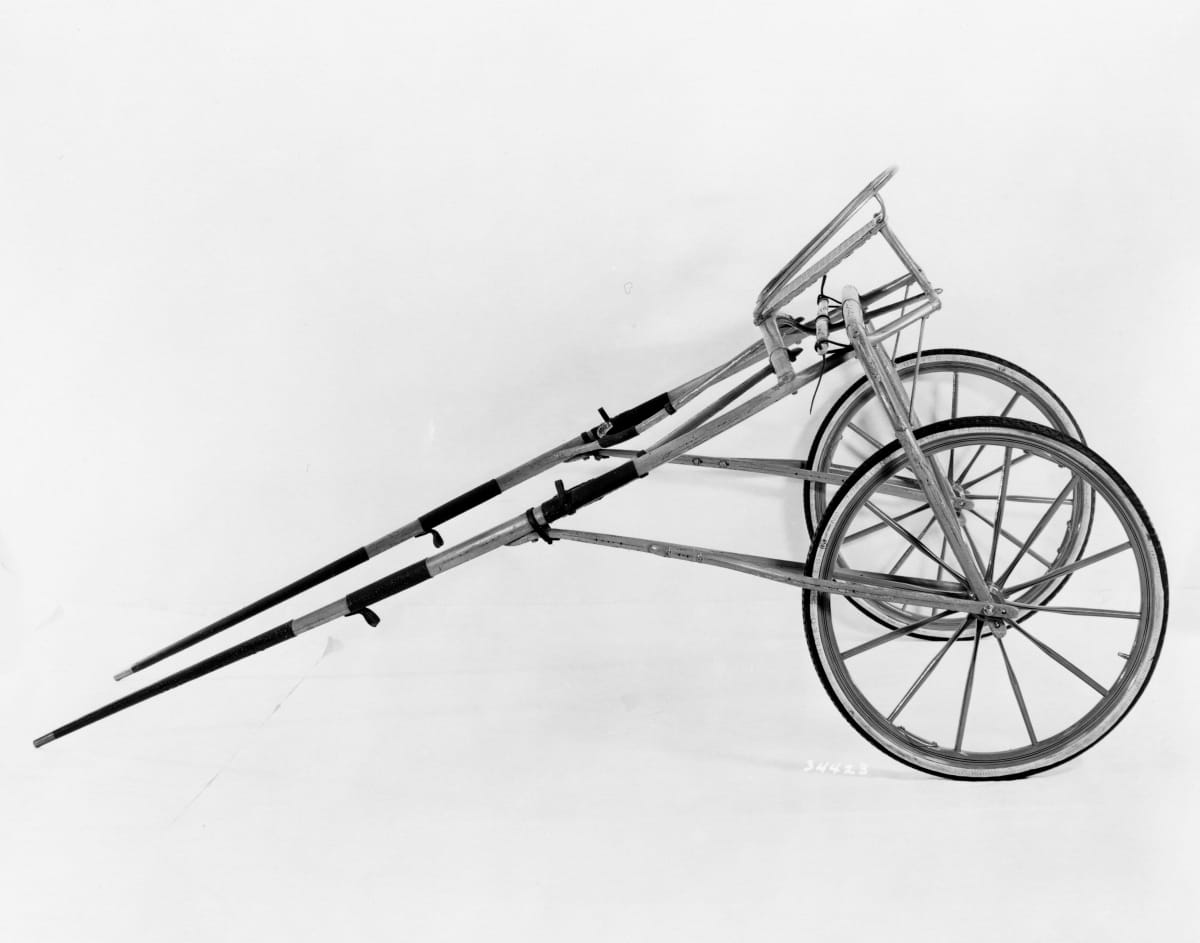
- Sulky, 1892-1893 - Harness racing enjoyed wide popularity in the late 19th century with competitions staged at dirt tracks, at state and county fairs, and sometimes on the streets. The "bicycle" sulky -- named for its bicycle-style wheels -- quickly proved superior over wooden high-wheel sulkies when introduced in 1892. Alma Bedford of Coldwater, Michigan, built this bicycle sulky and later manufactured them commercially.
- 1892-1893
- Collections - Artifact
Sulky, 1892-1893
Harness racing enjoyed wide popularity in the late 19th century with competitions staged at dirt tracks, at state and county fairs, and sometimes on the streets. The "bicycle" sulky -- named for its bicycle-style wheels -- quickly proved superior over wooden high-wheel sulkies when introduced in 1892. Alma Bedford of Coldwater, Michigan, built this bicycle sulky and later manufactured them commercially.
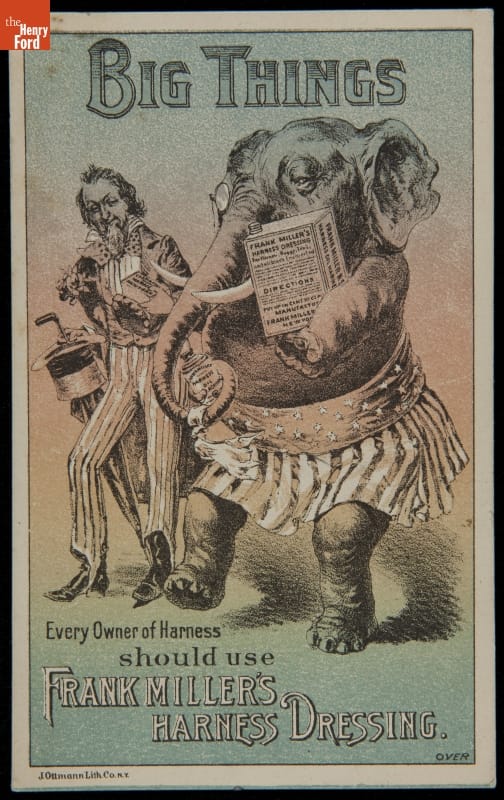
- Trade Card for Frank Miller's Harness Dressing, 1885-1900 - In the last third of the nineteenth century, an unprecedented variety of consumer goods and services flooded the American market. Advertisers, armed with new methods of color printing, bombarded potential customers with trade cards. Americans enjoyed and often saved the vibrant little advertisements found in product packages or distributed by local merchants. Many survive as historical records of commercialism in the United States.
- 1885-1900
- Collections - Artifact
Trade Card for Frank Miller's Harness Dressing, 1885-1900
In the last third of the nineteenth century, an unprecedented variety of consumer goods and services flooded the American market. Advertisers, armed with new methods of color printing, bombarded potential customers with trade cards. Americans enjoyed and often saved the vibrant little advertisements found in product packages or distributed by local merchants. Many survive as historical records of commercialism in the United States.
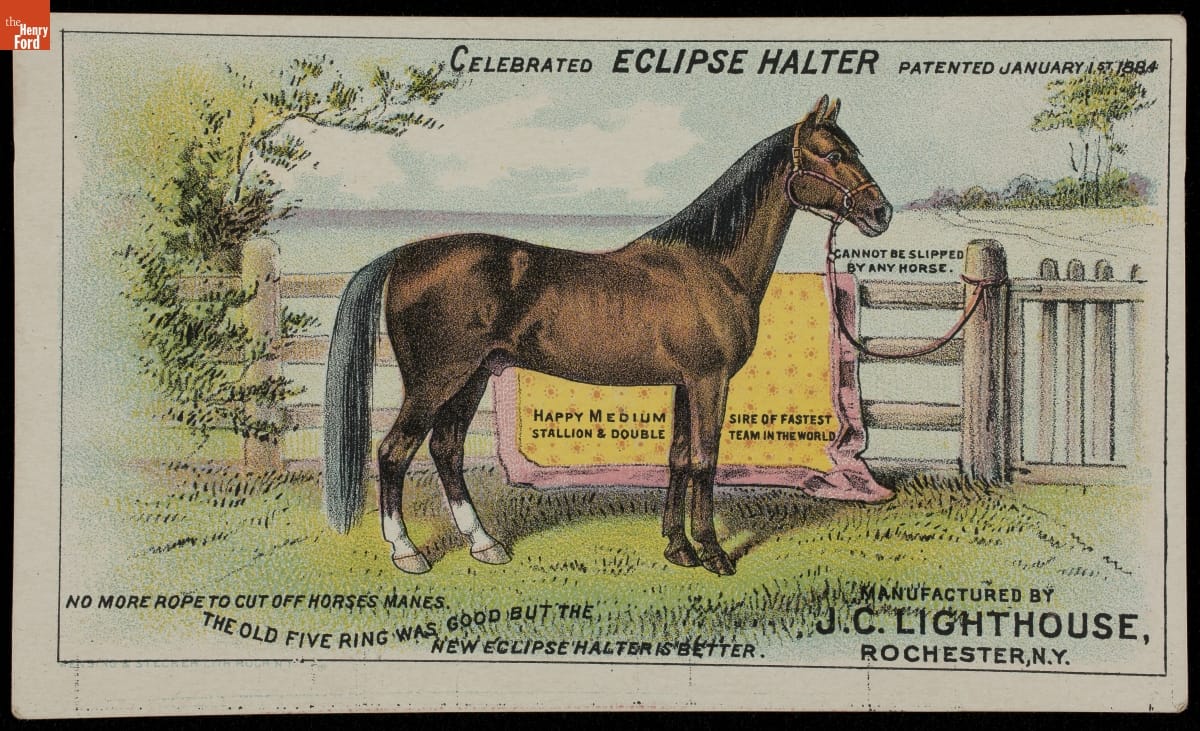
- Trade Card for Horse Collars and "Eclipse" Halters, J. C. Lighthouse, 1884-1894 - In the last third of the nineteenth century, an unprecedented variety of consumer goods and services flooded the American market. Advertisers, armed with new methods of color printing, bombarded potential customers with trade cards. Americans enjoyed and often saved the vibrant little advertisements found in product packages or distributed by local merchants. Many survive as historical records of commercialism in the United States.
- 1884-1894
- Collections - Artifact
Trade Card for Horse Collars and "Eclipse" Halters, J. C. Lighthouse, 1884-1894
In the last third of the nineteenth century, an unprecedented variety of consumer goods and services flooded the American market. Advertisers, armed with new methods of color printing, bombarded potential customers with trade cards. Americans enjoyed and often saved the vibrant little advertisements found in product packages or distributed by local merchants. Many survive as historical records of commercialism in the United States.
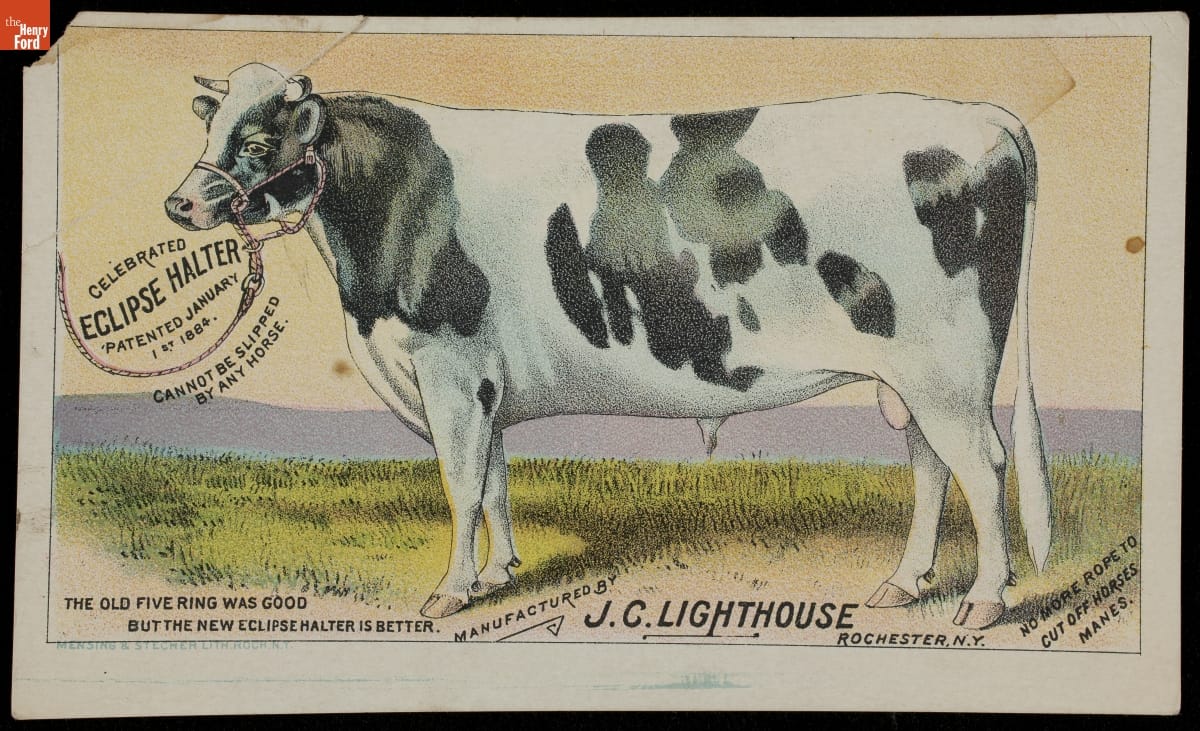
- Trade Card for Horse Collars and "Eclipse" Halters, J. C. Lighthouse, 1884-1894 - In the last third of the nineteenth century, an unprecedented variety of consumer goods and services flooded the American market. Advertisers, armed with new methods of color printing, bombarded potential customers with trade cards. Americans enjoyed and often saved the vibrant little advertisements found in product packages or distributed by local merchants. Many survive as historical records of commercialism in the United States.
- 1884-1894
- Collections - Artifact
Trade Card for Horse Collars and "Eclipse" Halters, J. C. Lighthouse, 1884-1894
In the last third of the nineteenth century, an unprecedented variety of consumer goods and services flooded the American market. Advertisers, armed with new methods of color printing, bombarded potential customers with trade cards. Americans enjoyed and often saved the vibrant little advertisements found in product packages or distributed by local merchants. Many survive as historical records of commercialism in the United States.