
Search
- Hay Rake, 1825-1835 - This rake was common from the 1700s to the 1840s. Two horses dragged the rake over the field, reducing physical labor and time needed to harvest the scythe-cut hay. A farmer or a field hand walked behind holding the two wooden handles to keep the rake's teeth parallel to the ground. The operator stopped periodically and tipped the rake to deposit the hay into windrows.
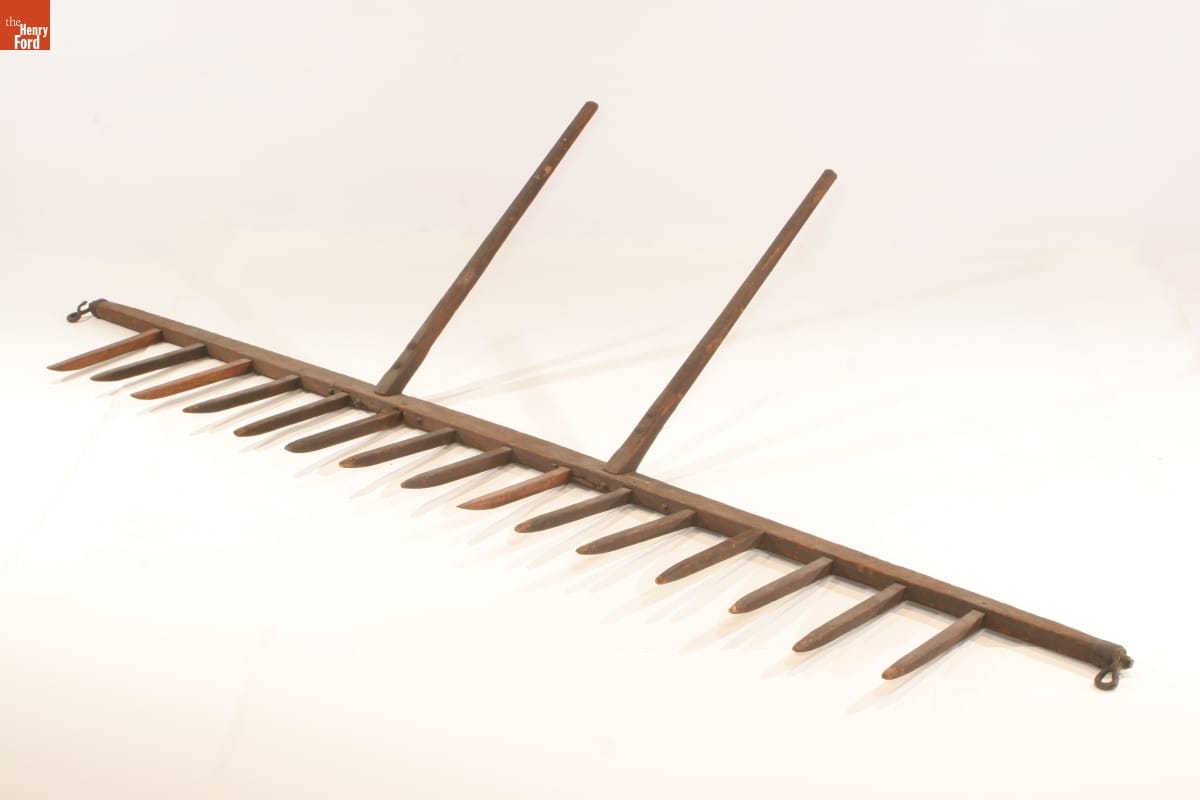
- 1825-1835
- Collections - Artifact
Hay Rake, 1825-1835
This rake was common from the 1700s to the 1840s. Two horses dragged the rake over the field, reducing physical labor and time needed to harvest the scythe-cut hay. A farmer or a field hand walked behind holding the two wooden handles to keep the rake's teeth parallel to the ground. The operator stopped periodically and tipped the rake to deposit the hay into windrows.
- Photograph, "Hay Press and Work Crew," 1915-1925 -
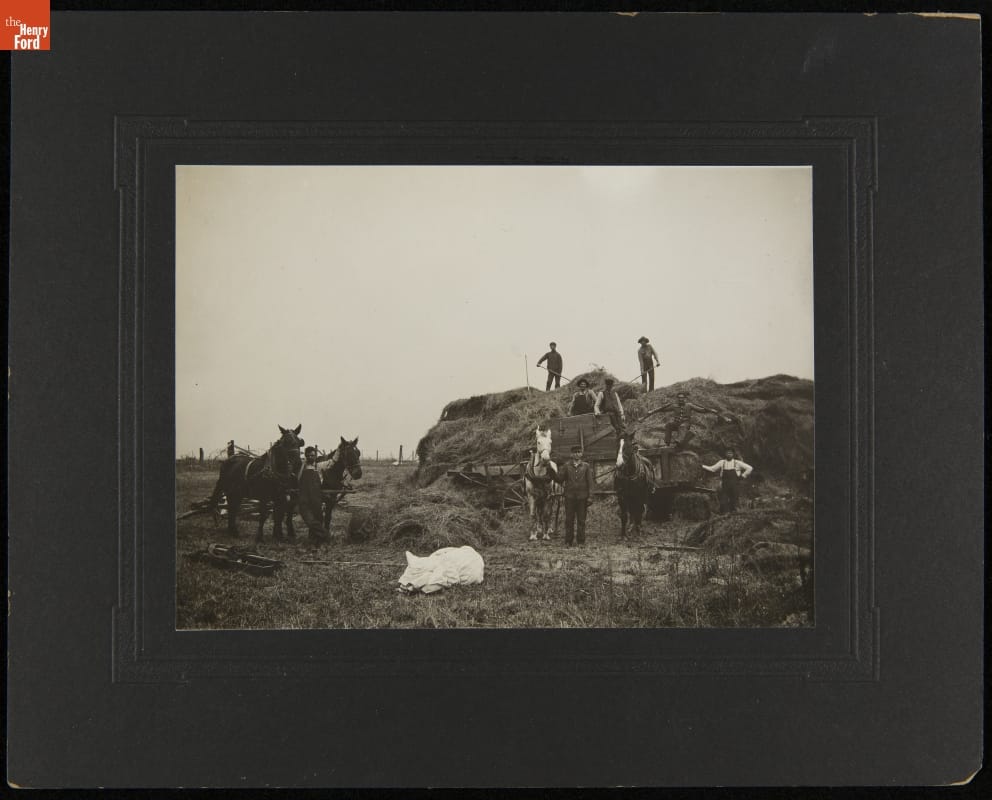
- 1915-1925
- Collections - Artifact
Photograph, "Hay Press and Work Crew," 1915-1925
- Hay Rake outside Ford Home (Henry Ford's Birthplace) at Its Original Site, Dearborn, Michigan, 1931 - Henry Ford began restoration of his Dearborn, Michigan, birthplace in 1919. He repaired or replaced the farm buildings and filled the small, white clapboard house with original or similar furnishings he remembered from his boyhood. He dedicated the restoration to the memory of his beloved mother, Mary Litogot Ford, who died in 1876. In 1944, the house and outbuildings were moved to Greenfield Village.
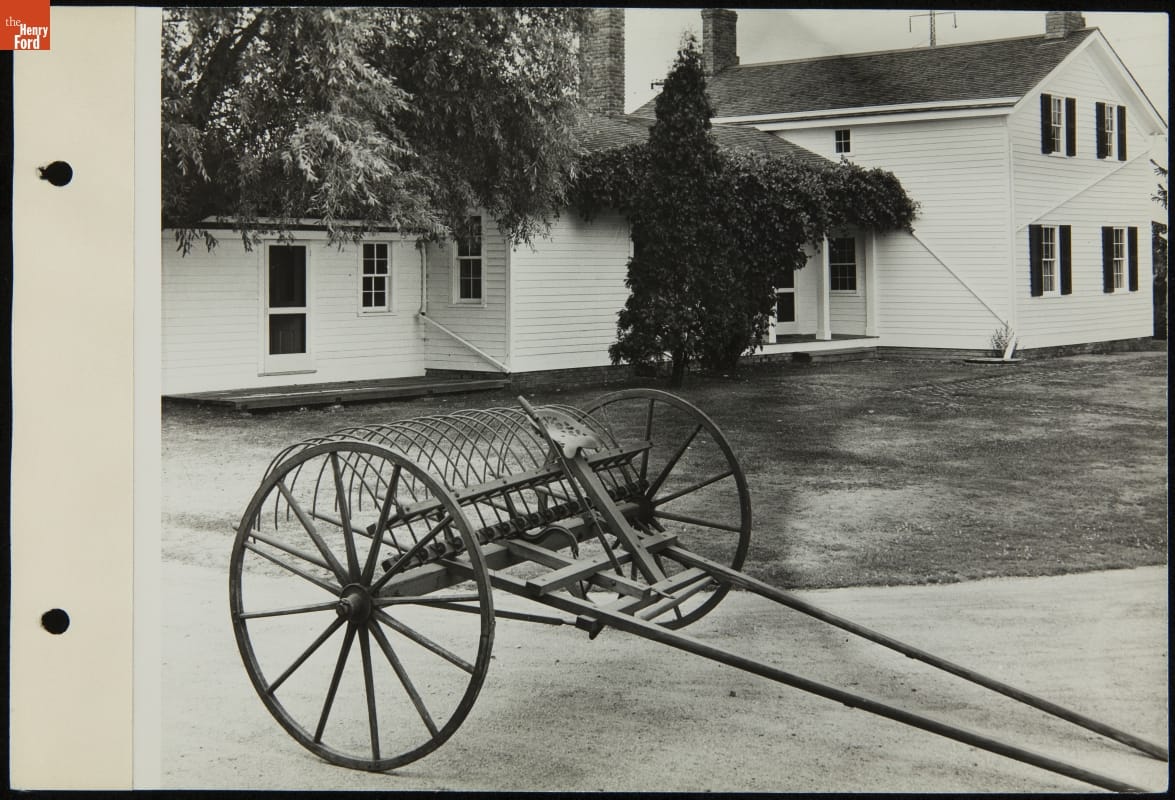
- July 31, 1931
- Collections - Artifact
Hay Rake outside Ford Home (Henry Ford's Birthplace) at Its Original Site, Dearborn, Michigan, 1931
Henry Ford began restoration of his Dearborn, Michigan, birthplace in 1919. He repaired or replaced the farm buildings and filled the small, white clapboard house with original or similar furnishings he remembered from his boyhood. He dedicated the restoration to the memory of his beloved mother, Mary Litogot Ford, who died in 1876. In 1944, the house and outbuildings were moved to Greenfield Village.
- Hay Rake, circa 1840 - After cutting hay, it must be cured to help preserve it for future use. Left in the field to dry, the hay is gathered, turned and stacked using a variety of rakes. Farmers used large wooden rakes to gather hay into windrows. Smaller rakes would help turn the hay to ensure uniform drying.
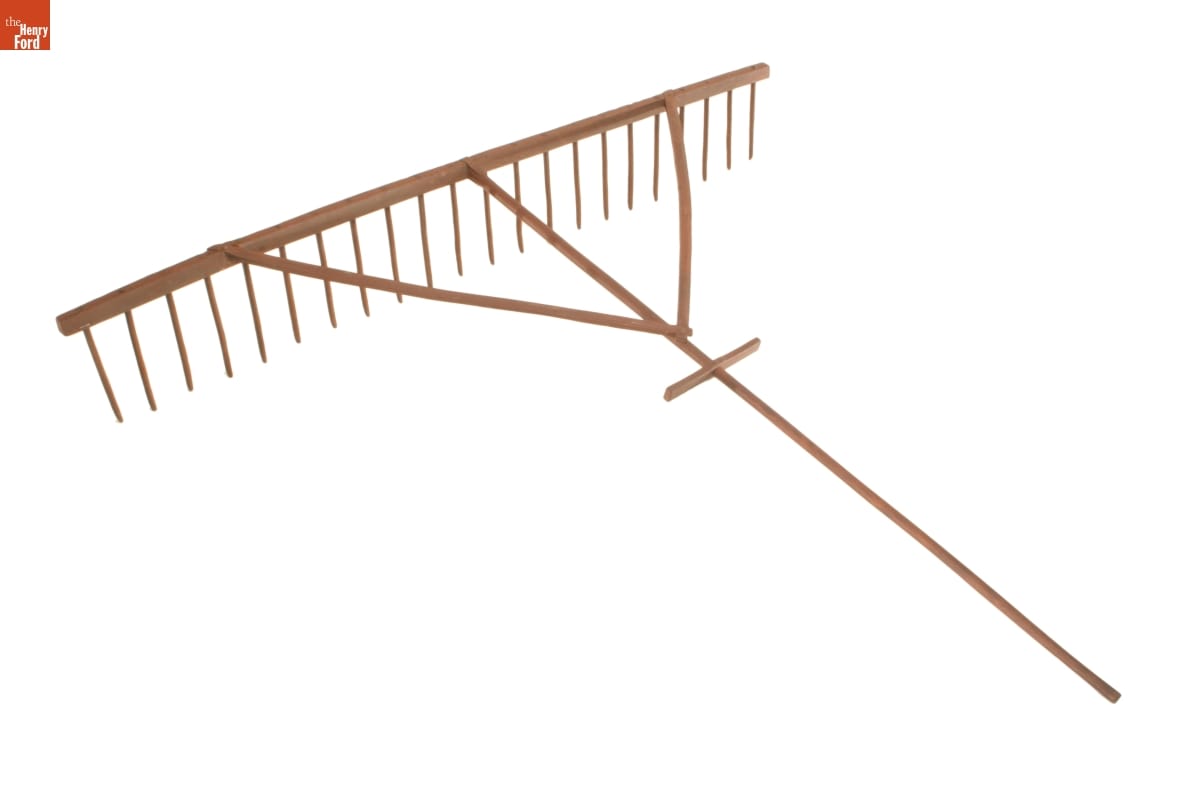
- circa 1840
- Collections - Artifact
Hay Rake, circa 1840
After cutting hay, it must be cured to help preserve it for future use. Left in the field to dry, the hay is gathered, turned and stacked using a variety of rakes. Farmers used large wooden rakes to gather hay into windrows. Smaller rakes would help turn the hay to ensure uniform drying.
- Hand Hay Rake, Used by Luther Burbank, circa 1910 -
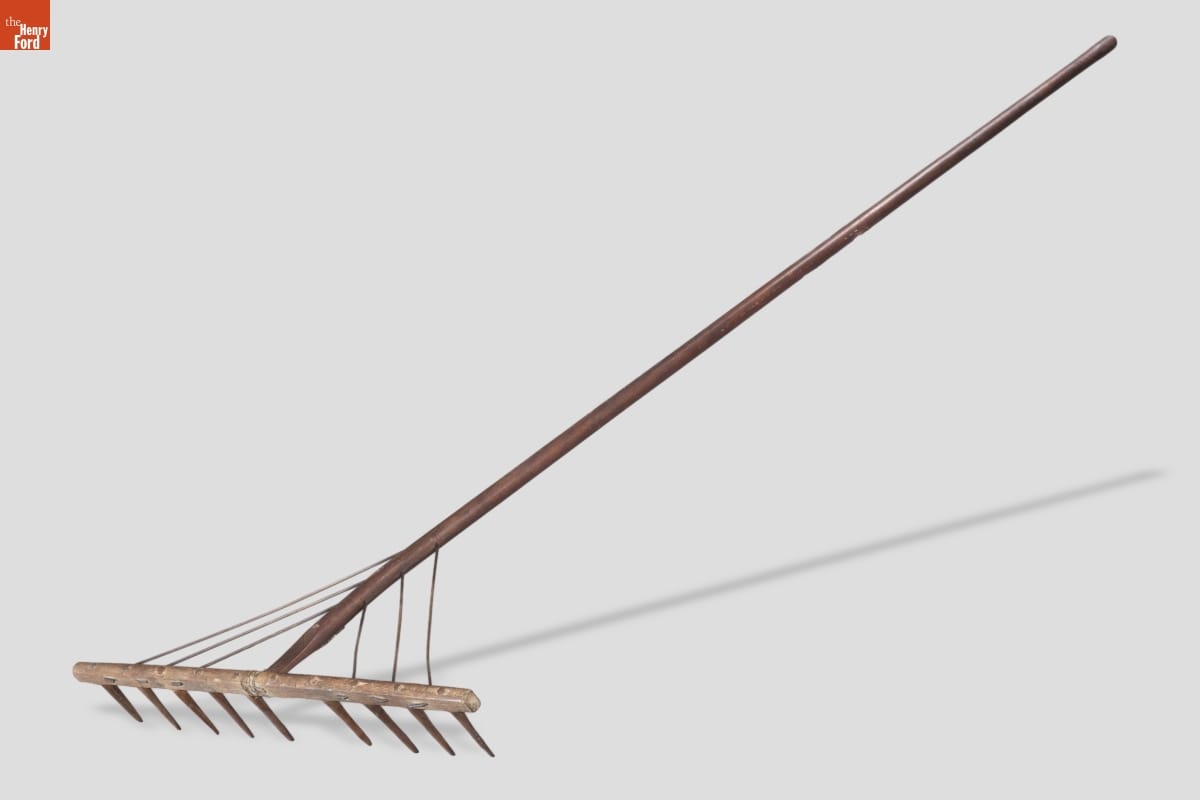
- circa 1910
- Collections - Artifact
Hand Hay Rake, Used by Luther Burbank, circa 1910
- Hay Rake, circa 1900 - After cutting hay, it must be cured to help preserve it for future use. Left in the field to dry, the hay is gathered, turned and stacked using a variety of rakes. Farmers used large wooden rakes to gather hay into windrows. Smaller rakes would help turn the hay to ensure uniform drying.
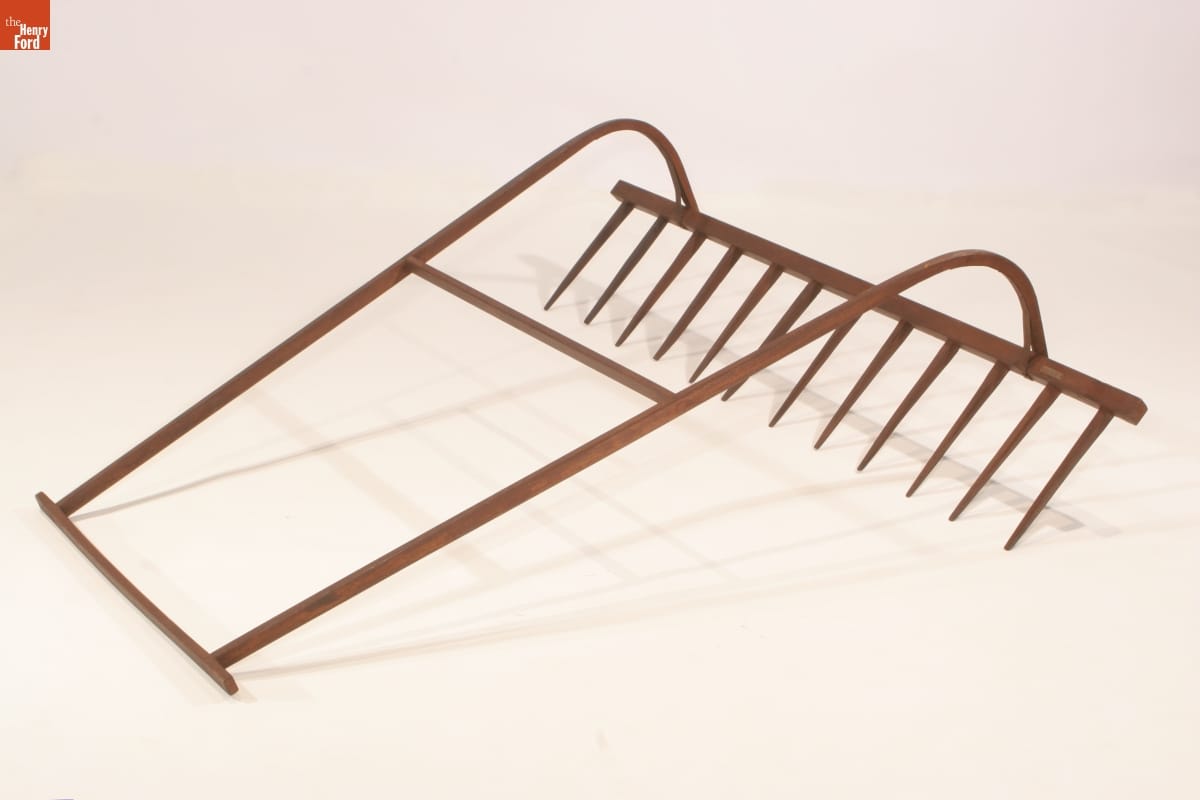
- circa 1900
- Collections - Artifact
Hay Rake, circa 1900
After cutting hay, it must be cured to help preserve it for future use. Left in the field to dry, the hay is gathered, turned and stacked using a variety of rakes. Farmers used large wooden rakes to gather hay into windrows. Smaller rakes would help turn the hay to ensure uniform drying.
- Hay Rake, circa 1882 -
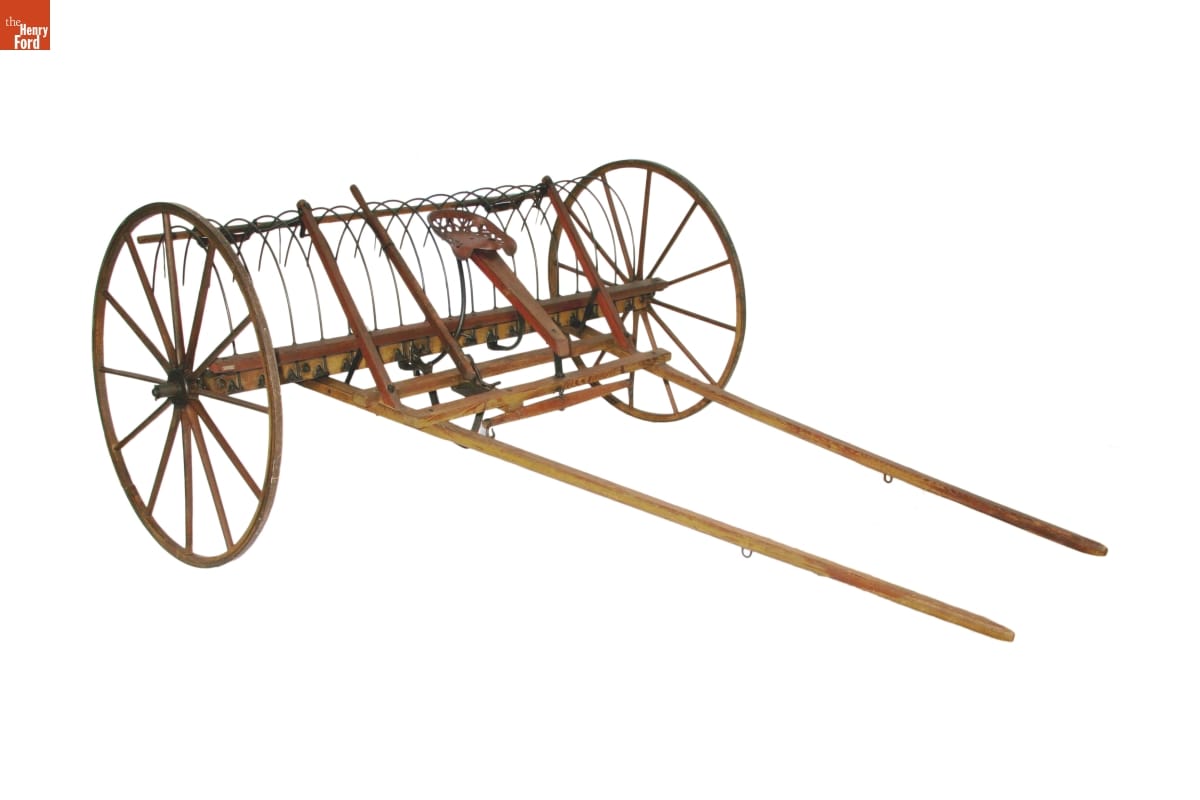
- circa 1882
- Collections - Artifact
Hay Rake, circa 1882
- Illustrated Industries and Geography of America, 1882 -

- 1882
- Collections - Artifact
Illustrated Industries and Geography of America, 1882
- Hay Rake, circa 1835 -
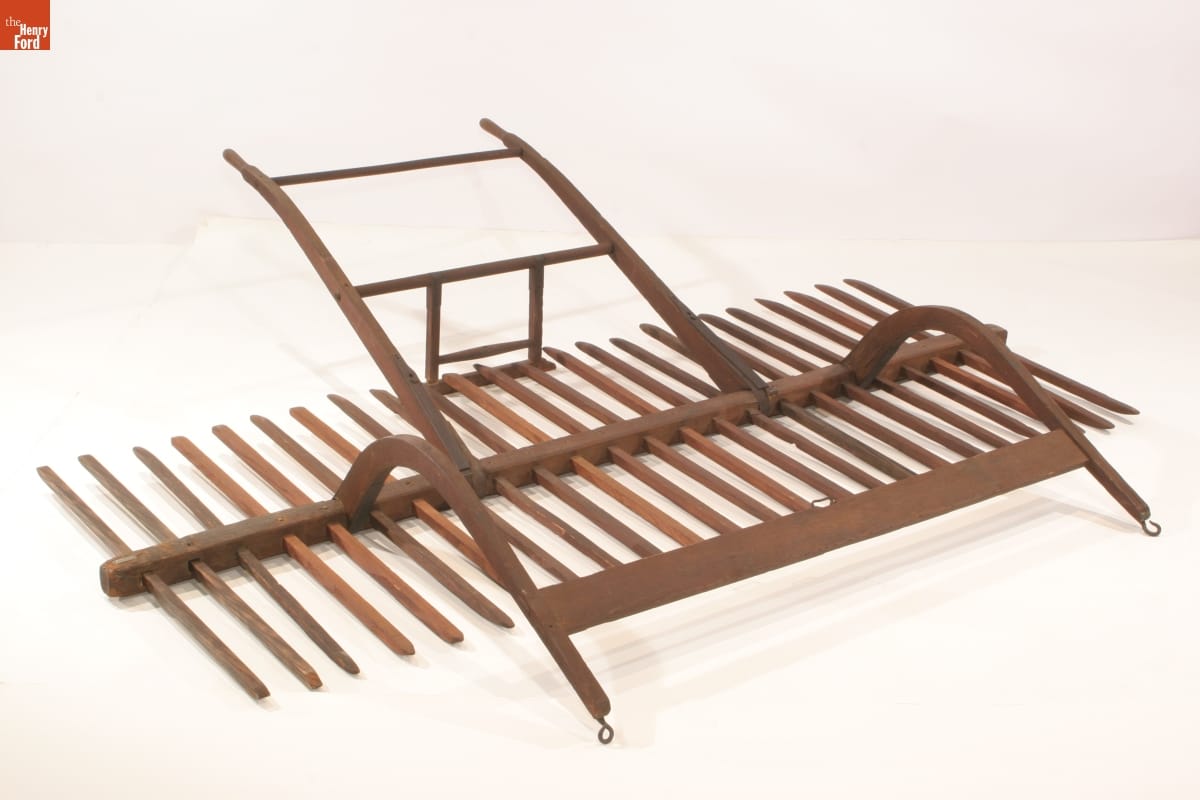
- circa 1835
- Collections - Artifact
Hay Rake, circa 1835