
Search
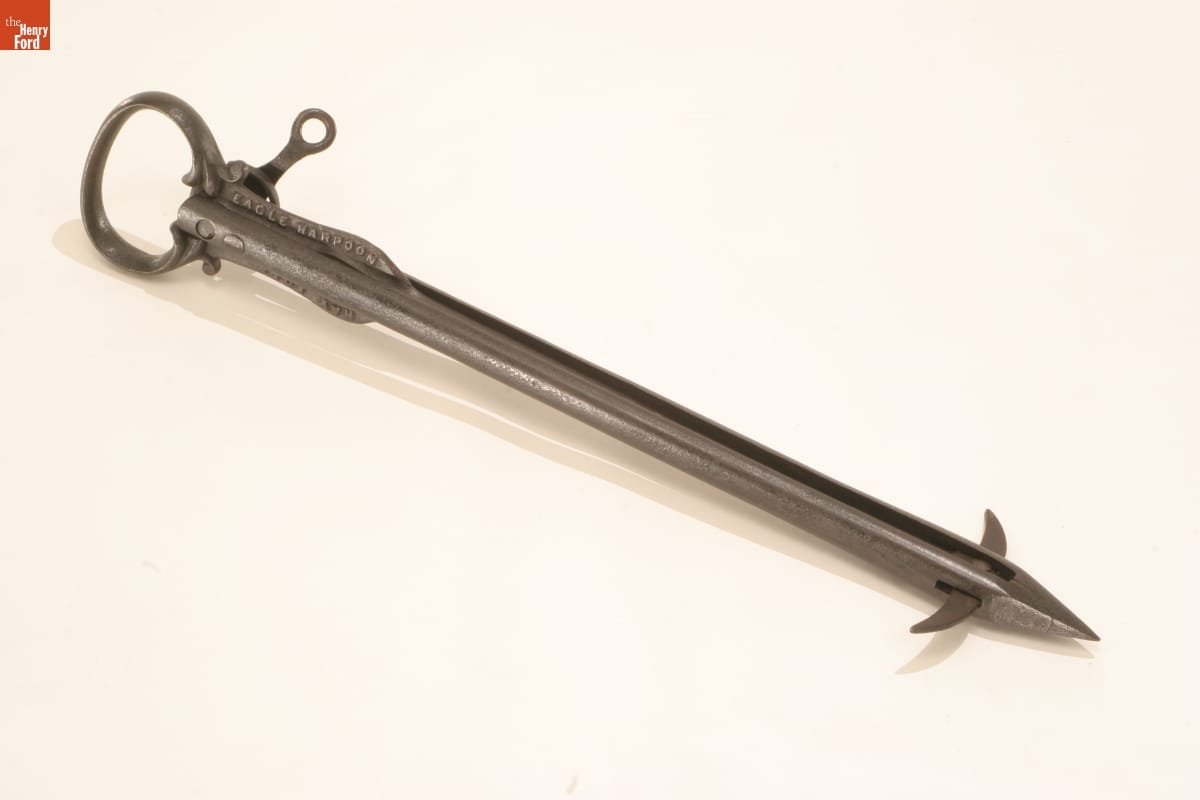
- Harpoon-Type Horse Hay Fork, circa 1895 - Moving bulky, loose hay in the 19th and early 20th centuries was hard, but necessary, work. Farmers stored some hay in barns after harvesting to continue the drying and curing process. Hay lifting forks -- usually operated with ropes, pulleys and lever releases -- could move large quantities of hay from wagons into haymows or lofts. These devices saved time and energy.
- circa 1895
- Collections - Artifact
Harpoon-Type Horse Hay Fork, circa 1895
Moving bulky, loose hay in the 19th and early 20th centuries was hard, but necessary, work. Farmers stored some hay in barns after harvesting to continue the drying and curing process. Hay lifting forks -- usually operated with ropes, pulleys and lever releases -- could move large quantities of hay from wagons into haymows or lofts. These devices saved time and energy.
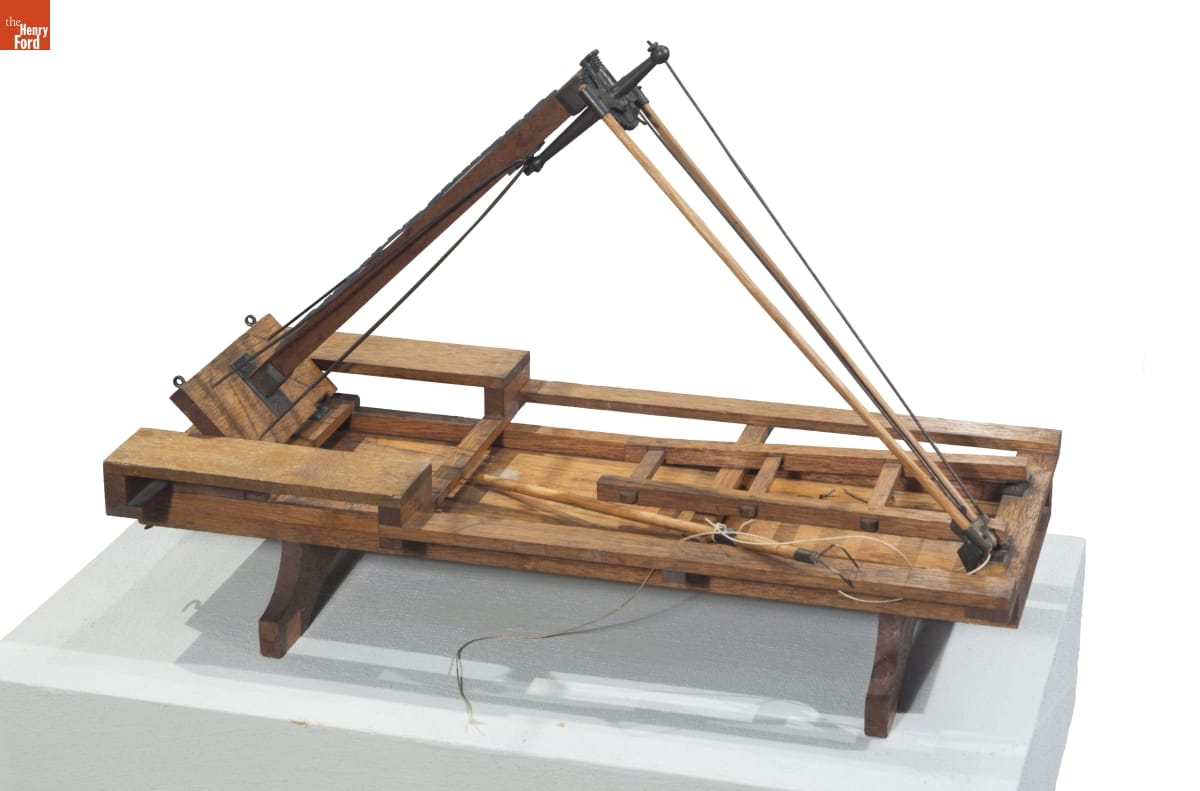
- Model of Hay Lifting Fork, 1864 - Farmers raced the weather to cut and cure grasses during summer to make hay for winter livestock feed. Moving hay from the field to dry storage had to be done quickly because rain could destroy a hay crop. William Elliot patented this hay loader in 1864. A crane, a hay fork, and the rack on the hay wagon worked together to pick up hay piled in fields and load it onto a wagon for transport.
- 1864
- Collections - Artifact
Model of Hay Lifting Fork, 1864
Farmers raced the weather to cut and cure grasses during summer to make hay for winter livestock feed. Moving hay from the field to dry storage had to be done quickly because rain could destroy a hay crop. William Elliot patented this hay loader in 1864. A crane, a hay fork, and the rack on the hay wagon worked together to pick up hay piled in fields and load it onto a wagon for transport.
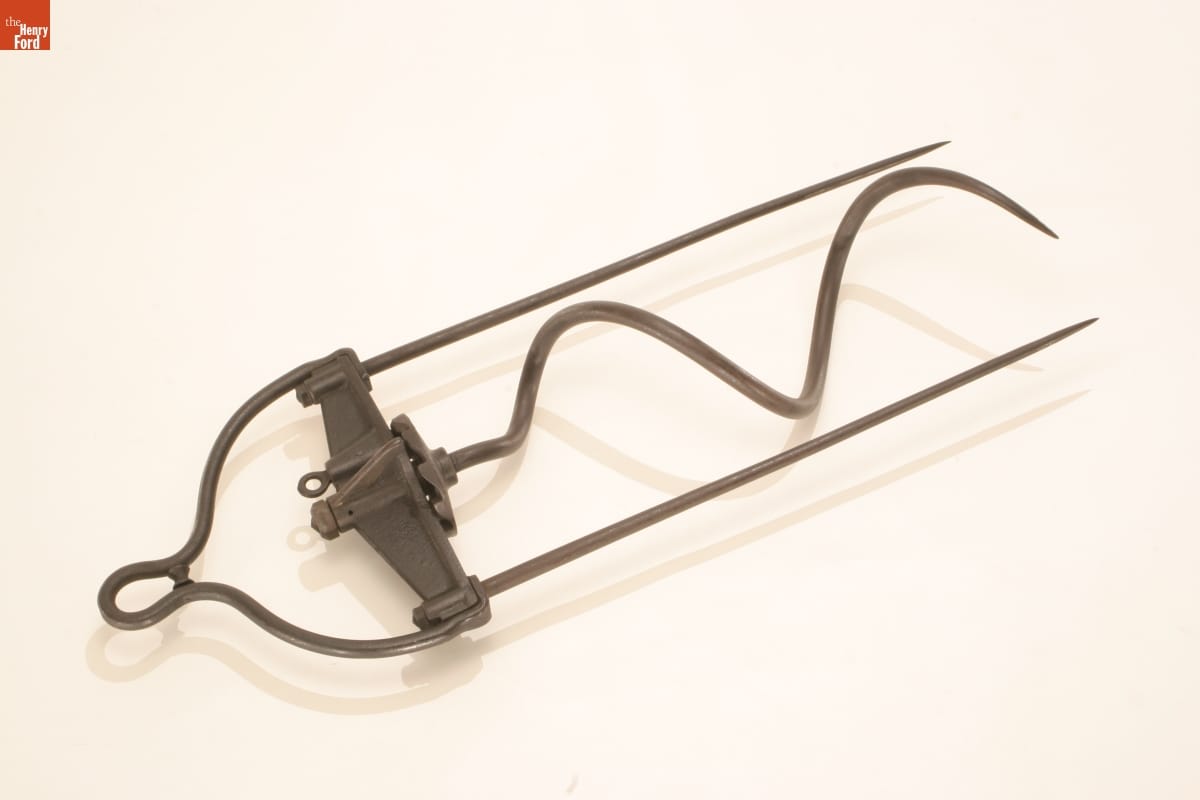
- Screw-Type Horse Hay Fork, circa 1880 - Moving bulky, loose hay in the 19th and early 20th centuries was hard, but necessary, work. Farmers stored some hay in barns after harvesting to continue the drying and curing process. Hay lifting forks -- usually operated with ropes, pulleys and lever releases -- could move large quantities of hay from wagons into haymows or lofts. These devices saved time and energy.
- circa 1880
- Collections - Artifact
Screw-Type Horse Hay Fork, circa 1880
Moving bulky, loose hay in the 19th and early 20th centuries was hard, but necessary, work. Farmers stored some hay in barns after harvesting to continue the drying and curing process. Hay lifting forks -- usually operated with ropes, pulleys and lever releases -- could move large quantities of hay from wagons into haymows or lofts. These devices saved time and energy.
- Illustrated Industries and Geography of America, 1882 -

- 1882
- Collections - Artifact
Illustrated Industries and Geography of America, 1882
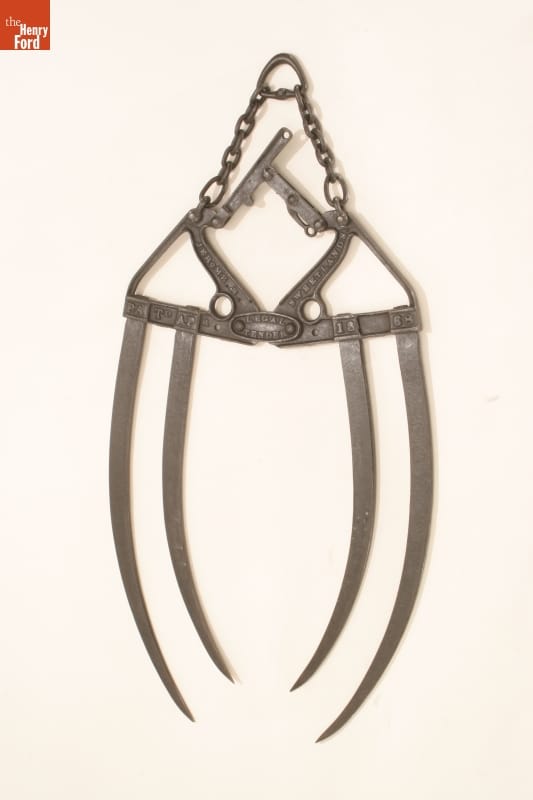
- Grapple-Type Horse Hay Fork, circa 1875 - Moving bulky, loose hay in the 19th and early 20th centuries was hard, but necessary, work. Farmers stored some hay in barns after harvesting to continue the drying and curing process. Hay lifting forks -- usually operated with ropes, pulleys and lever releases -- could move large quantities of hay from wagons into haymows or lofts. These devices saved time and energy.
- circa 1875
- Collections - Artifact
Grapple-Type Horse Hay Fork, circa 1875
Moving bulky, loose hay in the 19th and early 20th centuries was hard, but necessary, work. Farmers stored some hay in barns after harvesting to continue the drying and curing process. Hay lifting forks -- usually operated with ropes, pulleys and lever releases -- could move large quantities of hay from wagons into haymows or lofts. These devices saved time and energy.
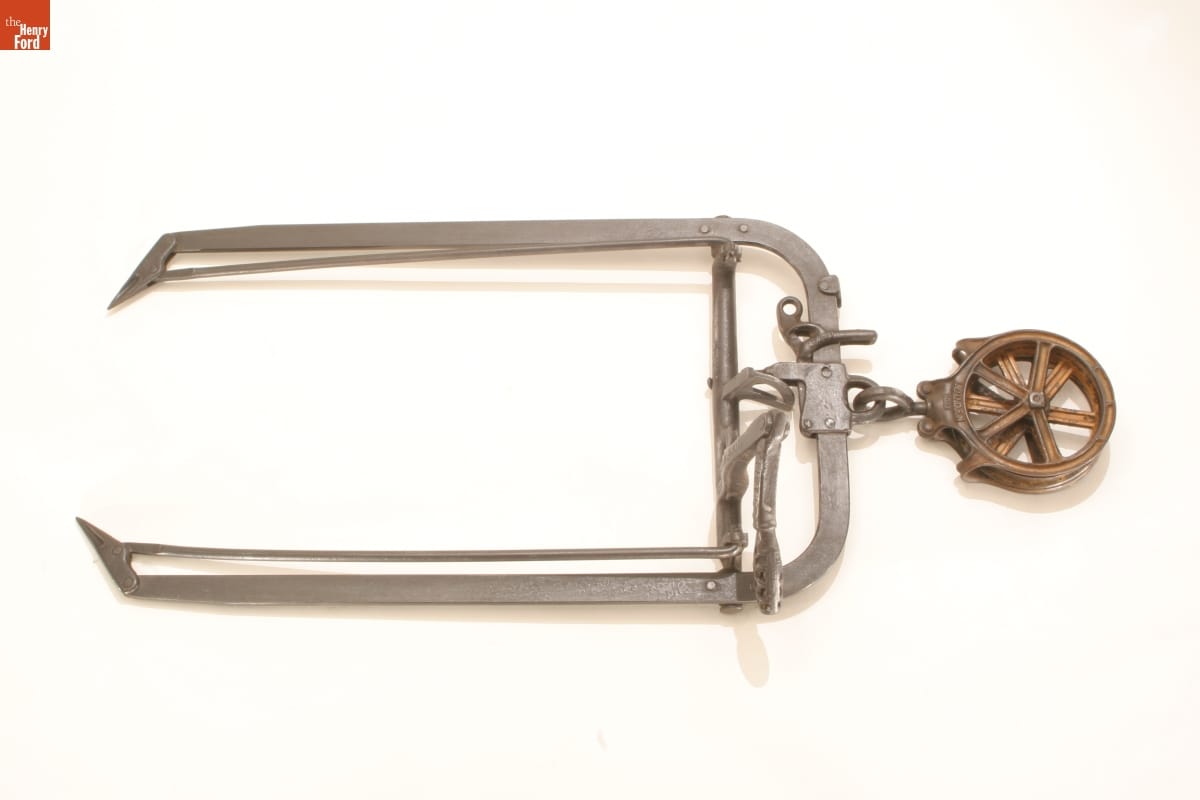
- Double Harpoon Horse Hay Fork, 1913 - Moving bulky, loose hay in the 19th and early 20th centuries was hard, but necessary, work. Farmers stored some hay in barns after harvesting to continue the drying and curing process. Hay lifting forks -- usually operated with ropes, pulleys and lever releases -- could move large quantities of hay from wagons into haymows or lofts. These devices saved time and energy.
- 1913
- Collections - Artifact
Double Harpoon Horse Hay Fork, 1913
Moving bulky, loose hay in the 19th and early 20th centuries was hard, but necessary, work. Farmers stored some hay in barns after harvesting to continue the drying and curing process. Hay lifting forks -- usually operated with ropes, pulleys and lever releases -- could move large quantities of hay from wagons into haymows or lofts. These devices saved time and energy.