
Search
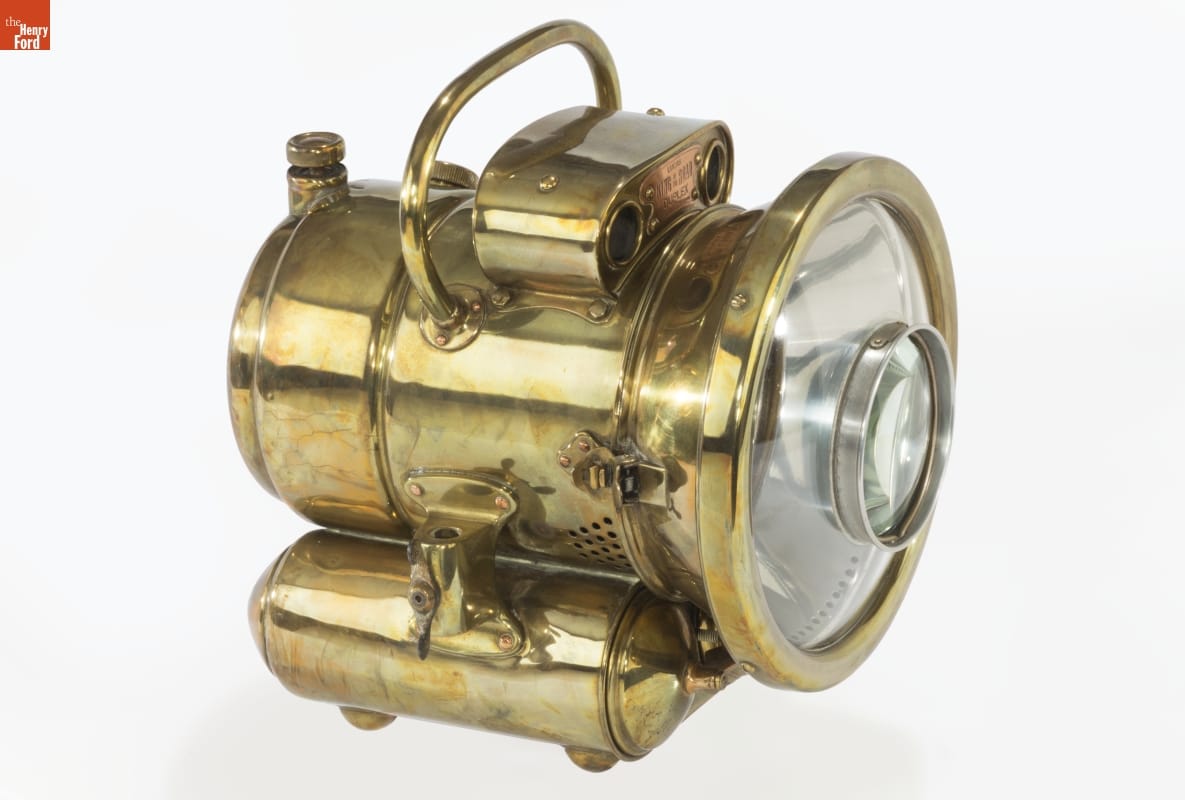
- "King of the Road" No. 784 Headlamp, 1902-1914 - Drivers in the early 1900s attached headlights to their automobiles to help light their way at night. To use this "King of the Road" model, automobilists filled the chambers with calcium carbide and then added water creating acetylene gas. Igniting the gas burner produced a strong white light. The lamp's lens and parabolic reflector cast a broad beam lighting the road ahead.
- 1902-1914
- Collections - Artifact
"King of the Road" No. 784 Headlamp, 1902-1914
Drivers in the early 1900s attached headlights to their automobiles to help light their way at night. To use this "King of the Road" model, automobilists filled the chambers with calcium carbide and then added water creating acetylene gas. Igniting the gas burner produced a strong white light. The lamp's lens and parabolic reflector cast a broad beam lighting the road ahead.
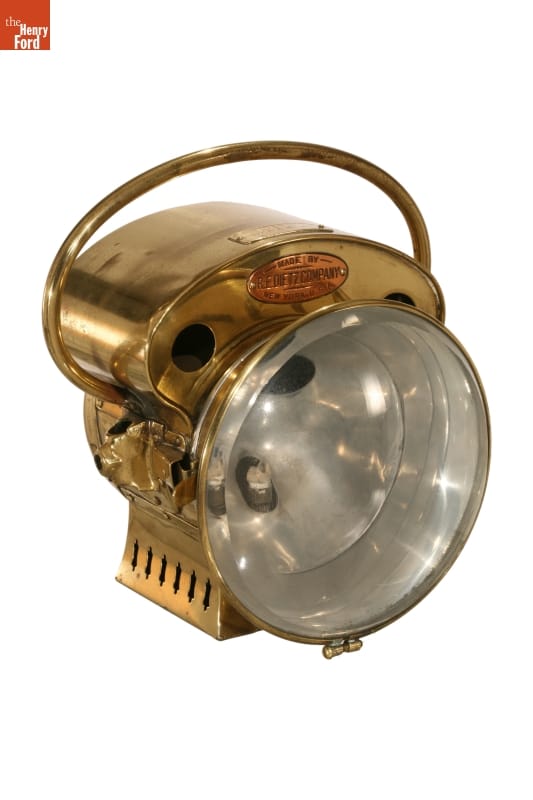
- Dietz Imperial No. 1 Headlight, circa 1902 - Kerosene lamps provided light for nighttime driving in the earliest automobiles -- if drivers dared to risk rudimentary cars and poor roads at night. The R.E. Dietz Company had been manufacturing lamps and lanterns for various uses since the 1840s, long before the automobile appeared. By the early 20th century, it had added automotive headlights to its product line.
- circa 1902
- Collections - Artifact
Dietz Imperial No. 1 Headlight, circa 1902
Kerosene lamps provided light for nighttime driving in the earliest automobiles -- if drivers dared to risk rudimentary cars and poor roads at night. The R.E. Dietz Company had been manufacturing lamps and lanterns for various uses since the 1840s, long before the automobile appeared. By the early 20th century, it had added automotive headlights to its product line.
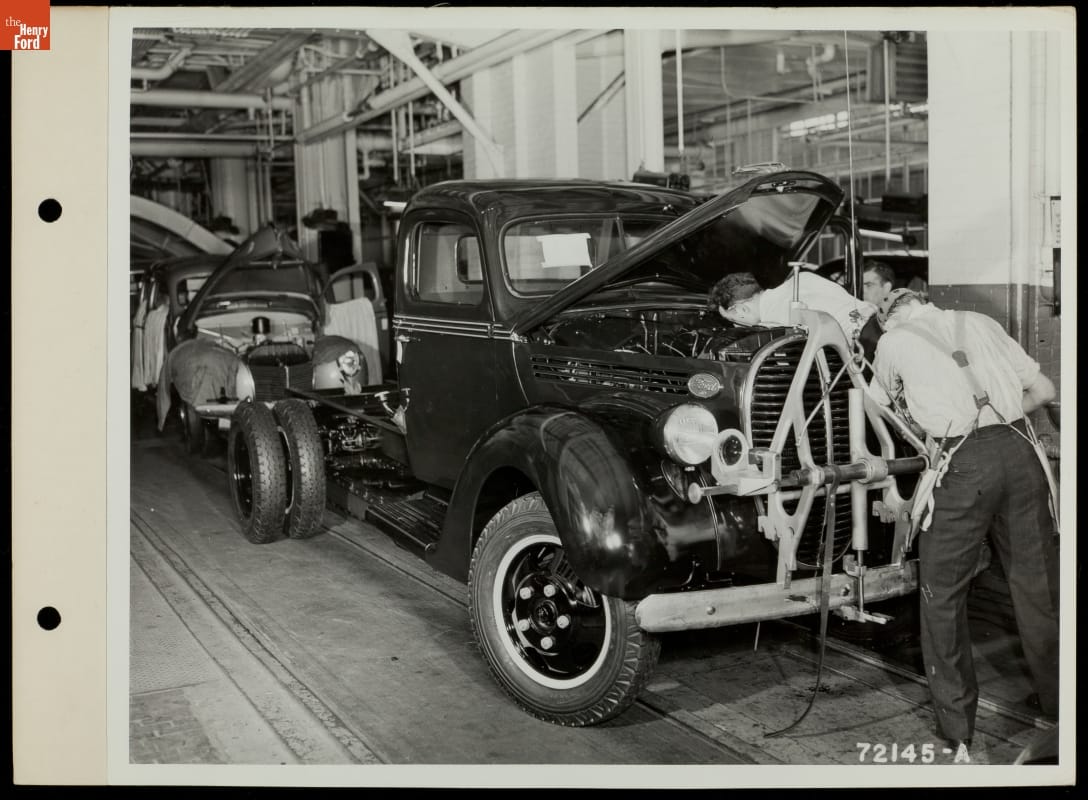
- Installing Headlights on Truck, Ford Assembly Line, 1939 - Engineers at Ford's Highland Park plant had fine-tuned the moving assembly line. With this experience in hand, Ford created the "B" Building at its new River Rouge complex with extensive conveyer systems to accommodate the flow of parts and assembly processes. Here, on the final assembly line, workers install headlights on a Ford Truck.
- July 27, 1939
- Collections - Artifact
Installing Headlights on Truck, Ford Assembly Line, 1939
Engineers at Ford's Highland Park plant had fine-tuned the moving assembly line. With this experience in hand, Ford created the "B" Building at its new River Rouge complex with extensive conveyer systems to accommodate the flow of parts and assembly processes. Here, on the final assembly line, workers install headlights on a Ford Truck.
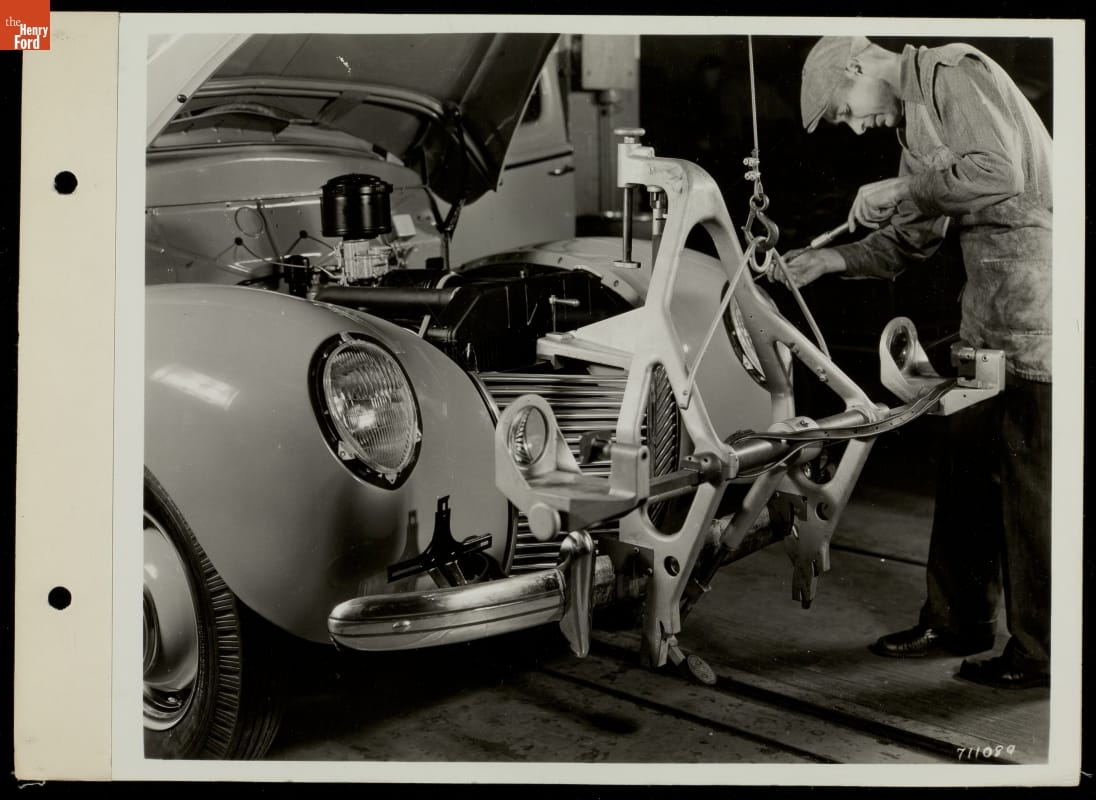
- Headlight Installation on Ford's Mercury Assembly Line, 1938 - Engineers at Ford's Highland Park plant had fine-tuned the moving assembly line. With this experience in hand, Ford created the "B" Building at its new River Rouge complex with extensive conveyer systems to accommodate the flow of parts and assembly processes. Here, during final assembly, a line worker adjusts the newly installed headlight on a 1939 Mercury automobile.
- November 25, 1938
- Collections - Artifact
Headlight Installation on Ford's Mercury Assembly Line, 1938
Engineers at Ford's Highland Park plant had fine-tuned the moving assembly line. With this experience in hand, Ford created the "B" Building at its new River Rouge complex with extensive conveyer systems to accommodate the flow of parts and assembly processes. Here, during final assembly, a line worker adjusts the newly installed headlight on a 1939 Mercury automobile.
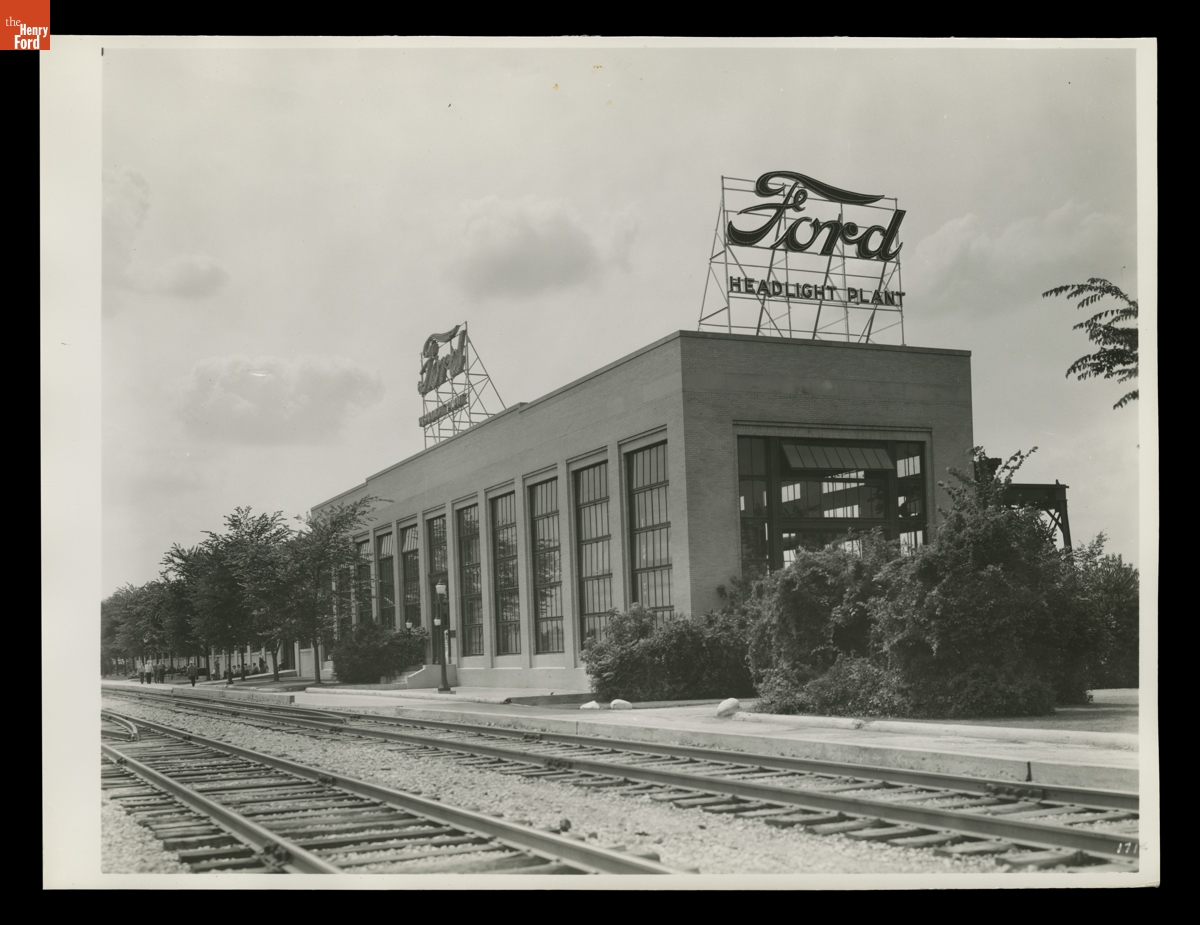
- Ford Motor Company Headlight Plant, Flat Rock, Michigan, 1942 - Henry Ford began setting up small-scale factories in towns throughout southeast Michigan in the 1920s. These "Village Industries" employed local people and supplied Ford with parts and equipment. The Flat Rock automotive lamp factory opened in 1923, powered by hydroelectric turbines on the Huron River. Workers produced tens of millions of lamp assemblies before Ford left the factory in 1950.
- July 27, 1942
- Collections - Artifact
Ford Motor Company Headlight Plant, Flat Rock, Michigan, 1942
Henry Ford began setting up small-scale factories in towns throughout southeast Michigan in the 1920s. These "Village Industries" employed local people and supplied Ford with parts and equipment. The Flat Rock automotive lamp factory opened in 1923, powered by hydroelectric turbines on the Huron River. Workers produced tens of millions of lamp assemblies before Ford left the factory in 1950.
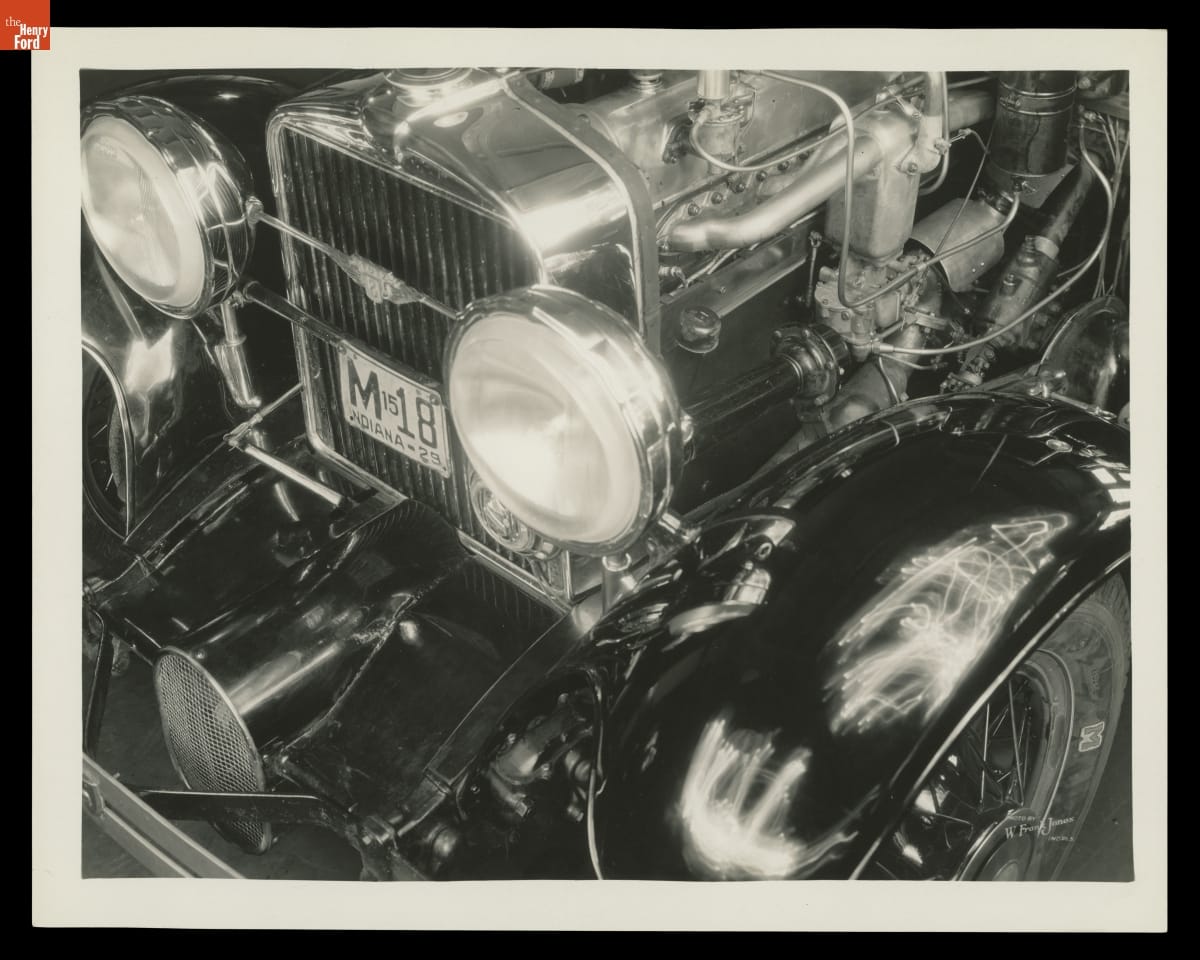
- Stutz Automobile, circa 1929 - Harry C. Stutz began manufacturing Stutz automobiles in 1911, and a strong showing at that year's Indianapolis 500 inspired the company's slogan: "The Car That Made Good in a Day." The sporty Bearcat further boosted the brand's high-performance image. Stutz cars grew more refined in the late 1920s, but the Depression devastated sales and Stutz auto production ended in 1935.
- circa 1929
- Collections - Artifact
Stutz Automobile, circa 1929
Harry C. Stutz began manufacturing Stutz automobiles in 1911, and a strong showing at that year's Indianapolis 500 inspired the company's slogan: "The Car That Made Good in a Day." The sporty Bearcat further boosted the brand's high-performance image. Stutz cars grew more refined in the late 1920s, but the Depression devastated sales and Stutz auto production ended in 1935.
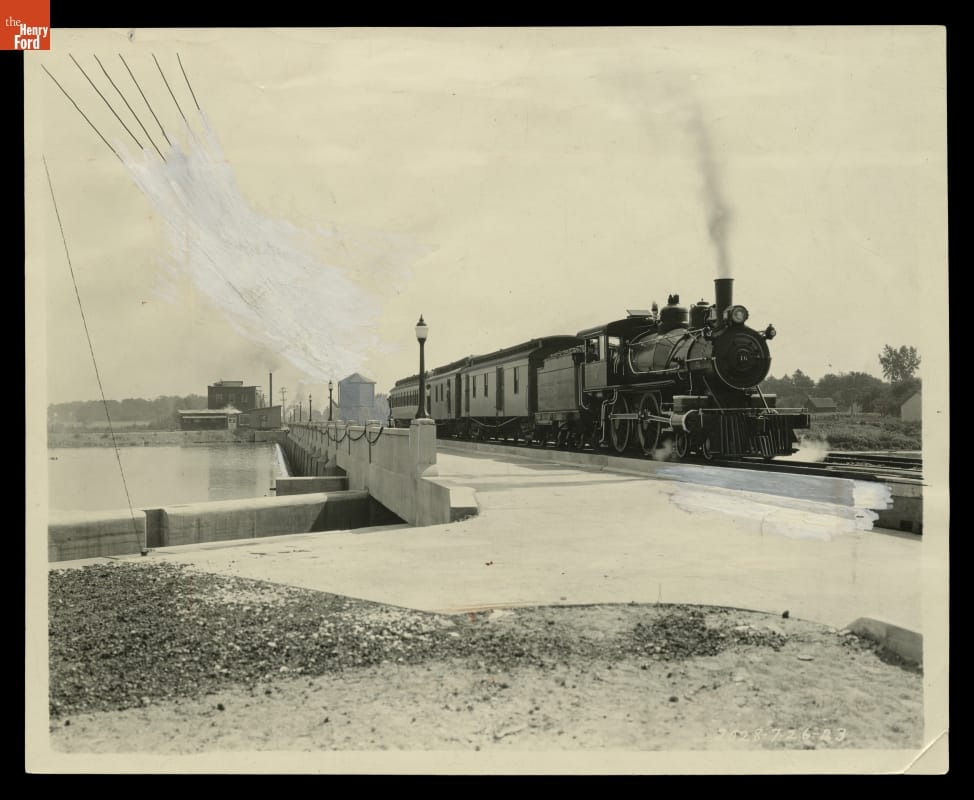
- Detroit, Toledo & Ironton Railroad Locomotive No. 16 at Ford Motor Company Headlight Plant, Flat Rock, Michigan, 1923 - Ford Motor Company opened an automotive lamp factory on the Huron River at Flat Rock, Michigan, in 1923. Water-driven turbines supplied the plant's electricity. The nearby dam was next to a bridge that carried both a factory access road and the Detroit, Toledo & Ironton Railroad across the river. Ford ended production at the plant in 1950.
- July 26, 1923
- Collections - Artifact
Detroit, Toledo & Ironton Railroad Locomotive No. 16 at Ford Motor Company Headlight Plant, Flat Rock, Michigan, 1923
Ford Motor Company opened an automotive lamp factory on the Huron River at Flat Rock, Michigan, in 1923. Water-driven turbines supplied the plant's electricity. The nearby dam was next to a bridge that carried both a factory access road and the Detroit, Toledo & Ironton Railroad across the river. Ford ended production at the plant in 1950.
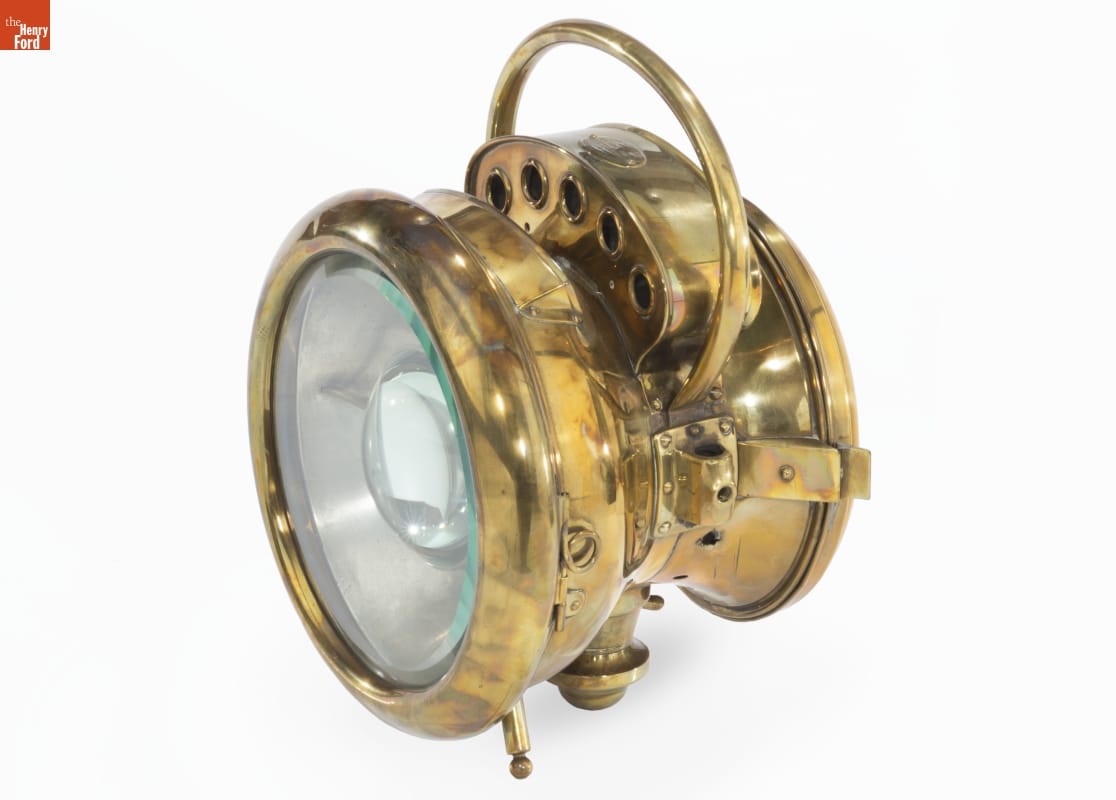
- Phare Majestic Co. Headlight, 1900-1904 - Automotive headlamps evolved alongside the automobile. Kerosene-fueled lamps were replaced by acetylene units in the first decade of the 20th century. Acetylene-fueled lamps were, in turn, replaced by electric units in the 1910s. Headlamp lenses improved as well. Optical lenses, also introduced in the 1910s, focused the headlamp's beam and increased its intensity.
- 1900-1904
- Collections - Artifact
Phare Majestic Co. Headlight, 1900-1904
Automotive headlamps evolved alongside the automobile. Kerosene-fueled lamps were replaced by acetylene units in the first decade of the 20th century. Acetylene-fueled lamps were, in turn, replaced by electric units in the 1910s. Headlamp lenses improved as well. Optical lenses, also introduced in the 1910s, focused the headlamp's beam and increased its intensity.
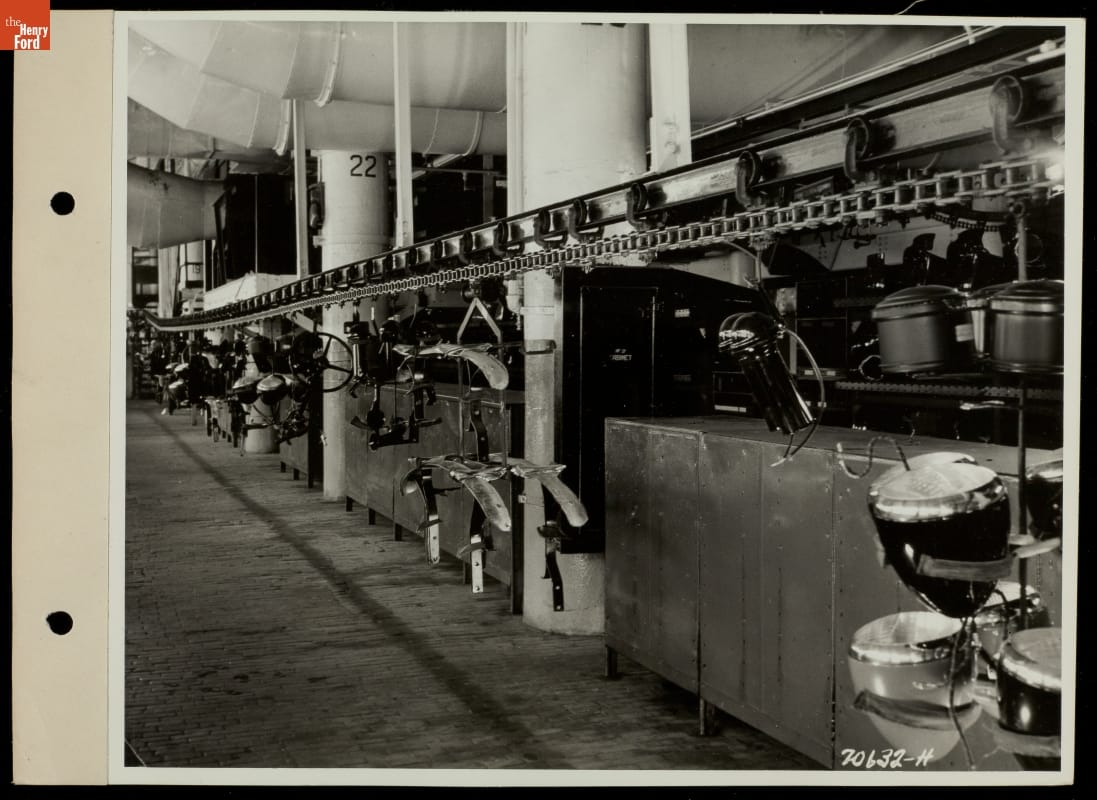
- Headlights, Bumpers and Components on Ford Assembly Line, 1938 - Engineers at Ford's Highland Park plant had fine-tuned the moving assembly line. With this experience in hand, Ford created the "B" Building at the new River Rouge complex with extensive conveyer systems to accommodate the flow of parts and assembly processes. 120 miles of conveyer crisscrossed the Rouge Plant, including the overhead section seen here.
- September 08, 1938
- Collections - Artifact
Headlights, Bumpers and Components on Ford Assembly Line, 1938
Engineers at Ford's Highland Park plant had fine-tuned the moving assembly line. With this experience in hand, Ford created the "B" Building at the new River Rouge complex with extensive conveyer systems to accommodate the flow of parts and assembly processes. 120 miles of conveyer crisscrossed the Rouge Plant, including the overhead section seen here.
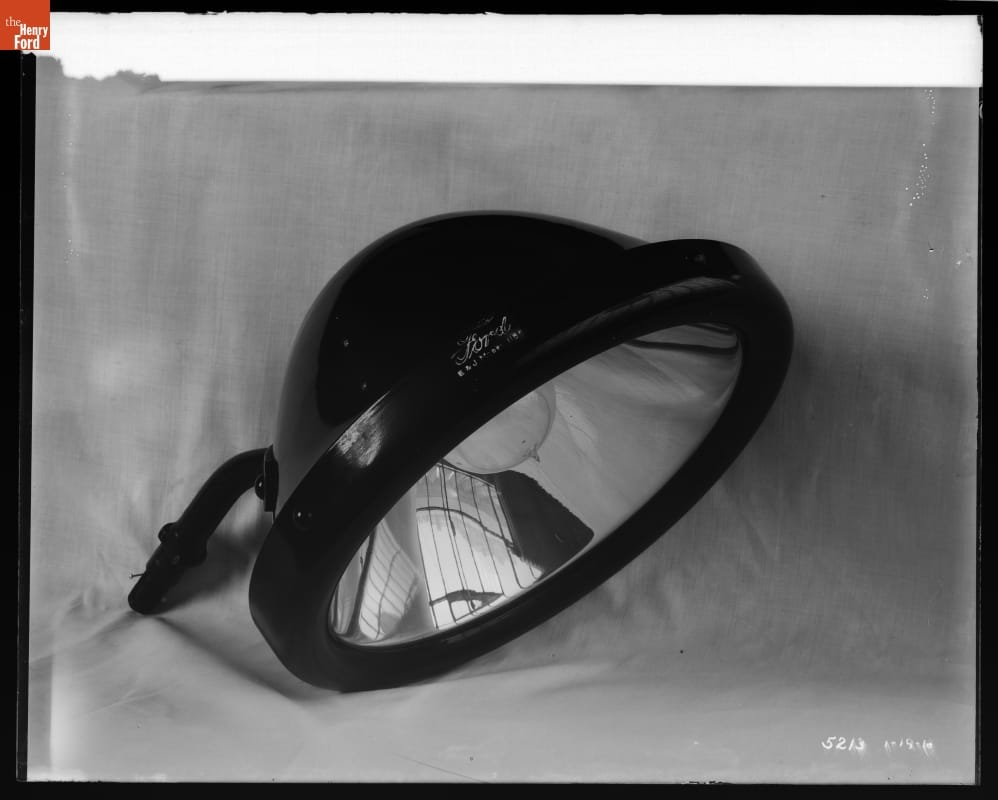
- Ford Motor Company Glass Plate Negatives--Item 1 - Ford Motor Company introduced electric headlights to the Model T for 1915. The lights were powered by the engine magneto. Some early 1915 lamps featured brass trim, but Ford soon settled on all-steel headlights painted black. The lamp in this photo was stamped to identify its supplier: Edmunds & Jones Corporation of Detroit.
- January 19, 1916
- Collections - Artifact
Ford Motor Company Glass Plate Negatives--Item 1
Ford Motor Company introduced electric headlights to the Model T for 1915. The lights were powered by the engine magneto. Some early 1915 lamps featured brass trim, but Ford soon settled on all-steel headlights painted black. The lamp in this photo was stamped to identify its supplier: Edmunds & Jones Corporation of Detroit.