
Search
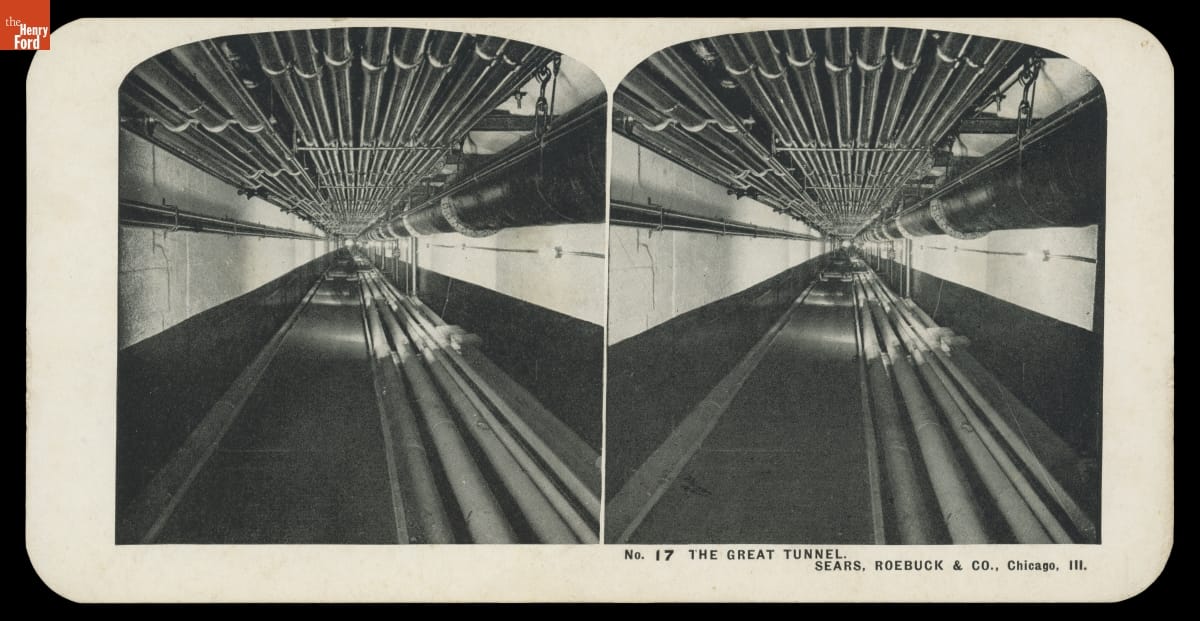
- "The Great Tunnel. Sears, Roebuck & Co., Chicago, Ill.," 1906-1908 - Mail-order firm Sears, Roebuck, & Co. had become one of America's largest corporations by the early 1900s. Sears was particularly popular among rural Americans, as it offered better options, lower costs, and more efficient delivery methods than traditional general stores. This stereograph, one of a set of 50 sold through the Sears catalog beginning in 1908, offered a behind-the-scenes look at the company's operation.
- 1906-1908
- Collections - Artifact
"The Great Tunnel. Sears, Roebuck & Co., Chicago, Ill.," 1906-1908
Mail-order firm Sears, Roebuck, & Co. had become one of America's largest corporations by the early 1900s. Sears was particularly popular among rural Americans, as it offered better options, lower costs, and more efficient delivery methods than traditional general stores. This stereograph, one of a set of 50 sold through the Sears catalog beginning in 1908, offered a behind-the-scenes look at the company's operation.
- Bridge and Beach Manufacturing Company General Catalog No. 84, "Superior Stoves and Ranges for Coal, Wood, and Gas," circa 1921 -
- circa 1921
- Collections - Artifact
Bridge and Beach Manufacturing Company General Catalog No. 84, "Superior Stoves and Ranges for Coal, Wood, and Gas," circa 1921
- American Stove Company Catalog No. 75, "Clark Jewel Gas Stoves," 1909 -
- 1909
- Collections - Artifact
American Stove Company Catalog No. 75, "Clark Jewel Gas Stoves," 1909
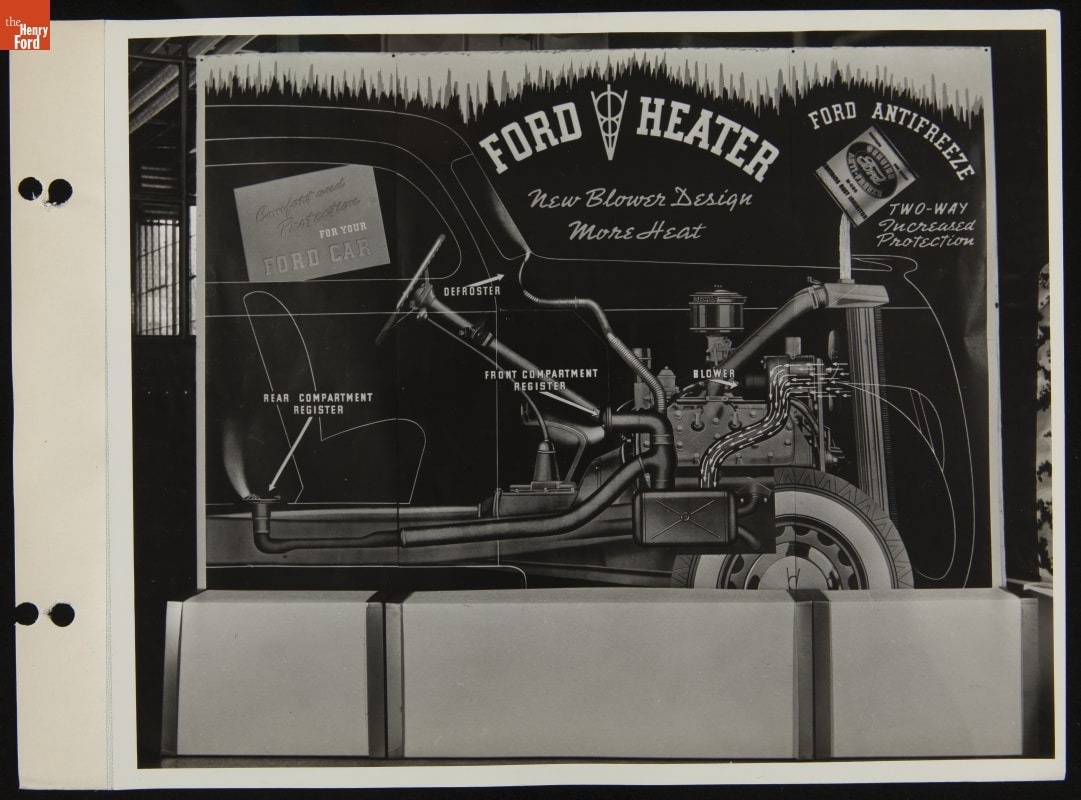
- Ford Dealership Window Display, "Ford V-8 Heater," November 17, 1937 - Heaters weren't standard equipment on all cars in the 1930s. Ford Motor Company and its dealers sold aftermarket heaters that used engine heat, routed through a heat exchanger, to warm the passenger compartment. Funnel-type heaters simply relied on the engine fan and the car's forward motion to move warm air. Blower-type heaters used electric blowers to help move the air.
- November 17, 1937
- Collections - Artifact
Ford Dealership Window Display, "Ford V-8 Heater," November 17, 1937
Heaters weren't standard equipment on all cars in the 1930s. Ford Motor Company and its dealers sold aftermarket heaters that used engine heat, routed through a heat exchanger, to warm the passenger compartment. Funnel-type heaters simply relied on the engine fan and the car's forward motion to move warm air. Blower-type heaters used electric blowers to help move the air.