
Search
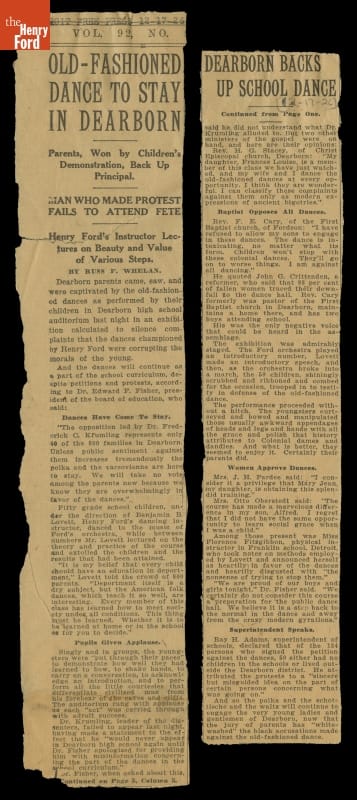
- Newspaper Article, "Old-Fashioned Dance to Stay in Dearborn...Dearborn Backs Up School Dance," 1926 - As Henry Ford extended his traditional American dance classes to local Dearborn schoolchildren, some parents grew alarmed--they weren't sure they approved of boys and girls dancing together. A dance demonstration by the children soon set most of the parents' minds at ease. They quickly realized the benefit of having their children learn these old-time dances--and the good manners that went along with them.
- December 17, 1926
- Collections - Artifact
Newspaper Article, "Old-Fashioned Dance to Stay in Dearborn...Dearborn Backs Up School Dance," 1926
As Henry Ford extended his traditional American dance classes to local Dearborn schoolchildren, some parents grew alarmed--they weren't sure they approved of boys and girls dancing together. A dance demonstration by the children soon set most of the parents' minds at ease. They quickly realized the benefit of having their children learn these old-time dances--and the good manners that went along with them.
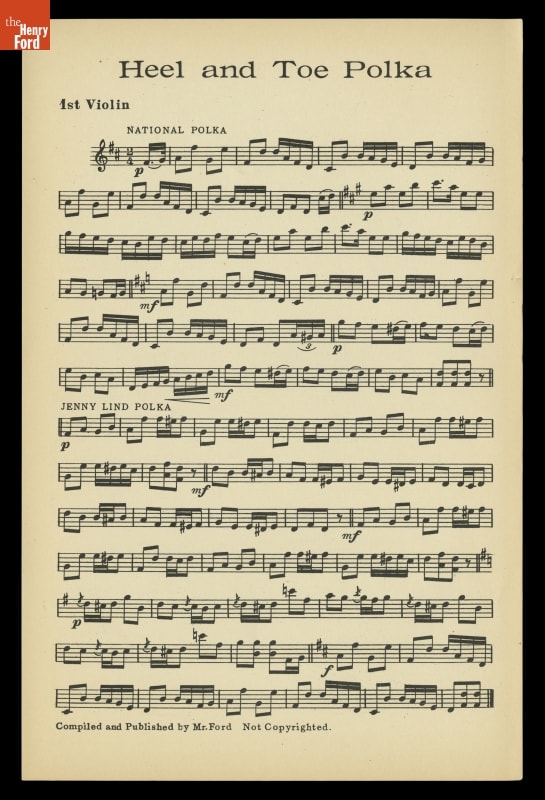
- "Heel and Toe Polka," Published by Henry Ford, 1925-1926 - In the 1920s, Henry Ford thought the old-fashioned dances of his youth should be revived. So he published a book of dance instruction--and also this sheet music for school orchestras or community musicians who wished to provide live music for 19th century dances like the reel, quadrille, schottische, and gavotte. The music included parts for violin, bass, cello, viola, clarinet, flute, piano, trumpet, trombone, and drums.
- 1925-1926
- Collections - Artifact
"Heel and Toe Polka," Published by Henry Ford, 1925-1926
In the 1920s, Henry Ford thought the old-fashioned dances of his youth should be revived. So he published a book of dance instruction--and also this sheet music for school orchestras or community musicians who wished to provide live music for 19th century dances like the reel, quadrille, schottische, and gavotte. The music included parts for violin, bass, cello, viola, clarinet, flute, piano, trumpet, trombone, and drums.
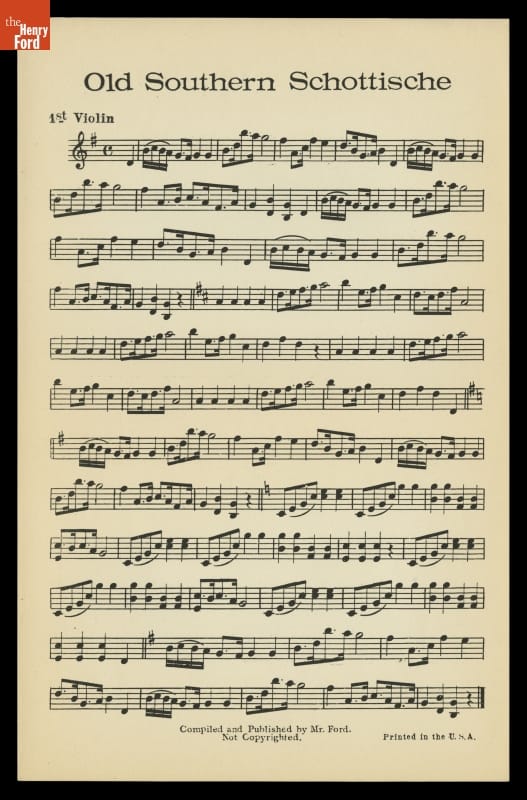
- "Old Southern Schottische," Published by Henry Ford, 1925-1926 - In the 1920s, Henry Ford thought the old-fashioned dances of his youth should be revived. So he published a book of dance instruction--and also this sheet music for school orchestras or community musicians who wished to provide live music for 19th century dances like the reel, quadrille, schottische, and gavotte. The music included parts for violin, bass, cello, viola, clarinet, flute, piano, trumpet, trombone, and drums.
- 1925-1926
- Collections - Artifact
"Old Southern Schottische," Published by Henry Ford, 1925-1926
In the 1920s, Henry Ford thought the old-fashioned dances of his youth should be revived. So he published a book of dance instruction--and also this sheet music for school orchestras or community musicians who wished to provide live music for 19th century dances like the reel, quadrille, schottische, and gavotte. The music included parts for violin, bass, cello, viola, clarinet, flute, piano, trumpet, trombone, and drums.
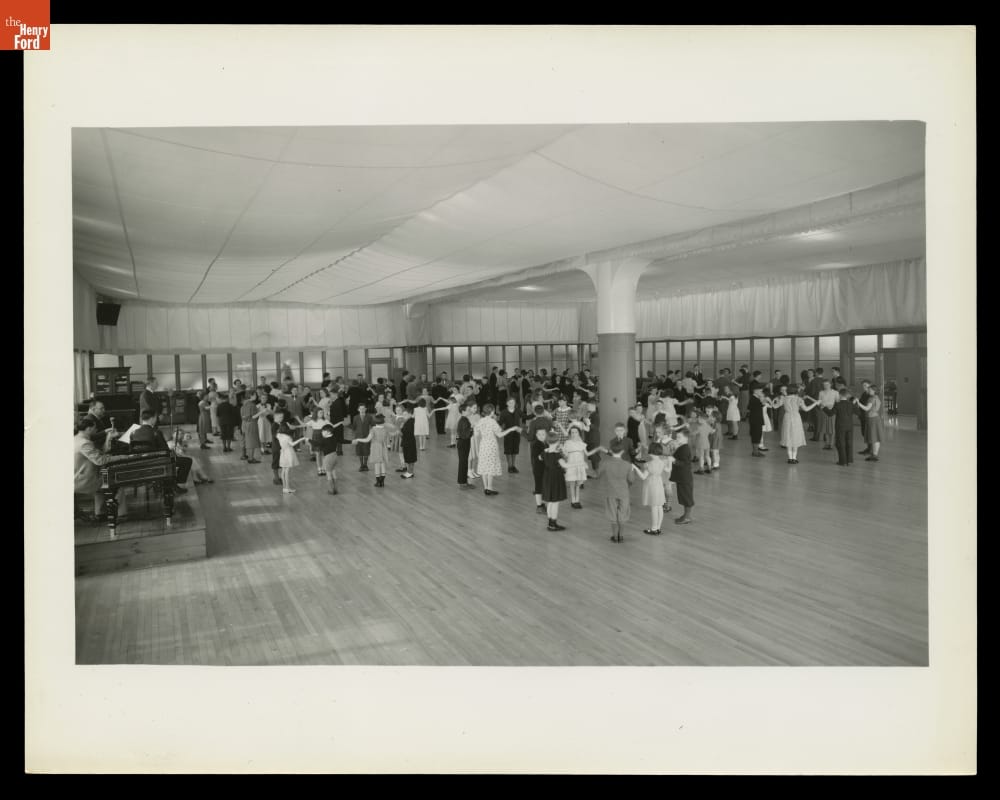
- Students in the Dance Room of the Ford Engineering Laboratory, May 1936 - Henry Ford created a room for dancing at Ford Motor Company's Engineering Lab, where his office and the company's engineering activities were located. These students are learning the traditional American dances of Henry Ford's youth--a part of the curriculum at Ford's Edison Institute schools. Ford's Old Time Orchestra provided the music, while Benjamin Lovett called the dance steps.
- May 06, 1936
- Collections - Artifact
Students in the Dance Room of the Ford Engineering Laboratory, May 1936
Henry Ford created a room for dancing at Ford Motor Company's Engineering Lab, where his office and the company's engineering activities were located. These students are learning the traditional American dances of Henry Ford's youth--a part of the curriculum at Ford's Edison Institute schools. Ford's Old Time Orchestra provided the music, while Benjamin Lovett called the dance steps.
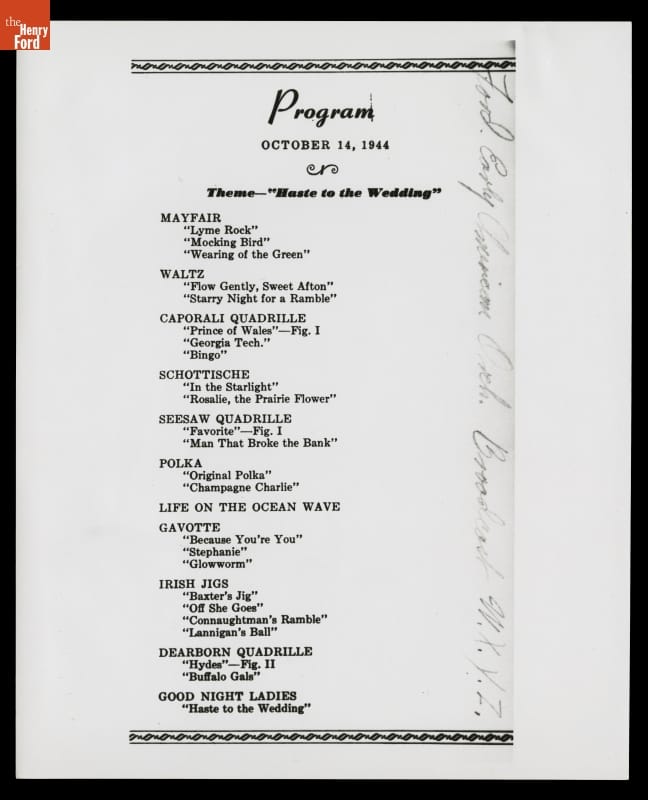
- Program for a Radio Broadcast of Dance Music Played by Henry Ford's Old-Time Dance Orchestra, 1944 - From January 1944 to July 1944, a Ford-sponsored half-hour radio program, "Early American Dance Music," featured Henry Ford's Old Time Orchestra. Broadcast live from Ford Motor Company's recording studio at the Engineering Laboratory, the program achieved a fair amount of popularity--though most of it with an older audience.
- 1944
- Collections - Artifact
Program for a Radio Broadcast of Dance Music Played by Henry Ford's Old-Time Dance Orchestra, 1944
From January 1944 to July 1944, a Ford-sponsored half-hour radio program, "Early American Dance Music," featured Henry Ford's Old Time Orchestra. Broadcast live from Ford Motor Company's recording studio at the Engineering Laboratory, the program achieved a fair amount of popularity--though most of it with an older audience.
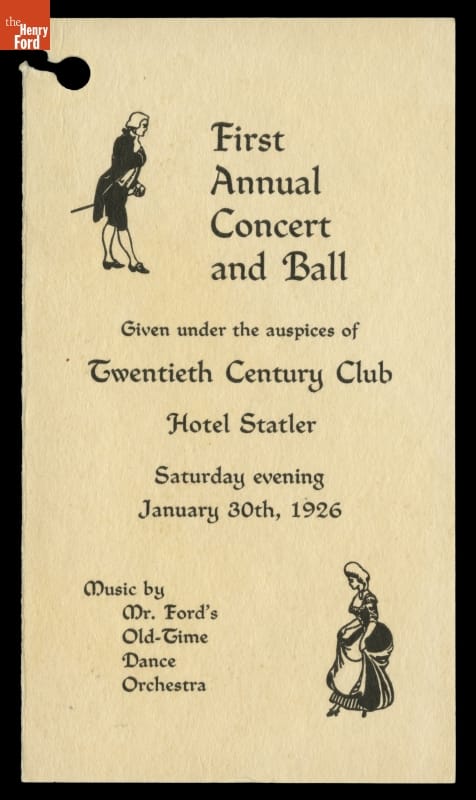
- Program, "First Annual Concert and Ball," with Music by Henry Ford's Old-Time Dance Orchestra," 1926 - Henry Ford's revival of early American dancing encouraged others to join in. In January 1926, members of Detroit's Twentieth Century Club held a ball featuring the old-fashioned dances. Most everyone came in period costume. Henry and Clara Ford looked elegant in their "old fashioned" garb--Henry in a waistcoat and vest, and Clara with a pink silk gown and her hair dressed in side curls.
- January 30, 1926
- Collections - Artifact
Program, "First Annual Concert and Ball," with Music by Henry Ford's Old-Time Dance Orchestra," 1926
Henry Ford's revival of early American dancing encouraged others to join in. In January 1926, members of Detroit's Twentieth Century Club held a ball featuring the old-fashioned dances. Most everyone came in period costume. Henry and Clara Ford looked elegant in their "old fashioned" garb--Henry in a waistcoat and vest, and Clara with a pink silk gown and her hair dressed in side curls.
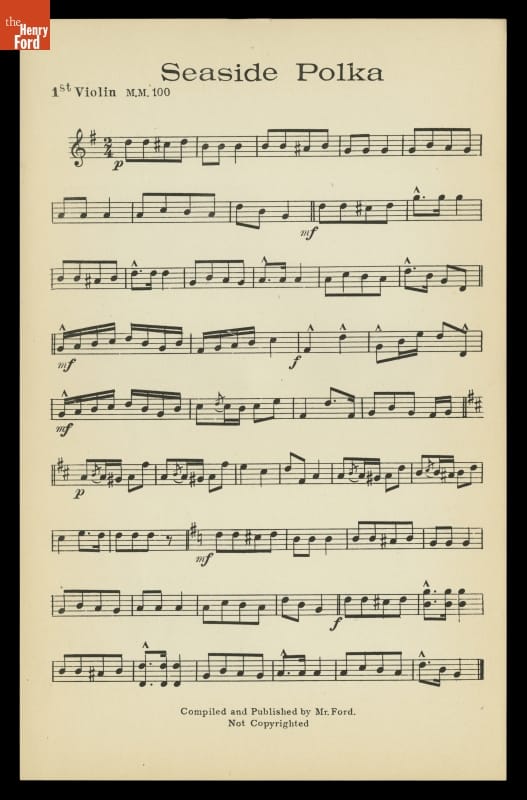
- "Seaside Polka," Published by Henry Ford, 1925-1926 - In the 1920s, Henry Ford thought the old-fashioned dances of his youth should be revived. So he published a book of dance instruction--and also this sheet music for school orchestras or community musicians who wished to provide live music for 19th century dances like the reel, quadrille, schottische, and gavotte. The music included parts for violin, bass, cello, viola, clarinet, flute, piano, trumpet, trombone, and drums.
- 1925-1926
- Collections - Artifact
"Seaside Polka," Published by Henry Ford, 1925-1926
In the 1920s, Henry Ford thought the old-fashioned dances of his youth should be revived. So he published a book of dance instruction--and also this sheet music for school orchestras or community musicians who wished to provide live music for 19th century dances like the reel, quadrille, schottische, and gavotte. The music included parts for violin, bass, cello, viola, clarinet, flute, piano, trumpet, trombone, and drums.
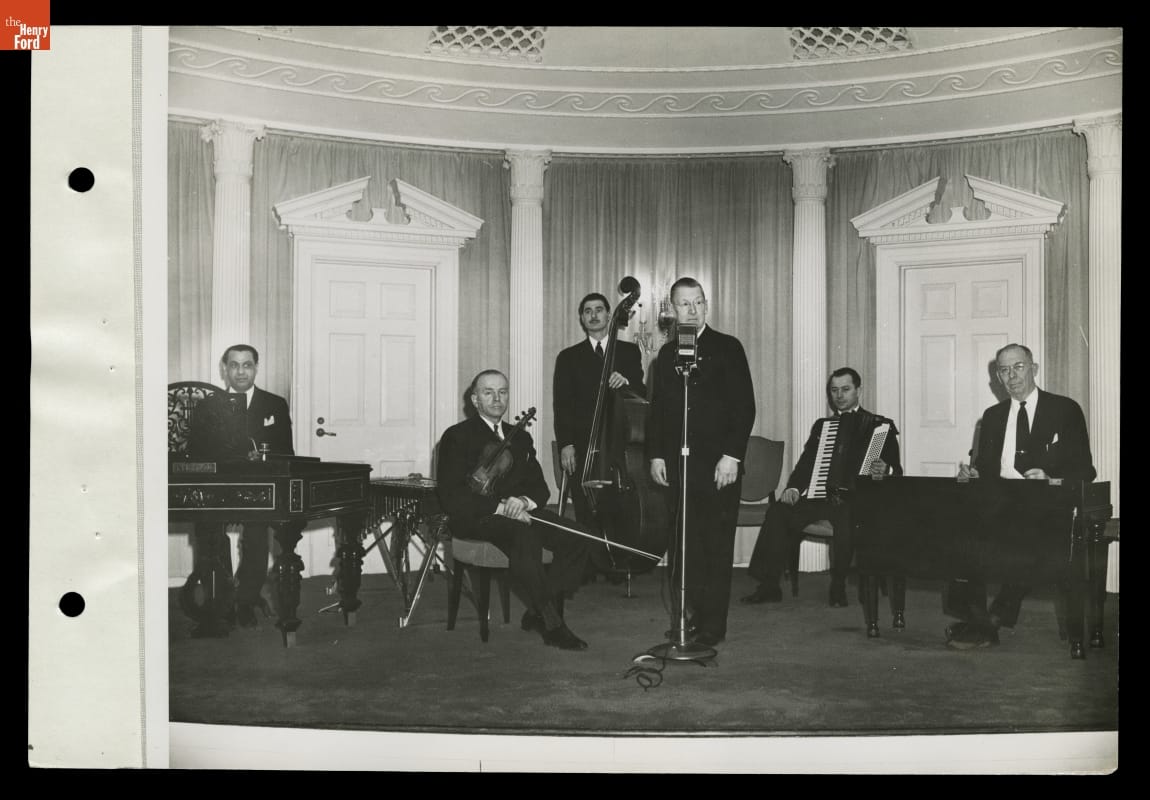
- Benjamin Lovett and Henry Ford's Old-time Dance Orchestra in Lovett Hall, Dearborn, Michigan, 1944 - Henry Ford's Old Time Orchestra play dance music on the band shell in the Lovett Hall ballroom. The musicians are William Hallup (cimbalom), Clayton Perry (violin), Gino Caporali (string bass), Don Van DeVen (accordion), and Ed Baxter (dulcimer). Benjamin Lovett, at the microphone, called the dance steps. Gino Caporali joined the band in the late 1930s, replacing Maurice Castel.
- February 14, 1944
- Collections - Artifact
Benjamin Lovett and Henry Ford's Old-time Dance Orchestra in Lovett Hall, Dearborn, Michigan, 1944
Henry Ford's Old Time Orchestra play dance music on the band shell in the Lovett Hall ballroom. The musicians are William Hallup (cimbalom), Clayton Perry (violin), Gino Caporali (string bass), Don Van DeVen (accordion), and Ed Baxter (dulcimer). Benjamin Lovett, at the microphone, called the dance steps. Gino Caporali joined the band in the late 1930s, replacing Maurice Castel.
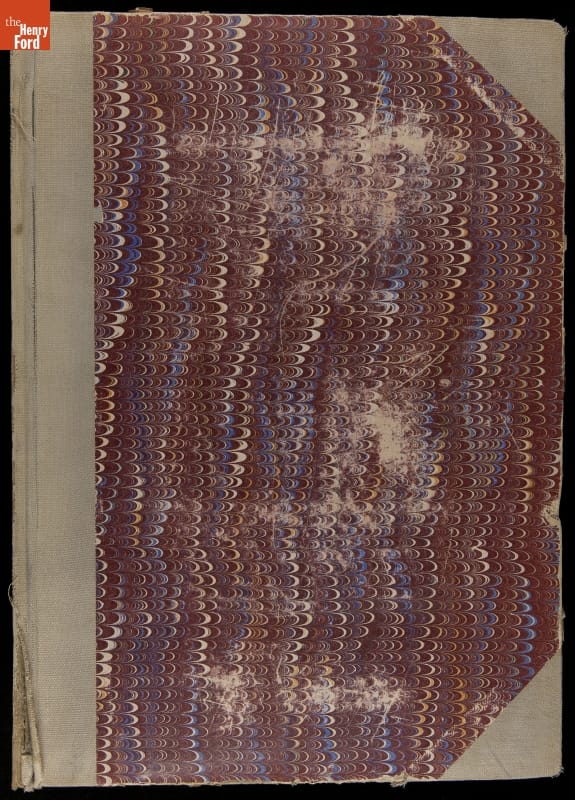
- Ford Motor Company Clipping Book, Volume 43, December 1925-January 1926 - Ford Motor Company kept scrapbooks of newspaper articles about Ford Motor Company and Henry Ford's activities. This volume contains articles about Henry Ford's interest in reviving fiddling and traditional American dance. At Ford-inspired "old time fiddler" contests, fiddlers vied for the title of champion fiddler. People in various parts of the country, including Michigan, joined in.
- December 1925-January 1926
- Collections - Artifact
Ford Motor Company Clipping Book, Volume 43, December 1925-January 1926
Ford Motor Company kept scrapbooks of newspaper articles about Ford Motor Company and Henry Ford's activities. This volume contains articles about Henry Ford's interest in reviving fiddling and traditional American dance. At Ford-inspired "old time fiddler" contests, fiddlers vied for the title of champion fiddler. People in various parts of the country, including Michigan, joined in.
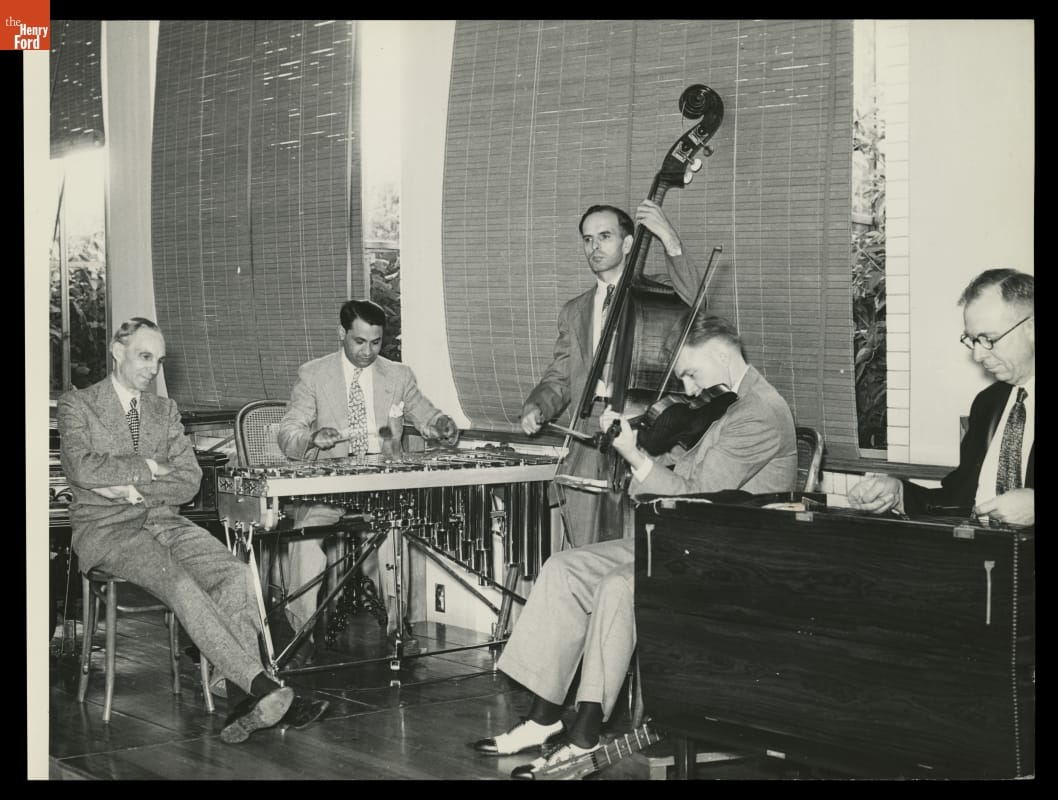
- Henry Ford with His Old-Time Dance Orchestra, 1933 - In 1924, Henry Ford put together an "Old Time Orchestra" to play at his old-fashioned dances. Ford chose musicians William Hallup (cimbalom), Maurice Castel (string bass), Clayton Perry (fiddle; here guitar) and Edwin Baxter (dulcimer). Henry Ford loved fiddling and could play a bit. At this July 1933 dance in celebration of Ford's 70th birthday, Henry sits with the band.
- July 01, 1933
- Collections - Artifact
Henry Ford with His Old-Time Dance Orchestra, 1933
In 1924, Henry Ford put together an "Old Time Orchestra" to play at his old-fashioned dances. Ford chose musicians William Hallup (cimbalom), Maurice Castel (string bass), Clayton Perry (fiddle; here guitar) and Edwin Baxter (dulcimer). Henry Ford loved fiddling and could play a bit. At this July 1933 dance in celebration of Ford's 70th birthday, Henry sits with the band.