
Search
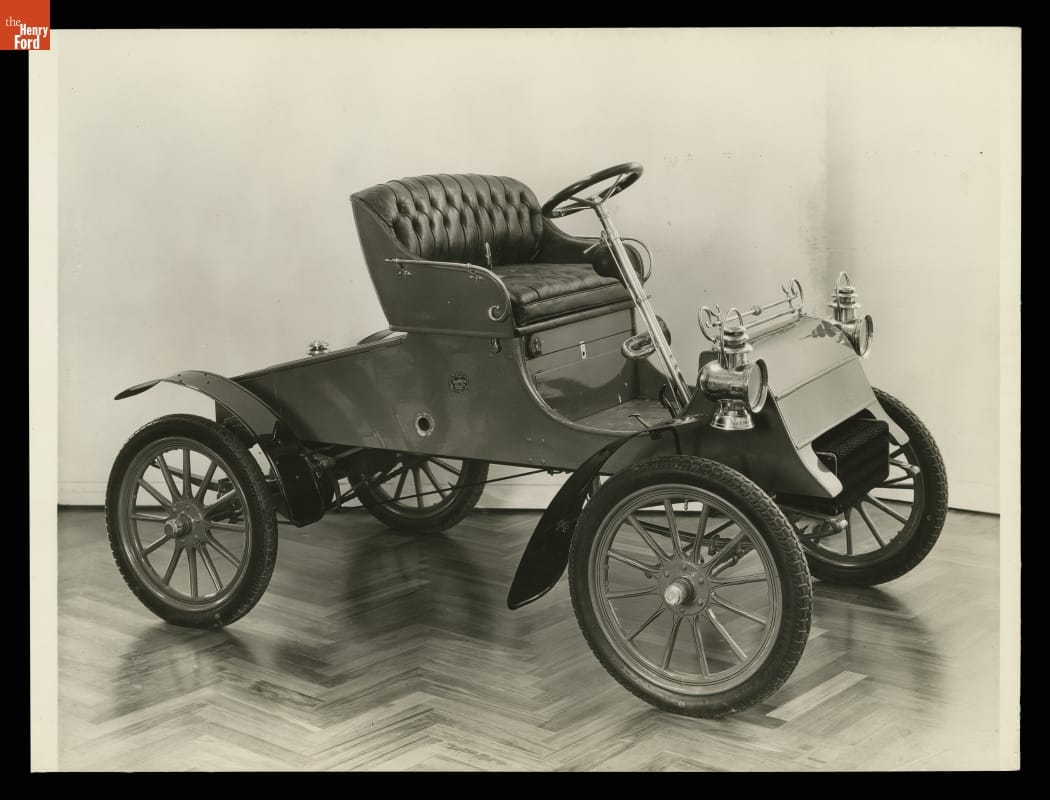
- 1903 Ford Model A Roadster in Henry Ford Museum, circa 1934 - A 1934 exhibition at Henry Ford's museum in Dearborn, Michigan, featured this Model A roadster, the first automobile produced and sold by the fledgling Ford Motor Company. In many ways, the original Ford was typical -- it looked like a carriage without the horse. But unlike other early autos, the 1903 Model A had a steering wheel rather than a tiller.
- April 20, 1934
- Collections - Artifact
1903 Ford Model A Roadster in Henry Ford Museum, circa 1934
A 1934 exhibition at Henry Ford's museum in Dearborn, Michigan, featured this Model A roadster, the first automobile produced and sold by the fledgling Ford Motor Company. In many ways, the original Ford was typical -- it looked like a carriage without the horse. But unlike other early autos, the 1903 Model A had a steering wheel rather than a tiller.
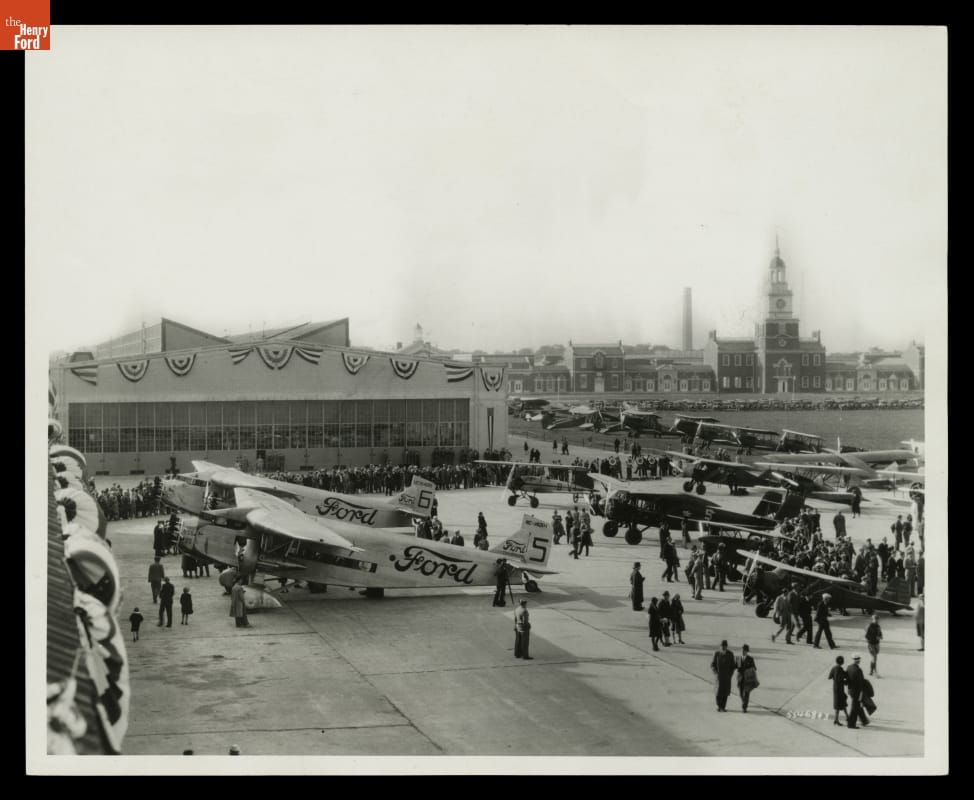
- Ford Reliability Tour at Ford Airport, Dearborn, Michigan, 1930 - From 1925-1931, Ford Motor Company sponsored annual air tours to promote reliability and safety in commercial aircraft. Pilots flew to pre-determined cities, and their airplanes were rated on the ability to take off and land quickly and maintain consistent speeds. The 1930 tour included 18 entries and visited 29 cities in the United States and Canada.
- September 27, 1930
- Collections - Artifact
Ford Reliability Tour at Ford Airport, Dearborn, Michigan, 1930
From 1925-1931, Ford Motor Company sponsored annual air tours to promote reliability and safety in commercial aircraft. Pilots flew to pre-determined cities, and their airplanes were rated on the ability to take off and land quickly and maintain consistent speeds. The 1930 tour included 18 entries and visited 29 cities in the United States and Canada.
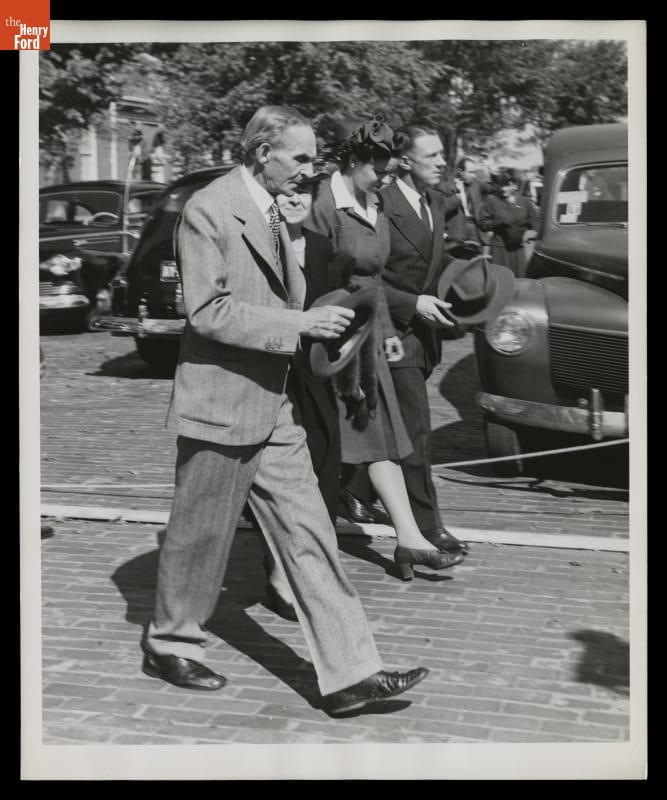
- Henry Ford and Clara Ford at Henry Ford Museum for the Presentation of the Sikorsky VS-300 Helicopter, October 7, 1943 - Henry Ford never intended his Edison Institute -- today's The Henry Ford -- only to be about the past. Henry Ford Museum and Greenfield Village would inspire the institute's students and visitors to create the future. Ford collected modern inventions alongside historic items. He acquired the VS-300 helicopter from inventor Igor Sikorsky in 1943 -- only four years after the aircraft's introduction.
- October 07, 1943
- Collections - Artifact
Henry Ford and Clara Ford at Henry Ford Museum for the Presentation of the Sikorsky VS-300 Helicopter, October 7, 1943
Henry Ford never intended his Edison Institute -- today's The Henry Ford -- only to be about the past. Henry Ford Museum and Greenfield Village would inspire the institute's students and visitors to create the future. Ford collected modern inventions alongside historic items. He acquired the VS-300 helicopter from inventor Igor Sikorsky in 1943 -- only four years after the aircraft's introduction.
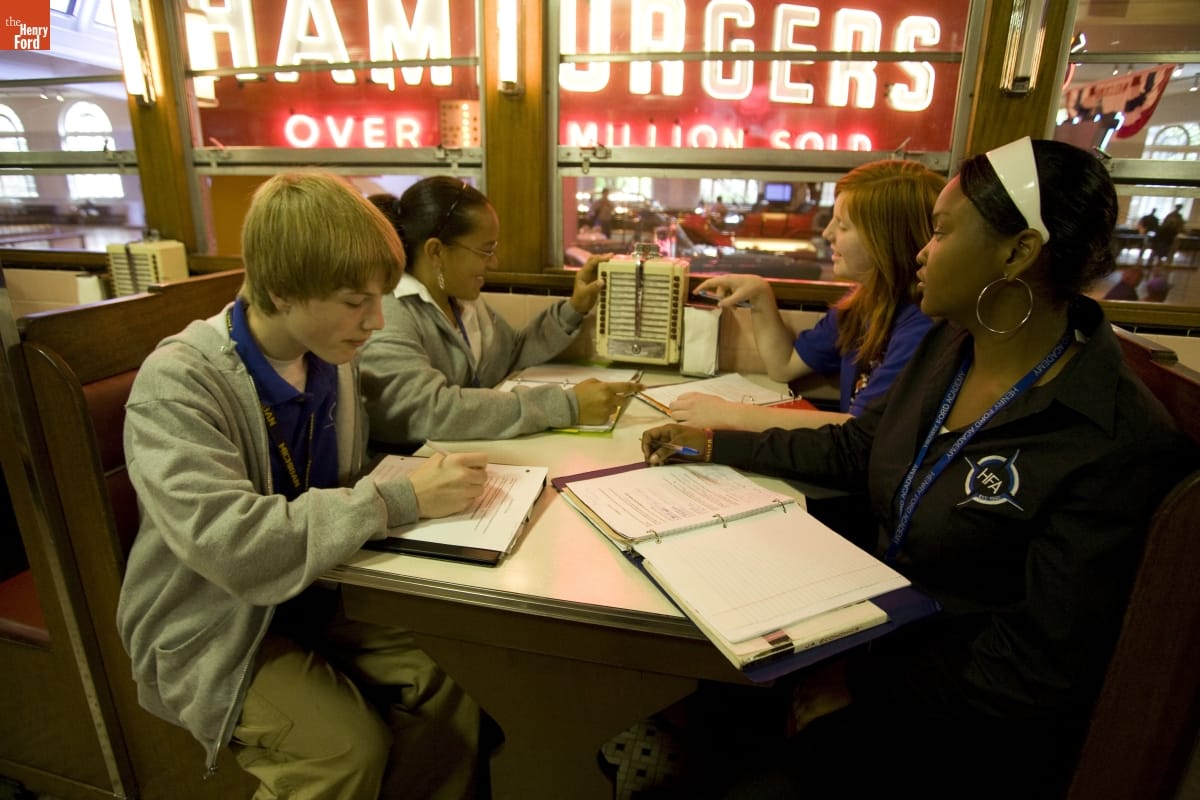
- Henry Ford Academy Students in Lamy's Diner in Henry Ford Museum, October 2007 - Henry Ford Academy, a charter high school on the campus of The Henry Ford, opened in 1997. These students were photographed having a lesson in Lamy's Diner, inside Henry Ford Museum, in October 2007.
- October 01, 2007
- Collections - Artifact
Henry Ford Academy Students in Lamy's Diner in Henry Ford Museum, October 2007
Henry Ford Academy, a charter high school on the campus of The Henry Ford, opened in 1997. These students were photographed having a lesson in Lamy's Diner, inside Henry Ford Museum, in October 2007.
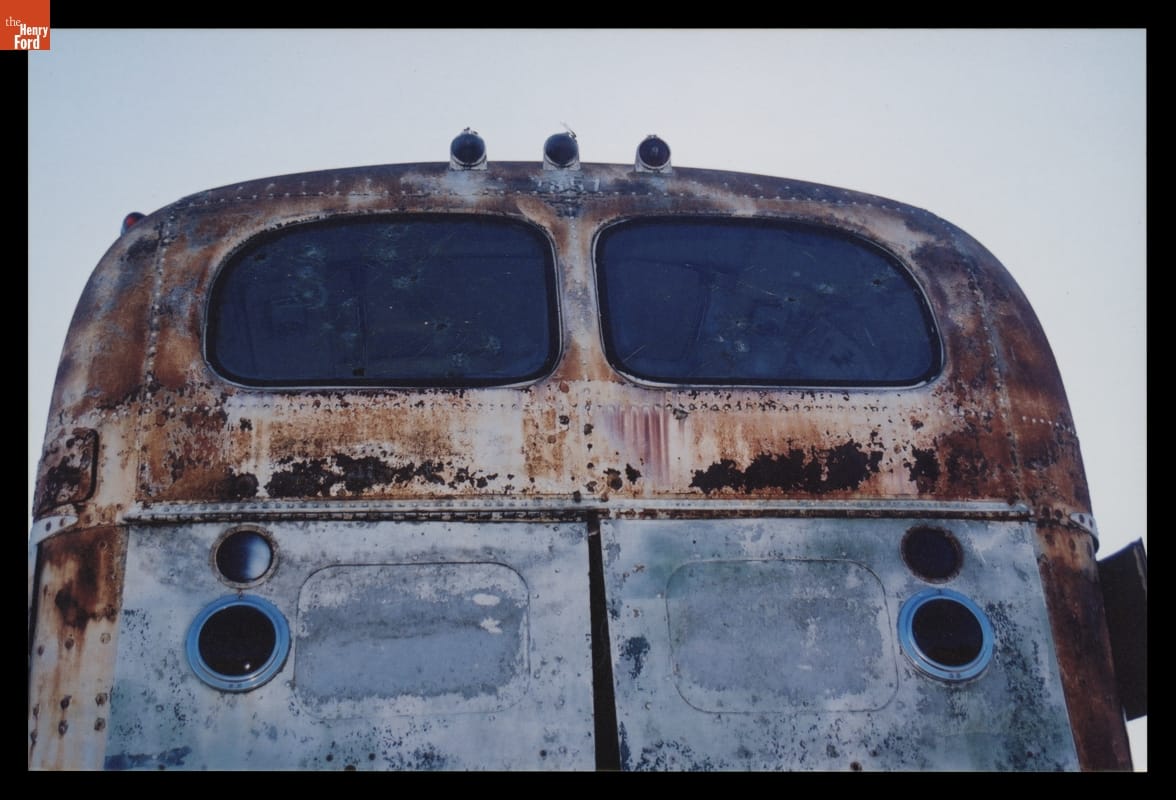
- Rosa Parks Bus before Restoration, outside Henry Ford Museum, September 12, 2002 - This bus, the site of Rosa Parks's stand against segregation laws, sat as a rusted storage shed before The Henry Ford acquired it and began a full restoration. Parks's act of defiance on December 1, 1955, sparked the Montgomery Bus Boycott, which helped to ignite the Civil Rights Movement. Today, the restored bus survives as a reminder of her courageous activism.
- September 12, 2002
- Collections - Artifact
Rosa Parks Bus before Restoration, outside Henry Ford Museum, September 12, 2002
This bus, the site of Rosa Parks's stand against segregation laws, sat as a rusted storage shed before The Henry Ford acquired it and began a full restoration. Parks's act of defiance on December 1, 1955, sparked the Montgomery Bus Boycott, which helped to ignite the Civil Rights Movement. Today, the restored bus survives as a reminder of her courageous activism.
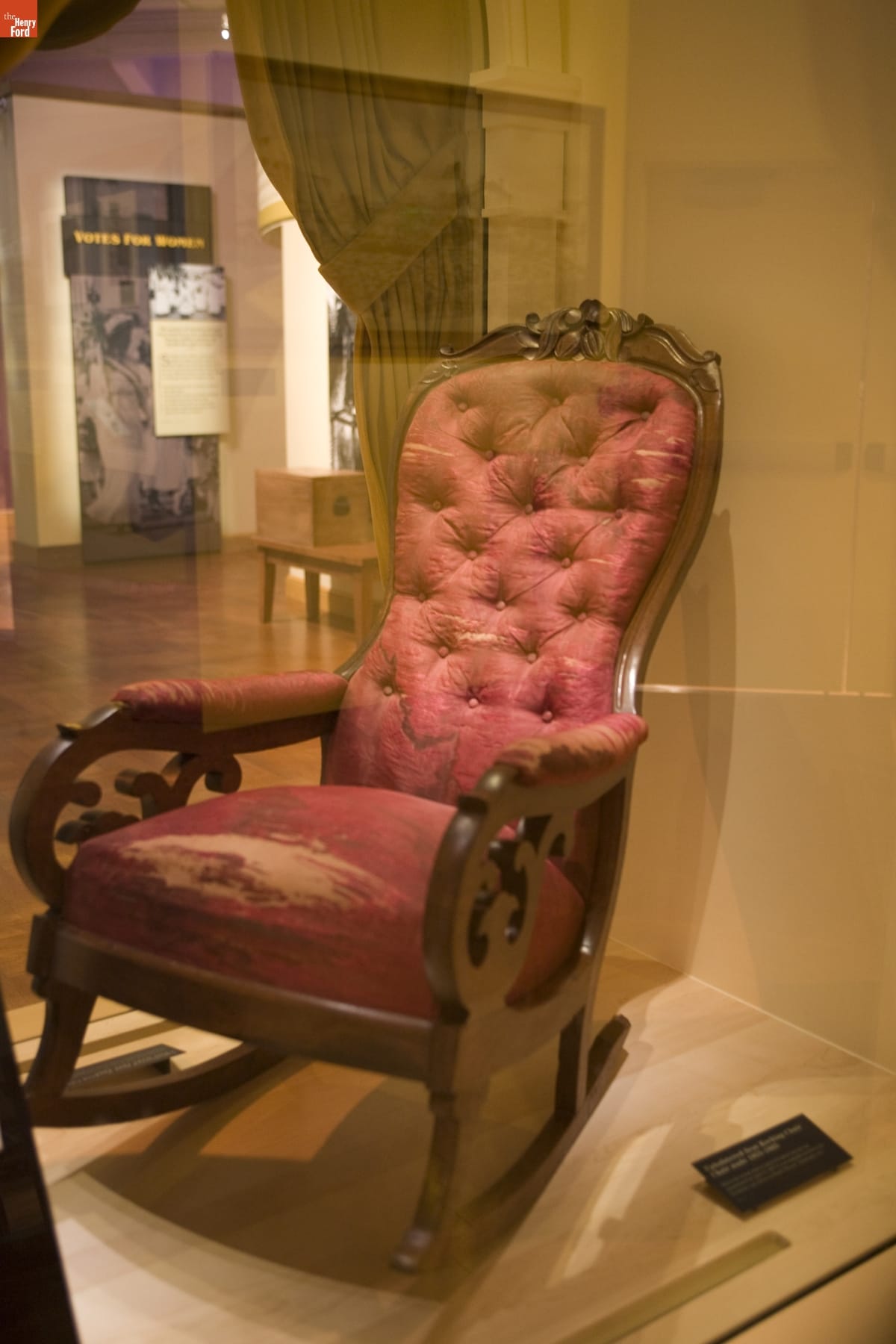
- The Chair in Which Abraham Lincoln Was Shot at Ford's Theatre, on Exhibit at Henry Ford Museum, June 2007 - President Abraham Lincoln was sitting in this rocking chair during a production of <EM>Our American Cousin</EM> at Ford's Theatre in Washington, D.C., when he was assassinated on April 14, 1865. Henry Ford purchased the chair in 1929 for the Museum, where it remains one of the most revered objects associated with the "man who saved the Union."
- June 01, 2007
- Collections - Artifact
The Chair in Which Abraham Lincoln Was Shot at Ford's Theatre, on Exhibit at Henry Ford Museum, June 2007
President Abraham Lincoln was sitting in this rocking chair during a production of Our American Cousin at Ford's Theatre in Washington, D.C., when he was assassinated on April 14, 1865. Henry Ford purchased the chair in 1929 for the Museum, where it remains one of the most revered objects associated with the "man who saved the Union."
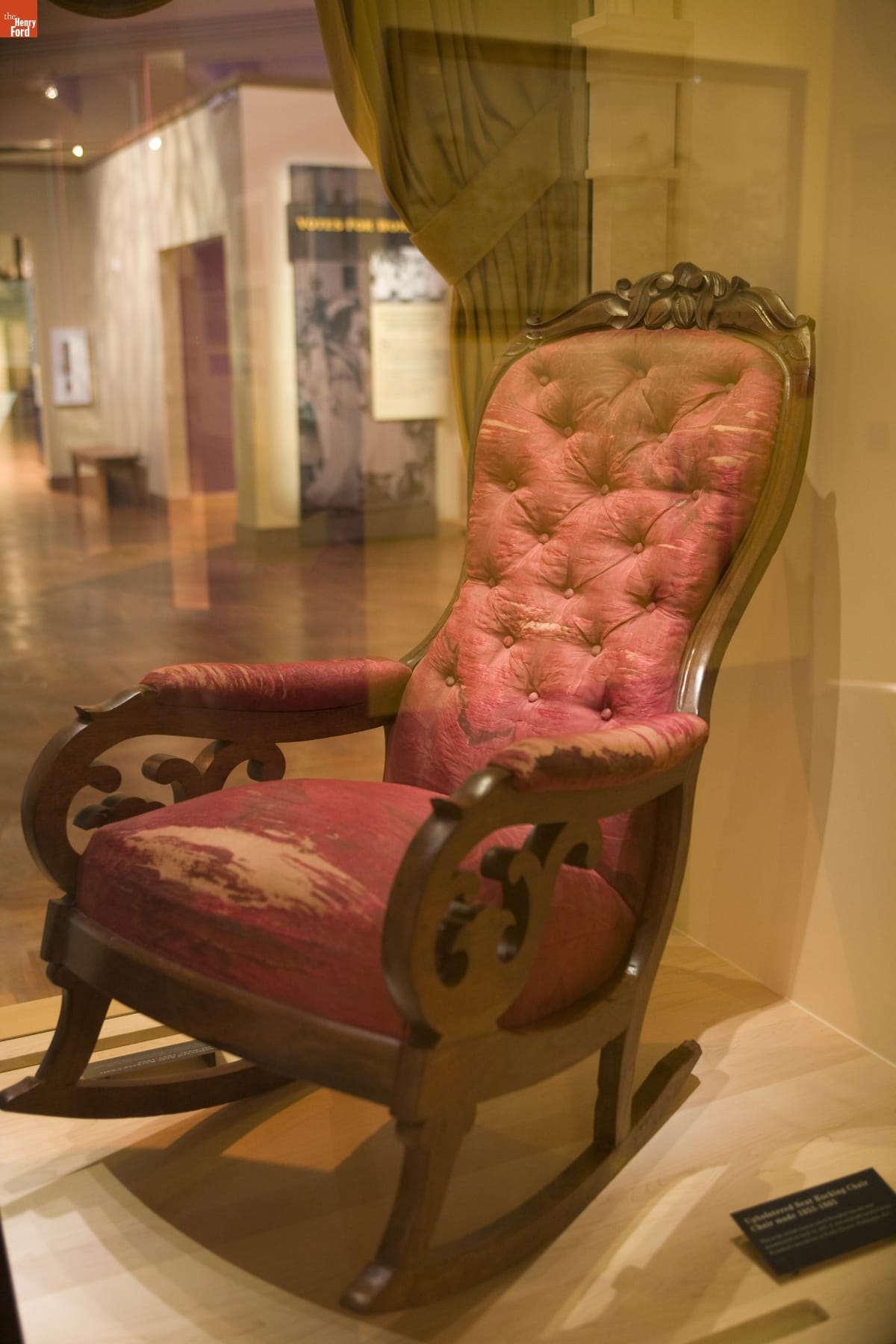
- The Chair in Which Abraham Lincoln Was Shot at Ford's Theatre, on Exhibit at Henry Ford Museum, June 2007 - President Abraham Lincoln was sitting in this rocking chair during a production of <EM>Our American Cousin</EM> at Ford's Theatre in Washington, D.C., when he was assassinated on April 14, 1865. Henry Ford purchased the chair in 1929 for the Museum, where it remains one of the most revered objects associated with the "man who saved the Union."
- June 01, 2007
- Collections - Artifact
The Chair in Which Abraham Lincoln Was Shot at Ford's Theatre, on Exhibit at Henry Ford Museum, June 2007
President Abraham Lincoln was sitting in this rocking chair during a production of Our American Cousin at Ford's Theatre in Washington, D.C., when he was assassinated on April 14, 1865. Henry Ford purchased the chair in 1929 for the Museum, where it remains one of the most revered objects associated with the "man who saved the Union."
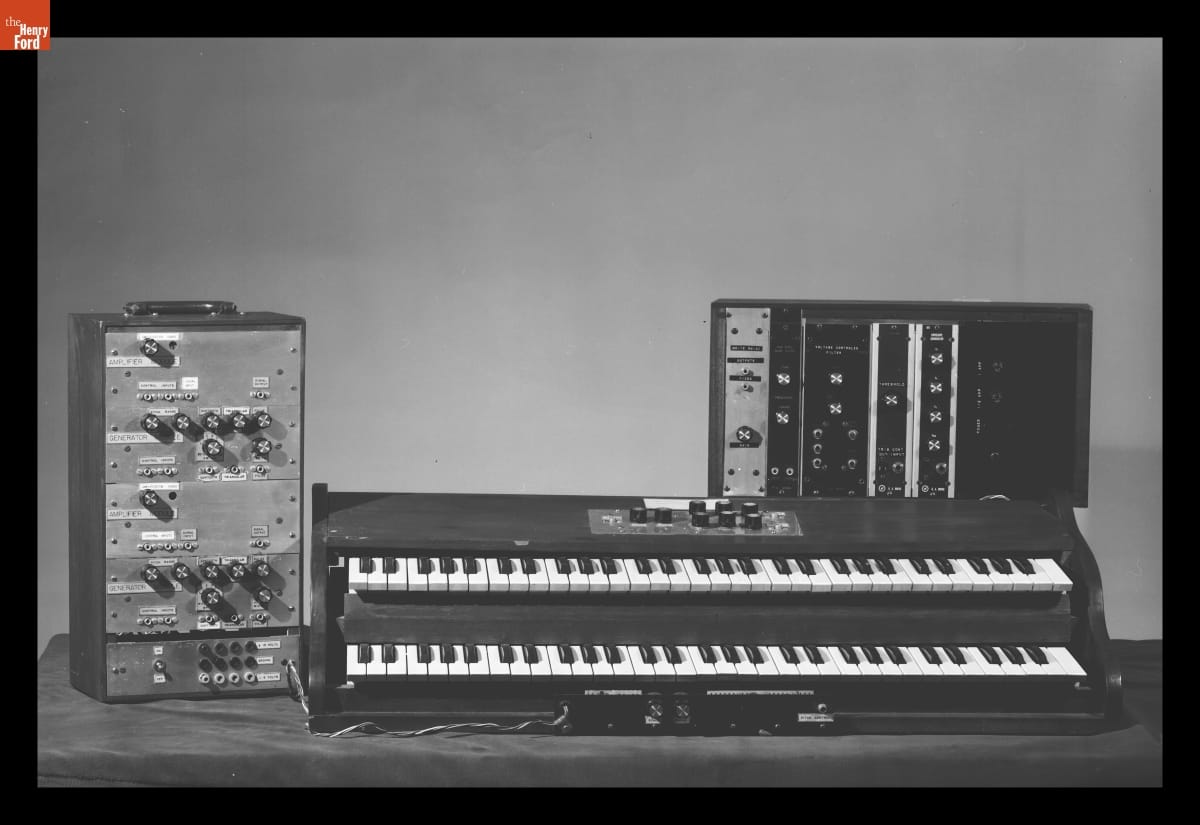
- Robert Moog's First Prototype Synthesizer in Henry Ford Museum, 1983 - This prototype synthesizer--a collaboration between engineer Robert Moog and composer Herbert Deutsch--is a musical icon. Synthesizers create unique electronically produced sounds. Moog's solid-state synthesizer was musically superior and much more portable than earlier vacuum-tube-based systems. In 1968, the album <em>Switched-On Bach</em> introduced the Moog synthesizer to a wider audience. Synthesizers quickly became a mainstay of popular music.
- 1983
- Collections - Artifact
Robert Moog's First Prototype Synthesizer in Henry Ford Museum, 1983
This prototype synthesizer--a collaboration between engineer Robert Moog and composer Herbert Deutsch--is a musical icon. Synthesizers create unique electronically produced sounds. Moog's solid-state synthesizer was musically superior and much more portable than earlier vacuum-tube-based systems. In 1968, the album Switched-On Bach introduced the Moog synthesizer to a wider audience. Synthesizers quickly became a mainstay of popular music.
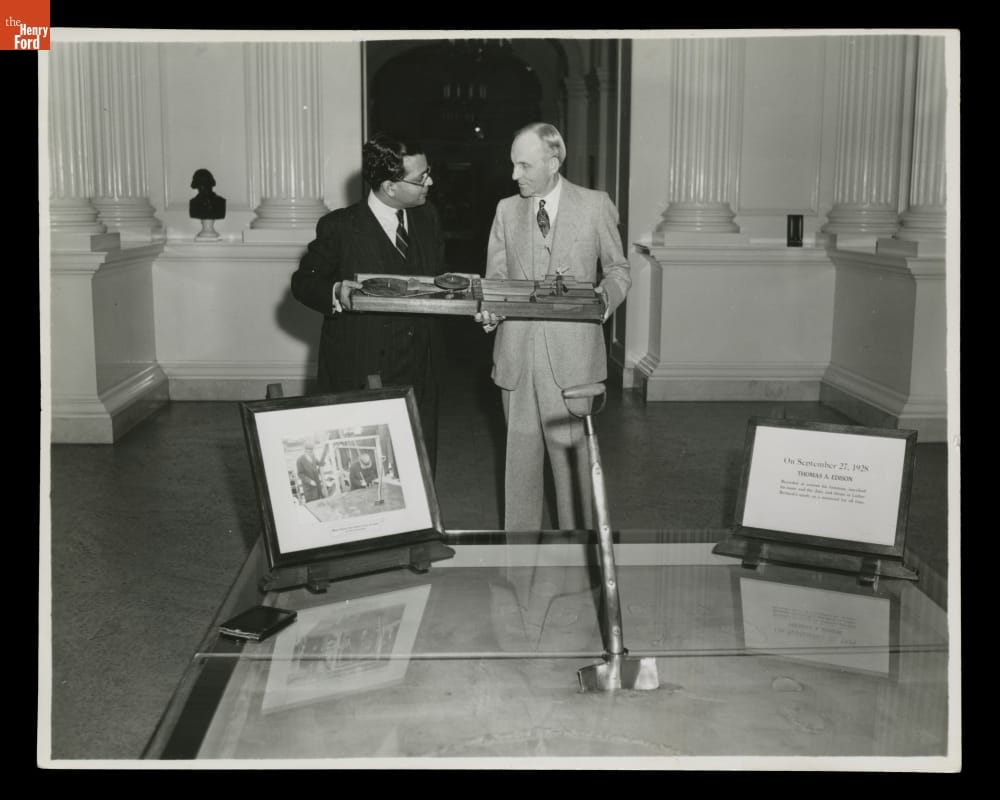
- Mr. T. A. Raman Presents a Portable Spinning Wheel to Henry Ford, a Gift from Mahatma Gandhi, 1942 - In response to a letter of good wishes from Henry Ford, Mahatma Gandhi sent a portable spinning wheel to the industrialist as a gift. Gandhi used the spinning wheel as a symbol in his struggle for India's independence and economic self-sufficiency. Gandhi and Ford shared a mutual admiration for one another because of their longstanding commitments to peace.
- December 01, 1942
- Collections - Artifact
Mr. T. A. Raman Presents a Portable Spinning Wheel to Henry Ford, a Gift from Mahatma Gandhi, 1942
In response to a letter of good wishes from Henry Ford, Mahatma Gandhi sent a portable spinning wheel to the industrialist as a gift. Gandhi used the spinning wheel as a symbol in his struggle for India's independence and economic self-sufficiency. Gandhi and Ford shared a mutual admiration for one another because of their longstanding commitments to peace.
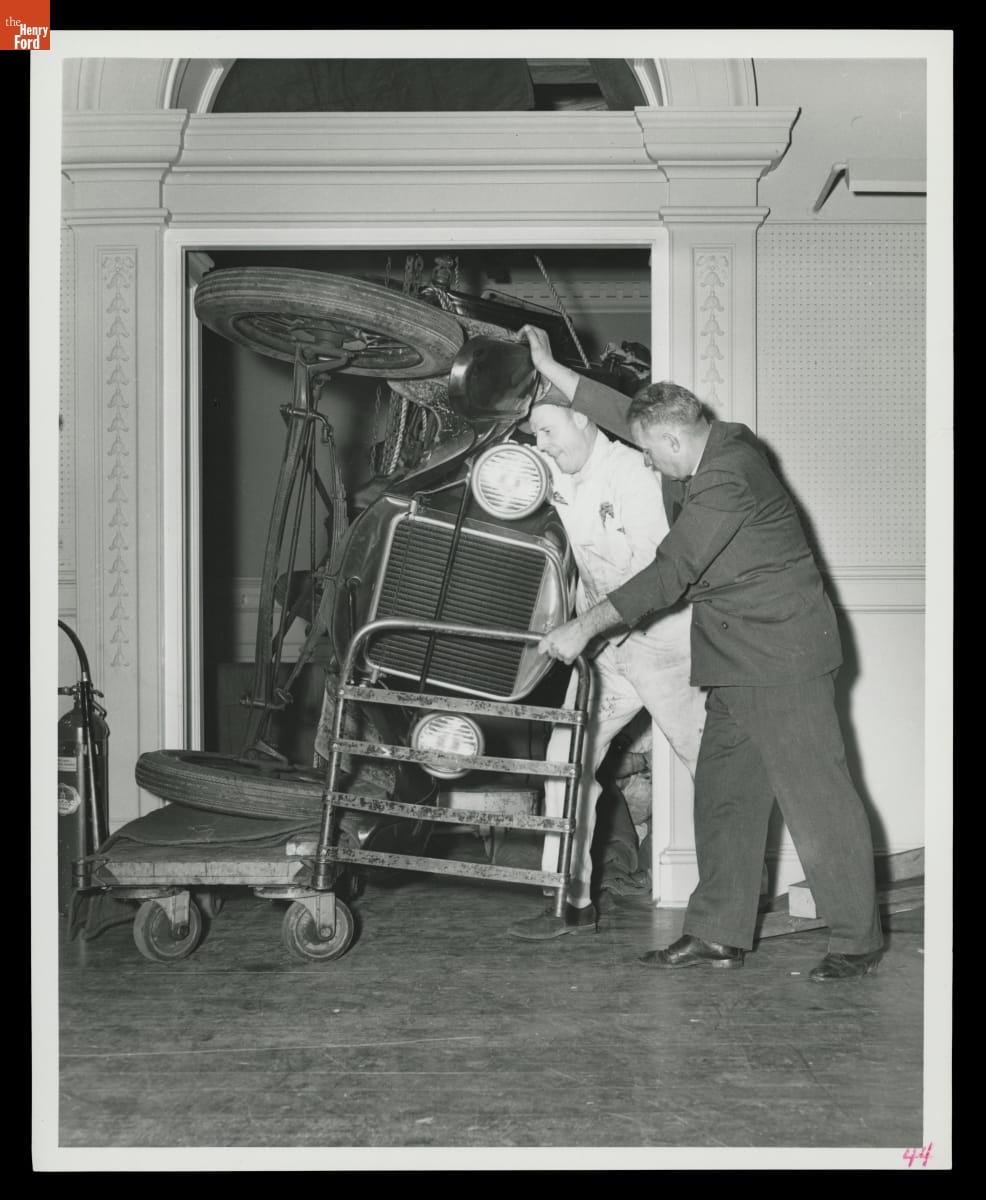
- Moving the 15 Millionth Ford Model T Into "Henry Ford: A Personal History" Exhibit, February 1953 - Henry Ford himself was the focus of <em>Henry Ford: A Personal History</em>. Opened in 1953 during Ford Motor Company's 50th anniversary, the exhibit included artifacts like the fifteen millionth Ford Model T. The exhibit's second-floor location meant lifting the Model T with a crane and moving it on its side through tight doorways.
- February 01, 1953
- Collections - Artifact
Moving the 15 Millionth Ford Model T Into "Henry Ford: A Personal History" Exhibit, February 1953
Henry Ford himself was the focus of Henry Ford: A Personal History. Opened in 1953 during Ford Motor Company's 50th anniversary, the exhibit included artifacts like the fifteen millionth Ford Model T. The exhibit's second-floor location meant lifting the Model T with a crane and moving it on its side through tight doorways.