
Search
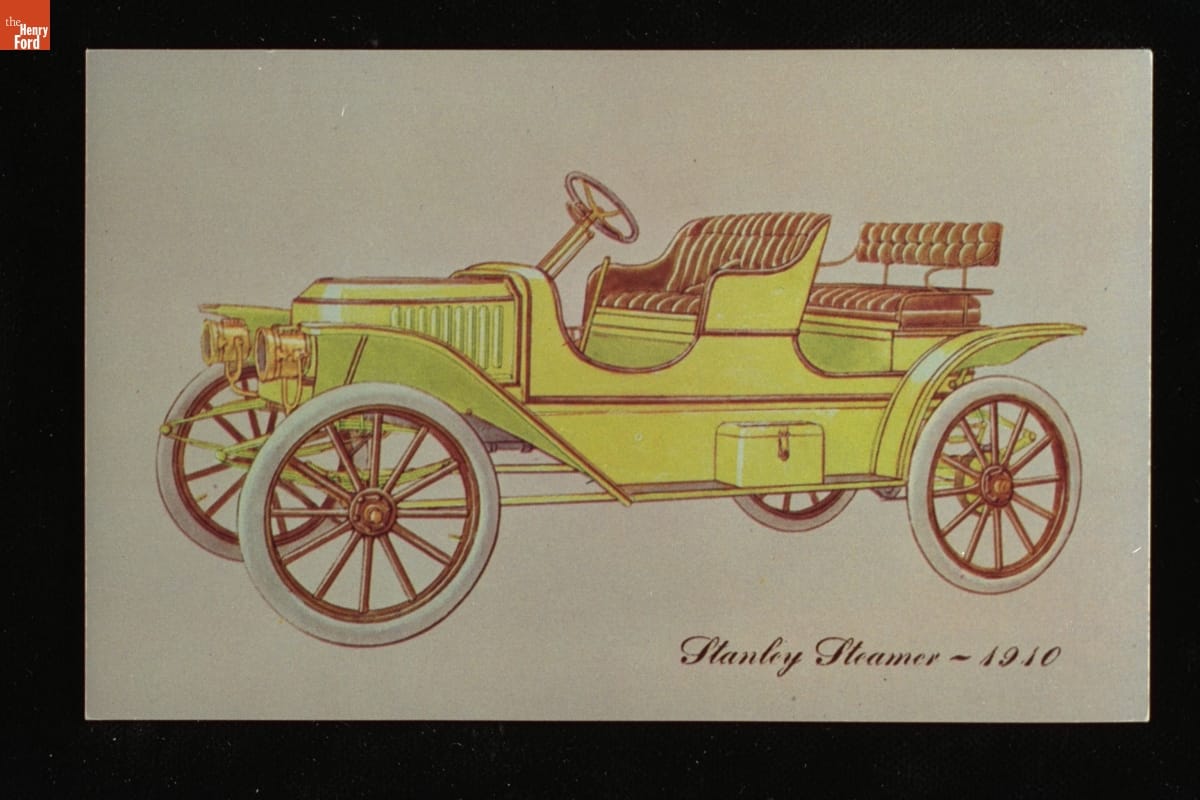
- Stanley Steamer - 1910 - This postcard, featuring an illustration of a 1910 Stanley runabout, was published by the Autoprints company of New York. Postcards like this were sold to visitors at Henry Ford Museum & Greenfield Village in the 1950s. Brothers Francis and Freelan Stanley formed Stanley Motor Carriage Company in 1902. The firm produced steam-powered cars exclusively until it ended operations in 1924.
- 1910
- Collections - Artifact
Stanley Steamer - 1910
This postcard, featuring an illustration of a 1910 Stanley runabout, was published by the Autoprints company of New York. Postcards like this were sold to visitors at Henry Ford Museum & Greenfield Village in the 1950s. Brothers Francis and Freelan Stanley formed Stanley Motor Carriage Company in 1902. The firm produced steam-powered cars exclusively until it ended operations in 1924.
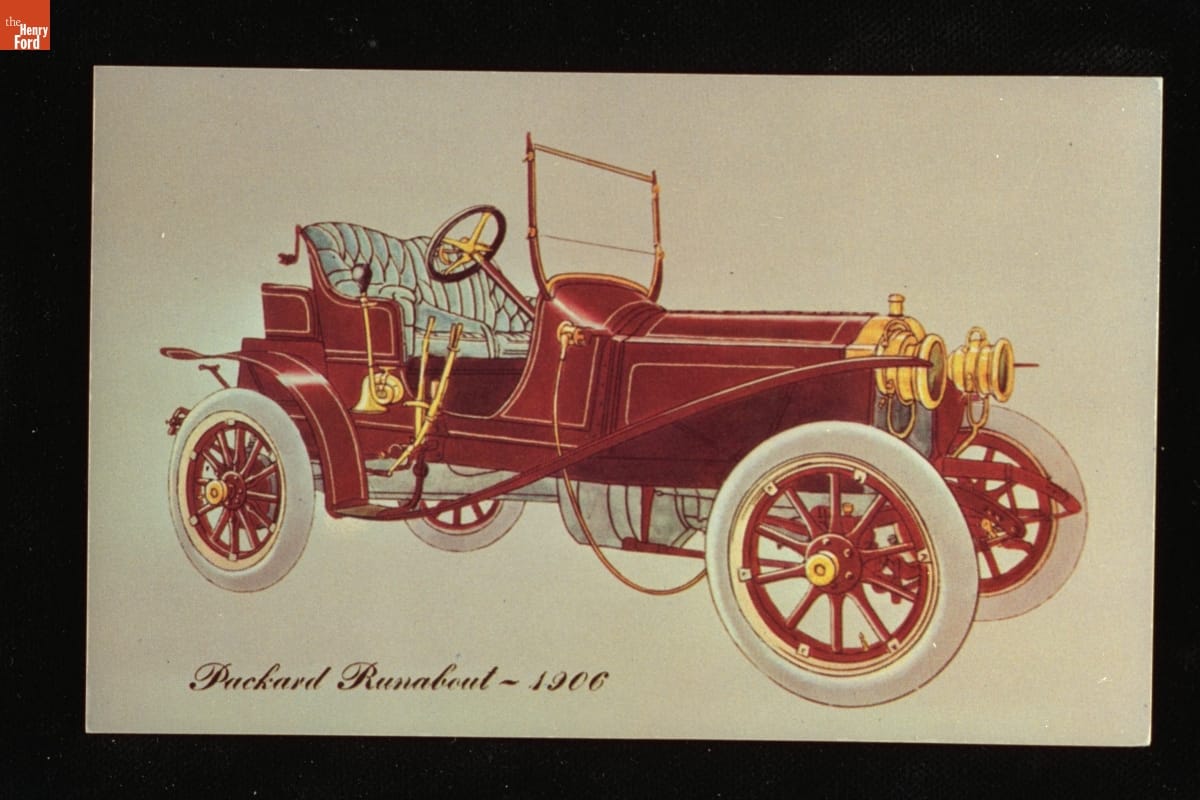
- Packard Runabout - 1906 - This postcard, featuring an illustration of an early Packard automobile, was published by the Autoprints company of New York. Postcards like this were sold to visitors at Henry Ford Museum & Greenfield Village in the 1950s. James Ward Packard founded Packard Motor Car Company in 1899. It became America's premier luxury marque and largely remained so until production ended in 1958.
- 1906
- Collections - Artifact
Packard Runabout - 1906
This postcard, featuring an illustration of an early Packard automobile, was published by the Autoprints company of New York. Postcards like this were sold to visitors at Henry Ford Museum & Greenfield Village in the 1950s. James Ward Packard founded Packard Motor Car Company in 1899. It became America's premier luxury marque and largely remained so until production ended in 1958.
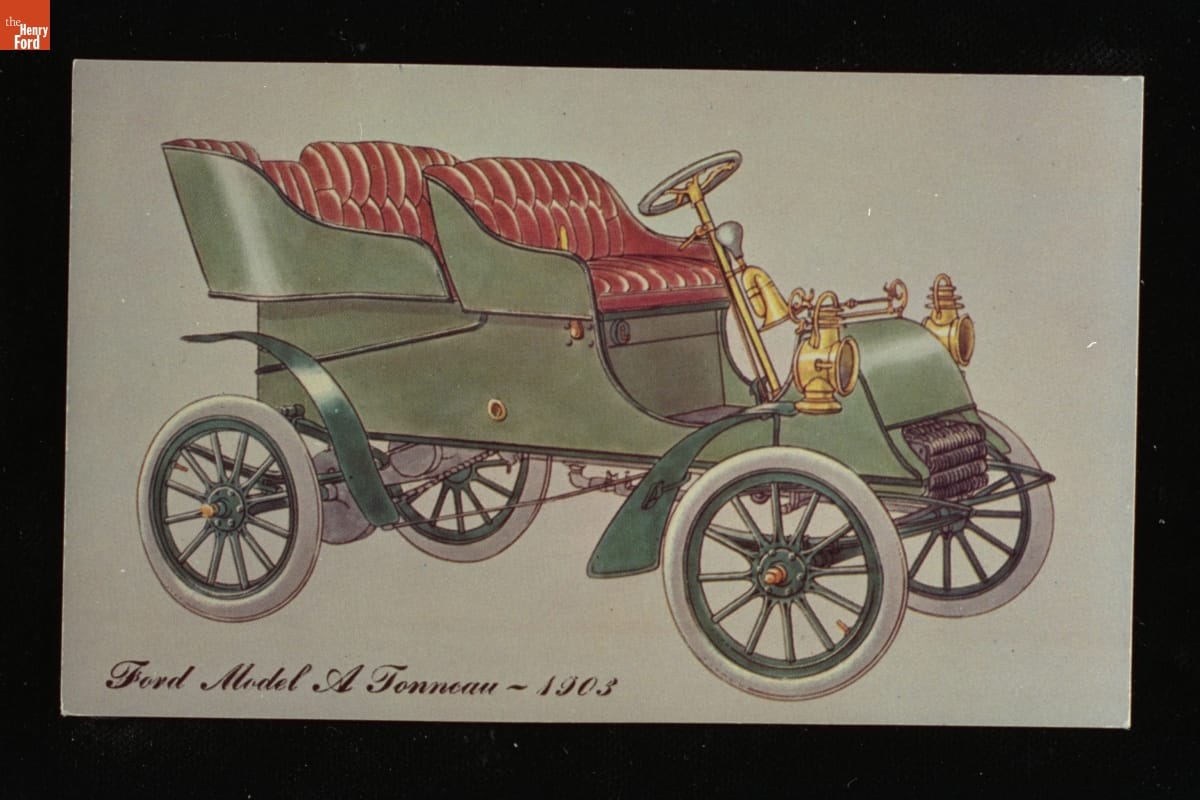
- "Ford Model A Tonneau - 1903" - This postcard, featuring an illustration of an early Ford automobile, was published by the Autoprints company of New York. Postcards like this were sold to visitors at Henry Ford Museum & Greenfield Village in the 1950s. Ford Motor Company, founded by Henry Ford in 1903, revolutionized the American auto industry with the Model T and the moving assembly line.
- 1903
- Collections - Artifact
"Ford Model A Tonneau - 1903"
This postcard, featuring an illustration of an early Ford automobile, was published by the Autoprints company of New York. Postcards like this were sold to visitors at Henry Ford Museum & Greenfield Village in the 1950s. Ford Motor Company, founded by Henry Ford in 1903, revolutionized the American auto industry with the Model T and the moving assembly line.
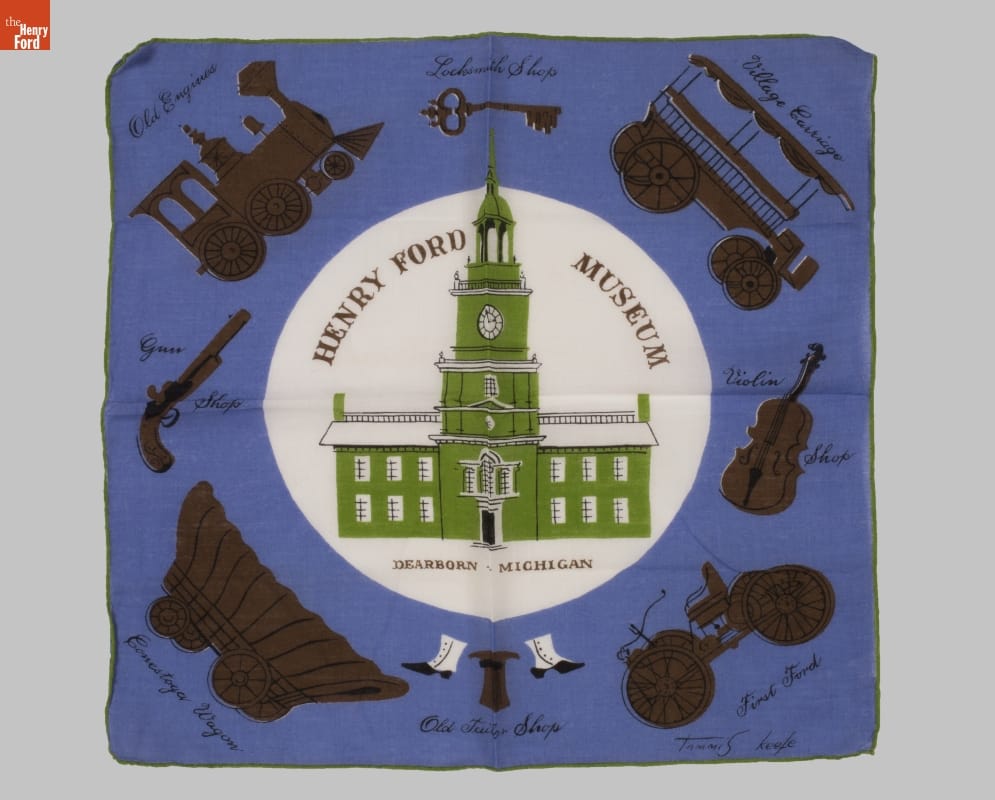
- Henry Ford Museum Souvenir Handkerchief, 1952-1956 - Margaret Thomas "Tammis" Keefe (1913-1960) created lively, whimsical designs for printed textiles. In the late 1940s, she began to design handkerchiefs that were sold at high-end retailers. She also created designs featuring American cities and attractions, showing highlights not to be missed. Keefe designed this souvenir handkerchief for Henry Ford Museum in the 1950s.
- 1952-1956
- Collections - Artifact
Henry Ford Museum Souvenir Handkerchief, 1952-1956
Margaret Thomas "Tammis" Keefe (1913-1960) created lively, whimsical designs for printed textiles. In the late 1940s, she began to design handkerchiefs that were sold at high-end retailers. She also created designs featuring American cities and attractions, showing highlights not to be missed. Keefe designed this souvenir handkerchief for Henry Ford Museum in the 1950s.
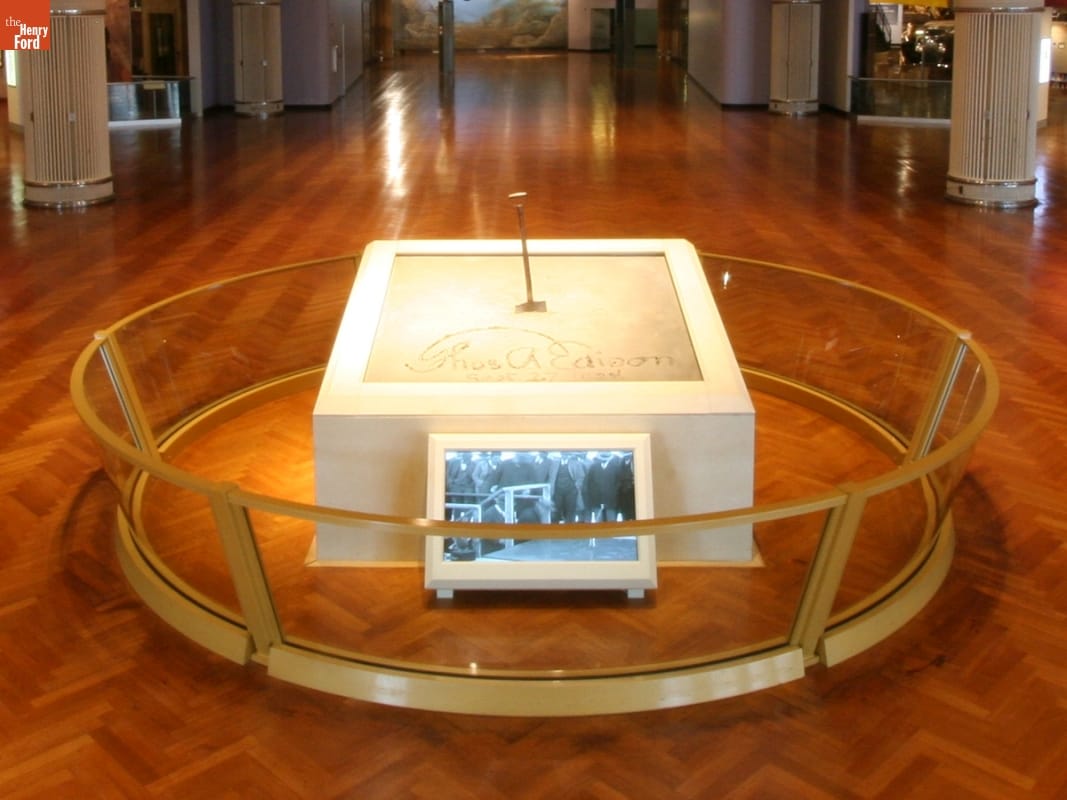
- Cornerstone of Edison Institute Signed by Thomas A. Edison, September 27, 1928 - The cornerstone commemorates the dedication of The Henry Ford. It suggests a union of nature (Luther Burbank's spade) and technology (Edison's signature and footprints). That unity is borne out by the block itself, made from Portland cement refined from blast furnace slag at the Ford's Rouge plant--a great example of Henry Ford approaching industry like a good farmer, denying the concept of waste.
- September 27, 1928
- Collections - Artifact
Cornerstone of Edison Institute Signed by Thomas A. Edison, September 27, 1928
The cornerstone commemorates the dedication of The Henry Ford. It suggests a union of nature (Luther Burbank's spade) and technology (Edison's signature and footprints). That unity is borne out by the block itself, made from Portland cement refined from blast furnace slag at the Ford's Rouge plant--a great example of Henry Ford approaching industry like a good farmer, denying the concept of waste.
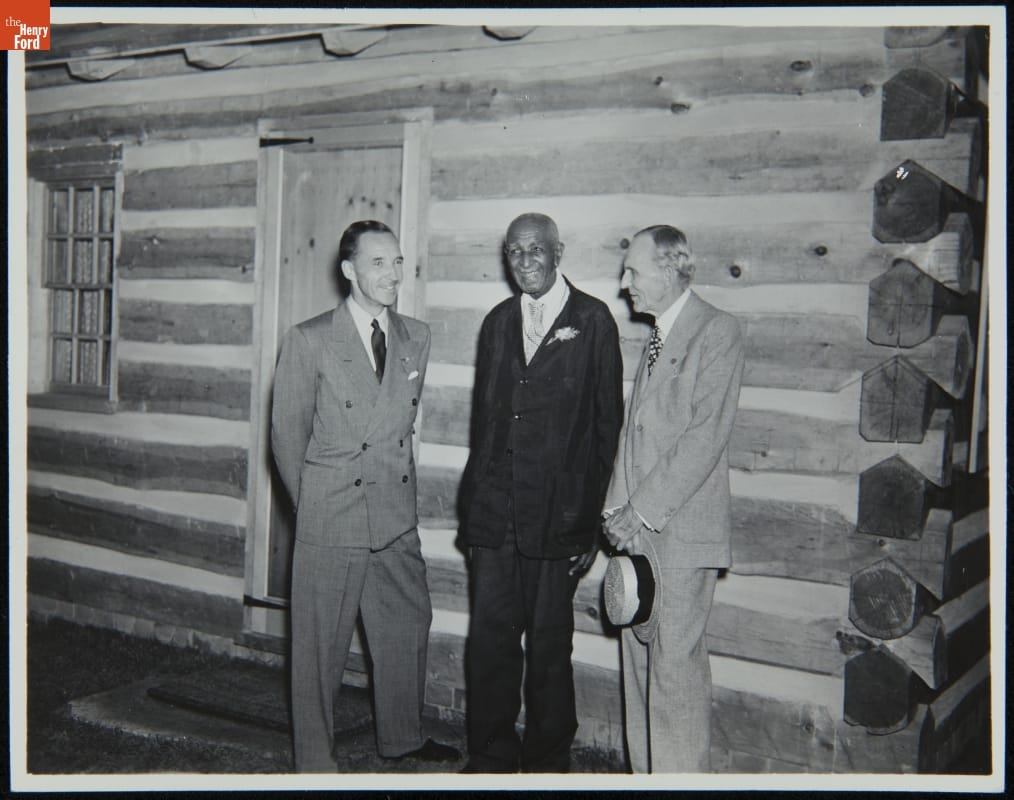
- Edsel Ford, George Washington Carver, and Henry Ford in Greenfield Village, July 1942 - Henry Ford, his son Edsel Ford, and agricultural scientist George Washington Carver stand in front of the Carver Memorial Cabin in Greenfield Village. Carver came to Dearborn in July 1942 for the dedication of this cabin, which Henry Ford built to honor his friend. The cabin is based on Carver's own sketches of the slave cabin in Missouri in which he was born.
- July 21, 1942
- Collections - Artifact
Edsel Ford, George Washington Carver, and Henry Ford in Greenfield Village, July 1942
Henry Ford, his son Edsel Ford, and agricultural scientist George Washington Carver stand in front of the Carver Memorial Cabin in Greenfield Village. Carver came to Dearborn in July 1942 for the dedication of this cabin, which Henry Ford built to honor his friend. The cabin is based on Carver's own sketches of the slave cabin in Missouri in which he was born.
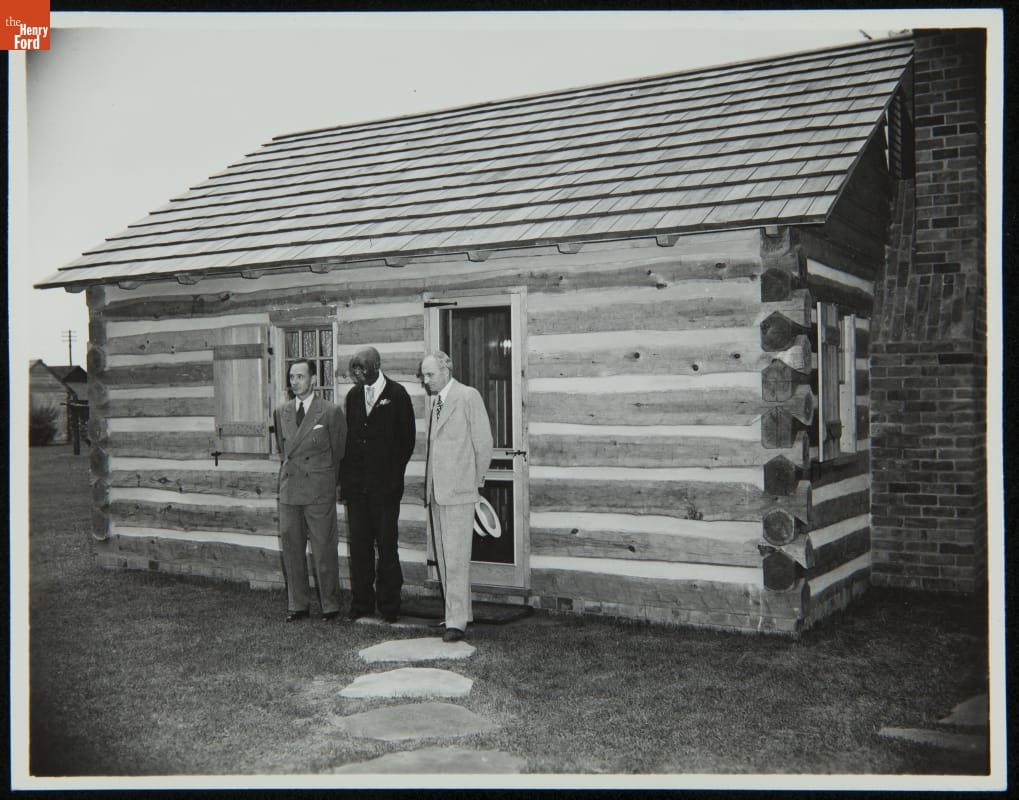
- Edsel Ford, George Washington Carver, and Henry Ford in Greenfield Village, July 1942 - Henry Ford, his son Edsel Ford, and agricultural scientist George Washington Carver stand in front of the Carver Memorial Cabin in Greenfield Village. Carver came to Dearborn in July 1942 for the dedication of this cabin, which Henry Ford built to honor his friend. The cabin is based on Carver's own sketches of the slave cabin in Missouri in which he was born.
- July 21, 1942
- Collections - Artifact
Edsel Ford, George Washington Carver, and Henry Ford in Greenfield Village, July 1942
Henry Ford, his son Edsel Ford, and agricultural scientist George Washington Carver stand in front of the Carver Memorial Cabin in Greenfield Village. Carver came to Dearborn in July 1942 for the dedication of this cabin, which Henry Ford built to honor his friend. The cabin is based on Carver's own sketches of the slave cabin in Missouri in which he was born.
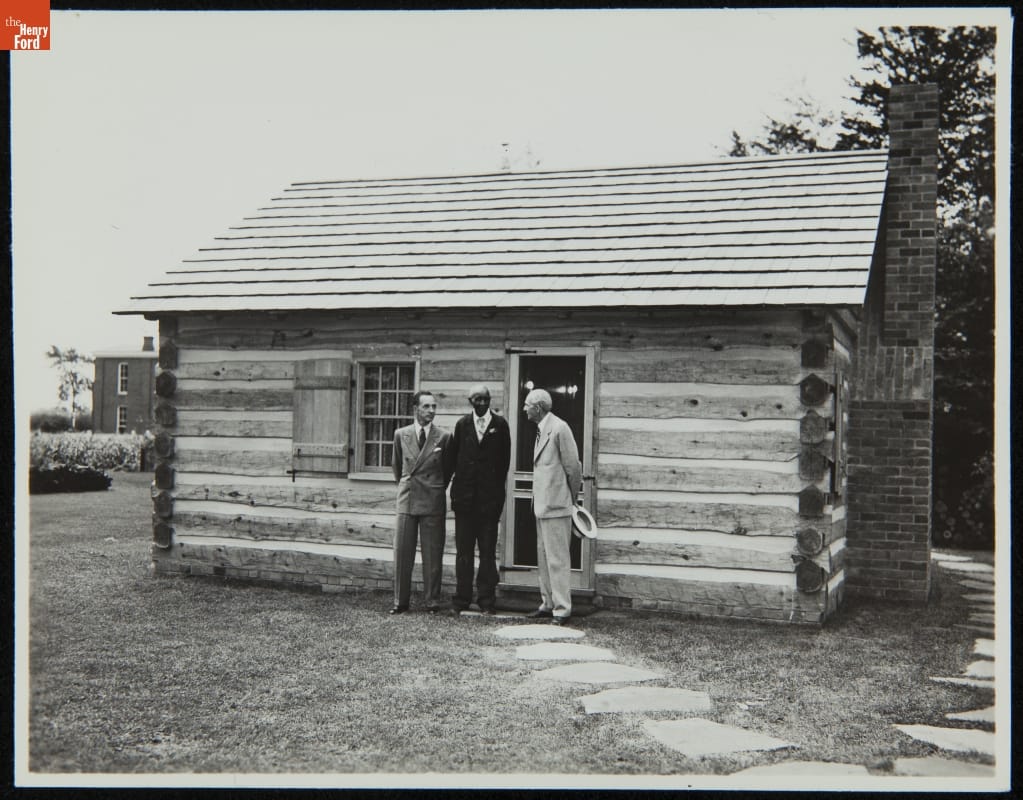
- Edsel Ford, George Washington Carver, and Henry Ford in Greenfield Village, July 1942 - Henry Ford, his son Edsel Ford, and agricultural scientist George Washington Carver stand in front of the Carver Memorial Cabin in Greenfield Village. Carver came to Dearborn in July 1942 for the dedication of this cabin, which Henry Ford built to honor his friend. The cabin is based on Carver's own sketches of the slave cabin in Missouri in which he was born.
- July 21, 1942
- Collections - Artifact
Edsel Ford, George Washington Carver, and Henry Ford in Greenfield Village, July 1942
Henry Ford, his son Edsel Ford, and agricultural scientist George Washington Carver stand in front of the Carver Memorial Cabin in Greenfield Village. Carver came to Dearborn in July 1942 for the dedication of this cabin, which Henry Ford built to honor his friend. The cabin is based on Carver's own sketches of the slave cabin in Missouri in which he was born.
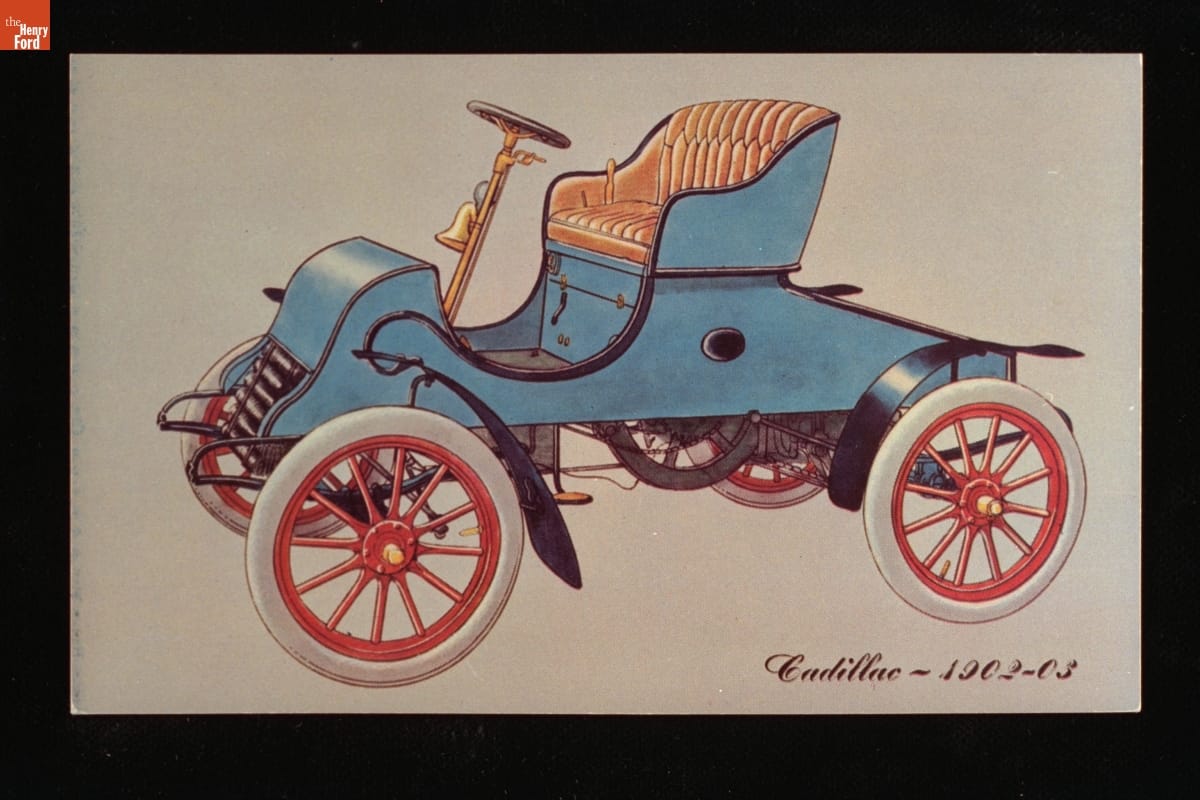
- Cadillac - 1902-03 - This postcard, featuring an illustration of an early Cadillac runabout, was published by the Autoprints company of New York. Postcards like this were sold to visitors at Henry Ford Museum & Greenfield Village in the 1950s. Cadillac, formed by Henry Leland in 1902, quickly earned a reputation for precision engineering and assembly.
- 1902-1903
- Collections - Artifact
Cadillac - 1902-03
This postcard, featuring an illustration of an early Cadillac runabout, was published by the Autoprints company of New York. Postcards like this were sold to visitors at Henry Ford Museum & Greenfield Village in the 1950s. Cadillac, formed by Henry Leland in 1902, quickly earned a reputation for precision engineering and assembly.
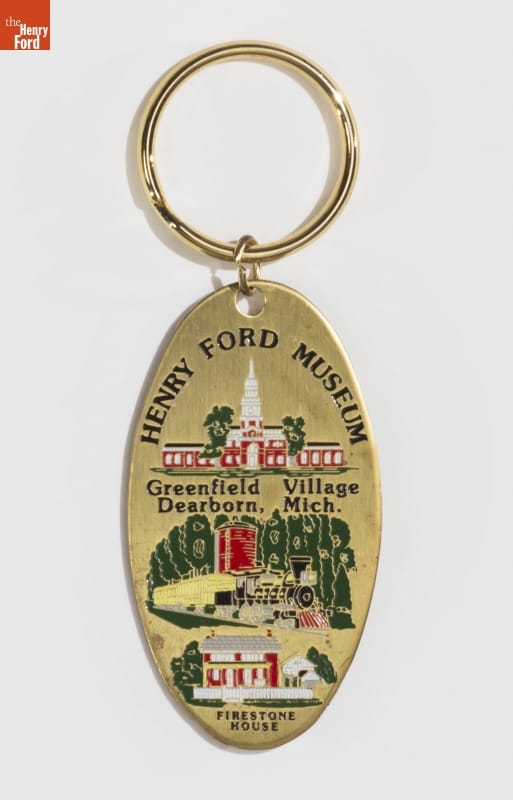
- Henry Ford Museum and Greenfield Village Keychain, circa 1987 -
- circa 1987
- Collections - Artifact
Henry Ford Museum and Greenfield Village Keychain, circa 1987