
Search
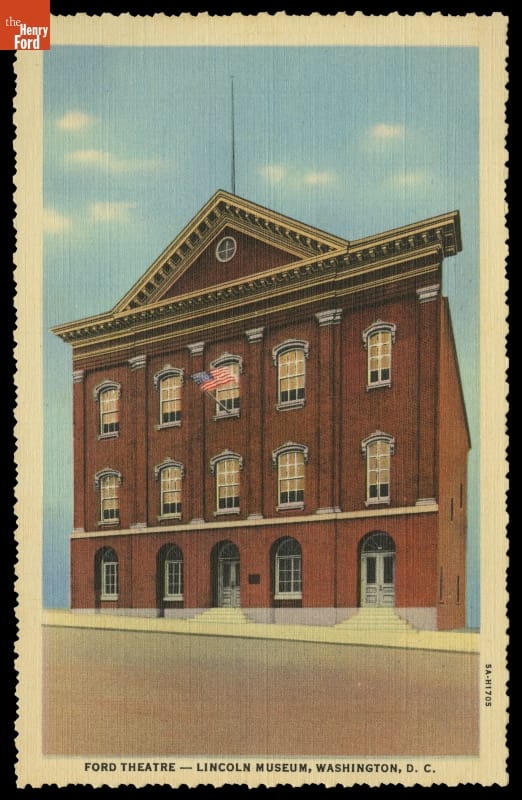
- "Ford Theatre--Lincoln Museum, Washington, D.C.," 1935 Postcard - Abraham Lincoln was assassinated in Ford's Theatre in April 1865. In the fall, the U.S. government leased--and later purchased--the building after an attempt to reopen the theater failed. Over the next sixty-five years the building housed offices and became a warehouse. In 1931, a museum displaying Lincoln memorabilia was created. The theatre returned to its 1865 appearance in the 1960s after Congress appropriated funds for the building's restoration.
- 1935
- Collections - Artifact
"Ford Theatre--Lincoln Museum, Washington, D.C.," 1935 Postcard
Abraham Lincoln was assassinated in Ford's Theatre in April 1865. In the fall, the U.S. government leased--and later purchased--the building after an attempt to reopen the theater failed. Over the next sixty-five years the building housed offices and became a warehouse. In 1931, a museum displaying Lincoln memorabilia was created. The theatre returned to its 1865 appearance in the 1960s after Congress appropriated funds for the building's restoration.
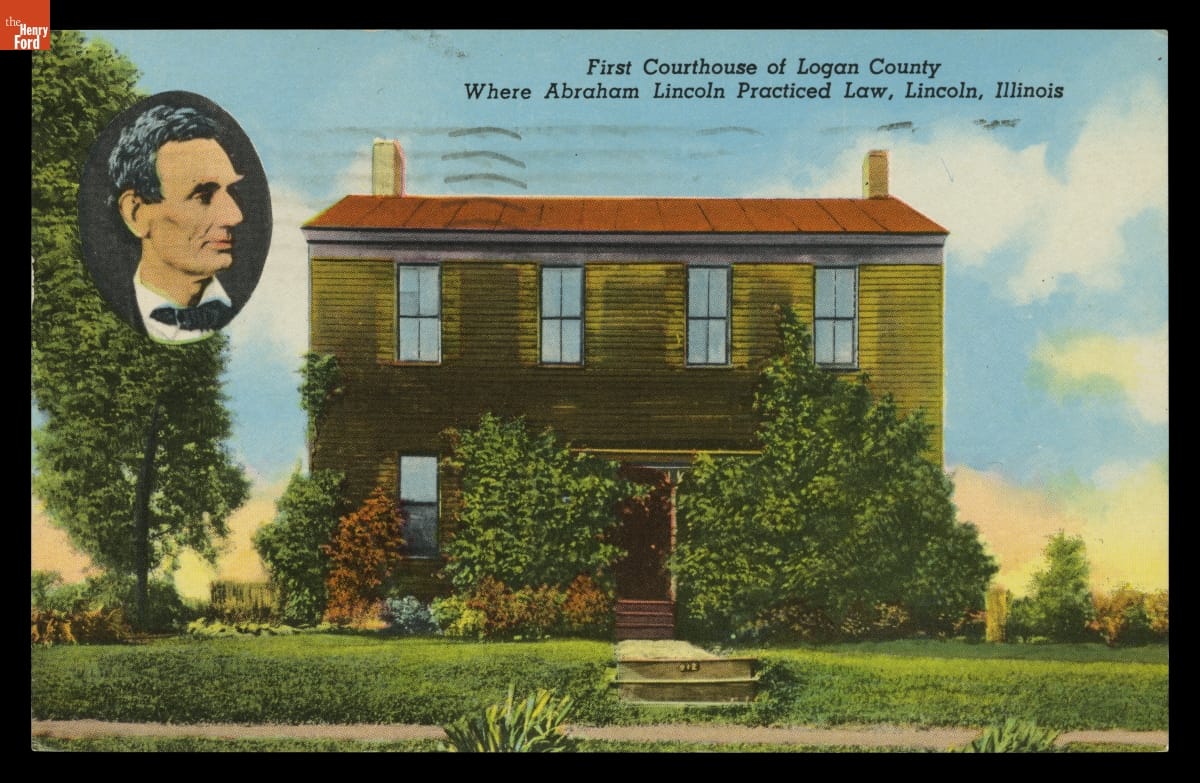
- "First Court House of Logan County Where Abraham Lincoln Practiced Law, Lincoln, Ill.," 1927 Postcard - Between 1840 and 1847, Abraham Lincoln tried cases as a traveling lawyer in this courthouse when it was located in Postville (later Lincoln), Illinois. When the Logan County seat moved to Mt. Pulaski, this courthouse was reused as a general store, jail, post office, and private dwelling. Henry Ford purchased it in 1929 and brought it to Greenfield Village.
- 1927
- Collections - Artifact
"First Court House of Logan County Where Abraham Lincoln Practiced Law, Lincoln, Ill.," 1927 Postcard
Between 1840 and 1847, Abraham Lincoln tried cases as a traveling lawyer in this courthouse when it was located in Postville (later Lincoln), Illinois. When the Logan County seat moved to Mt. Pulaski, this courthouse was reused as a general store, jail, post office, and private dwelling. Henry Ford purchased it in 1929 and brought it to Greenfield Village.
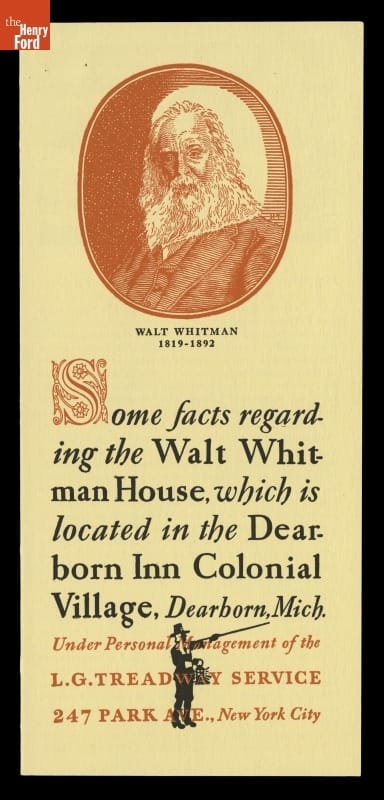
- Brochure, "Some Facts regarding the Walt Whitman House," Dearborn Inn Colonial Village, 1937 - By the mid-1930s, the Dearborn Inn, a popular luxury hotel, required additional accommodations to service travelers and visitors to the Edison Institute (later renamed The Henry Ford). The L.G. Treadway Service Corporation consulted with Edsel Ford and had five reproduction houses constructed behind the Inn. The exteriors were exact replicas of homes famous in American history, but guests found modern amenities inside.
- 1937
- Collections - Artifact
Brochure, "Some Facts regarding the Walt Whitman House," Dearborn Inn Colonial Village, 1937
By the mid-1930s, the Dearborn Inn, a popular luxury hotel, required additional accommodations to service travelers and visitors to the Edison Institute (later renamed The Henry Ford). The L.G. Treadway Service Corporation consulted with Edsel Ford and had five reproduction houses constructed behind the Inn. The exteriors were exact replicas of homes famous in American history, but guests found modern amenities inside.
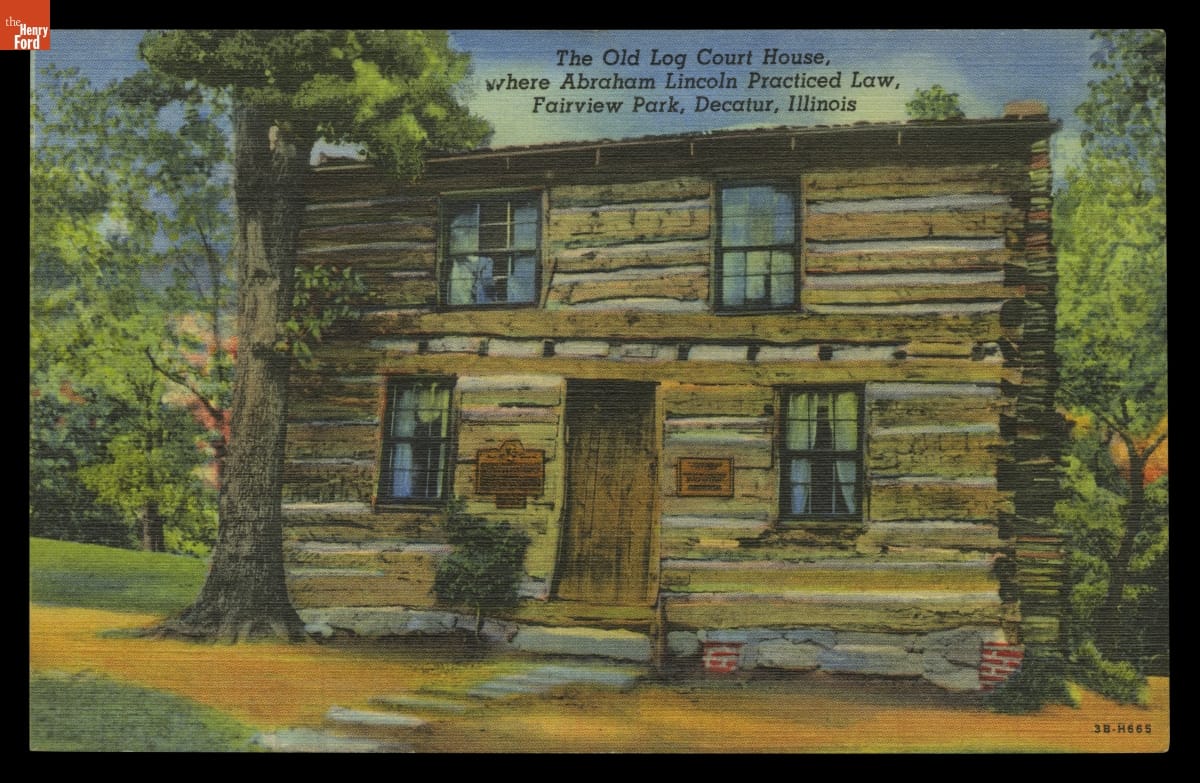
- "The Old Log Court House Where Abraham Lincoln Practiced Law," Decatur, Illinois, 1943 Postcard - By the early 20th century, the real Abraham Lincoln had long since faded from people's memory. A new generation of Americans had come of age who only knew the stories, the myths, the legends. This generation transformed Lincoln the man into Lincoln the hero. Local residents of Decatur, Illinois, saved and preserved their old log courthouse where Lincoln once practiced law.
- 1943
- Collections - Artifact
"The Old Log Court House Where Abraham Lincoln Practiced Law," Decatur, Illinois, 1943 Postcard
By the early 20th century, the real Abraham Lincoln had long since faded from people's memory. A new generation of Americans had come of age who only knew the stories, the myths, the legends. This generation transformed Lincoln the man into Lincoln the hero. Local residents of Decatur, Illinois, saved and preserved their old log courthouse where Lincoln once practiced law.
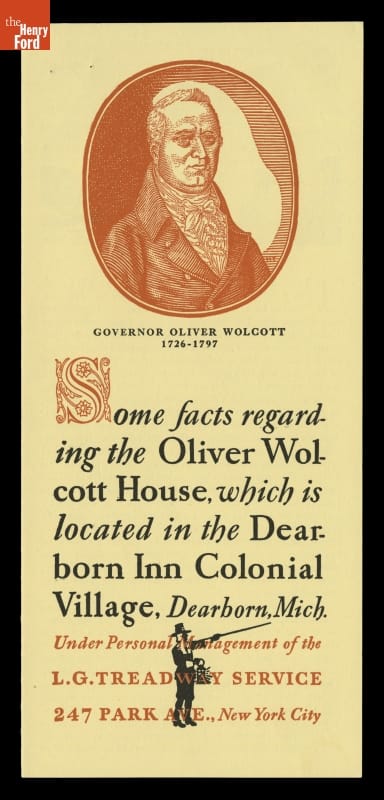
- Brochure, "Some Facts regarding the Oliver Wolcott House," Dearborn Inn Colonial Village, 1937 - By the mid-1930s, the Dearborn Inn, a popular luxury hotel, required additional accommodations to service travelers and visitors to the Edison Institute (later renamed The Henry Ford). The L.G. Treadway Service Corporation consulted with Edsel Ford and had five reproduction houses constructed behind the Inn. The exteriors were exact replicas of homes famous in American history, but guests found modern amenities inside.
- 1937
- Collections - Artifact
Brochure, "Some Facts regarding the Oliver Wolcott House," Dearborn Inn Colonial Village, 1937
By the mid-1930s, the Dearborn Inn, a popular luxury hotel, required additional accommodations to service travelers and visitors to the Edison Institute (later renamed The Henry Ford). The L.G. Treadway Service Corporation consulted with Edsel Ford and had five reproduction houses constructed behind the Inn. The exteriors were exact replicas of homes famous in American history, but guests found modern amenities inside.
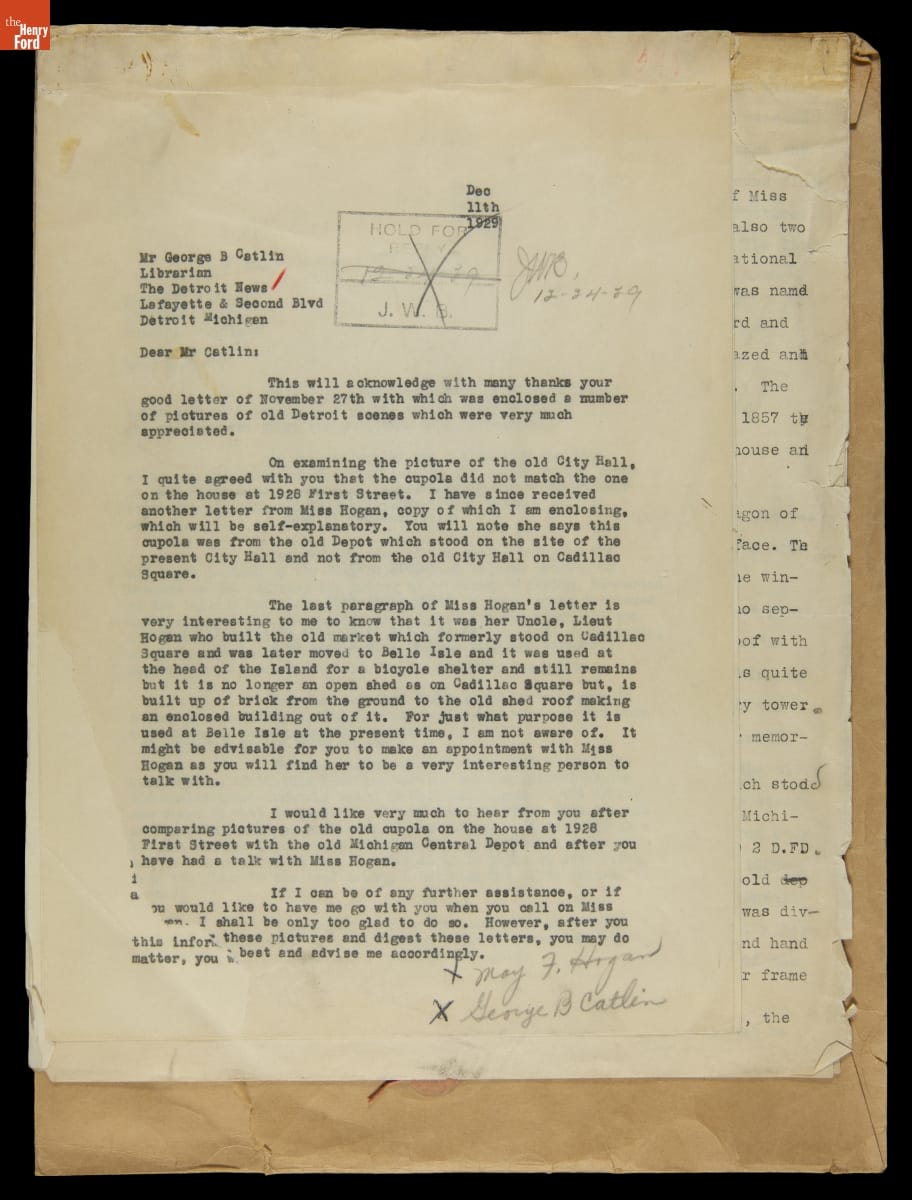
- May F. Hogan, George B. Catlin and James W. Bishop Correspondence and Photographs, November-December 1929 -
- November 1929-December 1929
- Collections - Artifact
May F. Hogan, George B. Catlin and James W. Bishop Correspondence and Photographs, November-December 1929
- Booklet, "Important Historical Relics Lately Added to the Ford Collections at Dearborn," 1937 -
- 1937
- Collections - Artifact
Booklet, "Important Historical Relics Lately Added to the Ford Collections at Dearborn," 1937
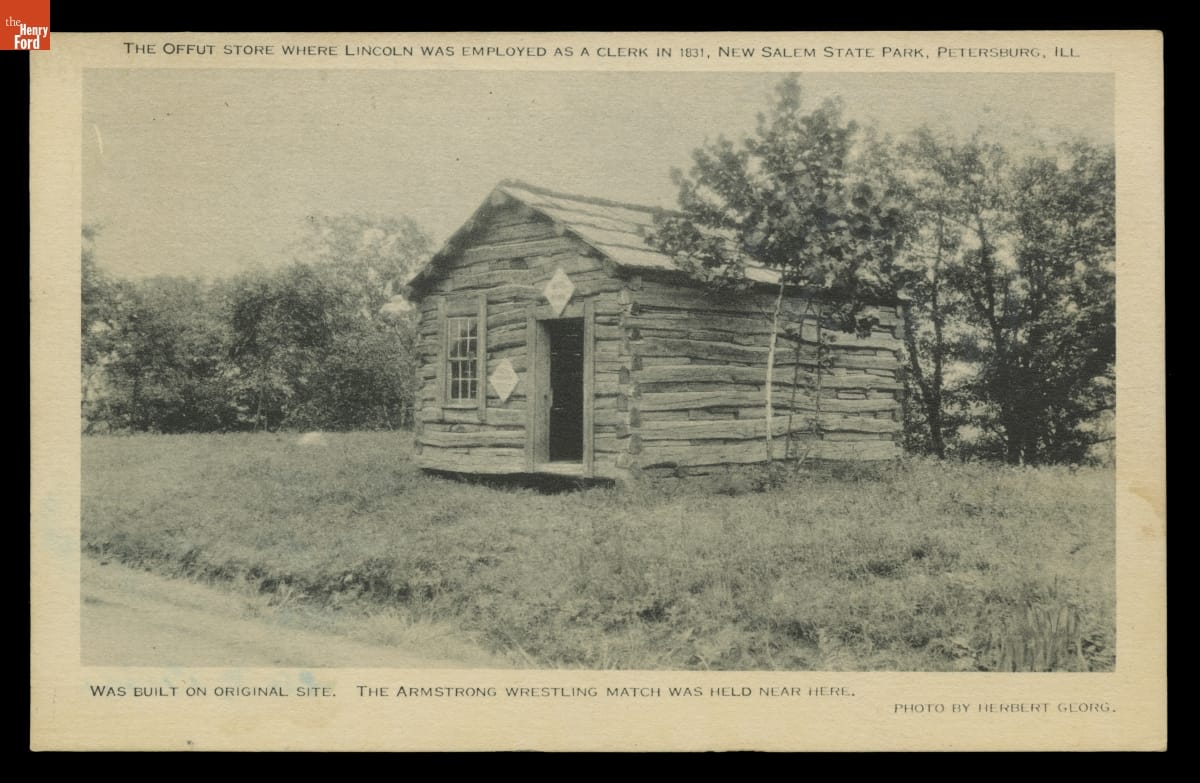
- "The Offut Store Where Lincoln Was Employed as a Clerk," New Salem State Park, Petersburg, Ill., circa 1920 Postcard -
- circa 1920
- Collections - Artifact
"The Offut Store Where Lincoln Was Employed as a Clerk," New Salem State Park, Petersburg, Ill., circa 1920 Postcard
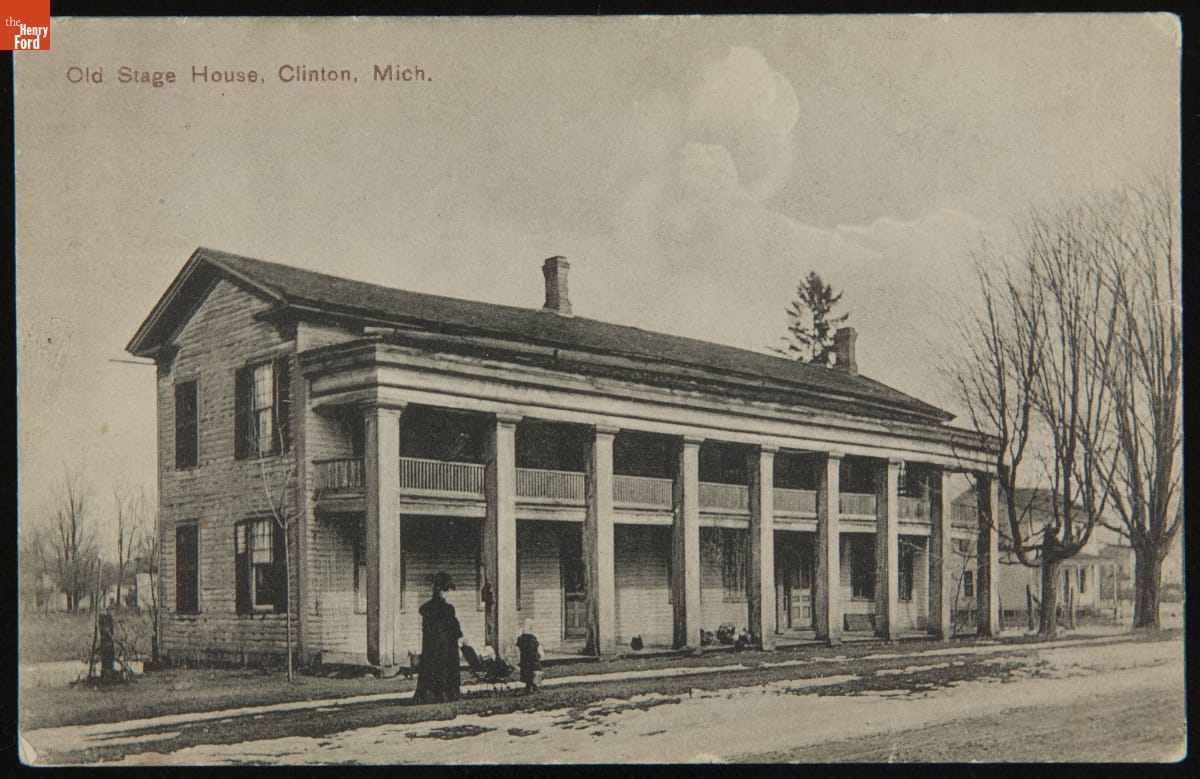
- Old Stage House, Clinton, Mich., November 7, 1909 - This "Old Stage House," constructed 1831-2 in Clinton, Michigan, was originally a stagecoach stop on the Detroit-to-Chicago road. In 1927, Henry Ford purchased the building from resident Ella Smith -- the daughter of Walter Smith, who had run the hostelry as Smith's Hotel between 1868 and 1896. Moved to Greenfield Village, the restored and renamed Clinton Inn opened in 1929.
- November 07, 1908
- Collections - Artifact
Old Stage House, Clinton, Mich., November 7, 1909
This "Old Stage House," constructed 1831-2 in Clinton, Michigan, was originally a stagecoach stop on the Detroit-to-Chicago road. In 1927, Henry Ford purchased the building from resident Ella Smith -- the daughter of Walter Smith, who had run the hostelry as Smith's Hotel between 1868 and 1896. Moved to Greenfield Village, the restored and renamed Clinton Inn opened in 1929.
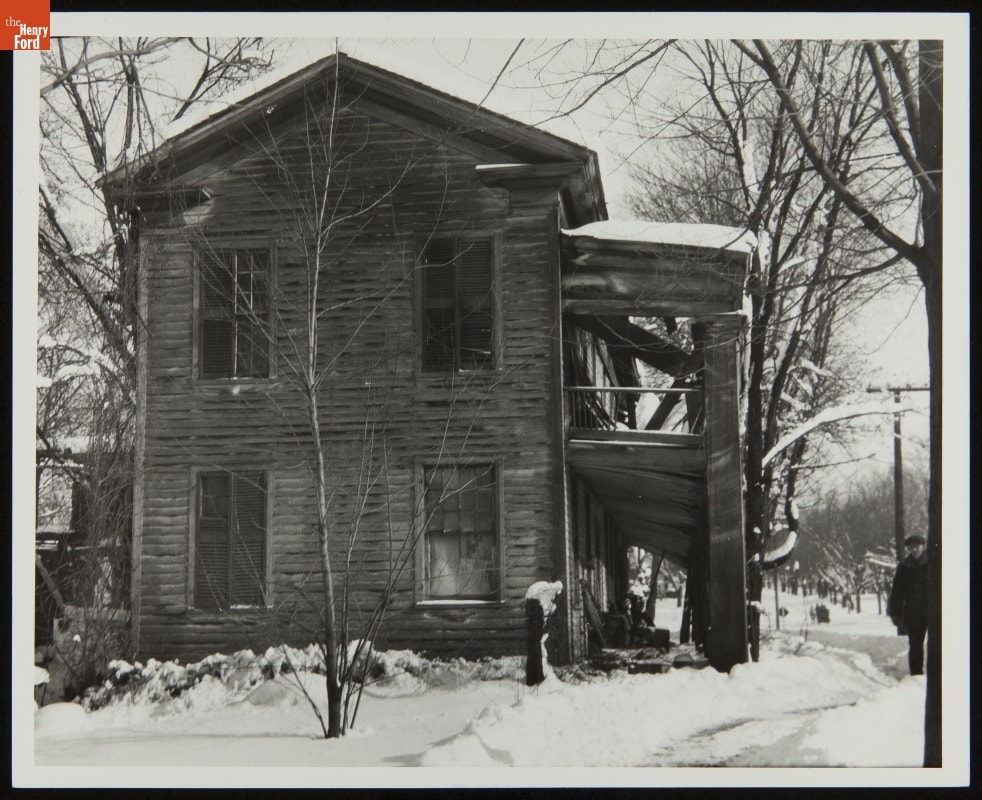
- Exterior of Eagle Tavern at its Original Site, Clinton, Michigan, circa 1925 - This building was constructed in 1831-2 as a stagecoach stop in Clinton, Michigan, on the Detroit-to-Chicago road. In the early 1900s, during its use as a private residence, the former hotel and tavern fell into disrepair. Henry Ford purchased the badly deteriorated structure in 1927, relocated it to Greenfield Village, and restored it as the Clinton Inn (later Eagle Tavern).
- circa 1925
- Collections - Artifact
Exterior of Eagle Tavern at its Original Site, Clinton, Michigan, circa 1925
This building was constructed in 1831-2 as a stagecoach stop in Clinton, Michigan, on the Detroit-to-Chicago road. In the early 1900s, during its use as a private residence, the former hotel and tavern fell into disrepair. Henry Ford purchased the badly deteriorated structure in 1927, relocated it to Greenfield Village, and restored it as the Clinton Inn (later Eagle Tavern).