
Search
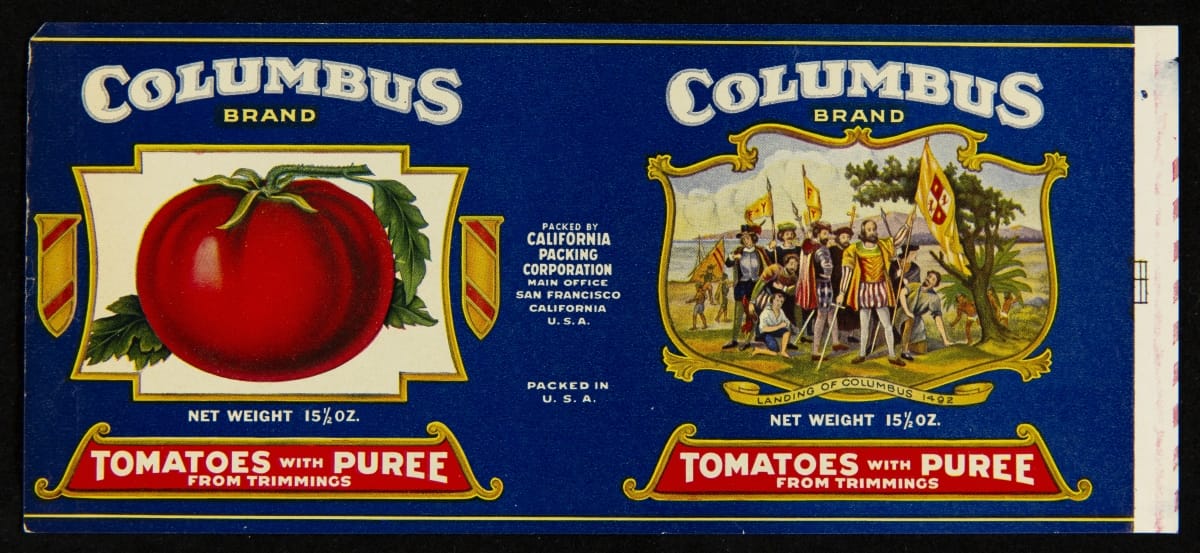
- Can Label, "Columbus Brand Tomatoes with Puree," circa 1930 - Manufacturers of similar products sought ways to make their company's goods stand out on store shelves. Attractive labels, like this design for Columbus Brand Tomatoes with Puree, helped catch the attention of potential customers -- hopefully encouraging them to purchase the company's product rather than that of a competitor.
- circa 1930
- Collections - Artifact
Can Label, "Columbus Brand Tomatoes with Puree," circa 1930
Manufacturers of similar products sought ways to make their company's goods stand out on store shelves. Attractive labels, like this design for Columbus Brand Tomatoes with Puree, helped catch the attention of potential customers -- hopefully encouraging them to purchase the company's product rather than that of a competitor.
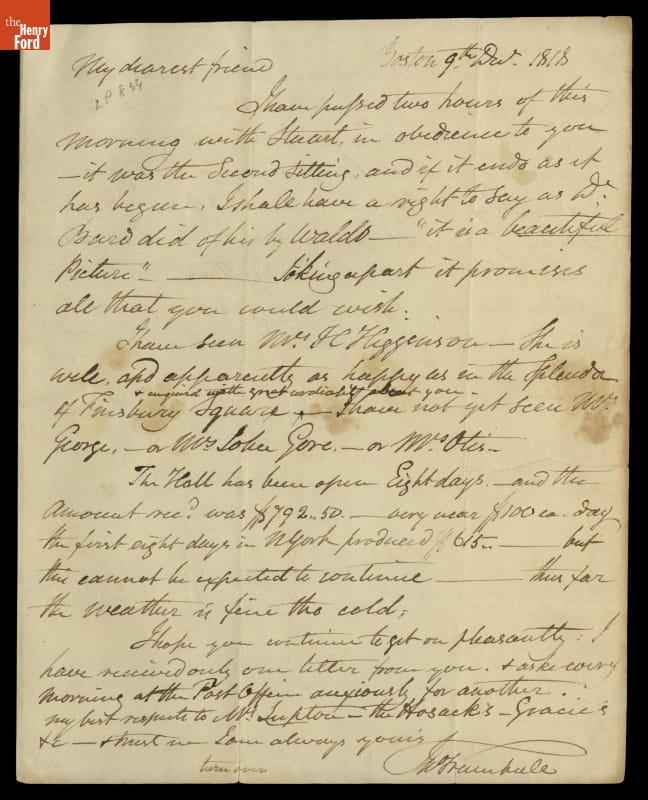
- Letter from John Trumbull to Sarah Hope Harvey Trumbull, December 9, 1818 - In 1817, the U.S. Congress commissioned John Trumbull to paint four Revolutionary-era scenes for the Capitol. The first, <EM>Declaration of Independence</EM>, was completed in 1818. Trumbull took the painting on a multi-city tour to give the public a chance to view the work before it returned to the Capitol. Trumbull mentioned the tour's success in this letter to his wife.
- December 09, 1818
- Collections - Artifact
Letter from John Trumbull to Sarah Hope Harvey Trumbull, December 9, 1818
In 1817, the U.S. Congress commissioned John Trumbull to paint four Revolutionary-era scenes for the Capitol. The first, Declaration of Independence, was completed in 1818. Trumbull took the painting on a multi-city tour to give the public a chance to view the work before it returned to the Capitol. Trumbull mentioned the tour's success in this letter to his wife.
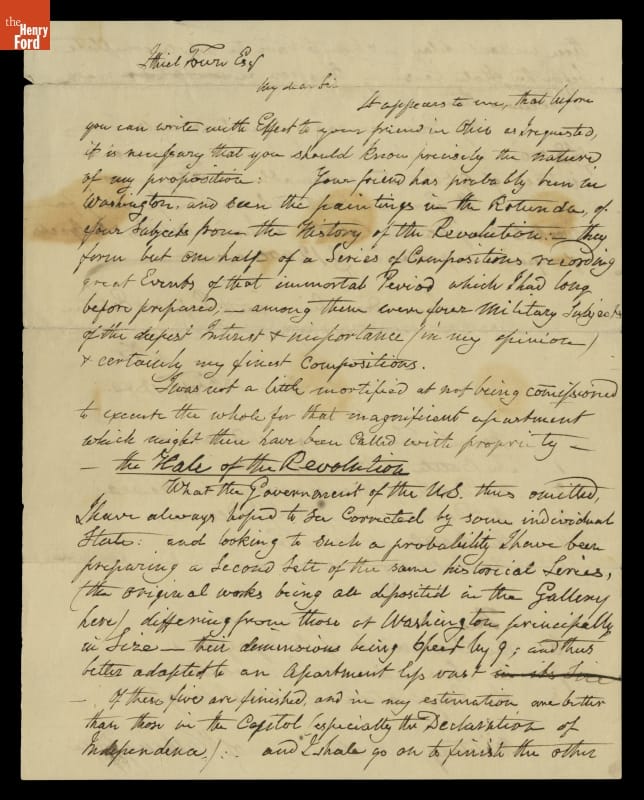
- Letter from John Trumbull to Ithiel Town, February 13, 1840 - Artist John Trumbull wanted to display a series of his paintings based on Revolutionary-era scenes in some permanent gallery. These eight patriotic works would include smaller versions of his four paintings that hung in the U.S. Capitol. In 1840, the aging Trumbull wrote architect Ithiel Town about the works, their prices and his vision of the project.
- February 13, 1840
- Collections - Artifact
Letter from John Trumbull to Ithiel Town, February 13, 1840
Artist John Trumbull wanted to display a series of his paintings based on Revolutionary-era scenes in some permanent gallery. These eight patriotic works would include smaller versions of his four paintings that hung in the U.S. Capitol. In 1840, the aging Trumbull wrote architect Ithiel Town about the works, their prices and his vision of the project.
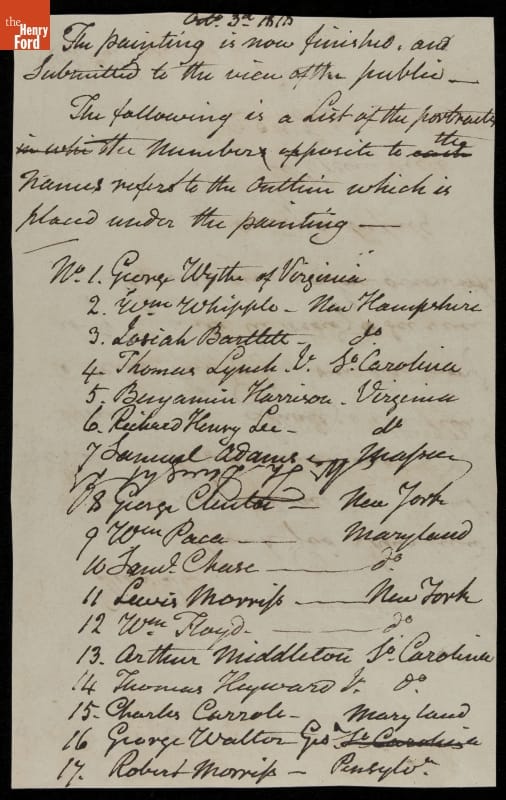
- Letter from John Trumbull to Theodore Dwight, 1818 - In 1817, the U.S. Congress commissioned John Trumbull to paint four Revolutionary-era scenes for the Capitol. <EM>Declaration of Independence</EM> depicts the presentation of Thomas Jefferson's document to the Continental Congress in 1776. In this letter, the self-described "overworked" Trumbull informed Theodore Dwight -- a partner who would help sell prints of the work -- that the painting was, at long last, finished.
- September 28, 1818
- Collections - Artifact
Letter from John Trumbull to Theodore Dwight, 1818
In 1817, the U.S. Congress commissioned John Trumbull to paint four Revolutionary-era scenes for the Capitol. Declaration of Independence depicts the presentation of Thomas Jefferson's document to the Continental Congress in 1776. In this letter, the self-described "overworked" Trumbull informed Theodore Dwight -- a partner who would help sell prints of the work -- that the painting was, at long last, finished.
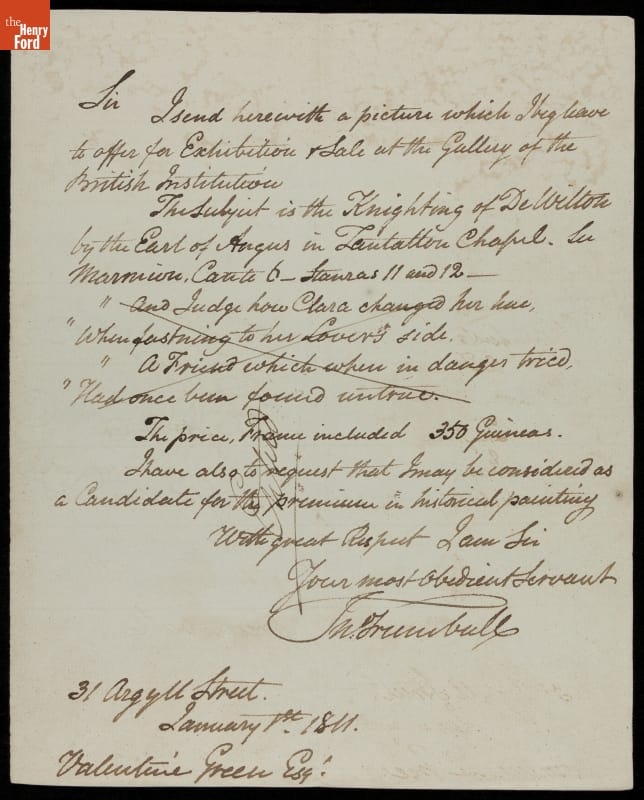
- Letter from John Trumbull to Valentine Green, London, England, 1811 - American artist John Trumbull finished painting <EM>The Earl of Angus Conferring Knighthood on De Wilton</EM> while living in England in 1810. He wrote this letter to Valentine Green hoping that this work would be exhibited and sold. A sale would be welcomed. Because of the growing diplomatic divide between the U.S. and England, Trumbull had few portrait commissions and had fallen into debt.
- January 01, 1811
- Collections - Artifact
Letter from John Trumbull to Valentine Green, London, England, 1811
American artist John Trumbull finished painting The Earl of Angus Conferring Knighthood on De Wilton while living in England in 1810. He wrote this letter to Valentine Green hoping that this work would be exhibited and sold. A sale would be welcomed. Because of the growing diplomatic divide between the U.S. and England, Trumbull had few portrait commissions and had fallen into debt.
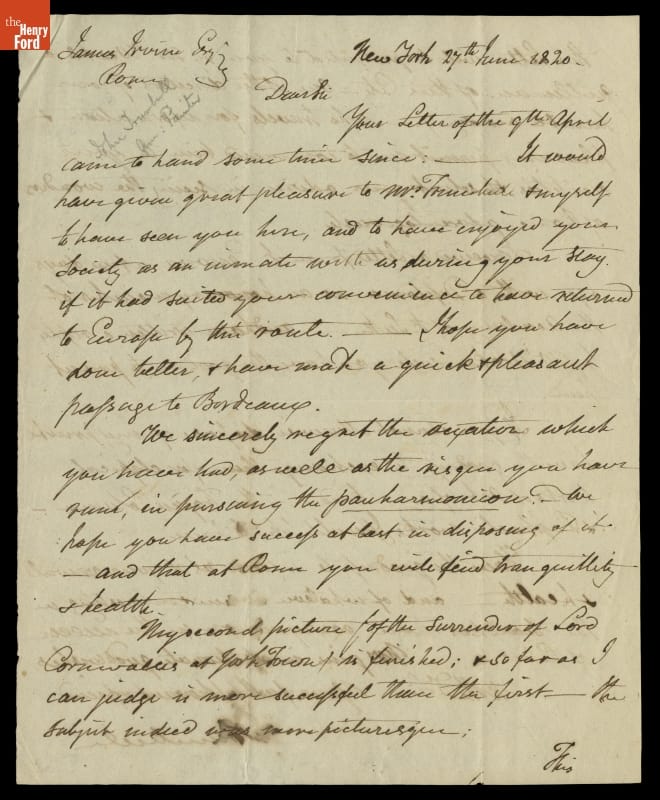
- Letter from John Trumbull to James Irvine, June 27, 1820 - John Trumbull wrote this cordial letter to James Irvine, a painter and art dealer from Rome, Italy. Trumbull regretted that the two did not meet before Irvine headed back to Europe. He also mentions that he has completed <EM>Yorktown</EM>, his second of four works commissioned by the U.S. Congress for the Capitol.
- June 27, 1820
- Collections - Artifact
Letter from John Trumbull to James Irvine, June 27, 1820
John Trumbull wrote this cordial letter to James Irvine, a painter and art dealer from Rome, Italy. Trumbull regretted that the two did not meet before Irvine headed back to Europe. He also mentions that he has completed Yorktown, his second of four works commissioned by the U.S. Congress for the Capitol.
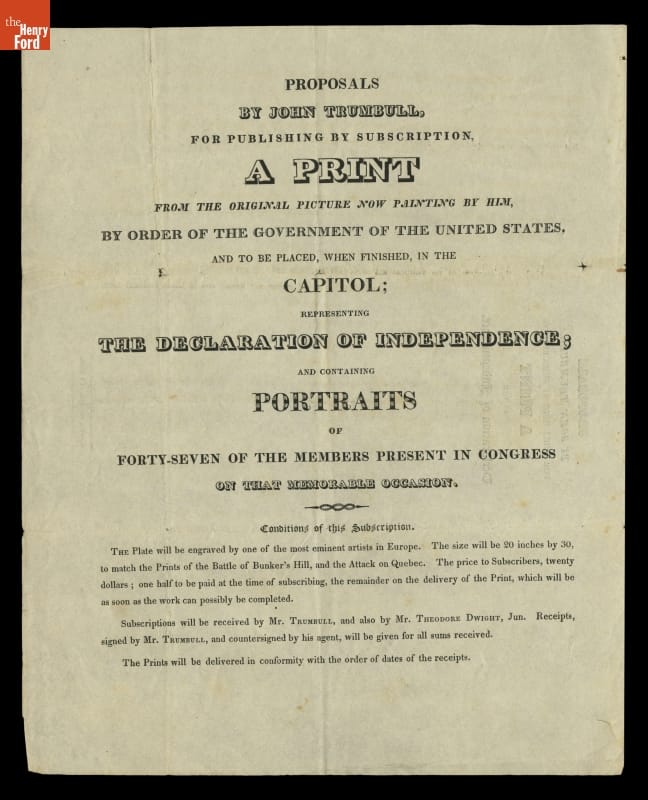
- Proposals by John Trumbull for Publishing by Subscription a Print from His "Declaration of Independence" Painting, 1818-1823 - John Trumbull sold subscriptions to fund the creation of a print based on his painting, <EM>Declaration of Independence</EM>. Subscribers would pay half of the print's price and promise to complete payment upon delivery. Trumbull's list of subscribers would include many prominent Americans, including two Presidents.
- 1818-1823
- Collections - Artifact
Proposals by John Trumbull for Publishing by Subscription a Print from His "Declaration of Independence" Painting, 1818-1823
John Trumbull sold subscriptions to fund the creation of a print based on his painting, Declaration of Independence. Subscribers would pay half of the print's price and promise to complete payment upon delivery. Trumbull's list of subscribers would include many prominent Americans, including two Presidents.
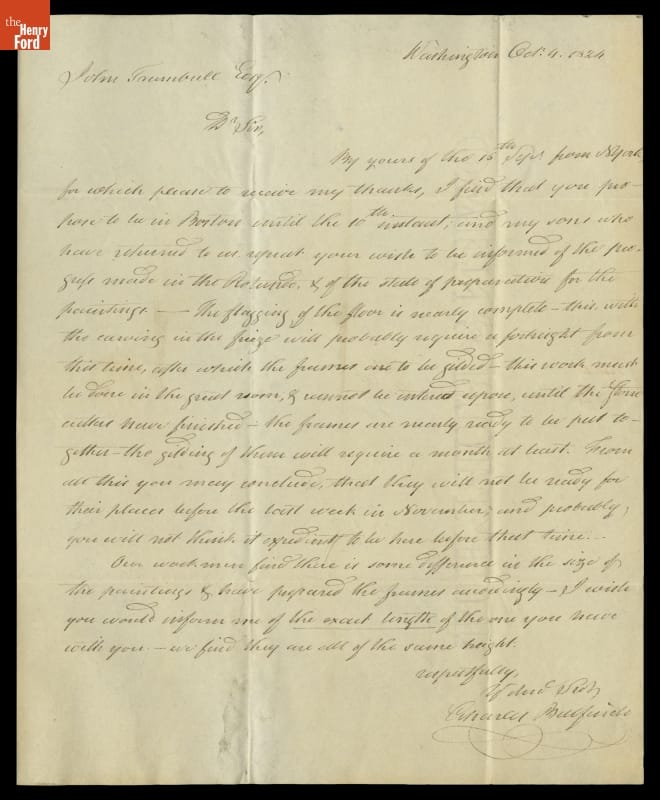
- Letter to John Trumbull from Charles Bulfinch, October 4, 1824 - Charles Bulfinch, third Architect of the Capitol, oversaw the completion of the U.S. Capitol from 1818 to 1826. He wrote this letter to artist John Trumbull in 1824 regarding the progress and the installation of Trumbull's paintings. Congress had commissioned Trumbull to create four Revolutionary-era paintings for the Rotunda. It would be two more years until the Capitol was finished and Trumbull's paintings hung.
- October 04, 1824
- Collections - Artifact
Letter to John Trumbull from Charles Bulfinch, October 4, 1824
Charles Bulfinch, third Architect of the Capitol, oversaw the completion of the U.S. Capitol from 1818 to 1826. He wrote this letter to artist John Trumbull in 1824 regarding the progress and the installation of Trumbull's paintings. Congress had commissioned Trumbull to create four Revolutionary-era paintings for the Rotunda. It would be two more years until the Capitol was finished and Trumbull's paintings hung.