
Search
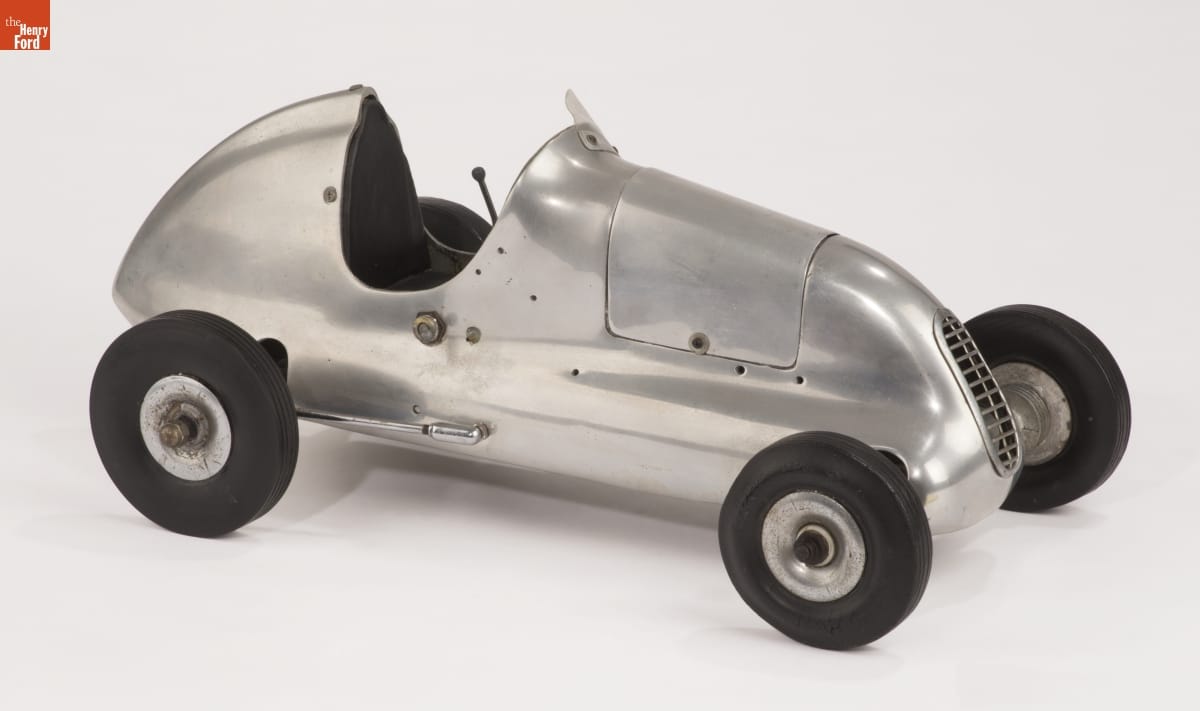
- Dooling "Mercury Second Series" Gas-Powered Racing Tether Car, 1940-1941 - Tether cars, gas-powered model race cars, were popular in the 1930s and 1940s. They were raced individually while tethered to a central pivot, or against each other on a scaled-down board track. This second series "Mercury" from Dooling Brothers features a cast aluminum body and frame. Its front-wheel-drive layout is somewhat unusual for a tether car.
- 1940-1941
- Collections - Artifact
Dooling "Mercury Second Series" Gas-Powered Racing Tether Car, 1940-1941
Tether cars, gas-powered model race cars, were popular in the 1930s and 1940s. They were raced individually while tethered to a central pivot, or against each other on a scaled-down board track. This second series "Mercury" from Dooling Brothers features a cast aluminum body and frame. Its front-wheel-drive layout is somewhat unusual for a tether car.
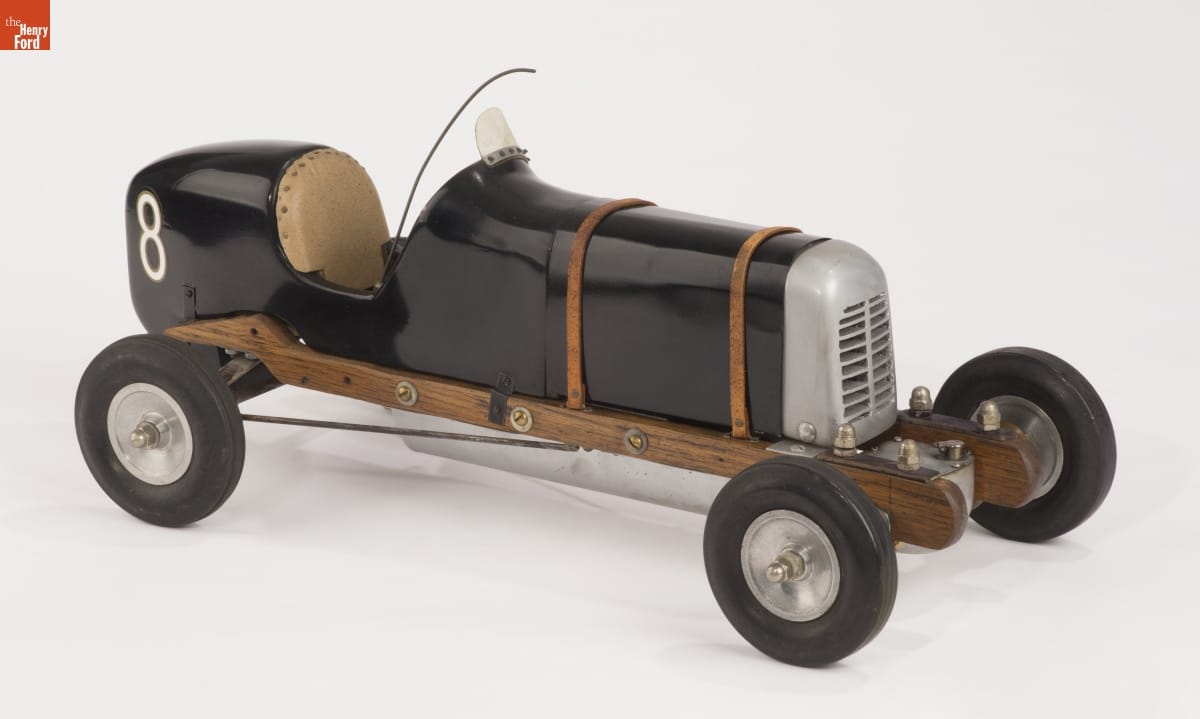
- Zip Grandell Special Gas-Powered Racing Tether Car, 1940-1950 - Tether cars, gas-powered model race cars, were popular in the 1930s and 1940s. They were raced individually while tethered to a central pivot, or against each other on a scaled-down board track. This is one of about six or eight models built by Charles "Zip" Grandell. Note the front-wheel-drive differential housing, and the suspension leaf springs at rear.
- 1940-1950
- Collections - Artifact
Zip Grandell Special Gas-Powered Racing Tether Car, 1940-1950
Tether cars, gas-powered model race cars, were popular in the 1930s and 1940s. They were raced individually while tethered to a central pivot, or against each other on a scaled-down board track. This is one of about six or eight models built by Charles "Zip" Grandell. Note the front-wheel-drive differential housing, and the suspension leaf springs at rear.
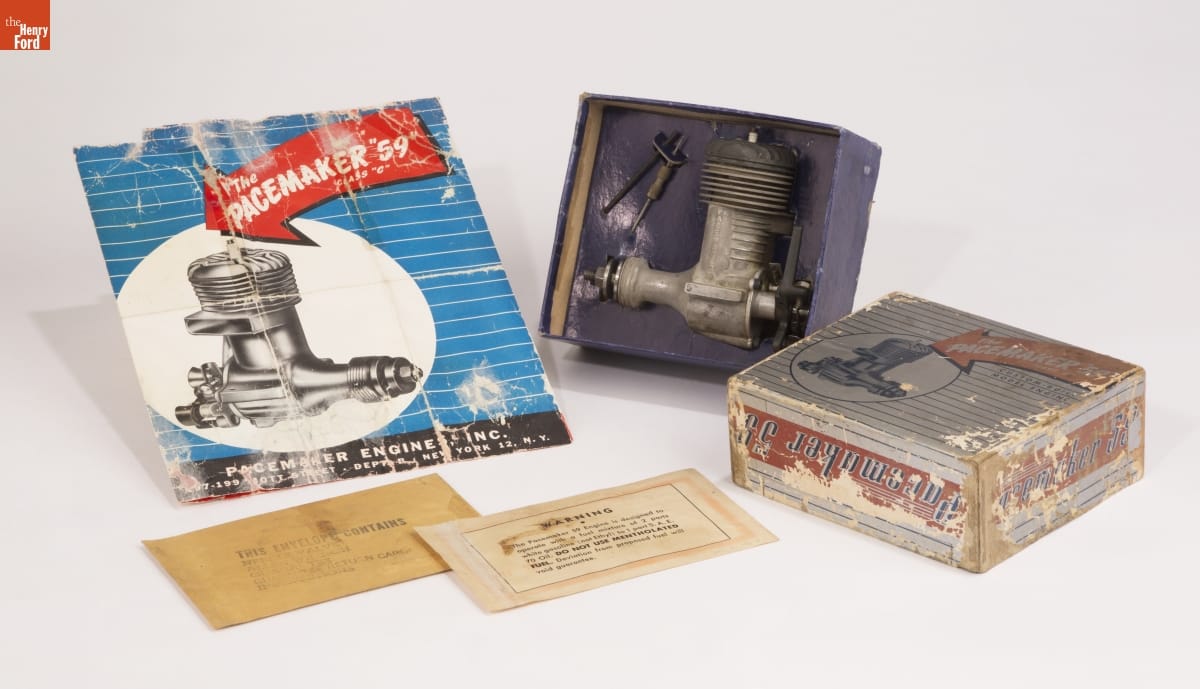
- Pacemaker "59" Engine, 1946-1947 - Tether cars, gas-powered model race cars, were popular in the 1930s and 1940s. They were raced individually while tethered to a central pivot, or against each other on a scaled-down board track. This Pacemaker "59" race engine was produced by Pacemaker Engines of New York, New York. "59" refers to its displacement of .594 cubic inches.
- 1946-1947
- Collections - Artifact
Pacemaker "59" Engine, 1946-1947
Tether cars, gas-powered model race cars, were popular in the 1930s and 1940s. They were raced individually while tethered to a central pivot, or against each other on a scaled-down board track. This Pacemaker "59" race engine was produced by Pacemaker Engines of New York, New York. "59" refers to its displacement of .594 cubic inches.
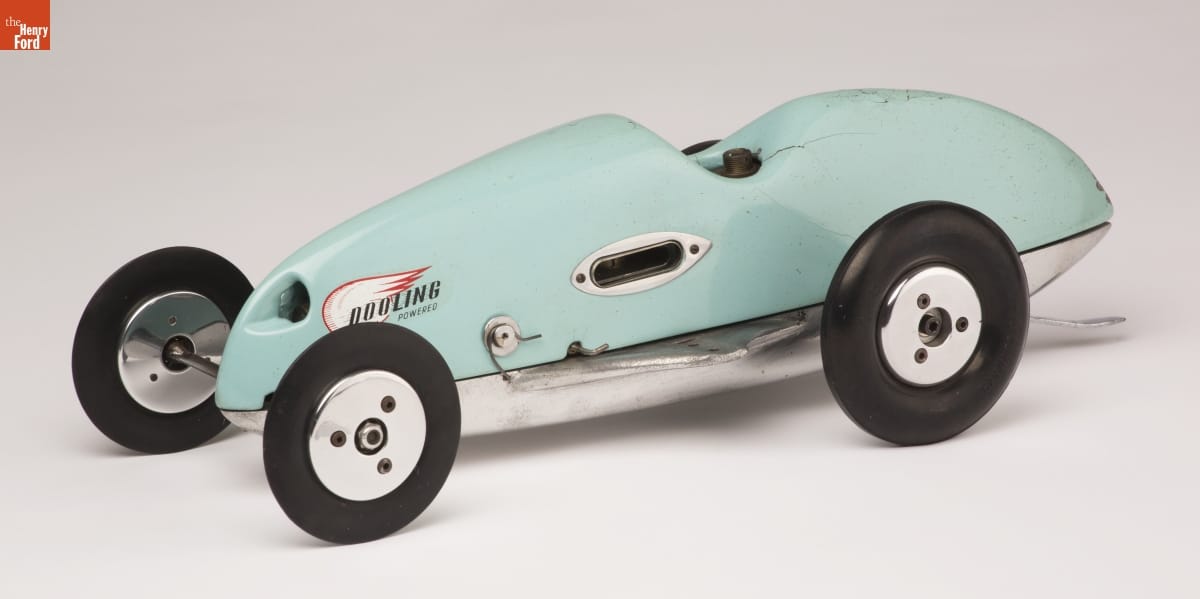
- Fox Proto "Long Tail" Gas-Powered Racing Tether Car, 1946-1947 - Tether cars, gas-powered model race cars, were popular in the 1930s and 1940s. They were raced individually while tethered to a central pivot, or against each other on a scaled-down board track. Fox Specialties of Oakland, California, manufactured this model circa 1946. Its frame is aluminum, while its wood upper body is pine.
- 1946-1947
- Collections - Artifact
Fox Proto "Long Tail" Gas-Powered Racing Tether Car, 1946-1947
Tether cars, gas-powered model race cars, were popular in the 1930s and 1940s. They were raced individually while tethered to a central pivot, or against each other on a scaled-down board track. Fox Specialties of Oakland, California, manufactured this model circa 1946. Its frame is aluminum, while its wood upper body is pine.
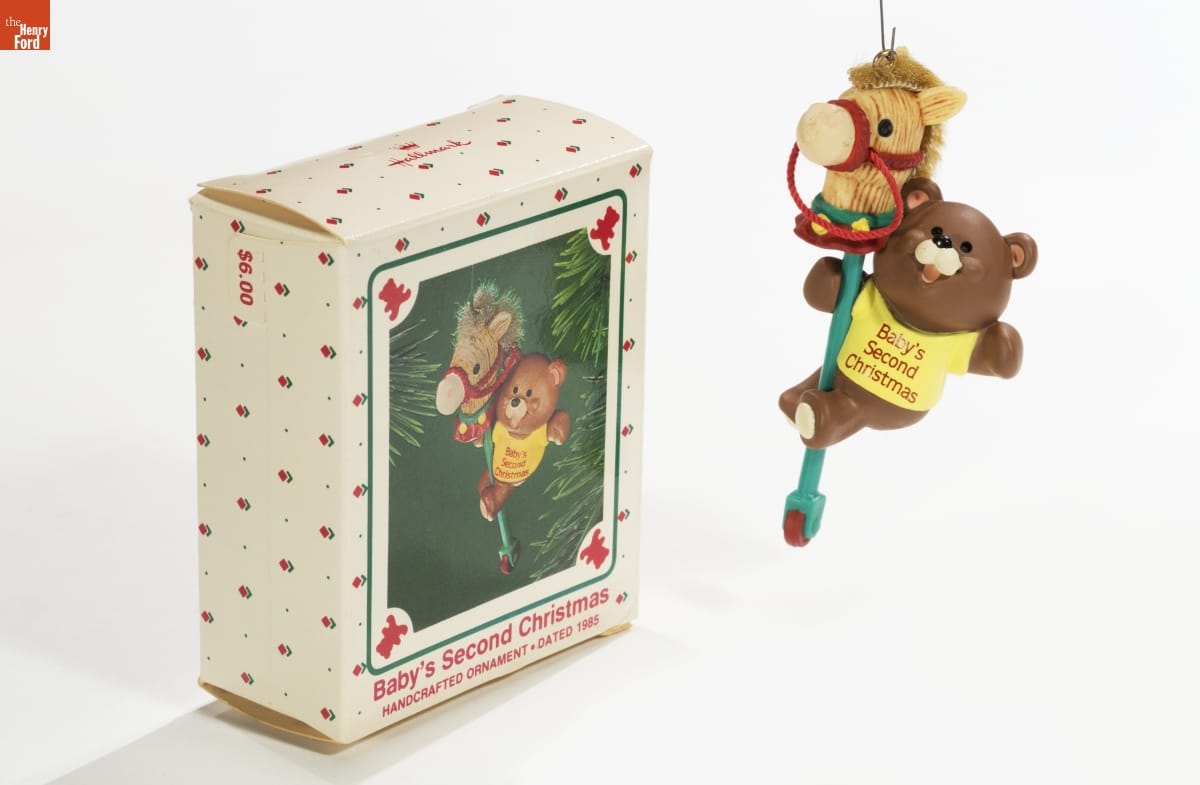
- Hallmark "Baby's Second Christmas" Christmas Ornament, 1985 - Already known for greeting cards, Hallmark introduced a line of Christmas ornaments in 1973. The company's annual release of an increasing array of ornaments revolutionized Christmas decorating, appealing to customers' interest in marking memories and milestones as well as expressing one's personality and unique tastes.
- 1985
- Collections - Artifact
Hallmark "Baby's Second Christmas" Christmas Ornament, 1985
Already known for greeting cards, Hallmark introduced a line of Christmas ornaments in 1973. The company's annual release of an increasing array of ornaments revolutionized Christmas decorating, appealing to customers' interest in marking memories and milestones as well as expressing one's personality and unique tastes.
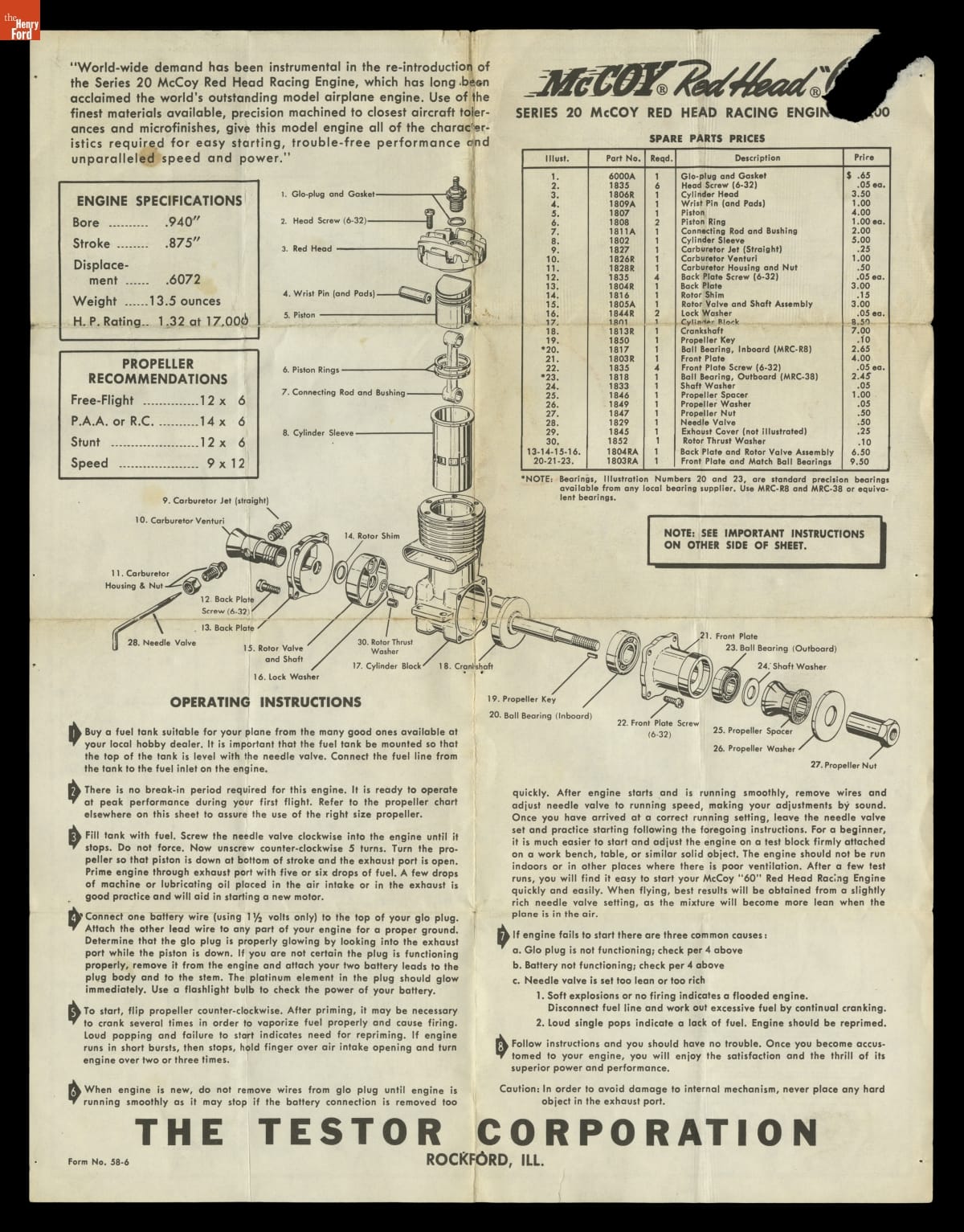
- Operating Instructions for the McCoy "Red Head 60" Racing Engine, 1956-1966 - Tether cars, gas-powered model race cars, were popular in the 1930s and 1940s. They were raced individually while tethered to a central pivot, or against each other on a scaled-down board track. The McCoy "60" racing engine produced 1.32 horsepower. The "60" referred to its displacement of .6072 cubic inches. The engine used a glow plug for ignition.
- 1956-1966
- Collections - Artifact
Operating Instructions for the McCoy "Red Head 60" Racing Engine, 1956-1966
Tether cars, gas-powered model race cars, were popular in the 1930s and 1940s. They were raced individually while tethered to a central pivot, or against each other on a scaled-down board track. The McCoy "60" racing engine produced 1.32 horsepower. The "60" referred to its displacement of .6072 cubic inches. The engine used a glow plug for ignition.
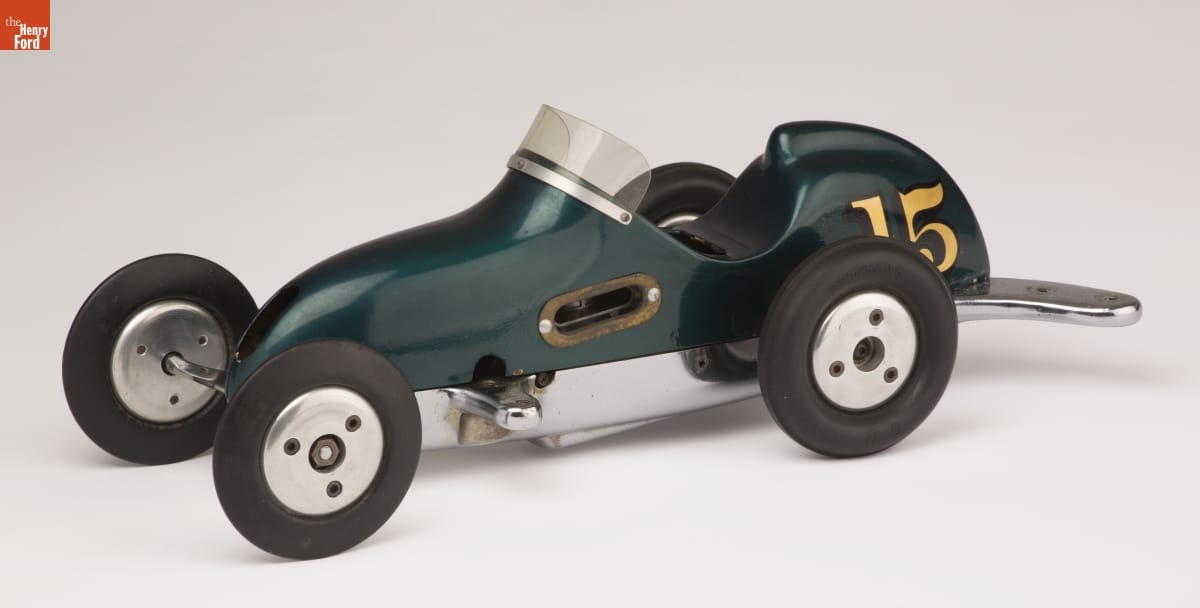
- C & R "Special" or "Curly Car" Gas-Powered Racing Tether Car, 1947-1950 - Tether cars, gas-powered model race cars, were popular in the 1930s and 1940s. They were raced individually while tethered to a central pivot, or against each other on a scaled-down board track. This model was produced by C & R Products Company of Hayward, California. C & R "Curly Cars" were nicknamed after company owner and racer Curly Glover.
- 1947-1950
- Collections - Artifact
C & R "Special" or "Curly Car" Gas-Powered Racing Tether Car, 1947-1950
Tether cars, gas-powered model race cars, were popular in the 1930s and 1940s. They were raced individually while tethered to a central pivot, or against each other on a scaled-down board track. This model was produced by C & R Products Company of Hayward, California. C & R "Curly Cars" were nicknamed after company owner and racer Curly Glover.
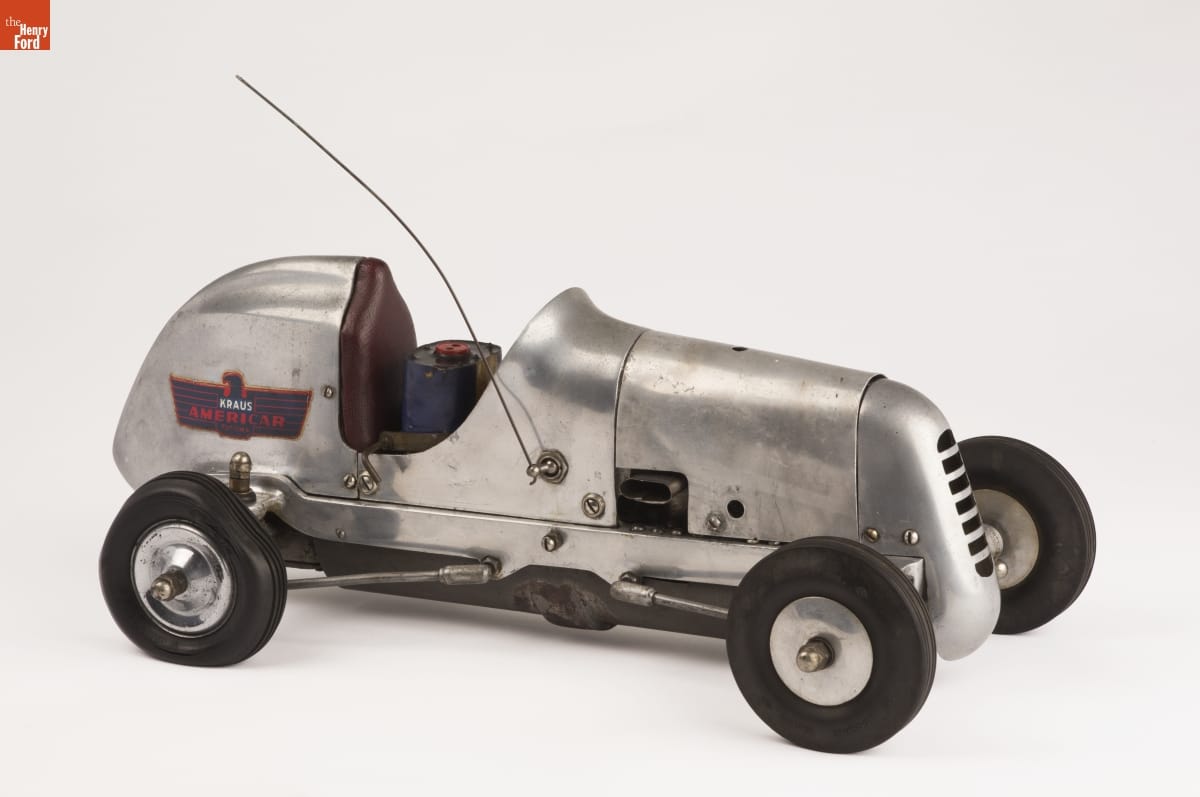
- Dooling "Mercury Deluxe" Gas-Powered Racing Tether Car, 1939-1940 - Tether cars, gas-powered model race cars, were popular in the 1930s and 1940s. They were raced individually while tethered to a central pivot, or against each other on a scaled-down board track. Dooling Brothers, of Los Angeles, California, manufactured a complete line of open-cockpit and streamliner models. Company owners Tom, Harris and Russell Dooling were successful tether car racers themselves.
- 1939-1940
- Collections - Artifact
Dooling "Mercury Deluxe" Gas-Powered Racing Tether Car, 1939-1940
Tether cars, gas-powered model race cars, were popular in the 1930s and 1940s. They were raced individually while tethered to a central pivot, or against each other on a scaled-down board track. Dooling Brothers, of Los Angeles, California, manufactured a complete line of open-cockpit and streamliner models. Company owners Tom, Harris and Russell Dooling were successful tether car racers themselves.
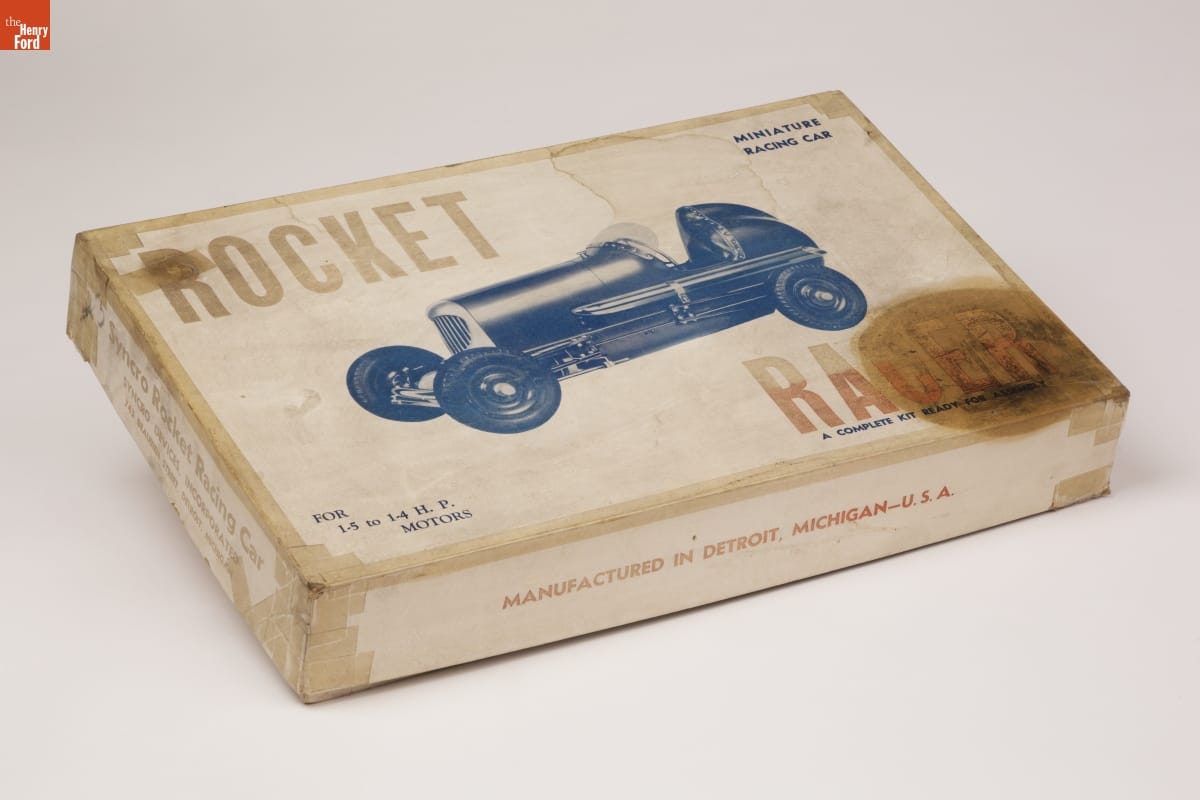
- Syncro Rocket Gas-Powered Racing Tether Car Kit, 1938-1939 - Tether cars, gas-powered model race cars, were popular in the 1930s and 1940s. They were raced individually while tethered to a central pivot, or against each other on a scaled-down board track. Syncro Devices, Inc., of Detroit, Michigan, made this model kit of an open-cockpit racer about 1938. Syncro built approximately 75-100 kits during its two years in production.
- 1938-1939
- Collections - Artifact
Syncro Rocket Gas-Powered Racing Tether Car Kit, 1938-1939
Tether cars, gas-powered model race cars, were popular in the 1930s and 1940s. They were raced individually while tethered to a central pivot, or against each other on a scaled-down board track. Syncro Devices, Inc., of Detroit, Michigan, made this model kit of an open-cockpit racer about 1938. Syncro built approximately 75-100 kits during its two years in production.
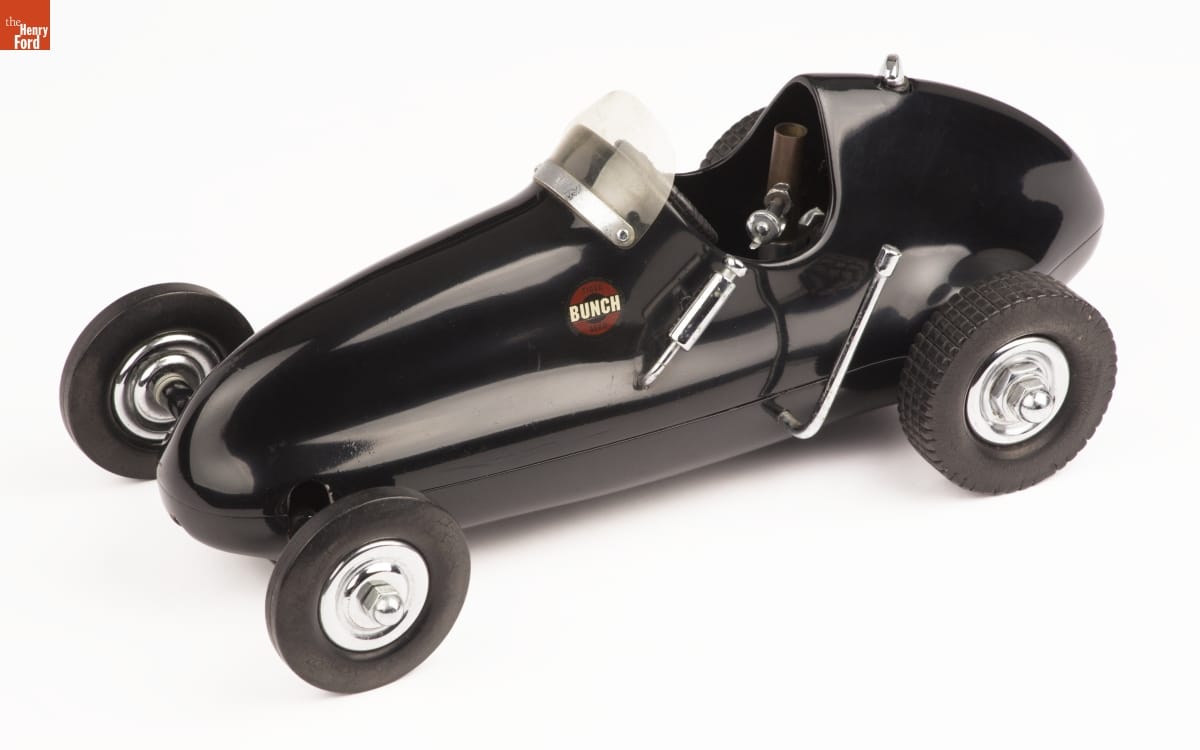
- Dooling "Pee Wee" Gas-Powered Racing Tether Car, 1942 - Tether cars, gas-powered model race cars, were popular in the 1930s and 1940s. They were raced individually while tethered to a central pivot, or against each other on a scaled-down board track. Dooling Brothers, of Los Angeles, California, manufactured a complete line of open-cockpit and streamliner models. Company owners Tom, Harris and Russell Dooling were successful tether car racers themselves.
- 1942
- Collections - Artifact
Dooling "Pee Wee" Gas-Powered Racing Tether Car, 1942
Tether cars, gas-powered model race cars, were popular in the 1930s and 1940s. They were raced individually while tethered to a central pivot, or against each other on a scaled-down board track. Dooling Brothers, of Los Angeles, California, manufactured a complete line of open-cockpit and streamliner models. Company owners Tom, Harris and Russell Dooling were successful tether car racers themselves.