
Search
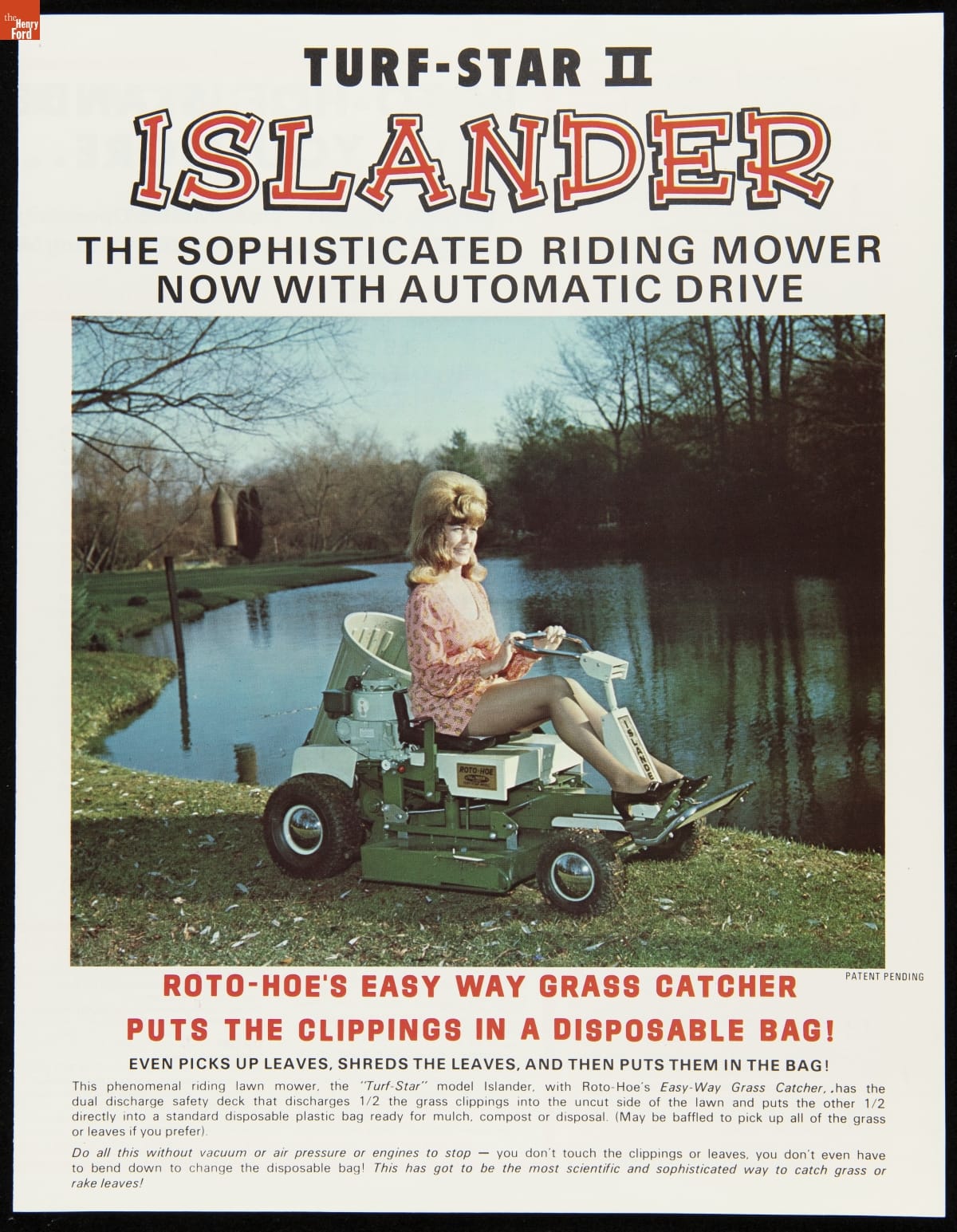
- Roto-Hoe Company Sales Brochure, "Turf-Star II Islander: The Sophisticated Riding Mower Now with Automatic Drive," 1972 - With the rise of the suburban neighborhood at the end of the 19th century, and its explosive growth in the years that followed World War II, maintaining a "perfect" lawn became the new standard. Manufacturers promoted a whole set of specialty equipment to support this American obsession.
- 1972
- Collections - Artifact
Roto-Hoe Company Sales Brochure, "Turf-Star II Islander: The Sophisticated Riding Mower Now with Automatic Drive," 1972
With the rise of the suburban neighborhood at the end of the 19th century, and its explosive growth in the years that followed World War II, maintaining a "perfect" lawn became the new standard. Manufacturers promoted a whole set of specialty equipment to support this American obsession.
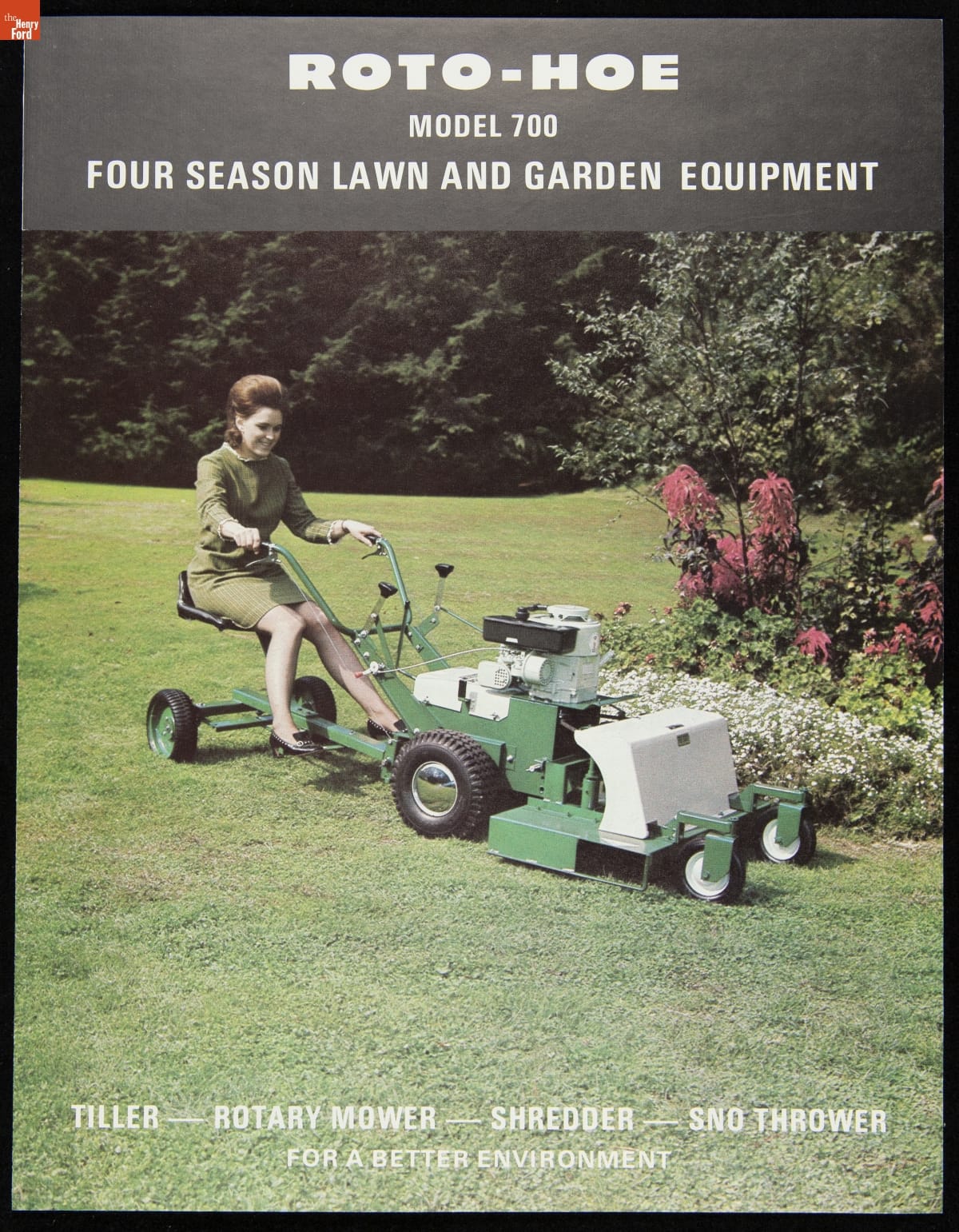
- Roto-Hoe Company Sales Brochure, "Roto-Hoe Model 700 Four Season Lawn and Garden Equipment," 1971 - With the rise of the suburban neighborhood at the end of the 19th century, and its explosive growth in the years that followed World War II, maintaining a "perfect" lawn became the new standard. Manufacturers promoted a whole set of specialty equipment to support this American obsession.
- 1971
- Collections - Artifact
Roto-Hoe Company Sales Brochure, "Roto-Hoe Model 700 Four Season Lawn and Garden Equipment," 1971
With the rise of the suburban neighborhood at the end of the 19th century, and its explosive growth in the years that followed World War II, maintaining a "perfect" lawn became the new standard. Manufacturers promoted a whole set of specialty equipment to support this American obsession.
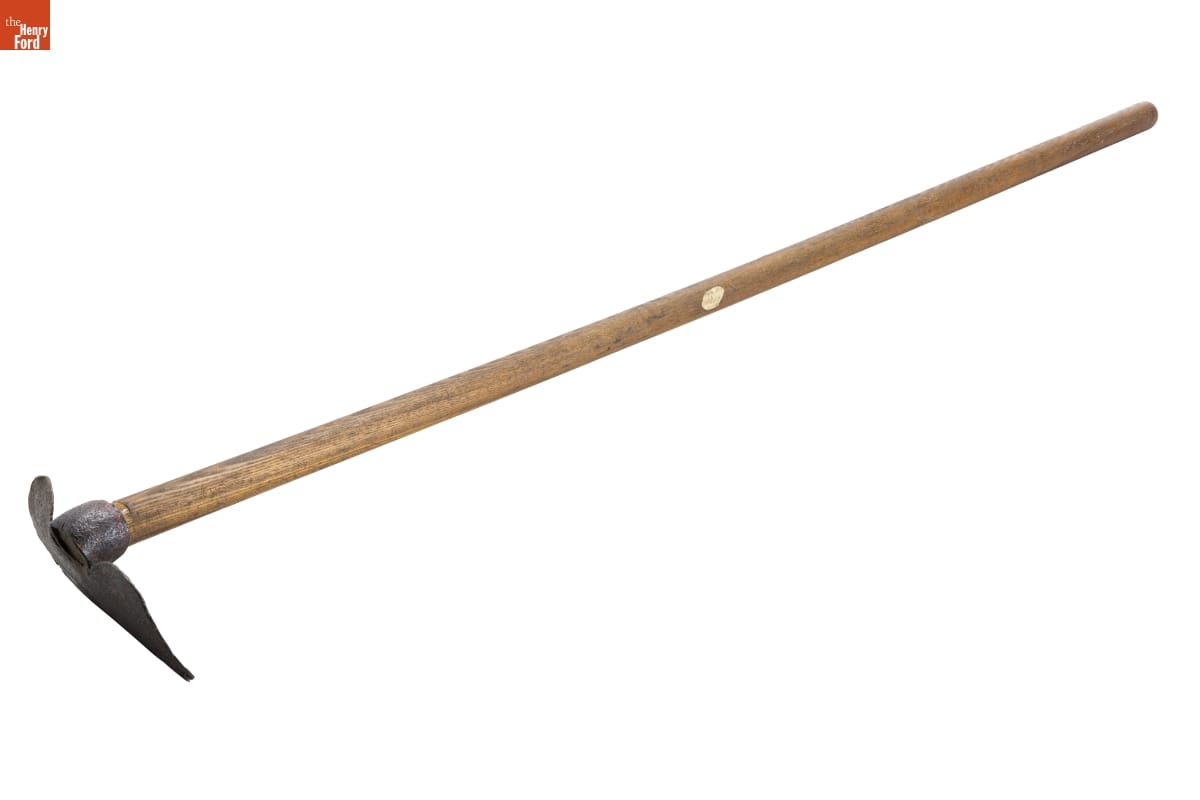
- Hoe - Farmers use hoes for a variety of jobs. The hoe can break up hard soil, dig holes, and cut unwanted roots and weeds found around crops. This useful tool has been an agricultural basic for thousands of years.
- Collections - Artifact
Hoe
Farmers use hoes for a variety of jobs. The hoe can break up hard soil, dig holes, and cut unwanted roots and weeds found around crops. This useful tool has been an agricultural basic for thousands of years.
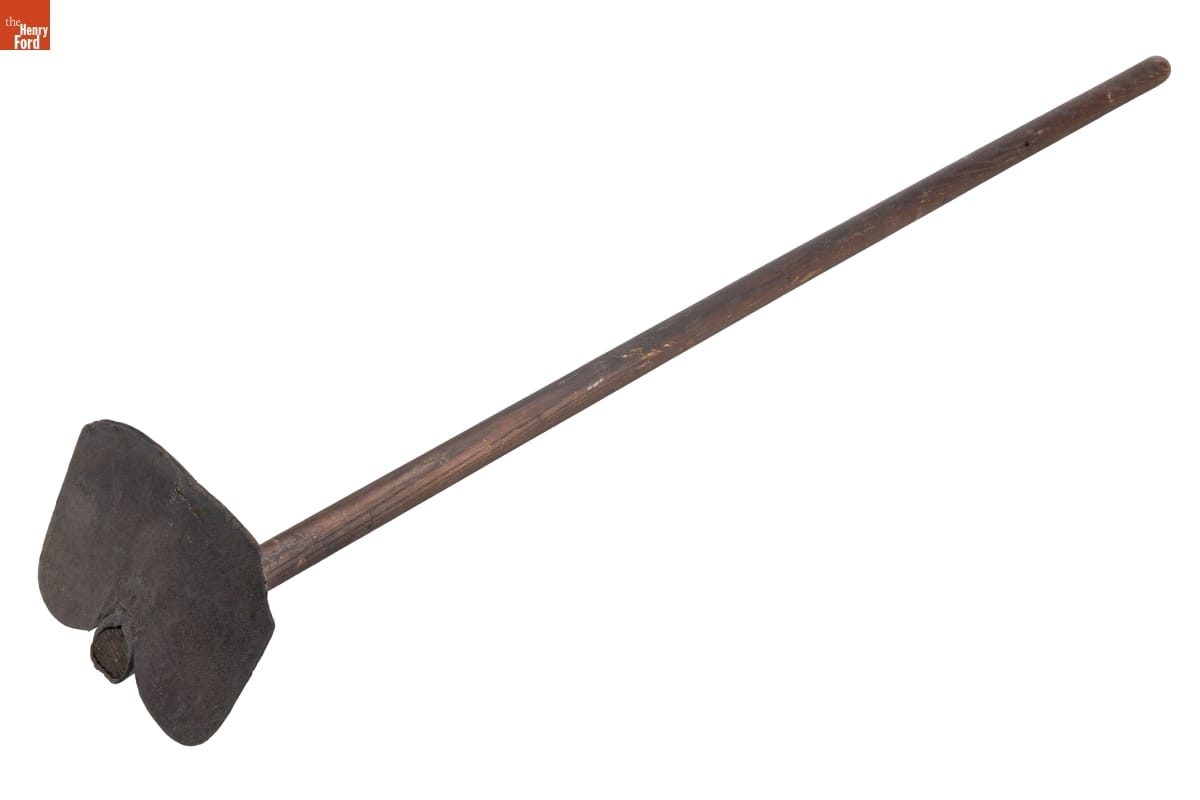
- Hoe - Farmers use hoes for a variety of jobs. The hoe can break up hard soil, dig holes, and cut unwanted roots and weeds found around crops. This useful tool has been an agricultural basic for thousands of years.
- Collections - Artifact
Hoe
Farmers use hoes for a variety of jobs. The hoe can break up hard soil, dig holes, and cut unwanted roots and weeds found around crops. This useful tool has been an agricultural basic for thousands of years.
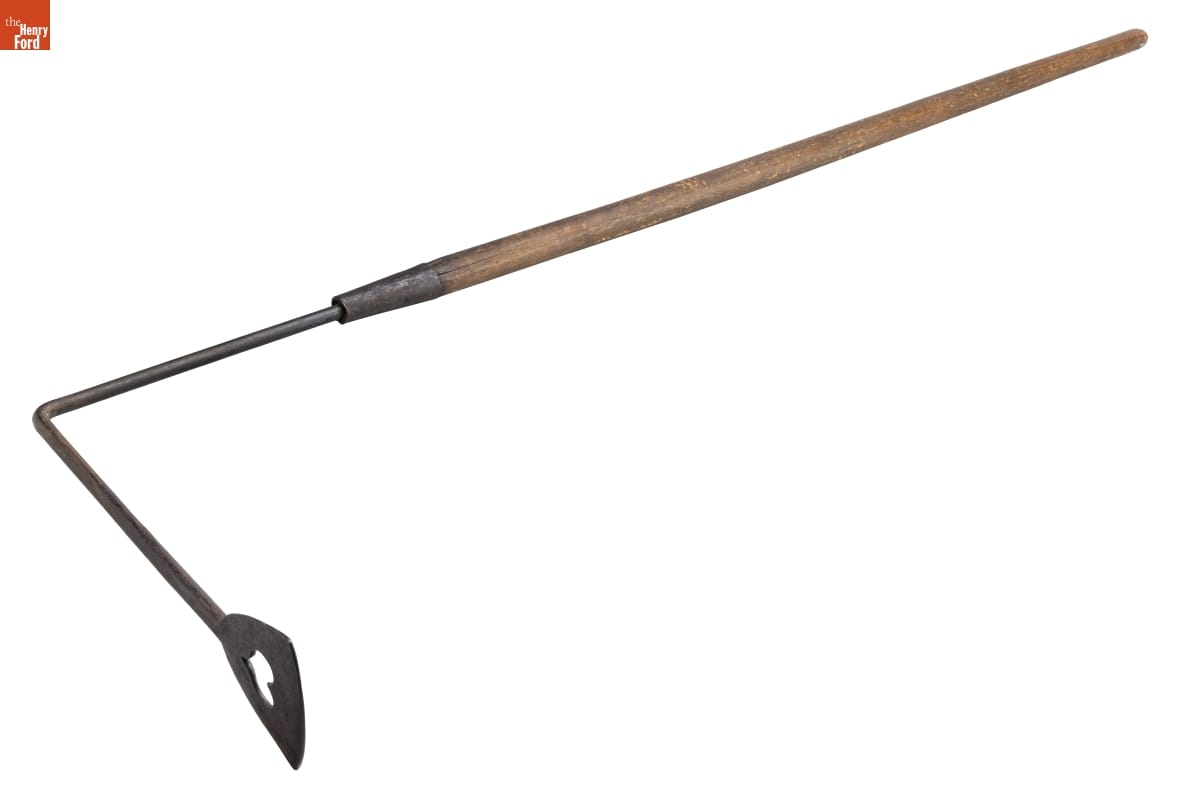
- Hoe, circa 1870 - Farmers use hoes for a variety of jobs. The hoe can break up hard soil, dig holes, and cut unwanted roots and weeds found around crops. This useful tool has been an agricultural basic for thousands of years.
- circa 1870
- Collections - Artifact
Hoe, circa 1870
Farmers use hoes for a variety of jobs. The hoe can break up hard soil, dig holes, and cut unwanted roots and weeds found around crops. This useful tool has been an agricultural basic for thousands of years.
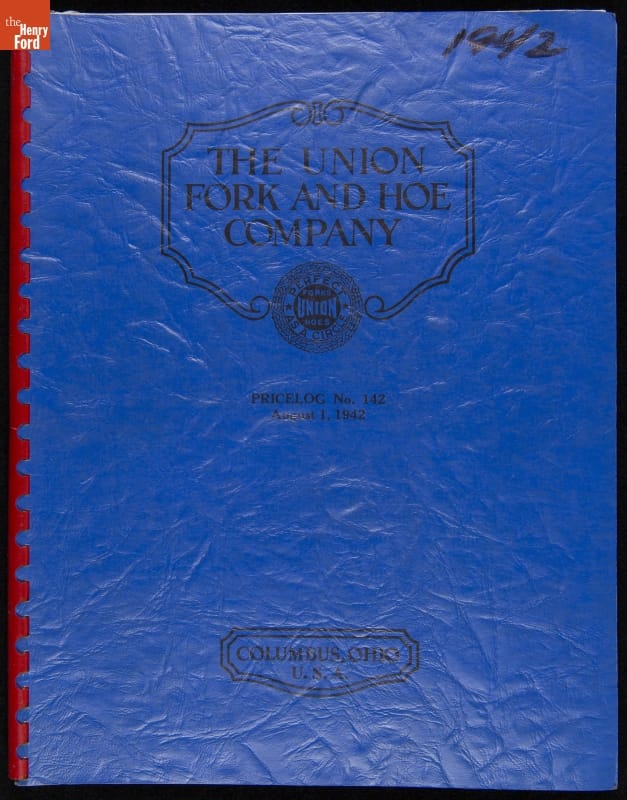
- Union Fork & Hoe Company Catalog and Price List No. 142, August 1, 1942 -
- August 01, 1942
- Collections - Artifact
Union Fork & Hoe Company Catalog and Price List No. 142, August 1, 1942
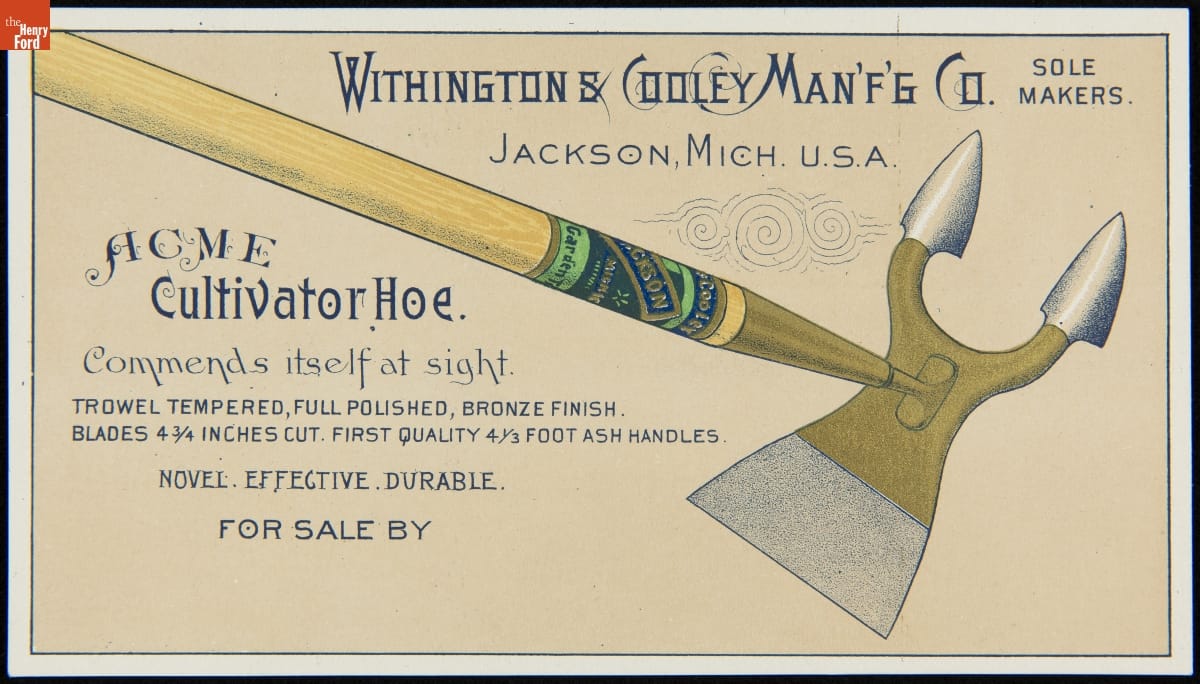
- Trade Card for Cultivator Hoes, Withington & Cooley Mfg. Co., 1865-1903 -
- 1865-1903
- Collections - Artifact
Trade Card for Cultivator Hoes, Withington & Cooley Mfg. Co., 1865-1903
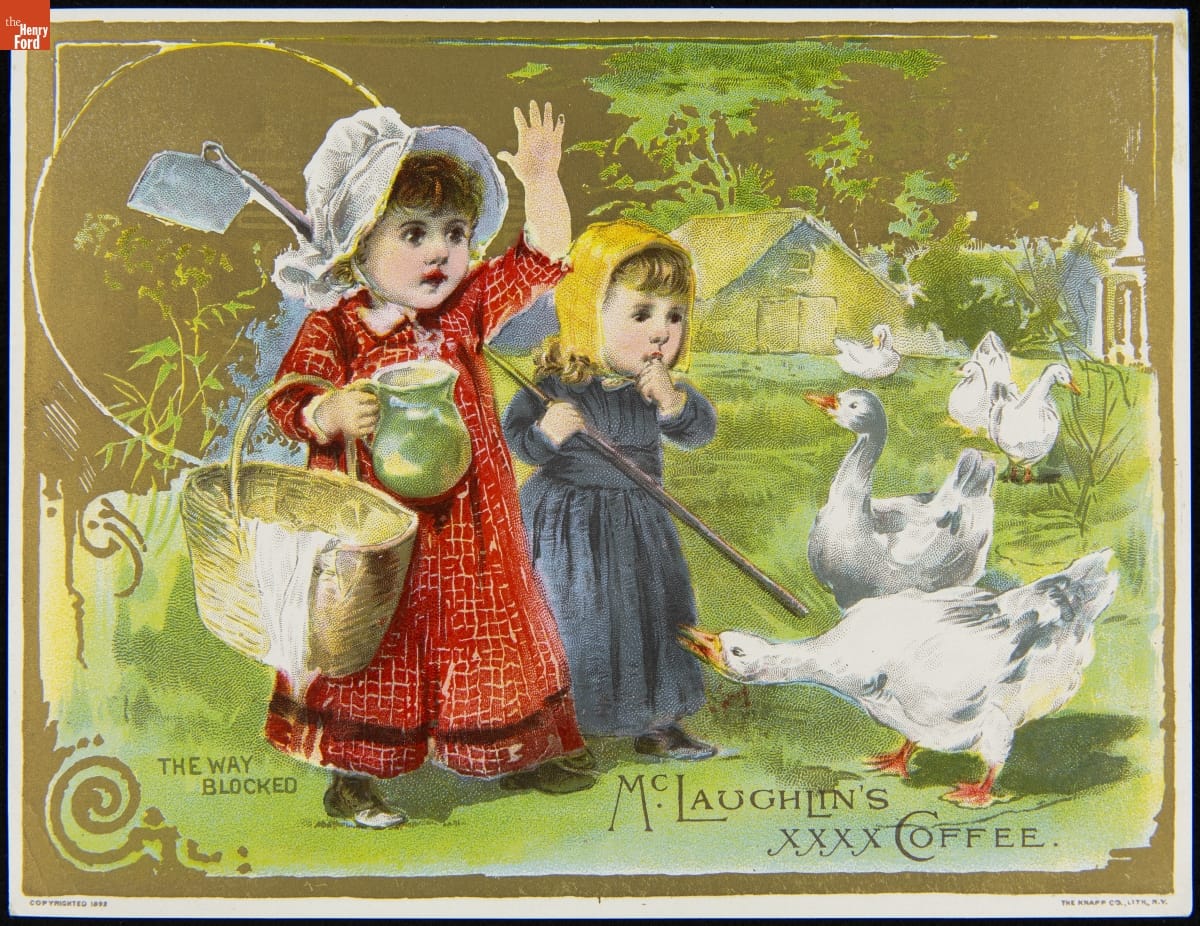
- Trade Card for McLaughlin's XXXX Coffee, W.F. McLaughlin & Co., 1892 - In the last third of the nineteenth century, an unprecedented variety of consumer goods and services flooded the American market. Advertisers, armed with new methods of color printing, bombarded potential customers with trade cards. Americans enjoyed and often saved the vibrant little advertisements found in product packages or distributed by local merchants. Many survive as historical records of commercialism in the United States.
- 1892
- Collections - Artifact
Trade Card for McLaughlin's XXXX Coffee, W.F. McLaughlin & Co., 1892
In the last third of the nineteenth century, an unprecedented variety of consumer goods and services flooded the American market. Advertisers, armed with new methods of color printing, bombarded potential customers with trade cards. Americans enjoyed and often saved the vibrant little advertisements found in product packages or distributed by local merchants. Many survive as historical records of commercialism in the United States.
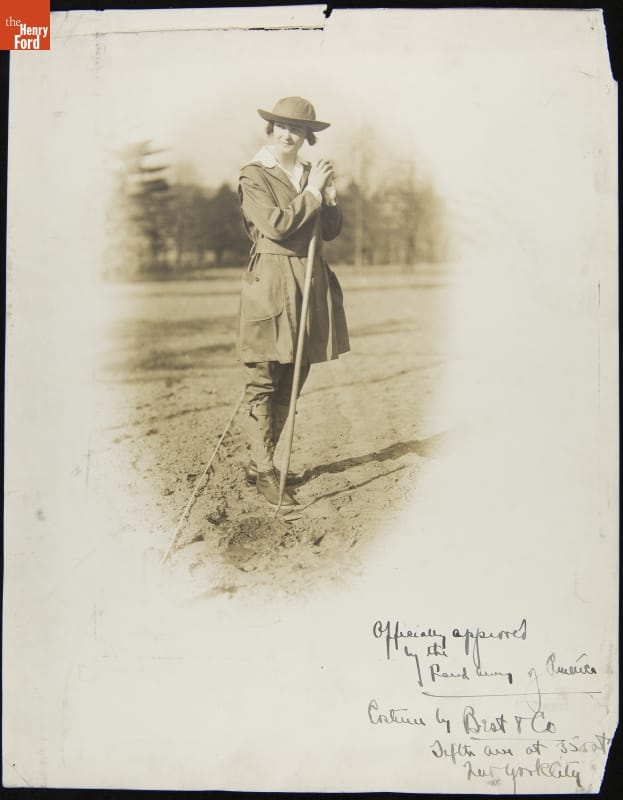
- Woman in Work Costume Officially Approved by the Land Army of America, 1918 - After the United States entered World War I in 1917, Americans worried about labor and food shortages as a result of men going off to fight. Organizations like the Woman's Land Army of America and the Woman's National Farm and Garden Association recruited and trained women to perform agricultural work across the country. This woman modeled the Land Army uniform.
- 1918
- Collections - Artifact
Woman in Work Costume Officially Approved by the Land Army of America, 1918
After the United States entered World War I in 1917, Americans worried about labor and food shortages as a result of men going off to fight. Organizations like the Woman's Land Army of America and the Woman's National Farm and Garden Association recruited and trained women to perform agricultural work across the country. This woman modeled the Land Army uniform.
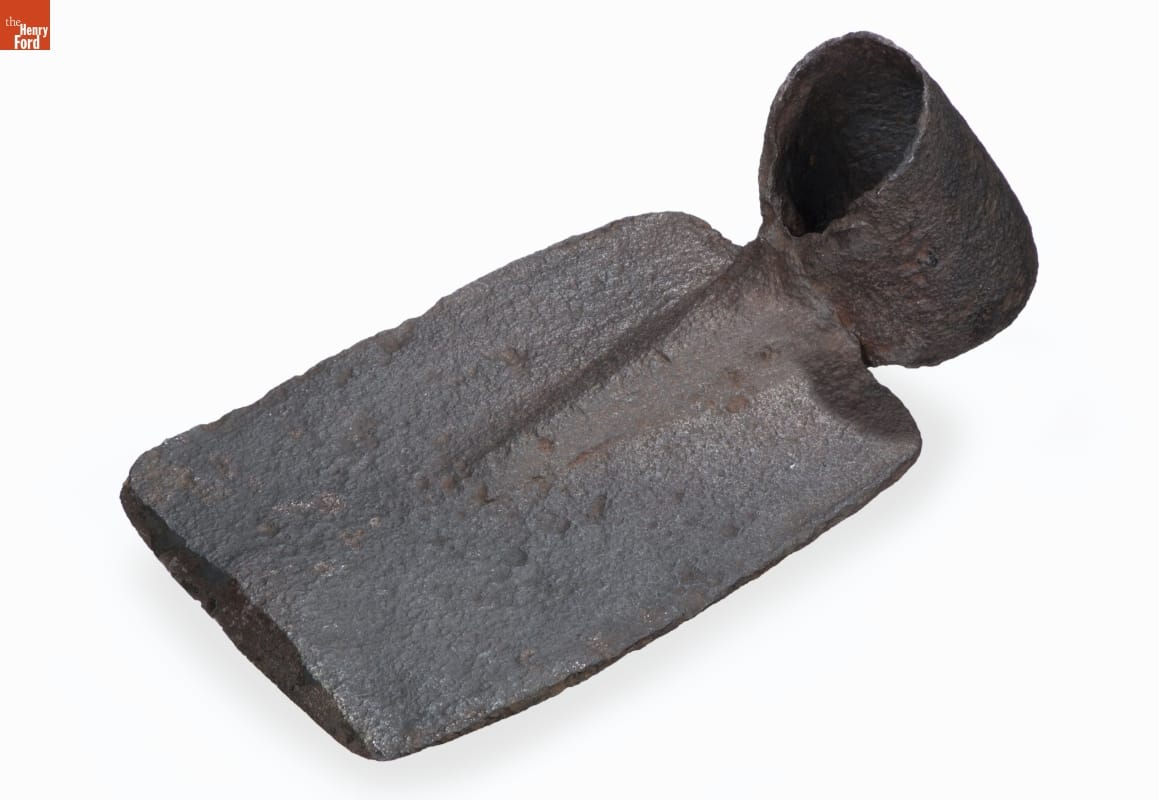
- Hoe Blade, 1800-1840 -
- 1800-1840
- Collections - Artifact
Hoe Blade, 1800-1840